AI, Blockchain, and IoT Transform Logistics Management in 2025


AI, blockchain, and IoT are transforming how people manage logistics in 2025. Many companies are leveraging these tools to accelerate the integration of AI, making supply chains faster and more accurate.
Technology | Adoption Rate | Impact |
|---|---|---|
AI | Lowered logistics costs by 15%, improved inventory by 35%, better service by 65% | |
IoT | Over 80% of logistics companies plan to integrate | Tracks items in real time, assists with inventory, prevents losses |
Digital Twins | 30% decrease in supply chain disruptions | Enhances operational efficiency |
You can observe these changes every day:
Fleet managers utilize GPS tracking to identify better routes and save fuel.
Warehouses employ machines to monitor stock and predict customer needs.
These innovative tools facilitate the rapid integration of AI, making logistics smarter and more transparent.
Key Takeaways
AI helps logistics by guessing what customers want. It also finds the best delivery routes. This makes service faster and saves money.
IoT lets people track shipments as they move. This helps manage inventory better. It also keeps customers happy by stopping losses and making sure things arrive on time.
Blockchain makes logistics more open and safe. It keeps records that cannot be changed. It also uses smart contracts to make work easier.
Using these technologies can cut costs a lot. It also makes work better and helps customers trust the company more.
To do well, companies should train their workers. They should also learn how to use new technology with old systems.
Logistics Transformation in 2025
Accelerate the Integration of AI
Logistics is changing fast because of AI. Artificial intelligence helps you guess what customers want. It also helps you find the best routes for trucks. AI can do jobs in warehouses without people. With AI, companies keep less inventory and serve customers better. AI looks at lots of data to find patterns. This helps you make choices quickly. AI plans routes so trucks waste less time and use less gas. It checks orders to catch mistakes early. This keeps things running well. AI uses sensors to watch machines and spot problems before they break. This stops delays. When you use more AI, you can store more goods without building new places. AI makes logistics safer, cheaper, and more flexible.
Advancement | Description |
|---|---|
Predictive Maintenance | Sensors watch machines and find problems early. This means less downtime and lower costs. |
Autonomous Vehicles | These vehicles deliver faster and need fewer workers. |
Fleets work together to save fuel and stop wasting time. | |
Inventory Optimization | AI checks stock so you do not have too much or too little. |
AI-assisted Risk Mitigation | AI looks at supply chains to find risks and fix them early. |
IoT and Real-Time Data
IoT lets you see where your shipments are all the time. Smart sensors tell you the location and condition of goods. You get updates often, so you always know what is happening. IoT helps you check temperature and humidity for special items. Real-time data helps you find and fix problems fast. Companies like DHL use IoT to change delivery routes and be on time more often. IoT saves money by checking things automatically. This means less work for people. You can fix problems quickly and keep customers happy.
IoT tracks shipments and checks their condition right away.
Real-time data helps make logistics better and cuts waste.
IoT lets you fix problems fast and makes customers happier.
Smart sensors help you spend less and work better.
IoT helps with machine care and saves fuel.
Blockchain in Logistics
Blockchain makes logistics more open and safe. You use blockchain to keep all supply chain data in one safe place. This stops people from changing records and helps everyone trust each other. Blockchain lets you track products as they move and fix problems fast. The TradeLens platform by Maersk and IBM shows how blockchain cuts paperwork and makes things clearer. You can use blockchain for smart contracts. These contracts pay people and do tasks automatically. This saves time and stops mistakes. Blockchain helps stop cheating, makes it easy to see where things come from, and lets you pay across borders right away.
Blockchain lets you track goods and keeps data safe.
Everyone sees the same info, so there are fewer arguments.
Smart contracts do jobs automatically and save lots of money.
Blockchain helps manage warehouses and control inventory.
Key Applications
Route Optimization
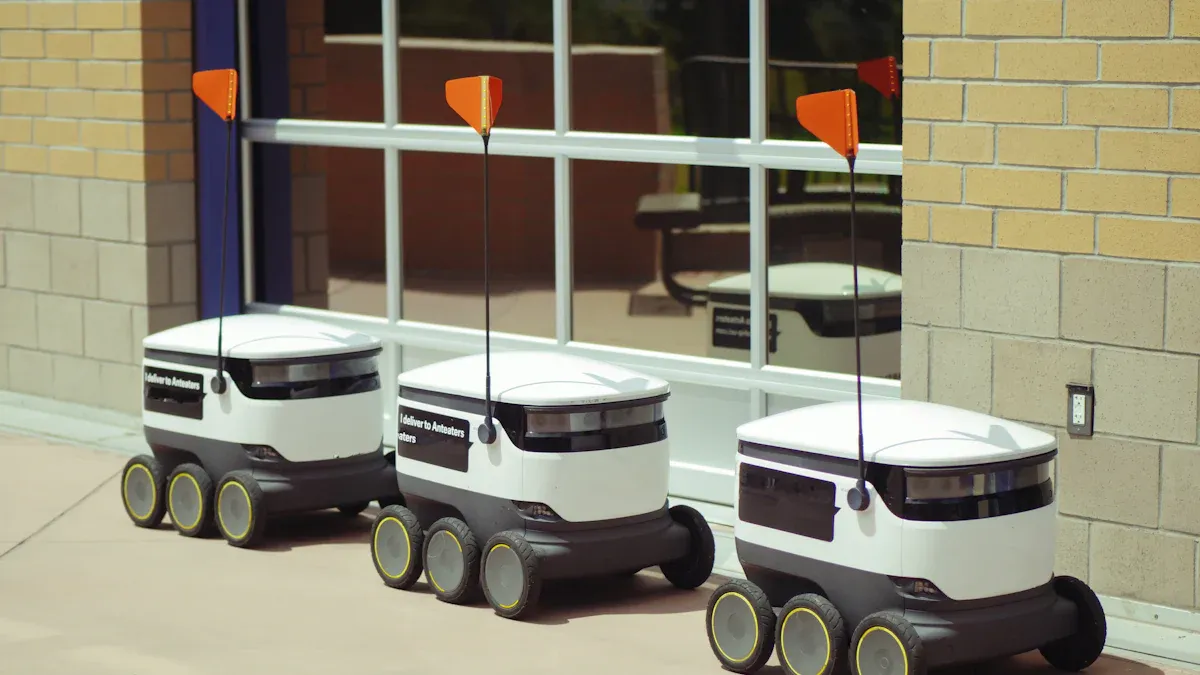
AI-powered route optimization helps logistics every day. These tools plan the best delivery routes. They change routes if traffic or weather changes. AI uses live data to pick better paths. This saves fuel and time. Packages arrive faster and use fewer resources.
Feature | Benefit |
|---|---|
Cuts costs for companies over time | |
Enhanced Customer Experience | Gives accurate arrival times and live tracking |
Improved Sustainability | Reduces carbon footprint and CO2 emissions |
AI-driven dynamic route planning | Changes routes quickly when things change |
Predictive analytics | Helps plan the best delivery times |
Retail logistics uses these tools during busy times. They change delivery routes to avoid delays and save fuel. In field service, AI sends workers where they are needed fast. Healthcare logistics uses these tools to deliver supplies on time. They keep medical items at the right temperature.
McKinsey says using AI in logistics can cut costs by 20%. It can also lower inventory by 30%. UPS and DHL saved millions of gallons of fuel. They also reduced their carbon footprint with these solutions.
Inventory Management
IoT changes how you manage inventory in logistics. Smart sensors watch goods and check inventory levels. This helps you see what you have and avoid running out. Automated systems order more items when stock gets low. You never miss a sale.
IoT Functionality | Benefit |
|---|---|
Lowers risk of loss and helps find items | |
Monitoring inventory levels | Orders more stock and keeps shelves full |
Demand forecasting | Uses data to help make better choices |
Equipment monitoring | Finds problems early and stops disruptions |
Real-time data sharing | Lets teams work together and see updates |
Automated replenishment | Cuts labor costs and makes work faster |
Space utilization optimization | Uses storage space better |
Environmental monitoring | Keeps goods safe and in good condition |
Real-time monitoring stops stockouts and too much inventory. You keep customers happy and save money. In cold storage, sensors keep food fresh and stop spoilage. AI analytics help you guess demand and avoid extra stock.
Asset Tracking
Asset tracking is important in logistics. You use GPS, Bluetooth, and RFID to follow assets live. These tools show where goods are and how they move. GPS is good for tracking worldwide. Bluetooth and RFID work well indoors.
Technology | Advantages | Limitations |
|---|---|---|
GPS | Tracks well, works everywhere, gives live info | Can lose signal, uses power, costs more |
Bluetooth | Uses little power, cheap, good indoors | Short range, needs receivers, hard to scale |
RFID | Accurate, live, does not need direct sight | Costs more, short range, can get interference |
These tools help you lose fewer assets and use resources better. You do not need to count inventory by hand as much. Live asset tracking makes work faster and cuts transport costs. Workflows are smoother and resources do not sit idle.
Live tracking makes work faster.
Route planning cuts transport costs.
Automated tracking means less manual work and fewer mistakes.
Smart Contracts
Smart contracts automate logistics tasks. They track each step of a product’s trip. These digital contracts pay when goods arrive. If something goes wrong, smart contracts alert everyone fast.
Smart contracts record every step from factory to store.
They pay automatically when goods arrive or send alerts if there is a problem.
Sensors or QR codes confirm delivery and release payments.
These contracts update records, pay insurance, or handle customs without people.
Benefit | Description |
|---|---|
IoT-Enabled Tracking | Sensors log live data like location or temperature on blockchain. |
NFT-Based Digital Twins | Each shipment gets a digital token to prove it is real. |
Real-Time Dispute Resolution | Insurance or refunds happen fast if shipments are damaged. |
Automated Stock Replenishment | New orders start when inventory gets low. |
AI-Driven Demand Forecasting | Algorithms use data to plan inventory better. |
Automated Customs Declarations | Smart contracts check customs and payments live. |
Privacy-Preserving Trade Compliance | You can check rules without sharing private data. |
You work faster and make fewer mistakes with these tools. Smart contracts check quality and release payments automatically. This makes logistics smoother and more reliable.
Benefits
Efficiency
AI, blockchain, and IoT help logistics work better. These tools let you do more with less. Robots in warehouses do jobs so people do not have to. Machine learning helps guess how much stock you need. IoT sensors watch goods and machines to find problems early. With these tools, you can send more packages faster. Your trucks and vans keep moving without many stops.
Here are some ways to check if logistics is efficient:
Metric | Description |
|---|---|
Deliveries per hour/day | Counts how many deliveries the fleet makes each day. |
Distance traveled per delivery | Shows miles driven for each delivery. |
Deliveries per route | Tells how many deliveries fit on one route. |
Time spent per stop | Checks how long each stop takes and finds slow stops. |
Cost per delivery | Finds out how much each delivery costs. |
Cost per stop | Looks at costs for routes with many stops to spot waste. |
Fuel and maintenance cost per route | Tracks driver costs to find problems. |
Fuel cost per delivery | Connects how much fuel is used for each delivery. |
Walmart uses machine learning to look at lots of data. This helped them have fewer empty shelves and happier shoppers. AI helps pick the best routes, so trucks use less gas and get there faster. IoT sensors show where goods are and if they are safe. This stops spoilage and damage, which is important for special shipments.
Transparency
Blockchain and IoT make it easier to see what is happening in logistics. Blockchain keeps a record that no one can change. You can trust this data and see where products go. IoT sensors give live updates about where goods are and if they are okay.
When you use both IoT and blockchain, you get a strong system. IoT gives live info, and blockchain keeps it safe. For example, sensors check the temperature of food, and blockchain saves this data. This makes it easy to check quality and safety.
Here is how these tools make supply chains clearer:
Aspect | Description |
|---|---|
Transparency Enhancement | Using blockchain and IoT makes things much clearer. |
Tamper-proof Records | Blockchain keeps records safe from changes. |
Real-time Data | IoT sensors give live info to help everyone see what is happening. |
Fraud Reduction | These tools help stop cheating by catching changes fast. |
Compliance Automation | Smart contracts check rules and make sure everyone follows them. |
Key Metrics Improvement | Numbers show less fraud and more trust in the system. |
OpenSC uses blockchain to track products and check if claims are true. This helps you know if goods are made the right way. Maersk and IBM made TradeLens, which tracks almost half the world’s cargo. This shows how you can make supply chains more open and reliable.
You can also see your inventory and trucks better. Live tracking lets you know where packages are all the time. You can manage stock with records that cannot be changed. This helps you plan and keep enough goods. Fleet management is easier because you can track vehicles and their care safely.
Cost Reduction
AI, blockchain, and IoT help save money in logistics. AI can help you spend 10-15% less. UPS uses AI to save hundreds of millions on fuel and workers. Better routes and robots in warehouses mean less fuel and less work for people.
Here are some ways to cut costs:
Plan better routes to drive less.
Buy supplies together to get lower prices.
Fill trucks up to make fewer trips.
Use live data to make smart choices.
Use robots and machines to do jobs faster.
Tracifier used Oracle Blockchain to track food better. This made processing cheaper by almost half. IoT sensors stop spoilage and damage, so you lose less. Robots in warehouses work fast and make fewer mistakes, so you spend less money.
Customer Satisfaction
These new tools help keep customers happy. AI looks at lots of data to find problems early. This means you can fix things before customers notice. Blockchain keeps a safe record of every step, so customers trust your products. IoT devices watch where goods are and check temperature and humidity.
Here is how technology helps customers:
Metric | Description |
|---|---|
Delivery Time | Orders get to customers faster with new tech. |
Order Accuracy | Orders are right more often because of better systems. |
Customer Satisfaction | Scores show customers are happier with the service. |
You can deliver faster and make fewer mistakes. Customers can see where their packages are at any time. AI helps you guess what people want, so you do not run out. This means customers get what they need when they want it. More companies use these tools because they help keep customers happy.
Using AI, blockchain, and IoT together gives you better tracking, faster deliveries, and more trust. This makes customers happier and helps your business do well.
Challenges
Implementation
Bringing new technology into logistics can be tough. AI needs good data, but it takes time to collect and clean it. You must connect new systems to old ones. This is hard, especially when adding iot devices to older tech. Software and hardware can cost a lot. Small companies may not afford these tools. Some workers may not want to change how they work.
Challenge | Description |
|---|---|
Data Accuracy and System Integration | AI needs good data, but cleaning and connecting systems is hard. |
Managing High Implementation Expenses | New technology costs a lot, especially for small companies. |
Dealing with Organizational Resistance | Workers may worry about losing jobs or not understand the new tools. |
A step-by-step plan can help make things easier. Good change management helps everyone see why new tech is needed. Training and support help workers feel ready for new tasks. You should track your progress with clear goals.
Security
Security is very important in logistics. More vendors and systems mean more places for cyber threats. You may not know how third parties keep your data safe. Complex systems can slow things down and hide problems.
Problems can stop trucks and shut down factories.
Stolen data can hurt your company and cost money.
Ransomware can lock your systems until you pay.
To stay safe, use strong security steps. Split up your networks and limit who can see important data. Teach your team to spot threats. Work with trusted suppliers and check their security often. Keep systems updated and have a plan for emergencies.
Workforce Adaptation
Your team is important for new technology to work well. Some workers may worry about losing jobs to machines. Others may not know how to use new tools. You need to help your team learn and adjust.
Tell your team why you are making changes.
Give training so everyone can use new systems.
Set up help for questions and problems.
Celebrate small wins to build trust.
When you focus on people, change goes smoother. Your team feels included in the process. This helps operations get better and makes logistics stronger.
AI, blockchain, and IoT change how you manage logistics. You see faster deliveries, safer data, and smarter tracking. To stay ahead, start learning about these tools now. Try small projects and train your team.
The future brings even more smart machines and real-time data. You can lead the way by using new technology and watching for the next big trend.
FAQ
What is the main benefit of using AI in logistics?
You can use AI to plan better delivery routes and predict what customers want. This helps you save time and money. AI also helps you avoid mistakes and keep your shipments on track.
How does IoT help track shipments?
You use IoT devices to watch your shipments in real time. These sensors show you where your goods are and if they stay safe. You can fix problems quickly and keep customers happy.
Why is blockchain important for supply chains?
You use blockchain to keep records safe and easy to check. This technology helps you trust the data and see every step in the supply chain. You can stop fraud and make sure goods are real.
Can small businesses use these new technologies?
Yes, small businesses can use these tools. Many companies offer simple solutions that do not cost a lot. You can start with one part of your logistics and add more as you grow.