AI-driven inventory balancing and its impact on demand forecasting to reduce excess inventory costs

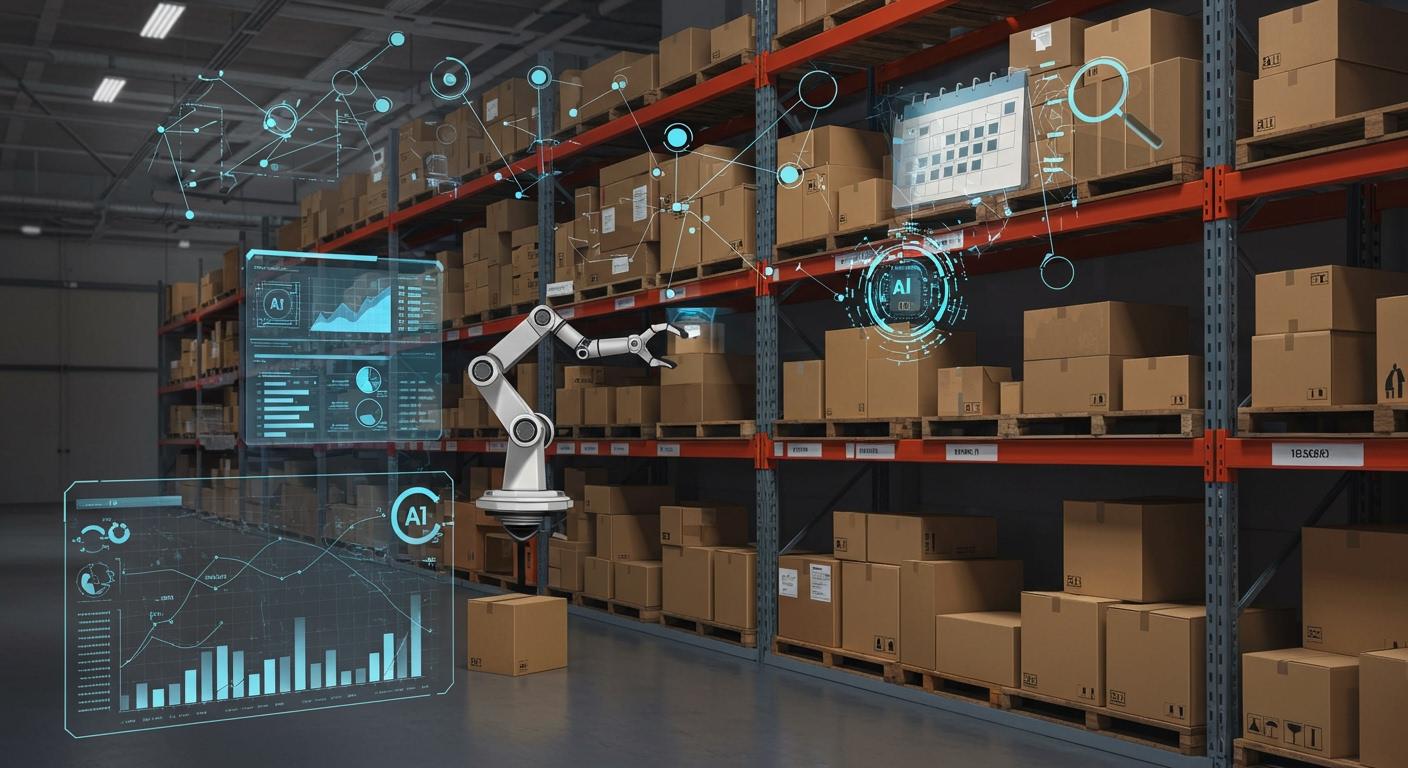
Excess inventory drains profitability and increases operational costs for businesses globally. Over half of companies with more than 20% excess stock resort to inventory financing, reflecting significant financial strain. Traditional forecasting systems often fail to adapt to rapid market changes, resulting in overstocking and missed sales. JUSDA leverages AI automation to deliver hyper-accurate demand forecasting, real-time inventory visibility, and automated replenishment. JusLink and advanced warehouse solutions provide transparency and control, helping businesses minimize waste and optimize supply chain efficiency.
Key Takeaways
AI-driven demand forecasting improves accuracy by over 20%, helping businesses reduce excess inventory and avoid stockouts.
Implementing JusLink can lead to a 15% reduction in logistics costs and a 65% improvement in service levels.
Real-time warehouse management systems enhance efficiency, reducing order picking time by 23% and energy consumption by up to 40%.
Companies using AI automation report up to 50% fewer forecasting errors, leading to significant cost savings and improved profitability.
To get started with AI automation, assess current processes, choose the right technology, and define clear success metrics for implementation.
AI automation in inventory balancing

JusLink AI forecasting
JUSDA transforms inventory management with AI automation, especially through its JusLink platform. JusLink uses real-time data from multiple sources to predict demand with high accuracy. The platform integrates supply chain systems, allowing businesses to track shipments and manage inventory efficiently. JusLink's AI-driven forecasting improves accuracy by over 20% compared to traditional methods. Manufacturers benefit from reduced excess inventory and increased warehouse space without risking stockouts.
JusLink's AI forecasting algorithm stands out because it updates predictions using live data. This approach helps companies respond quickly to market changes and avoid costly overstock situations.
Key features of AI automation in inventory balancing include:
Feature | Description |
|---|---|
Utilizes historical and live data for accurate predictions. | |
Automated reordering | Initiates orders automatically to prevent stock shortages. |
Stock level optimization | Reduces waste and holding costs by optimizing inventory levels. |
Supply chain streamlining | Enhances delivery speed through improved supply chain processes. |
JusLink's AI-driven forecasting and replenishment strategies deliver measurable results:
AI can reduce logistics costs by approximately 15%.
Service levels improve by about 65%.
Forecasting errors decrease by up to 50%.
Practical implementations lead to an 11% improvement in delivery accuracy and an 8.5% reduction in overstock.
Several companies have achieved significant cost savings using AI automation:
Company | Impact on Inventory Costs | Key Features of AI Implementation |
|---|---|---|
Walmart | 15% reduction | Machine learning-based inventory tools for seasonal forecasting, reducing stockouts and waste. |
Home Depot | Analyzing sales data and seasonal patterns to optimize stock levels. | |
Warby Parker | 30% reduction in stockouts | AI forecasting for omnichannel inventory management, improving customer satisfaction and sales. |
JusLink's AI-driven solutions enhance supply chain efficiency. Predictive maintenance and optimized logistics planning reduce unplanned downtime and transportation costs. Businesses experience a more cost-effective supply chain.
Real-time warehouse management
JUSDA's warehouse solutions use AI automation to provide continuous visibility into operations. Real-time management systems monitor inventory movement and workforce productivity every second. This capability allows managers to reassign workers or reroute mobile robots, improving efficiency.
Operational improvements observed in warehouses using real-time AI management systems include:
Category | Real-World Impact |
|---|---|
Order Picking Time | Reduced by 23% through storage reconfiguration using explainable AI. |
Layout Optimization | AI-generated layouts enhance accessibility and flow via beam search frameworks. |
Energy Efficiency | Electricity consumption reductions of up to 40% due to AI-controlled systems. |
Safety Monitoring | 40% reduction in minor safety incidents after deploying AI-based video analytics. |
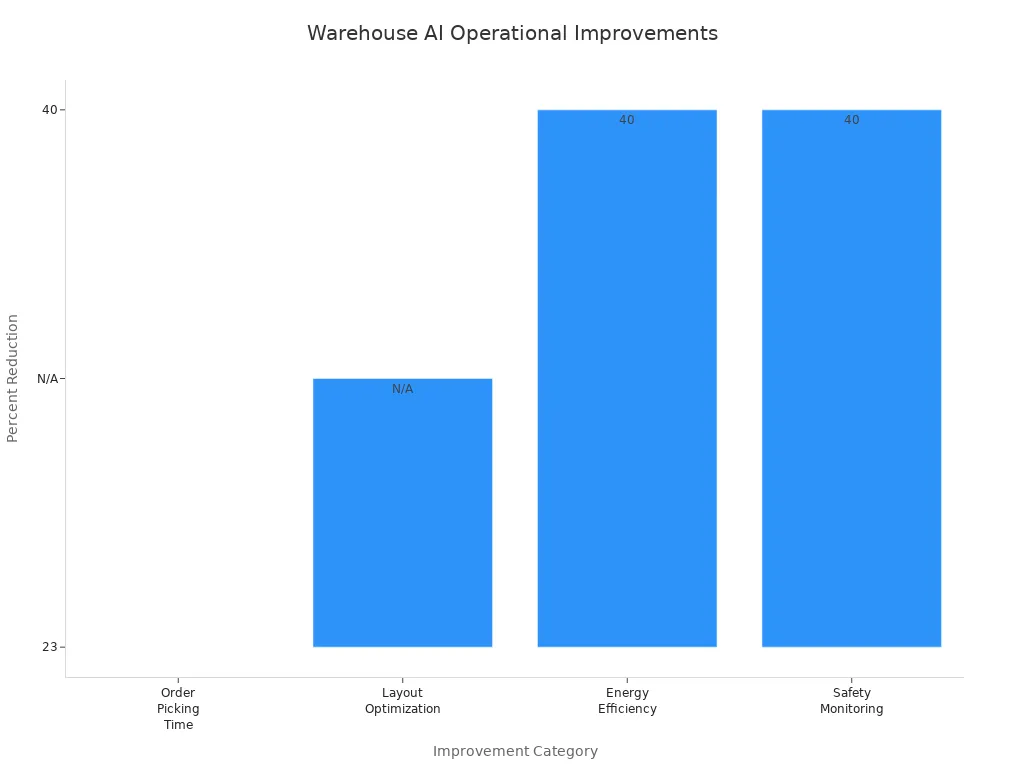
JUSDA's real-time warehouse management systems optimize stock levels and streamline supply chain processes. Companies benefit from reduced waste, lower holding costs, and faster delivery speeds. The integration of AI automation ensures that inventory remains balanced and responsive to market demand.
Overcoming excess inventory challenges
Traditional forecasting limits
Many businesses struggle with excess inventory due to common issues in traditional inventory management and demand forecasting. Inaccurate demand predictions often lead to overstocking. Changing consumer preferences can result in surplus stock that is difficult to sell. Misalignment between departments may cause overordering because of miscommunication. Inefficient inventory management systems sometimes create mistakes in stock levels. Product lifecycle variations can generate excess stock if inventory adjustments do not match market needs. Seasonal fluctuations leave companies with unsold inventory after peak periods. Supply chain and logistics challenges often prompt businesses to overstock as a precaution.
Traditional forecasting methods contribute to these problems. Companies relying on outdated tools often overestimate demand, tying up capital and increasing storage costs. Studies show that improving forecast accuracy from about 55% to 75% allowed a packaging manufacturer to eliminate nearly €1 million in inventory for a single product line. Probabilistic forecasting methods can enhance accuracy by 15–25% compared to traditional approaches, helping maintain optimal stock levels and reducing excess inventory. Businesses with highly accurate forecasting systems have reduced inventory costs by 20–50% compared to those using poor forecasts.
Limitation | Description |
|---|---|
Inefficiency in handling complex market situations | Traditional forecasting struggles with nonlinear data, such as seasonality and volatile demand. |
Reliance on historical data | These methods often produce inaccurate forecasts, affecting business cost estimations. |
JUSDA warehouse solutions
JUSDA addresses excess inventory challenges with its global warehouse network and industry expertise. The company operates over 155 service points worldwide and manages more than 2,500,000 square meters of warehouse space. JUSDA Vietnam offers 110,000 square meters across seven facilities, providing general, bonded, and distribution center storage. Advanced management systems like JusLink and eVMI enable real-time inventory tracking and control. These systems ensure transparency and accuracy, reducing mistakes and optimizing stock levels. JUSDA’s value-added services, such as picking, packing, labeling, and kitting, further streamline operations. The integration of AI automation in warehouse management allows businesses to respond quickly to market changes, minimize waste, and lower holding costs. JUSDA’s expertise supports industries ranging from electronics to automotive, helping companies maintain balanced inventory and improve supply chain efficiency.
Benefits of AI-driven demand forecasting

Cost reduction
AI-driven demand forecasting delivers measurable cost savings for businesses across industries. Companies experience fewer errors in supply chain networks, which leads to lower operational expenses. Improved forecast accuracy reduces lost sales from out-of-stock situations and decreases warehousing costs. Many organizations report significant financial improvements after implementing these solutions.
AI-powered forecasting reduces errors by 30 to 50% in supply chain networks.
Improved accuracy leads to a 65% reduction in lost sales due to inventory out-of-stock situations.
Warehousing costs decrease by 10 to 40%.
The following table highlights cost savings reported by different types of companies after adopting AI-driven demand forecasting:
Company Type | Cost Savings/Improvements | Description |
|---|---|---|
Retail Chain | Increased sales and enhanced customer satisfaction. | |
Major Airline | 15% increase in revenue | Optimized flight schedules and pricing strategies. |
Manufacturing Firm | 10% reduction in production costs | Accurate prediction of material needs and minimized excess inventory. |
Companies using AI automation in demand forecasting consistently achieve lower inventory holding costs and improved profitability.
Improved turnover rates
AI-driven demand forecasting enhances inventory turnover rates by increasing forecast accuracy and optimizing inventory levels. Medical manufacturing facilities that integrate AI forecasting with ERP systems see streamlined procurement processes and reduced carrying costs. Retail chains analyze purchase patterns and predict demand, ensuring optimal stock levels and higher turnover rates. Manufacturing facilities synchronize raw materials with production schedules, which reduces bottlenecks and excess inventory. Logistics companies use AI insights to optimize delivery routes, ensuring timely arrivals and balanced inventory systems.
AI-driven demand forecasting improves inventory turnover rates by enhancing forecast accuracy.
Optimized inventory levels reduce excess stock and stockouts.
Streamlined procurement processes lead to more efficient order fulfillment.
Retail chains use AI to analyze purchase patterns and predict demand, ensuring optimal stock levels and increasing turnover rates.
Manufacturing facilities synchronize raw materials with production schedules through AI, reducing bottlenecks and excess inventory.
Logistics companies optimize delivery routes using AI insights, ensuring timely arrivals and maintaining balanced inventory systems.
Enhanced decision-making
AI-driven demand forecasting empowers organizations to make better decisions. Companies reduce forecasting errors by as much as 50%. The Idaho Forest Group decreased forecasting time from over 80 hours to under 15 hours using AI. AI eliminates human bias, which leads to more reliable predictions and improved inventory planning.
AI-driven demand forecasting can reduce forecasting errors by up to 50%.
The Idaho Forest Group reduced forecasting time from over 80 hours to under 15 hours using AI.
AI eliminates human bias, resulting in more reliable predictions and better inventory planning.
Decision-makers gain access to real-time insights, which enables faster responses to market changes and supports strategic planning.
Implementing AI automation with JUSDA
Getting started with JusLink
Businesses can adopt JUSDA’s JusLink platform by following a structured approach. The process begins with an opportunity assessment. Companies review their business processes to identify areas where automation can deliver the most value. Next, teams document current workflows, mapping out decision points and exceptions. This step helps establish a baseline for measuring improvements.
Technology evaluation follows. Decision-makers assess available automation solutions, focusing on data handling, integration, and scalability. After selecting the right technology, businesses choose a pilot process. The pilot should have a meaningful impact but remain manageable in complexity. Finally, teams define clear success metrics, such as efficiency gains, error reduction, and user satisfaction.
Tip: Start with a process that is important but not overly complex. This approach allows teams to learn and adapt before scaling up.
Integration tips
Successful implementation of AI automation in inventory management depends on several best practices. Companies should focus on data quality. Clean, accurate data enables the AI to make reliable predictions. Setting clear objectives and key performance indicators (KPIs) helps track progress and measure success. Evaluating different vendor options ensures the chosen solution fits the business’s unique needs.
The measurable benefits of using JUSDA’s JusLink and warehouse solutions include:
Benefit | Description |
|---|---|
Enhanced Efficiency | Automated systems streamline operations, reducing time for manual processes and increasing productivity. |
Cost Reduction | Integration of technology leads to lower operational expenses, including reduced labor and utility costs. |
Improved Customer Satisfaction | Faster delivery times and accurate order processing enhance customer trust and loyalty. |
By following these steps and best practices, businesses can unlock the full potential of AI automation with JUSDA’s JusLink and warehouse solutions.
AI automation transforms inventory balancing and demand forecasting, delivering measurable improvements in accuracy, cost savings, and operational efficiency. JUSDA’s JusLink and warehouse solutions enable businesses to optimize inventory, reduce waste, and enhance customer satisfaction.
Benefit | Statistic/Outcome |
|---|---|
Forecast Accuracy Improvement | |
Inventory Cost Savings | 20-30% reductions within the first year |
Operational Efficiency Increase | 15-25% increase in efficiency |
Waste Reduction | 34% waste reduction, saving 420 tons from landfills |
Customer Satisfaction | Improved product availability and quicker delivery |
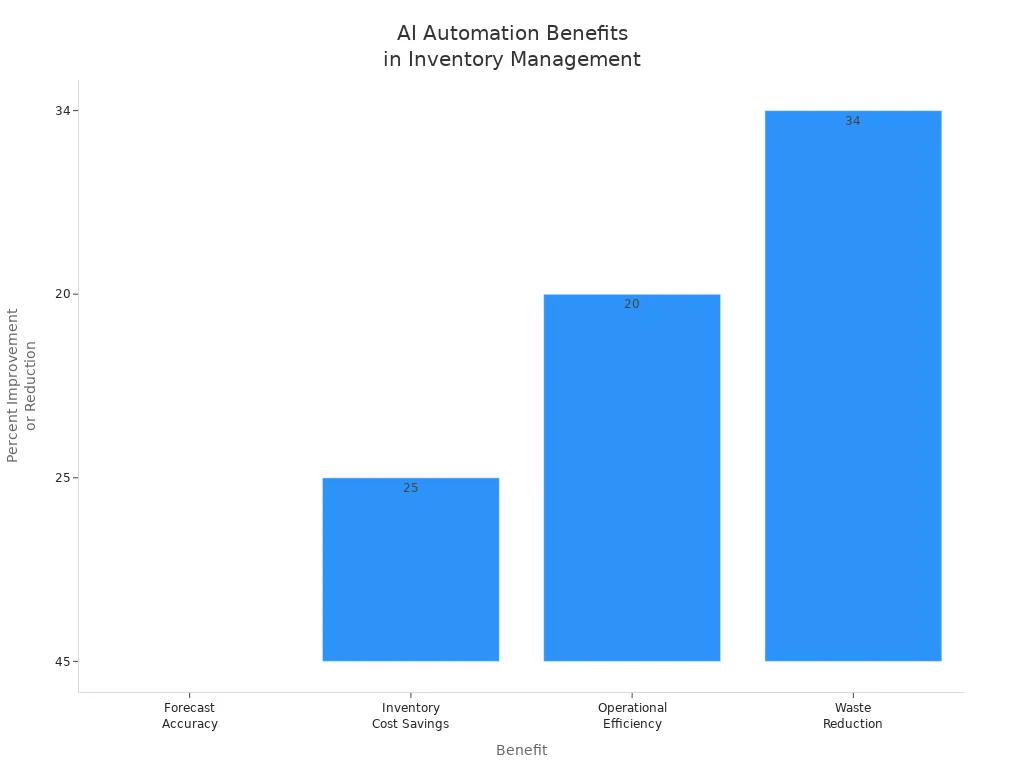
JUSDA’s advanced planning, predictive analytics, and unified management systems help companies streamline operations and respond quickly to market changes. Businesses seeking to improve supply chain efficiency and minimize excess inventory costs should consider JUSDA’s AI-driven solutions for their inventory management needs.
FAQ
What industries benefit most from JUSDA’s AI-driven inventory solutions?
JUSDA’s AI-driven inventory solutions support electronic manufacturing, 3C home appliances, FMCG, automotive, new energy, medical health, heavy equipment, and bulk materials. These industries gain efficiency, transparency, and cost savings through advanced supply chain management.
How does JusLink improve demand forecasting accuracy?
JusLink uses real-time data, AI algorithms, and deep learning to analyze market trends and historical sales. The platform updates predictions continuously, helping companies respond quickly to changes and reduce forecasting errors.
What warehouse management features does JUSDA offer?
JUSDA provides real-time inventory tracking, automated replenishment, picking, packing, labeling, kitting, and repacking. Advanced systems like JusLink and eVMI ensure transparency, accuracy, and control across all warehouse operations.
Can JUSDA’s solutions integrate with existing supply chain systems?
JUSDA’s JusLink platform integrates with ERP, TMS, and WMS systems. Open data interfaces and unified big data platforms enable seamless connectivity, supporting end-to-end supply chain management.
What measurable results have companies achieved with JUSDA’s AI automation?
Companies using JUSDA’s AI automation report up to 50% reduction in forecasting errors, 20–30% inventory cost savings, 15–25% operational efficiency gains, and 34% waste reduction. These improvements enhance profitability and supply chain performance.
See Also
Enhancing Automotive Demand Forecasting Through Data-Driven Insights
Discover JUSDA's Expertise in Inventory Optimization Strategies
Transform Your Business Using Innovative Inventory Management Methods
Understanding Robotic Automation for Enhanced Warehouse Efficiency