AI-Powered Warehouse Automation Transforms Global Logistics as Labor Costs Rise and Smart Systems Redefine Supply Chain Efficiency

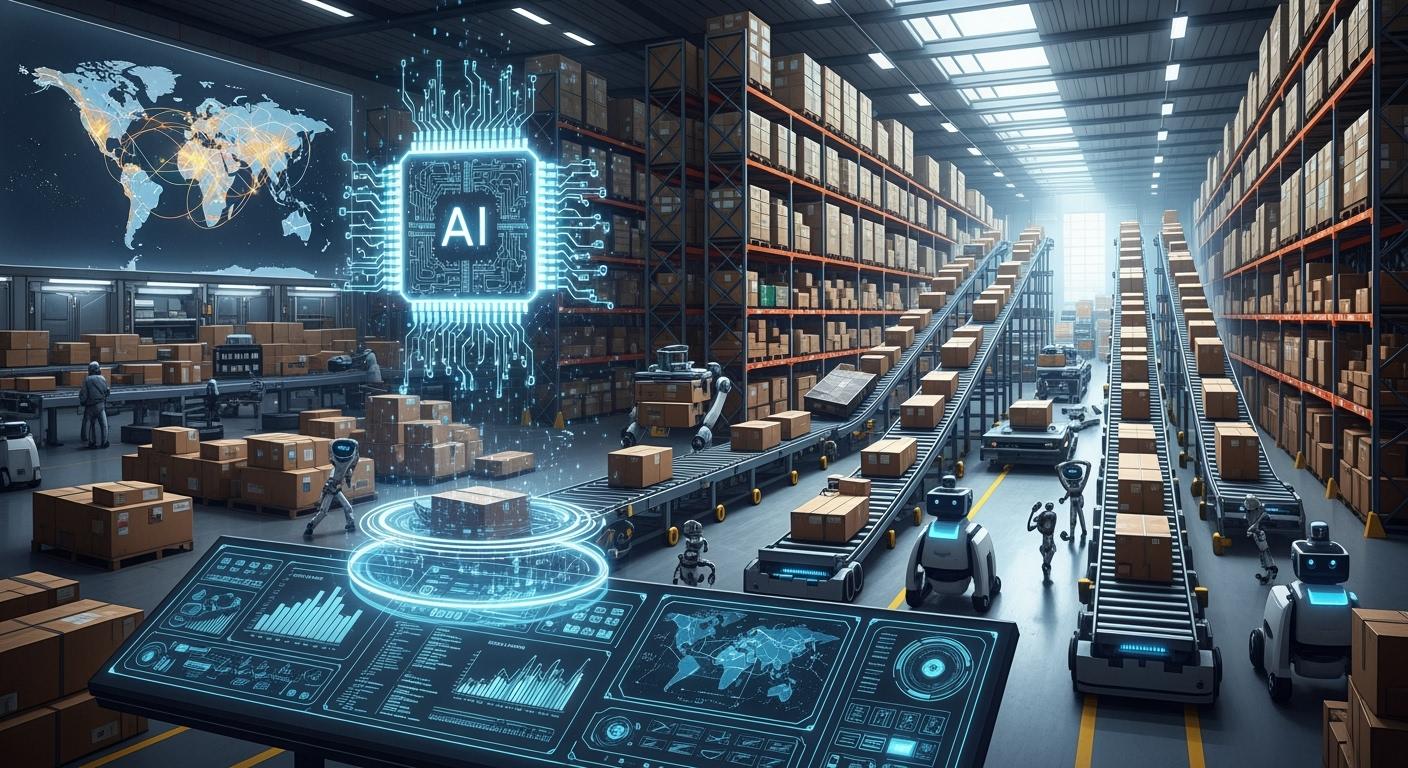
AI automation is reshaping global logistics as labor costs continue to rise. JUSDA leads the industry with intelligent supply chain solutions that leverage robotics and smart systems. The logistics sector faces increased operational expenses, prompting leaders to rethink strategies.
Statistic Description | Value/Percentage |
|---|---|
Estimated warehouse robots by 2025 | |
Labor cost reduction through automation | Up to 60% |
Reduction in operational errors | 99% reduction |
Warehouses using management systems | Over 90% |
Smart systems enhance efficiency, optimize space, and improve customer satisfaction. Readers should evaluate how these innovations can strengthen their logistics strategies.
Key Takeaways
AI automation can reduce labor costs by up to 60%, helping companies save money and improve efficiency.
Smart systems and robotics enhance warehouse operations, leading to a 99% reduction in operational errors.
Real-time data and predictive analytics allow for better inventory management, reducing excess stock and improving order fulfillment speed.
Investing in workforce training ensures employees adapt to new technologies, enhancing productivity and job satisfaction.
Companies that embrace AI-driven solutions gain a competitive edge, meeting customer demands more effectively.
Global Logistics Challenges
Labor Costs and Workforce Shortages
Labor costs and workforce shortages present significant obstacles for logistics operations worldwide. Many warehouse leaders identify workforce availability as a core issue. The hiring market has tightened, making it difficult to find and retain skilled labor. Rising labor costs add to the challenge, with a notable percentage of warehouse leaders citing it as a top concern. Training and onboarding new employees require time and resources, often resulting in inconsistent productivity during ramp-up periods.
The logistics sector faces a shortage of approximately 40,000 truck drivers in the U.S. alone. The industry needs 96,000 new drivers each year to meet demand. This shortage extends to delivery drivers, impacting the entire supply chain.
Warehouse operations also struggle with:
Inefficient route planning
Suboptimal inventory management
Limited visibility
Data silos
The need for automation and digitalization
Sustainability and environmental pressures
Impacts of climate change on logistics infrastructure
These challenges drive organizations to seek solutions that improve efficiency and reduce reliance on manual labor.
Complexity in Modern Supply Chains
Modern supply chains have grown increasingly complex. Multiple factors contribute to this complexity:
Difficulty integrating and analyzing data from various sources
Trouble visualizing the entire supply chain network
Aspect | Impact on Operational Efficiency and Costs |
|---|---|
Interconnectedness | Each stage requires careful coordination for optimal performance. |
Cost Reduction | Effective management reduces operational costs by eliminating waste. |
Inventory Management | Maintaining optimal stock levels lowers carrying costs and risk of overstocking. |
Efficiency | Good planning and coordination reduce delays and improve delivery times. |
Risk Management | Proactive strategies help maintain a seamless supply chain. |
Optimization Benefits | Eliminating inefficiencies leads to reduced operating costs. |
Supply chain disruptions, the implementation of new technologies, and evolving work organization methods further complicate operations. Many companies now turn to AI automation to address these challenges, streamline processes, and gain real-time visibility across their networks.
AI Automation in Warehousing
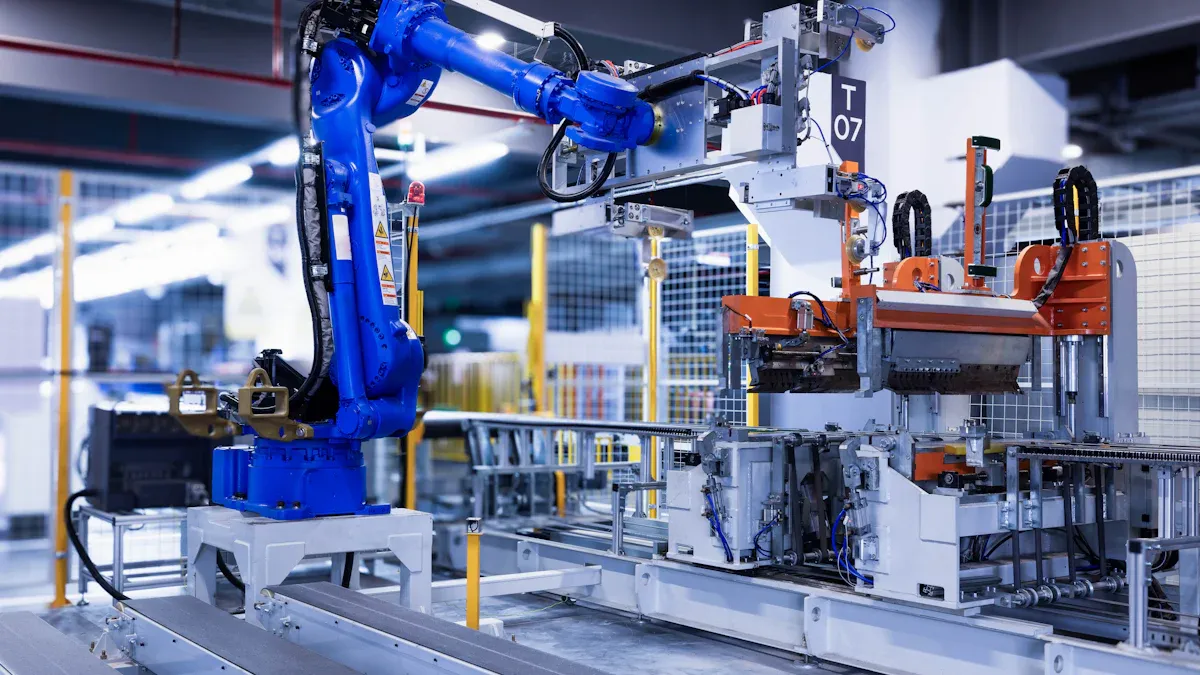
JUSDA’s global network demonstrates how AI automation transforms warehouse operations. The company integrates advanced technologies to optimize logistics, reduce costs, and improve accuracy. Warehouses now rely on smart systems and robotics to handle complex tasks, streamline workflows, and deliver consistent results.
Robotics and Smart Systems
JUSDA leverages robotics and smart systems to enhance warehouse efficiency. These technologies automate repetitive tasks, minimize errors, and allow employees to focus on strategic activities. The integration of robotics, IoT, and intelligent platforms such as JusLink creates a connected ecosystem across JUSDA’s facilities.
Core components of AI automation in warehouse operations include:
Machine learning enables systems to learn from data, supporting demand prediction and inventory optimization.
Deep learning utilizes neural networks for complex data processing, aiding product identification.
Robotics perform picking, packing, and sorting, equipped with sensors for navigation and safety.
Computer vision interprets visual data for quality control and inventory tracking.
IoT collects real-time data on goods’ status and location, optimizing processes.
JUSDA’s warehouses use robotic process automation to reduce manual tasks. Employees can focus on decision-making, which improves order processing speed and inventory accuracy. Machine learning analyzes historical data to forecast demand and allocate resources, helping organizations anticipate disruptions.
JUSDA’s JusLink platform integrates IoT and robotics, enabling real-time communication between autonomous mobile robots and warehouse systems. This dynamic task allocation and route adjustment respond to current warehouse conditions, reducing bottlenecks and enhancing productivity.
Recent advancements in robotics and smart systems include:
Autonomous mobile robots provide flexible movement of goods and adapt to changes in warehouse layouts.
IoT and sensor integration collect data for real-time monitoring and predictive maintenance.
AI-powered inventory management improves accuracy in stock management through demand forecasting and real-time tracking.
JUSDA’s global network connects sensors, devices, and machines across the supply chain, offering full visibility and instant control over warehouse operations.
Real-Time Data and Predictive Analytics
Real-time data plays a critical role in predictive analytics for warehouse management. JUSDA’s AI-driven inventory systems utilize real-time insights to enhance decision-making, reduce carrying costs, and streamline operations.
Real-time data enables:
Accurate forecasting of inventory demand, labor needs, equipment performance, and storage utilization.
Reduction of overstocking and idle inventory while preparing for demand spikes.
Dynamic labor allocation and space optimization.
Immediate responses to disruptions, improving overall warehouse efficiency.
JUSDA’s JusLink platform uses predictive analytics to forecast demand at granular levels. The system incorporates hyperlocal data for precise inventory management and continuously learns from real-time inputs to enable timely adjustments.
Description | |
|---|---|
Forecasting Accuracy | Enhanced ability to predict demand accurately, leading to better inventory management. |
Inventory Optimization | Reduction in excess stock and improved stock levels through data-driven insights. |
Risk Management | Proactive identification of potential disruptions, allowing for timely adjustments. |
Operational Efficiency | Streamlined processes resulting in faster deliveries and improved customer satisfaction. |
Stronger predictions lead to faster deliveries and accurate order fulfillment. JUSDA’s approach ensures consistent meeting of delivery windows, which enhances customer loyalty.
AI automation in JUSDA’s warehouses supports dynamic management and total control over global supply chain dynamics. The integration of JusLink and advanced analytics empowers organizations to optimize resources, anticipate risks, and maintain high service standards.
JUSDA’s Intelligent Solutions
JusLink AI Capabilities
JUSDA’s JusLink platform stands out in the logistics industry with its advanced AI-driven tools and seamless integration capabilities. JusLink transforms supply chain management by connecting ERP and SAP systems directly with production schedules. This integration enables real-time logistics synchronization, which improves operational efficiency and responsiveness.
JusLink’s unique features include:
C2M2C advantage, which creates an end-to-end supply chain platform from component to manufacturer to consumer.
Seamless integration with enterprise resource planning systems, allowing immediate updates and adjustments.
Zero-redundancy inventory management, which optimizes stock levels and reduces waste.
A three-layer ecosystem, consisting of a digital backbone (Sky Network), vertical expertise (Vertical Network), and localized hubs (Ground Network).
The platform’s AI capabilities provide enhanced visibility and control across the supply chain. JusLink uses machine learning and predictive analytics to forecast demand, optimize replenishment, and manage risks. The system supports dynamic inventory allocation and real-time monitoring, which helps organizations respond quickly to market changes.
Capability | Description |
|---|---|
Integration with ERP/SAP systems | Seamless integration with production schedules for enhanced operational efficiency. |
Real-time logistics synchronization | Enables immediate updates and adjustments in logistics, improving responsiveness and accuracy. |
Zero-redundancy inventory | Achieves efficient inventory management from Component to Manufacturer to Consumer (C2M2C). |
AI-driven control | Utilizes AI for enhanced visibility and control across the supply chain. |
JUSDA’s collaboration with leading manufacturers demonstrates the effectiveness of JusLink’s AI automation. For example, Chinese manufacturers expanding globally have adopted JUSDA’s Supply Chain Management Collaboration Platform. This platform uses AI and blockchain to standardize operations, improve transparency, and reduce manual handling. Manufacturers benefit from real-time lifecycle management, efficient global procurement, and streamlined customs processes. The platform’s success is evident in its widespread adoption and the improved efficiency reported by users.
JusLink’s AI-powered control tower enables proactive risk management and rapid response to disruptions, supporting uninterrupted supply chain operations.
Warehouse Network and Value-Added Services
JUSDA operates a vast global warehouse network that supports efficient logistics and supply chain management. The company manages 60 logistics centers worldwide, covering 2 million square meters of warehouse space. This extensive network includes over 100 cross-border transportation centers and more than 1,000 multi-modal transportation routes.
JUSDA’s warehouse network provides:
Transportation services for over 3,000 renowned brands and 100+ manufacturing units of Foxconn.
A one-stop supply chain platform for e-commerce and cross-border e-commerce, integrating domestic and international resources.
Value-added services such as picking, packing, labeling, kitting, switch doc, and repacking.
Advanced inventory management systems like eVMI and JusLink for real-time tracking and control.
Clean room facilities that meet stringent environmental health and safety standards.
JUSDA’s value-added services enhance operational efficiency and customer satisfaction. The company’s multilingual capabilities and close relationships with customs authorities ensure smooth cross-border operations. Clients benefit from tailored solutions that address industry-specific needs, including electronics, automotive, and consumer goods.
JUSDA’s global warehouse network and integrated value-added services provide clients with transparency, control, and flexibility, supporting their growth in international markets.
JUSDA’s intelligent solutions, powered by JusLink and a robust warehouse network, enable organizations to optimize supply chain operations, reduce costs, and maintain high service standards. The company’s commitment to innovation and efficiency positions it as a leader in AI automation for global logistics.
Benefits of AI Automation
Efficiency and Cost Savings
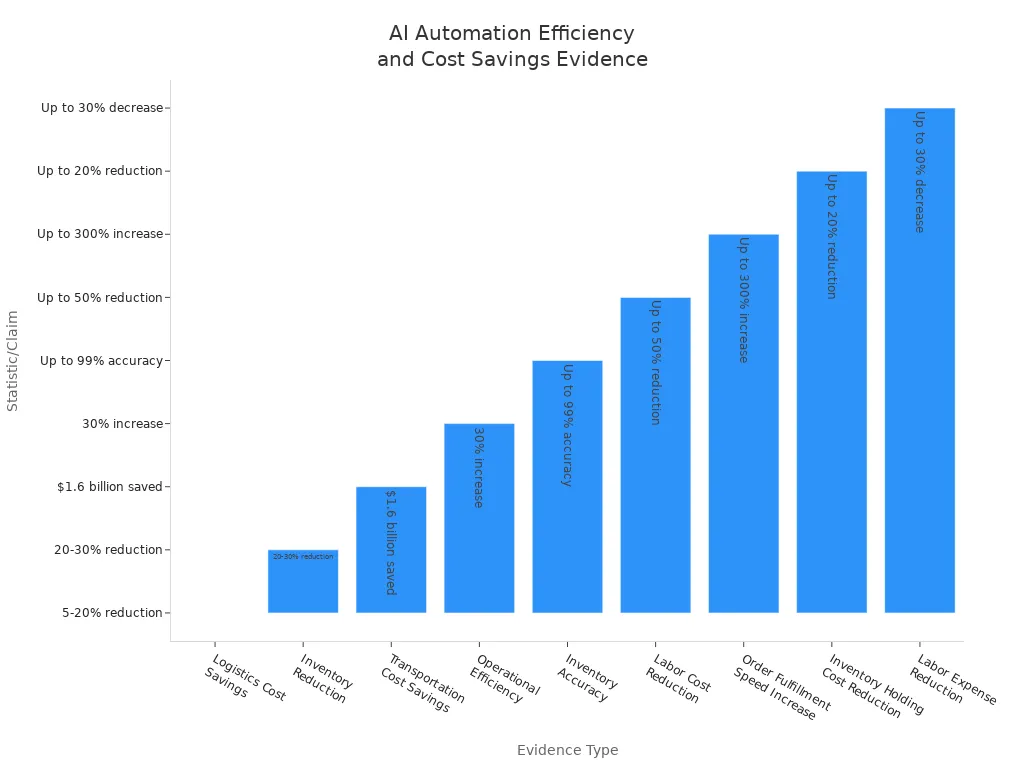
AI automation delivers measurable improvements in warehouse efficiency and cost management. JUSDA’s intelligent solutions use advanced analytics and robotics to streamline operations, reduce manual labor, and optimize inventory. Companies experience smarter demand forecasting, which allows them to predict supply and demand with greater accuracy. Real-time data enables optimized inventory management, automating reorder processes and minimizing excess stock. Faster and more accurate order fulfillment becomes possible as AI coordinates the entire process, from picking to shipping.
JUSDA’s clients benefit from predictive maintenance, which identifies machinery issues before they escalate. This approach improves reliability and reduces downtime. Robotics and warehouse automation handle repetitive tasks efficiently, freeing employees to focus on higher-value activities. Optimized workflows and route planning further enhance operational performance.
Evidence Type | Statistic/Claim |
|---|---|
Logistics Cost Savings | 5-20% reduction in logistics costs noted by McKinsey |
Inventory Reduction | 20-30% reduction in inventory |
Transportation Cost Savings | $1.6 billion saved by Amazon in logistics costs |
Operational Efficiency | 30% increase reported by DHL after using robots |
Inventory Accuracy | Up to 99% accuracy with AI vs. 90-95% in traditional |
Labor Cost Reduction | Up to 50% reduction in labor costs |
Order Fulfillment Speed Increase | Up to 300% increase in order fulfillment speed |
Inventory Holding Cost Reduction | Up to 20% reduction in holding costs |
Labor Expense Reduction | Up to 30% decrease in labor expenses |
Safety and Sustainability
JUSDA’s AI-driven warehouse solutions also promote safer and more sustainable operations. Battery-powered automated guided vehicles (AGVs) replace traditional fuel-powered forklifts, reducing greenhouse gas emissions. Route optimization ensures AGVs move goods using the shortest paths, which decreases energy consumption and operational time.
Robotic palletizers and automated forklifts handle heavy lifting, reducing the risk of back and shoulder injuries for workers. These vehicles are programmed to avoid collisions, minimizing accident risks in busy warehouse environments. Real-time monitoring systems detect unsafe conditions and alert operators, preventing incidents before they occur.
Smart inventory management helps minimize waste in packaging and materials, supporting environmental responsibility. Goods-to-person systems allow employees to work at ergonomically sound heights, improving comfort and efficiency. By streamlining routes and processes, JUSDA’s solutions contribute to lower carbon emissions and a safer workplace.
Overcoming Barriers
Workforce Adaptation and Training
JUSDA recognizes that workforce adaptation is essential for successful AI automation in warehousing. Employees must learn new skills and adjust to digital workflows. The company invests in hands-on training, allowing staff to work directly with advanced tools and robotics. This practical approach increases skill retention and motivation. JUSDA gradually introduces digital tools into daily operations, helping employees build confidence and familiarity. The organization promotes a culture of continuous learning, encouraging staff to pursue ongoing development and adapt to technological changes.
Hands-on training with real tools boosts employee engagement.
Gradual integration of digital tools fosters confidence.
Continuous learning opportunities support skill growth and adaptability.
JUSDA’s commitment to workforce development ensures that employees remain effective and motivated as automation transforms warehouse operations.
Integration and Change Management
Integrating AI automation with existing warehouse systems presents several challenges. JUSDA addresses these barriers by deploying robust IT infrastructure and real-time analytics tools. The company connects new automation platforms with legacy warehouse management systems (WMS) and enterprise resource planning (ERP) solutions, requiring significant technical effort. Data management becomes critical, as IoT devices, AI, and robotics generate large volumes of information. JUSDA’s infrastructure supports real-time data processing and analytics, enabling seamless operations.
Challenge/Strategy | Description |
|---|---|
Connecting new automation systems with legacy WMS or ERP platforms requires significant IT effort. | |
Data management | Handling large volumes of data from IoT devices, AI, and robotics needs robust infrastructure and real-time analytics tools. |
Employee readiness | Adapting the workforce to work with AI and robotics necessitates targeted training and change management. |
Extensive training on new systems helps staff understand features and reduces resistance. JUSDA offers sessions for employees to learn about automation tools, which enhances user effectiveness and acceptance.
Training sessions introduce new system features.
Support programs reduce resistance and improve adoption.
JUSDA’s strategic approach to integration and change management enables organizations to overcome barriers, ensuring smooth transitions to smart warehouse systems.
Future Trends in Smart Warehousing
AI-Driven Innovation
Smart warehousing continues to evolve as new technologies shape the industry. Companies like JUSDA lead this transformation by integrating advanced systems into their global networks. The next wave of innovation centers on artificial intelligence, cloud computing, and robotics. These technologies work together to create more intelligent and responsive warehouse environments.
Trend | Description |
|---|---|
Artificial Intelligence | AI enhances warehouse operations through smarter decision-making, optimizing efficiency, and enabling just-in-time inventory management. It also improves workforce management and quality control, creating a more intelligent ecosystem. |
Cloud Computing | Cloud-based Warehouse Management Systems (WMS) provide scalability and flexibility, essential for modern supply chains. They support omnichannel fulfillment and allow for remote management of operations. |
Automation & Robotics | The integration of automation and robotics addresses labor shortages and operational bottlenecks, improving efficiency and speed in warehouse operations. Smart wearables and IoT devices are also becoming increasingly prevalent. |
AI-powered algorithms now optimize picking routes and monitor equipment health. Cloud WMS platforms allow businesses to adjust operations based on demand and connect with e-commerce systems. Smart wearables help workers lift heavy objects and improve ergonomic practices. Autonomous mobile robots and collaborative robots (cobots) automate material movement and physically demanding tasks, making warehouses safer and more efficient. The global market for autonomous mobile robots is expected to grow rapidly, reflecting the increasing adoption of these solutions.
Evolving Role of Human Workers
As AI automation becomes more common, the role of human workers in warehouses changes. By 2030, warehouse teams will focus on exception handling, quality control, and strategic oversight. AI and robots will manage routine and repetitive tasks. Workers will need to develop new skills to collaborate with advanced systems.
Employees will shift from repetitive tasks to strategic roles that use human judgment.
New career paths, such as AI trainers and robotics coordinators, will emerge.
Most industry leaders expect to adopt intralogistics solutions by 2026, changing workforce requirements.
"At Cyngn, we believe the true promise of this technology lies in collaboration, reshaping workforce dynamics in measurable ways," said Cyngn CEO, Lior Tal.
Companies invest in workforce development to help employees gain skills for working with AI. They design automation to complement human strengths and communicate openly about how technology will enhance jobs. This approach ensures that people and machines work together for greater efficiency and innovation.
AI automation and smart systems, led by innovators like JUSDA, continue to transform logistics and supply chain efficiency. Companies that adopt intelligent solutions gain a competitive edge and deliver customer-focused results. Industry forecasts highlight several trends:
The global e-commerce boom drives logistics providers to innovate for faster delivery.
Smart systems create scalable, cost-effective solutions.
AI-driven demand forecasting increases fill rates and operational efficiency.
Organizations should assess their readiness for AI automation. Ongoing innovation will shape the future of global logistics.

JUSDA Solutions
To provide you with professional solutions and quotations.
FAQ
What types of warehousing services does JUSDA offer?
JUSDA provides general storage, bonded warehouses, distribution centers, and finished goods storage. The company also offers clean room facilities that meet strict environmental health and safety standards.
How does JUSDA ensure inventory transparency and control?
JUSDA uses advanced management systems like eVMI and JusLink. These platforms enable real-time inventory tracking, giving clients full visibility and control over their stock.
What value-added services are available in JUSDA warehouses?
Clients benefit from picking, packing, labeling, kitting, switch doc, and repacking. JUSDA also provides software upgrades and rework services to optimize warehouse operations.
How does JusLink’s AI solution improve supply chain management?
JusLink’s AI solution offers demand forecasting, risk monitoring, and automated replenishment. The platform uses machine learning and predictive analytics to enhance decision-making and operational efficiency.
Where are JUSDA’s warehouses located globally?
JUSDA operates warehouses in China, Hong Kong, Taiwan, Japan, Vietnam, India, the United States, Mexico, and several regions in Europe and Southeast Asia. The network supports international logistics and supply chain needs.
See Also
Transforming Logistics: The Impact of AI on Supply Chains
Understanding Robotic Automation: Enhancing Efficiency in Warehousing
Exploring High-Tech Manufacturing: Advantages of Automation in Warehouses
Boosting Warehouse Productivity Through Advanced Logistics Robotics
Revolutionizing Supply Chains: Innovations in AI for Efficiency