Why AI Logistics Matters for the Next Generation of Supply Chain Leaders for demand forecasting and inventory optimization


AI logistics has become essential for future supply chain leaders who focus on demand forecasting and inventory optimization. The global AI in supply chain market reached $5.05 billion in 2023 and is expected to hit $51.12 billion by 2030. Over 60% of businesses in logistics now explore or use AI.
Key Finding | Description |
|---|---|
Strategic Differentiator | Organizations that view AI as a strategic differentiator can create substantial competitive advantages. |
Reliable Data | Successful AI implementation relies on having reliable data and clear objectives. |
Change in Processes | A willingness to adapt traditional processes is crucial for leveraging AI effectively. |
AI logistics transforms supply chain management, enabling leaders to make real-time, data-driven decisions and improve operational success.
Key Takeaways
AI logistics is crucial for supply chain leaders to enhance demand forecasting and inventory optimization.
Companies using AI can improve forecasting accuracy by 10-50%, leading to better inventory management.
Real-time data processing helps organizations respond quickly to market changes and reduce costs.
Investing in AI tools like JUSDA's JusLink can streamline operations and improve overall supply chain efficiency.
Embracing digital transformation and AI prepares businesses for future disruptions and enhances resilience.
AI Logistics and Modern Supply Chains
Industry Challenges
Modern supply chain management faces a landscape filled with complexity and risk. Companies now operate in a world where disruptions can cost an average of $1.5 million per day. Several factors contribute to these challenges:
Climate change leads to more frequent natural disasters, disrupting logistics and supply operations.
Rising transportation costs put pressure on global supply networks.
Cybersecurity threats have surged, with attacks on supply chains increasing by 431% between 2021 and 2023.
Regulatory compliance grows more complex as companies expand into new markets.
Sustainability requirements push organizations to adopt eco-friendly logistics practices.
Labor shortages affect the availability of skilled workers across the supply chain.
Consumer demands for transparency and customization continue to rise.
Fragmented systems and limited visibility make early risk detection difficult. Disconnected IT systems create data silos, which limit decision-making and coordination. Freight constraints and infrastructure delays cause delivery issues and increase costs. Poor coordination leads to inventory imbalances, affecting both capital and efficiency. According to ABI Research, the supply chain risk management market is projected to grow at a 35% CAGR, reaching $5 billion by 2032. Companies are investing in advanced tools to address ongoing disruptions, raw material shortages, and geopolitical instability.
Evolving Customer Expectations
Customer expectations have shifted dramatically in recent years. Consumers now demand rapid and efficient delivery solutions, influenced by the "Amazon effect." They want greater transparency and control over their delivery options. Businesses must balance speed with cost-effectiveness, offering choices such as same-day delivery or eco-friendly alternatives. AI-powered tracking systems play a key role in enhancing transparency and building customer confidence. These trends drive companies to focus on enhancing supply chains and logistics performance.
JUSDA stands out as a global leader in innovative supply chain solutions. The company leverages AI and advanced digital platforms to help clients navigate these challenges. JUSDA’s expertise in logistics and supply chain management enables organizations to adapt quickly and meet evolving market demands.
Demand Forecasting with Artificial Intelligence in Logistics

AI-Driven Forecasting
Artificial intelligence in logistics has transformed how companies predict demand. Traditional forecasting methods often rely on historical data and manual analysis. These approaches struggle to keep up with the speed and complexity of modern supply chain operations. AI in supply chain operations uses advanced algorithms to process large datasets in real time. This capability allows organizations to identify patterns and trends that humans might miss.
Companies that implement AI-driven forecasting see significant improvements in accuracy and responsiveness.
Many organizations report a 10-15% increase in forecasting accuracy, with some achieving up to 50% improvement.
AI enables real-time data processing, which leads to more precise predictions than traditional methods.
According to McKinsey, businesses using AI in supply chain operations have reduced inventory costs by 20-50% while increasing forecasting accuracy by 10-15%.
These improvements help companies avoid costly stockouts and overstocking. They also support better planning and resource allocation across the supply chain.
JusLink’s Predictive Tools
JusLink, JUSDA’s intelligent supply chain platform, brings the power of artificial intelligence in logistics to the forefront. The platform integrates AI in supply chain operations to deliver accurate sales forecasts and dynamic replenishment strategies. JusLink’s predictive tools analyze historical sales data, market trends, and external factors to generate actionable insights.
Method | Error Reduction (%) |
|---|---|
Traditional Methods | 0 |
AI-Powered Systems | 20-50 |
JusLink’s AI-powered systems automate the reordering process. This automation minimizes the risk of stockouts and reduces excess inventory. The platform’s agility allows businesses to respond quickly to changes in demand. AI in supply chain operations also supports real-time monitoring, enabling supply chain leaders to make informed decisions faster.
AI-driven forecasting with JusLink reduces errors by 20-50% compared to traditional methods.
Automated processes help maintain optimal inventory levels and improve supply chain efficiency.
JusLink’s predictive tools enhance visibility and control across the entire supply chain.
Case Study: JUSDA in Action
JUSDA’s commitment to artificial intelligence in logistics delivers measurable results for its clients. One example involves a leading manufacturer facing challenges with global procurement and inventory management. The company adopted JUSDA’s AI-powered supply chain collaboration platform, integrating JusLink’s predictive tools.
AI-based forecasting improved demand prediction accuracy by over 20% compared to previous methods.
Enhanced accuracy led to better inventory management and increased operational efficiency.
The platform provided real-time transparency, allowing the client to respond swiftly to market changes.
JUSDA’s approach to artificial intelligence in logistics empowers organizations to optimize supply chain operations. Clients benefit from improved forecasting, reduced costs, and greater agility in a competitive market.
Inventory Optimization and Smart Warehousing
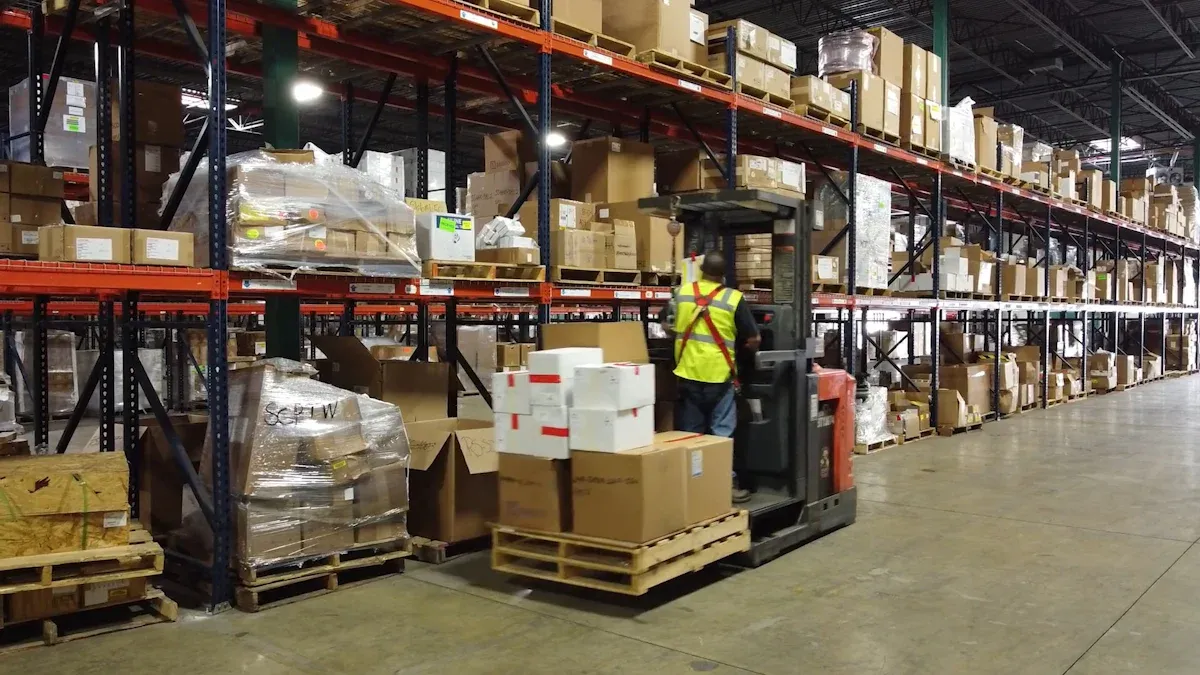
JUSDA Warehouse Solutions
JUSDA delivers advanced warehouse solutions that drive supply chain optimization for global enterprises. The company operates over 2,500,000 square meters of warehouse space across multiple regions, including China, Vietnam, Japan, and the United States. JUSDA’s facilities support general storage, bonded warehouses, distribution centers, and finished goods storage. The integration of eVMI and JusLink enables supply chain automation and real-time insights into inventory status. These systems provide real-time visibility and supply chain visibility, allowing businesses to monitor inventory levels and shipment tracking across all nodes.
JUSDA’s warehouse network supports industries such as electronics, automotive, and fast-moving consumer goods (FMCG). The company’s clean room facilities meet strict environmental standards, ensuring product quality for technology brands. JUSDA’s multilingual staff and close relationships with customs authorities streamline logistics and supply chain operations. The company’s value-added services, including picking, packing, labeling, and kitting, enhance supply chain optimization and logistics efficiency.
Real-Time Inventory Control
JUSDA’s integration of eVMI and JusLink delivers real-time inventory control, transforming supply chain management. These platforms use AI to provide real-time insights and tracking, enabling supply chain leaders to respond quickly to demand changes. Automated replenishment and AI-driven tracking minimize human error and reduce stock discrepancies. Real-time visibility helps identify inventory imbalances and supports supply chain optimization.
JusLink’s AI capabilities recommend ideal stock levels based on demand patterns, ensuring products remain available and reducing carrying costs. Automated systems align inventory with actual customer demand, improving order fulfillment rates and operational efficiency.
Impact Area | Description |
|---|---|
Stock Levels | AI dynamically recommends stock levels tailored to demand, ensuring availability. |
Shrinkage | Automated replenishment reduces human error, minimizing stock discrepancies and losses. |
Order Fulfillment Rates | Aligns inventory with actual customer demand, improving fulfillment rates and efficiency. |
JUSDA’s real-time insights and supply chain automation support shipment tracking and inventory management across global operations. These capabilities help companies maintain optimal stock levels, prevent overstocking, and reduce potential losses.
Value-Added Services
JUSDA enhances supply chain optimization with a comprehensive suite of value-added services. The company offers picking, packing, labeling, kitting, switch doc, and repacking, supporting logistics and supply chain automation. Software upgrades and rework services optimize warehouse operations and improve product quality. JUSDA’s VMI services enable strategic collaboration between suppliers and buyers, leveraging real-time insights and tracking for efficient inventory management.
Industries such as electronics, automotive, and FMCG benefit from JUSDA’s AI-driven inventory optimization. Companies experience improved demand forecasting, reduced stockouts, and enhanced operational efficiency. Optimized stock levels and availability lead to better customer satisfaction and streamlined logistics.
Benefit | Description |
|---|---|
Improved demand forecasting | Analyzing sales data to predict future demand, leading to better inventory levels. |
Reduced stockouts | Ensuring products are available when needed, enhancing customer satisfaction. |
Enhanced operational efficiency | Streamlining inventory management tasks, reducing labor costs, and increasing overall efficiency. |
Better customer satisfaction | Meeting customer needs effectively through optimized stock levels and availability. |
JUSDA’s supply chain automation and AI-driven tracking deliver real-time visibility and supply chain visibility, supporting shipment tracking and logistics optimization. These solutions empower supply chain leaders to achieve greater efficiency and resilience in a competitive market.
Benefits for Supply Chain Leaders
Improved Decision-Making
Supply chain leaders gain sharper insights and make smarter supply chain decisions with JUSDA’s artificial intelligence solutions. Digitalization and supply chain automation improve visibility, transparency, and agility. Leaders use AI to extract and validate data from logistics documents with 98% accuracy, reducing manual intervention by 70%. AI enables trend and predictive analysis, helping anticipate demand and optimize inventory. These capabilities drive proactive decision-making and support transforming supply chain operations.
AI extracts and validates logistics data with high accuracy.
Digitalization increases transparency and agility in supply chain management.
Predictive analysis helps leaders anticipate demand and optimize inventory.
Efficiency and Cost Savings
JUSDA’s AI-driven supply chain automation delivers measurable improvements in supply chain efficiency and cost savings. The following table compares AI logistics benefits with traditional supply chain management approaches:
Aspect | AI Logistics Benefits | Traditional Supply Chain Management |
|---|---|---|
Cost Savings | Higher costs due to inefficiencies | |
Efficiency Improvement | 10-20% improvement in forecasting accuracy | Basic prediction models often fail |
Operational Cost Reduction | Up to 30% savings on operational costs | No significant savings reported |
Real-Time Adjustments | AI adjusts routes in real-time | Static routing often leads to delays |
Sustainability | Reduces empty miles and fuel consumption | Less focus on sustainability |
JUSDA’s solutions streamline operations and automate sourcing events. Predictive cost optimization leads to significant reductions in cycle times and costs. AI logistics also increases transparency and traceability, supporting compliance and building trust.
Resilience and Risk Management
AI strengthens supply chain resilience and risk management. JUSDA’s supplier risk assessment models identify high-risk vendors, improving decision-making and operational efficiency. AI-driven data analysis detects anomalies early, such as fuel loss, enabling corrective actions. Predictive maintenance anticipates equipment needs, minimizing risks of failures. JUSDA’s AI solutions provide end-to-end visibility, helping leaders respond quickly to disruptions and maintain supply chain stability.
AI anticipates maintenance needs and minimizes equipment risks.
Supplier risk models improve operational efficiency.
Early anomaly detection enables proactive corrective actions.
JUSDA’s AI solutions deliver hyper-accurate demand forecasting and inventory optimization. Intelligent supplier selection and relationship management enhance risk mitigation and collaboration. Automation streamlines operations, reduces costs, and increases transparency across the supply chain.
Future Trends in AI Logistics
Embracing Digital Transformation
Supply chain management continues to evolve as companies embrace digital transformation. Organizations define clear objectives for digital upgrades, aiming for lasting improvements in logistics and supply chain automation. Leaders use digital solutions to reduce costs and improve profitability. Machine learning and advanced analytics enhance service quality and communication. Companies like Crowley and DSV Global Transport and Logistics have improved agility and competitive advantage by integrating change management into their culture. Real-time data access strengthens decision-making and increases employee engagement. JusLink’s AI capabilities support these best practices, providing predictive analytics, real-time visibility, and supply chain automation for future-ready operations.
Tip: Establishing a culture of continuous improvement and investing in digital tools ensures organizations remain agile and responsive to market changes.
Preparing for Disruptions
The future of AI in supply chains centers on resilience and adaptability. Organizations use artificial intelligence to prepare for disruptions by improving supply chain transparency and reducing information asymmetry. AI-driven forecasting and process automation enhance inventory control and logistics coordination. Companies assess partner risk and diversify supply networks, reducing dependence on single suppliers. Real-time monitoring and predictive analytics help organizations respond quickly to unexpected events. JusLink’s intelligent agents and risk control tower provide early warnings, supporting proactive risk management and supply chain stability.
Automation and intelligent forecasting improve logistics coordination.
Transparency builds trust among supply chain partners.
Steps to Adopt AI
Supply chain leaders must follow a structured approach to adopt AI logistics successfully. Begin with a comprehensive data assessment to evaluate quality and completeness. Implement data governance processes to maintain data integrity. Quantify potential value through financial modeling, considering direct and indirect impacts. Conduct stakeholder mapping to identify resistors and champions. Focus on systems innovation to optimize internal processes and supply chain routes. Ensure sustainability by demanding similar commitments from external partners. Prepare technical infrastructure by evaluating existing systems against AI requirements. Address talent development by enhancing data science capabilities and analytical literacy. Establish a governance framework for ethical considerations and decision rights. Develop an implementation roadmap that prioritizes use cases based on value potential.
Challenge | Solution |
|---|---|
Start with well-defined projects for scalability and return on investment. | |
Legacy infrastructure | Modernize platforms and use API-driven integration. |
Lack of regulatory frameworks | Develop internal governance models for human-AI collaboration. |
Insufficient technical capabilities | Invest in workforce transformation and build in-house expertise. |
Supply chain automation and digital transformation drive future success in logistics. Leaders who invest in AI and automation position their organizations for growth, resilience, and competitive advantage.
AI logistics has transformed supply chain management by enabling accurate demand forecasting and proactive inventory optimization.
AI systems analyze trends, seasonality, and purchasing behavior for precise planning.
Leading companies achieve faster response times and optimized stock levels.
Real-time demand signals help reduce costs and improve efficiency.
Early adopters of AI logistics gain lower logistics costs and improved inventory levels, while those who delay face talent shortages and competitive risks.
Supply chain leaders should invest in AI skills, assess business applications, and explore JUSDA and JusLink solutions to stay ahead.
FAQ
What industries benefit most from JUSDA’s AI logistics solutions?
JUSDA’s AI logistics solutions serve electronics, automotive, FMCG, new energy, medical health, heavy equipment, and bulk materials industries. These sectors gain improved demand forecasting, inventory optimization, and supply chain visibility.
How does JusLink improve demand forecasting accuracy?
JusLink uses AI-driven analytics to process historical sales data and market trends. The platform delivers precise demand forecasts, helping companies reduce stockouts and excess inventory.
What value-added services does JUSDA offer in its warehouses?
JUSDA provides picking, packing, labeling, kitting, switch doc, repacking, software upgrades, and rework services. These services support efficient inventory management and enhance product quality.
How does JUSDA ensure real-time inventory control?
JUSDA integrates eVMI and JusLink systems for real-time inventory tracking. These platforms use AI to monitor stock levels, automate replenishment, and provide instant visibility across the supply chain.
Can JUSDA’s AI solutions help manage supply chain risks?
JUSDA’s AI solutions include risk control towers and intelligent agents. These tools monitor supply chain risks, provide early warnings, and support proactive decision-making for greater resilience.
See Also
Transforming Logistics: The Future of AI Supply Chains
Exploring AI's Hidden Power in Modern Logistics
Enhancing Supply Chain Performance Through AI Innovations
Discovering AI's Role in Shaping Future Supply Chains
Innovative Supply Chains: Redefining the Logistics Landscape