How AI Route Planning Improves Delivery Times and Saves Fuel in 2025 While Improving Customer Satisfaction Metrics

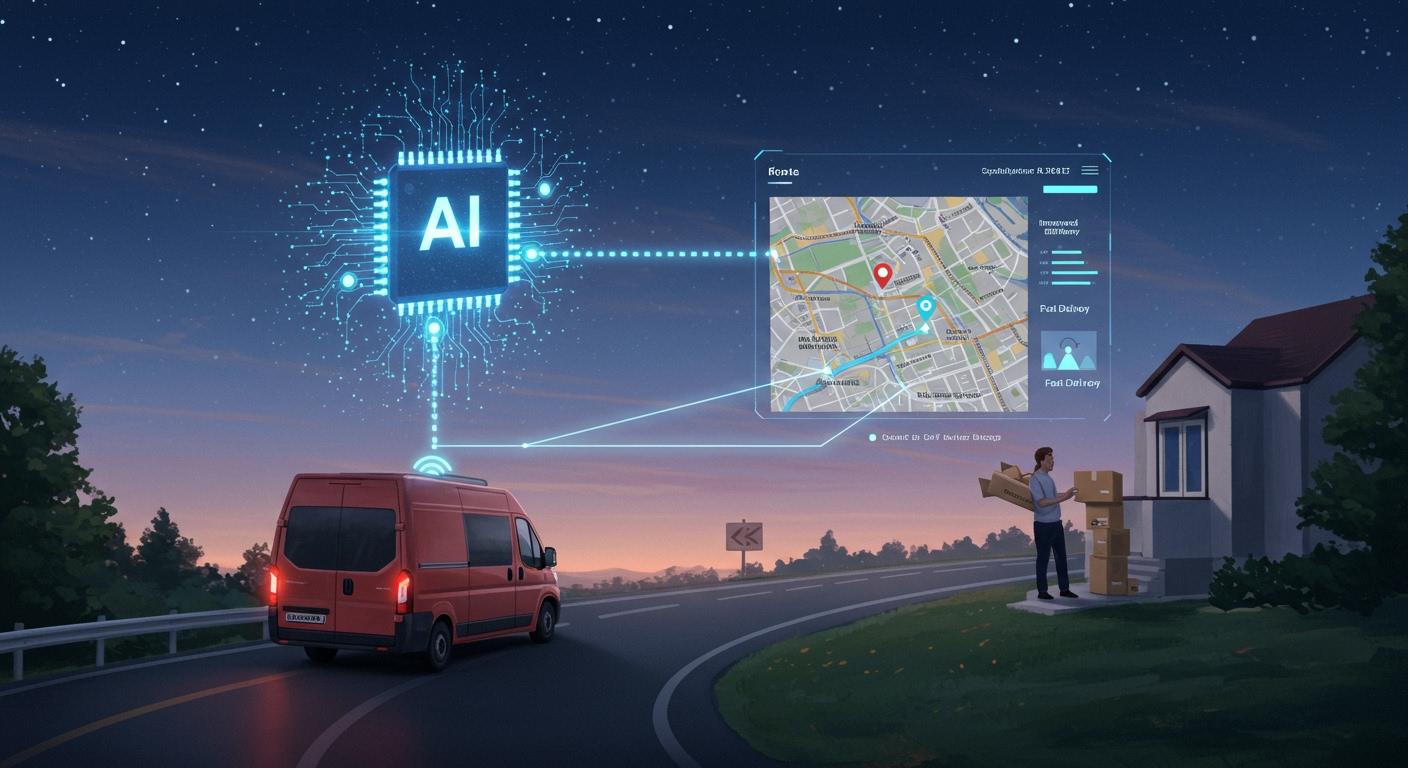
AI route optimization changes delivery operations in 2025. Companies use smart systems to create faster and more efficient delivery routes. JUSDA and its JusLink platform lead this transformation for global supply chains. Drivers reach customers on time and save fuel. The latest data shows a 15% reduction in fuel costs and a 35% improvement in on-time arrivals.
Metric | Improvement |
|---|---|
Fuel Cost Reduction | 15% |
On-Time Arrival Improvement | 35% |
JUSDA’s technology helps businesses boost customer satisfaction and reduce expenses.
Key Takeaways
AI route optimization significantly improves delivery speed, with companies reporting time reductions of 25-30%. This allows businesses to serve more customers efficiently.
Using real-time data helps logistics teams avoid traffic and weather issues, leading to a 15% reduction in fuel costs. This not only saves money but also supports sustainability efforts.
Enhanced customer satisfaction comes from accurate delivery times and live tracking features. Customers appreciate knowing where their packages are, which builds trust.
Companies should assess their current delivery operations to identify inefficiencies. This step is crucial before implementing AI solutions for better results.
Choosing the right AI platform is essential. Look for features that improve delivery times, reduce costs, and provide real-time tracking to enhance overall performance.
Traditional Route Planning Challenges
Inefficiency Issues
Traditional route planning methods create several obstacles for logistics companies. Many organizations still rely on outdated technologies and manual processes. These approaches often result in missed delivery windows, excess fuel consumption, and underutilized vehicle capacity. Poor customer satisfaction frequently follows.
Outdated technologies
Missed delivery windows
Excess fuel consumption
Underutilized capacity
Poor customer satisfaction
Inefficient route planning increases logistics costs, which can consume up to 8.7% of the national GDP. Failure to adjust to real-time obstacles leads to delays and customer complaints.
Fuel Consumption
Fuel efficiency is heavily influenced by the route a driver takes. It’s not just about the distance between two points, but also about the conditions along the way. Traffic congestion, for instance, forces vehicles to idle in place or move slowly, burning more fuel than if they were traveling at a steady pace.
Traditional route planning methods often lead to increased fuel consumption due to inefficiencies in route selection and lack of real-time data. These methods typically rely on outdated tools such as spreadsheets and hand-drawn maps, which cannot adapt to dynamic conditions like traffic congestion or road closures.
Traditional route planning typically involves setting fixed routes ahead of time. However, optimised routes are dynamic and adjust in real-time based on changing conditions. This is where technology plays a crucial role.
Many fleet operations still rely on manual or outdated route planning methods, leading to inefficiencies, increased costs, and operational delays. Without real-time data and AI-powered decision-making, dispatchers and drivers struggle to keep up with shifting traffic conditions, last-minute job changes, and unpredictable variables that impact fleet performance.
Customer Experience
Key characteristics of traditional route planning include static routes based on fixed inputs, no re-optimization without manual input, high dependency on dispatchers, and little flexibility in adapting to same-day changes.
Logistics companies face significant hurdles such as traffic congestion and weather changes that disrupt static route plans, leading to delays and increased costs, ultimately impacting customer satisfaction.
Traditional route planning challenges lead to inefficiencies, delays, and customer dissatisfaction. Customers expect timely deliveries and accurate ETAs, and failing to meet these expectations can result in frustration and loss of trust.
Companies that want to improve delivery performance and reduce costs now look to AI route optimization as a solution to these persistent challenges.
AI Route Optimization Solutions

Real-Time Data
AI route optimization relies on real-time data to improve delivery efficiency. Modern systems collect live information from GPS, traffic databases, and weather forecasts. This data gives logistics teams a current view of road conditions. When a traffic jam occurs, the AI quickly finds alternative routes to avoid delays. Delivery vehicles stay on the most efficient paths, which saves time and reduces fuel use.
Description | |
|---|---|
Traffic Data | Identifies roadblocks, accidents, and congested areas, allowing for immediate rerouting to minimize delays. |
Weather Data | Allows for planning around adverse conditions, enabling adjustments to avoid high-risk areas and improve safety. |
AI route optimization uses this continuous stream of information to keep deliveries on schedule. Companies see fewer delays and lower operational costs.
Predictive Analytics
Predictive analytics plays a key role in AI route optimization. These tools analyze historical and real-time data, such as weather, traffic, and port conditions, to find the best delivery routes. By forecasting conditions before they happen, companies can adjust routes to avoid problems.
AI-powered predictive analytics improves fuel efficiency and reduces delays.
Dynamic re-routing helps drivers avoid traffic and reach customers faster.
Anticipating disruptions leads to smoother logistics operations.
Description | |
|---|---|
Scikit-learn, XGBoost, TensorFlow | Libraries used to build models that forecast traffic delays and optimize routes. |
Time-series forecasting | Predicts peak-hour traffic and historical delivery trends to avoid congestion. |
Clustering algorithms | Groups delivery stops to segment routes for different drivers, enhancing last-mile delivery. |
Constraint-based optimization | Uses VRP solvers to create delivery sequences considering various constraints like road closures. |
Machine learning models learn from each delivery event. Over time, these algorithms get better at predicting bottlenecks and driver availability.
JusLink Capabilities
JusLink, JUSDA’s intelligent supply chain platform, stands out in the field of AI route optimization. The platform uses AI-driven tools for demand forecasting, predictive maintenance, and route planning. JusLink integrates cloud computing and big data analytics to provide real-time data access and operational flexibility.
Initiative | Impact on Delivery Performance |
|---|---|
AI-driven tools | Enhanced demand forecasting, predictive maintenance, and route optimization, leading to lower operational costs and faster delivery times. |
Cloud Computing Integration | Enabled real-time data access and operational flexibility, reducing bottlenecks and improving overall performance. |
Big Data Analytics | Provided insights into supplier performance and inventory management, minimizing disruptions and enhancing supplier collaboration. |
Sustainability Initiatives | Implemented eco-friendly strategies, such as carbon-neutral warehousing and electric vehicle fleets, reducing environmental footprint and aligning with global sustainability goals. |
International Trade Compliance | Streamlined cross-border logistics operations, ensuring compliance while maintaining operational flexibility. |
JusLink’s AI-powered solutions help companies respond quickly to changing conditions. The platform supports global supply chains by offering end-to-end visibility, risk management, and automated decision-making. Businesses using JusLink experience faster deliveries, reduced costs, and improved customer satisfaction.
Benefits of AI Route Optimization
Delivery Speed
AI route optimization transforms delivery speed for logistics companies. Automated route planning reduces scheduling time by up to 80%. Dynamic rerouting adapts to real-time traffic and weather, preventing delays from affecting the entire delivery schedule. Companies using these systems report delivery time improvements of 25–30%. The technology considers traffic, vehicle capacity, and delivery windows to create the most efficient routes.
Benefit | Description |
|---|---|
Automated Route Planning | Reduces planning time by 60-80%, allowing for faster delivery scheduling. |
Dynamic Rerouting | Adapts to real-time conditions, preventing delays from affecting schedules. |
Comprehensive Consideration | Considers traffic, vehicle capacity, and delivery windows for optimal routing. |
Companies utilizing AI route optimization report delivery time improvements of 25-30%.
AI systems enhance delivery speed by considering real-time traffic and weather, leading to quicker deliveries.
This results in improved customer satisfaction and the ability to complete more deliveries in a shorter time frame.
Fuel Savings
Fuel savings represent a major benefit for companies adopting AI route optimization. These systems analyze traffic patterns and weather to determine the most efficient routes, reducing unnecessary mileage and idle time. Companies typically achieve fuel savings of 15–20% within the first year. Some logistics providers have reported a 15% decrease in fuel consumption after implementation.
Companies using AI route optimization in 2025 typically achieve fuel savings of 15–20% within the first year.
Some logistics providers report a 15% decrease in fuel consumption within their first year.
A startup utilizing AI-powered distance matrix technology reported a 30% reduction in overall costs, which likely includes fuel savings.
AI route optimization also supports sustainability goals. A leading logistics provider achieved a 12% reduction in carbon emissions by integrating AI into their route optimization system. DHL’s AI initiative led to a 15% reduction in last-mile delivery costs and an 18% decrease in carbon emissions. Organizations report transportation cost reductions of up to 20% by using AI algorithms to optimize routes.
Customer Satisfaction
Customer satisfaction improves significantly with AI route optimization. Enhanced delivery accuracy and precise ETAs increase transparency and build trust. Live tracking features allow recipients to monitor package locations in real time, reducing the number of support calls about delivery status.
AI route optimization enhances delivery accuracy, leading to improved customer satisfaction.
Features like precise ETAs and live tracking increase transparency, which builds customer trust.
Reduced idle time contributes to reliability, further enhancing customer loyalty.
Fast and predictable deliveries foster customer loyalty.
Transparency reduces the number of inbound support calls regarding delivery status.
Leveraging machine learning and real-time data processing enhances logistical operations, leading to better customer experiences.
Reliable and fast deliveries serve as trust markers for customers. Studies show that 98% of consumers believe delivery impacts brand loyalty. A high on-time delivery rate is crucial for maintaining customer loyalty. Trust is essential, and faster shipping significantly enhances this trust. In fact, 84% of consumers are unlikely to return after a negative shipping experience.
Sharp Case Study
The Sharp case study demonstrates the real-world impact of AI route optimization. After implementing JUSDA’s JusLink platform, Sharp achieved measurable improvements across key logistics metrics.
Outcome | Improvement |
|---|---|
Fuel consumption | Dropped by 19% |
On-time deliveries | Increased from 82% to 94% |
Customer satisfaction | Increased by 17 points |
Fleet utilization | Rose by 15% |
Maintenance downtime | Dropped by 34% |
Emergency parts orders | Fell by 67% |
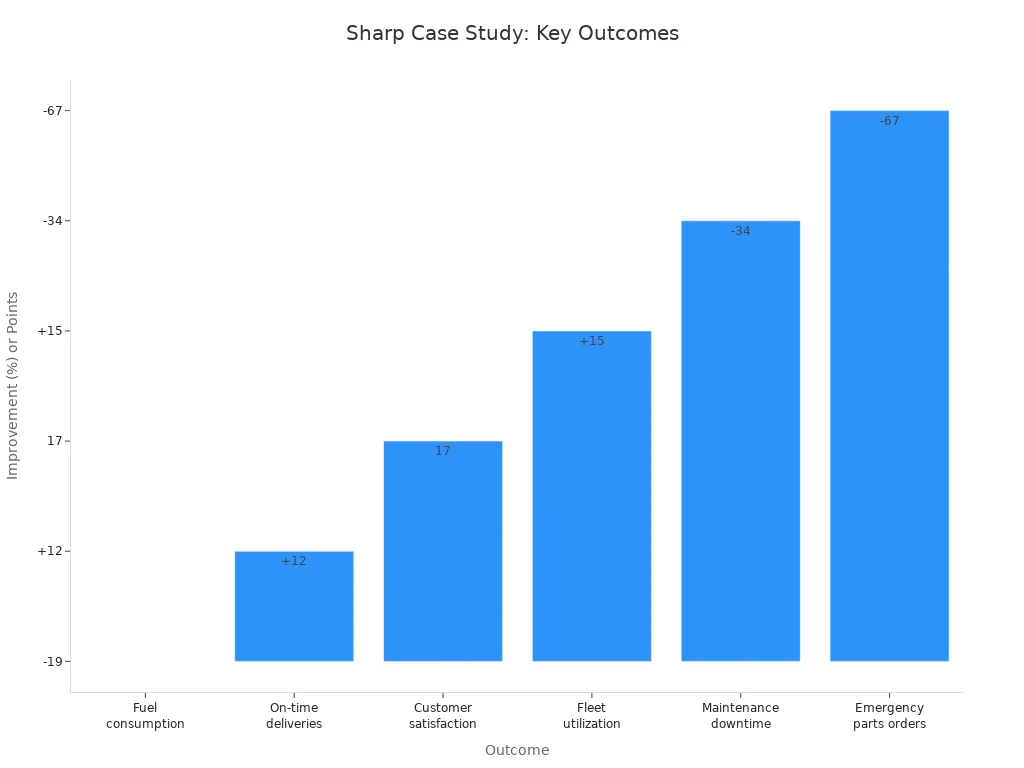
Sharp’s partnership with JUSDA led to a 19% reduction in fuel consumption and a 12-point increase in on-time deliveries. Customer satisfaction scores rose by 17 points. Fleet utilization improved, and maintenance downtime dropped by 34%. Emergency parts orders fell by 67%, showing the effectiveness of AI route optimization in streamlining operations and improving service quality.
Adoption Steps
Assess Operations
Companies should begin by evaluating their current delivery operations. A thorough assessment helps identify inefficiencies and areas for improvement. The process involves several key steps:
Analyze delivery times to find delays.
Examine distance traveled for excess mileage.
Track fuel consumption to uncover optimization opportunities.
Gather feedback from drivers and customers to improve routes.
Operational metrics also play a crucial role in determining readiness for AI route optimization. The following table outlines important metrics to review:
Metric | Description |
|---|---|
Latency | Measures end-to-end response times; should be minimized for better adoption. |
Uptime | Monitors system availability and recovery; should be maximized. |
Cost-per-inference | Represents the cost of each AI output; balance cost and quality. |
Throughput | Indicates tasks processed per unit time; ensures peak load handling. |
Scalability | Assesses how well the system manages increased workloads. |
Choose Solutions
Selecting the right solution requires careful consideration of business needs and technology capabilities. Companies should compare available platforms based on several criteria:
Criteria | Description |
|---|---|
Cost Efficiency | Reduces fuel and operational costs. |
Improved Delivery Times | Enhances customer satisfaction with quicker deliveries. |
Enhanced Visibility | Provides real-time tracking and updates. |
Sustainability | Reduces emissions and appeals to eco-conscious customers. |
Scalability | Adapts to business growth without major changes. |
Data-Driven Insights | Offers valuable operational performance data. |
Platforms like JusLink deliver features such as AI-powered ETA accuracy, live delivery tracking, and rapid route optimization. These capabilities support diverse routing scenarios and integrate with logistics workflows.
Implementation
Successful implementation depends on best practices and overcoming common challenges. Companies should:
Start with AI-driven solutions that integrate into existing operations.
Invest in data quality and security.
Partner with AI-driven logistics providers.
Train and upskill the workforce to use new tools.
Common challenges include initial investment, integration issues, and employee resistance. Addressing these early ensures smoother adoption.
Tip: Begin with simple AI solutions and expand as readiness increases. Clean, well-structured data maximizes AI effectiveness.
Measure Results
Measuring the impact of AI route optimization involves tracking key performance indicators and calculating return on investment (ROI). Companies should:
Define the business process to focus on, such as delivery or customer support.
Assess current costs, task volumes, and implementation expenses.
Estimate AI’s impact by calculating monthly savings, breakeven period, and cumulative profit.
The ROI formula is:
ROI = (Gain from Investment - Cost of Investment) / Cost of Investment × 100
For AI agents, this means:
AI Agent ROI = (Cost Savings + Revenue Gains - Total Implementation Costs) / Total Implementation Costs × 100
Tracking these metrics helps businesses understand the value and effectiveness of their AI route optimization efforts.
AI route optimization delivers measurable gains for logistics leaders. Companies report faster deliveries, lower fuel use, and higher customer satisfaction.
UPS saves 10 million gallons of fuel each year.
Maersk cuts fuel costs by 15%.
Walmart improves delivery speed by 25%.
JUSDA’s JusLink platform supports over 5,000 manufacturers and 1,000 global brands with AI, big data, and IoT. Adopting intelligent supply chain solutions ensures businesses stay competitive in a rapidly changing market.
JUSDA Solutions
To provide you with professional solutions and quotations.
FAQ
What is JusLink and how does it support AI route optimization?
JusLink is JUSDA’s intelligent supply chain platform. It uses AI-driven tools for demand forecasting, risk management, and route planning. JusLink integrates real-time data, cloud computing, and big data analytics to optimize delivery routes and improve operational efficiency.
How does AI route optimization improve delivery speed?
AI route optimization uses real-time traffic and weather data to create efficient delivery routes. The system adapts quickly to changing conditions. Companies report delivery time improvements of 25–30% after implementation.
What fuel savings can companies expect with AI route optimization?
Companies using AI route optimization typically achieve fuel savings of 15–20% within the first year. The system reduces unnecessary mileage and idle time by selecting the most efficient routes.
How does JusLink enhance customer satisfaction?
JusLink provides accurate ETAs and live tracking features. Customers can monitor deliveries in real time. These features increase transparency and build trust, leading to higher satisfaction scores.
Can JusLink help manage supply chain risks?
JusLink’s Risk Control Tower monitors supply chain risks in real time. The system provides early warnings and response solutions. This helps companies reduce disruptions and maintain stable operations.
See Also
Transforming Future Logistics Through AI Supply Chain Solutions
Enhancing Operational Efficiency With AI Supply Chain Advances
Exploring AI's Hidden Capabilities Within Logistics Management
Revolutionizing Logistics Efficiency With JUSDA's Optimization Strategies
Innovative Transport Solutions: Redefining Efficiency With Intelligence