AI-Powered Robotics Reshape Warehouse Operations as Automation Redefines Labor Costs and Logistics Efficiency in 2025

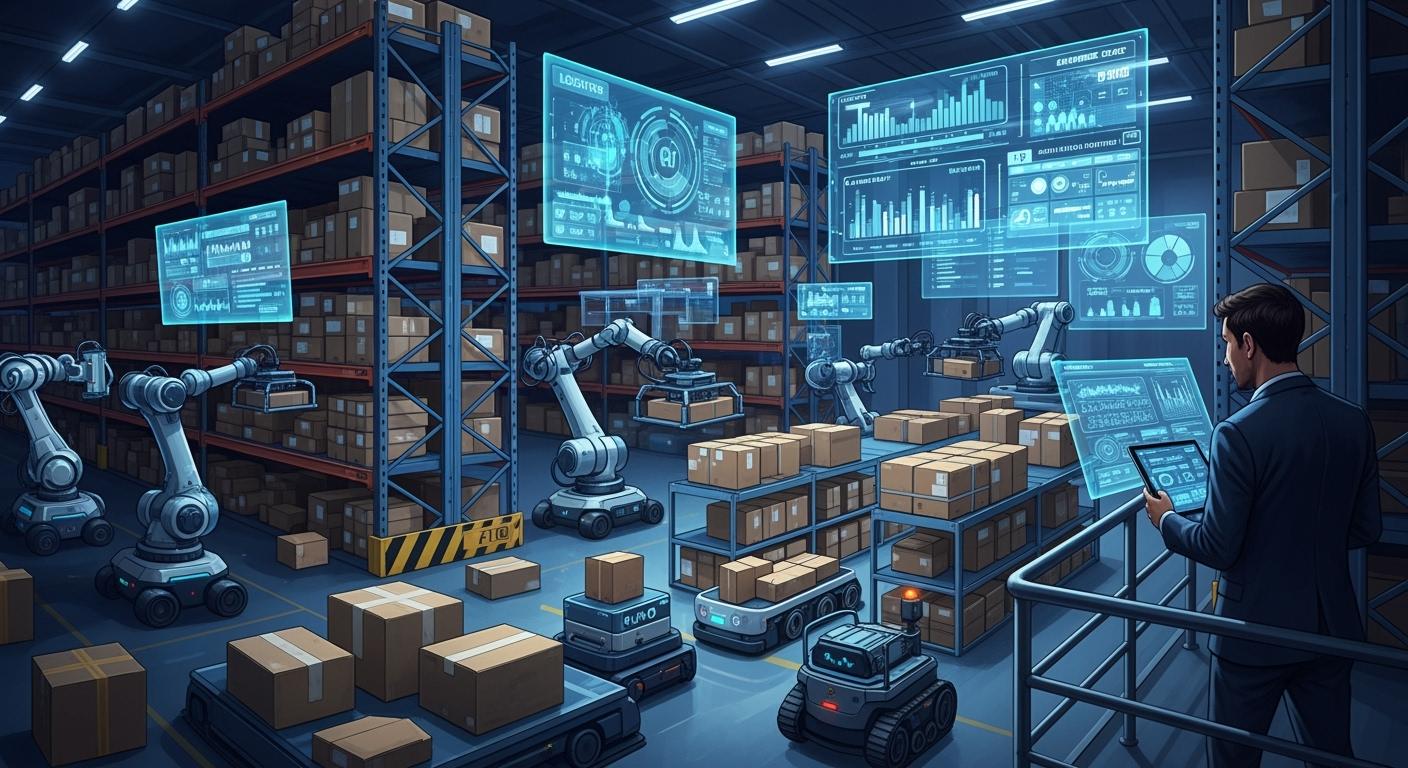
AI-powered robotics now shape warehouse operations by driving significant changes in labor costs and logistics efficiency. Industry reports show global warehouse automation revenue reached $15.34 billion in 2025, with projections suggesting strong growth in both mobile robots and automated storage systems. Companies like JUSDA deliver innovative solutions and global expertise, helping businesses optimize operations and stay competitive. Leaders in supply chain management increasingly adopt robotics to streamline processes and boost productivity.
Key Takeaways
AI-powered robotics significantly reduce labor costs and improve logistics efficiency in warehouses.
Companies that adopt automation can achieve up to 300% faster order fulfillment and 99% inventory accuracy.
Investing in employee training and upskilling is essential for adapting to new technologies and roles.
Strategic planning and phased implementation of automation help manage risks and ensure smooth transitions.
Using platforms like JusLink enhances supply chain visibility and supports real-time decision-making.
AI Robotics Transform Warehouse Operations
Key Technologies in Modern Warehouses
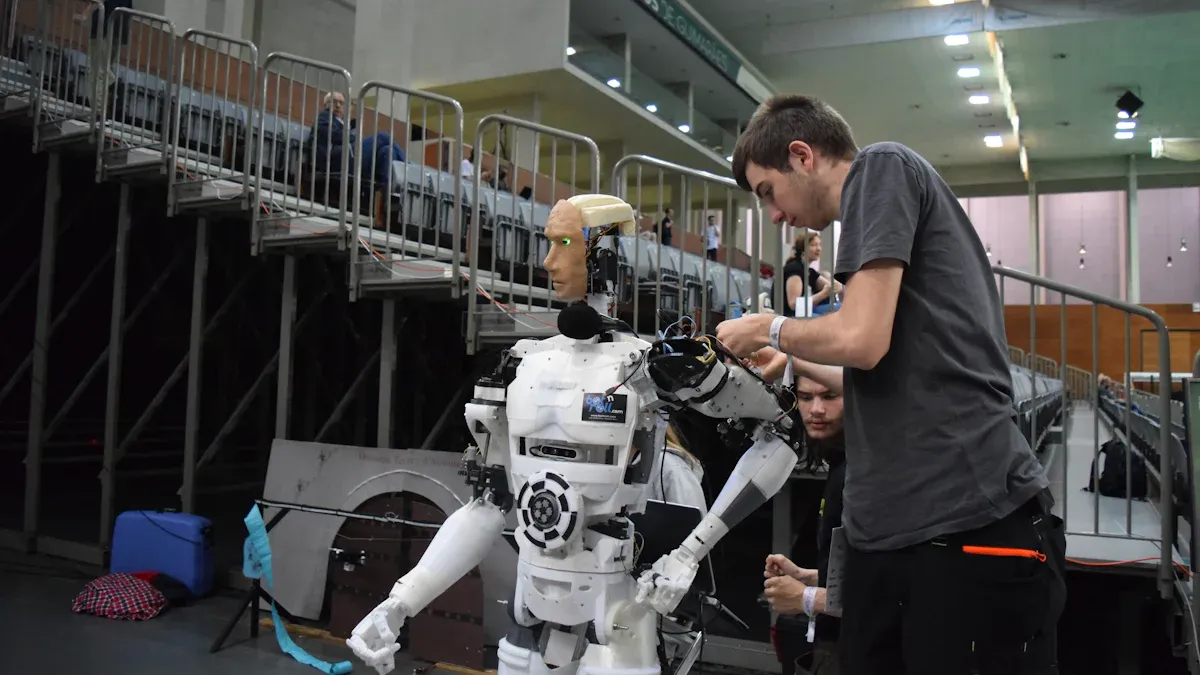
Modern warehouses rely on a suite of advanced technologies to achieve efficiency and accuracy. Companies deploy machine learning to improve demand forecasting and labor planning. Computer vision systems enable real-time surveillance and help verify items during picking and packing. Robotics, including Automated Guided Vehicles (AGVs) and Autonomous Mobile Robots (AMRs), automate material handling and transport, reducing manual labor and increasing speed.
Technology Type | Primary Function |
|---|---|
Machine Learning (ML) | Improves demand forecasting, labor planning, and inventory control. |
Computer Vision (CV) | Enables real-time surveillance, defect detection, and verification during picking/packing. |
Robotics | Automates picking, packing, and transport using smart robots and AGVs. |
Natural Language Processing (NLP) | Powers voice-activated systems for warehouse workers, enhancing speed and reducing errors. |
Internet of Things (IoT) | Connects sensors and machinery to track inventory and asset health. |
Predictive Analytics | Anticipates equipment failures and order spikes, minimizing delays and costs. |
Automated Guided Vehicles (AGVs) | Automates material handling, reducing labor-intensive tasks. |
Autonomous Mobile Robots (AMRs) | Optimizes operations in dynamic environments using sensors and maps. |
Unmanned Aerial Vehicles (UAVs) | Facilitates aerial inventory checks, improving efficiency. |
Collaborative Robots (Cobots) | Works alongside humans to enhance productivity. |
Warehouse robotics enhance every stage of the supply chain. Real-time inventory tracking, smart restocking, and accurate demand forecasting allow businesses to respond quickly to market changes. These systems help maintain stock accuracy, which is crucial for meeting customer expectations.
Robot and human teams achieve up to 85% higher productivity than teams of only humans or only robots. Companies that delay automation investments may face costs up to 50% higher, highlighting the urgency for adopting AI-driven solutions.
JUSDA’s Global Warehouse Network
JUSDA operates a robust global warehouse network that supports diverse industries, including electronics, automotive, and FMCG. The company manages over 2.5 million square meters of warehouse space across 155 service points worldwide. JUSDA’s facilities in China, Vietnam, the United States, Japan, and other regions use advanced management systems like eVMI and JusLink for real-time inventory tracking and control.
JUSDA’s warehouses offer value-added services such as picking, packing, labeling, and kitting. The integration of IoT and cloud computing enables seamless data sharing and collaboration between suppliers and buyers. This network ensures transparency, efficiency, and reliability for clients seeking to optimize their supply chain operations.
JUSDA’s commitment to innovation and technology-driven solutions positions the company as a leader in intelligent warehouse management. Their global reach and advanced systems help clients reduce costs, improve accuracy, and adapt to the evolving demands of modern logistics.
Evolution of Warehouse Automation
From Manual to Intelligent Systems
Warehouse automation has progressed through several distinct phases over the past decades. Early operations depended on manual processes, which often resulted in inefficiencies and frequent errors. The introduction of digital recordkeeping, such as the Universal Product Code (UPC), improved inventory control and set the stage for further advancements. Automated Storage and Retrieval Systems (AS/RS) began to automate inventory placement and retrieval, reducing the need for human labor. Advanced Warehouse Management System (WMS) technology emerged, offering features like pick path optimization and automatic order fulfillment. Robotics integration further enhanced efficiency and productivity. The latest milestone involves AI-powered solutions, which optimize warehouse processes and enable intelligent decision-making.
Milestone | Description |
|---|---|
Manual Processes | Early warehouse management relied heavily on manual processes, leading to inefficiencies and errors. |
Digital Recordkeeping | The introduction of digital recordkeeping in the '70s and '80s, marked by the launch of the UPC, improved inventory control. |
Automated Storage and Retrieval Systems (AS/RS) | AS/RS technology emerged to automate inventory placement and retrieval, reducing human labor. |
Advanced WMS Technology | In the '90s and 2000s, WMS technology advanced with features like pick path optimization and automatic order fulfillment. |
Robotics Integration | The integration of robotics allowed warehouses to enhance efficiency and productivity. |
The emergence of AI in WMS took operational capabilities to a new level, optimizing processes further. |
Automation minimizes manual input, ensuring accurate data transfer and consistent inventory tracking. Companies experience fewer errors and improved productivity. For example, a beverage distribution company reduced losses from expired product write-offs by 85% after implementing a WMS. Amazon achieved a 75% reduction in picking and packing times by deploying over 750,000 robots. Intelligent software now analyzes patterns and predicts inventory needs, automatically reordering items based on historical data and real-time demand.
JusLink’s Role in Digital Transformation
JUSDA’s JusLink platform leads the digital transformation of warehouse operations. JusLink integrates AI-driven sales forecasting, smart replenishment, and intelligent risk management. The platform uses deep learning algorithms to predict market trends and dynamically adjust inventory levels. JusLink’s Control Tower monitors supply chain risks in real time, providing timely alerts and enabling swift responses to disruptions.
JusLink’s automated application management tracks shipment statuses and detects anomalies. The platform supports end-to-end visibility and control, allowing businesses to optimize procurement, production, and delivery. JusLink’s microservices architecture enables customization for specific business scenarios, ensuring flexibility and scalability.
JusLink empowers enterprises to streamline supply chain processes, reduce costs, and improve customer satisfaction. Its AI-powered tools deliver precise forecasts and efficient inventory management, helping companies adapt to the demands of modern logistics.
Impact of Automation on Labor Costs
Workforce Optimization with AI
Warehouse automation powered by AI robotics has transformed how companies manage their workforce. Businesses now use intelligent systems to allocate staff more efficiently, reducing unnecessary labor and overtime. JUSDA’s advanced inventory management and real-time tracking systems, such as JusLink and eVMI, allow managers to see inventory levels instantly. This visibility helps them match staffing to actual needs, preventing overstaffing or understaffing.
Many leading companies have reported significant reductions in labor costs after adopting AI-powered robotics. For example:
Amazon uses robots and AI systems to speed up order processing, which lowers the need for manual labor and reduces operational costs.
Coca-Cola has streamlined warehouse operations with automation, cutting down on manual tasks and saving money.
JUSDA’s solutions enable similar results for clients across industries. By integrating AI-driven platforms, JUSDA helps businesses optimize workforce allocation and improve scheduling. The following table highlights the main benefits of workforce optimization with AI in warehouse settings:
Benefit | Description |
|---|---|
Reduced Labor Costs | AI optimizes staff allocation, reducing overtime and turnover costs. |
Increased Efficiency | AI identifies efficient workflows, potentially reducing picking labor by up to 25 percent. |
Higher Employee Retention | Automation and flexible scheduling improve job appeal, leading to lower burnout and turnover. |
Greater Agility | AI insights enable quick adaptation to market changes, enhancing competitiveness. |
JUSDA’s real-time tracking systems also support labor optimization. These systems adjust staffing based on current inventory and workflow needs. The table below shows how advanced inventory management impacts labor allocation and operational efficiency:
Benefit | Impact on Labor Allocation and Efficiency |
|---|---|
Real-Time Alignment | Adjust staffing levels based on current inventory, preventing overstaffing or understaffing. |
Labor Optimization | Efficient scheduling tied to inventory workflows keeps labor costs proportional to needs. |
Enhanced Forecasting | Predicts future staffing requirements for better scheduling. |
Reduced Stockouts | Ensures enough personnel during busy periods to minimize stockouts. |
Improved Customer Experience | Balances inventory and staff availability for better service and satisfaction. |
JUSDA’s global warehouse network leverages these technologies to help clients maintain optimal staffing and reduce unnecessary expenses. Companies that use JUSDA’s AI-driven solutions gain a competitive edge by keeping labor costs under control while maintaining high service levels.
Cost Savings and Efficiency Gains
Automation in warehouses delivers measurable cost savings and efficiency gains. Companies that implement AI robotics often see dramatic improvements in inventory accuracy, order fulfillment speed, and overall operational costs. JUSDA’s clients benefit from these advancements through integrated solutions that combine robotics, real-time data, and intelligent management platforms.
AI and robotics integration can improve inventory accuracy by up to 99 percent. Labor costs can drop by as much as 50 percent, and order fulfillment speed can increase by up to 300 percent. Many businesses report a return on investment of up to 300 percent within the first two years of adopting AI-powered warehouse systems. Operating costs can decrease by up to 25 percent, freeing up capital for growth and innovation.
JUSDA’s advanced inventory management and real-time tracking systems play a key role in these outcomes. By providing instant access to inventory data and automating routine tasks, these systems reduce the need for manual labor and minimize errors. Clients experience faster order processing, fewer stockouts, and improved customer satisfaction.
Companies that embrace automation and AI-driven solutions position themselves for long-term success. JUSDA’s expertise and technology help businesses achieve lower labor costs, higher efficiency, and greater flexibility in a rapidly changing logistics landscape.
Enhancing Logistics Efficiency
Predictive Analytics and Real-Time Decisions
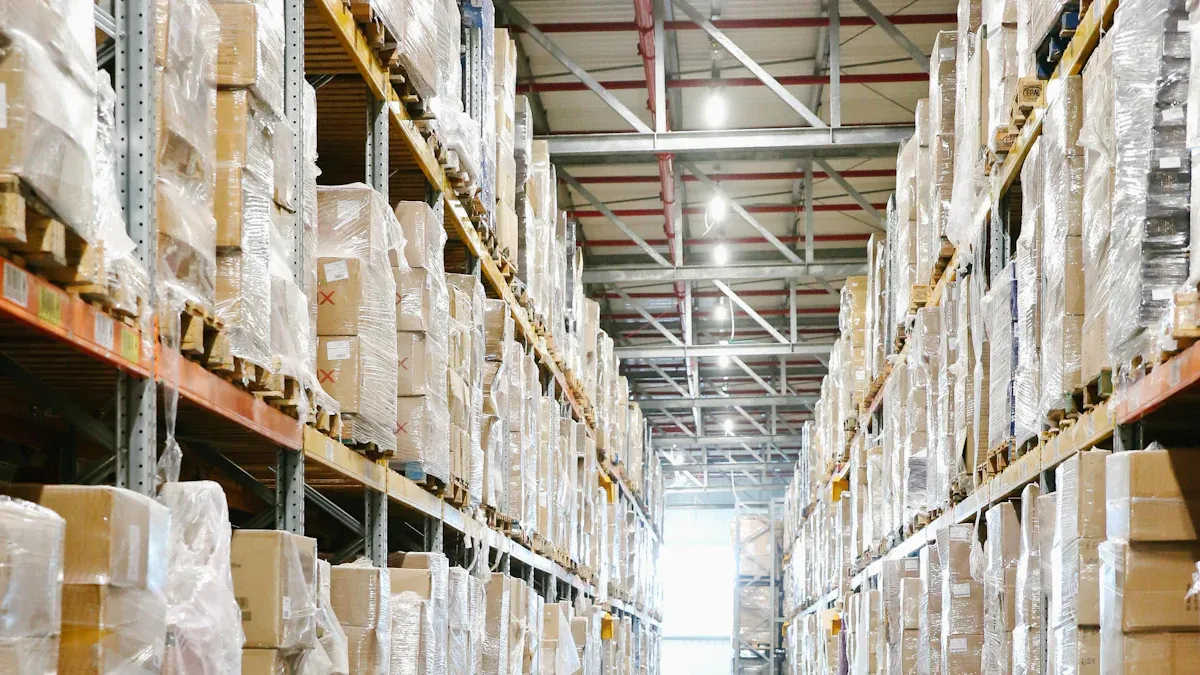
AI-powered robotics and advanced analytics have transformed logistics efficiency in warehouses. Companies now rely on predictive analytics to anticipate demand, optimize inventory, and streamline delivery schedules. These tools analyze vast amounts of data, enabling managers to make faster and more confident decisions.
Warehouse automation increases throughput, accuracy, and safety. For example, sorting robots at DHL handle 1,000 parcels per hour with 99% accuracy, boosting capacity by 40%. AI route optimization reduces overall delivery times by up to 25% and last-mile delivery times by 40%. These improvements help businesses meet customer expectations for speed and reliability.
Predictive analytics and real-time decision-making tools enhance supply chain responsiveness in several ways:
Advanced forecasting models reduce stockouts and overstock risks by aligning inventory levels with actual needs.
Predictive analytics lower holding and carrying costs by identifying slow-moving products and optimizing reorder points.
Accurate demand forecasts improve supplier coordination and procurement strategies, reducing emergency purchases.
Live data enables immediate course correction, minimizing downtime and disruptions. Centralized views of operational performance foster better cross-functional coordination. Up-to-date order information builds trust and loyalty with customers.
Common logistics bottlenecks addressed by AI-powered robotics include supply chain disruptions, inventory management issues, and operational inefficiencies. The table below illustrates how these challenges are resolved:
Logistics Bottleneck | AI-Powered Robotics Solution |
|---|---|
Supply Chain Disruptions | AI-driven forecasting and diversified supplier networks help mitigate disruptions. |
Inventory Management Issues | Automated inventory management enhances accuracy and efficiency in stock handling. |
Operational Inefficiencies | Real-time data processing allows for immediate task reassignment and alerts for maintenance needs. |
Warehouse managers use these solutions to maintain high throughput, improve accuracy, and deliver products on time. The integration of predictive analytics and real-time decision-making tools ensures that logistics operations remain agile and responsive.
JusLink’s AI-Driven Supply Chain Management
JUSDA’s JusLink platform stands at the forefront of AI-driven supply chain management. JusLink leverages advanced AI technologies to provide comprehensive visibility, predictive analytics, and intelligent risk management across global warehouse networks.
Companies using JusLink’s AI-driven tools have reported a 15% decrease in logistics costs. Inventory accuracy has increased by 35%, and service levels have improved by up to 65%. Predictive analytics within JusLink have reduced forecasting errors by at least 20%. These measurable improvements demonstrate the platform’s impact on operational efficiency and cost control.
JusLink’s core capabilities include:
Supply chain trend analysis for real-time monitoring of international trade data and industry trends.
Freight rate trend prediction using historical data and external factors to support logistics decisions.
Sales demand forecasting that mines historical sales data and market trends for accurate production planning.
Automated replenishment strategies that optimize inventory turnover and ensure steady product supply.
Risk Control Tower for real-time monitoring and early warning of potential disruptions.
JusElsa, an intelligent supply chain assistant powered by DeepSeek, supports seamless human-computer interaction for tasks such as shipment tracking and exception handling.
JusLink’s AI Intelligent Agents operate across six key domains, including material preparation, delivery stocking, logistics management, order inquiry, data query, and risk management. These agents help enterprises optimize procurement, improve delivery schedules, and enhance overall supply chain stability.
JusLink’s integration of IoT, cloud computing, and big data enables real-time collaboration and information sharing. Businesses gain end-to-end visibility and control, allowing them to respond quickly to market changes and customer demands.
JUSDA’s commitment to innovation and efficiency positions JusLink as a critical tool for companies seeking to enhance logistics efficiency. The platform’s AI-driven solutions empower businesses to streamline operations, reduce costs, and deliver superior service in a competitive global market.
Addressing Challenges and Misconceptions
Job Transformation and Upskilling
Warehouse automation often raises concerns about job loss, but the reality shows a shift toward job transformation. Companies like JUSDA have observed that automation eliminates repetitive roles such as manual order picking and inventory counting. Workers now take on higher-value responsibilities, focusing on technology supervision, system maintenance, and data analysis. New positions have emerged, including operators, technicians, data analysts, and workflow coordinators. These roles require employees to oversee and maintain automated systems, ensuring smooth operations.
Automation in warehouses leads to job transformation rather than simple replacement. Employees gain opportunities to develop new skills and advance their careers.
Upskilling programs play a crucial role in helping workers adapt to these changes. Effective initiatives combine classroom learning with hands-on experience. For example, mechatronics and robotics apprenticeships teach employees how to operate and maintain advanced warehouse technologies. Technical apprenticeships and certification programs provide structured pathways for workers to transition into roles such as automation engineers and controls specialists. Pre-paid tuition programs and self-paced learning platforms support career growth in high-demand occupations.
Employee Adaptation Strategies
Companies implement several strategies to help employees adapt to AI-powered robotics in warehouse environments:
Invest in workforce development by creating structured training programs. These programs teach employees how to work alongside AI systems and leverage new technologies.
Design human-centric automation solutions that complement human workers. This approach ensures that technology enhances employee roles rather than replacing them.
Communicate transparently with staff about automation plans. Open communication helps employees understand how technology will improve their work and career prospects.
Measure success using metrics beyond efficiency, such as worker satisfaction, injury rates, and career advancement.
Training employees to work with AI-powered systems is essential for successful implementation. Companies provide clear communication and ongoing support, helping employees feel confident and comfortable with new technology. As a result, businesses like JUSDA maintain a skilled, adaptable workforce ready to thrive in an automated warehouse environment.
Practical Implications for Businesses
Strategic Planning for Automation
Businesses planning warehouse automation must approach the process with a clear strategy. JUSDA recommends starting with a thorough assessment of operational challenges and setting measurable objectives. Engaging stakeholders ensures support throughout the transition. Companies often benefit from phased rollouts, which allow them to manage risks and monitor progress. Accountability remains essential, with clear responsibilities and metrics guiding each stage.
Key Element | Description |
|---|---|
Identifying Operational Challenges | Understand specific issues that automation will address. |
Establishing Clear Objectives | Set measurable goals for the automation process. |
Engaging Stakeholders | Involve all relevant parties for buy-in and support. |
Implementing Phased Rollouts | Introduce automation gradually to ensure smooth transitions. |
Accountability | Assign responsibilities and track metrics to evaluate success. |
Resource optimization, digital twins, and compatibility with legacy systems play a vital role. JUSDA’s JusLink platform supports virtual testing and real-time data analysis, helping businesses maximize efficiency and reduce costs.
Measuring ROI and Success Metrics
Evaluating the return on investment for warehouse automation requires a focus on financial and operational metrics. JUSDA advises clients to use Net Present Value (NPV) and Internal Rate of Return (IRR) to assess financial viability. These metrics account for the time value of money and provide a clear picture of long-term benefits.
Metric | Description |
|---|---|
Net Present Value (NPV) | Assesses ROI by considering the time value of money. A positive NPV signals a viable investment. |
Internal Rate of Return (IRR) | Expresses returns as a percentage, indicating financial viability. |
Time Value of Money | Highlights the importance of early returns in investment decisions. |
Labor savings: Compare productivity before and after automation to estimate annual cash flow improvements.
Space savings: Automated systems optimize storage, delaying or eliminating the need for facility expansion.
Increased revenue: Faster shipping and improved order accuracy lead to higher customer satisfaction.
Building a Future-Ready Workforce
JUSDA supports clients in developing a workforce prepared for automation. Strategic workforce planning integrates coaching and resilience programs into skills gap analyses. Upskilling and cross-training create agile teams capable of adapting to new roles. Temp-to-hire strategies help evaluate workers for permanent positions, ensuring a strong fit.
Method | Description |
|---|---|
Strategic Workforce Planning | Integrate coaching and resilience programs into skills gap analyses and succession plans. |
Upskilling and Cross-Training | Train workers on multiple tasks to build agile teams. |
Temp-to-Hire Strategy | Evaluate temporary workers for permanent roles. |
Leveraging AI and Automation | Use AI-driven insights to support and enhance workforce capabilities. |
Pair high-potential employees with mentors to preserve institutional knowledge.
Conduct internal audits to identify skills gaps and growth opportunities.
Create agile teams through ongoing training and cross-functional assignments.
JUSDA’s approach ensures businesses maintain a skilled workforce while controlling labor costs and supporting long-term growth.
AI-powered robotics continue to reshape warehouse operations, driving measurable improvements in labor costs and logistics efficiency. JUSDA leads this transformation with advanced solutions and a global network. Businesses benefit by adopting proactive strategies and leveraging platforms like JusLink.
Recommendation | Description |
|---|---|
Develop a clear action plan | Address necessary technologies and create a coherent data strategy framework. |
Evaluate AI platforms | Ensure chosen platforms meet business needs and can scale with data volume and complexity. |
Prioritize high-impact areas | Focus on projects with high ROI and measurable returns to build confidence in AI integration. |
Implement best practices | Emphasize data quality, automation, employee training, and phased implementation. |
Start small with pilot projects | Reduce costs and risks by testing AI solutions in specific areas before full-scale implementation. |
Offer comprehensive training | Equip employees with the necessary skills to operate AI tools effectively. |
Embracing ongoing learning and innovation keeps companies competitive in logistics.
Investing in workforce development supports adaptation to new technologies.
Advancements in automation and AI integration will continue to drive efficiency and sustainability.
FAQ
What types of warehousing services does JUSDA offer?
JUSDA provides general storage, bonded warehouses, distribution centers, and finished goods storage. The company also offers clean room facilities that meet strict environmental health and safety standards.
How does JUSDA ensure inventory transparency and control?
JUSDA uses advanced management systems like eVMI and JusLink. These platforms enable real-time inventory tracking, giving clients full visibility and control over their stock.
What value-added services are available in JUSDA warehouses?
JUSDA offers picking, packing, labeling, kitting, switch doc, repacking, software upgrades, and rework services. These services help businesses optimize warehouse operations and improve efficiency.
How does JusLink support supply chain management?
JusLink integrates AI-driven forecasting, smart replenishment, and risk management. The platform provides real-time data sharing and collaboration, helping companies streamline procurement, production, and delivery.
Where are JUSDA’s global warehouses located?
JUSDA operates warehouses in China, Vietnam, the United States, Japan, Hong Kong, Taiwan, India, and Mexico. The company maintains a network of over 155 service points worldwide.
See Also
Maximizing Warehouse Efficiency Through Robotic Automation Insights
Harnessing Robotics in Logistics to Improve Warehouse Efficiency
Automated Solutions: Advantages of High-Tech Manufacturing Warehouses
Transforming Logistics with AI: The Future of Supply Chains
Sustainable Supply Chains: Robotics Trends Shaping the Future