Key Strategies for Successful Air Freight Shipping in 2025

You need fast air freight shipping to do well in 2025. Air freight will move 69 million tonnes. The global market will be worth $319.4 billion. You will face problems like busy airports, customs delays, and security risks. Planning ahead and good logistics help make air freight shipping work well.
Key Takeaways
Know what kind of cargo you have. Different things need different care. If your shipment is general or special cargo, pick the right service.
Measure your shipment the right way. Check both weight and volume. Airlines use the bigger number to set the price. Look at both before you book.
Keep up with customs documents. Wrong or missing papers can slow down shipments. You might pay extra fees. Always check what your destination country needs.
Air Freight Shipping Basics
Cargo Types
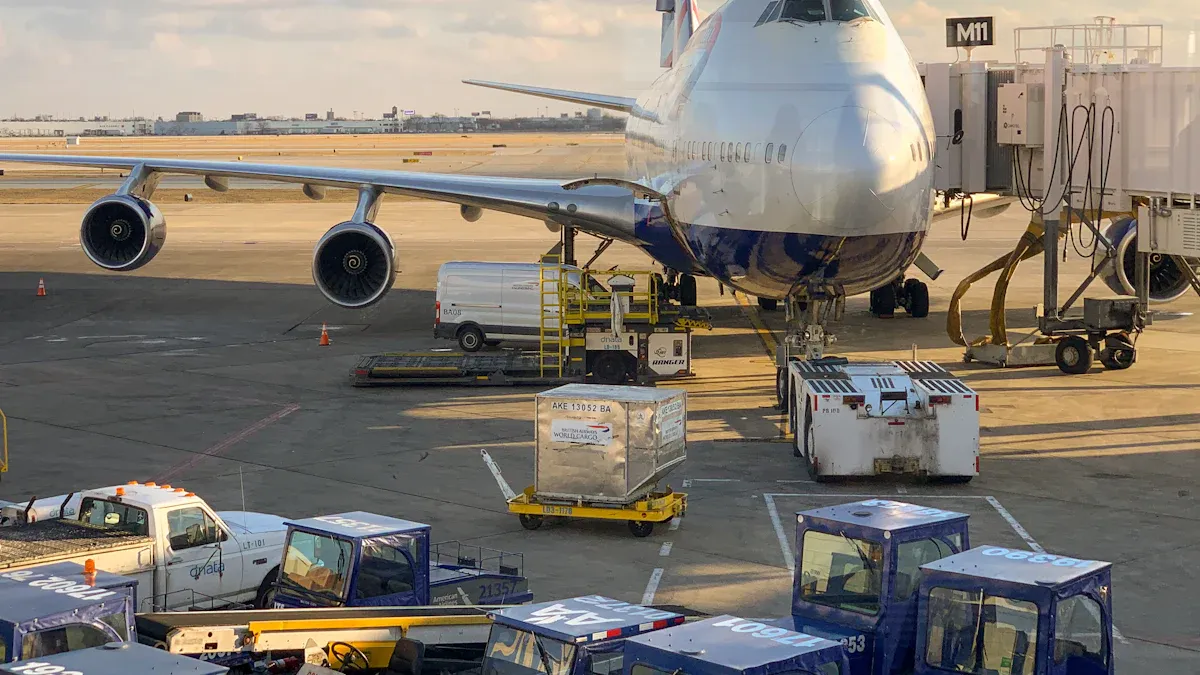
When you ship goods by air, you should know your cargo type. Air freight moves many products. Most shipments fit into two groups:
General Cargo: This means things like electronics, clothes, and machines. These items do not need extra care.
Special Cargo: This group has things that need special attention, like perishable goods, dangerous materials, or live animals.
You need to check if your shipment needs special handling. For example, fresh food or flowers must stay cold. Knowing your cargo type helps you pick the right service and avoid problems.
Volume Assessment
You have to measure your shipment before you book air freight. Airlines use different ways to set prices. How you measure your cargo can change what you pay.
Pricing Model | Description |
|---|---|
Weight-Based Pricing | Uses the cargo’s real weight in kilograms or pounds. |
Volume-Based Pricing | Counts the shipment’s size, especially for light cargo. |
Spot Pricing | Sets prices based on demand and supply, often for one-time shipments. |
Tiered Pricing | Uses price levels based on how often you ship, how fast you need it, size, or service type. |
Contractual Pricing | Prices made from long-term deals or service agreements. |
Surcharge-Based Pricing | Extra fees added to the main price for market changes and costs. |
Tip: Airlines may charge you for the higher number between actual weight and size weight. Always check both.
Other things also change your air cargo cost:
Freight class, fuel cost, and handling needs
Service level and how far it goes
Market demand and world events
Knowing these basics helps you plan better and avoid problems when you ship by air.
Regulatory Compliance
Customs Documents
You need the right documents before you ship goods by air. Customs officers in each country check these papers. They make sure your shipment follows all the rules. If you forget a document or make a mistake, your shipment can get delayed. You might also have to pay extra fees. Here are some common documents you may need for air cargo:
Customs Declaration
Insurance Certificate
Export Licence/Permit
Import Licence/Permit
Dangerous Goods Declaration (DGD)
Phytosanitary Certificate
Certificate of Conformity
Bill of Lading (B/L)
Health Certificate
Quarantine Clearance
Certificate of Analysis
Export Packing Declaration
Certificate of Weight
Tip: Always check what documents your destination country needs. Some shipments, like food or chemicals, may need more certificates.
International Rules
You must follow strict rules when you ship by air. These rules help keep people safe and protect the environment. In 2025, new standards make following the rules even more important. The table below lists some important regulations and what they mean for you:
Regulation Type | Key Requirements | Implications for Shippers |
|---|---|---|
Air Cargo Security Regulations | Not following rules can mean fines or shipment holds. | |
Chain-of-Custody Documentation Standards | New standards to stop cargo tampering | More audits and penalties if you do not follow rules. |
Stricter Background Checks | Better checks and tighter access controls | Staff must get special training to follow the rules. |
Sustainability Standards | Use less fuel and report emissions | You may need to buy smart security technology. |
Global Compliance Standards | Stricter rules for paperwork and tracking cargo | You must use TSA-approved logistics partners. |
Many groups make these rules for air cargo:
Governing Body | Role |
|---|---|
Makes global rules for aviation safety and security. | |
TSA | Checks security steps for air cargo on all flights. |
IATA | Gives advice for cargo operations, packaging, and labeling. |
You should always learn about new rules. This helps you avoid delays and keeps your shipments moving.
Packaging for Air Freight
Secure Packing
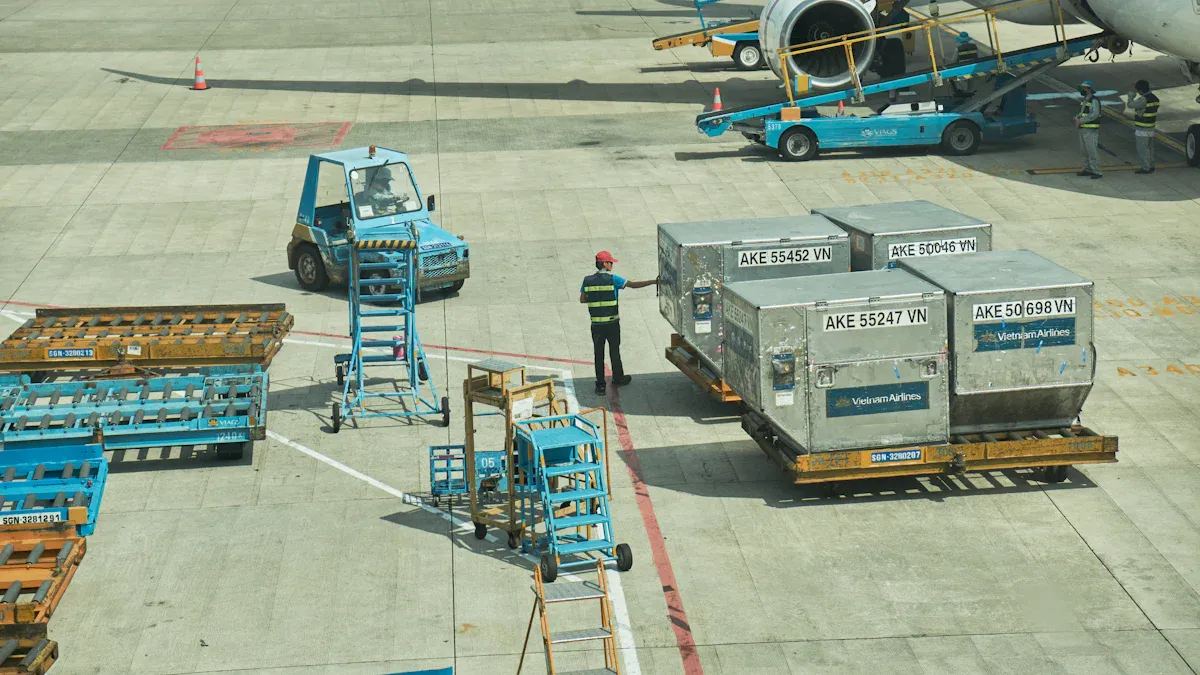
You must pick the right packaging to keep goods safe. Strong boxes, like corrugated cardboard, are good for most things. Bubble wrap and foam help protect items from bumps. Always put enough padding around your items so they do not move. If you ship many things, use dividers to keep them apart.
Sometimes, damage happens inside even if the box looks fine. Electronics can break if dropped or hit. You can stop this by using good packing methods. Watch out for things like holes, squishing, and water. Banding, shrink-wrap, and edge protectors help keep boxes safe. Always use strong tape to seal your packages and check they are closed tight before shipping.
Tip: Use insulated packaging for goods that need to stay cold or warm during shipping.
Labeling Accuracy
Labels are very important for air freight. They tell workers how to handle your shipment and help avoid mistakes. Use clear labels that show who owns the package and what is inside. If you ship dangerous goods, you need special labels to warn people. Medicines, batteries, and chemicals all need these warning labels.
Requirement Type | Description |
|---|---|
Dangerous Goods Labels | Needed for hazardous materials, like batteries or chemicals. |
Time & Temperature Sensitive Labels | Show if your goods need to stay within a certain temperature range. |
General Labeling | Clearly mark ownership and contents, especially for fragile or special items. |
Good packaging and correct labels help your shipment move fast and stay safe at airports.
Cost Optimization in Air Freight
Rate Comparison
You can save money by checking rates from many carriers. Air freight rates change a lot. Fuel prices, airport fees, and demand all change what you pay. When more people want to ship and there are fewer planes, prices rise. In 2023, rates were between $3.00 and $7.00 per kilogram. This is still higher than before the pandemic. You should look at rates for your cargo type and route. Planning ahead helps you get the best price and not pay too much.
JUSDA uses its worldwide network to help you get better rates. The team talks with top carriers to find good freight prices. JUSDASR’s warehouses near big ports and airports in the U.S. help lower first-leg transport costs. This lets you save money before your goods even leave.
Shipment Consolidation
Shipment consolidation is a smart way to save money. You put small shipments together into one big load. This fills up space on the plane and uses load optimization. You only pay for the space your goods use. This splits the cost of fuel, handling, and transit fees. Shippers often save 30% to 50% compared to sending each shipment alone.
Load optimization gives you more benefits:
Lower handling costs because there are fewer shipments.
Fewer customs entries, so less paperwork and lower clearance fees.
Less packaging needed, which saves on shipping costs.
JUSDA’s logistics experts use special tools to help you get the most from every shipment. These smart strategies help you save money and control freight costs in a changing market.
Technology for Efficient Air Freight
Real-Time Tracking
You can track your air freight shipments at all times. IoT sensors and smart devices show where your cargo is. They also show what shape your goods are in. This technology helps you find problems early. It keeps your goods safe. You get alerts if your shipment goes off its route. You also get alerts if there are delays. You can check temperature and humidity for sensitive products.
Benefit | Description |
|---|---|
You can see your shipment’s status and location anytime. | |
Increased Efficiency | You manage cargo better with quick updates and analysis. |
Improved Customer Service | You share updates with customers so they feel sure about their orders. |
Risk Mitigation | You act fast if something goes wrong, lowering the chance of loss or damage. |
Condition Monitoring | You protect goods that need special care, like medicine or food. |
JusLink’s AI Solution makes tracking even better. It predicts risks and trends. This helps you avoid delays. You can use these insights to make smarter choices. You can improve your supply chain and work faster.
Digital Platforms
Digital platforms change how you handle air freight. You can book shipments and manage documents in one place. You can track cargo easily. Automation cuts mistakes and saves time. You get instant rate quotes. You can compare carriers quickly.
Benefit | Description |
|---|---|
Workflow Automation | It speeds up tasks and lowers errors in shipping. |
Cost Reduction | It cuts manual work, helps you save money, and manage rates better. |
Delivery Optimization | It finds the best routes for faster and more reliable shipping. |
Enhanced Visibility | You see your shipments in real time for better control. |
Data-Driven Decisions | It uses big data to help you plan and improve your work. |
JUSDA’s JusLink platform gives you full visibility. You can work easily with partners. You can share dashboards and track shipments. You can use AI-powered tools for freight rate prediction and risk management. These features help you ship air freight efficiently. They help you stay ahead in a fast-changing market.
Carrier Partnerships
Reliable Providers
It is important to pick air freight carriers you trust. Good carriers make sure your shipments arrive safely and on time. When you choose a carrier, you should look at a few things. The table below shows what to check:
Criteria | Description |
|---|---|
Service Reliability and Infrastructure | Strong systems help deliveries stay safe and fast. |
Real-Time Tracking and Shipment Solutions | Tools let you watch shipments and fix problems quickly. |
Expertise and Industry Experience | Carriers know your industry and ship goods smoothly. |
Comprehensive Network Coverage | A big network helps deliver to many places easily. |
Customer Service and Support | Friendly staff answer questions and help you fast. |
Technology and Tracking Capabilities | Advanced tools give clear updates about your shipment. |
Reliability and On-Time Performance | Carriers have a good record for being on time and solving issues. |
Always check if the carrier knows how to handle your cargo type. Make sure they have real-time tracking for your shipments. Good customer service helps you fix problems fast. A strong network means your goods can go to more places without trouble.
Long-Term Relations
Making long-term partnerships with carriers helps your business. You can save money because trusted partners give better prices. Shipping is safer since experienced carriers use strong packaging and careful handling. Long-term partners help you when your business grows or changes.
You can reach new customers and markets with your carrier’s network.
Working together brings new ideas and better ways to ship.
Sharing knowledge and technology helps you work faster and smarter.
Strong partnerships keep your business steady, even when things change.
You can offer better service and reliability than your competitors.
Tip: Talk often with your carriers. Good communication helps you solve problems early and keeps your supply chain strong.
Risk Management in Air Freight
Insurance Options
Shipping goods by air can be risky. Things can get damaged, lost, delayed, or stolen. Insurance helps protect you from these problems. There are different types of insurance for shipments. The table below shows what each type covers:
Type of Coverage | Description |
|---|---|
Liability Insurance | Protects against third-party claims of injury or property damage. |
All-Risk Coverage | Covers most risks, including damage, loss, and theft. |
Basic Cover | Offers protection against major disasters like accidents and natural events. |
Broad Cover | Adds coverage for theft and non-delivery. |
All-Risk Cover | Highest level, covers all risks unless excluded. |
Type A | All-risk insurance with higher premiums. |
Type B | Average insurance with lower premiums. |
Type C | Covers only total losses, least expensive. |
Pick insurance based on how much your cargo is worth. Think about how risky your shipment is. All-risk coverage is best for expensive items. Basic or broad cover works for cheaper goods. Always read what each policy covers before you ship.
Risk Monitoring
You need to watch for risks at every step. Delays, rule problems, and theft can hurt your delivery. You can manage risks by doing smart things:
Talk with your forwarder about possible risks and make backup plans.
Check all your documents to make sure they are correct.
Use technology to track your shipments as they move.
Teach your staff about security and how to handle goods.
Screen shipments and storage places to keep things safe.
Look at your supply chain often and change plans for new risks.
Make sure you have enough insurance for every shipment.
Real-time tracking helps you find problems early. You can fix things fast if something goes wrong. Good risk management keeps your shipments safe and helps your business stay strong.
Communication and Coordination
Team Collaboration
Strong teamwork keeps air freight shipments running well. Good communication lets your team share news fast. This helps fix problems before they get worse. When everyone knows their job, you avoid mix-ups and delays. Technology can make teamwork easier and quicker.
You can help your team work better in many ways:
Make one place where everyone finds updates and documents.
Use the same steps so each team member knows what to do.
Pick clear ways to talk, like group chats or project boards.
Let team members share ideas or worries without fear.
Modern software tools help teams work together from anywhere. Here are some examples:
Software | Key Features | Benefits for Collaboration |
|---|---|---|
SafetyCulture | Real-time reporting, mobile checklists | Makes work easier and helps teams talk more |
GoFreight | Shipment tracking, document management | Helps teams see shipments and work together |
iCargo | Cloud-based cargo management | Shares good ways to work and helps digital change |
Cloud Technology | Easy data access, flexible logistics management | Makes teamwork and planning better |
Stakeholder Updates
You must keep all stakeholders updated during air freight shipping. Clear updates help everyone know what is happening. This lowers stress and worry. Use good ways to share news, like email, phone, or web platforms. Make sure everyone has the right contact details.
Some best ways to update stakeholders are:
Make rules for sending updates and sharing documents.
Use real-time tracking tools to show shipment status right away.
Share important papers on digital platforms for quick access.
Tell people early if there are changes or delays.
Tip: Giving regular updates builds trust and helps fix problems faster.
JUSDASR for Cross-Border Air Freight
Strategic Warehousing
Strong warehousing is important for cross-border air freight. JUSDASR lets you use special warehouses in important places. These warehouses help you move goods faster and save money. The table below shows how each region helps your business:
Region | Strategy Description | Benefits |
|---|---|---|
North America | Focus on cross-border VMI services and consolidation centers | Makes response times better and helps along the US-Mexico border. |
Vietnam | Establishing VMI + CMI collaborative warehouses and integrating air and sea transport | Helps manage over 20,000 SKUs and makes Vietnam stronger in Southeast Asia logistics. |
India | Integration with local supply chains and government initiatives | Supports the electronic parts market and keeps logistics working well. |
You can keep products near big airports and ports. This helps your shipments move out quickly. You also spend less on the first part of shipping. Planning well with these warehouses makes you work better and meet customer needs.
Last-Mile Delivery
You want your goods to get to customers fast and safe. JUSDASR works with top carriers like FedEx and UPS. This gives you strong last-mile delivery. You can use dropshipping to send products straight from the warehouse to buyers. This way, you store items for less time and deliver faster.
JUSDASR also helps with high-power energy storage products. You get special care and storage for these goods. The team follows all safety rules to keep your items safe. With JUSDASR, you can trust your logistics for tough products and tight schedules. You get more control over your air freight and work more efficiently.

JUSDA Solutions
To provide you with professional solutions and quotations.
You can ship goods by air well in 2025 if you plan ahead. You should use smart technology and work efficiently. Try different ways to ship so you can avoid problems. Get ready for new rules that may come quickly. Use digital tools and data to make shipping easier. Check out JUSDA’s services to help you ship to more places around the world.
See Also
Exploring 2024 Innovations in Sea Freight Logistics
Transforming Logistics with AI: The Future Awaits
Five Key Trends Shaping Future Supply Chain Efficiency
Discover Five Cutting-Edge Techniques for Supply Chain Optimization