How the 2025 Government Shutdown Is Affecting Air Travel Across the United States

The 2025 air travel disruptions government shutdown has made flying in the United States extremely difficult. Due to the air travel disruptions government shutdown, many people are experiencing canceled flights or facing long delays. On November 8, more than 1,200 flights were canceled, and over 2,000 flights were delayed because of staffing shortages caused by the air travel disruptions government shutdown. The table below highlights the scale of the air travel disruptions government shutdown:
Date | Total Delay Minutes | Cancellations | Economic Impact |
|---|---|---|---|
Nov. 8 | 184,000 | 1,271 | $285M–$580M |
JUSDA and other logistics providers are working to keep transportation moving despite the air travel disruptions government shutdown. Passengers who cannot fly due to the air travel disruptions government shutdown can consider trains or buses as alternative options.
Key Takeaways
The 2025 government shutdown has led to many flight delays and cancellations. This has affected more than 5.2 million people who fly.
Travelers should think about using other ways to travel, like trains and buses. More people are booking these services, with a 12% increase.
To avoid problems, get to the airport early. Try to book the first flight of the day. Be ready to change your travel plans if needed.
Airlines have to give full refunds for flights they cancel. Travelers should know their rights and check what the airline says.
The logistics industry is also having problems. There are delays in moving cargo because there are not enough workers. This is causing trouble for businesses and supply chains.
Air Travel Disruptions: Government Shutdown Effects
Flight Delays and Cancellations
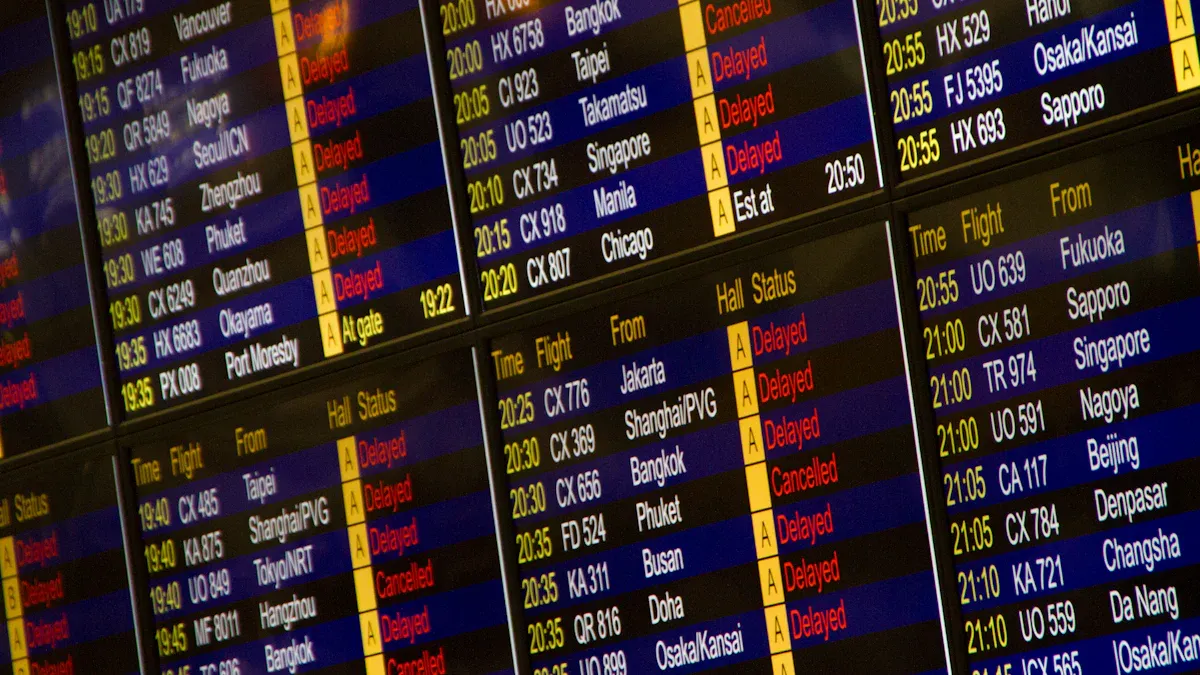
The air travel disruptions government shutdown is causing many flight delays and cancellations in the United States. Since it began, about 6% of all flights have been canceled. Airlines said they had over 1,200 canceled flights and almost 1,750 delayed flights in just one day. This has made travel very hard for passengers, with thousands of delays changing travel plans everywhere.
Big airports like Chicago O'Hare, Newark Liberty, and Hartsfield-Jackson in Atlanta have the most delays and cancellations. Bad weather and not enough staff have made things worse, especially for regional airlines. The FAA told airlines to cut 6% of flights at busy airports, so even more flights were canceled. Since then, airlines have canceled over 9,000 flights.
Note: Travelers should check their flight often and be ready for changes because of ongoing flight disruptions.
Impacted Airlines and Airports
The air travel disruptions government shutdown is hurting both big and small airlines. Southwest Airlines cut 145 flights to follow FAA rules. Delta Air Lines finished its planned cancellations and hopes to run most flights, but air traffic control problems could cause more delays. Regional airlines like SkyWest and Republic Airlines are having a hard time because they depend on routes affected by bigger airlines.
Airports in Denver, Atlanta, Chicago, Dallas, and New York have the most delays and cancellations. The impact is different for big and small airports:
Airport Type | Flight Reduction | Impact Level |
|---|---|---|
Major Airports | 10% | Moderate |
Regional Airports | Higher than 10% | Significant |
Big airports are still running long flights and flights between main hubs. Airlines are cutting more flights that connect big airports to smaller ones. United Airlines said long international flights are not affected, but most cuts are for regional and main U.S. flights.
Phase of Cuts | Percentage Reduction | Focus Area |
|---|---|---|
Initial Phase | 4% | Major Airports |
Full Implementation | 10% | Small and Medium Cities |
Alternative Transportation Trends
Because of the air travel disruptions government shutdown, more people are using other ways to travel. Bus and train bookings are up 12% from last year, and some routes are up 30%. Amtrak thinks it will have record numbers of travelers, especially in the Northeast, with many people booking early. Megabus and Flix, which owns Greyhound, also say more people are buying tickets, especially on busy travel days.
Bus and train bookings went up 12% for Thanksgiving.
Some days have 20% to 30% more bookings.
Amtrak saw more bookings before the government shutdown and expects even more as flight disruptions go on.
More people are also using private jets to avoid problems caused by the air travel disruptions government shutdown. The move to buses, trains, and private jets shows how travelers are changing their plans during this time of flight disruptions and uncertainty.
Tip: Travelers should book buses and trains early, since more people want these options when air travel is chaotic.
Government Shutdown: Causes and FAA Actions
Staffing Shortages
Staffing shortages are making air travel much harder. Air traffic controllers and TSA agents are working without pay. This has caused many to miss work and feel stressed. Airports in New York, Chicago, and San Francisco have long lines and delays. Some people in Houston waited five hours at security. The FAA said staffing shortages at air traffic control centers are now four times worse. Half of the busiest airports have big staffing problems. This leads to more delays and canceled flights.
Impact | Description |
|---|---|
Staffing Issues | Air traffic controllers working without pay, leading to operational strain |
Delays and Cancellations | 84% of flight delays linked to staffing shortages |
Controller Stress | Burnout and increased pressure among controllers |
"The shutdown makes controllers’ jobs even harder. They feel tired and face more risks," said Nick Daniels, president of the National Air Traffic Controllers Association.
FAA Flight Reductions
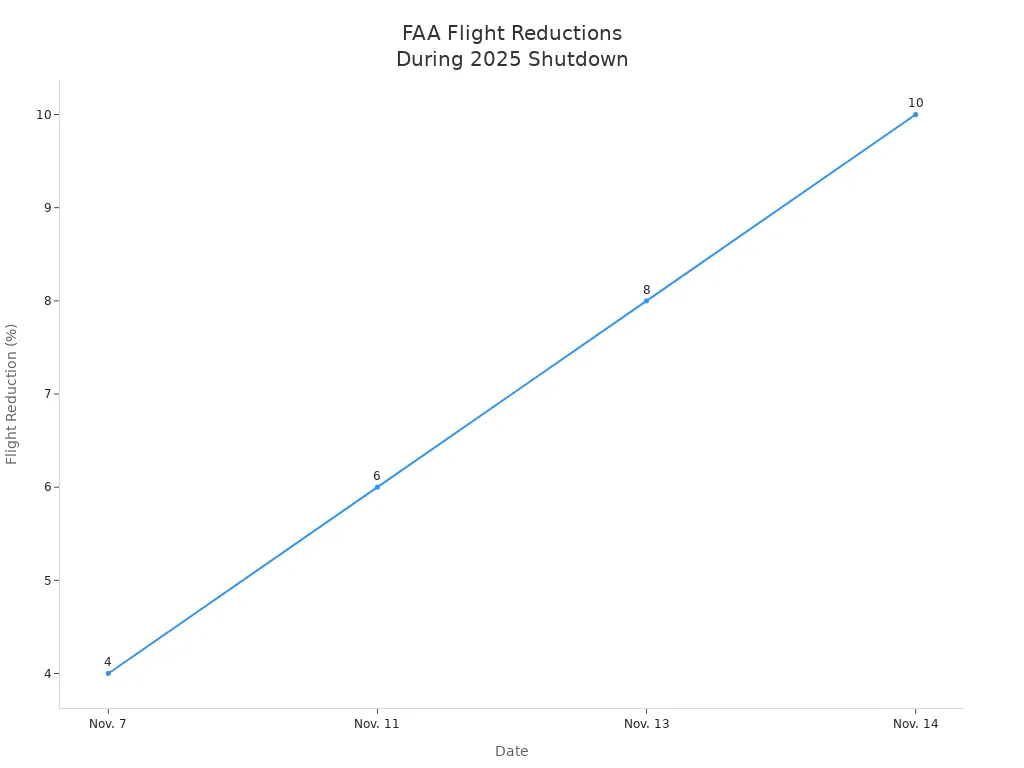
The FAA is cutting the number of flights to help keep things safe. This helps air traffic controllers handle their work. The FAA ordered a 10 percent cut in flights at 40 busy airports. They chose which flights to cut by looking at plane size, how many people fly, and which routes are open. The table below shows how flight cuts got bigger over time:
Date | Flight Reduction | Reason for Reduction |
|---|---|---|
Nov. 7 | 4% | Initial response to staffing shortages |
Nov. 11 | 6% | Increased staffing triggers and safety concerns |
Nov. 13 | 8% | Ongoing staffing issues and safety data |
Nov. 14 | 10% | Continued need to manage air traffic safely |
Safety Concerns
Safety is the FAA’s most important goal right now. There are more close calls and runway problems than before. Some experts worry tired controllers and stopped training could make things less safe. The Transportation Department sees signs of stress in the system. Airline pilots are also worried about talking with air traffic controllers. The FAA says flight limits will stay until safety gets better.
Impact on Operations | Description |
|---|---|
Safety Concerns | Potential for decreased safety due to overworked employees |
Training Halted | Controller training and modernization efforts delayed |
Financial Stress | Anxiety among employees, possibly distracting them from safety roles |
"Now I talk with my kids at dinner about which bills to pay first," said air traffic controller Amy Lark.
The government shutdown has changed how planes fly and made things less safe.
Traveler Impact and Advice

How Travelers Are Affected
People in the United States are feeling the effects of the government shutdown in many ways. Not enough workers at air traffic control towers have caused long waits. Sometimes, there are hours with no coverage at all. Families and business travelers have had flights canceled often. Their trips have been interrupted. Almost half of Americans have seen changes in their towns. More than 40 million people might lose food help programs. International flights are still running as usual because of agreements. But flying inside the country is now very hard for many people.
Long waits at big airports have messed up travel plans.
Companies that need federal licenses have had problems.
Families and business travelers have missed flights and connections.
Tips to Minimize Disruption
Travel experts suggest some easy ways to avoid problems during this time in the air travel industry:
Drive instead of fly if your trip is less than eight hours.
Get to the airport early so you do not wait in long lines.
Book the first flight of the day to lower your chance of delays.
Be ready to change your plans if your flight is canceled.
Do not hurry to buy a new ticket; airlines often rebook you.
Pick airlines that have many flights to your destination.
Try to be one of the first to ask for help if your flight is canceled.
🛫 Tip: Travelers should check their flight often and stay updated on airline rules.
Rights to Refunds
The Department of Transportation has clear rules for passenger rights during the government shutdown. If an airline cancels your flight or changes the schedule a lot and you do not want to travel, you can get your money back. Airlines must tell travelers about their rights by email or text. If you take a delayed or changed flight, you cannot get a refund. Airlines must give full refunds for canceled flights. They do not have to pay for extra costs like food or hotels unless the problem is their fault.
Coverage Type | Description |
|---|---|
Cancel For Any Reason | Pays back 50-75% of costs if you buy it soon after booking. |
Covers delays caused by carrier issues during a government shutdown. | |
Baggage Delay or Loss Protection | Gives help for lost or delayed bags because of airline problems. |
📢 Note: Travelers should read their airline’s rules and think about travel insurance for more protection.
Economic Impact and Logistics Industry
Airline Financial Losses
U.S. airlines are losing a lot of money during the 2025 government shutdown. Every day, airlines lose hundreds of millions of dollars. The table below shows how much money is lost from different groups:
Source | Type of Evidence | Estimated Financial Losses |
|---|---|---|
Airlines for America | Daily economic impact | $285 million to $580 million |
U.S. Travel Association | Weekly economic impact | $1 billion per week |
Greg Raiff, Elevate Aviation | Daily financial losses | Hundreds of millions per day |
Even with these losses, airline stock prices have stayed strong. Some airlines, like Delta, focus on premium travel and wealthy customers. This plan helped them make 9% more money from premium seats. More people are flying inside the country, with travel up almost 2% from last year. Airlines learned from past shutdowns and now have better finances and loyalty programs.
Delta Air Lines goes after high-value customers.
Some airlines are still running smoothly.
Airlines think they will recover fast after the shutdown.
Broader Economic Effects
The shutdown hurts more than just airlines. The travel, tourism, and hospitality industries have lost almost $6 billion in travel spending since October 1. Millions of travelers and businesses are feeling these problems.
“The government shutdown is hurting hotels, travel, and hospitality,” said Rosanna Maietta, president and CEO of AHLA. “People are worried about the economy and are canceling trips. This is making it hard for hotels and travel companies, especially during the busy holiday season.”
The travel industry loses $1 billion every week.
Many people are canceling or delaying their trips.
Hotels and restaurants have fewer bookings.
Even though important services like border security and air traffic control are still working, the shutdown can still cause problems. Travelers may see more delays and lower service quality. Travel businesses are under a lot of stress.
Logistics Response (JUSDA)
The logistics industry is having a hard time during the shutdown. Many federal workers are not working, so customs and cargo move slower. Ports are open, but there are fewer workers to check documents and do inspections. Trucking companies cannot hire new drivers because reviews are paused. Air cargo is also slower because certifications are not being processed. These issues cause delays, higher costs, and more uncertainty for logistics.
JUSDA is helping keep the supply chain strong during this time. The company helps clients deal with shipment delays and find new routes. JUSDA’s skills help keep goods moving, even when things are tough. Their work helps lower the shutdown’s impact on businesses and people.
The 2025 government shutdown is still causing problems for air travel and logistics in the United States. Airlines and travelers are dealing with delays that keep happening. More than 5.2 million passengers have been affected so far. The FAA has not said when flight cuts will end. This means problems could continue even after the government opens again.
Many flights are still delayed or canceled.
Not enough workers and other problems make it hard to fix things.
Travelers can feel less stressed by following helpful tips and thinking about taking trains or buses. JUSDA is helping keep the supply chain steady and supports businesses as they adjust during this uncertain time.

JUSDA Solutions
To provide you with professional solutions and quotations.
FAQ
What caused the 2025 government shutdown to disrupt air travel?
The shutdown made the FAA and TSA short on staff. Some workers did not get paid or missed work. This led to flight delays and cancellations. Airports had more safety problems because of fewer workers.
How long will air travel disruptions last?
The FAA has not said when flight cuts will stop. Delays and canceled flights may keep happening. Things may not get better until Congress ends the shutdown and more staff return.
Can travelers get refunds for canceled flights?
Yes, airlines must give full refunds for canceled flights. Travelers should look at airline rules and ask for refunds from the airline.
Are alternative travel options available during the shutdown?
People can travel by train, bus, or private jet. Amtrak and bus companies have seen more people booking seats. Booking early helps you get a spot during busy times.
How is the logistics industry responding to air cargo delays?
JUSDA and other companies find new ways to ship goods. They help clients deal with delays and keep shipments moving. Fewer federal workers means cargo takes longer to process.
See Also
Understanding Inflation: Overcoming Supply Chain Challenges Ahead
Analyzing Logistics Risks: Key Trends To Watch Now
Enhancing Supply Chain Performance: Five Key Trends Emerging
Transforming Industries: The Role Of Cloud Supply Chains
Ensuring Supply Chain Excellence: A Comprehensive JUSDA Guide