Arctic North Sea Route Reshapes Global Supply Chains as a Near Year-Round, Sustainable Shipping Corridor

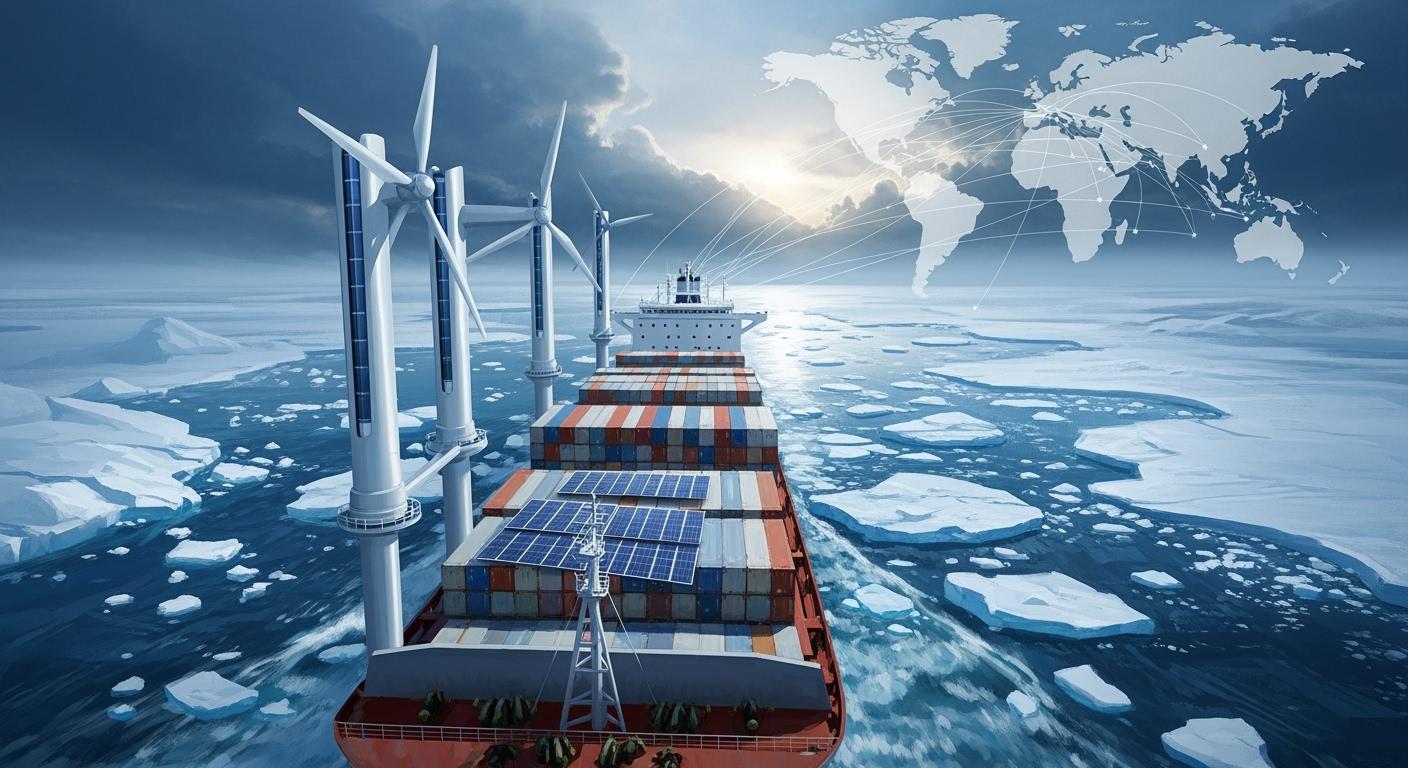
Arctic shipping is transforming global supply chains by offering a faster and more sustainable corridor for international trade. The northern sea route now provides near year-round access, supporting increased trade volumes projected to rise by 5% to 10% by 2030. Industries such as electronics, automotive, and FMCG benefit from reduced transit times and improved reliability.
Route | Transit Time | Key Ports Involved |
|---|---|---|
18 days | Ningbo, Felixstowe, Rotterdam, Hamburg, Gdańsk | |
Traditional Routes | Varies | Various ports, often longer |
JUSDA leverages digital solutions like JusLink to optimize logistics, manage risks, and enhance operational efficiency. Stakeholders must evaluate both opportunities and challenges, including environmental impacts and operational complexities.
Key Takeaways
The Northern Sea Route significantly reduces shipping times between Asia and Europe, cutting transit from 30-40 days to just 18 days.
JUSDA's JusLink platform enhances logistics efficiency by providing real-time monitoring and AI-driven risk management, helping businesses adapt to new trade patterns.
Arctic shipping offers a sustainable alternative to traditional routes, with potential emissions reductions of up to 90% compared to the Suez Canal.
The Arctic's changing ice conditions and advanced navigation technology are making year-round shipping more reliable and accessible.
Stakeholders must balance the benefits of faster shipping with environmental concerns and operational challenges in the Arctic region.
Northern Sea Route: Supply Chain Impact
Changing Global Trade Patterns
Arctic shipping has begun to reshape global trade by offering a faster and more reliable corridor for international cargo movement. As of August 31, 2023, ten container ships had successfully navigated the northern sea route, along with tankers and other vessels. These ships primarily transported goods between China and Russia, highlighting the increasing significance of this shipping route in global commerce. The Sea Legend China-Europe Shipping Route now connects major Chinese ports to European hubs, reducing shipping time to only 18 days. This dramatic decrease in transit time, compared to the traditional 30 to 40 days, allows companies to move goods more quickly and efficiently. Analysts recognize the Arctic passage as a game-changer for time-sensitive cargo, emphasizing its ability to enhance supply chain speed and lower inventory requirements.
JUSDA supports this transformation by providing advanced logistics solutions for industries such as electronics, automotive, and FMCG. The company leverages its global network and digital platforms to help clients adapt to new trade patterns. JUSDA’s expertise ensures that businesses can take advantage of the northern sea route’s efficiency while maintaining high standards of reliability and transparency.
Strategic Benefits for Shippers
Shippers using the northern sea route report several strategic advantages over traditional maritime paths:
Reduced transit times and lower fuel consumption, which improve trade efficiency.
A direct shipping path between Asia and Europe, avoiding congested regions like the Suez Canal.
The potential to reshape global maritime trade patterns, offering new opportunities for logistics optimization.
JUSDA’s JusLink platform enables shippers to maximize these benefits. The platform uses AI-driven forecasting, real-time risk monitoring, and automated management tools to streamline supply chain operations. JusLink’s intelligent agents provide accurate demand predictions, optimize inventory levels, and monitor shipments in real time. These capabilities help shippers respond quickly to market changes and minimize disruptions.
JUSDA’s commitment to innovation and efficiency positions it as a leader in supporting clients through the evolving landscape of arctic shipping. The company’s solutions empower businesses to capitalize on the strategic benefits of the northern sea route, ensuring competitive advantage in global trade.
Arctic Shipping: Year-Round Reliability
Seasonal Access and Ice Conditions
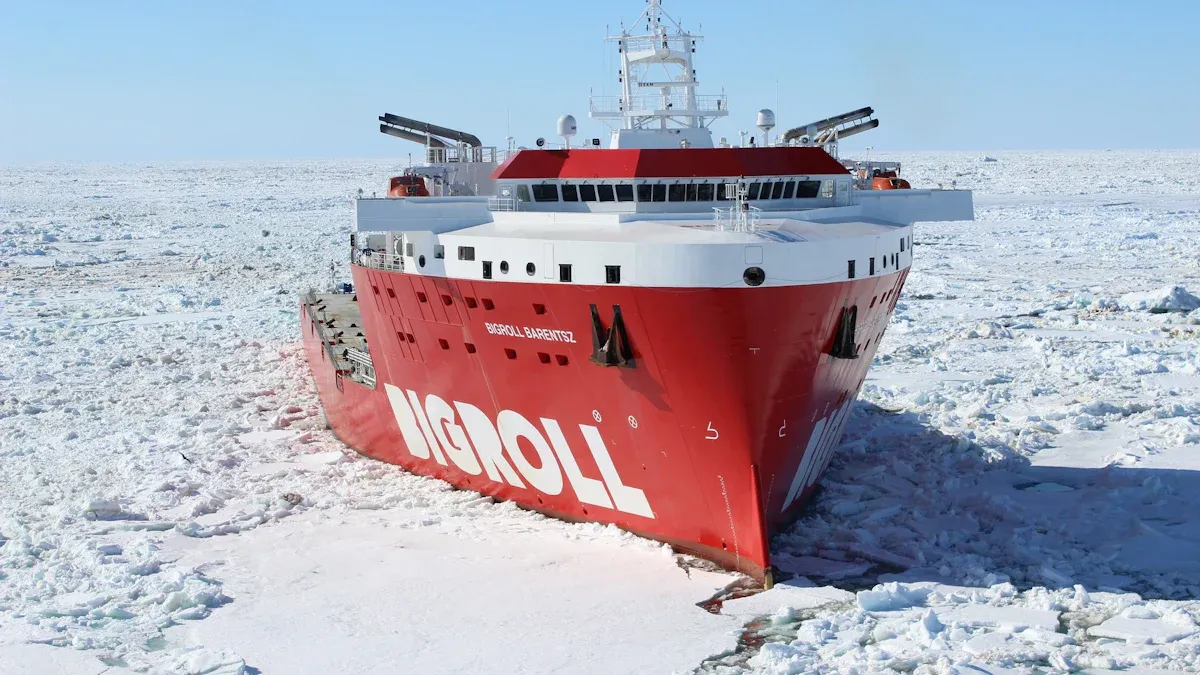
Arctic shipping has become increasingly reliable due to changes in ice conditions and advancements in navigation technology. As of early August 2025, the northern sea route is nearly clear of ice, which allows for an early start to the shipping season with icebreaker escort. In 2024, cargo volumes reached 37.9 million tonnes, with 92 full transit voyages recorded. Rosatom expects the number of foreign vessels operating on this shipping route to double in 2025 compared to the previous year. These developments highlight the growing confidence in the ability to maintain regular trade through the Arctic.
Operators must address several challenges when navigating the Arctic. Environmental unpredictability and dynamic sea ice conditions require constant monitoring. Limited connectivity for real-time data and the need for reliable satellite imagery add complexity to operations. Companies like JUSDA leverage digital risk management tools such as JusLink to overcome these obstacles. JusLink integrates advanced connectivity services, including real-time weather updates and satellite communication, which enhance decision-making and safety for vessels traveling through the region.
Note: The integration of digital platforms like JusLink enables shippers to monitor ice conditions, track shipments, and respond quickly to changes in the environment.
Trends in Extended Navigation
Over the past decade, the Arctic has experienced significant changes that support extended navigation periods. The port of Longyearbyen in Svalbard has seen a steady increase in ship visits from 2015 to 2022, reflecting a growing interest in Arctic exploration and tourism. This trend demonstrates the expanding window for arctic shipping and the potential for year round operations.
Arctic air temperatures have risen faster than the global average, leading to a reduction in sea ice thickness and extent. Compared to the reference period of 1981 to 2010, the current sea ice extent has decreased by approximately 1.31 million square kilometers. These changes have made the northern sea route more accessible for longer periods each year, supporting the movement of goods and boosting trade between Asia and Europe.
JUSDA’s JusLink platform plays a critical role in managing the risks associated with extended navigation. The platform provides real-time monitoring, risk assessment, and automated alerts, which help shippers maintain operational efficiency and safety. JusLink’s intelligent agents analyze external data, predict potential disruptions, and offer solutions to ensure stable supply chain operations.
Key operational challenges addressed by JusLink:
Environmental unpredictability
Dynamic ice conditions
Limited connectivity for real-time data
Need for reliable satellite imagery
JUSDA continues to support clients by integrating advanced digital solutions that enable safe and efficient arctic shipping. The company’s commitment to innovation ensures that businesses can take advantage of the extended navigation periods and maintain reliable supply chain operations throughout the year.
Arctic Shipping vs. Suez Canal
Transit Times and Cost Comparison
The Northern Sea Route has emerged as a strong alternative to the suez canal for global shipping. Recent case studies show that the Arctic route can reduce shipping distances by about 40% compared to the Suez Canal. This shorter distance leads to faster transit times. For example, the Sea Legend China-Europe Shipping Route completes the journey in just 18 days, while traditional routes through the Suez Canal often take 30 to 40 days.
Cost savings are also significant. During the optimal navigation period in September, shipping companies can save between 50% and 70% on costs. Emissions drop by 80% to 90% compared to the Suez Canal route. These improvements make the Arctic route attractive for industries that rely on fast and efficient trade, such as electronics and automotive.
JUSDA uses advanced digital platforms to help clients choose the best route for their shipments. The company leverages real-time data and analytics to ensure that each shipment follows the most efficient path, reducing both time and expenses.
Risk and Operational Challenges
Despite the benefits, Arctic shipping faces unique risks and operational challenges:
The Northern Sea Route saw only about 90 ships transit last year, while the Suez Canal handled over 13,000 ships.
Some major shipping companies avoid the Arctic route due to environmental and safety concerns.
Experts warn about increased whale strikes and disruptions to the fragile Arctic ecosystem.
Harsh conditions, such as darkness and icy temperatures, make navigation difficult.
The region lacks adequate spill response resources, raising the risk of environmental disasters.
The Automatic Identification System (AIS) enables near real-time tracking of vessels, providing detailed information on ship identity, cargo, and routes. This technology helps JUSDA monitor port activities, identify bottlenecks, and optimize logistics efficiency, especially in challenging environments like the Arctic.
JUSDA’s digital solutions, including JusLink, support clients in managing these risks. The company’s expertise ensures that businesses can maintain reliable operations, even when using new shipping corridors.
Technology and Innovation in Arctic Logistics
Ice-Class Vessels and Fleet Growth
Arctic logistics depend on specialized ice-class vessels that can navigate harsh conditions. The global fleet now includes 150 vessels, with 102 diesel-electric icebreakers, 7 nuclear-powered icebreakers, and 12 LNG-powered icebreakers. The fleet continues to expand, with 9 new vessels entering service in 2024 and 19 more on order. Cargo volumes on the Northern Sea Route increased by 83% from 2020 to 2024, reaching 33 million tonnes. National investments in icebreaker construction and modernization exceeded $9.5 billion over the past four years. Russia is refurbishing 12 diesel-electric vessels to extend their operational life, while Finland allocated $1.1 billion for retrofitting. Seasonal navigation windows have grown by 24 days since 2018, supporting longer shipping periods.
42 new icebreaker applications submitted in 2024
Russia’s fleet transported 26.6 million tonnes, with diesel-electric vessels moving 19 million tonnes
Scientific research voyages rose by 25%, totaling 210 missions in 2024
JusLink: AI-Driven Supply Chain Solutions
JUSDA’s JusLink platform transforms Arctic logistics through advanced digital technologies. JusLink uses AI-driven sales forecasting to predict demand and optimize inventory. The platform’s intelligent replenishment management ensures timely delivery and reduces stockouts. JusLink’s Control Tower Intelligent Risk Management system monitors supply chain risks in real time, providing early warnings and actionable insights. Automated application management tracks shipment status and detects anomalies, improving operational efficiency. JusLink’s microservices architecture allows customization for different business scenarios, supporting industries such as electronics, automotive, and FMCG.
AI-powered demand forecasting and replenishment
Real-time risk monitoring and alerts
Automated shipment tracking and anomaly detection
Real-Time Monitoring and Risk Control
Real-time monitoring and risk control technologies deliver measurable benefits for Arctic shipping. Predictive maintenance reduces unplanned downtime, making operations more reliable. Improved berth and yard planning decreases congestion and boosts port efficiency. Optimized scheduling lowers energy consumption and emissions. Workforce roles shift from manual tasks to data analysis, increasing productivity. Incremental gains from each project add up to substantial long-term advantages.
Benefit | Description |
|---|---|
Reduced unplanned downtime | Predictive maintenance leads to reliable operations. |
Improved berth and yard planning | Less congestion enhances port efficiency. |
Energy and emission improvements | Scheduling optimization cuts energy use and emissions. |
Workforce transitions | Staff focus on monitoring and analysis, raising productivity. |
Cumulative operational advantages | Project-by-project gains result in significant long-term benefits. |
AI and data analytics play a crucial role in monitoring Arctic changes. These tools provide early warnings, risk assessments, and proactive mitigation strategies, helping shippers adapt to evolving conditions.
Sustainability and Environmental Considerations

Emissions Reduction and Green Shipping
Arctic shipping offers significant opportunities for reducing emissions. The Northern Sea Route provides a shorter voyage distance compared to the Suez Canal, which can increase profits for liner companies and reduce fuel consumption. Sea Legend’s China-Europe Shipping Route claims to cut carbon emissions by approximately 50%. This achievement aligns with industry benchmarks for sustainable shipping, where optimized power allocation can reduce emissions by 8%, and alternative fuels such as hydrogen-powered systems can achieve reductions of up to 70%.
Methodology | Emission Reduction (%) |
|---|---|
Optimized Power Allocation | 8 |
Alternative Fuels | Up to 70 |
Hydrogen-powered systems | Up to 70 |
Despite these benefits, increased shipping activity in the Arctic may result in black carbon emissions, which pose a threat to the fragile ecosystem. JUSDA addresses these challenges by integrating green shipping practices and advanced digital solutions. JusLink’s AI-driven supply chain management supports efficient route planning and real-time monitoring, helping clients minimize environmental impact while maintaining operational efficiency.
Regulatory Compliance and Ecosystem Protection
International regulations play a vital role in protecting the Arctic ecosystem. The International Maritime Organization (IMO) has enacted a ban on heavy fuel oil use in the Arctic, effective July 1, 2024, to prevent pollution. The Polar Code establishes mandatory guidelines for ship operations in polar waters, focusing on safety and environmental protection. Article 234 of the United Nations Convention on the Law of the Sea (UNCLOS) allows coastal states to enforce laws against vessel-source pollution in ice-covered areas.
IMO regulations limit heavy fuel oil use to protect Arctic waters.
The Polar Code mandates safety and environmental standards for polar shipping.
UNCLOS Article 234 empowers local authorities to control pollution in ice-covered regions.
JUSDA demonstrates a strong commitment to sustainable logistics by complying with these international standards. The company’s digital platforms, including JusLink, enable clients to track regulatory changes and ensure adherence to environmental guidelines. JUSDA’s approach balances efficiency with responsibility, supporting global supply chains while safeguarding the Arctic environment.
Future of the Northern Sea Route
Year-Round Prospects and Climate Trends
The Northern Sea Route continues to attract attention as climate trends reshape Arctic navigation. Research shows a 37% increase in Arctic shipping over the past decade, with further growth expected by 2050 as melting ice extends the navigation season. The Arctic navigation window has lengthened compared to 20 years ago, allowing more vessels to operate for longer periods. The ACCIBERG project aims to improve probabilistic forecasting, making navigation safer and more predictable.
"European land in the Arctic remains the fastest-warming region on Earth, and changes in atmospheric circulation are favouring more frequent summer heatwaves. Glaciers are melting (…)"
"The rapid pace and complexity of Arctic change demand new and strengthened Arctic adaptation and global reductions of fossil fuel pollution."
JUSDA leverages digital supply chain solutions like JusLink to help clients adapt to these changes. JusLink provides real-time monitoring and risk management, supporting safe and efficient year round operations.
Geopolitical and Economic Outlook
Geopolitical developments continue to influence the economic outlook for the Northern Sea Route. The Arctic is becoming an alternative to traditional maritime routes, reducing time and cost for global trade. Control of Arctic resources and transport corridors shapes future economic flows and security strategies. Transport links between Arctic resources and European and Asian markets remain pivotal for global interests.
Evidence Description | Implication for NSR Economic Outlook |
|---|---|
The Arctic is becoming an alternative to traditional maritime routes, cutting both time and cost of moving goods. | This shift is changing global trade flows and creating new logistics hubs, enhancing the economic viability of the NSR. |
Control of Arctic resources and transport routes means control of future economic flows and security architectures. | This control will shape the global order and influence economic strategies related to the NSR. |
Transport corridors linking Arctic resources with European and Asian markets are pivotal to US interests. | The opening of new Arctic routes provides strategic flexibility and reduces reliance on traditional pathways, positively impacting the NSR's economic outlook. |
JUSDA’s vision centers on global supply chain innovation. The company uses advanced digital platforms to optimize logistics and support clients in navigating evolving trade patterns.
Challenges to Widespread Adoption
Several challenges limit the widespread adoption of the Northern Sea Route:
Geopolitical dynamics complicate diplomatic negotiations, especially with Russia controlling much of the route.
Security risks include threats of piracy and maritime accidents, requiring advanced search and rescue capabilities.
Regulatory complexities demand strict adherence to international safety and environmental standards.
JUSDA addresses these challenges by integrating intelligent risk management and compliance tools within JusLink. The platform enables clients to monitor risks, track regulatory changes, and maintain supply chain stability in the Arctic.
The Northern Sea Route is reshaping global supply chains by reducing travel distance between East Asia and Europe by nearly 9,000 km and cutting transit times by up to two weeks. JusLink enhances risk management and efficiency through real-time data integration and advanced analytics. Companies achieve a balance between speed, sustainability, and environmental responsibility by adopting green shipping practices and monitoring emissions. Supply chain professionals should track ongoing developments, such as increased cargo volumes and expanding port capacity, and leverage digital solutions like JusLink to address future challenges.
The NSR could be ice-free by 2030, enabling regular seasonal services.
Technology improves decision-making and safety in Arctic operations.
Slower ship speeds can reduce emissions by nearly 30%.
Emerging digital tools support supply chain visibility and resilience.
Factor Category | Key Insights |
|---|---|
Environmental Factors | Energy efficiency and air quality improvement remain critical. |
Social Factors | Community welfare is a priority. |
Green Investments | Sustainable practices attract investment. |
Supply chain leaders should embrace innovation and digital transformation to stay ahead in the evolving Arctic shipping landscape.

JUSDA Solutions
To provide you with professional solutions and quotations.
FAQ
How does JusLink improve supply chain risk management?
JusLink uses AI-driven risk control towers to monitor supply chain risks in real time. The platform provides early warnings and actionable insights, helping companies respond quickly to disruptions and maintain stable operations.
What sustainability practices does JUSDA follow in Arctic shipping?
JUSDA integrates green shipping practices and complies with international regulations. JusLink supports efficient route planning and real-time monitoring, helping clients reduce emissions and protect the Arctic ecosystem.
How does JusLink support real-time shipment tracking?
JusLink’s automated application management tracks shipment status and detects anomalies. The platform offers real-time logistics and inventory monitoring, ensuring transparency and timely delivery for global supply chains.
What are the core features of JusLink’s AI solution?
Feature | Benefit |
|---|---|
Sales Forecasting | Accurate demand prediction |
Replenishment | Optimized inventory levels |
Risk Control Tower | Real-time risk monitoring |
Intelligent Assistant | Efficient customer interaction |
See Also
Comprehensive Insights on Eco-Friendly Transport in Supply Chains
Exploring Innovations in Sea Freight Logistics for 2024
Transforming Future Logistics with AI in Supply Chains