Arctic Shipping Route Reshapes Global Trade as New Passages Cut Asia–Europe Transit by 40%


The arctic shipping route is changing global trade. It makes trips between Asia and Europe much shorter. The route cuts travel time by 40%. The arctic lets ships move faster and gives new chances for business. Many companies think the arctic will be important for shipping. The arctic shipping route helps shape the future. It also helps the future of arctic logistics and shipping.
Key Takeaways
The Arctic shipping route makes trips between Asia and Europe 40% faster. This means goods can be delivered more quickly.
Companies can spend less money on fuel by using the Arctic route. This helps lower shipping costs. It is a smart choice for global trade.
New technology, like better icebreakers and AI systems, makes Arctic shipping safer. These tools also make it more reliable. This helps Arctic shipping grow in the future.
What Is the Arctic Shipping Route?
Northern Sea Route Overview
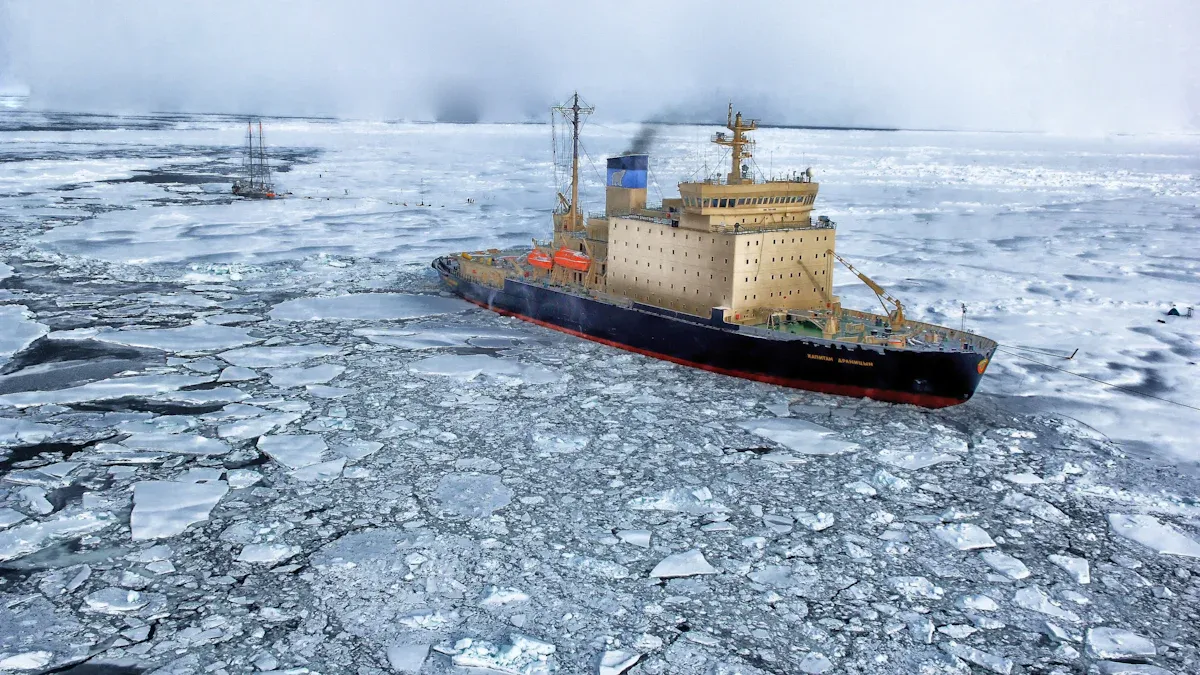
The northern sea route goes along Russia’s arctic coast. Ships use this path to get from Asia to Europe. It gives a direct way between big ports. Many cargo ships pick the northern sea route because it is used more often. Russian shipping companies use this route for their regular trade. The arctic waters here are easier to travel now because sea ice is melting. Bigger ships can go through safely because of this change. The northern sea route helps ships move faster and helps global trade grow.
Northwest Passage Explained
The northwest passage goes through Canada’s arctic islands. This passage links the Atlantic Ocean and the Pacific Ocean. Not many ships use the northwest passage because the water is not well mapped. Ships have gotten stuck here before. The northwest passage is not used as much as the northern sea route. The table below shows how these two arctic routes are different:
Route | Navigability Challenges | Usage |
|---|---|---|
Northwest Passage | Poorly surveyed waters, history of groundings | Less frequently navigated |
Northern Sea Route | More established, greater usage by commercial vessels | Primarily used by Russian shipping |
Seasonal Accessibility
Arctic shipping changes with the seasons. Ships can only travel when there is little sea ice. Summer is the best time for safe trips. The transpolar sea route might open later as ice keeps melting. The number of ships using the arctic depends on the season. Companies plan their trips by looking at ice forecasts. The arctic is still hard for shipping, but new technology makes it safer and more reliable.
How the Arctic Sea Route Cuts Transit Times
Shorter Distances Between Asia and Europe
The arctic sea route gives ships a direct way from Asia to Europe. Ships travel along Russia’s northern coast. This path is shorter than older shipping lanes. The arctic sea route makes shipping between big ports much faster. Now, ships can get from Asia to Europe in about 20 days. This is much quicker than the Suez Canal, which takes 40 days, or the Cape of Good Hope, which takes 50 days.
The table below shows how long each route takes:
Route | Duration |
|---|---|
Arctic Sea Route | 20 days |
Suez Canal | 40 days |
Cape of Good Hope | 50 days |
Shipping companies use the arctic sea route to save time and money. Shorter trips mean ships use less fuel and spend less money. The arctic sea route also helps companies deliver things faster. This is important for items like electronics and medical supplies. Many businesses pick the arctic sea route because it is fast and efficient.
Note: The arctic sea route is only open for part of the year. Ships must plan their trips to avoid sea ice.
Comparison to Suez and Panama Canals
The arctic sea route is changing global shipping. The Suez Canal and Panama Canal have been main shipping paths for a long time. These routes are longer and often crowded with ships. Ships using the Suez Canal sometimes have to wait to pass through. The arctic sea route helps ships skip these delays.
The arctic sea route lets ships cut travel time by up to 40%. This means goods get delivered faster and supply chains work better. The arctic sea route also helps ships avoid traffic jams that happen in the Suez Canal.
The chart below shows how long each shipping route takes:
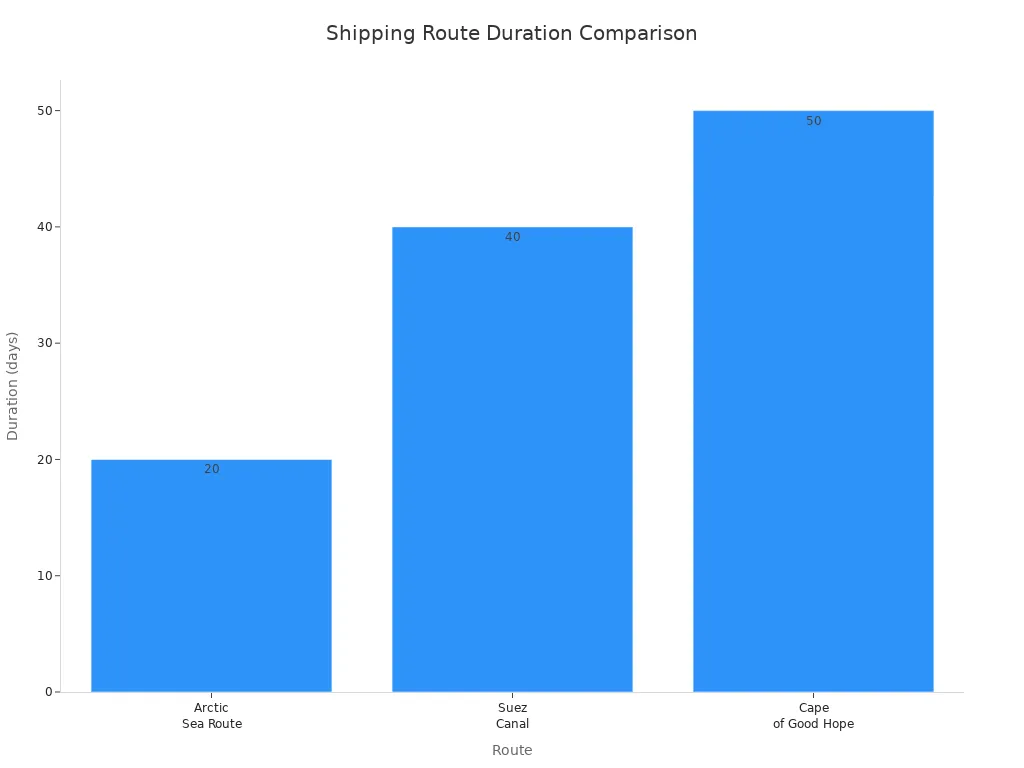
Using the arctic sea route gives companies a new way to link Asia and Europe. The shorter trips help meet the need for fast delivery. As the arctic opens up more, more ships will use this route. The arctic sea route is becoming an important part of global shipping’s future.
Benefits for Global Trade and Logistics

Faster Shipping and Cost Savings
Arctic shipping routes have changed how goods move between Asia and Europe. Ships now travel much shorter paths. This makes shipping faster and costs less money. Many shipping companies say the arctic route can cut travel time by up to 40 percent. Ships use less fuel and spend less time at sea. Businesses save money because products arrive sooner. Faster shipping helps companies react quickly to what people want. The arctic route also lowers costs for storage and insurance.
Shipping through the arctic lets companies skip crowded canals. Ships do not wait as long in busy places. This makes delivery times more reliable. Companies can plan better and keep their supply chains working well. The arctic route helps global trade by making shipping more efficient.
New Trade Opportunities
Arctic shipping routes give many countries new chances for trade. Companies now look for new deals and partners. The table below shows how different companies and countries gain from more arctic shipping:
Company | Agreement Details | Impact on Trade Opportunities |
|---|---|---|
Eimskip | Enhances capacity and efficiency in arctic shipping, facilitating trade between Iceland and Greenland | |
Royal Arctic Line | Agreement for cooperation in sharing capacity and port developments | Increases business activities and direct services between arctic nations, improving trade routes |
Vietnam & Russia | Exploring joint venture for maritime transport route | Strengthens maritime trade and logistics cooperation, potentially opening new routes in the arctic region |
Many countries see the arctic as a way to grow shipping. Vietnam and Russia are thinking about working together on a new shipping route. This plan will help both countries build ships and improve how goods move. The Northern Sea Route links Europe and Asia, making shipping faster and cheaper. These new trade chances help change global trade and support growth.
Tip: Companies using arctic shipping routes can reach new markets and make stronger partnerships.
JUSDA’s China-Europe Express Rail as an Alternative
JUSDA offers the China-Europe Express Rail as another way to move goods between Asia and Europe. This rail service gives companies a choice besides arctic shipping. The table below compares the China-Europe Express Rail and the arctic shipping route:
Attribute | JUSDA China-Europe Express Rail | Arctic Shipping Route |
|---|---|---|
Speed | More than 25 days | |
Cost | Higher capital costs | Reduces inventory by 40% |
Reliability | More predictable | Affected by weather and ice |
JUSDA’s rail service gives steady delivery times. Companies trust the rail because it is predictable. The rail takes more than 25 days, which is slower than the arctic route. But the rail does not have problems with ice or storms. Businesses pay more for rail, but they get steady service. The arctic shipping route is faster and costs less for inventory. Companies pick rail or arctic shipping based on what they need for speed, cost, and reliability.
JUSDA helps global trade by giving companies more choices. The China-Europe Express Rail helps businesses manage their supply chains. Companies use rail when they need steady schedules. They use arctic shipping when they want faster delivery and lower costs. Both ways help shape global trade and create new chances for growth.
Challenges of the Arctic Shipping Route
Environmental and Safety Risks
The arctic has many problems for ships. Ships can hurt the fragile ecosystem. Oil spills and ship waste can harm sea ice and animals. Accidents happen more when ships travel near ice. Melting sea ice makes new paths, but brings new worries.
"More ships in the Arctic can hurt the fragile ecosystem and ice caps."
"More shipping can crowd lanes and slow down traffic. This traffic is very important for Arctic communities to live and grow."
More ships mean more fuel burned and more pollution. Ships release harmful gases when they travel. As summers have less ice, more ships may come. This puts more stress on the environment and people living there. Protecting the arctic means thinking about the future and being careful with trade.
Infrastructure and Harsh Conditions
Shipping in the arctic is very hard. Cold weather and moving ice make trips risky. Many places do not have good shipping infrastructure. Rescue teams cannot help much in far away areas. Ships must be ready for storms and thick ice.
Not enough rescue teams
Not enough ports in polar waters
Ships need special fuel for cold trips. There are not many ports or repair places. Companies must plan well to avoid delays and help the environment. The tough weather makes every trip hard and needs good planning.
Geopolitical Tensions
Countries fight for control of arctic routes. Melting ice opens new trade paths, but causes arguments. Nations want to keep their resources safe. Some countries make strict rules for ships in their waters. These rules can change fast and affect shipping.
Fights between countries can slow trade and make it cost more. Companies must watch for new laws and changing borders. The arctic is a place where politics, nature, and business meet. Every shipping choice must think about the environment and the future of trade.
Innovations and Solutions in Arctic Logistics
Advanced Icebreaking and Navigation
Modern icebreakers help ships move safely in the Arctic. These ships have strong hulls and big engines to break thick ice. Navigation tools use satellites and radar to find safe paths. Crews get weather updates to stay away from danger. Many companies train workers for Arctic trips. They teach crews how to handle problems and work with rescue teams.
Note: Icebreakers let ships travel in tough seasons. They stop ships from getting stuck and help avoid delays.
The table below lists important parts of advanced icebreaking ships:
Feature | Benefit |
|---|---|
Reinforced hull | Withstands ice impact |
GPS navigation | Finds safe passages |
Weather radar | Detects storms early |
JusLink AI for Supply Chain Optimization
JUSDA’s JusLink AI helps make Arctic shipping better. The system uses artificial intelligence to spot risks and manage inventory. JusLink AI looks at data from ships, ports, and weather stations. It gives early warnings about ice, storms, or delays. Companies use JusLink AI to plan trips and avoid trouble.
Real-time risk checks help companies act fast.
Predictive analytics show changes in freight rates and demand.
Digital supply chain tools keep shipments moving.
JusLink AI also helps with choices for global supply chains. Businesses get clear reports and tips for better planning. JusLink AI helps companies save money and deliver goods faster. Technology like JusLink AI makes Arctic shipping safer and more reliable.
The Future of the Arctic Sea Route
Growth Potential and Market Impact
Many experts think arctic shipping will grow a lot. More companies want to deliver goods faster between Asia and Europe. The Northern Sea Route and Northwest Passage give new ways for global trade. Shipping lines like Sea Legend have shown big container ships can use these waters. The Istanbul Bridge finished its trip faster than old routes. This success makes other carriers want to try the arctic path. Businesses hope for lower costs and quicker ways to reach Europe. The table below shows how the market might change:
Impact Area | Expected Change |
|---|---|
Delivery Speed | Faster shipments |
Trade Volume | Higher exports |
Logistics Costs | Lower expenses |
Ongoing Environmental and Political Issues
Arctic shipping has many problems. Melting ice opens new paths but can hurt animals. Oil spills and pollution can damage the ecosystem. Countries fight for control of these waters. Russia, Canada, and others make strict rules for ships. Political problems can change shipping plans fast. Companies must watch for new laws and risks to nature. Many groups want safer shipping and better care for the arctic.
Note: Good planning helps protect nature and avoid legal trouble.
Outlook for Global Trade and Logistics
The future of the arctic sea route looks bright. More ships will use these routes as technology gets better. Companies like JUSDA use smart tools and AI to help. JusLink AI helps plan safe trips and manage risks. Rail services like the China-Europe Express Rail give another way to deliver goods. The arctic route will change how goods move around the world. Businesses must think about speed, cost, and safety. People everywhere will watch how trade grows and how the arctic changes.

JUSDA Solutions
To provide you with professional solutions and quotations.
The Arctic shipping route is changing trade around the world. Companies can deliver things faster and find new chances. Technology from groups like JUSDA helps make shipping safer and better. The table below shows ways to grow and care for the environment:
Strategy | Description |
|---|---|
Promotion of Renewable Fuels | Uses cleaner fuels to help nature. |
Investment in Decarbonization | Supports green shipping for future business. |
Rapid Implementation | Acts fast to keep the Arctic safe. |
See Also
Exploring Innovations in Sea Freight Logistics for 2024
Transforming Logistics with AI in the Supply Chain
Addressing Global Supply Chain Growth Challenges Effectively
Discovering Key Global Logistics Companies: A Comprehensive Guide
Understanding the Importance of Supply Chains in Global Trade