The Autonomous Revolution in Last-Mile Delivery: Pilot Successes That Are Shaping the Future of Logistics

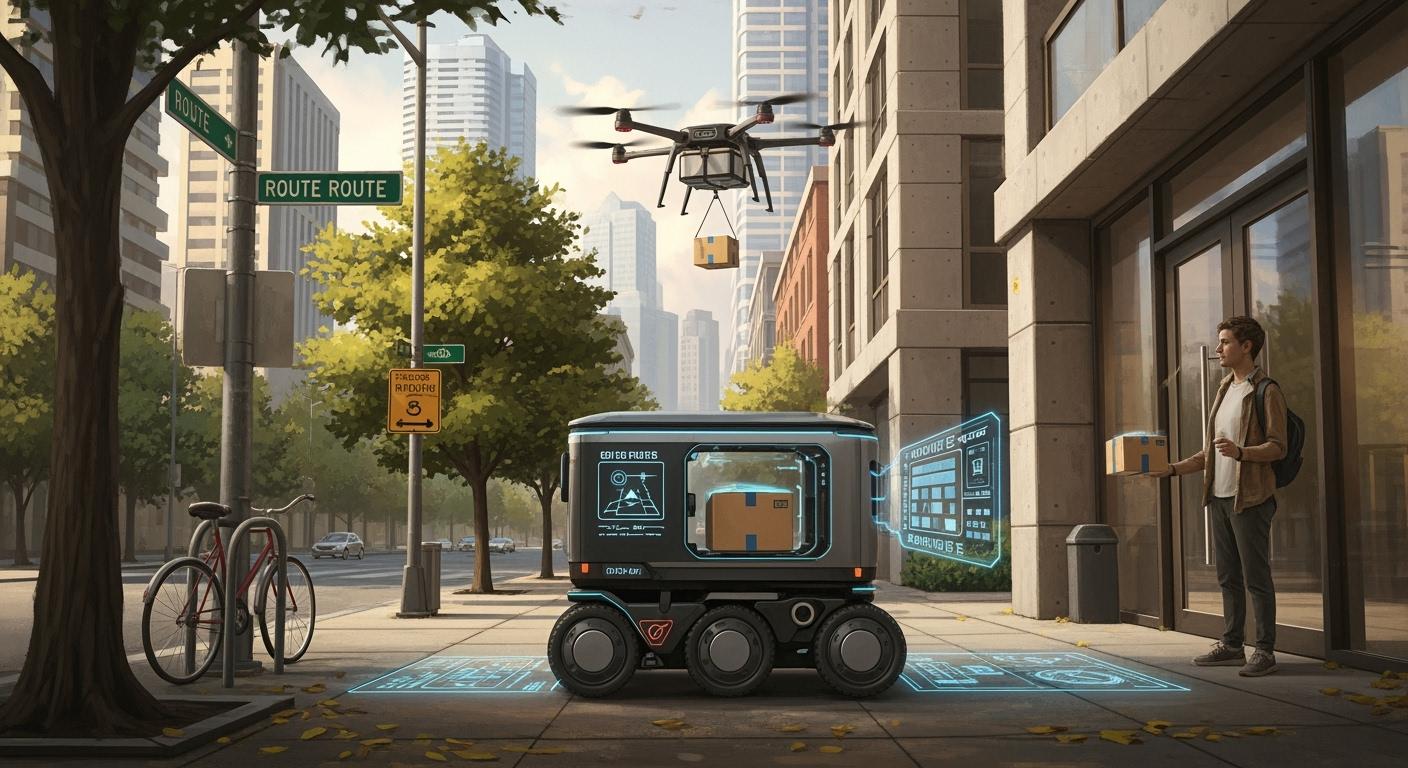
Autonomous vehicles and automation now drive major change in last mile delivery, pushing speed, flexibility, and sustainability to new heights. Across Asia-Pacific, market share for autonomous vehicles in delivery is set to surpass 36% by 2025, supported by smart logistics and new vehicle technology.
Region | Market Share (2025) | CAGR (2025-2034) | Key Developments |
|---|---|---|---|
Asia-Pacific | >36% | ~9.2% | Strong growth driven by smart logistics, urban micro-hubs, and new delivery vehicles. |
Latin America | ~6% | ~8% | Growth due to investments in logistics infrastructure and urban delivery networks. |
Middle East | ~1% | Steady growth | Driven by urban logistics projects and government initiatives for electric delivery vehicles. |
Digital supply chain solutions and advanced warehousing now cut delivery times, lower emissions, and boost transparency. JUSDA uses intelligent platforms and AI to help businesses meet rising customer demands and redefine the future of logistics.
Key Takeaways
Autonomous vehicles are transforming last mile delivery by improving speed and efficiency. They use advanced technology to navigate urban areas quickly, meeting the demand for faster deliveries.
Operating 24/7, autonomous vehicles reduce labor costs and increase delivery volume. This continuous operation allows companies to keep up with high demand without the need for driver breaks.
Autonomous delivery solutions help tackle urban congestion and labor shortages. They optimize fleet size and improve vehicle utilization, leading to cost savings and enhanced delivery efficiency.
Investing in real-time tracking and transparent communication builds customer trust. Companies that prioritize these aspects reduce failed deliveries and improve overall customer satisfaction.
JUSDA's digital solutions, like JusLink, enhance last mile delivery by using AI and IoT for route optimization and inventory management. These technologies provide businesses with greater efficiency and transparency.
Autonomous Vehicles Transforming Last Mile Delivery
Impact on Delivery Speed and Efficiency
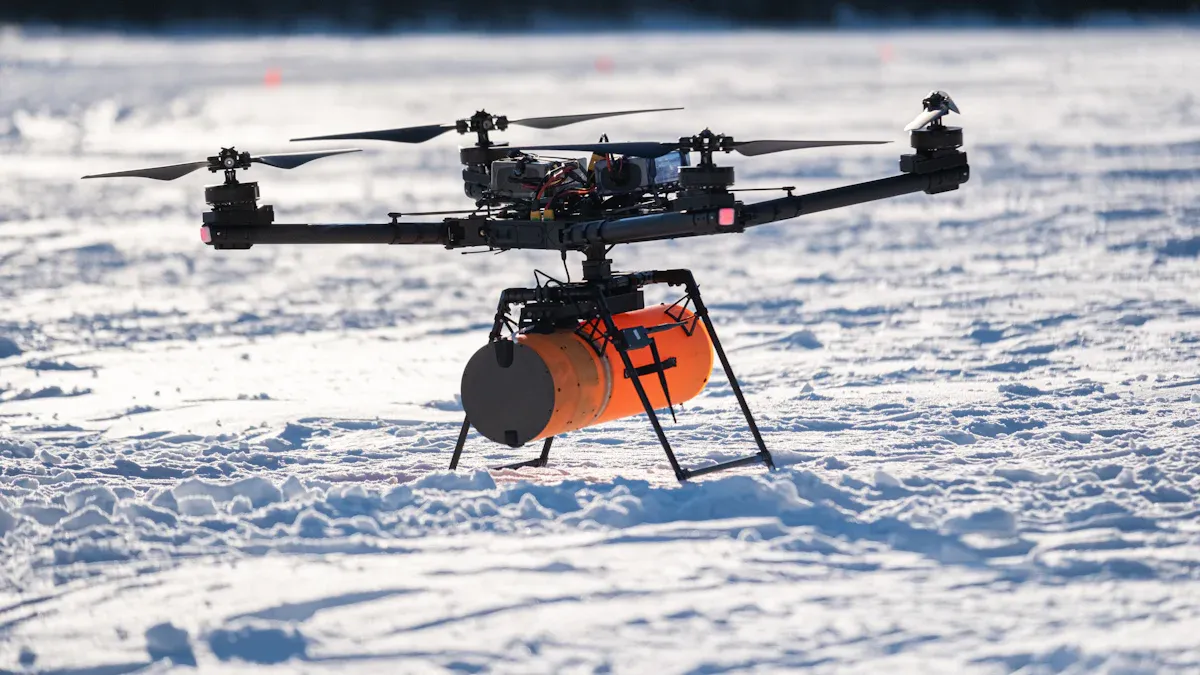
Autonomous vehicles have become a game changer in last mile delivery. They use advanced sensors and AI-powered navigation to move through urban environments quickly and safely. Companies now rely on these vehicles to meet the growing demand for fast and reliable deliveries. The ability to process real-time traffic data allows autonomous vehicles to select the most efficient routes, reducing delays and improving on-time performance.
Several factors drive the adoption of autonomous vehicles in last mile delivery:
Technological advancements enable precise navigation and obstacle avoidance.
Regulatory frameworks support safe deployment in cities.
Consumer acceptance grows as people see the benefits of faster, more reliable service.
The need for efficient delivery solutions increases as e-commerce expands.
Autonomous vehicles help companies deliver packages faster and with fewer errors. This improvement in speed and efficiency leads to higher customer satisfaction and supports the trend toward same-day or even one-hour delivery options.
24/7 Operations and Cost Savings
Autonomous vehicles operate around the clock, which sets them apart from traditional delivery methods. They do not require breaks or shift changes, so companies can offer continuous delivery services. This capability increases the volume of packages delivered each day and helps businesses keep up with high demand.
Key benefits of 24/7 autonomous delivery include:
Continuous operation without the need for driver rest periods.
AI-powered route optimization for maximum efficiency.
Lower labor costs due to reduced reliance on human drivers.
A comparison of operational costs highlights the savings:
Delivery Method | Cost per Mile | Cost Reduction Percentage |
|---|---|---|
Traditional Human-Driven | $0.60 | N/A |
Autonomous Vehicles | $0.10 | 40-60% |
These cost savings make autonomous vehicles an attractive option for companies looking to optimize last mile delivery. The combination of speed, efficiency, and lower expenses positions autonomous vehicles as a key driver of innovation in logistics.
Overcoming Last Mile Delivery Challenges
Addressing Urban Congestion and Labor Shortages
Urban congestion and labor shortages present major obstacles for logistics providers. Delivery vehicles often face traffic jams, limited parking, and inconsistent addresses, which slow down operations and increase costs. Recent logistics studies highlight these challenges:
Challenge | Description |
|---|---|
High Costs | Last-mile delivery often consumes more than 50% of total shipping costs. |
Traffic Congestion | Congestion increases delivery times, especially in urban areas. |
Inconsistent Addresses | Issues with address accuracy lead to delivery inefficiencies. |
Limited Parking | Difficulty in finding parking can delay deliveries. |
Approximately 5% of last-mile deliveries fail, costing nearly $17–$18 each in reattempts. | |
Peak-Season Volume Spikes | Increased demand during peak seasons complicates logistics. |
Long Distances in Rural Areas | Long distances between stops reduce efficiency in rural deliveries. |
Autonomous vehicles help address these issues by optimizing fleet size and improving vehicle utilization. Studies show that shared autonomous mobility services can lower operational costs and reduce congestion. Autonomous trucks operate nearly 24/7, which boosts delivery efficiency and helps companies manage labor shortages. As new roles in technology maintenance and logistics management emerge, the industry adapts to changing workforce needs.
Enhancing Sustainability and Customer Experience
Sustainability and customer experience have become top priorities in last mile delivery. Inefficient route planning often leads to late deliveries and higher emissions. Autonomous delivery solutions streamline supply chains, reduce emissions, and minimize noise pollution. Pilot programs demonstrate that these solutions can deliver meals in an average of 7 minutes and groceries in 14 minutes, greatly improving customer satisfaction.
Note: Companies that invest in real-time tracking and transparent communication provide a more reliable and visible delivery process. This approach not only reduces failed deliveries but also builds trust with customers.
By leveraging advanced technology, logistics providers can overcome traditional barriers and set new standards for efficiency, sustainability, and service quality.
Pilot Successes in Last Mile Delivery
Retail and E-Commerce Pilots
Retail and e-commerce companies have rapidly adopted autonomous technology to transform last mile delivery. Major players such as Nuro, Starship Technologies, and Amazon have launched pilot programs that use autonomous vehicles and drones to deliver goods directly to customers. These pilots demonstrate how automation can increase speed and reliability in the delivery process. Companies like FedEx and Wing have also tested autonomous vehicles and drones in urban areas, focusing on overcoming regulatory and public acceptance challenges.
The following table highlights some of the most notable pilot programs in this sector:
Company | Program Description | Key Insights |
|---|---|---|
FedEx | Pilots autonomous delivery vehicles in urban areas | Focus on automation, addresses regulatory and public acceptance |
Nuro | Deploys robotic couriers in controlled environments | Part of a broader trend in autonomous delivery |
Starship Technologies | Uses robots for local deliveries | Contributes to the growing market for autonomous last mile delivery |
Amazon | Implements robotic couriers for e-commerce deliveries | Significant player in autonomous delivery |
Wing | Leverages drones for retail deliveries | Expands drone use in last mile logistics |
Zipline | Uses drones for medical and retail deliveries | Highlights drone versatility in delivery contexts |
The market for autonomous last mile delivery reached $18.7 billion in 2023. Projections show it could grow to $144.2 billion by 2033, with an expected annual growth rate of 23.1% from 2024 to 2033. This rapid expansion reflects the increasing demand for faster, more efficient delivery solutions in retail and e-commerce.
Healthcare and Food Delivery Pilots
Healthcare and food delivery sectors have also benefited from autonomous delivery pilots. These programs focus on speed and reliability, which are critical for time-sensitive deliveries such as medical supplies and fresh food. Autonomous vehicles and drones have shown impressive results in these pilots.
Metric | Result |
|---|---|
Time savings | |
Reduction in product expirations | 67% decrease in blood and blood product expiration rates |
These results highlight the impact of autonomous technology on improving delivery times and reducing waste. Hospitals and clinics now receive essential supplies faster, while food delivery services can ensure fresher products reach customers. The success of these pilots demonstrates the potential for autonomous solutions to address unique challenges in healthcare and food logistics.
JUSDA’s Global Pilot Programs
JUSDA has played a leading role in advancing last mile delivery through its global pilot programs. The company leverages its digital supply chain platform, JusLink, and advanced warehousing solutions to support pilot success across multiple industries. JUSDA’s pilots focus on integrating AI, IoT, and real-time data to optimize delivery routes, manage inventory, and enhance transparency.
JUSDA’s digital supply chain and warehouse solutions provide several advantages:
Real-time inventory tracking through platforms like JusLink and eVMI.
Seamless integration of procurement, transportation, and warehousing systems.
AI-driven demand forecasting and risk management for proactive decision-making.
Value-added services such as picking, packing, and labeling to streamline operations.
JUSDA’s pilots have enabled leading manufacturers to expand globally with greater efficiency and lower costs. The company’s collaboration with partners in the automotive, electronics, and FMCG sectors showcases its ability to adapt digital solutions to diverse industry needs.
JUSDA’s global network of over 155 service points and 2.5 million square meters of warehousing supports these pilots. The company’s commitment to innovation and efficiency positions it as a key driver in the evolution of last mile delivery. By combining advanced technology with industry expertise, JUSDA continues to set new standards for pilot success in logistics.
JUSDA’s Digital Solutions for Last Mile Delivery
JusLink AI-Driven Supply Chain Management
JUSDA’s JusLink platform empowers businesses to manage last mile delivery with precision and transparency. JusLink uses AI, IoT, and real-time data integration to optimize every step of the supply chain. The platform analyzes traffic patterns and weather conditions, then determines the most efficient delivery routes. This approach reduces delivery times and lowers operational costs. Companies benefit from predictive analytics, which forecast demand and adjust inventory levels dynamically. JusLink’s intelligent agents provide instant access to shipment status, risk alerts, and business reports, enhancing decision-making and customer satisfaction.
AI-driven route optimization can reduce delivery costs by 10-30%.
Real-time data analysis enables immediate adjustments in driver dispatch and route selection.
Predictive analytics help businesses anticipate demand spikes and avoid last-minute disruptions.
Automated management features streamline cargo transport and improve customer interaction.
A table below summarizes key aspects of JusLink’s AI capabilities:
Aspect | Description |
|---|---|
Route Optimization | AI algorithms analyze real-time data to select efficient routes, minimizing fuel and time. |
Predictive Analytics | Forecasts demand and customer behavior, supporting proactive inventory management. |
Real-time Data Analysis | Enables swift operational changes based on live conditions. |
Advanced Warehousing and Real-Time Inventory
JUSDA’s advanced warehousing solutions deliver transparency and efficiency across global logistics networks. The company integrates IoT sensors and GPS-enabled tracking to provide immediate updates on inventory and vehicle locations. This visibility allows logistics teams to respond quickly to delays or disruptions, such as rerouting shipments during adverse weather. Modern warehouse management systems like eVMI and JusLink support real-time inventory tracking, helping prevent spoilage of temperature-sensitive goods and ensuring product quality.
IoT devices gather live data, improving operational efficiency and risk management.
Enhanced tracking prevents inventory loss and supports compliance with environmental standards.
Predictive analytics identify low-stock products and optimize replenishment strategies.
Insights from multiple sales channels improve demand forecasting and inventory control.
JUSDA’s digital solutions set new standards for transparency, efficiency, and risk management in last mile delivery. Businesses gain full visibility into their supply chains, enabling them to deliver superior service and adapt to changing market demands.
Integrating Autonomous Delivery with Logistics Systems
Fleet and Route Optimization
Companies now rely on advanced AI-powered systems to optimize fleet operations and delivery routes. These technologies analyze real-time traffic data and adjust routes instantly, ensuring vehicles follow the fastest possible paths. Machine learning algorithms anticipate traffic congestion and suggest alternative routes before delays occur. AI also improves vehicle capacity utilization, reducing unnecessary trips and maximizing fleet efficiency. Routing algorithms prioritize multiple drop-offs, arranging deliveries in the most efficient sequence.
AI-powered dynamic route optimization provides adaptive routing solutions that lower costs and boost delivery efficiency.
AI recalculates routes based on live traffic data, ensuring timely deliveries.
Machine learning anticipates recurring congestion and suggests alternatives.
AI optimizes vehicle capacity, reducing excess trips and improving fleet use.
Advanced routing algorithms arrange multiple drop-offs for maximum efficiency.
These improvements help logistics providers deliver packages faster and more reliably. Companies achieve greater operational efficiency and reduce costs, supporting the evolution of last mile delivery.
Collaboration Across the Supply Chain
Collaboration across the supply chain strengthens the effectiveness of autonomous delivery solutions. Studies show that last mile delivery has a significant positive effect on customer experience. Collaborative relationships among supply chain partners enhance delivery efficiency and transparency. Companies invest in technologies such as route optimization software and real-time tracking systems to improve performance. The following table summarizes key findings:
Evidence | Description |
|---|---|
Positive Effect | Last-mile delivery significantly improves customer experience. |
Mediating Role | Delivery mediates the link between collaboration and customer experience. |
Companies invest in route optimization and real-time tracking systems. | |
Collaborative Relationships | Developing collaborative relationships is recommended. |
Supply chain partners who prioritize collaboration and technology investment achieve better results. These efforts lead to improved customer satisfaction and more resilient logistics networks.
Challenges and Lessons from Pilot Programs
Regulatory and Infrastructure Barriers
Pilot programs in autonomous logistics have revealed several regulatory and infrastructure challenges. Many countries lack consistent policies for autonomous vehicles and drone delivery, which limits the ability to scale these solutions. Current transportation laws often focus on traditional vehicles, making it difficult for companies to test and operate autonomous systems legally. The absence of standardized regulations at national and local levels creates confusion and slows deployment.
Infrastructure also presents obstacles. Existing roadways and traffic management systems were not designed for driverless technology. Upgrading these systems requires significant investment, which can be a barrier for smaller logistics providers. High operational costs for robotics infrastructure, LiDAR, and AI integration further complicate adoption.
Barrier Type | Description |
|---|---|
Inconsistent Regulatory Frameworks | Approximately 40% of global governments lack formal policies for drone delivery or autonomous transport, hindering scalability. |
Significant upfront investments are required for robotics infrastructure, LiDAR systems, and AI integration, posing challenges for smaller logistics providers. | |
Infrastructure Adaptation | Existing roadways and traffic management systems are not designed for autonomous vehicles, necessitating substantial upgrades. |
Note: Pilot programs show that integrating new autonomous vehicles into existing logistics services is more complex than anticipated. A stable data network is essential for reliable communication between vehicles and control centers.
Consumer Acceptance and Trust
Building consumer trust remains a key challenge for autonomous last mile delivery. People want to feel confident that these technologies are safe, useful, and easy to use. Companies have found that improving perceived usefulness and ease of use encourages acceptance. Addressing privacy and safety concerns through transparent data management and strong regulatory compliance also helps build trust.
Effective strategies include:
Providing clear information about how autonomous delivery works.
Offering liability insurance to reduce concerns about economic loss.
Promoting consumer oversight and industry self-regulation.
Integrating privacy safeguards and multi-stakeholder governance.
Pilot programs highlight the importance of community support. When companies engage with local communities and address their concerns, they see higher acceptance rates. Trust grows when people understand the benefits and feel their safety and privacy are protected.
The Future of Last Mile Delivery with JUSDA
Scaling Autonomous Solutions Globally
JUSDA continues to drive the global expansion of autonomous logistics. The company’s pilot successes and digital platforms position it at the forefront of industry transformation. Market projections show rapid growth for autonomous last mile delivery solutions. The following table highlights the expected increase in market size:
Year | Market Size (USD) | CAGR (%) |
|---|---|---|
2024 | 22.7 | |
2034 | 10.36 billion |
Year | Market Size (USD) | CAGR (%) |
|---|---|---|
2024 | 20.52 billion | 26.5 |
2032 | 134.90 billion |
JUSDA’s global network and advanced technologies support this scaling. The company integrates AI, IoT, and real-time data to optimize delivery operations. Its platforms enable centralized fleet management and seamless coordination across regions. These capabilities help clients adapt to new markets and regulatory environments.
What Stakeholders Should Expect Next
Stakeholders in logistics should prepare for significant changes. City governments are creating green corridors for low- or zero-emission vehicles. Non-compliance may result in fines or restrictions. Urbanization and decarbonization mandates are reshaping logistics economics. Companies must adjust to higher package volumes and stricter environmental standards.
Technological advancements will continue to shape the industry. Stakeholders can expect:
Edge computing for faster data processing.
Real-time traffic data integration.
AI-powered delivery robots with LIDAR, HD cameras, and GPS.
Consumers now expect flexible delivery options and real-time tracking. The demand for transparency and choice in delivery slots is rising. Companies that leverage digital and autonomous solutions gain a competitive edge. The table below summarizes key technologies and their advantages:
Technology | Competitive Advantage |
|---|---|
Advanced Sensor and Perception Systems | High precision navigation reduces accidents and operational risks. |
Artificial Intelligence and Machine Learning | Improves delivery efficiency and adapts to dynamic traffic conditions. |
Connectivity and IoT Integration | Enhances coordination for seamless fleet management and rapid response. |
Battery and Power Management | Extends vehicle range and reduces charging times, crucial for operational continuity. |
Autonomous Fleet Management Platforms | Provides centralized control and operational insights for scalability. |
JUSDA’s innovations and pilot programs set new standards for last mile delivery. Stakeholders who embrace these solutions will strengthen their market position and meet evolving customer expectations.
Autonomous vehicles, digital supply chain platforms, and advanced warehousing now redefine last mile delivery. Companies deploy thousands of robots and drones, completing over 100,000 deliveries daily. Urban centers see millions of packages delivered, with sensor fusion technology improving safety and efficiency.
Evidence Type | Description |
|---|---|
Recognition | JUSDA has earned the “Golden Pegasus” International Supply Chain Brand for seven consecutive years. |
Commitment to Innovation | The company builds smarter, greener, and more resilient supply chains. |
Global Collaboration | Teams across regions enhance training, standardization, and knowledge sharing. |
Key trends continue to shape the future:
Integration of AI and machine learning
Focus on sustainability
JUSDA leads the way, enabling efficient, transparent, and customer-centric logistics. The evolution of last mile delivery depends on embracing digital transformation.
JUSDA Solutions
To provide you with professional solutions and quotations.
FAQ
What industries benefit most from JUSDA’s last mile delivery solutions?
JUSDA serves electronics, automotive, FMCG, new energy, medical health, heavy equipment, and bulk materials. Each industry receives tailored supply chain management and logistics solutions.
How does JusLink improve last mile delivery efficiency?
JusLink uses AI, IoT, and real-time data to optimize routes, forecast demand, and manage risks. Businesses gain transparency, faster deliveries, and better inventory control.
What value-added services does JUSDA’s warehousing provide?
JUSDA offers picking, packing, labeling, kitting, repacking, and software upgrades. These services support efficient inventory management and logistics planning.
How does JUSDA ensure transparency in inventory management?
JUSDA uses advanced systems like eVMI and JusLink for real-time inventory tracking. Clients receive immediate updates, which improves control and reduces logistics costs.
See Also
Unlocking AI's Hidden Power in Logistics and Supply Chain
Transforming Logistics with AI: A Vision for the Future
Innovative Supply Chain Solutions Shaping the Future of Logistics
Navigating Future Logistics Through Advanced Digital Technologies
Exploring Future Logistics Through Groundbreaking Technological Advances