Black Friday Pressure Point: Global ‘Make Amazon Pay’ Strikes Expand From Retail to Logistics and Cloud Infrastructure


“Workers from over 30 countries are joining forces this Black Friday, marking a surge in the ‘Make Amazon Pay’ strikes.” The movement now reaches beyond retail into logistics and cloud infrastructure, amplifying its impact on Amazon’s busiest day. The campaign’s rapid expansion into new regions and sectors, including Germany, the United States, and Brazil, signals rising pressure on Amazon’s entire supply chain. Such widespread action highlights the urgent need for resilient logistics solutions in today’s complex global marketplace.
Country/Region | Industry Sector Involved |
|---|---|
Germany | Warehouse workers |
United States | Activists |
Brazil | Protests planned |
Key Takeaways
The 'Make Amazon Pay' strikes have expanded globally, affecting logistics and cloud operations, not just retail.
Logistics disruptions during peak times like Black Friday can lead to significant delays in fulfillment and customer service.
Companies must adopt resilient logistics solutions to manage risks and maintain operations during strikes and other disruptions.
Advanced technologies, such as AI and IoT, enhance supply chain visibility and help businesses respond quickly to challenges.
The campaign highlights the need for fair labor practices and environmental responsibility in the logistics industry.
Strikes Expand to Logistics and Cloud
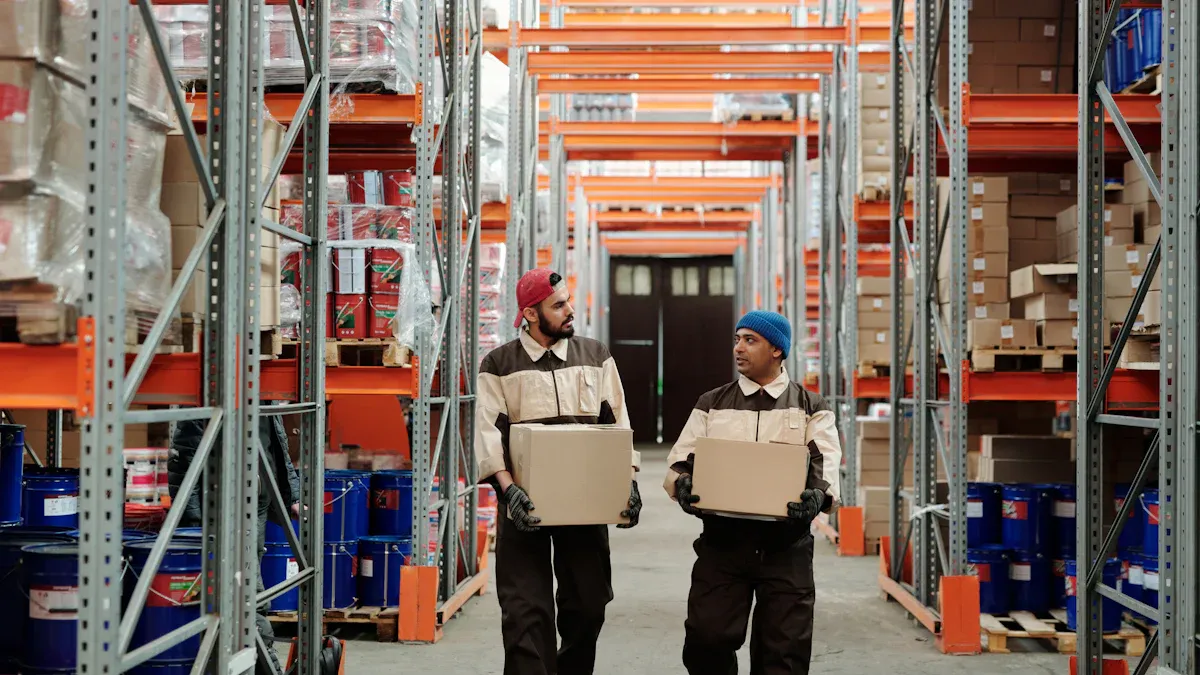
Beyond Retail: New Targets
The 'Make Amazon Pay' campaign has moved beyond retail, now targeting Amazon's logistics and cloud operations. This shift marks a significant escalation. Workers and activists in more than a dozen new countries have joined the movement. The list includes Spain, Denmark, Greece, the United Kingdom, Poland, Luxembourg, Australia, Indonesia, Taiwan, Nepal, Palestine, Brazil, Colombia, and South Africa.
Country |
|---|
Spain |
Denmark |
Greece |
United Kingdom |
Poland |
Luxembourg |
Australia |
Indonesia |
Nepal |
Palestine |
Brazil |
Colombia |
South Africa |
These new regions highlight the campaign's global reach. The focus now includes not only warehouse workers but also those in transport, delivery, and cloud infrastructure. This expansion increases the pressure on Amazon's entire supply chain.
Logistics Disruption on Black Friday
Logistics stands as a critical pressure point for Amazon, especially during Black Friday. The strikes have caused regional slowdowns in fulfillment and deliveries. Customers have experienced longer response times for support and unpredictable delays in certain areas. In Germany, the Verdi (a German trade union) union called for stoppages at major fulfillment centers. Organizers warned that these actions could disrupt deliveries and reduce visibility during the peak holiday shopping period.
Regional slowdowns in fulfillment and deliveries
Longer response times for support and issue resolution
Unpredictable delays in certain geographies
Logistics strikes often worsen existing issues in Amazon's delivery and fulfillment processes. During high-demand periods like Black Friday, carrier networks reach capacity. This leads to delays in sorting, packing, and shipping orders. Both standard and expedited shipping services can face setbacks.
Vulnerability Type | Description |
|---|---|
Nation-state actors use cyber operations to enhance physical military objectives. | |
Integration of cyber and physical threats | Traditional cybersecurity frameworks are inadequate as they treat digital and physical threats separately. |
Exploitation of enterprise systems | Threat actors target systems like CCTV networks to gain operational intelligence for physical attacks. |
These vulnerabilities show how logistics networks face risks from both physical and digital threats. Companies need resilient logistics solutions to manage such disruptions. JUSDA, as a global logistics and supply chain provider, offers advanced warehouse management and real-time inventory tracking. Its JusLink platform integrates IoT, cloud computing, and big data. This approach helps businesses maintain transparency and control, even during large-scale disruptions.
Note: JUSDA's extensive global network and technology-driven solutions enable companies to adapt quickly to changing conditions and minimize the impact of strikes or other disruptions.
Cloud Infrastructure Under Pressure
The strikes have also reached Amazon's cloud infrastructure. Labor actions and layoffs have affected divisions such as Amazon Web Services (AWS). Teams responsible for mission-critical facilities and data centers face uncertainty. The layoffs could impact up to 30,000 corporate employees. This shift raises concerns about the stability of cloud services that support many businesses worldwide.
Cloud infrastructure now plays a vital role in logistics and supply chain management. Disruptions in this area can affect everything from order processing to real-time tracking. Companies that rely on digital platforms for logistics need robust solutions to ensure continuity. JUSDA's JusLink platform, for example, uses AI-driven tools and real-time monitoring to help businesses manage risks and maintain operations, even when external factors threaten stability.
Campaign Demands and Worker Voices
Labor and Environmental Issues
The 'Make Amazon Pay' campaign centers on several key demands. Workers seek fair wages, safe working conditions, and greater environmental responsibility from Amazon. Many employees report harsh environments, such as extreme heat in warehouses. They feel treated as expendable, facing severe consequences when taking time off for health reasons. Environmental advocates raise concerns about Amazon's political influence, especially its support for deregulation and policies that may harm the environment. These issues have united workers and activists across the globe, amplifying calls for change in logistics and cloud operations.
Note: The campaign highlights the intersection of labor rights and environmental stewardship, urging Amazon to address both workplace safety and its broader impact on communities.
Worker Stories from Warehouses
Real stories from Amazon's workforce illustrate the urgency of these demands. Kentucky drivers advocate for industry-standard pay and improved working conditions. Jeffrey King, a TOM Team driver, stated, "It doesn’t matter if you’re in a warehouse or driving a truck, Amazon treats all its workers as disposable." Workers from different regions and roles have joined together, demonstrating the strength of collective action. Their experiences reveal the challenges faced in logistics and warehouse operations, especially during peak periods like Black Friday.
Kentucky drivers push for better pay and conditions.
Warehouse workers report feeling undervalued.
Employees unite to challenge corporate practices.
Calls for Change in Logistics
Campaign organizers and workers have outlined specific changes for Amazon's logistics operations. The following table summarizes their requests:
Change Requested | Description |
|---|---|
A bill proposes Amazon hire delivery drivers directly, ending reliance on Delivery Service Partners. | |
Accountability for Safety | The bill requires Amazon to take responsibility for delivery vehicle incidents and worker job security. |
Safety Training and Licensing | Legislation mandates safety training for drivers and licensing for last-mile delivery centers. |
Advanced warehouse management solutions, such as those offered by JUSDA, can help address many of these industry challenges. JUSDA's technology-driven approach provides real-time inventory tracking, transparent operations, and efficient logistics planning. These capabilities support safer, more reliable working environments and help companies adapt to evolving demands in the global supply chain.
Operational Impact on Amazon and the Industry
Retail and Fulfillment Delays
The 'Make Amazon Pay' strikes have created immediate challenges for Amazon's retail and fulfillment operations, especially during Black Friday. Labor actions across more than 30 countries have targeted Amazon at a critical time, disrupting both logistics and retail performance. Workers in German logistics centers have mobilized, and labor shortages have affected shipping volumes. These disruptions have led to significant delays in Amazon's fulfillment processes. Strikes in transport and logistics sectors have made sorting, packing, and shipping slower, with delays becoming more pronounced during high-volume periods.
Strikes disrupt operations at a critical time for Amazon, impacting logistics and retail performance during Black Friday.
Labor actions are coordinated across more than 30 countries, targeting Amazon's operations during peak shopping season.
Mobilization of workers in German logistics centers and labor shortages affect shipping volumes.
Labor shortages and strikes can lead to significant delays in Amazon's fulfillment processes.
Strikes in transport or logistics sectors exacerbate these delays, affecting sorting, packing, and shipping.
Such delays are particularly pronounced during high-volume periods.
These disruptions have a direct impact on customer satisfaction. When orders arrive late or service quality drops, customers may lose trust in the brand. The ongoing strikes highlight the need for companies to build more resilient supply chains that can withstand such challenges.
Logistics Bottlenecks and Solutions
Strikes have exposed vulnerabilities in Amazon's logistics network. Disruptions in workforce stability can lead to inconsistent staffing levels, which affects operational efficiency. When logistics processes get interrupted, order fulfillment slows down, and bottlenecks appear throughout the supply chain. Over time, these issues can cause chronic instability if not addressed.
The ongoing strikes at Amazon reflect larger issues within the company's labor management strategies. Tension between operational efficiency targets and humane employment practices can lead to chronic instability in the workforce. If these issues remain unresolved, further disruptions in supply chain operations may occur.
Companies like JUSDA use digital tools to enhance supply chain resilience and transparency. JusLink, JUSDA's intelligent supply chain platform, provides several advantages:
Digital tools enhance response visibility and decision autonomy, which is crucial during disruptions.
Predictive analytics identify patterns that precede disruptions, allowing for proactive adjustments.
Real-time visibility through IoT sensors provides instant tracking of shipments, improving transparency.
Recovery audits help quantify disruption costs and inform strategic investments in technology.
Building a connected supplier ecosystem strengthens resilience against future disruptions.
JUSDA's approach helps businesses maintain control and adapt quickly, even when external factors threaten stability. Advanced logistics solutions like JusLink support real-time collaboration, information sharing, and risk management. These capabilities help companies minimize the impact of strikes and keep their supply chains moving.
Cloud Service Risks
Labor actions have also affected Amazon's cloud infrastructure. On October 20, 2025, a major outage of Amazon Web Services disrupted operations for around 70,000 organizations worldwide. Technology and financial services sectors felt the impact most. The outage lasted between 15 to 16 hours, with many organizations experiencing downtime of 8 to 12 hours. This incident shows the risks of relying heavily on a single cloud provider. The outage led to estimated cyber insurance losses ranging from $38 million to $581 million.
Disruptions in cloud services can affect order processing, real-time tracking, and overall supply chain management. Companies that depend on digital platforms for logistics need robust solutions to ensure continuity. JUSDA's JusLink platform uses AI-driven tools and real-time monitoring to help businesses manage risks and maintain operations, even when external factors threaten stability.
Note: The operational impacts of the 'Make Amazon Pay' strikes extend beyond immediate delays. They highlight the importance of resilient logistics networks, advanced digital tools, and proactive risk management for global enterprises.
The Future of Logistics and Supply Chains
Industry Trends and Digitalization
Recent strikes have revealed the importance of digital, resilient, and transparent logistics solutions. Companies now face unpredictable disruptions in both physical and digital supply chains. Many organizations have started to adopt advanced technologies to improve visibility and control. Digitalization has become a key trend. Businesses use AI, IoT, and big data to monitor shipments, forecast demand, and manage risks. Automation in logistics increases speed and accuracy. Flexible processes allow companies to adapt quickly when challenges arise. Integration of systems ensures seamless coordination between inventory, fulfillment, and customer data.
Note: The industry now treats supply chains as living organisms. Continuous monitoring and adaptation help optimize performance and reduce vulnerabilities.
JUSDA’s Role in Smart Logistics
JUSDA leads the way in smart logistics through innovation and technology. The JusLink platform uses AI-driven forecasting, intelligent replenishment, and real-time risk management. JUSDASR provides efficient cross-border logistics, supporting e-commerce merchants and manufacturers with reliable delivery and strategic warehouse locations. JusTrade streamlines customs clearance, offering intelligent solutions for global trade. JUSDA’s customer stories show how manufacturers benefit from end-to-end lifecycle management, real-time transparency, and reduced costs. These solutions help businesses maintain stability and efficiency, even during large-scale disruptions.
JUSDA Solution | Key Features | Benefits |
|---|---|---|
JusLink | AI forecasting, risk control tower | Visibility, proactive response |
JUSDASR | Cross-border logistics, dropshipping | Fast delivery, cost savings |
JusTrade | Smart customs clearance, integration | Compliance, efficiency |
Lessons for Global Supply Chains
Global supply chains can learn several lessons from Amazon’s operational challenges during the strikes:
Forecast intelligently using AI and data to predict customer needs.
Automate with purpose to improve speed, accuracy, and scalability.
Embrace flexible processes enabled by technology for higher performance.
Integrate systems for seamless coordination across logistics and fulfillment.
Empower people for judgment, creativity, and leadership.
Treat the supply chain as a living organism, monitoring and adapting continuously.
JUSDA’s approach aligns with these lessons. The company’s digital platforms and smart logistics solutions help enterprises build resilient supply chains. Proactive risk management and real-time collaboration ensure that businesses can respond quickly to disruptions and maintain customer trust.
The 'Make Amazon Pay' strikes have expanded across retail, logistics, and cloud infrastructure, revealing new vulnerabilities in global supply chains. Industry leaders now focus on cyber resilience and rapid response strategies. Recent events, such as the Jaguar Land Rover cyberattack, show how digital threats can halt production and disrupt logistics networks. Companies like JUSDA use advanced technology and global networks to help businesses adapt and maintain stability. These changes signal a shift toward resilient, innovative logistics solutions for the future.
Cyber resilience has become essential for supply chain stability.
Rapid response capabilities help minimize disruption impacts.
Integrated digital platforms support transparency and control.

JUSDA Solutions
To provide you with professional solutions and quotations.
FAQ
What makes JUSDA’s logistics solutions resilient during disruptions?
JUSDA uses advanced digital platforms like JusLink. These platforms provide real-time tracking, predictive analytics, and risk management. Companies maintain visibility and control, even during strikes or supply chain disruptions.
How does JusLink improve supply chain transparency?
JusLink integrates IoT, cloud computing, and big data. The platform offers instant shipment tracking and automated reporting. Businesses gain full visibility across all supply chain nodes.
What industries benefit from JUSDA’s services?
JUSDA serves electronics, automotive, FMCG, medical health, heavy equipment, and bulk materials. The company tailors supply chain solutions to meet each industry’s unique needs.
How does JUSDASR support cross-border e-commerce?
JUSDASR provides efficient cross-border logistics. The service includes strategic warehouse locations, dropshipping, and reliable last-mile delivery through partnerships with major carriers.
What is JusTrade’s role in global customs clearance?
JusTrade offers intelligent customs clearance solutions. The platform uses AI and big data to streamline processes, reduce manual errors, and ensure compliance for international trade.
See Also
Transforming Industries Through Cloud Supply Chain Innovations
Understanding Current Trends in Logistics Risk Management
Revealing Big Data's Role in Supply Chain Enhancement
The Future of Logistics: AI's Supply Chain Revolution
Innovative Cloud Solutions Transforming Supply Chain Management