How Blockchain Implementation Transforms Supply Chain Transparency and Authentication Across Global Trade Networks

You see fast changes in global trade as blockchain supply chain solutions bring new ways to see and check things. In industries like electronics, automotive, and FMCG, supply chain transparency now builds trust and keeps people safe. Blockchain technology, IoT, and AI help you follow goods, stop fake items, and make safe data sharing automatic.
Key Takeaways
Blockchain technology keeps supply chains safe. It makes a record that cannot be changed for every deal. This helps partners trust each other.
Blockchain, IoT, and AI let people track things right away. They share data fast. This makes supply chains work better. It also saves money. It helps people make good choices.
Smart contracts do jobs by themselves. They check if product claims are true. This stops cheating. It makes sure rules are followed.
Blockchain Supply Chain Transformation
Immutability and Decentralization
Blockchain technology helps keep supply chains safe. Every transaction is locked in and cannot be changed. Blockchain is a shared ledger that many people use. No single company owns all the data. Everyone in the network sees the same information. When you add a transaction, it becomes a block. Each block connects to the last one. This makes a chain that is very hard to change. This setup keeps your data safe from cheating and fraud.
Blockchain uses transparency, immutability, and consensus to protect your supply chain.
Each transaction is locked and linked to the last one, making it secure.
Everyone in the network can see the data, but no one controls it all.
This way, partners can trust each other. You know the information is correct and cannot be changed. This is important for tracking and proving where things come from. You can follow every step, from raw materials to finished goods, and feel sure about it.
Real-Time Tracking and Data Sharing
Blockchain supply chain solutions let you track goods in real time. You can see where things are as they move. This helps you make good choices and fix problems fast. Blockchain, IoT, and AI make this possible. For example, JUSDA uses AI to lower stock problems by 30%. IoT helps cut spoilage by 18% in cold chain shipping. Blockchain makes tracking much faster, giving you updates right away.
Here are some ways real-time tracking and data sharing help you:
Benefit | Description |
|---|---|
Transparency | You get a clear record of every transaction, which builds trust and accountability. |
Security | Cryptographic algorithms keep your data safe and tamper-proof. |
Cost Efficiency | You save money by removing middlemen and automating processes. |
Improved Efficiency | Processes become faster, with less paperwork and fewer delays. |
Better Compliance and Auditing | You can track and verify compliance with regulations easily. |
Enhanced Collaboration | Everyone shares the same data, which improves teamwork and trust. |
Improved Supply Chain Visibility | You can track shipments and inventory in real time, helping you make better decisions. |
Faster Transactions | Automated invoicing and payments speed up your business. |
JUSDA’s JusLink platform uses these tools to give you one true record. You can always see where your goods are. This level of supply chain transparency helps you avoid slowdowns and lower risks.
Smart Contracts and Authentication
Smart contracts are digital deals on the blockchain. They work by themselves when certain things happen. You do not need to check things by hand or use paper. This makes your supply chain safer and faster. Smart contracts help stop fake products and fraud. They check product claims and keep a record of every step.
Evidence Type | Description |
|---|---|
Reduced Fraud and Errors | Smart contracts lower the risk of fraud and mistakes by giving everyone verified information. |
Automated Verification | They check product claims automatically, so you know the information is true. |
Immutable Records | Once data is on the blockchain, it cannot be changed, giving you a reliable audit trail. |
Clear Audit Trails | Every action is recorded, making it easy to resolve disputes and build trust. |
JusTrade, part of JUSDA, uses blockchain to make customs and rules easier. The platform links with your ERP system and uses AI to check documents and automate rules. Customs officers can see safe, real-time information about your shipments. This makes clearance faster and lowers mistakes. You can meet global rules with less work.
When you use blockchain supply chain solutions, you get better tracking and proof. You can show where your products come from and prove they are real. This keeps your brand safe and helps you meet customer needs for openness. As more companies use blockchain, tracking, rules, and speed will get even better.
Supply Chain Transparency in Practice
JUSDA Solutions and JusTrade Integration
JUSDA and JusTrade help make supply chains clearer. JUSDA’s platform uses blockchain, IoT, and AI to show every step. You can track goods in real time, from the factory to the customer. JusTrade links customs, logistics, and finance teams. This makes customs checks faster and more correct. You can connect your ERP system to JusTrade’s SAAS platform. The platform checks documents and uses smart contracts to follow rules. This helps stop delays and mistakes, so shipments stay on time.
JUSDA’s platform lets you work with partners worldwide. You can share data safely and make fast choices. The system gives one true record for each shipment. You always know where your goods are. This traceability builds trust with customers and partners.
Industry Applications and Case Studies
Many companies in electronics, automotive, and FMCG use blockchain to improve supply chains. Here are some real examples:
Samsung saved 20% on shipping after using blockchain.
Walmart and IBM tracked food and cut tracing time from six days to two seconds.
McDonald’s joined a project in China to use blockchain for food safety.
The MOBI Consortium uses blockchain to make car supply chains clearer and greener.
JUSDA worked with Sharp, a big electronics brand, to show how blockchain helps. Sharp used JUSDA’s platform for global e-commerce logistics. They cut logistics costs by 20% and sped up order processing. These solutions help companies save money, move goods faster, and keep products safe.
You can compare old supply chains with new blockchain ones:
Feature | Traditional Supply Chain | Blockchain-Enabled Supply Chain |
|---|---|---|
Tracking | Slow, manual, and often unclear | Real-time, automated, and transparent |
Traceability and Provenance | Hard to verify product origins | Easy to prove where products come from |
Compliance | Paper-based, risk of errors | Automated, accurate, and auditable |
Counterfeiting | High risk, hard to detect | Strong protection, easy to spot fakes |
Blockchain is a strong tool to fight fake goods. It helps you check where products come from and stops fakes from getting in. Studies show blockchain blocks fake assets and keeps your supply chain safe. Old systems can fail or be changed by bad actors. Blockchain keeps your data safe and true.
You also get big gains in efficiency:
Efficiency Gain | Description |
|---|---|
Automation | Blockchain does tasks like paperwork and inventory checks, saving time and lowering mistakes. |
Cost Reduction | Smoother processes help you cut costs in your supply chain. |
Improved Compliance | An unchangeable ledger makes it easier to follow rules and prove it. |
Real-time Tracking | You always know where your goods are, so you avoid delays. |
Counterfeit Prevention | You can trust your products are real and safe. |
Streamlined Processes | Smart contracts speed up payments and shipments, lowering human error. |
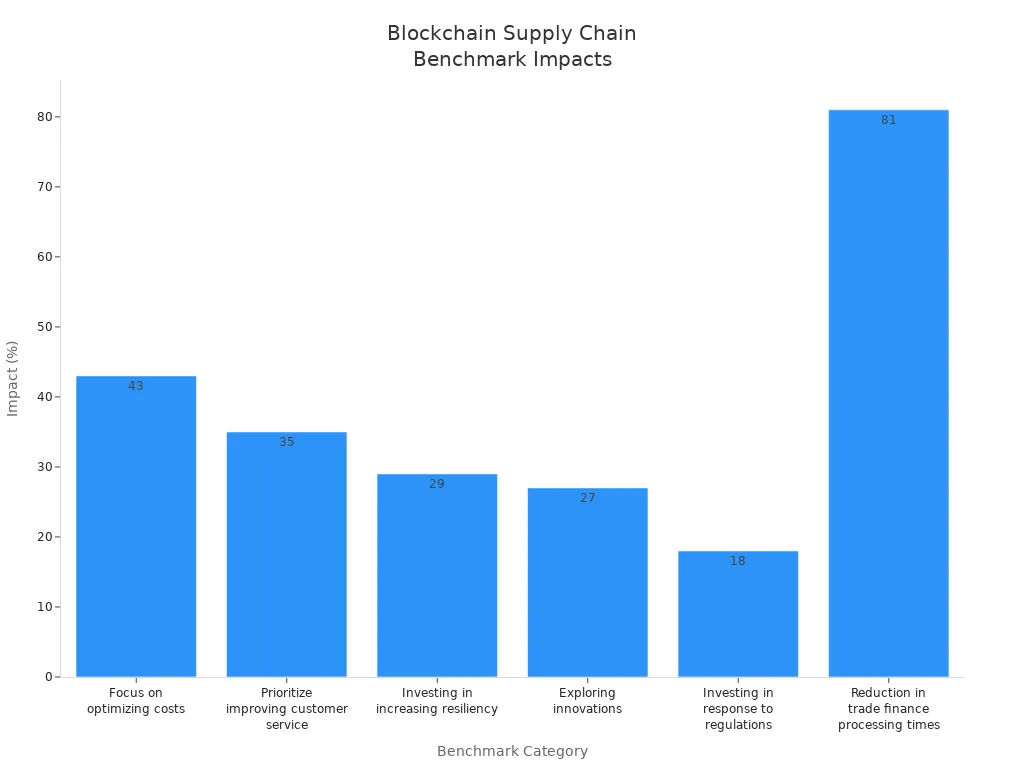
Industry benchmarks show how much blockchain helps supply chains:
Overcoming Challenges
You may face problems when starting with blockchain in your supply chain. It can take time to learn, and your team must understand the new system. Governance is important. You must pick who can see and change data. Data privacy matters, too. You want to keep private info safe but still share what is needed.
Best practices help you solve these problems:
Look at your current process to find where blockchain helps most.
Change your workflows to use blockchain’s strengths.
Connect IoT devices and smart contracts to automate actions.
You can also use these tips:
Use permissioned blockchains to control who sees sensitive data.
Add encryption to keep private info safe.
Hide details when you need to share data but keep things private.
A table can help you remember key best practices:
Best Practice | Description |
|---|---|
Data Protection Measures | Let users check and control who can see their data. |
Role Based Access Controls | Give roles to manage access, which is more reliable than hard rules. |
Compliance with Regulations | Make sure your data handling follows all laws. |
Blockchain gives you a record of goods that cannot be changed. This is important for meeting global sustainability rules. Old systems often do not have this level of transparency, so compliance is harder. Blockchain lowers fraud and mistakes by giving everyone one true version of the data. This builds trust among all partners.
You can see that blockchain, with JUSDA and JusTrade, changes how you manage your supply chain. You get better tracking, stronger compliance, and real protection from fake goods. As you move forward, these tools help you build a supply chain that is safe, efficient, and ready for the future.
JUSDA Solutions
To provide you with professional solutions and quotations.
Blockchain supply chain solutions help people see things more clearly. They make it easier to check if products are real. You can track goods right away and trust the information. Experts say these tools make work faster and keep data safe. Good rules and new ideas help these systems grow. JUSDA and JusTrade give better tracking and use smart contracts. Try these tools to make your global supply chain work better.
See Also
Achieving Success Through Enhanced Supply Chain Transparency
Unwavering Clarity: Essential for Supply Chain Achievement
Virtual Twins: Revolutionizing Supply Chain Operations Ahead
Transforming Supply Chains: The Power of Big Data Uncovered
Revolutionizing Industries: The Impact of Cloud Supply Chain Solutions