AI-Driven Supply Chain Scheduling Transforms Global E-Commerce Operations


AI is revolutionizing how global e-commerce brands approach supply chain management, with a particular focus on The Boost of AI to Cross-border E-commerce: Intelligent Supply Chain Scheduling. JUSDA leverages advanced AI technologies to optimize delivery and inventory processes, ensuring that international logistics are faster, more reliable, and highly scalable. The Boost of AI to Cross-border E-commerce: Intelligent Supply Chain Scheduling empowers brands to make smarter, real-time decisions, streamlining every aspect of cross-border operations.
Achievement | Description |
|---|---|
Golden Pegasus Award | JUSDA has been honored with the 'Golden Pegasus' International Supply Chain Brand for seven consecutive years. |
Commitment to Innovation | This recognition highlights JUSDA’s dedication to advancing smarter, greener, and more robust logistics through AI. |
The Boost of AI to Cross-border E-commerce: Intelligent Supply Chain Scheduling is evident in JUSDA’s use of predictive analytics, automation, and intelligent warehousing solutions. JUSDA’s innovative platforms demonstrate how AI is transforming global logistics, setting new standards for efficiency and growth in the cross-border e-commerce sector.
Key Takeaways
AI makes supply chains work better by doing simple jobs automatically. This lets teams spend time on bigger tasks.
AI tools give live data. This helps companies choose better options. It also lowers shipping costs by 15-25%.
This keeps enough products in stock. It also cuts down on storage costs.
The Boost of AI to Cross-Border E-Commerce: Intelligent Supply Chain Scheduling
AI-Powered Supply Chain Transformation
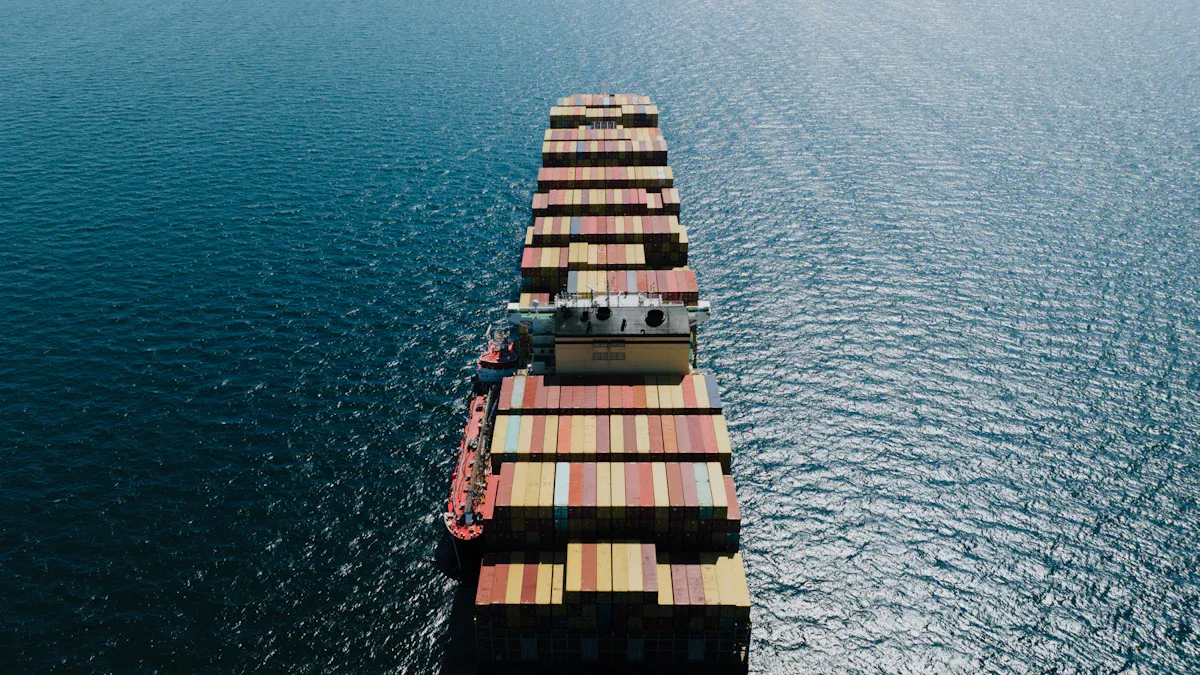
AI is changing how brands handle global logistics. JUSDA uses AI to make supply chain scheduling smarter. Teams can see what is happening very quickly. This helps freight arrive on time, even if there are problems.
JUSDA’s JusLink AI solution makes supply chains better in many ways. The platform sorts goods with high accuracy. AI matches products to HS codes. This lowers mistakes and stops extra fees. JusLink also picks the best shipping routes. It looks at things like weather and customs. This saves time and cuts down on carbon emissions.
Application | Description |
|---|---|
Classification | AI sorts goods by HS codes very accurately. This lowers mistakes and stops extra fees. |
Route Forecasting | AI picks the best shipping routes by looking at many things. This saves time and cuts down on carbon emissions. |
JUSDA’s AI tools do simple tasks automatically. Staff can spend time on more important work. Automated messages mean less work and fewer mistakes. AI gives teams real-time information to help them decide what to do. AI can warn about problems early. This lets teams act fast and keeps things running well.
Note: AI in cross-border e-commerce helps companies grow without spending more money. Costs can go down by 15–25% because there is less manual work. Teams get more done when they focus on important jobs.
JUSDA’s JusLink and Warehouse Solutions
JUSDA’s warehouse systems and real-time tracking help make logistics better. The company has over 155 service points around the world. It manages more than 2.5 million square meters of warehouse space. JusLink connects these warehouses and gives real-time data on inventory and shipments. This helps make deliveries fast and accurate.
JUSDA’s warehouses use smart tracking systems like eVMI and JusLink. These systems let clients see and control their inventory. Real-time data helps suppliers and buyers work together. AI makes sure inventory matches what people need. This stops items from running out and lowers storage costs.
Real-time visibility and risk detection: JusLink’s AI platform gives instant updates about problems. Teams can fix things quickly to keep deliveries on time.
Demand forecasting and inventory optimization: AI helps companies buy the right amount of stock. This means better profits.
Route optimization and delivery automation: AI changes delivery routes using real-time data. This cuts delays and makes last-mile delivery better.
JUSDA’s AI tools also automate picking, packing, and labeling in warehouses. Automation lowers mistakes and makes orders faster. AI in cross-border e-commerce helps global trade run smoothly. JUSDA’s clients get faster deliveries, lower costs, and happier customers.
Improvement Type | Description |
|---|---|
Automation of Routine Tasks | AI handles scheduling and questions, so staff can do more important work. |
Streamlined Workflows | Automated messages mean less work and fewer mistakes. |
Real-Time Insights | AI looks at data and gives helpful advice. |
Predictive Capabilities | AI warns about problems early so teams can act fast. |
Improved Forecasting | AI helps predict demand and spots trends that people miss. |
Lower Manual Intervention | Automation means less boring work and fewer mistakes. |
Operational Scalability | Companies can grow without spending a lot more money. |
Cost Reduction | Costs go down by 15–25% because there is less manual work. |
Increased Employee Productivity | Teams can do more important work and get more done. |
AI in cross-border e-commerce is easy to see in JUSDA’s global network. Real-time data from JusLink and smart warehouse systems help at every step. JUSDA’s focus on AI, automation, and inventory tracking sets new standards for global logistics.
Key Benefits and Challenges of AI in Supply Chain
Enhanced Efficiency and Visibility
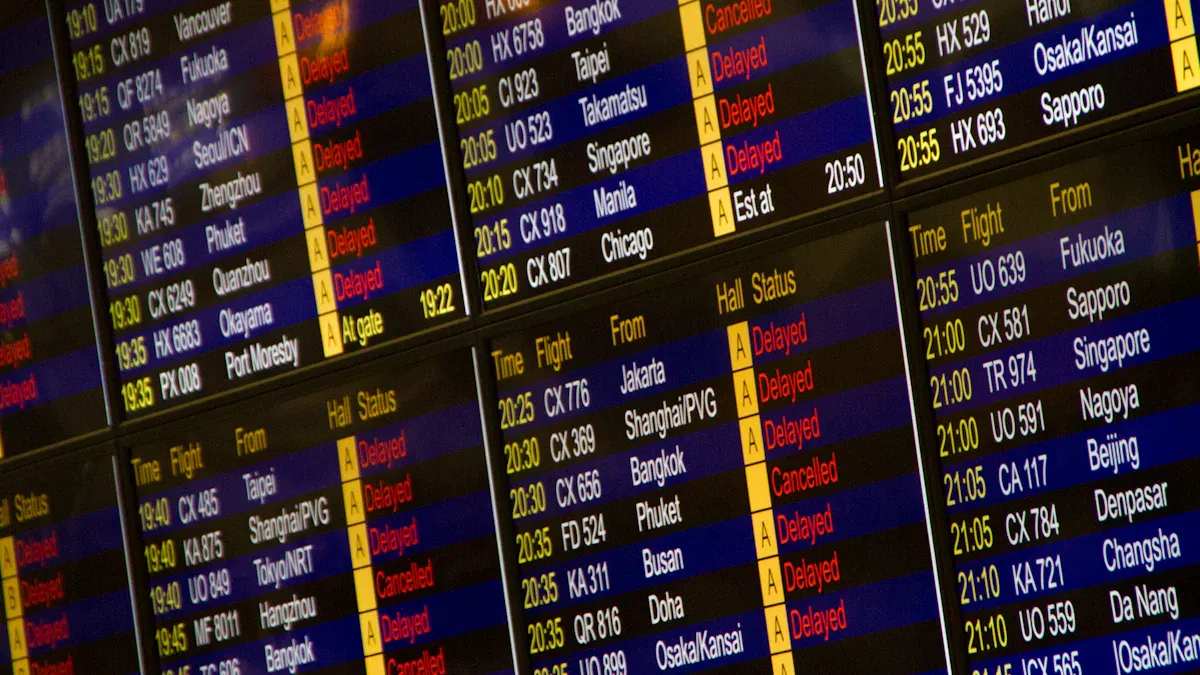
AI makes supply chains work better and easier to see. JUSDA uses AI to help deliveries be more accurate. Customers get a better experience. AI helps teams pick faster customs routes. It can suggest sending shipments early to stop delays. AI also helps choose better carriers.
AI looks at traffic and weather to find the best routes. This means faster deliveries and fewer late shipments. Automation speeds up work in warehouses. Orders get processed faster. Machine learning helps guess how much stock is needed. This stops items from running out and keeps deliveries on time. AI checks addresses and helps with packaging. This makes sure packages go to the right place. Predictive forecasting finds problems before they happen. Teams can fix things early. Real-time tracking and barcode scanning help catch mistakes.
JUSDA’s big network and warehouses help these changes. They have over 2.5 million square meters of space. Their systems like JusLink and eVMI show where inventory and shipments are. Clients can watch every step of the process.
Metric | Value |
|---|---|
Percentage of organizations using AI for visibility | |
Increase in operational efficiency | 22% |
Reduction in logistics costs | 15% |
Decrease in inventory levels | 35% |
Improvement in service levels | 65% |
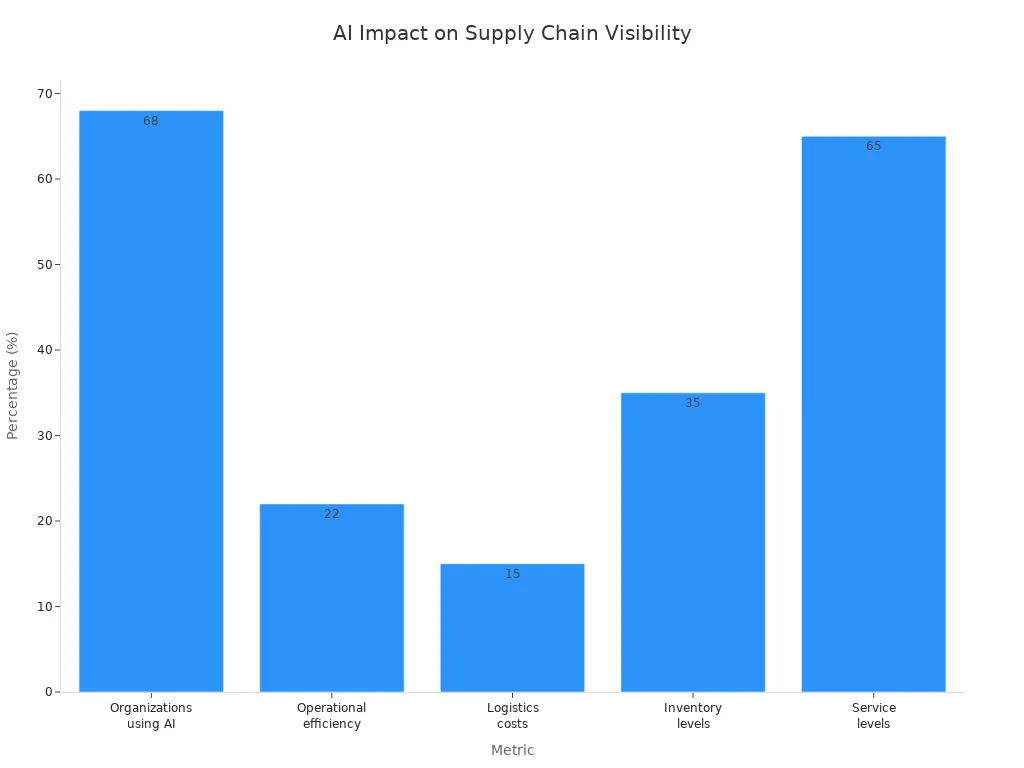
JUSDA’s AI tools give teams real-time tracking and predictions. This helps them act fast and keep things running well. Teams work better, manage inventory, and make customers happy.
Cost Reduction and Risk Mitigation
AI helps companies spend less and avoid risks. JUSDA’s AI tools do simple jobs automatically. This means less manual work and fewer mistakes. Labor costs go down and things move faster. AI helps pick the best shipping routes and carriers. This saves money on transport.
AI helps manage inventory by guessing what will be needed. This stops too much stock and lowers storage costs. Predictive forecasting finds risks early. Teams get alerts and can fix problems fast.
AI also helps teams make better choices. It looks at lots of data and gives advice. JUSDA’s risk control tower uses AI to watch for risks. It sends warnings early. This keeps logistics steady and safe.
Tip: Companies using AI for supply chain visibility save money. They cut logistics costs by 15% and inventory by 35%.
Overcoming Data and Compliance Challenges
Using AI in supply chains can be hard. Starting with AI can cost a lot. Many companies check if it is worth it and start small.
Getting data and connecting systems can be tough. JUSDA uses digitization and a big data warehouse. This helps everyone see what is happening in real time.
Connecting software and devices can be tricky. JUSDA uses APIs and microservices to help systems talk to each other. This makes inventory and logistics better.
Companies must follow rules like the EU’s AI Act and California’s privacy law. Regular checks and people watching make sure AI works right.
Common challenges in AI adoption:
Trouble getting and sharing data
Hard to set up
Job worries
Ethics questions
Tough rules to follow
Best practices for overcoming challenges:
Check costs and benefits before using AI.
Start small and grow slowly.
Train workers and help them learn new skills.
Be open about how AI makes decisions.
Check systems often and have people watch them.
JUSDA’s tools and experience help clients beat these problems. Their focus on tracking, automation, and predictions keeps supply chains strong and following the rules.
Actionable Steps for AI Adoption in Global Supply Chains
Data Centralization and Model Training
Companies start using AI by setting clear goals. They figure out what problems they want to fix. Then, they collect data from many places. Data centralization lets teams put all information together. This includes logistics, inventory, and operations data. It makes the data better and helps with real-time analysis. JUSDA’s supply chain management solution uses this data to train AI models. These models learn in different ways. They help make supply chains work better and faster. Teams get the data ready and make it easy for AI to use. This helps AI predictions become more correct. When data is clean and neat, AI-driven demand forecasting works well.
Recommended Steps for AI Adoption:
Find where your data comes from.
Buy the right AI tools.
Make a good plan for your data.
Teach workers how to use AI.
Start with small projects and grow bigger.
Watch how things go and make changes.
Workflow Integration and Continuous Improvement
Adding AI to supply chains needs good planning. JUSDA says to check your systems first. Pick platforms that have APIs ready to use. This makes it easier to automate logistics. Workers get training to learn new tech. Change management helps teams get used to new ways of working. Companies use automation to work faster and make fewer mistakes. They test and watch systems often to keep them working well. Teams keep making things better by retraining AI and trying new ideas. They build a culture where people like to try new things. Teams are open about how AI works and use data to make choices.
Strategy | Description |
|---|---|
Centralized data stops mistakes and helps automation. | |
Change Management Resistance | Training early helps workers feel sure about changes. |
Integration Complexity | APIs and connectors make systems work together easily. |
Security and Compliance | Encryption and records keep data safe. |
High-Impact Areas | Focus on parts that get the most help from AI. |
Step-by-Step Roadmap | Doing things in steps helps companies grow with AI. |
Tip: Companies that see AI as part of a bigger change get better results in supply chain optimization and logistics efficiency.
AI helps teams guess what supplies are needed. It makes moving goods easier and helps manage shipments.
AI scheduling saves money and stops late deliveries.
AI lets teams see where shipments are right now. It helps make shipping better and clearer.
AI helps automate jobs and brings new ideas to shipping.
AI helps supply chains grow and keeps shipping strong and safe for the planet.
AI helps teams study data, work together, and ship better.
AI makes supply chains quick to change and helps shipping adjust easily.
AI helps teams spot risks, plan better, and control shipments.
AI helps companies work together and improve shipping.
AI helps companies stay ahead and do well in shipping.
See Also
Transforming Logistics Through AI Innovations For The Future
Addressing Global Supply Chain Growth Issues Effectively
Enhancing Global E-commerce Success With Supply Chain Transparency
Boosting Efficiency With Innovative AI Supply Chain Solutions
Transforming Industries Through Cloud-Based Supply Chain Solutions