Mexico's cross-border shipments increase amid updated export regulations

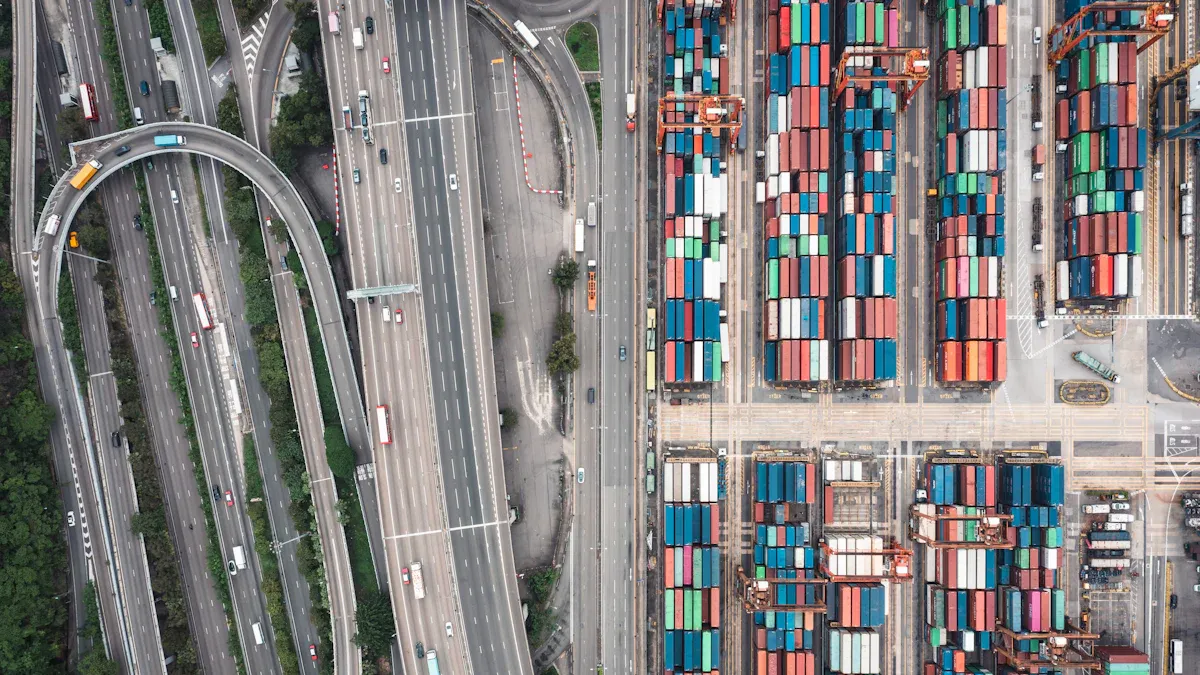
Mexico had a 5% rise in cross-border shipments in July 2025. There were big increases in transport and electronic equipment. New export regulations, like pre-export notifications, changed trade patterns. Important routes like Monterrey to Laredo and Tijuana to San Diego helped this growth.
"Borderlands Mexico: Cross-border trade rises 5% in July as new export rules take effect
Key Takeaways
Mexico's cross-border shipments went up by 5% in July 2025. This happened because of new export rules and more people wanting goods. - The new export rules need automatic alerts for sensitive goods. These alerts help make customs faster and keep trade safer. - JUSDA has new tools, like JusTrade and JusLink. These tools help companies follow the rules. They also lower shipping costs and make deliveries faster.
Borderlands Mexico: Cross-Border Trade Rises 5% in July
Cross-Border Trade Growth and Key Data
In July 2025, trade between the U.S. and Mexico grew by 5%. The total trade value was $74.4 billion. Mexico sent $56.7 billion worth of goods to the U.S. This was a big jump after a drop in April. The end of the U.S.–China tariff truce changed things. Many U.S. companies started sending goods through Mexico. They wanted to avoid higher tariffs. This made cross-border trade busier and helped it grow.
Nearshoring was also important. U.S. companies moved more work to Mexico. This helped trade between the two countries grow. Companies wanted to make supply chains shorter and save money. New export rules began in July 2025. These rules made companies send automatic notices for sensitive goods. The rules changed how companies shipped goods. But trade kept growing strong.
Texas stayed Mexico’s top U.S. partner. Port Laredo handled a lot of trade. In June, Port Laredo managed $29.8 billion in goods. Texas made up $281 billion of the $840 billion in U.S. trade with Mexico in 2024. This strong teamwork kept trade growing between the two countries.
Sector and Regional Highlights
The Bajío–Mexico City–Querétaro corridor helped trade grow. Factories in Bajío got bigger. This area met more demand from Querétaro to the Valley of Mexico. Stores like Walmart de México needed more U.S. goods. This made more goods move south. The corridor worked like the Texas Triangle in the U.S. It helped trade go both ways.
Evidence Description | Impact on Trade Flows |
|---|---|
The Bajío–Mexico City–Querétaro corridor is a key driver of North American trade growth. | Significantly impacts Mexico-US trade flows through increased demand for southbound freight. |
Manufacturers in the Bajío region are expanding operations. | Meets consumer demand concentrated from Querétaro to the Valley of Mexico, enhancing trade capacity. |
The growing retail sector in Central Mexico is anchored by Walmart de México. | Drives demand for U.S. goods southbound, enhancing trade flows. |
The corridor mirrors the U.S. Texas Triangle's economic dynamics. | Facilitates commerce in both directions, strengthening trade relations. |
Nearshoring changed many sectors. Electronics, automotive, and FMCG companies put more money into Mexico. Big companies like Samsung and Foxconn sent out more electronics. General Motors, Ford, and Tesla made more cars in Mexico. The area also grew in aerospace and medical device making. These changes helped trade between the U.S. and Mexico grow.
Sector | Key Players | Impact on Trade |
|---|---|---|
Electronics | Samsung, Foxconn | Significant investments leading to increased exports. |
Automotive | General Motors, Ford, Tesla | Expansion of production operations in Mexico. |
Aerospace | Bombardier, Honeywell | Emergence as a global manufacturing hub. |
Medical Devices | Medtronic, Cardinal Health | Surge in manufacturing to meet North American demand. |
Appliances | Various global manufacturers | Shift in production for lower costs and market access. |
JUSDA in North America gave logistics help for this growth. The company had special services for cross-border shipments. They worked with electronics, automotive, and FMCG companies. JUSDA’s network helped companies follow new rules. They kept trade moving well. JUSDA focused on risk and following the law. This helped trade between the U.S. and Mexico keep growing. JUSDA’s help let businesses change fast and keep growing their cross-border trade.
New Export Rules and Cross-Border Solutions
Export Rules Impact on Cross-Border Trade
On August 11, 2025, Mexico made new export rules. These rules changed how companies ship goods across borders. Exporters must now send automatic notices for sensitive goods before shipping. They use the SNICE platform to send a letter and an Excel form. This helps the government watch exports and protect important industries.
The SNICE platform makes it easier to follow the new rules. Exporters send official notices with all needed details. This keeps things organized and helps sensitive goods move safely.
Exporters have new rules to follow. They must check if their goods have certain tariff codes. They also need to tell their supply chain partners about the changes. Companies must report how the new rules affect them and find ways to stop delays.
Requirement | Description |
|---|---|
Exporters must apply for this notice through the Ministry of Economy before shipping covered goods. | |
Review Affected Tariff Codes | Ensure shipments fall within specified HS code classifications. |
Communicate with Your Supply Chain | Inform all suppliers about the new standards to prevent delays. |
Report on Supply Chain Impacts | Identify affected parts and develop strategies to minimize disruptions. |
The new export rules changed how trade moves across borders. Many businesses now pay more tariffs on raw materials and finished goods. These higher costs often mean higher prices for shoppers. This is true for things like cars and electronics. Some companies have delays and problems in their supply chains. Others look for new trade partners to avoid extra costs.
Businesses pay more because of higher tariffs on raw materials and finished goods.
Shoppers pay more for things like cars and electronics.
Supply chains have more delays, especially in car and electronics industries.
Some companies look for new trade partners to save money.
The car, farm, and electronics industries have changed the most since July 2025. Car prices are higher, and some companies moved their factories. Farmers pay more, and electronics companies pay more for parts.
Automotive Industry: Car prices are up and some factories moved.
Agricultural Sector: Produce costs more and farmers have more stress.
Electronics Industry: Parts cost more and new ideas slow down.
Exporters face new problems. They must plan better and keep good records. Companies now wait longer for customs checks. They must give more details about their products. Even if a product uses steel in a small way, companies must report it.
Challenge | Description |
|---|---|
Increased Operational Complexities | Exporters must enhance compliance planning and internal traceability protocols. |
Longer Lead Times for Clearance | Companies must anticipate longer lead times and additional information requests. |
Detailed Documentation Requirements | New regulations require specific data on steel inputs, including identity and location of mills. |
Indirect Reporting Requirements | Even indirect use of steel in products may trigger reporting obligations, necessitating thorough assessments. |
Some industries have more trouble than others. The table below shows which ones have the hardest time with the new rules.
Sector | Impact Description |
|---|---|
Textiles and Apparel | Tariffs are now 35% on finished goods and 15% on textile inputs. |
Automotive and Auto Parts | These face big problems from the new rules. |
Plastics and Chemicals | They pay more tariffs and have more limits. |
Footwear and Leather Goods | These are affected by the new export rules. |
Steel and Aluminum | These have problems with the new policies. |
Furniture, Wood Products, Paper | These struggle with the new export rules. |
JUSDA’s JusTrade and Customs Innovation
JUSDA’s JusTrade helps companies with the new export rules. JusTrade uses computers to make customs papers and sort products. This cuts down on mistakes and makes customs faster. Small businesses like this because they may not have experts.
JusTrade links with company systems to keep all info together. This helps companies follow the new rules and avoid delays. JusTrade’s team knows a lot about cross-border trade and tough rules.
JUSDA also has digital and AI tools called JusLink. JusLink uses smart data to help companies plan better. Companies using JusLink save up to 30% on shipping and get goods 20% faster. AI plans routes to save gas, and inventory tools help order the right amount.
Smart data cuts shipping costs by up to 30%.
Delivery is 20% faster.
AI route planning saves 10-20% on fuel.
Inventory tools cut waste by ordering just enough.
These tools help companies handle risks and keep trade moving. JUSDA’s solutions make it easier to follow the new rules and keep supply chains strong.
Some industries have a hard time with the new rules, but others see chances to grow. Mexico wants 45% of its energy to be clean by 2030. Solar, wind, and water power are growing. The Clean Energy Exchange Rate Coverage Facility helps protect these projects from money changes. New laws help clean energy and bring in private money.
Mexico wants 45% clean energy by 2030, with more solar, wind, and water power.
Government help and private money will help clean energy grow.
The new export rules changed how companies ship goods across borders. JUSDA’s JusTrade and JusLink help businesses keep up, follow the rules, and find new ways to grow.
Mexico’s cross-border trade got bigger in July. This happened because of new rules and strong factories. Companies now make better customs papers. They also follow new laws that keep changing. JUSDA helps businesses get used to these changes. Experts think there will be more new ideas and smarter ways to move goods. They also think new rules will change trade between the two countries.
FAQ
What are the main benefits of Mexico’s new export regulations?
The new rules help companies plan shipments better. They also make it safer for sensitive goods. This helps goods move across the border more easily.
How does JUSDA support businesses with customs compliance?
JUSDA uses computers and expert teams to help. They make sure companies follow trade rules. This helps stop delays at the border.
Which industries see the most impact from recent cross-border changes?
Automotive, electronics, and retail are affected the most. These groups need fast and steady trade between Mexico and the United States.
See Also
Achieving Success in International Trade Through JUSDA Solutions
Understanding the Effects of Current Logistics Risk Trends
Exploring Innovations in Sea Freight Logistics for 2024
Revolutionary Approaches to Supplier Ties in Global E-commerce