Global Trade Faces New Dynamics with China’s Electric Vehicle Export Growth

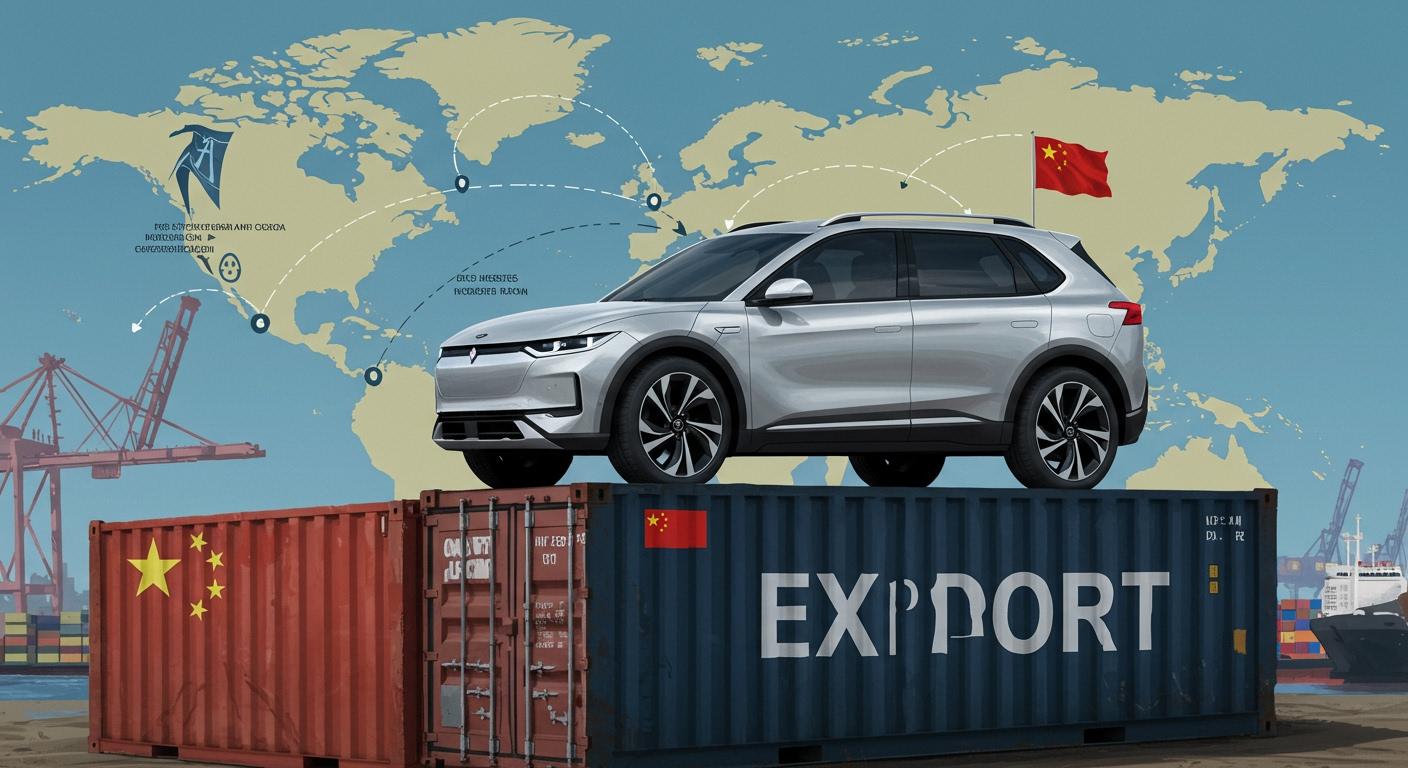
Chinese export growth in electric vehicles is changing the landscape of global trade and supply chains. Recent statistics show a remarkable surge:
Year | |
|---|---|
2017 | 1,006 |
2025 | 213,809 |
This rapid expansion prompts companies worldwide to adapt their logistics strategies and explore new markets.
Supply chains now stretch across continents, with European and emerging markets gaining importance.
Tariffs and trade tensions push firms to adjust pricing and sourcing.
“Demand for clean technologies continues to skyrocket as more and more countries seek their benefits, from low-cost power to cheaper vehicles,” said Ember analyst Euan Graham.
Key Takeaways
Chinese electric vehicle exports are rapidly increasing, with a projected rise from 1,006 units in 2017 to over 213,000 by 2025. Companies must adapt to this growth to stay competitive.
Emerging markets in Latin America and Europe are becoming key destinations for Chinese EVs. Businesses should explore these markets to expand their reach.
Tariffs and trade tensions complicate the global landscape for EV manufacturers. Companies need to develop strategies to navigate these barriers effectively.
Intelligent supply chain management, including AI-driven solutions, is crucial for enhancing efficiency and competitiveness in the global EV market.
Understanding the dynamics of China's EV sector is essential for global energy planning and adapting to future transportation policies.
Chinese Export Growth in Electric Vehicles
Export Trends and Data
Chinese export growth in electric vehicles has accelerated at an unprecedented pace. Customs data highlights a steady year-over-year increase in both total car exports and electric vehicle (EV) exports. The following table illustrates this upward trend:
Year | Total Car Exports (millions) | EV Exports (millions) |
|---|---|---|
2023 | 4.9 | 1.2 |
2024 | 5.9 | 1.3 |
This data shows that Chinese manufacturers continue to expand their presence in the global automotive market. The export volume of EVs has grown alongside overall car exports, reflecting strong international demand. In September alone, Chinese EV exports doubled compared to the previous year, reaching 222,000 units. This surge demonstrates the scale and momentum behind Chinese export growth in the EV sector.
The top destinations for Chinese electric vehicles span several continents. Countries in Latin America, Europe, and Asia have become key markets. The table below lists the leading importers of Chinese EVs by total units:
Country | Battery Electric Vehicles | Plug-in Hybrid Electric Vehicles | Total Units |
|---|---|---|---|
Brazil | 29,461 | 51,575 | 81,036 |
Mexico | 31,350 | 42,829 | 74,179 |
Belgium | 39,382 | 32,932 | 72,314 |
UK | 22,738 | 19,209 | 41,947 |
Turkey | 13,166 | 16,951 | 30,117 |
Indonesia | 29,773 | N/A | 29,773 |
Australia | 18,547 | 7,140 | 25,687 |
Spain | 10,680 | 9,358 | 20,038 |
Philippines | 3,768 | 11,849 | 15,617 |
UAE | 6,000 | 7,042 | 13,042 |
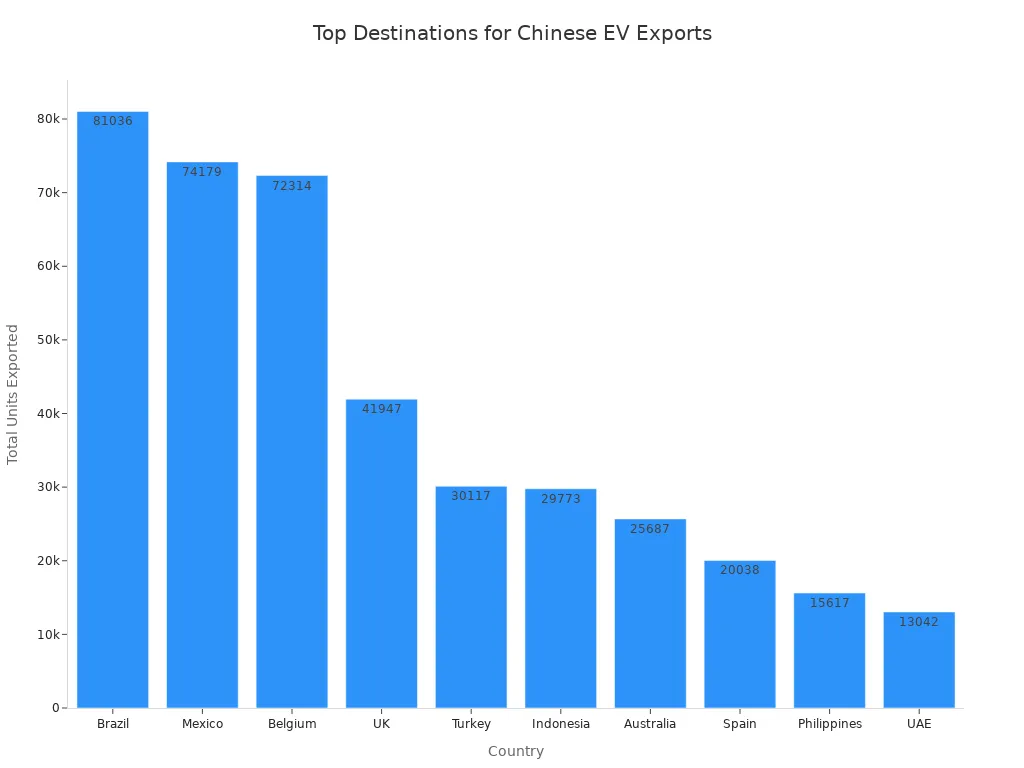
These figures highlight the broad international reach of Chinese EV exports. Brazil, Mexico, and Belgium lead as major importers, while markets in the UK, Turkey, and Southeast Asia also show significant demand.
Global Market Impact
The rapid expansion of Chinese export growth in electric vehicles has reshaped the global automotive landscape. Several key impacts have emerged:
Chinese manufacturers have doubled their EV exports year-over-year, reaching 222,000 units in September. This increase has boosted China's share of the global EV market and influenced trends in other regions.
Companies from China now play a larger role in overseas markets, especially in Asia and Latin America. Their presence has shifted the competitive balance and encouraged new market strategies.
The growth in Chinese EV exports contributes to the anticipated peak in global oil demand. As more electric vehicles enter the market, the demand for traditional fuels declines.
Understanding the trajectory of China's EV sector has become essential for global energy planning. The expansion affects energy consumption patterns and shapes future transportation policies.
International automakers have responded to this shift by adjusting their strategies:
European brands, such as Volkswagen, have launched affordable electric vehicles to compete with Chinese models. Volkswagen introduced the ID Life at a price point of €20,000, making EVs more accessible to a wider audience.
Automakers have increased their focus on high-quality production and advanced software-driven technology. These efforts aim to enhance competitiveness and meet evolving consumer expectations.
Note: The surge in Chinese export growth for electric vehicles signals a new era in global trade. Companies worldwide must adapt to these changes, rethinking supply chains and product offerings to remain competitive.
Domestic Pressures and Market Shifts
Competition and Margins
Chinese electric vehicle manufacturers face intense competition in their home market. Companies continue to innovate and expand, which has led to a notable shift in profitability. Recent financial reports reveal that several leading manufacturers now achieve gross profit margins that surpass those of established global players like Tesla. This improvement signals a new phase for the industry, where efficiency and scale drive better financial outcomes.
Metric | Q2 2025 | Q2 2024 | Q1 2025 |
|---|---|---|---|
Gross Margin | 17.3% | 14.0% | 15.6% |
Vehicle Margin | 14.3% | 6.4% | 10.5% |
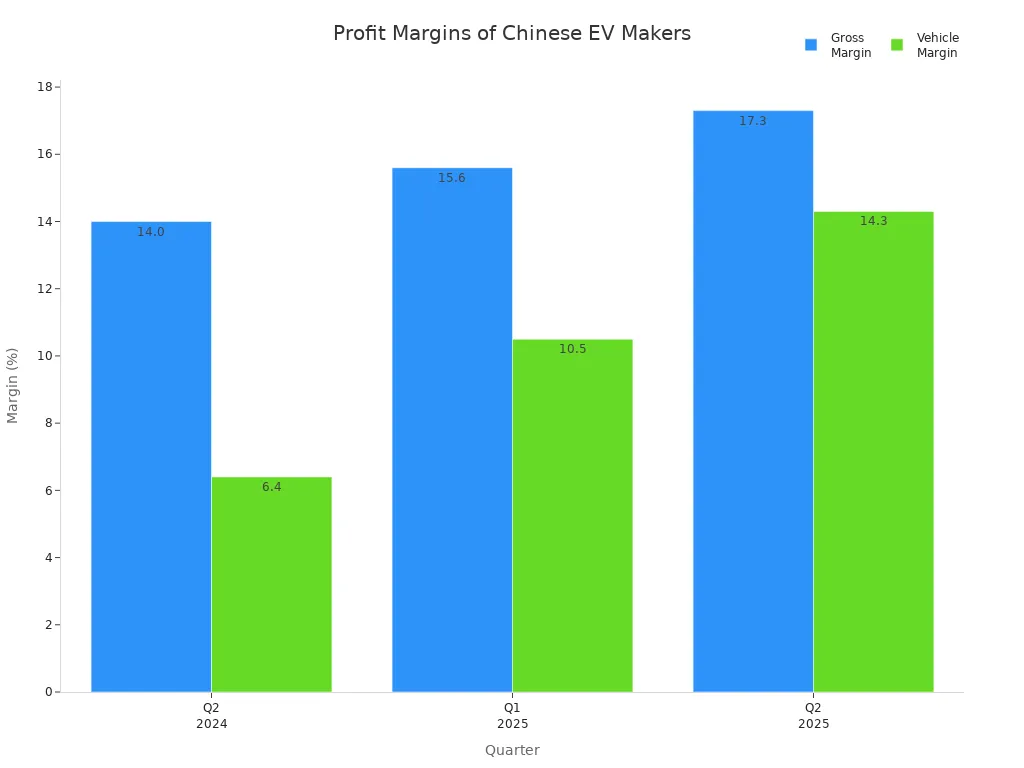
Manufacturers have improved their margins by optimizing production, investing in advanced technology, and responding quickly to market changes. As a result, the sector has become more resilient, even as competition remains fierce.
Policy and Demand Changes
Policy shifts and evolving consumer preferences continue to shape the electric vehicle landscape in China. The government delayed the final termination of subsidies for electric vehicles until at least 2022, responding to a downturn in the auto sector. The COVID-19 pandemic also led to a more relaxed goal for plug-in electric vehicles, setting a target of 20% by 2025. Policymakers may extend subsidies further, while the dual credit policy is expected to play a larger role in promoting adoption.
The final termination of subsidies for electric vehicles was delayed until at least 2022 due to an unexpected downturn in the Chinese auto sector.
The COVID-19 pandemic contributed to a relaxed goal of 20% plug-in electric vehicles (PEVs) by 2025.
There is a possibility of a further extension of PEV subsidies.
As subsidies decline, the dual credit policy is expected to become a more effective tool for promoting electric vehicle adoption.
Consumer preferences have also shifted. Market surveys show that 94% of Chinese consumers are considering an electric vehicle for their next purchase. Many buyers remain open to alternative mobility options, with 66% willing to explore new forms of vehicle access. However, 69% of consumers cite driving range as the biggest barrier to purchase. While interest in electric vehicles is high, actual sales depend on supportive policies and improvements in charging infrastructure.
Chinese export growth in electric vehicles reflects these domestic pressures and market shifts. Manufacturers adapt to changing policies and consumer needs, which strengthens their position in both local and global markets.
JUSDA’s Role in Global Supply Chains
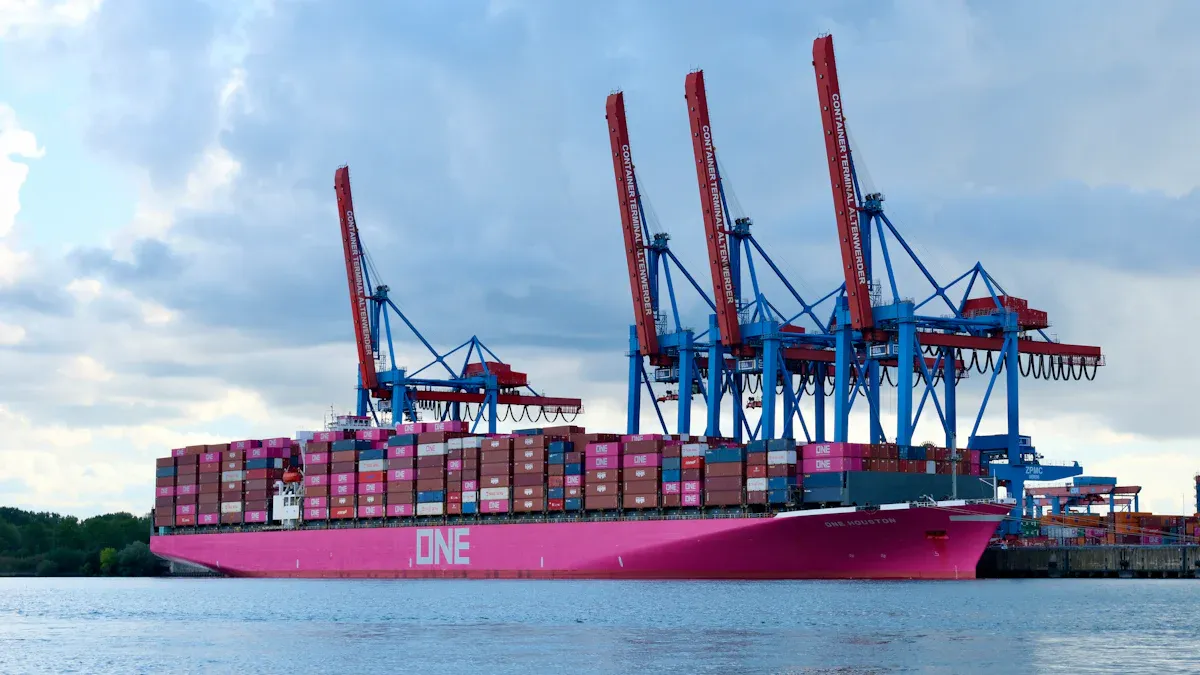
China-Europe Express Rail Solutions
JUSDA’s China-Europe Express Rail service provides a vital link between Chinese manufacturers and European markets. This rail solution offers a balanced approach to speed and cost, delivering goods in 15-20 days. Companies benefit from reliable door-to-door service, which supports the rapid expansion of electric vehicle exports. The rail network handles a variety of products, including electronics and medical supplies, and minimizes the risk of delays through expert customs operations.
Advancements in supply chain technology have strengthened China’s position in the global electric vehicle market. China now leads in lithium-ion battery exports, accounting for 52% of the global share in 2023. The country has surpassed Germany and Japan as the largest exporter of EV passenger vehicles. JUSDA’s rail solutions help Chinese exporters respond quickly to market demands and maintain competitiveness.
JusTrade Customs Services
JusTrade, a specialized customs clearance provider under JUSDA, streamlines the export process for Chinese electric vehicle manufacturers. The platform uses AI algorithms and big data analysis to simplify customs procedures and ensure compliance. JusTrade’s services cover bonded processing trade, equipment clearance, and cross-border logistics.
Service Type | Description |
|---|---|
Customs clearance in special areas | Professional services for bonded VMI import/export declarations, one-day customs declarations, etc. |
Customs clearance for equipment | Complete solutions for equipment including tax reduction filing, customs clearance, and inspections. |
Customs service platform products | Integrated services like big data analysis, document preparation, and compliance management. |
Customs outsourcing services | Full range of services including customs consultation and AEO certification consulting. |
Intelligent supply chain management, including AI-driven solutions, improves efficiency for Chinese export growth in electric vehicles. AI technologies enhance sourcing, logistics, and production planning. Chinese automakers use these tools to compete globally and increase export volumes. In June 2025, new energy vehicle exports reached 198,000 units, a 116% year-over-year increase. Over 40% of total auto exports were new energy vehicles, showing the impact of advanced supply chain solutions.
JUSDA’s integrated approach to logistics and customs clearance empowers Chinese manufacturers to expand internationally and adapt to changing trade dynamics.
Navigating Global Competition
Tariffs and Trade Barriers
Chinese electric vehicle manufacturers face a complex landscape of tariffs and trade barriers in major export markets. Governments have introduced high tariff rates to protect domestic industries and address concerns about market disruption. The following table summarizes current tariff rates in key regions:
Country | Tariff Rate | Notes |
|---|---|---|
US | 100% | Imposed under Section 301 due to unfair trade practices |
EU | Varies | Linked to WTO principles and subsidy investigations |
Canada | 100% | No clear basis for the rate, no WTO complaint filed |
Brazil | 18% (rising to 35% by 2026) | Domestic EV industry protection |
India | 70-100% | Local manufacturing investment required for lower tariffs |
The European Union has implemented countervailing duties of up to 35.3% on Chinese battery electric vehicles. This action aims to limit the impact of subsidized imports and protect local manufacturers investing in electric vehicle production. The United States and Canada have also imposed steep tariffs, making direct exports less competitive. Brazil and India use tariffs to encourage local manufacturing and shield their own industries.
Trade barriers extend beyond tariffs. Exporters must navigate complex customs procedures, regulatory standards, and frequent investigations into subsidies. These challenges increase costs and create uncertainty for manufacturers seeking to expand globally.
Note: Geopolitical tensions, overcapacity in the domestic market, and dependence on imported raw materials such as lithium, cobalt, and nickel remain significant challenges for exporters.
Market Diversification Strategies
To overcome these obstacles, Chinese electric vehicle companies pursue a range of market diversification strategies. Many manufacturers form joint ventures with local partners, establish production facilities abroad, and align with regional policies that promote green transitions. These approaches help companies avoid high tariffs, reduce logistics costs, and access government incentives.
Manufacturers also leverage flexible supply chain partnerships. They collaborate with suppliers and technology firms to enhance production capabilities and adapt quickly to changing market demands. By sourcing directly from Tier-2 and Tier-3 suppliers, companies bypass traditional channels and respond faster to supply shortages. Battery suppliers often set up production near original equipment manufacturers, ensuring reliable delivery.
Success in emerging markets highlights the effectiveness of these strategies:
Region | Success Level | Key Factors |
|---|---|---|
Southeast Asia | High | Competitive pricing, diverse models |
Latin America | High | Attractive sub-$25,000 EVs |
Australia | Moderate to High | Growing interest in EVs |
Countries with established automotive value chains benefit by attracting investment from both Chinese and non-Chinese manufacturers. Negotiating with Chinese firms for localization supports industry growth and technology transfer. As global demand for electric vehicles rises, these strategies position Chinese companies to maintain a competitive edge.
Chinese export growth in electric vehicles has transformed global trade and strengthened China’s economic resilience.
In 2023, EV production in China rose by 35%, with exports capturing 23% of the global market.
Manufacturers and logistics providers adapt by building new hubs and shifting supply chains, while competitors face rising pressure.
Future trends include digitalization, predictive analytics, and localized supply chains.
Advanced logistics and intelligent supply chain solutions remain essential for companies seeking to thrive in this evolving landscape.
JUSDA Solutions
To provide you with professional solutions and quotations.
FAQ
What advantages does JUSDA’s China-Europe Express Rail offer for EV exporters?
JUSDA’s China-Europe Express Rail provides a fast, cost-effective link between China and Europe. It delivers goods in 15-20 days, supports a wide range of products, and ensures reliable customs operations. This service helps exporters meet market demand efficiently.
How does JusTrade simplify customs clearance for electric vehicle exports?
JusTrade uses AI and big data to streamline customs processes. The platform connects with clients’ systems, reduces manual errors, and ensures compliance. Companies benefit from faster, more accurate customs clearance and improved supply chain transparency.
Why is intelligent supply chain management important for global EV trade?
Intelligent supply chain management improves efficiency, reduces costs, and enhances decision-making. JUSDA’s AI-driven solutions provide real-time insights, predictive analytics, and risk monitoring. These tools help companies adapt quickly to changing global trade conditions.
Which industries benefit most from JUSDA’s supply chain solutions?
JUSDA serves industries such as automotive, electronics, FMCG, new energy, medical health, and heavy equipment. Each sector receives tailored logistics and supply chain services designed to optimize operations and support international growth.
How does JUSDA support Chinese manufacturers expanding globally?
JUSDA offers integrated logistics, customs clearance, and intelligent supply chain platforms. These services help manufacturers manage complex global operations, reduce costs, and maintain production schedules. JUSDA’s expertise enables smooth entry into new international markets.
See Also
Maximizing Opportunities Within Your Automotive Supply Network
Addressing Global Supply Chain Growth Issues Effectively
Expert Advice for Overcoming Automotive Supply Chain Hurdles
Transforming Supply Chains Through Innovative Robotics Solutions
Revealing Strategies for Supplier Engagement in Global E-commerce