From Chip Shortage to Component Crisis: How Geopolitics is Reshaping the Semiconductor Landscape

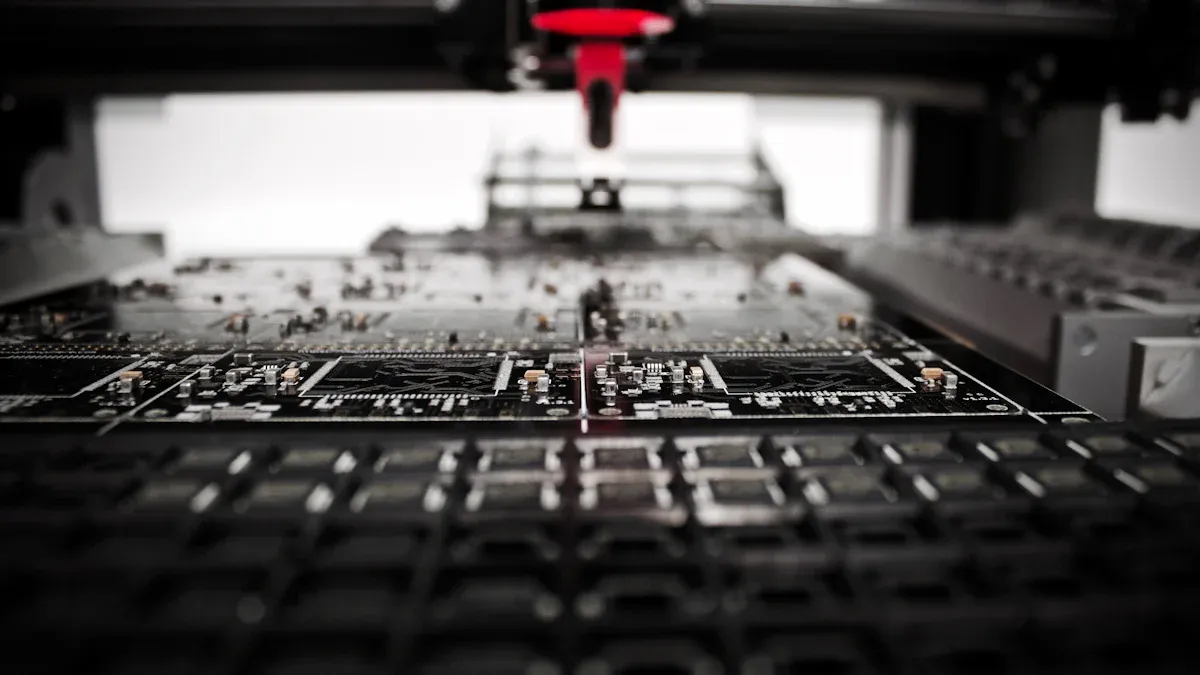
The chip shortage describes a critical gap between global semiconductor demand and available supply. Its effects ripple through industries, causing delays and production halts.
Median inventory of semiconductor products dropped from 40 days in 2019 to under 5 days in 2021.
The U.S. share of chip manufacturing shrank to 12%, while China imported $350 billion in semiconductors in 2020.
Initiative | Description |
|---|---|
CHIPS Act | Incentivizes new U.S. semiconductor plants to strengthen supply chain security and boost capacity. |
Digital supply chain management and advanced solutions now play a vital role in stabilizing this complex landscape.
Key Takeaways
The chip shortage began in 2020 due to COVID-19, causing production delays and higher prices for electronics and vehicles.
Semiconductors are essential for many products, including cars, smartphones, and home appliances. Shortages lead to fewer choices for consumers.
Governments and companies are investing in new semiconductor plants to reduce reliance on foreign supply and strengthen the supply chain.
Digital tools and AI are helping businesses manage supply chain disruptions and improve efficiency in production.
The future of the semiconductor industry will focus on innovation, local manufacturing, and adapting to new technology demands.
Chip Shortage Overview
What Is the Chip Shortage
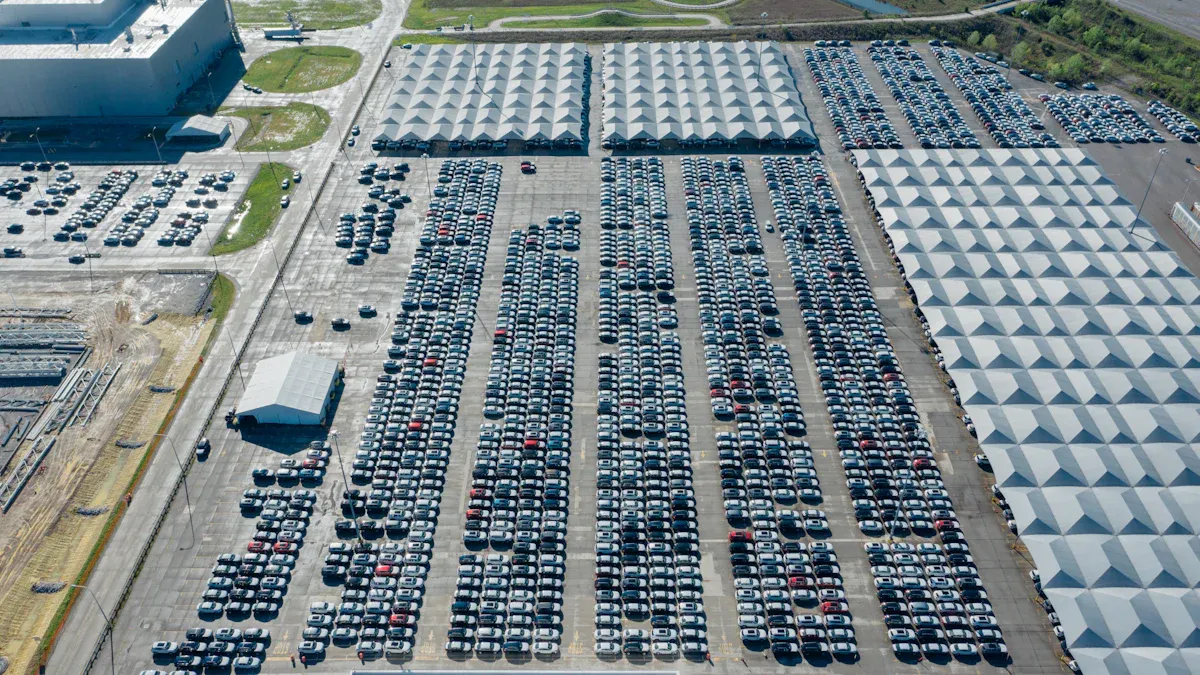
The chip shortage refers to a global crisis where the supply of semiconductor chips cannot meet the growing demand. This shortage began in 2020 and quickly affected many industries. Several events triggered the crisis. The COVID-19 pandemic caused factories to shut down, which stopped chip production. At the same time, more people worked and studied from home, so the need for electronics increased. Ports closed, which created supply chain bottlenecks and delayed shipments.
The chip shortage has not only slowed down production but also changed how companies plan and deliver products.
A timeline of key events helps explain how the chip shortage developed:
Year/Period | Event/Impact | Description |
|---|---|---|
2020 | COVID-19 Pandemic | Global lockdowns increased demand for consumer electronics while halting chip production. |
2021 | Auto Industry Impact | Global vehicle production decreased by 9.4 to 11 million units due to chip shortages. |
2022 | CHIPS Act Introduction | Aimed at boosting domestic semiconductor manufacturing to reduce dependency on foreign supply. |
Why It Matters
The chip shortage affects almost every part of modern life. Semiconductors power smartphones, cars, computers, and home appliances. When chips run short, companies cannot build enough products. This leads to higher prices and fewer choices for consumers.
The chip shortage has caused price increases and supply chain disruptions in many sectors.
Car deliveries have been delayed, and home appliances are harder to find.
Major automakers have scaled down production because they cannot get enough chips.
Under-investment in chip manufacturing plants has made it difficult to keep up with new technology demands.
Sanctions against Chinese tech companies have made the situation worse.
The auto industry alone faced a revenue loss of $60.6 billion in 2021. Some manufacturers removed features from vehicles to cope with the lack of chips. The chip shortage started with cars but now affects smartphones, computers, and even kitchen appliances. This crisis shows how important semiconductors are to the global economy.
Causes
Demand Surge
The demand for semiconductors has grown rapidly in recent years. Several industries now rely on chips for their products.
In 2023, PC and communications segments made up 57% of semiconductor sales.
The automotive sector accounted for 17% of sales.
Industrial applications held 14% of the market share.
Consumer electronics represented 11% of the total market.
Global semiconductor sales reached $627.6 billion in 2024, marking a 19.1% increase from the previous year. The market achieved its highest-ever sales, with fourth-quarter sales rising 17.1% compared to the same period in 2023. This surge in demand has placed immense pressure on manufacturers to keep up, fueling the Chip Shortage.
Supply Chain Disruptions
Supply chain disruptions have played a major role in the ongoing crisis.
Trade wars between Japan, Korea, China, and the United States have increased commodity pricing and distribution challenges.
Natural disasters, such as droughts in Taiwan and plant fires in Japan, have caused raw material shortages.
The automotive industry’s increased demand and advancements in IoT and AI technologies have further strained supply chains.
Supply chain instability makes it difficult for companies to deliver products on time and maintain steady production.
Geopolitics
Geopolitical tensions have directly affected semiconductor supply chains. Since the Trump administration, the United States has enforced strict export controls against China. These controls now include broader restrictions on the semiconductor industry.
The U.S.-China trade war led to significant tariffs on semiconductor imports, affecting pricing and availability.
Export controls have limited access to essential technologies and materials.
The shift towards domestic production is changing global supply chain dynamics.
The U.S. imposed tariffs of up to 145% on Chinese semiconductor imports.
Export controls expanded under the Biden administration, targeting China’s semiconductor industry.
The 2022 Chips and Science Act restricts U.S. firms from expanding semiconductor manufacturing in China.
Manufacturing Limits
Manufacturing capacity limitations have become a critical factor in the Chip Shortage. The industry faces significant constraints, especially for legacy chips. Many older fabrication plants have closed without replacements, reducing the ability to produce certain devices.
STMicroelectronics NV predicts its automotive order backlog will exceed existing manufacturing capacity through 2023.
Many legacy chips are produced in older fabs that process 200-mm wafers, which are not being replaced by newer 300-mm fabs.
Equipment for producing 200-mm chips is becoming scarce, leading to hesitance in investment for older chip production.
The lack of investment in legacy chip production means that as demand grows, especially in automotive and industrial sectors, the industry struggles to keep up.
Industry Impact

Consumer Electronics
The consumer electronics industry has faced major disruptions due to the chip shortage. Production delays have become common, affecting both large and small companies. Many well-known brands, such as Apple, Samsung, and Sony, have postponed the launch of new products. Gaming consoles like Sony's PlayStation 5 and Microsoft's Xbox Series X have seen repeated delays, leaving many consumers frustrated by limited stock.
Production delays have slowed the release of new smartphones, laptops, and tablets.
Smaller companies struggle to secure enough semiconductors, which leads to even longer delays.
The cost of semiconductors has increased, raising production expenses for manufacturers.
Higher costs often result in more expensive products for consumers.
Manufacturers and retailers now find it difficult to meet consumer demand. These challenges have reduced profitability across the sector. Companies must rethink their supply chain strategies to stay competitive in a market where chip availability remains uncertain.
Automotive
The automotive industry has experienced some of the most severe effects from the chip shortage. Car manufacturers lost billions of dollars due to reduced production volumes and the need to remove popular features from vehicles. Between 2021 and 2023, automakers cut production by 19.6 million vehicles. Manufacturing lead times increased from the usual 3-4 months to as long as 10-12 months.
GM halted production in several plants across the US, Canada, and Mexico.
Ford canceled production schedules at its Kansas City plant.
Volkswagen, Honda, and Nissan adjusted their production plans to cope with shortages.
Consumers now face longer wait times for new vehicles.
Dealership inventories have dropped, making it harder for buyers to find the models they want.
Fleet managers focus on already produced vehicles because of ongoing delays.
The ripple effects of the chip shortage have changed the way automakers manage their supply chains and production schedules.
Automotive companies have adopted new strategies to address these challenges:
Strategy | Description |
|---|---|
Streamlining chip types | Reducing the number of different chips to improve purchasing power and build stronger partnerships. |
Qualifying multiple suppliers | Working with various suppliers to reduce risks from disruptions. |
Moving towards software-defined vehicles | Integrating hardware and software to replace multiple chips with high-performance computing modules. |
These changes help automakers become more flexible and resilient in the face of ongoing supply constraints.
AI and Data Centers
The rapid growth of artificial intelligence has increased the demand for data center capacity. Training large-scale AI models requires powerful chips, such as GPUs and high-bandwidth memory (HBM). As a result, cloud providers and enterprises must invest heavily to keep up with rising needs. By 2028, AI workloads are expected to make up 25-30% of all data center activity, up from 10-15% in 2023.
The chip shortage has created supply bottlenecks for key components. Lead times for GPUs and HBM have grown longer, and prices have surged. For example, HBM3 prices rose by 20-30% year-over-year because demand outpaced supply. The GPU market now faces backlogs of a year or more, especially for major cloud providers.
Year | Estimated AI Workloads (% of total) | Installed Capacity (GW) | Hyperscaler Capacity (GW) |
|---|---|---|---|
2023 | 10-15% | 27 | 9 |
2028 | 25-30% | 52 | 26 |
Companies must rethink their infrastructure plans and budgets to adapt to these new realities.
Industrial and IoT
Industrial automation and IoT device manufacturers depend heavily on semiconductors. Recent surveys show that more than half of organizations using chips worry about supply levels over the next two years. Downstream industries expect chip demand to grow by 29% by the end of 2026, which is double what semiconductor companies predict. Less than 30% of these firms believe current supply levels can meet their needs.
Evidence | Details |
|---|---|
Concern about supply adequacy | Over half of organizations relying on semiconductors are worried about supply levels in the next two years. |
Anticipated chip demand growth | Downstream industries expect a 29% increase in chip demand by the end of 2026. |
Current supply levels | Fewer than 30% of downstream firms believe that current supply levels can meet their needs. |
The ongoing chip shortage, combined with geopolitical tensions and trade restrictions, has pushed manufacturers to seek domestic sources and nearshoring options. This shift is especially important for industries like robotics, which rely on a steady supply of chips for automation and smart devices.
Solutions
JUSDA’s Approach
JUSDA has responded to global supply chain challenges with a focus on digital transformation and artificial intelligence. The company uses advanced tools to help manufacturers and suppliers manage disruptions caused by the chip shortage. JUSDA’s solutions improve visibility, speed, and accuracy across the supply chain. Their digital platforms connect partners, automate processes, and provide real-time data.
JUSDA’s main digital and AI-driven supply chain solutions include:
Solution Type | Description |
|---|---|
JusAI Intelligent Dialogue Engine | An AI product that enhances logistics operations through real-time insights and user interaction. |
Provides real-time data on stock levels, optimizing inventory and reducing costs. | |
AI Logistics Optimization | Predicts bottlenecks and suggests routes, improving delivery times and customer satisfaction. |
These tools help companies predict problems, respond quickly, and keep production moving. JUSDA supports global manufacturers by optimizing logistics, reducing manual work, and lowering costs. The company’s platforms also help businesses adapt to changing market conditions and supply chain risks.
JUSDA’s digital approach ensures that manufacturers can maintain steady operations even during periods of high demand or supply chain disruption.
JusLink AI Tools
JusLink, JUSDA’s intelligent supply chain platform, offers a suite of AI-powered tools designed to address the unique challenges of the semiconductor industry. These tools use data and machine learning to improve every step of the supply chain, from sourcing to delivery.
Function | |
|---|---|
Predictive Maintenance | Analyzes data from equipment to determine when maintenance is needed, preventing costly issues. |
Logistics Optimization | Optimizes transportation routes using real-time data to enhance efficiency in goods delivery. |
Improved Communication | Reduces linguistic and cultural barriers, facilitating better global supply chain interactions. |
Administrative Function Improvement | Identifies patterns in supply chain data to enhance decision-making and operational efficiency. |
Sourcing | Helps identify the best suppliers based on specific needs using data analysis. |
Environmental Sustainability | Optimizes resources and reduces waste, promoting a more sustainable supply chain. |
JusLink’s AI forecasting and risk management features have proven effective in real-world scenarios:
Company A integrated AI technologies to predict demand and optimize production schedules. This reduced lead times and minimized inventory costs. The company also used AI for real-time monitoring of raw material sourcing, which led to significant cost savings and improved product quality.
Company B leveraged predictive analytics to forecast future demand accurately. This allowed the company to align production with market needs. AI-driven inventory management helped maintain optimal stock levels and reduced holding costs.
JusLink’s tools give companies the ability to see risks early, make better decisions, and keep supply chains running smoothly. The platform’s real-time monitoring and automated management features help businesses respond quickly to disruptions.
Industry and Policy Moves
Governments and industry leaders around the world have launched major initiatives to address the chip shortage and strengthen supply chain resilience. These efforts include new investments, policy changes, and international cooperation.
The U.S. automotive industry lost production of about four million vehicles due to chip shortages during and after 2020.
In Europe, a senior German official reported a GDP loss of 1-1.5% in 2021, which equals about €40 billion, because of semiconductor shortages.
Both the U.S. and Europe rely heavily on chips from Taiwan, which increases the risk of economic disruption if geopolitical conflicts arise.
Country | Initiative Description | |
|---|---|---|
China | National goal of achieving self-sufficiency in semiconductor value chain; funding for over 52 fabs; creation of National IC Fund and local IC funds. | Over $100 billion |
South Korea | K-Belt Semiconductor Strategy with tax credits, loans, and R&D investments to secure leading position by 2030. | $55-$65 billion in incentives over 3 years |
European Union | 2030 Digital Compass Initiative aiming to increase global chip manufacturing share to 20% by 2030; plans to allocate up to 35 billion euros for advanced semiconductor production capabilities. | Up to 35 billion euros |
India | Offering over a billion dollars for each new fab set up locally and encouraging investments across the semiconductor value chain. | Over $1 billion per fab |
Japan | Task force to develop industrial policy to revitalize the chipmaking sector, focusing on manufacturing, equipment, and materials. | N/A |
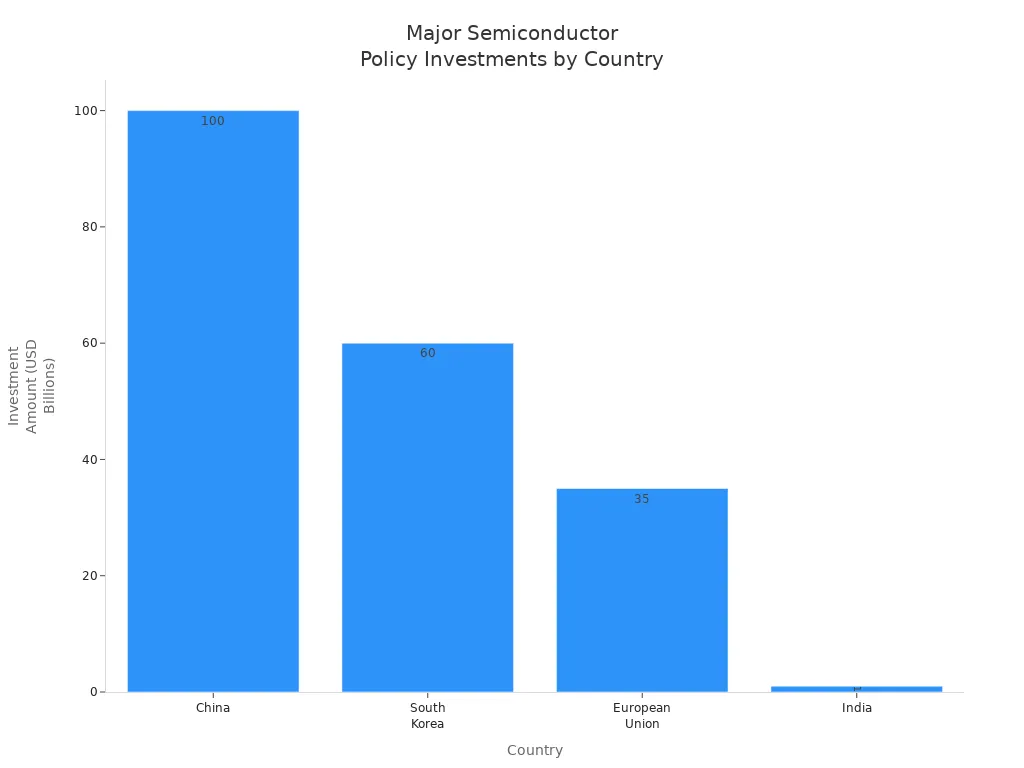
Both the United States and the European Union have passed important laws to increase public investments in semiconductors. These laws support new chip factories, research, and workforce training. The goal is to reduce dependency on foreign-made chips and protect the economy from future disruptions.
The CHIPS and Science Act, signed in August 2022, provides about $52.7 billion in subsidies for new semiconductor plants and private investment. This act aims to fix weaknesses in the supply chain that became clear during the COVID-19 pandemic. As a result, the U.S. is expected to triple its semiconductor manufacturing capacity by 2032, reaching the highest growth rate in the world.
These industry and policy moves show a global commitment to building a more resilient and secure semiconductor supply chain.
Future Outlook
Short-Term Trends
Market analysts expect strong growth in semiconductor demand over the next few years. Several factors drive this trend:
AI, machine learning, and IoT applications continue to expand rapidly.
The adoption of 5G technology increases the need for integrated circuits.
Investments in electric vehicles and autonomous driving boost demand for automotive semiconductors.
Cloud computing and data centers require more memory chips and processors.
Many countries focus on localizing semiconductor manufacturing to reduce supply chain risks.
Companies adjust their procurement and inventory strategies to cope with ongoing shortages. They work closely with suppliers to improve transparency and understand chip usage in products. Many businesses redesign products to use fewer chips or qualify parts from multiple suppliers. Some build buffer inventory to stabilize production during delays. Others shift from just-in-time to just-in-case inventory models. These steps help companies stay resilient in a changing market.
Long-Term Shifts
The global semiconductor industry will see major changes after the Chip Shortage. The table below highlights key shifts:
Shift Type | Description |
|---|---|
Government Involvement | Governments increase efforts to reshore semiconductor manufacturing and reduce risks. |
Decline of Fabless Model | Some companies move away from the fabless model and choose vertical integration. |
Focus on Innovation and R&D | The industry places greater emphasis on research and innovation to meet new technology demands. |
Advancements in manufacturing technology will also shape the future. Decentralized manufacturing reduces dependence on specific regions and improves supply chain resilience. New innovations, such as EUV lithography and advanced materials, set new industry standards. AI plays a bigger role in chip design and production, making processes more efficient. Companies also adopt green manufacturing practices to balance growth with environmental responsibility.
Risks and Opportunities
Businesses face several risks in the evolving semiconductor landscape:
Labor shortages may leave thousands of semiconductor jobs unfilled, especially in the U.S.
The demand for skilled engineers could exceed supply, affecting production timelines.
Advanced chips now have shorter lifespans, leading to faster obsolescence.
Geopolitical tensions can disrupt supply chains and limit access to key components.
At the same time, new opportunities emerge:
Increased investments in manufacturing capacity allow businesses to expand operations.
The growing demand for AI and advanced technologies creates space for innovation and market growth.
Digital supply chain solutions like JusLink help companies manage these risks and seize opportunities. By using AI-driven systems, businesses can analyze global developments, predict disruptions, and adjust strategies quickly. Digital tools support resilience, minimize risks, and help companies grow sustainably in a fast-changing industry.
The Chip Shortage stems from high demand, supply chain disruptions, and geopolitical shifts. Industries such as automotive, electronics, and AI have faced significant challenges. Companies now invest in new fabs, diversify suppliers, and adopt digital supply chain management.
Capability Type | Description |
|---|---|
Readiness | Prevent stressors and enhance robustness. |
Responsiveness | Rapidly detect and react to supply chain issues. |
Recovery |
To stay competitive, businesses focus on resilience, innovation, and strategic stockpiling. Embracing AI-driven tools and advanced analytics will help organizations adapt to ongoing changes in the semiconductor landscape.
FAQ
What caused the global chip shortage?
The global chip shortage started with increased demand for electronics and disruptions in manufacturing. COVID-19 lockdowns, supply chain issues, and geopolitical tensions made the problem worse.
How does the chip shortage affect everyday products?
Consumers see higher prices and fewer choices for electronics, cars, and appliances. Companies struggle to keep shelves stocked and deliver products on time.
What is JUSDA’s role in solving supply chain challenges?
JUSDA uses digital platforms and AI tools to help manufacturers manage risks, optimize logistics, and maintain steady operations during supply chain disruptions.
How does JusLink improve supply chain efficiency?
JusLink uses AI forecasting, real-time monitoring, and risk management to predict demand, track shipments, and respond quickly to problems. This helps companies save time and reduce costs.
Will the chip shortage end soon?
Experts expect the shortage to ease as new factories open and supply chains adapt. Investments in technology and local manufacturing will help stabilize the market.
See Also
Unveiling Quality Control Techniques in Semiconductor Manufacturing
Enhancing Supply Chain Strategies for Advanced Manufacturing Challenges
Transforming Supply Chains Through IoT Innovations and Trends