How to Choose the Best International Shipping Solutions for Your Budget

Ever feel torn between affordable rates and reliable delivery when looking for international shipping? You want value, but your shipping requirements can make the search tricky. Choosing the right shipping solutions matters. Rail-based logistics, like those from JUSDA, give you affordable options and real value. Always follow shipping guidelines for peace of mind.
Key Takeaways
Explore various international shipping options like air freight, express couriers, and freight forwarders to find the best fit for your needs.
Understand the factors that influence shipping costs, such as distance, package size, customs duties, and insurance, to make informed decisions.
Negotiate rates with carriers and utilize technology like JUSDA’s JusLink platform to optimize your shipping strategy and reduce costs.
International Shipping Options
When you start exploring international shipping, you’ll notice several options. Each method has its own strengths. Let’s break down the main choices so you can pick what fits your needs.
Description | Key Considerations | |
|---|---|---|
Fastest method for transporting cargo internationally. | Higher costs compared to other methods. | |
Agents that manage shipping logistics and documentation for international shipments. | Familiarity with import/export regulations. | |
Customs Brokers | Professionals who assist with customs clearance and compliance. | Essential for legal shipping processes. |
Express Couriers
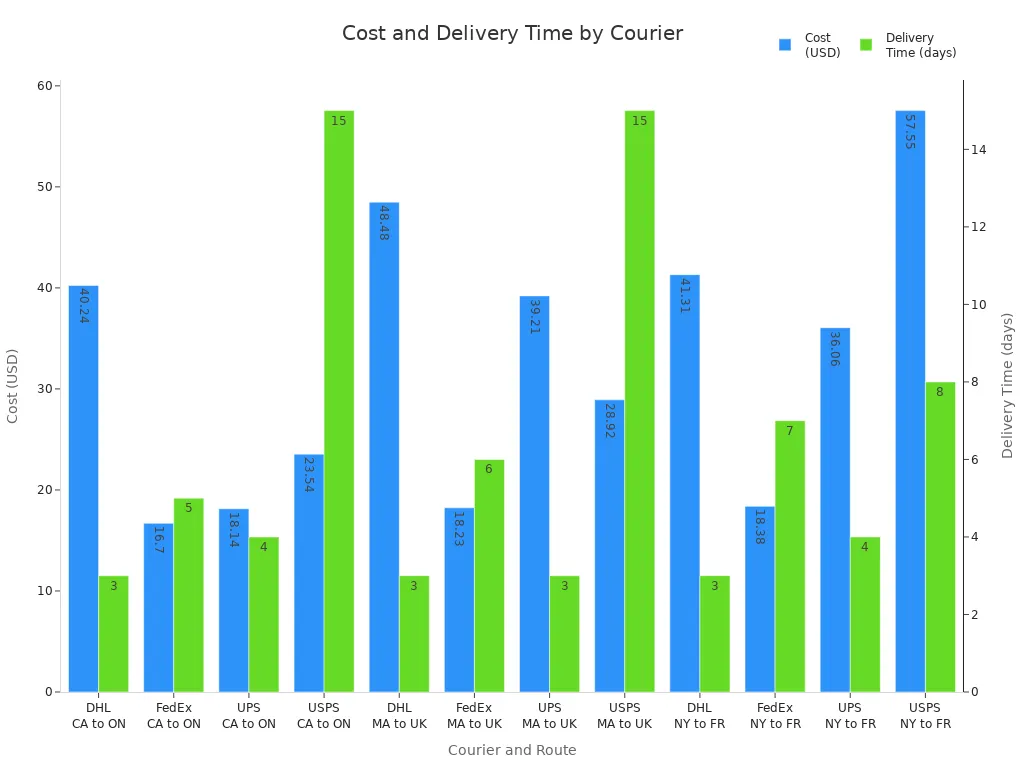
Express couriers like DHL, FedEx, and UPS offer speed and convenience. You get door-to-door service and tracking. If you need something delivered quickly, these international courier services are a solid choice. They’re great for urgent documents or small packages. You pay more for speed, but you get reliable delivery.
Postal Services
Postal services, such as USPS, work well for non-urgent shipments. You save money, but delivery takes longer. If you’re shipping gifts or low-value items, this option makes sense. You still get tracking, but reliability can vary depending on the destination.
Freight Forwarders
Freight forwarders help you manage complex international shipping. They handle logistics, paperwork, and customs. If you ship large volumes or need help with regulations, freight forwarders offer a reliable solution. You get flexibility and support for different cargo types.
JUSDA China-Europe Express Rail
JUSDA’s China-Europe Express Rail stands out as a unique option. You get a balance between speed and cost. Rail shipping takes 15-20 days, faster than sea freight and much cheaper than air. If you want reliable delivery for electronics, clothing, or medical supplies, this rail solution helps you optimize your budget and timeline.
Shipping Costs Factors

When you plan an international shipment, you want to know what drives shipping costs. Several factors play a role, and understanding them helps you make smarter choices.
Distance and Zones
Shipping costs often depend on how far your package travels. Carriers use zones to set prices, and each zone covers a different region. You might notice that shipping to Europe costs more than shipping to a neighboring country. Longer distances mean higher fuel and labor expenses. Some carriers even charge different rates for similar distances, depending on the destination zone. If you ship to riskier areas, you pay extra for safety measures.
International zones vary by carrier and country.
Greater distances increase transportation time and fuel costs.
Risky destinations can raise shipping costs.
Package Size and Weight
The size and weight of your shipment matter. Heavier or bulkier packages take up more space and need more resources. You pay more for oversized items or special handling. Carriers calculate shipping costs based on weight, volume, and cargo type. If you ship electronics or fragile goods, expect higher rates.
Heavier and larger packages cost more.
Special cargo needs extra care, which increases shipping costs.
Customs and Duties
Customs fees and taxes add to your shipping costs. Each country sets its own rules, and these depend on the product’s value, origin, and description. You might pay extra for goods with higher sale values or those subject to special tariffs. Some countries charge GST or VAT, which can make shipping costs jump.
Customs duties depend on product value, trade agreements, and country of origin.
GST and VAT apply in many countries.
Insurance and Tracking
You want peace of mind when shipping valuable items. Insurance protects your shipment from loss or damage, but it adds to your shipping costs. Tracking services also come with a fee. If you ship high-value goods, investing in insurance and tracking makes sense.
Tip: Always check if your provider offers real-time tracking and flexible insurance options. These features help you manage risks and control shipping costs.
Compare Providers
Choosing the right international shipping provider can feel overwhelming. You want affordable rates, reliable service, and real value for your business. Let’s break down how you can compare your options and make a smart decision.
Reputation and Reviews
You should always check what other customers say about a provider. Reviews and reputation scores give you a peek into real experiences. Positive feedback often means the company delivers on time and handles packages with care. Negative reviews can warn you about delays or poor customer service. If you want reliable shipping, look for providers with strong ratings and consistent praise for their service quality. Customer reviews help you spot trends in delivery speed, support, and overall value.
Service Options
Not every international shipping provider offers the same services. You need to match your needs with what each company provides. Here’s a quick look at common service options:
Service Option | Description |
|---|---|
Delivery Speed | Overnight air freight for urgent shipments, ocean or LTL shipping for less time-sensitive cargo. |
Insurance | Coverage for loss or damage, plus help with claims. |
Shipping Cost | Clear pricing, discounts, and no hidden fees for affordable shipping. |
Customer Service | 24/7 support or dedicated managers to solve delivery issues. |
Real-time Tracking | Updates and notifications so you know where your package is. |
Shipping Rules and Regulations | Handling hazardous materials, weight, and size limits. |
Remote Area Delivery | Options for rural or hard-to-reach places. |
You should ask yourself: Do you need fast delivery? Is insurance important for your goods? Will you ship to remote areas? The answers help you find the provider that gives you the most value.
Pricing Transparency
You want to avoid surprises when the bill arrives. Transparent pricing means you see all costs upfront. Many international shipping providers list their rates, but some add extra fees later. Watch out for these common hidden charges:
Fuel surcharges
Handling fees
Customs declaration costs
Weekend or remote area charges
Providers that show all fees clearly build trust and keep customers happy. You get peace of mind knowing exactly what you pay. Transparent pricing helps you compare options and choose the most affordable and reliable solution for your needs.
Tip: Always ask for a detailed quote before you commit. This way, you spot any hidden fees and make sure you get the best value.
JUSDA’s Supply Chain Solutions
If you want a technology-driven approach, JUSDA stands out among international shipping providers. JUSDA uses advanced digital solutions to boost efficiency and deliver real value. Their JusLink Smart Supply Chain Management Platform gives you end-to-end visibility and control. RFID and warehouse management systems (WMS) help track your shipments and reduce errors. Automation in warehousing speeds up operations and makes service more reliable. You also get dynamic inventory management, auto procurement, and risk management features. These tools help you save money and improve your supply chain.
Technology Solution | Description |
|---|---|
JusLink Smart Supply Chain Management Platform | End-to-end visibility and control, using RFID and WMS for better efficiency. |
Automation in Warehousing | Boosts productivity and reduces mistakes. |
Advanced Digital Solutions | Dynamic inventory, auto procurement, and risk management for seamless shipping. |
JUSDA’s expertise covers many industries, from electronics to medical supplies. You get affordable rates, reliable delivery, and real value for your business. If you want to streamline your international shipping, JUSDA’s solutions make it easier to manage costs and improve performance.
Reduce Shipping Costs
Looking for cheaper international shipping? You can make smart choices that help your business save money and boost efficiency. Let’s break down some practical strategies you can use right now.
Optimize Packaging
You might not realize how much packaging affects your shipping costs. When you use custom-fit packaging, you cut down on wasted space and lower the weight of each shipment. This simple change can lead to big savings. For example, one company redesigned its packaging and reduced the number of containers shipped by 12%. That move saved $1.2 million in freight costs in just one year.
Efficient packaging design helps you fit more products in fewer containers.
Less void space means you pay less for shipping.
Custom packaging eliminates unnecessary filler, making your shipments lighter and more cost-effective.
If you want cheaper international shipping, always look for ways to minimize packaging volume and weight. Swap out bulky boxes for polybags when possible. Buy packing supplies in bulk to get better rates. Every little change adds up.
Efficient Scheduling
Timing matters in international shipping. When you plan shipments carefully, you avoid delays and cut down on wasted resources. Efficient scheduling helps you find the shortest routes, which saves fuel and lowers costs. You also reduce waiting times for ships, which means less money spent on fuel and lower emissions.
Optimize your shipping schedule to prevent vessel wastage.
Shorter routes lead to fuel savings and faster delivery.
Fewer delays mean lower operational costs and happier customers.
If you want cheaper international shipping, coordinate shipments to avoid peak times and take advantage of off-peak rates. Use fulfillment centers near your customers to reduce shipping distances. These steps make your shipping process more cost-effective.
Technology and AI (JusLink)
Technology can transform your shipping strategy. JUSDA’s JusLink platform uses AI to give you real-time visibility and smart analytics. You get tailored solutions that fit your business needs and help you make better decisions. JusLink’s intelligent risk management tools help you avoid costly mistakes and keep your shipments on track.
JusLink integrates AI with deep industry knowledge for smarter shipping.
Real-time visibility lets you track shipments and spot issues early.
Intelligent risk management helps you avoid delays and extra costs.
If you want cheaper international shipping, leverage technology for automation and data analytics. JusLink’s platform helps you compare carrier rates, optimize routes, and manage inventory more efficiently. You get a cost-effective solution that keeps your supply chain running smoothly.
Tip: Use real-time carrier rate shopping to find the most economical option for each shipment. Automation and analytics help you spot savings opportunities you might miss otherwise.
Negotiate Rates
Negotiation is key to cheaper international shipping. When you build strong relationships with carriers, you can secure better rates and discounts. Start by researching the market and understanding current prices. Set clear goals for what you want to achieve. Get quotes from multiple vendors to ensure you’re getting the best deal.
Here are some proven tactics for negotiating lower rates:
Research the market and know your numbers.
Set realistic goals for your shipping costs.
Build trust with your carriers for long-term savings.
Buy in bulk to qualify for volume discounts.
Explore flexible payment options that benefit both sides.
Use competition among suppliers to your advantage.
Highlight how lower prices help both you and your carrier.
Negotiate beyond just price—look for added value in service.
Stay flexible and be ready to compromise for better terms.
You can also stick to a handful of carriers to strengthen your bargaining power. Use prepaid shipping options for bulk shipments to unlock discounts. Always research local customs regulations to avoid unexpected costs. These steps make your shipping process more cost-effective and help you achieve cheaper international shipping.
Strategy | Description |
|---|---|
Build relationships to secure better rates and discounts. | |
Use the right packaging | Optimize packaging to reduce weight and dimensions, impacting shipping fees. |
Utilize real-time carrier rate shopping | Compare shipping costs across multiple carriers to select the most economical option. |
Offer multiple delivery options | Provide customers with choices to manage costs and satisfaction. |
Optimize last mile delivery | Improve routing and scheduling to save costs on the last mile. |
Use bulk shipments | Consolidate shipments to negotiate better rates and reduce per unit shipping costs. |
Opt for fulfillment centers | Store inventory closer to customers to reduce shipping distances. |
Leverage technology | Use automation and data analytics to streamline processes and reduce costs. |
Implement zone skipping | Consolidate shipments to reduce transportation costs related to distance and handling fees. |
Attempt commingling delivery | Combine shipments from various retailers to optimize vehicle capacity and lower costs. |
If you want cheaper international shipping, combine these strategies for the best results. Optimize packaging, schedule shipments efficiently, use technology like JusLink, and negotiate rates with your carriers. You’ll see your shipping costs drop and your business become more cost-effective.
Cheaper International Shipping Tips
Avoid Hidden Fees
Hidden fees can sneak up on you and ruin your shipping budget. If you want to keep costs down, you need to know what to watch for. Here are some of the most common hidden charges you might face:
Remote area surcharge for deliveries in hard-to-reach places
Holiday or out-of-hours delivery fee
Billing errors that lead to overcharges
Oversize or overweight surcharges
Dangerous goods handling fees
Delivery Duty Unpaid (DDU), where the recipient pays taxes and duties
You can avoid these surprises by reading the fine print, double-checking invoices, and asking your provider for a detailed quote. If you stay alert, you’ll keep your shipping process smooth and reliable.
Check Delivery Guarantees
Not all shipping providers offer the same level of reliability or compensation if things go wrong. Before you choose a service, compare their delivery guarantees. Here’s a quick look at how some major carriers stack up:
Provider | Speed | Reliability | Compensation |
|---|---|---|---|
FedEx | 1-3 business days (Priority) | High | Limited discounts for small-volume shippers |
DHL | Next business day (Express Worldwide) | High | Money-back guarantees for some services |
UPS | 2-5 business days (Expedited) | High | Higher surcharges for additional handling |
If you want peace of mind, pick a provider with a reliable track record and clear compensation policies. Always check the fine print so you know what’s covered.
Understand Insurance
Shipping insurance protects your goods from loss or damage. You have options, and the cost is usually low. For example, EasyPost charges just $1.50 to insure $150 worth of goods. Marine cargo insurance covers a wide range of risks, like fire, storms, and theft. You can tailor coverage to your needs, whether you ship port-to-port or warehouse-to-warehouse.
Tip: Always ask your provider about insurance options. A small investment can save you a lot if something goes wrong.
Key Shipping Terms
When you ship internationally, you’ll see a lot of jargon. Understanding these key terms helps you avoid confusion and costly mistakes. Let’s break down the essentials.
Incoterms
Incoterms set the rules for who handles what during shipping. You decide with your buyer or seller who pays for shipping, insurance, and customs. For example, EXW (Ex Works) means you cover all costs from the seller’s door. DDP (Delivered Duty Paid) puts the responsibility on the seller until the goods reach you. FOB (Free on Board) shifts risk to you once the goods are loaded onto the vessel. Picking the right Incoterm helps you control costs and avoid disputes. You get clarity on who pays for each part of the journey.
Tip: Always check which Incoterm fits your shipment. It affects your total landed cost and risk.
Bill of Lading
The bill of lading is a must-have document in shipping. You use it as:
A receipt showing the carrier got your goods in good condition.
A contract that spells out the terms of transport.
Proof of ownership, letting you transfer goods while they travel.
This document protects you and the receiver. It sets clear rules, proves ownership, and keeps you compliant with trade laws.
Customs Declaration
You must fill out a customs declaration for every international shipment. Include the correct value, HS code, recipient address, and contact info. Mistakes can cause delays, extra fees, or even legal trouble. If you mislabel hazardous materials or attach forms incorrectly, customs may hold your goods. Always follow import-export laws and double-check your paperwork.
Note: Never assume your goods qualify for duty-free treatment. Wrong assumptions can lead to penalties or fraud charges.
You want affordable shipping that delivers real value. Follow these steps for the best results:
Compare providers for affordable rates and transparent pricing.
Choose partners who automate delivery and offer real-time tracking.
Use innovative options like JUSDA and China-Europe Express Rail for affordable, fast, and reliable value.
These solutions give you affordable shipping, reduce delivery times, and add value to your business. Understand shipping costs and terms. Start evaluating your options with confidence.
See Also
Mastering Cost Reduction Strategies For Logistics Management
Unveiling The Leading Global Logistics Firms And Solutions
Understanding Financial Strategies For Supply Chain Efficiency
Addressing Global Supply Chain Growth Obstacles Effectively
Identifying Savings Opportunities In Your Supply Chain Costs