Container Rate Fluctuations Reshape Global Logistics Costs: How Falling Shipping Prices on Key Trade Lanes Impact Supply Chain Budgets

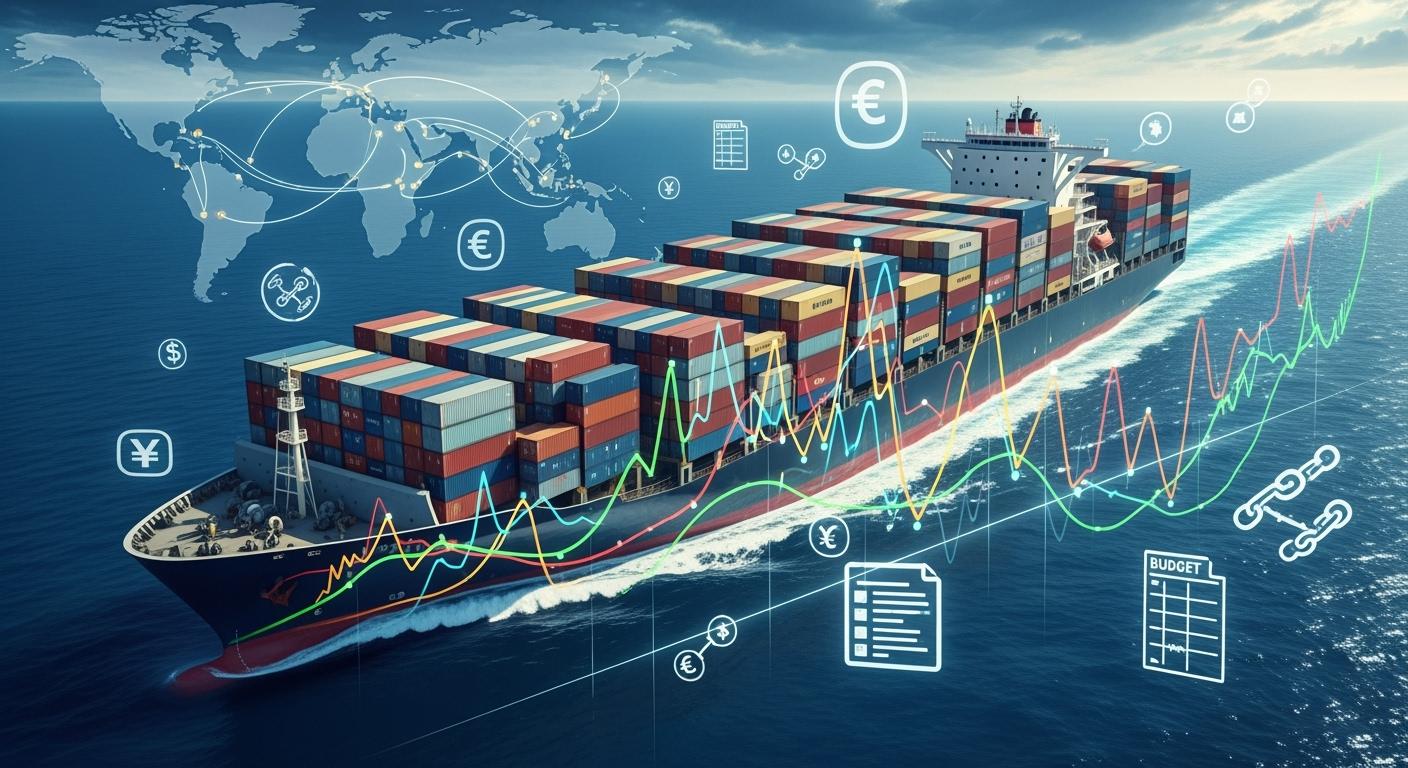
Recent declines in container rates have driven shipping costs to their lowest levels since January 2024, with the Drewry World Container Index falling to $1,669 per 40ft container. Businesses in major industries now focus on flexibility and proactive planning to adapt to these volatile conditions in global logistics. Innovative solutions, such as JUSDA and the China-Europe Express Rail, help companies navigate market shifts. Technology and alternative modes like rail offer cost-effective options, especially when ocean freight prices fluctuate.
Key Takeaways
Falling container rates provide businesses with opportunities to optimize logistics budgets and improve resource allocation.
Companies should adopt flexible shipping strategies to adapt to fluctuating rates and geopolitical disruptions.
Utilizing technology, like JUSDA's AI solutions, can enhance predictive analytics and improve decision-making in logistics.
Building partnerships with multiple carriers increases flexibility and helps manage shipping costs effectively.
Regularly monitoring market trends and employing data-driven strategies can help businesses anticipate changes and minimize costs.
Container Rates and Market Trends
Recent Rate Movements
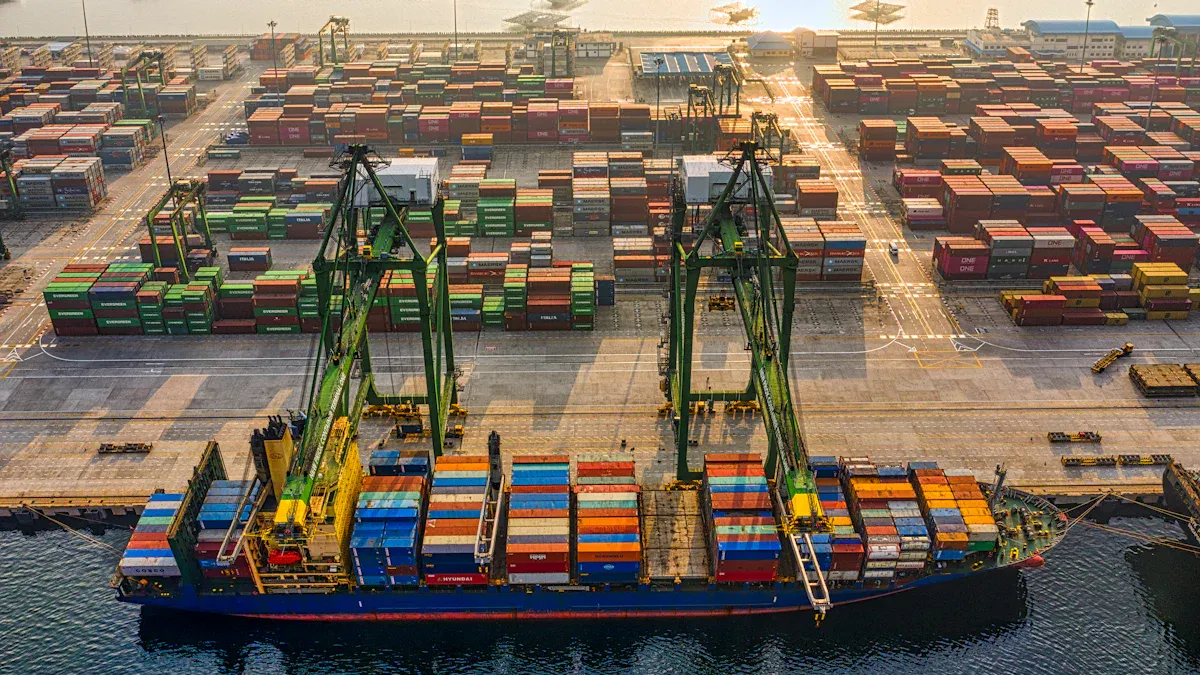
Container rates have shifted dramatically across global trade lanes in recent months. Industry sources such as Xeneta and Drewry report notable changes in pricing, reflecting the volatility of the shipping market. The following table summarizes the latest average container rates on major routes:
Trade Lane | Rate Change (%) | Current Rate (per 40ft) | Source |
|---|---|---|---|
North Europe–US East Coast | -5.5% | Lowest in 21 months | Xeneta |
Shanghai-Rotterdam | +6% | $1,669 | Drewry |
Shanghai-North Europe | +7% | $2,290 | SCFI |
Far East-North Europe | +13.9% | 24-day high | Xeneta |
Rates on the Asia-Europe and Transpacific lanes have also experienced significant movement over the past year. The table below highlights these changes:
Trade Lane | Rate Change (%) | Current Rate (per FEU) |
|---|---|---|
Asia-North Europe | +13% | $1,975 |
Asia-Mediterranean | +1% | $2,147 |
Asia-Europe (October GRIs) | - | ~$2,300 |
Experts from Drewry anticipate further weakening of the supply-demand balance, which may lead to contracting spot rates. Overcapacity remains a major factor, with projections showing average overcapacity reaching 18% this year and possibly 27% through 2028.
Key Trade Lanes Analysis
Several factors contribute to the volatility in container rates. Analysts identify persistent oversupply in the shipping market and an imbalance between shipping capacity and cargo volumes. Geopolitical events disrupt supply chains, causing frequent changes in freight routes and longer delivery times. Companies respond by seeking ways to hedge against price risks, which increases market activity.
The North Asia to Europe and North Asia to US West Coast routes show significant volatility due to policy changes and geopolitical tensions.
Disruptions in the South China Sea and increased attacks on shipping routes add to instability.
The following table illustrates the impact of overcapacity on container rates in recent months:
Metric | Value | Date |
|---|---|---|
Asia–Europe spot rates | USD 1,613/FEU | October 2, 2023 |
Shanghai Containerized Freight Index (SCFI) | USD 1,114.52/TEU | September 29, 2023 |
China Containerized Freight Index (CCFI) | USD 1,087.41/TEU | September 29, 2023 |
Container rates continue to fluctuate as the industry faces ongoing challenges from supply-demand imbalances, geopolitical risks, and changing trade policies.
Impact on Shipping Costs

Budget Implications for Businesses
Falling container rates have a direct impact on logistics budgets across industries. Companies in electronics, fast-moving consumer goods (FMCG), and automotive sectors experience significant changes in their cost structures. Lower shipping costs allow businesses to allocate resources more efficiently and adjust their shipping strategy to meet market demands. However, volatility in rates creates uncertainty, forcing organizations to reevaluate their budget planning.
Protectionist policies, such as tariffs and trade restrictions, disrupt global supply chains and increase costs for manufacturers.
Political instability and conflicts often lead to higher transportation costs and unpredictable delivery schedules.
Inventory costs rise when companies maintain buffer stocks to manage uncertain lead times, which can result in higher prices for consumers.
Automotive manufacturers, for example, have reported notable financial impacts. General Motors experienced a $1.1 billion decrease in net income due to increased component costs from tariffs. This loss represented a 35% reduction in profits, even with a 12% sales gain to dealerships. The Port of Los Angeles saw a surge in container volumes, reflecting fluctuating logistics costs for businesses operating in the region.
Companies in the automotive sector respond to these challenges by adjusting procurement and shipping schedules. They increase air freight usage for critical components to avoid costly assembly line shutdowns, which can result in losses of $10,000 to $30,000 per minute. Inventory carrying costs rise by an average of 24% as organizations maintain higher buffer stocks to manage unpredictable lead times.
Note: Businesses must remain agile and adapt their shipping strategy to minimize the impact of rate fluctuations on their logistics budgets.
Cost Management Strategies
Organizations facing declining container rates implement several cost management strategies to optimize their freight cost and shipping costs. They negotiate long-term contracts and utilize index-linked agreements to stabilize expenses. Understanding the dynamics of freight rates and capacity management helps companies make informed decisions.
Asia–U.S. West Coast rates decreased by 24% to $2,369 per forty-foot equivalent unit (FEU).
Asia–U.S. East Coast prices fell by 5% to $4,888 per FEU.
Asia–Mediterranean freight prices dropped by 4% to $3,802 per FEU.
Drewry’s World Container Index fell 4% to $2,250 per 40ft container, marking the tenth consecutive weekly decline.
Shippers now hold a stronger negotiating position. They must carefully evaluate market conditions and adjust their shipping strategy to maximize cost savings. Companies also face challenges such as volatility in shipping costs, geopolitical tensions, and labor disputes, which can disrupt trade routes and increase expenses.
Volatility in shipping costs due to fluctuating spot rates.
Geopolitical tensions affecting trade routes and pricing.
Labor disputes leading to delays and increased costs.
Unanticipated events like pandemics and port strikes.
Increased costs due to reliance on just-in-time supply chains.
By adopting advanced transportation optimization strategies and leveraging technology, businesses can mitigate the impact of rate changes. JUSDA’s industry-specific solutions help companies in electronics, FMCG, and automotive sectors manage logistics budgets and maintain supply chain resilience.
Drivers of Ocean Freight Trends
Supply and Demand Factors
Ocean freight trends reflect a complex interplay between supply and demand. Lower import volumes have contributed to reduced demand for ocean freight. Carriers have increased available capacity, which places downward pressure on rates. These trends have led to significant drops in freight rates, especially on transpacific routes. U.S. port volumes are projected to decline by 5.6% for 2025. This projection suggests that current trends are not temporary but indicate a broader erosion in demand across the ocean freight market.
Major shipping alliances play a critical role in shaping ocean freight trends. They pool resources to enhance service coverage, allowing for more frequent services on key routes. This collaboration reduces operational costs and makes shipping more efficient. Shippers benefit from regular and efficient transportation options, which is crucial in a competitive market.
Lower import volumes reduce demand for ocean freight.
Increased carrier capacity leads to downward pressure on rates.
Major alliances improve service coverage and efficiency.
Geopolitical and Regulatory Influences
Global trade policies and regulatory decisions drive ocean freight trends. Recent U.S. tariffs and EU trade agreements have affected container shipping rates on major trade lanes. The following table highlights the impact of these policies:
Rate Change (%) | Current Rate (per FEU) | |
|---|---|---|
China to U.S. West Coast | -59% | $2,268 |
China to U.S. East Coast | -43% | $3,796 |
North Europe to U.S. East Coast | -25% | $2,000 |
"Trade deals aren’t a magic bullet for a weak shipping market... It’s not good news for shippers—just less bad than it could have been."
These trends show that regulatory changes and geopolitical events can reshape ocean freight trends rapidly. Shippers must monitor these developments to adapt their logistics strategies. Capacity management, trade agreements, and tariffs remain central to understanding the direction of ocean freight trends.
JUSDA Solutions for Rate Volatility
JusLink’s AI for Predictive Analytics
JUSDA’s JusLink AI Solution empowers logistics managers to navigate volatile freight rates and shipping container costs with advanced predictive analytics. The platform leverages artificial intelligence to analyze large data sets, forecast disruptions, and optimize route planning. Logistics teams benefit from smart containers that react to real-time issues and anticipate future challenges. The system suggests alternative routes when delays occur, which enhances decision-making and reduces shipping container costs.
AI models assess risks and forecast delays, supporting logistics managers in planning.
Predictive analytics use historical data to improve the accuracy of container rate forecasting.
Machine learning algorithms refine predictions over time, increasing efficiency.
The system alerts operators to maintenance needs, which reduces in-transit failures and unexpected costs.
JusLink’s AI-driven insights help businesses manage unexpected disruptions and maintain resilience. The platform’s risk control tower provides real-time monitoring, enabling proactive management of freight rates and shipping container costs. This approach supports better logistics planning and cost optimization, especially for industries such as electronics, FMCG, and automotive.
Digital logistics platforms like JusLink integrate innovations that mitigate the impact of container rate fluctuations. The following table highlights key features:
Innovation Type | Description |
|---|---|
Digital Freight Platforms | Use AI and big data for real-time tracking and automated load-matching, improving efficiency. |
Predictive Analytics | Enhances operational planning by anticipating demand and minimizing disruptions. |
Blockchain Technology | Provides enhanced security and data accuracy, reducing fraud and simplifying documentation processes. |
Unified Digital Infrastructure | Strengthens collaboration and increases supply chain agility by standardizing container tracking. |
JUSDA’s JusLink solution increases efficiency and speed with instant booking options. Real-time visibility and tracking provide updates from pickup to delivery. Cost savings result from eliminating manual paperwork and optimizing load matching. Faster payment processes improve cash flow for shippers and carriers.
China-Europe Express Rail as an Alternative
JUSDA’s China-Europe Express Rail offers a strategic alternative to traditional ocean freight, balancing speed and shipping container costs. The rail service connects China and Europe through a reliable network, providing faster transit times compared to sea freight. Shipments via rail typically take 14–18 days, while ocean freight may require 30–40 days. The following table compares key parameters:
Parameter | Rail Freight | Sea Freight |
|---|---|---|
Speed | 14–18 days (China-Europe) | 30–40 days (China-Europe) |
Cost | Less expensive than air freight, generally more expensive than sea freight | Least expensive, especially for large volumes |
Businesses choose China-Europe Express Rail to optimize shipping container costs and improve delivery speed. The service is ideal for high-value, time-sensitive goods such as electronics and medical supplies. The table below demonstrates cost optimization during periods of ocean freight volatility:
Transport Mode | Cost per FEU | Transit Time | Value Category | Time Sensitivity |
|---|---|---|---|---|
China-Europe Rail | $3,700 | Shorter | High-value, high-time-sensitive | High |
Maritime Shipping | $3,500 | Longer | High-value, low-time-sensitive | Low |
Maritime Shipping | $2,600 | Longer | Low-value, high-time-sensitive | High |
Maritime Shipping | $2,600 | Longer | Low-value, low-time-sensitive | Low |
JUSDA’s expertise in intercontinental logistics ensures smooth customs operations and resource alignment. The rail service minimizes the risk of goods being stranded, supporting reliable delivery and cost management. Companies in electronics, FMCG, and automotive sectors benefit from the flexibility to choose the most suitable transport mode based on freight rates, shipping container costs, and time sensitivity.
JUSDA’s digital transformation initiatives, such as the Supply Chain Management Collaboration Platform, have elevated Chinese manufacturers to global prominence. The platform integrates AI, cloud computing, and blockchain to enhance transparency, efficiency, and cost optimization. Leading manufacturers have adopted JUSDA’s solutions to standardize operations, reduce manual handling, and achieve efficient global expansion.
JUSDA’s commitment to innovation and efficiency positions its solutions as essential tools for managing freight rate trends, shipping container costs, and container availability in a dynamic market.
Future Outlook for Container Rates
Risks and Uncertainties
Container rates face several risks and uncertainties in the coming year. Geopolitical conflicts, especially in the Red Sea, disrupt shipping routes and increase operational cost. Proposed tariffs on imports from major trading partners create uncertainty in international trade, which can impact freight rates and cost structures. Overcapacity in the shipping industry remains a concern, with the orderbook-to-fleet ratio rising from 27.5% in 2023 to 31.6% in 2024. Market dynamics of supply and demand play a crucial role, as low spot rates could lead to lower annual contract rates and affect overall cost planning.
Geopolitical tensions and tariff implications may drive up cost.
Overcapacity can depress rates, but also create volatility in cost.
Global containership capacity increased by 5.1 million TEU or 19% since Q3 2023.
Shipping demand rose by 12% from January to July 2023 compared to the previous year.
Regulatory changes, such as new tariffs, can alter freight volumes and cost. Higher tariffs may reduce consumer purchases, lowering import volumes and decreasing trucking demand, which can lead to lower freight rates and cost savings. Conversely, reshoring manufacturing could boost domestic freight demand and increase cost.
Evidence Type | Description |
|---|---|
Capacity Adjustment | Ocean carriers canceled 80 sailings from China due to tariffs. |
Rate Trends | Spot rates from Shanghai to Los Angeles rose by 3% to $2,815 per container. |
Trade Pattern Shift | Shift from China to South and Southeast Asia affects cost and logistics. |
Strategies for Supply Chain Resilience
Supply chain professionals can build resilience against container rate volatility by adopting several strategies:
Use advanced shipping software to improve visibility and control cost.
Build partnerships with multiple carriers for flexibility in managing cost.
Maintain contingency funds to cover unexpected disruptions and cost spikes.
Employ dynamic pricing models to respond quickly to market changes and optimize cost.
Regularly evaluate market trends and refine strategies to manage cost effectively.
Leveraging technology for real-time visibility helps optimize inventory management and supplier payment strategies, which can reduce cost. Integrating AI with human expertise enhances decision-making and responsiveness, allowing organizations to anticipate disruptions and adjust procurement strategies to control cost.
Supply chain professionals should monitor container rate trends using tools like the Freightos Baltic Index, which provides accurate data for benchmarking shipping cost and forecasting budget requirements. Conducting thorough freight rate analysis and examining historical data helps predict future rate movements and allocate resources efficiently, minimizing cost.
Tip: Optimizing logistics processes, exploring alternative shipping routes, and investing in digital tools for rate monitoring can help businesses manage cost and prepare for future changes in container rates.
Container rate fluctuations continue to reshape global shipping costs and supply chain budgets. Companies benefit from data-driven strategies and AI-powered budgeting, as shown below:
Key Takeaway | Description |
|---|---|
AI-powered budgeting | Minimizes logistics expenses through data-driven approaches. |
Predictive analytics | Forecasts market changes and manages price fluctuations. |
Cross-functional collaboration | Aligns budgets between procurement and finance teams. |
Index-based contracts | Secures against unexpected shipping price spikes. |
Data-driven strategies | Manages uncertainties in freight shipping costs. |
JUSDA’s technology solutions support cost optimization in volatile markets:
Real-time rate tools enable quick financial adjustments.
Digital platforms provide visibility and automation.
AI-powered pricing strategies maintain profitability.
Ongoing monitoring practices, such as enhancing supply chain visibility and implementing real-time tracking, help businesses stay agile. Proactive oversight ensures organizations respond effectively to changes in logistics strategy.

JUSDA Solutions
To provide you with professional solutions and quotations.
FAQ
What is the typical transit time for JUSDA’s China-Europe Express Rail service?
JUSDA’s China-Europe Express Rail delivers goods door-to-door in 15–20 days. This service offers a faster alternative to sea freight and a more cost-effective solution compared to air freight.
How does JusLink’s AI Solution help manage container rate volatility?
JusLink’s AI Solution uses predictive analytics to forecast freight rate trends. The platform provides real-time risk monitoring and supports logistics managers in making informed decisions to optimize costs.
Which industries benefit most from JUSDA’s logistics solutions?
JUSDA serves electronics, 3C home appliances, FMCG, automotive, new energy, medical health, heavy equipment, and bulk materials industries. The company tailors supply chain solutions to meet each sector’s unique needs.
What types of goods can be shipped using the China-Europe Express Rail?
The China-Europe Express Rail supports electronic products, clothing, small commodities, and medical supplies. JUSDA’s expertise ensures smooth customs operations and reliable delivery for these goods.
Tip: Businesses seeking faster delivery and cost optimization often choose JUSDA’s rail service for high-value, time-sensitive shipments.
How does JUSDA’s digital transformation enhance supply chain efficiency?
JUSDA’s Supply Chain Management Collaboration Platform integrates AI, cloud computing, and blockchain. This platform improves transparency, standardizes operations, and reduces manual handling for global manufacturers.
See Also
Understanding Current Trends in Logistics Risk Management
Unlocking Cost Savings: Expert Tips for Supply Chain Success
Analyzing Financial Strategies for Supply Chain Efficiency
Identifying Savings Opportunities in Your Supply Chain Costs
Transforming Logistics Through Innovative Supply Chain Solutions