Digital Logistics News and Insights for Modern Supply Chains


You see digital logistics driving smarter, faster, and more transparent systems in 2025. Companies that embrace digital supply chain strategies stand out by adapting quickly and maintaining resilience. Smart logistics enables predictive analysis, helping you address disruptions and stay competitive.
Innovation, efficiency, and collaboration shape the future of digital logistics.
Key Takeaways
Embrace AI and automation to enhance productivity and accuracy in logistics. Real-time insights help you track operations and reduce downtime.
Utilize IoT technologies for better asset management. Real-time monitoring improves inventory control and reduces costs.
Adopt sustainable practices in logistics. Eco-friendly initiatives not only lower environmental impact but also enhance brand reputation.
Digital Logistics Trends 2025
AI and Automation
You see artificial intelligence and automation changing the way you manage logistics. Companies use AI-driven automation to boost productivity and accuracy. For example, JUSDA’s JusLink AI Solution helps you analyze supply chain trends, predict freight rates, and forecast demand. JusAI, powered by large language models, lets you interact with bots for fast and precise logistics support.
AI-driven automation gives you real-time insights. You can track productivity and deadlines, align resources with demand, and monitor equipment to predict maintenance needs. This reduces downtime and keeps your operations running smoothly. Automation technologies in warehouses, such as robots for picking and packing, lower human error and speed up order fulfillment.
Here is a table showing measurable benefits from AI and automation in logistics operations:
Company | Measurable Benefit | Description |
|---|---|---|
Amazon Robotics | 20% increase in warehouse productivity | AI-guided robots reduce travel time and increase order processing speed, enhancing delivery times. |
Maersk | Improved inventory turnover rates | AI-driven demand forecasting optimizes container inventory, leading to cost savings and responsiveness. |
FedEx | 70% reduction in manual processing time | IDP solutions automate invoice processing, increasing data accuracy and accelerating customs clearance. |
IBM | 30% reduction in disruption-related delays | AI-powered risk management tools enhance supply chain visibility and allow for agile decision-making. |
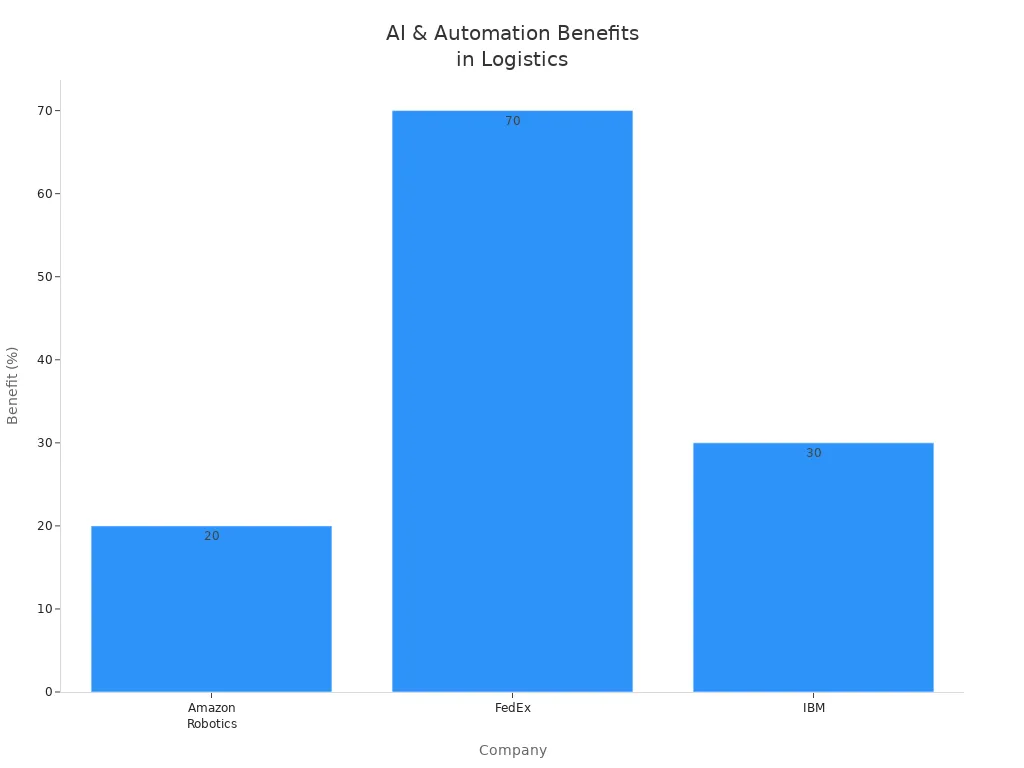
You notice that about two-thirds of supply chain organizations now use AI to improve operations. The market for AI in supply chains is expected to exceed $41 billion by 2030. Major shippers like UPS and FedEx are exploring autonomous delivery methods to make logistics more efficient.
JUSDA’s customer stories show how digital logistics technology solutions help Chinese manufacturers expand globally. The JusLink platform uses AI and blockchain to provide end-to-end lifecycle management, real-time transparency, and efficiency. You benefit from standardized operations and reduced manual handling, which lowers costs and improves quality.
IoT Integration
IoT and the connected logistics ecosystem give you new ways to track and manage assets. IoT technologies like GPS and RFID provide real-time location updates for shipments. You can monitor the condition of products during transport using sensors, which helps prevent damage and ensures quality.
You use IoT to improve inventory management. Continuous monitoring of stock levels helps you avoid overstocking and stockouts. This enhances operational efficiency and supports better decision-making. Real-time data from IoT devices lets you optimize routes and predict maintenance needs, reducing costs and downtime.
Here are some common IoT applications and their results:
Decrease in maintenance costs by up to 40%.
Improved delivery time accuracy and customer satisfaction.
You see logistics providers using location tracking, environmental sensors, and data analysis to boost performance. Fleet tracking improves visibility into vehicle location and performance, leading to cost savings. Cold chain monitoring ensures compliance with temperature regulations, reducing spoilage risk for sensitive goods. Shipping container tracking prevents loss and optimizes shipping routes.
Tip: IoT and the connected logistics ecosystem help you make dynamic decisions and improve overall supply chain performance.
Hyperautomation
Hyperautomation combines AI, automation, and digital supply chain technology to streamline logistics processes. You automate repetitive tasks like inventory management and shipment tracking, which increases productivity and operational efficiency. Digitization through hyperautomation gives you end-to-end visibility, helping you identify bottlenecks and improve workflows.
Companies like SpeedyDeliver have seen a 20% reduction in fuel costs within three months of using hyperautomation. On-time deliveries increased by 15%, which improved customer satisfaction and loyalty. The company handled 25% more deliveries with the same fleet size, showing better resource utilization.
Here is a table summarizing the benefits of hyperautomation in logistics:
Benefit | Description |
|---|---|
Automating repetitive tasks like inventory management and shipment tracking increases productivity. | |
Enhanced supply chain visibility | Digitization through hyperautomation provides end-to-end visibility, helping to identify bottlenecks. |
Increased productivity | Streamlined workflows between departments and intelligent tools lead to better business outcomes. |
You see hyperautomation as a key trend in logistics trends 2025. JUSDA’s JusLink platform uses AI-driven automation and digital supply chain technology to help you manage global operations. You gain full visibility into your supply chain, monitor risks in real time, and make smarter decisions.
Note: Innovation in logistics technology solutions and supply chain technology will continue to drive efficiency and resilience in the logistics ecosystem.
Sustainability in Logistics
Green Logistics Practices
You see global leaders in logistics trends focusing on sustainable logistics to reduce environmental impact. Companies reimagine logistics operations by adopting eco-driving programs, using sustainable packaging, and selecting efficient vehicles. You notice policy measures that encourage collaboration between government and industry, creating incentives for greener logistics. Logistics infrastructure evolves with zero-emissions trucking corridors and efficient networks. Investments from public-private partnerships unlock new opportunities for sustainable logistics projects.
JUSDA integrates sustainability into its global operations and warehouse management. You benefit from cleaner warehouses that use modern cleaning technology to lower ecological footprints and improve air quality. JUSDA’s long-term ESG commitment emphasizes innovation and responsibility in building sustainable supply chains. The company’s facilities in Vietnam hold TAPA “A” Certification, which recognizes strict global security standards and elevated protection for high-value goods. This certification remains valid until November 2027 and demonstrates JUSDA’s dedication to compliance and excellence.
Initiative/Certification | Description |
|---|---|
Cleaner Warehouses | JUSDA invests in modern cleaning technology to reduce ecological footprint and improve air quality. |
Long-term ESG Commitment | JUSDA emphasizes innovation and responsibility in building sustainable supply chains. |
TAPA “A” Certification | Recognizes JUSDA's facilities in Vietnam for meeting strict global security standards, enhancing their logistics capabilities. |
Tip: Clean room facilities at JUSDA comply with environmental health and safety standards set by major technology brands, supporting e-commerce and supply chain operations.
Digital Solutions for Sustainability
You use digital solutions to enhance sustainability in logistics. Advanced digital systems track emissions and help you reduce operational costs. Digital route planning lets you monitor CO2 emissions per mile and track carbon footprint reductions. Fuel usage metrics improve operational efficiency, with users reporting up to an 18% reduction in total costs. AI and IoT technologies shorten decision-making timelines and cut emissions by up to 40%.
AI-driven observability reduces data collection time by 80%, enabling faster actions to lower emissions. IoT-supported digital twins optimize resource consumption, lowering energy use by an average of 10%. Cargofive’s integration with major carriers provides detailed visibility into schedules and routes, leading to measurable reductions in emissions. You see early adopters of AI-powered systems reducing logistics costs by 15%, inventory levels by 35%, and improving service levels by 65%. The logistics market expects AI to reach $348.62 billion by 2032, showing strong growth in digital and sustainable logistics trends.
Warehouse Innovation by JUSDA
Smart Warehousing
You experience a new era of logistics trends with JUSDA’s smart warehousing solutions. JUSDA’s warehouse network uses advanced technology, including RFID and Warehouse Management Systems (WMS), to deliver seamless integration and high efficiency. You benefit from comprehensive service offerings that cover every aspect of the supply chain. JUSDA tailors logistics solutions for different industries, which drives customer satisfaction and sets a benchmark for automation and robotics in warehousing. The JusLink platform gives you end-to-end visibility and control, making your operations more reliable. You see robotics and ai working together to automate repetitive tasks, reduce errors, and boost productivity. This approach supports sustainability and keeps you ahead in digital logistics trends.
Comprehensive service offerings for all supply chain needs
Technological integration with RFID, WMS, and robotics
Customer-centric solutions for industry-specific challenges
Real-Time Inventory
You gain a competitive edge with real-time inventory management across JUSDA’s global warehouse network. The use of ai and robotics in warehousing ensures accurate stock counts and reduces lost products. You track inventory throughout the supply chain, which improves order fulfillment speed and operational efficiency. JUSDA Vietnam demonstrates how digital and automation technologies minimize human error and theft. The table below shows the impact of real-time inventory on key performance metrics:
Benefit | Description |
|---|---|
End-to-end visibility | Comprehensive tracking of inventory throughout the supply chain |
Improved inventory accuracy | Fewer errors in stock counts, better management |
Reduced lost products | Enhanced tracking prevents theft and loss |
Faster order fulfillment | Quick location and dispatch of items |
Enhanced operational efficiency | Streamlined processes and higher customer satisfaction |
Value-Added Services
You unlock more value from JUSDA’s warehouse services through a range of value-added offerings. JUSDA provides cross-border logistics solutions, customs clearance, compliance management, and real-time tracking. These services help you expand your business and improve shipment speed and reliability. You see ai and robotics supporting automation and robotics in warehousing, which increases efficiency and accuracy. JUSDA’s commitment to logistics trends and technology ensures you stay ahead in a fast-changing market.
Cross-border logistics solutions from Asia to Mexico
Customs clearance and compliance management
Real-time tracking for improved reliability
Note: JUSDA’s focus on ai, robotics, and digital technology in warehousing helps you meet the demands of modern logistics trends and supports your growth in global supply chains.
End-to-End Visibility
Control Tower Solutions
You need strong supply chain visibility to keep your logistics operations efficient and resilient. JUSDA’s JusLink platform gives you a digital control tower that connects every part of your supply chain. You use ai and iot to monitor shipments, inventory, and exceptions in real time. This approach helps you spot disruptions early and respond quickly, which builds supply chain resilience. JusLink’s automation solutions let you track orders, manage inventory, and coordinate with partners across the globe. You see how ai-driven analytics and automation solutions help you make better decisions and improve supply chain resilience.
“JusLink's advantage lies in its ability to integrate AI technology with deep industry knowledge, providing tailored solutions that exceed customer expectations.” – Wan Cheng, Product Ecosystem Director at JusLink
You benefit from digital dashboards that show live data from iot sensors and ai-powered alerts. These automation solutions reduce manual work and help you focus on trends that matter most. You can adapt to changes and keep your logistics running smoothly.
Blockchain Security
You want your logistics data to stay secure and transparent. Blockchain technology acts as a shared ledger that records every transaction in your supply chain. This system makes it almost impossible to tamper with records, which increases trust and compliance. You use blockchain to track the origin of goods, verify authenticity, and support sustainability goals.
Aspect | Description |
|---|---|
Blockchain's immutability makes fraud nearly impossible by recording every transaction permanently. | |
Efficiency Improvement | Smart contracts automate processes, reducing paperwork and human error, thus saving time and resources. |
Regulatory Compliance | Provides a reliable audit trail for regulators, ensuring compliance with laws and standards. |
You see asset tracking as the largest market segment, especially in industries like food and pharmaceuticals. Blockchain supports automation solutions and digital trends by making logistics more transparent and secure.
Market Segment | Insights |
|---|---|
Asset Tracking | Largest market revenue share in 2023, driven by the need for transparency and real-time visibility. |
Industry Applications | Valuable in food, pharmaceuticals, and luxury goods for verifying authenticity and origin. |
Sustainability Demand | Growing adoption of blockchain for ethical sourcing and environmental proof. |
You gain confidence in your logistics operations, knowing that ai, iot, and automation work together to deliver end-to-end supply chain visibility and security.
Last-Mile Delivery Trends
Autonomous Vehicles
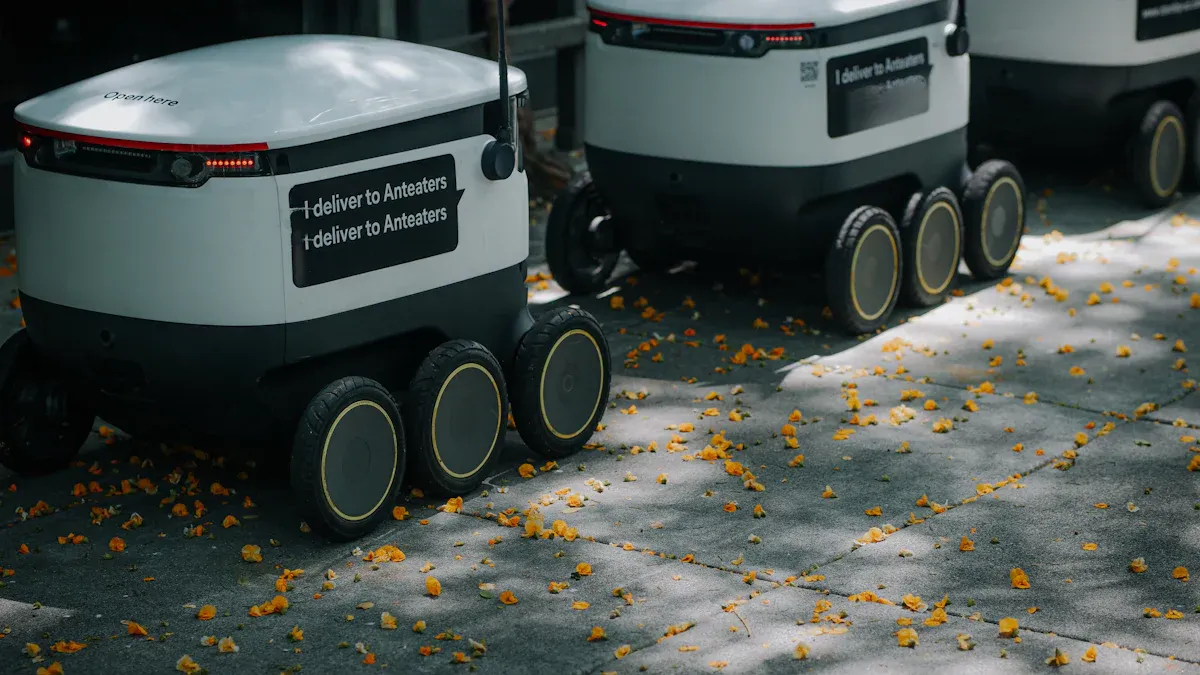
You see autonomous vehicles transforming last-mile delivery in the logistics industry. Companies like Amazon and Walmart test robotic systems to deliver groceries and packages. These vehicles use ai, high-precision GPS, and LIDAR sensors to navigate city streets and avoid obstacles. You benefit from faster deliveries and reduced labor costs. The logistics industry trends show that automation and digital technology drive efficiency in urban areas. JUSDA explores these innovations to improve supply chain performance and customer satisfaction.
Technology | Function |
|---|---|
Artificial Intelligence | Navigation, obstacle assessment, and route optimization through data analysis. |
LIDAR and Sensors | Detect surroundings in real-time to avoid obstacles and follow traffic rules. |
High-Precision GPS | Accurate navigation to delivery destinations. |
Cloud Computing | Real-time communication and fleet management. |
5G Connectivity | Instant communication with infrastructure and other vehicles for safety. |
You notice that ai and iot work together to support real-time tracking and fleet management. Companies like Nuro and Starship Technologies deploy delivery robots in cities, making logistics more reliable and scalable.
Drone Delivery
You experience drone delivery as a growing trend in logistics. Drones offer quick and contactless delivery for small packages. Amazon tests drone deliveries with Prime Air, while FedEx explores new ways to reach customers. You see ai and iot enabling drones to plan routes and avoid obstacles. Drone delivery brings economic feasibility and supports digital supply chain innovation.
Benefits: Drones improve delivery speed and customer attitudes toward new technology.
Challenges: You must consider perceived risks and operational hurdles, such as route planning and environmental awareness.
JUSDA monitors these logistics industry trends to enhance last-mile delivery. You gain faster service and better supply chain visibility through ai-powered automation and digital solutions.
Tip: Embracing autonomous vehicles and drones helps you stay ahead in logistics and meet rising customer expectations.
Cybersecurity in Logistics
Data Protection
You face growing cybersecurity threats as digital logistics systems expand. Attackers target your data with phishing, ransomware, and supply chain attacks. Phishing uses AI-generated emails to trick employees. Ransomware can lock your systems and demand payment. A breach in one partner can compromise your entire supply chain. Recent incidents, such as KNP’s ransomware crisis and Stop & Shop’s disruptions, show how cyber threats can halt logistics operations.
You protect your data by focusing on several key strategies:
Employee training helps your team recognize and avoid cyber threats.
Access management controls who can view sensitive information.
Advanced technologies, including artificial intelligence and blockchain, strengthen your defenses.
JUSDA’s AI-powered solutions help you monitor for risks in real time. You use iot sensors and digital platforms to track data flows and spot unusual activity. This approach keeps your logistics data secure and your operations running smoothly.
Risk Management
You need a proactive approach to manage risks in digital logistics. Security awareness training empowers your workforce to respond quickly to threats. Zero-trust security models ensure that no user or device is trusted by default. Artificial intelligence and machine learning detect threats before they cause harm.
JUSDA’s risk control tower, powered by AI, gives you real-time alerts and early warnings. You see every part of your supply chain, from iot devices to cloud platforms. This visibility helps you prevent disruptions and maintain trust in your logistics network.
Tip: Regularly update your digital systems and train your staff to stay ahead of evolving cyber risks.
Automotive Logistics Industry Trends
Digital Transformation
You see digital transformation reshaping the automotive sector. Companies use AI and advanced analytics to manage data and improve operational processes. Blockchain increases transparency and traceability in logistics. Real-time supply chain visibility gives you immediate insights into parts movement, which boosts agility. Digital twins simulate supply chain scenarios, helping you make better decisions. Warehouse robotics automate tasks, reducing errors and saving time.
JUSDA’s partnership with Foton Blue Ocean drives innovation in automotive supply chain management. You benefit from integrated digital platforms that connect manufacturing, procurement, and distribution. These platforms use IoT and AI to monitor shipments and predict risks. You notice that digital transformation trends in the logistics industry are promising, but adoption remains slow due to legacy systems and fragmented data. Companies like General Motors use outbound logistics software to improve visibility and delivery processes, showing how digital solutions enhance efficiency.
Trend | Impact on Supply Chain Efficiency |
|---|---|
AI and Advanced Analytics | Enhances data management and operational processes. |
Blockchain | Improves transparency and traceability in logistics. |
Real-time Supply Chain Visibility | Provides immediate insights into parts movement, increasing agility. |
Digital Twins | Simulates supply chain scenarios for better decision-making. |
Warehouse Robotics | Automates processes, reducing time and errors in logistics. |
Global Expansion
You see global expansion changing the logistics industry trends in automotive. The globalization of manufacturing leads to more dispersed production sites and supply chains. Electric and autonomous vehicles require specialized logistics due to unique handling needs. Technological advancements like AI and IoT improve efficiency with real-time tracking and predictive analytics. Sustainability initiatives encourage eco-friendly practices, such as carbon-neutral shipping and transparent tracking systems. Changing consumer expectations drive the need for flexible and customized logistics solutions.
The automotive logistics market grows as electric and autonomous vehicle production increases.
Regulatory requirements around emissions and transparency push logistics providers toward responsible practices.
E-commerce in automotive parts creates new opportunities for logistics providers to adapt to smaller, frequent shipments.
Strategic production and assembly locations increase logistics demand.
Technological developments in logistics management transform operations and decision-making.
You benefit from JUSDA’s global network, which supports expansion and adapts to new logistics industry trends. Digital transformation and IoT help you manage complex supply chains and meet evolving market demands.
SMART JusLink
Supply Chain Management Solution
You see digital trends transforming logistics and the supply chain.
Companies use real-time data and automation to boost efficiency and reduce errors.
Sustainable packaging and advanced technology improve operations and customer satisfaction.
Start with small digital steps, enhance collaboration, and use predictive analytics to stay resilient.
See Also
Navigating Future Logistics Through Digital Technology Innovations
Transforming Tomorrow's Logistics With AI Supply Chain Solutions
The Influence of Supply Chain Innovations on Logistics Evolution
Innovative Cloud Solutions Transforming Supply Chain Management Today
The Role of Cloud Solutions in Industry Supply Chain Transformation