How digital twin technology makes supply chain risk assessment more efficient in 2025 from reactive to resilient

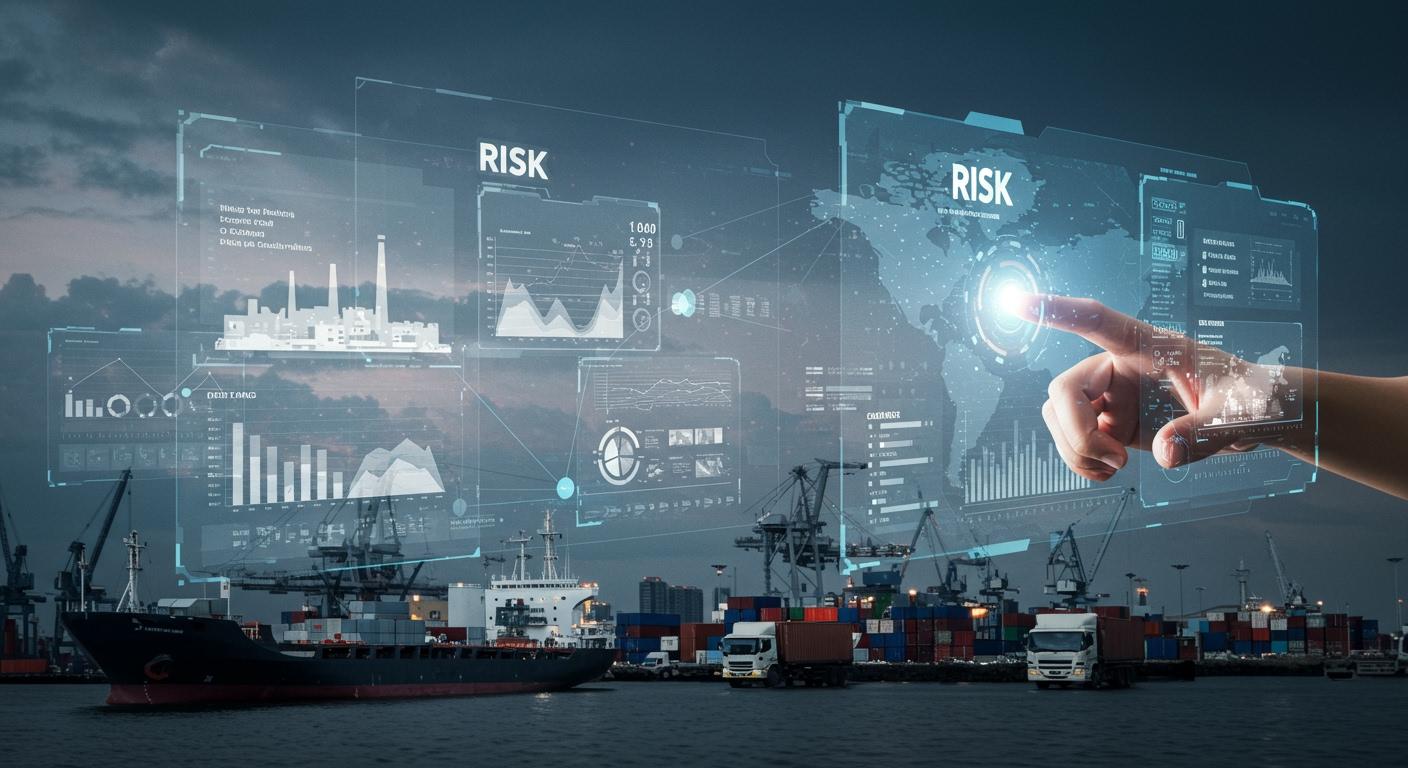
Digital twin technology is changing supply chain risk assessment by creating virtual models that deliver real-time insights and predictions. Companies now see a 60% reduction in assessment time and gain the ability to act before disruptions occur. The market for these solutions has grown rapidly, with projected values reaching over $8.7 billion by 2033. JUSDA’s JusLink AI and advanced warehouse services help organizations boost visibility, optimize operations, and improve decision-making across global supply chains.
Key Takeaways
Digital twin technology significantly reduces supply chain risk assessment time by up to 60%, allowing companies to act before disruptions occur.
Real-time monitoring and predictive analytics from digital twins enhance decision-making, enabling proactive risk management and improved operational efficiency.
Organizations can simulate various risk scenarios using digital twins, helping them identify vulnerabilities and optimize inventory management.
Implementing digital twin solutions requires strong data integration and collaboration across teams to overcome challenges like fragmented technology and inconsistent data.
Companies leveraging JUSDA’s digital twin technology gain a competitive edge by improving adaptability, reducing costs, and enhancing overall supply chain resilience.
Traditional Risk Assessment Challenges
Inefficiencies in Legacy Systems
Legacy supply chain risk assessment systems often struggle to keep pace with modern business demands. Many organizations still rely on outdated ERP and CRM tools that require manual data handling. This approach increases the risk of human error and slows down the entire assessment process. High maintenance costs also burden mid-market companies, making it difficult to allocate resources for innovation. Security risks become more pronounced as these systems cannot support regular updates, leaving vulnerabilities unaddressed.
Manual data entry and consolidation delay decision-making.
Siloed data across procurement, inventory, logistics, and finance reduces overall visibility.
Scalability issues prevent companies from adapting to new technologies.
Outdated components create resource constraints for security teams, complicating risk management.
Lack of flexibility in older systems makes even minor updates or integrations challenging.
These inefficiencies not only hinder operational efficiency but also limit a company’s ability to respond quickly to emerging risks. As a result, organizations face delays and discrepancies that can impact the entire supply chain.
Limited Visibility and Delayed Response
Traditional risk assessment methods often fall short in providing real-time insights. The interconnected nature of supply chain risks complicates identification and assessment. Risks do not exist in isolation; they interact and propagate through complex networks. This complexity makes it difficult to analyze events accurately and respond in a timely manner.
The interconnectedness of risks complicates identification and assessment.
Risks propagate through complex networks, making isolated analysis ineffective.
Traditional methods often assume statistical independence, leading to oversimplified assessments.
Without comprehensive visibility, companies may overlook critical vulnerabilities. Delayed responses can result in missed opportunities to mitigate disruptions, ultimately affecting supply chain resilience and competitiveness.
Digital Twin in Supply Chain Management

Core Capabilities of Digital Twin
A digital twin serves as a virtual replica of a physical supply chain system. It mirrors real-world behaviors, processes, and performance, connecting to every aspect of the network. Companies use digital twin technology to simulate scenarios, plan decisions, and optimize operations. This approach enables organizations to monitor supply chain processes in real time and adapt quickly to changes.
Digital Twins offer real-time insights, while simulations focus on hypothetical 'what-if' scenarios. While simulations may forecast potential outcomes, Digital Twins go further by offering prescriptive solutions, actively recommending actions, or even initiating them.
Key features that set digital twin technology apart include:
Predictive and prescriptive capabilities for proactive risk management.
Dynamic models that update continuously with real-world data.
Leading companies apply digital twin technology to improve efficiency and visibility. For example:
Siemens creates virtual models of plants and warehouses for real-time tracking and predictive maintenance.
DHL uses digital twins for fleet management, route optimization, and warehouse layout testing.
JUSDA integrates digital twin capabilities through its JusLink AI platform and advanced warehouse services. JusLink AI connects IoT, cloud computing, and big data to create dynamic supply chain models. JUSDA’s warehouse network supports real-time inventory tracking and control, enhancing transparency and collaboration.
Real-Time Data and Predictive Analytics
Digital twin platforms rely on real-time data from sensors and IoT devices. This data enables organizations to identify disruptions and take proactive measures, such as rerouting shipments or adjusting inventory levels. Metrics like forecast accuracy and inventory turns update instantly, making them actionable for supply chain managers.
Digital twins enhance predictive analytics by providing insights into trends and anomalies. They analyze historical and real-time data to predict bottlenecks and demand variations. Continuous data flow allows organizations to monitor performance and respond quickly to issues.
Real-time monitoring provides immediate visibility into system performance.
Enhanced agility enables businesses to adapt strategies based on current insights.
Predictive analytics help prevent failures by analyzing ongoing data streams.
JUSDA’s JusLink AI and warehouse integration empower supply chain professionals to leverage real-time data for smarter decision-making. These solutions support proactive risk management and improve overall supply chain resilience.
Efficiency Gains with Digital Twin Solutions
Scenario Modeling and Monitoring
Digital twin technology transforms supply chain risk assessment by enabling companies to simulate and monitor scenarios in real time. JUSDA’s JusLink AI platform and global warehouse network provide the foundation for these capabilities. Companies use digital twins to predict bottlenecks and optimize supply and inventory buffers. This approach helps organizations identify vulnerabilities before they impact operations.
Digital twins allow teams to simulate various risk scenarios and assess their potential impact on supply chain performance.
Real-time monitoring through JusLink AI enables companies to anticipate disruptions and take corrective action quickly.
JUSDA’s warehouse services support dynamic inventory tracking, ensuring transparency and control across multiple regions.
JUSDA’s integration of IoT, cloud computing, and big data through JusLink AI creates a connected environment. Supply chain managers gain immediate visibility into inventory levels, shipment status, and warehouse operations. This visibility supports faster decision-making and reduces assessment time by up to 60%. Companies can adjust inventory buffers and reroute shipments with confidence, minimizing the risk of delays.
The following table highlights measurable improvements observed after implementing digital twin solutions in supply chain environments:
Improvement Type | Description |
|---|---|
Reduction in expedited shipping costs | Achieved through strategic buffer management. |
Decrease in order fulfillment cycle times | Measurable reductions noted post-implementation. |
Improvement in on-time delivery performance | Significant enhancements observed in delivery metrics. |
Reduction in supply order variability | Companies report over 40% improvement compared to traditional methods. |
Enhanced response capabilities | Replenishment lead times reduced from weeks to days. |
Strategic inventory reduction | Total inventory costs decreased by approximately one-third while service levels improved. |
Proactive Risk Management
JUSDA’s digital twin solutions empower organizations to shift from reactive to proactive risk management. JusLink AI’s predictive analytics and real-time monitoring capabilities enable supply chain professionals to anticipate risks and prevent disruptions. Companies move away from responding to failures after they occur and instead focus on predicting and mitigating risks before they escalate.
JUSDA’s warehouse network, combined with JusLink AI, supports predictive maintenance and dynamic inventory management. Supply chain teams receive early warnings about potential issues, allowing them to plan maintenance and adjust operations proactively. This approach reduces unplanned downtime and improves asset performance.
The table below compares proactive risk management enabled by digital twin technology with traditional reactive approaches:
Aspect | Proactive (Digital Twin) | Reactive (Traditional) |
|---|---|---|
Maintenance Approach | Predictive maintenance | Reactive response to failures |
Downtime | Reduced unplanned downtime | Higher downtime due to delayed responses |
Asset Performance | Improved asset performance | Often leads to critical incidents |
Prediction Accuracy | 85-95% prediction accuracy for failures | 30-50% accuracy with condition monitoring |
Maintenance Planning Accuracy | 40-60% improvement in planning accuracy | Less accurate planning |
JUSDA’s solutions deliver measurable outcomes. Companies experience faster recovery rates and fewer disruptions. Inventory costs decrease, while service levels improve. JusLink AI’s intelligent agents and risk control tower provide continuous monitoring and early warnings, supporting resilient supply chain operations.
Tip: Organizations that leverage digital twin technology with JUSDA’s JusLink AI and warehouse services gain a strategic advantage. They reduce risk assessment time, enhance resilience, and improve operational performance across global supply chains.
Implementing Digital Twin with JUSDA
Data Integration and Infrastructure
Organizations that want to implement digital twin technology with JUSDA should begin by focusing on data integration and infrastructure. JUSDA’s global warehouse network and JusLink AI platform provide a strong foundation for this process. Teams need to connect data from inventory, transportation, and supplier systems. This integration ensures real-time visibility and accurate modeling.
Common challenges include fragmented technology landscapes, inconsistent data, and resistance to change. Companies often struggle to unify data from legacy systems, which can lead to silos and inefficiencies. Inconsistent data quality may result in inaccurate insights. Staff may resist new processes, especially when they are used to traditional methods. Cost and resource constraints also present obstacles, especially for mid-sized manufacturers. Scaling across global networks can be difficult due to regional differences.
Fragmented technology landscapes make integration difficult.
Data quality and uniformity issues can reduce accuracy.
Organizational resistance slows adoption.
Cost and resource constraints limit investment.
Scaling across regions adds complexity.
JUSDA addresses these challenges by bridging legacy systems with modern integration, elevating data governance, and encouraging collaborative transformation. The company also adopts a modular, scalable approach and leverages cloud platforms for real-time monitoring.
Building and Scaling Digital Twin Platforms
To build and scale digital twin platforms, organizations should follow a structured approach. JUSDA recommends starting with pilot projects and expanding as teams gain experience. Cross-functional teams play a key role in preventing silos and fostering collaboration. Data governance ensures consistent standards and quality across all sources.
The following table outlines best practices for scaling digital twin platforms in global supply chain operations:
Best Practice | Description |
|---|---|
Executive Vision & Roadmap | Define a clear vision and link use cases to business goals. |
Data Governance & Quality | Maintain consistent data standards and master data management. |
Integrated, Modular Architecture | Build on existing systems using open APIs for holistic optimization. |
Cross-Functional Teams | Use agile, cross-disciplinary teams to foster collaboration. |
Talent and Skills | Fill skill gaps and ensure necessary expertise. |
Iterative Pilots & Simulation | Start with pilots and refine the platform incrementally. |
Robust Risk & Security Controls | Implement strong security measures and ensure compliance. |
Break Down Silos and Collaborate | Enhance collaboration across departments and partners. |
Monitor and Iterate | Continuously measure performance and adjust models as needed. |
JUSDA’s approach combines advanced technology, a global warehouse network, and JusLink AI to help organizations achieve resilient and efficient supply chains.
Real-World Impact and Future Outlook

Case Studies from JUSDA
JUSDA’s deployment of digital twin solutions has delivered measurable improvements in supply chain risk assessment and operational efficiency. Companies have experienced faster decision-making and reduced assessment time. The integration of JusLink AI and advanced warehouse services has enabled real-time monitoring and dynamic risk management. The following table highlights the impact observed in leading organizations:
Company | Impact on Supply Chain Efficiency |
|---|---|
Siemens | 30% reduction in downtime, 25% increase in production output, 20% decrease in maintenance costs |
DHL | 15% reduction in order processing times, 20% improvement in order accuracy, 10% decrease in operational costs |
JUSDA’s own customer stories reveal similar benefits. Manufacturers using JUSDA’s Supply Chain Management Collaboration Platform have achieved global process optimization and standardized international freight operations. Real-time transparency and lifecycle management have improved quality and reduced costs. The integration of AI, cloud computing, and blockchain has streamlined operations and enhanced data accuracy.
JUSDA’s digital twin solutions provide:
Real-time monitoring for continuous tracking of supply chain processes.
Effective risk assessment frameworks.
Enhanced decision-making through integrated data sources.
Improved efficiency and resource management.
Greater flexibility and adaptability to changing market conditions.
Evolving Supply Chain Resilience
Supply chain resilience continues to evolve as companies adopt digital twin technology. JUSDA’s approach leverages IoT, cloud computing, and big data to create agile supply chain networks. The following trends are shaping the future of risk management:
Trend Description | Implications |
|---|---|
Simulation of disruption scenarios | Enables companies to prepare for natural disasters, logistics failures, and geopolitical events. |
Integration with AI and blockchain | Enhances supply chain resilience and transparency, allowing for better risk management. |
Collaboration platforms | Facilitates shared digital models among suppliers, manufacturers, and retailers, improving efficiency by 15-25%. |
Enhanced transparency | Provides immutable records of product journeys, improving traceability and compliance. |
Sustainability tracking | Optimizes sustainability initiatives across the value chain, contributing to competitive advantage. |
Key developments include:
Digital twins provide real-time support for decision-making in dynamic environments.
Companies visualize the impact of disruptions and anticipate future risks.
Data integration and scalable architecture address interoperability gaps.
Strong data governance mitigates integration issues.
Knowledgeable collaborations with digital twin firms enhance cybersecurity.
JUSDA’s continued innovation positions its clients to respond effectively to global challenges and maintain competitive advantage.
Digital twin technology has transformed supply chain risk assessment, driving efficiency and resilience for global organizations. JUSDA’s JusLink AI and advanced warehouse services empower companies to move from reactive to proactive risk management. The following table highlights key benefits:
Benefit | Description |
|---|---|
Cost Savings | Firms cut expenses by improving resource allocation and reducing waste. |
Improved Decision-Making | Predictive insights enhance decision-making processes. |
Enhanced Adaptability | Scenario testing enables quick responses to disruptions. |
Supply chain leaders should accelerate digital transformation to secure a lasting competitive edge.

JUSDA Solutions
To provide you with professional solutions and quotations.
FAQ
What is digital twin technology in JUSDA’s supply chain solutions?
Digital twin technology creates virtual models of physical supply chain systems. JUSDA uses these models to simulate scenarios, monitor operations, and optimize risk assessment. JusLink AI and advanced warehouse services support real-time data integration and predictive analytics.
How does JUSDA’s JusLink AI improve risk management?
JusLink AI provides real-time monitoring, predictive analytics, and intelligent agents. These features help supply chain teams anticipate disruptions, optimize inventory, and make faster decisions. JusLink AI integrates IoT, cloud computing, and big data for enhanced visibility.
What types of warehousing services does JUSDA offer?
JUSDA offers general storage, bonded warehouses, distribution centers, and finished goods storage. The company provides value-added services such as picking, packing, labeling, kitting, and repacking. Advanced inventory management systems ensure transparency and control.
Can JUSDA’s solutions support global supply chain operations?
JUSDA operates over 155 service points worldwide and manages more than 2.5 million square meters of warehouse space. The company’s solutions support air, land, sea, and rail transport, enabling efficient logistics and supply chain management across regions.
What industries benefit from JUSDA’s digital twin and AI solutions?
JUSDA serves electronic manufacturing, 3C home appliances, FMCG, automotive, new energy, medical health, heavy equipment, and bulk materials. The company tailors supply chain solutions to meet the unique needs of each industry.
See Also
Exploring Digital Twins In Modern Supply Chain Strategies
Could Digital Twins Revolutionize Supply Chain Efficiency?
Implementing Sustainable Strategies To Mitigate Supply Chain Risks
Assessing Your Supply Chain's Preparedness For Digital Transformation
Embracing Technology: Adapting Supply Chains For Future Needs