Real-Time Dynamic Pricing for Logistics: Leveraging Capacity Utilization and Data Analytics to Drive Cost Efficiency

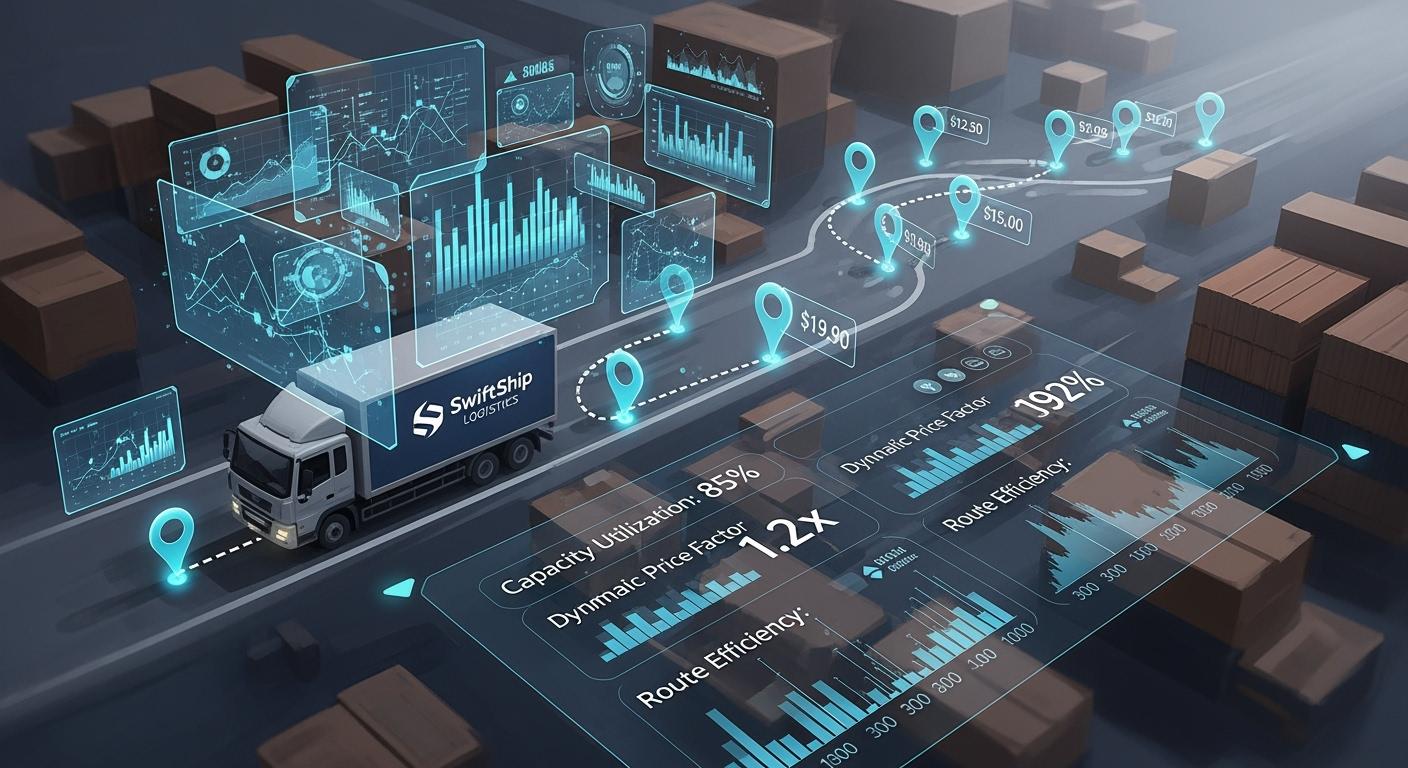
Logistics companies face rising complexity in managing costs and capacity, especially as global supply chains expand. Many struggle with integrating diverse data sources and outdated technology, which leads to inefficiencies and missed opportunities. Dynamic pricing, powered by real-time data and capacity analytics, enables logistics providers to align prices with inventory levels and market shifts. Solutions like JusLink deliver AI-driven insights, helping companies minimize carrying costs and respond quickly to demand. For professionals seeking innovation, these tools offer clear paths to greater efficiency and a competitive edge.
Key Takeaways
Dynamic pricing allows logistics companies to adjust rates in real time, maximizing profit margins during peak demand and offering discounts when demand is low.
Real-time data analytics enhances decision-making, enabling logistics providers to respond quickly to market changes and optimize resource allocation.
Implementing dynamic pricing requires integrating inventory management systems with pricing tools for automatic updates based on current market conditions.
AI-driven forecasting significantly reduces logistics costs and improves service levels, helping companies manage inventory effectively and avoid overstocking.
JUSDA’s JusLink platform supports logistics companies by providing real-time visibility and collaboration across the supply chain, enhancing efficiency and transparency.
Dynamic Pricing in Logistics

Cost Optimization
Dynamic pricing in logistics transforms how companies manage costs and resources. Unlike traditional fixed pricing models, dynamic pricing allows logistics providers to adjust rates in real time based on current market demand and operational factors. This approach helps companies maximize profit margins by charging higher rates during peak periods and offering discounts when demand is low. It also automates the process of generating freight quotes, which saves time and improves accuracy. Customers benefit from fair pricing that reflects actual market conditions, building trust and loyalty.
The main cost components affected by dynamic pricing include freight rates, operational costs, and accessorial charges. The table below outlines these components:
Cost Component | Description |
|---|---|
Freight Rates | Adjusts instantly based on market conditions, impacting shipment costs during peak and off-peak seasons. |
Operational Costs | Optimizes logistics operations and enhances cost efficiency through tailored pricing strategies. |
Accessorial Charges | Evaluates additional charges based on shipment specifics, ensuring cost-effectiveness. |
By using dynamic pricing, third-party logistics providers can respond to changes in service demand, warehouse space, and shipment complexity. This flexibility helps them avoid financial inefficiencies that often occur with static pricing strategies.
Real-Time Adjustments
Real-time adjustments are essential for logistics companies facing fluctuating demand and capacity. Dynamic pricing models enable businesses to quickly change prices in response to shifts in logistics demand and available capacity. Companies can increase prices when demand rises and lower them when demand drops, which helps manage inventory levels and maximize revenue.
Several technologies support real-time dynamic pricing adjustments:
Artificial intelligence recalculates optimal prices using multiple data inputs, allowing rapid responses to market changes.
Telematics and IoT provide real-time visibility into logistics operations, enabling pricing adjustments based on actual truck capacity and delays.
Predictive demand forecasting uses machine learning to anticipate demand changes, supporting proactive pricing decisions.
Dynamic pricing serves as a strategic tool, helping companies remain competitive and customer-focused in unpredictable environments. It positions businesses to seize revenue opportunities as they arise, adapting to real-time market signals.
Capacity Utilization & Analytics

Data-Driven Decisions
Capacity utilization plays a central role in shaping dynamic pricing strategies for logistics providers. Companies monitor how much of their available resources—such as trucks, warehouse space, and staff—are being used at any given moment. When utilization rates rise, logistics providers can adjust prices to reflect increased demand and limited capacity. This approach helps maximize profitability and ensures that resources are allocated efficiently.
Capacity utilization directly influences profitability and pricing strategies for logistics services.
Understanding capacity constraints, such as truck or staffing limitations, is essential for making informed pricing decisions.
Optimizing capacity utilization allows logistics service providers to enhance profitability without necessarily increasing sales volume.
Data analytics tools process and interpret capacity utilization data to support these decisions. Logistics companies use advanced analytics to optimize warehouse operations by analyzing product placement and storage capacity. Insights from data help rearrange warehouse layouts, streamlining processes to enhance efficiency. IoT sensors on delivery vehicles analyze location and speed to predict arrival times, which impacts pricing strategies based on delivery efficiency. Connected forklifts provide utilization data that helps optimize equipment deployment, influencing operational costs and pricing.
Integrating data from various sources offers a comprehensive view of warehouse efficiency, crucial for informed pricing decisions.
AI-powered analytics uncover patterns that lead to better organizational strategies, impacting pricing.
Logistics companies analyze historical transportation data to optimize routes, reducing transit times and fuel costs.
They evaluate carrier performance metrics to make informed decisions on carrier selection and negotiate better terms.
By integrating customer order data with inventory levels, they can optimize inventory management and demand forecasting.
Transportation costs are analyzed to identify cost-saving opportunities and optimize budgets.
Data on historical disruptions helps in risk management and contingency planning.
Customer feedback and delivery metrics are leveraged to enhance customer service and satisfaction.
The most effective data sources for informing capacity utilization analytics include telematics, IoT sensors, warehouse management systems, transportation management systems, customer and order data, and external data such as weather forecasts and traffic updates.
Data Source | Description |
|---|---|
Telematics & IoT Sensors | Enable real-time tracking of vehicles and cargo, providing data on location, speed, and condition. |
Monitor inventory levels and warehouse efficiency, providing real-time data on stock movements. | |
Transportation Management Systems (TMS) | Assist in route optimization and delivery scheduling by analyzing traffic conditions and performance. |
Customer & Order Data | Analyzing demand patterns to predict fluctuations and improve fulfillment rates. |
External Data | Incorporate weather forecasts and traffic updates to mitigate disruptions in logistics operations. |
Pricing analysts use these data sources to develop competitive pricing strategies, identify cost-saving opportunities, and create customer-centric pricing models. This data-driven approach supports continuous refinement of dynamic pricing strategies, helping logistics companies adapt to market changes and improve financial performance.
JUSDA’s JusLink Solution
JUSDA’s JusLink solution stands out in the logistics industry for its advanced capacity utilization analytics and dynamic pricing capabilities. JusLink links the entire supply chain network through digital-driven smart manufacturing solutions, enabling collaboration between upstream and downstream partners. The platform provides transportation, inventory, and material visualization, enhancing transparency throughout the supply chain process.
Feature | Description |
|---|---|
Smart Supply Chain Collaboration | Links the entire supply chain network through digital-driven smart manufacturing solutions, enabling collaboration between upstream and downstream partners. |
Visualization Capabilities | Provides transportation, inventory, and material visualization, enhancing the transparency of the supply chain process. |
Multi-role Coordination | Facilitates online coordination for various roles such as procurement, transportation, warehousing, and customs. |
Integration of Modern Technologies | Utilizes IoT, cloud computing, and big data to eliminate information silos and promote seamless information sharing across the supply chain. |
JusLink utilizes AI-driven forecasting and real-time monitoring to improve logistics pricing accuracy. AI models can cut forecasting errors by up to 50%. AI programs can lower logistics costs by approximately 15%. Service levels can be boosted by as much as 65%. Local delivery times are reported to be 25% faster, and fuel consumption can be reduced by about 15%. Dynamic pricing engines use AI-driven algorithms to adjust prices based on real-time inventory and local demand signals, leading to a margin uplift of 5-10% when systems quickly respond to demand and stock changes.
Evidence Type | Description |
|---|---|
Forecasting Error Reduction | AI models can cut forecasting errors by up to 50%. |
Cost Reduction | AI programs can lower logistics costs by approximately 15%. |
Service Level Improvement | AI can boost service levels by as much as 65%. |
Delivery Time Improvement | Reported local delivery times are 25% faster. |
Fuel Use Reduction | Fuel consumption can be reduced by about 15%. |
JUSDA’s industry applications demonstrate the effectiveness of JusLink in dynamic pricing. AI orchestrates fulfillment and delivery, improving response to unpredictable demand. JusLink integrates demand forecasting and dynamic routing, enhancing pricing strategies. The platform utilizes real-time data analysis to adjust pricing dynamically, achieving operational efficiencies and improving logistics and supply chain management. Continuous refinement of pricing strategies is necessary to adapt to market dynamics, and JusLink supports effective management decisions through real-time data analysis.
JusLink’s AI technology integration enables logistics companies to achieve cost reduction, service level improvement, and enhanced financial performance. Real-time data analysis is essential for adjusting price dynamics and supporting effective management decisions.
JUSDA’s customer stories highlight how JusLink elevates manufacturers to global prominence. The platform addresses complex overseas supply chains, global procurement coordination, and regional customs differences. By leveraging AI, cloud computing, and blockchain technologies, JusLink enhances end-to-end lifecycle management, real-time transparency, and efficiency. Leading manufacturers have adopted JusLink to optimize global processes, standardize operations, and reduce manual handling, resulting in efficient and low-cost global expansion.
Benefits & Implementation
Efficiency & Savings
JUSDA’s JusLink platform delivers measurable benefits for logistics companies. Organizations see significant cost reduction by automating pricing updates and optimizing resource allocation. AI-driven forecasting and real-time monitoring help companies match supply with demand, which reduces excess inventory and minimizes waste. Improved resource utilization leads to higher profitability, as companies can allocate trucks, warehouse space, and staff more effectively. Enhanced data quality and integration across the supply chain network support better decision-making and operational transparency. These improvements allow logistics providers to respond quickly to market changes and maintain a competitive edge.
Steps to Adopt Dynamic Pricing
Logistics companies can follow a structured approach to implement advanced pricing strategies:
Integrate inventory management systems with pricing tools. This enables automatic pricing updates based on real-time inventory levels.
Use real-time data to assess current market conditions. Adjust prices according to supply, demand, and operational capacity.
Set flexible pricing strategies that account for external variables such as weather and traffic. This helps companies remain competitive in changing environments.
JusLink supports these steps by connecting the entire supply chain network through digital-driven collaboration. The platform enables seamless integration between upstream and downstream partners, which enhances data accuracy and resource utilization.
Overcoming Challenges
Companies often face several challenges when adopting new pricing systems:
Customers may distrust price fluctuations if they feel taken advantage of.
Setting optimal prices requires a deep understanding of market dynamics and consumer behavior.
Advanced technology is necessary for real-time data analysis and processing.
Compliance with regulatory and ethical standards is essential to maintain a positive brand image.
JusLink addresses these challenges by providing a smart system platform that supports complex customer needs in an open, multi-channel environment. The platform enhances data quality and integration, which improves transparency and builds trust. JusLink’s collaborative features help companies manage regulatory requirements and deliver consistent, customer-focused service.
JUSDA’s JusLink platform empowers logistics companies to achieve measurable cost efficiency by combining capacity utilization and data analytics. Companies benefit from optimized routes, reduced delays, and improved inventory management.
Data analytics lowers logistics costs and enhances fleet efficiency.
AI-driven forecasting helps manage inventory and avoid overstocking.
Leading companies like Amazon and Walmart use similar strategies for operational gains.
Recommendation | Description | Expected Outcome |
|---|---|---|
Real-Time Market Analysis | Monitor trends to adjust prices | |
Dynamic Pricing Algorithms | Use predictive analytics for pricing | Revenue increase up to 12% |
Customer Segmentation | Personalize pricing for customer groups | Increased retention |
A thoughtful, data-driven approach ensures logistics providers stay agile and competitive.

JUSDA Solutions
To provide you with professional solutions and quotations.
FAQ
What is dynamic pricing in logistics?
Dynamic pricing in logistics refers to adjusting shipping rates in real time based on current demand, capacity, and operational data. This approach helps companies optimize costs and improve resource allocation.
How does JusLink support real-time capacity utilization?
JusLink uses IoT, cloud computing, and big data to monitor transportation, inventory, and material flows. The platform provides real-time visibility, enabling logistics providers to make informed decisions and maximize resource use.
What benefits does AI-driven forecasting offer in JusLink?
AI-driven forecasting in JusLink reduces forecasting errors, lowers logistics costs, and improves service levels. Companies can respond faster to demand changes and minimize excess inventory.
What challenges do companies face when adopting dynamic pricing?
Companies may encounter customer trust issues, technology integration hurdles, and regulatory compliance requirements. JusLink addresses these by enhancing transparency, supporting data integration, and enabling consistent, customer-focused service.
See Also
Understanding Supply Chain Costs: Strategies for Optimization
Unlocking Logistics Savings: Expert Tips for Efficiency
Exploring AI's Hidden Benefits in Modern Logistics
Transforming Logistics with AI: The Future is Here
Boosting Warehouse Efficiency with Advanced Logistics Robotics