Faster Than Ever: Decoding E-commerce's Drive for Express Delivery in Air Cargo


Express Delivery is changing the way you shop online and how air cargo works. You see e-commerce sales doubling in the last five years, now topping $6 trillion. Express carriers make up 45% of global air cargo revenues and their volumes grow faster than general cargo. You get your packages quicker because businesses use air freight to meet same-day or next-day promises.
Feature | General Cargo | |
|---|---|---|
Handling | Door-to-door service | Airport-to-airport shipping |
Speed | 1–3 days worldwide | Fast, but airport-to-airport |
Value | High-priority, urgent | Larger, less urgent |
JUSDA brings smart supply chain solutions, helping companies keep up with these fast changes.
Key Takeaways
Express Delivery is revolutionizing online shopping by meeting customer demands for faster shipping, with many shoppers expecting same-day or even hourly delivery.
Air cargo is adapting to e-commerce growth, with express carriers now accounting for 45% of global air cargo revenues, highlighting the importance of speed in logistics.
Automation and smart technology are enhancing the efficiency of express delivery, leading to quicker turnaround times and fewer errors in package handling.
Sustainability is becoming a priority in express delivery, with companies adopting eco-friendly practices and sustainable fuels to reduce their carbon footprint.
Partnering with logistics experts like JUSDA can help businesses leverage smart supply chain solutions to improve delivery speed and customer satisfaction.
Express Delivery Impact

E-commerce Growth
You see online shopping changing every year. More people want their orders delivered fast. Express Delivery makes this possible. You notice that shoppers now expect same-day shipping, and many want their packages within just a few hours. This shift pushes businesses to work harder and smarter.
The global e-commerce market could reach over $8 million by 2027. It grows about 7% each year.
Cross-border e-commerce logistics was worth nearly $98 billion in 2023. It may grow by more than 25% every year until 2030.
Most shoppers—about 80%—want same-day shipping. Over half want delivery in one to three hours.
You see delivery companies racing to keep up. The express parcels market jumped from €396.4 billion in 2019 to €518.5 billion in 2023. Asia Pacific leads with the fastest growth, followed by North America. The B2C segment now makes up almost 60% of the global market, showing how much e-commerce shapes delivery volumes.
Tip: If you run an online store, offering Express Delivery can help you win more customers and keep them happy.
Air Cargo Demand
Express Delivery does not just change how you shop. It also transforms air cargo. You see more planes carrying packages instead of just bulk goods. Why? People want their orders fast, and air freight is the quickest way to move products across countries and continents.
Here’s a quick look at what’s driving air cargo demand:
Factor | Description |
|---|---|
Consumer Expectations | Shoppers want faster delivery for online purchases. |
Growth of Cross-Border E-commerce | More people buy from other countries, boosting air cargo needs. |
Advancements in Technology | Better tracking and logistics make air cargo more efficient. |
Evolving Consumer Goods | New products and smaller packages change shipping strategies. |
Expansion in Emerging Markets | New e-commerce platforms in developing regions add to air cargo demand. |
You see airlines investing in bigger cargo operations. Retailers and direct-to-consumer brands rely on air cargo to meet fast delivery promises. Fulfillment centers pop up near airports to cut down delivery times. Companies like CEVA Logistics even launch direct air charters between cities to handle the surge in e-commerce orders.
The airfreight industry has nearly doubled over the last few decades.
Express carriers now make up 45% of global air cargo revenues.
Express cargo is projected to grow 33% faster than general cargo by 2043.
The annual growth rate for express cargo sits at 4%.
Air traffic could double again in the next 20 years.
You see Express Delivery driving these changes. Businesses adapt quickly, and you benefit from faster, more reliable shipping. The world feels smaller when your package can travel across continents in just a day or two.
Express vs. General Cargo
Service Levels
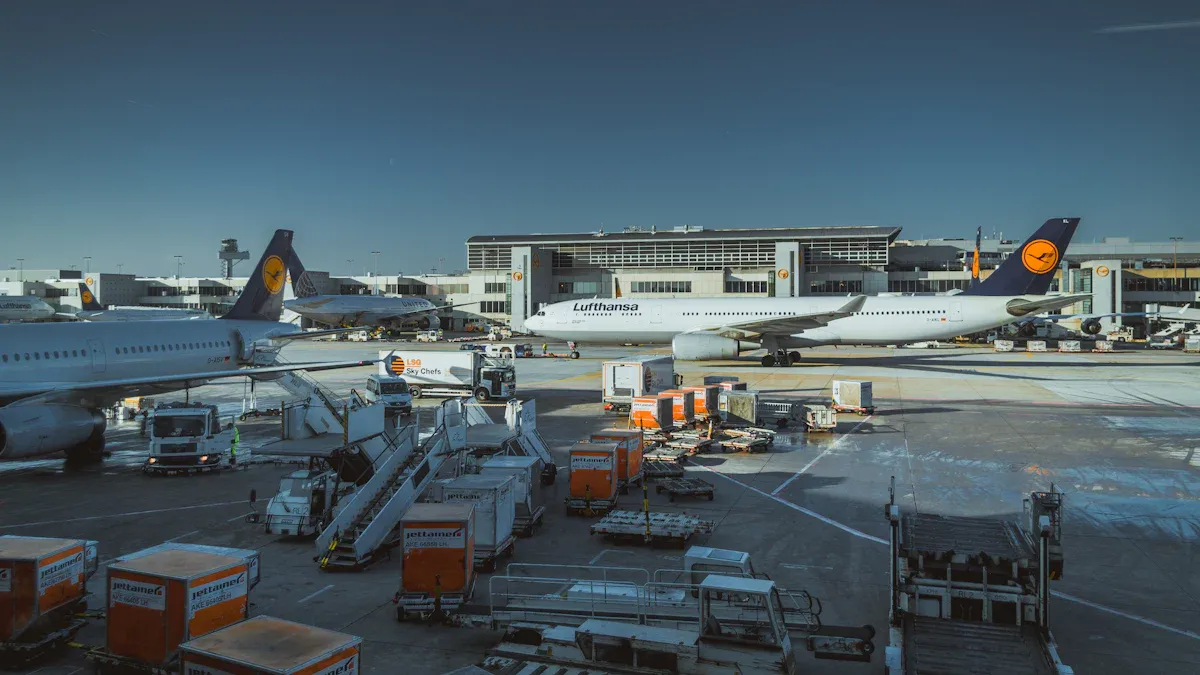
You might wonder what makes Express Delivery different from general cargo. The answer is speed and reliability. When you choose express, your package moves faster and arrives on time almost every time. General cargo takes longer and sometimes faces delays. You see the difference in the way companies handle your shipment.
Here’s a quick look at how service levels compare:
Aspect | Express Delivery | General Cargo |
|---|---|---|
Speed | Significantly faster transit times | Slower, 2–6 weeks transit time |
Reliability | High reliability, on-time delivery | Less reliable, more delays |
Express Delivery gives you peace of mind. You know your package will get to its destination quickly. General cargo works well for less urgent shipments, but you may wait weeks for delivery.
Tip: If you need something fast, always pick express. You save time and avoid stress.
Delivery Expectations
You expect more when you choose express. Your shipment gets top priority. Airlines guarantee space for express cargo on the flight you want. Workers load it last and unload it first. You get your package before anyone else. General cargo does not get this special treatment. It waits for space and sometimes gets bumped for higher-priority shipments.
Check out how delivery expectations stack up:
Cargo Type | Delivery Expectations | Priority Level |
|---|---|---|
Express Cargo | Guaranteed space on intended flight, priority loading, last-on and first-off process | High |
General Cargo | Subject to delays, lower priority compared to express and certain commodities | Low |
Express Delivery means you get what you want, when you want it. General cargo works for big shipments that do not need to arrive right away. You decide what matters most—speed or cost.
Market Trends
E-commerce Expansion
You probably notice how online shopping keeps growing every year. E-commerce now makes up about 15% of all air cargo volumes. During and after the pandemic, this number jumped even higher. Most cross-border online orders—about 80%—travel by air. That means your favorite gadgets or clothes from another country likely flew to your doorstep.
E-commerce-driven air cargo demand is growing fast, with a yearly growth rate of 6–7% through 2025.
Global e-commerce sales have doubled in the last five years, now topping $6 trillion.
The transport of business-to-consumer online purchases has sped up, especially from Chinese marketplaces.
Cross-border e-commerce is now a major driver for global air cargo demand.
You see airlines and cargo companies investing in more planes and bigger fleets. They want to keep up with your need for fast shipping. Many companies now convert old passenger planes into cargo planes just to handle the surge in online orders. Asia-Pacific leads the way, with air cargo capacity expected to triple in the coming years.
Note: If you order from overseas, there’s a good chance your package relies on air freight for speedy delivery.
Air Freight Data
Let’s look at some numbers that show how much air freight is growing because of e-commerce and Express Delivery:
Year | Global Air Freight Market Value (USD Billion) | CEP Market Value (USD Billion) | Projected Growth Rate (%) |
|---|---|---|---|
2023 | 257.44 | 461.69 | N/A |
2030 | 501.32 | 925.48 | 10.6 |
2033 | N/A | N/A | 6.2 |
You can see that airfreight shipping volumes are expected to grow at about 4% each year. Express carriers are growing even faster, with a projected 5.8% yearly increase. China-to-US e-commerce shipments now use about half of the cargo space on eastbound flights and make up 6% of global air freight demand. In March, global air cargo demand rose by 5% compared to last year, showing a positive trend.
These numbers prove that air cargo is booming. You benefit from faster, more reliable deliveries, no matter where you shop.
JUSDA Solutions
Intelligent Supply Chain
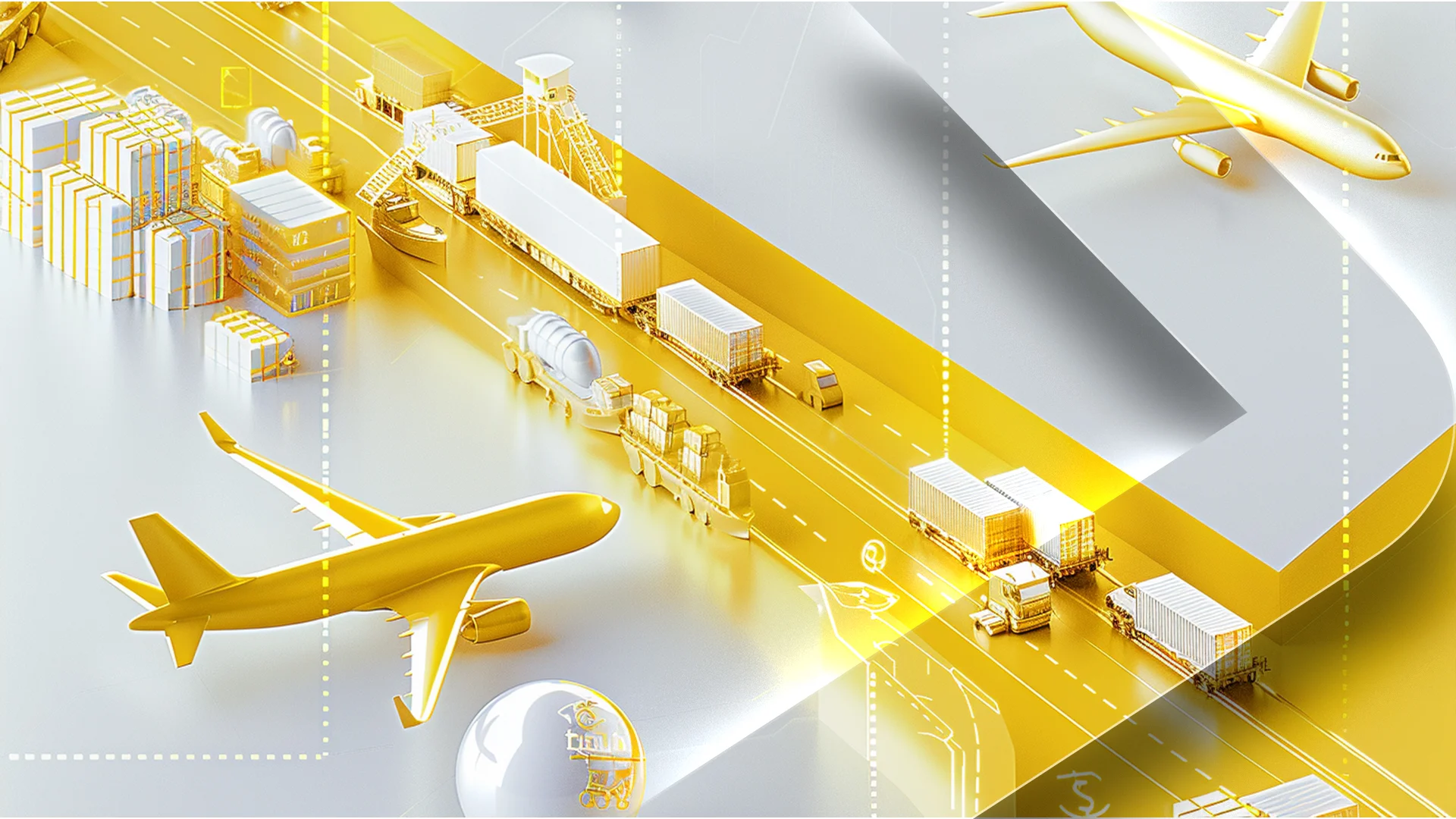
You want your packages to move fast and arrive on time. JUSDA makes this happen by building a smart supply chain that connects the world. With over 155 service points and a huge warehouse network, JUSDA helps you get what you need, no matter where you are. The company uses air, sea, land, and rail to move goods quickly and efficiently. You see better coordination between everyone involved—manufacturers, retailers, and carriers—because JUSDA uses cloud warehousing and smart technology.
JUSDA’s supply chain uses advanced tools like AI, IoT, and big data. These tools help you track your package in real time. AI makes decisions fast, so if there’s a problem, JUSDA can fix it right away. IoT devices show where your package is at every step. Big data helps JUSDA plan the best routes and predict what you’ll need next. This means you get faster deliveries and fewer delays.
Here’s how JUSDA’s smart supply chain stands out:
Real-time updates for inventory and transportation status.
Big data analysis to spot risks early and find new chances to improve.
Proactive risk management for your orders.
One-stop solutions that bring together transportation and extra services.
You also care about the planet. JUSDA helps by planning better routes and combining shipments. This saves fuel and cuts down on pollution. You get your package fast, and you help the environment at the same time.
SMART JUSDA
Supply Chain Management Solution
Industry-Specific Services
Every industry has its own needs. JUSDA understands this and offers special solutions for electronics, automotive, FMCG, new energy, medical health, and more. You get services that fit your business, whether you ship tiny gadgets or heavy equipment.
JUSDA’s 8 core products make a big difference. They cover air, land, sea, and rail transport, plus cloud warehousing, consolidation, foreign trade, and the JusLink intelligent supply chain. You get everything you need in one place.
Check out how JUSDA’s solutions compare to traditional methods:
Feature | JUSDA's Solutions | Traditional Methods |
|---|---|---|
Real-Time Updates | Often lacks real-time visibility | |
Big Data Analysis | Predicts and resolves issues early | Limited predictive capabilities |
One-Stop Solutions | Integrates main and value-added products | Typically fragmented services |
You see these benefits in action. For example, Sharp, a global electronics company, needed help managing e-commerce logistics. JUSDA set up the JusLink platform for them. Sharp cut logistics costs by 20%, sped up order processing, and made customers happier.
JUSDA also uses JusElsa, a smart assistant powered by AI. JusElsa helps you make better decisions and manage risks. You get real-time answers and support, making your supply chain smoother and more transparent.
When you choose JUSDA, you get a partner that understands your industry and uses the latest technology to help you grow. You stay ahead in a fast-changing world, and your customers notice the difference.
Tip: If you want to boost your business with Express Delivery and smart logistics, JUSDA has the tools and experience to help you succeed.
Express Delivery Technology
Automation
You see automation changing the way Express Delivery works in air cargo. Robots and smart machines now handle many tasks that people used to do. Automated cargo handling systems speed up loading and unloading. You get your packages faster because these systems sort and move goods with almost no mistakes. In warehouses, robotic picking systems and automated guided vehicles (AGVs) zip around, grabbing items and sending them where they need to go. Drones and autonomous vehicles help with inventory checks and even deliver packages for the last mile.
Here’s what you might notice in a modern air cargo hub:
Robots sort packages quickly and accurately.
Cobots work alongside people, packing and collecting items.
Drones fly over warehouses, checking inventory and moving goods.
Digital documentation replaces piles of paperwork, making everything faster.
Autonomous ground vehicles transport cargo between planes and warehouses.
You benefit from these changes. Your orders arrive sooner, and there are fewer mistakes. Automation also helps companies use less energy and cut down on waste, which is good for the planet.
Tip: Automation means you get reliable, fast service every time you order online.
Tracking
You want to know where your package is at all times. Real-time tracking systems make this possible. You get updates from the moment your order leaves the warehouse until it arrives at your door. Businesses use advanced tracking technology to watch every step in the supply chain. They can see if a shipment gets delayed or if it moves faster than expected.
Here’s how tracking helps you:
You get accurate delivery time estimates.
You receive proactive updates if something changes.
You feel peace of mind knowing your package is on the way.
Companies spot problems early and fix them before you notice.
Real-time tracking boosts transparency and efficiency. You see everything happening with your shipment. Companies improve their service and keep you happy. When you shop online, you expect this level of visibility. Express Delivery makes it possible.
Note: Tracking technology gives you control and confidence when you order from anywhere in the world.
Operational Changes
Fast Turnaround
You want your package to move quickly from one place to another. To make this happen, air cargo companies have changed how they work. They use smart technology and new systems to speed up every step. Check out some of the biggest changes:
Operational Change | Description |
|---|---|
Digitization of processes | Intelligent cargo and warehouse management systems boost speed and efficiency. |
Automation of freight handling | New machines and upgraded hubs help move packages faster. |
Efficiency improvements in ULDs | Better loading and unloading means planes spend less time on the ground. |
Online booking portals | Real-time booking and instant confirmations make shipping smoother. |
You see these changes every time you track a package online or get a delivery faster than you expected. Companies now use digital tools to manage cargo, so you get updates in real time. Robots and smart machines handle heavy lifting, which means fewer mistakes and less waiting. Planes get loaded and unloaded quickly, so your order spends more time in the air and less time sitting around.
Tip: Fast turnaround times mean you get your orders sooner and with fewer delays.
Last-Mile Delivery
The last mile is the final step before your package reaches your door. This part is changing fast because you and other shoppers want quick, reliable service. Companies now work together more closely, using standard box sizes and systems. This makes it easier to customize how your package gets to you.
You might see delivery vans, bikes, or even drones bringing packages to your home. Some companies test self-driving vehicles to make deliveries even faster. The number of parcels shipped worldwide hit over 161 billion in 2022, and experts think this will grow by almost 60% by 2027. That’s a lot of packages moving through cities and neighborhoods!
You expect short delivery times and lots of choices when you shop online. Express Delivery helps meet these high expectations. Delivery companies use new strategies and technology to handle more packages and keep you happy.
Note: The last mile is all about making sure your package arrives quickly and safely, just the way you want.
Challenges
Logistics Integration
You might think moving packages from one place to another is easy. In reality, you face many hurdles when you try to connect different logistics systems. You see companies using old software that does not talk to new platforms. Sometimes, data from a 3PL Transport Management System does not match up with other systems. This can slow down your deliveries and make you wait longer for your package.
Here are some common problems you may notice:
Data compatibility issues make it hard to share information between systems.
Security concerns can stop companies from connecting their networks.
Outdated systems often cause delays and missed shipments.
Manual processes slow everything down and frustrate customers.
You want your package to arrive quickly and safely. When companies struggle with these challenges, you feel the impact. You might get late deliveries or miss out on important updates. Logistics integration is key to making express delivery work smoothly.
Tip: When you choose a delivery service, look for one that uses smart technology and modern systems. This helps avoid delays and keeps you in the loop.
Sustainability
You care about the planet. Express air cargo companies are working hard to make shipping greener. You see more providers using reusable and recyclable packaging to cut down on waste. For example, some companies offer eco-friendly packaging for temperature-controlled shipments. Industry groups like IATA and TIACA bring everyone together to set goals and share best practices.
Public-private partnerships play a big role. Governments give incentives for using Sustainable Aviation Fuels (SAF). Heathrow’s SAF program supports up to 155,000 tonnes of SAF in 2024, which helps lower carbon emissions.
Let’s look at how SAF is changing the game:
SAF can cut lifecycle carbon emissions by up to 80% compared to regular jet fuel.
SAF makes up less than 1% of all aviation fuel right now because it costs more and is hard to find.
Big cargo airlines like FedEx, DHL, and UPS are testing SAF to shrink their carbon footprint. IATA wants net-zero carbon emissions by 2050.
You see the industry moving toward greener solutions, but there are still challenges. High costs and limited supply slow down progress. When you choose express delivery, you support companies that care about sustainability and work to protect the environment.
Note: Every small step counts. Choosing eco-friendly shipping helps make a difference for the future.
Future Outlook
Innovations
You’re going to see big changes in air cargo and Express Delivery soon. Companies are using new technology to make shipping faster, safer, and greener. Blockchain helps keep your packages secure and makes tracking easier.
Blockchain technology is being utilized for secure transactions, enhancing transparency in cargo tracking and reducing fraud risk.
Take a look at some cool innovations coming your way:
Innovation | What It Means for You |
|---|---|
Lower carbon emissions, cleaner air | |
Autonomous Drones | Faster last-mile delivery, fewer mistakes |
Robotic Arms in Warehouses | Quicker sorting, less human error |
AI Cargo Management | Smarter route planning, fewer delays |
Real-Time Tracking | Always know where your package is |
You’ll notice more electric planes flying your packages. Drones will drop off orders at your door. Robots will sort and pack items in huge warehouses. AI will help companies pick the best routes, so your package arrives on time. Real-time tracking means you can watch your order move every step of the way.
Opportunities
You have a chance to use these changes to grow your business or get better service. Here’s how you can benefit:
Speed and efficiency help you deliver products faster.
Global connectivity lets you reach new customers anywhere.
Autonomous cargo drones save money and protect the environment.
Digital tools like AI and IoT make your supply chain smarter.
Green logistics help you meet eco-friendly goals.
JUSDA is leading the way with smart solutions and greener technology. By 2025, air freight volumes could hit 72.5 million tonnes, growing 5.8% each year. E-commerce drives this growth, so you need better logistics to keep up. JUSDA’s focus on sustainability matches what customers want.
Year | Market Size (in billion USD) | CAGR (%) |
|---|---|---|
2024 | 324.79 | - |
2025 | 349.01 | 7.5 |
2029 | 494.5 | 9.1 |
You can use Express Delivery and new technology to stay ahead. If you run a business, try using smart logistics and eco-friendly shipping. You’ll reach more customers and help the planet.
Express delivery keeps changing air cargo. You see faster shipping, more jobs, and new technology everywhere. JUSDA helps you handle these changes with smart supply chains and real-time tracking. Check out some key takeaways:
Key Takeaway | Description |
|---|---|
Economic Impact | |
Operational Changes | Old logistics models shift to meet new demands. |
Environmental Focus | Companies work hard to lower carbon emissions. |
To stay ahead, use digital tools, plan for capacity, and work with partners like JUSDA. You can grow your business and help shape a greener, smarter future for global logistics.
FAQ
What is the main difference between express and general cargo?
Express cargo moves much faster. You get door-to-door service, real-time tracking, and priority handling. General cargo takes longer and usually ships airport-to-airport. If you need something quickly, express is the way to go.
How does JUSDA help my business with express delivery?
JUSDA uses smart technology and a global network to move your packages fast. You get real-time updates, better route planning, and industry-specific solutions. This helps you save time and keep your customers happy.
Can I track my package in real time with JUSDA?
Yes! You can see where your package is at every step. JUSDA’s JusLink platform gives you live updates, so you always know when your order will arrive.
Is express delivery eco-friendly?
Express delivery is getting greener. Companies use better routes, eco-friendly packaging, and sustainable fuels. JUSDA also works hard to lower emissions and help protect the planet.
See Also
Exploring 2024 Trends in Sea Freight Logistics
Enhancing Supplier Connections in Global E-commerce Strategies
The Importance of Supply Chain Transparency in E-commerce