How Supply Chains Can Shift From Vulnerable to Future-proof


You can future-proof supply chains by embracing digital transformation, advanced technology, and proactive risk management. Recent studies show that digital upgrades improve efficiency and lower costs. For example, a large-scale analysis found companies that adopted digital tools saw better stock performance and decreased future expenses.
Companies like Toyota and Nike have shown that proactive risk management and technology reduce downtime and sales losses during disruptions.
Gartner reports that over 21% of businesses now have resilient supply chains, and more than half expect to reach this level soon.
Key Takeaways
Future-proof supply chains use digital tools, clear communication, and smart risk management to stay strong during disruptions.
Watch for signs like low inventory, poor visibility, and slow responses to spot vulnerable supply chains early.
Real-time data and AI help companies predict problems, manage inventory, and react quickly to changes.
Diversifying suppliers reduces risk and keeps your business running when one source faces issues.
Start your digital transformation by connecting key partners to platforms like JusLink for better control and faster decisions.
Vulnerable vs. Future-proof
Supply Chains: Key Differences
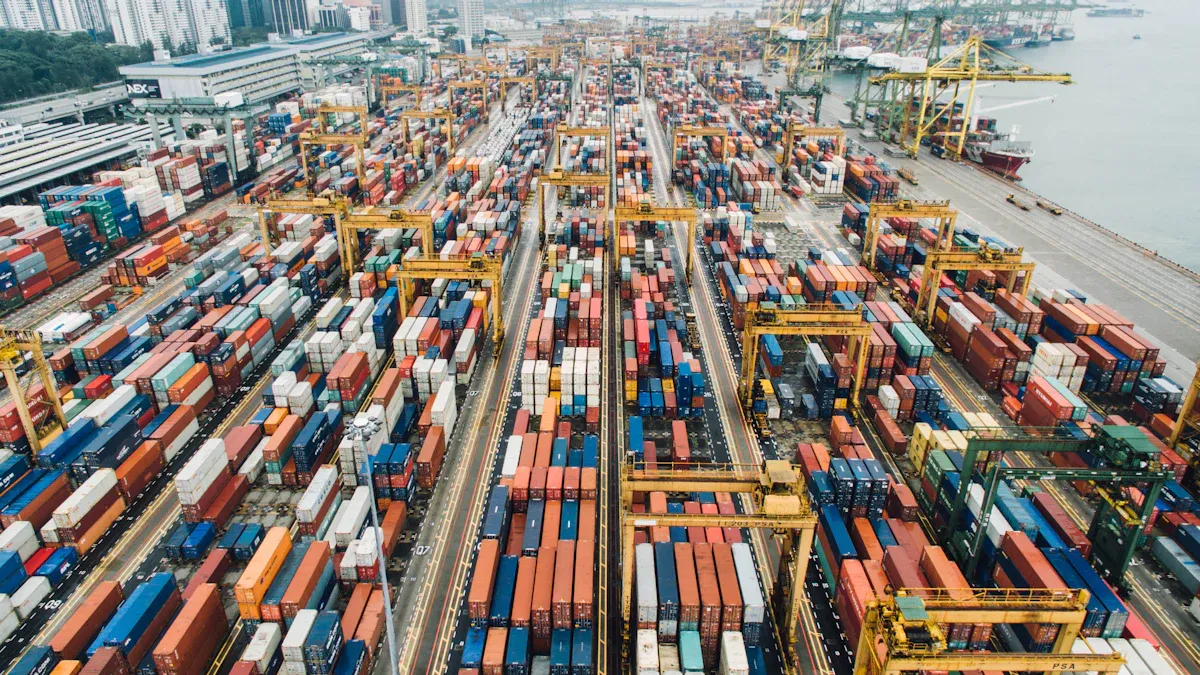
You can spot the difference between vulnerable and future-proof supply chains by looking at how they handle complexity, information, and risk. Vulnerable supply chains often struggle with too many moving parts, unclear roles, and poor communication. Future-proof supply chains, on the other hand, focus on clear processes, strong information sharing, and smart risk management.
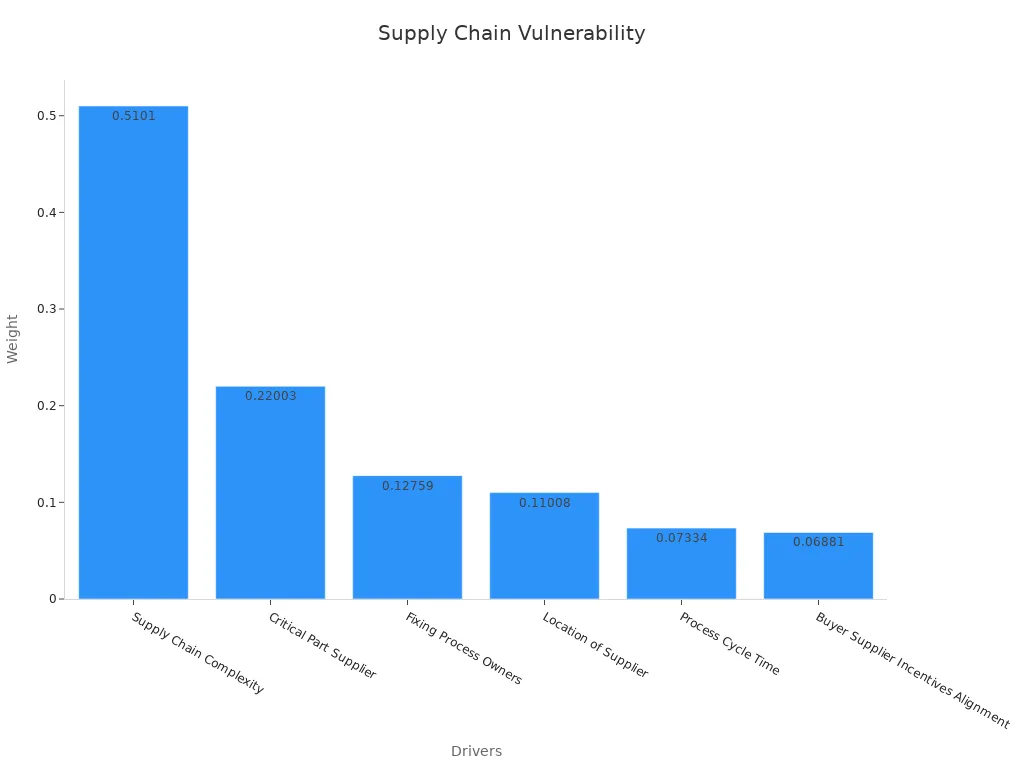
Here is a table that shows what makes a supply chain vulnerable:
Supply Chain Vulnerability Driver | Weight |
|---|---|
Supply Chain Complexity | 0.5101 |
Critical Part Supplier | 0.22003 |
Fixing Process Owners | 0.12759 |
Location of Supplier | 0.11008 |
Process Cycle Time | 0.07334 |
Buyer Supplier Incentives Alignment | 0.06881 |
Note: The higher the weight, the more it affects vulnerability. Managing complexity and sharing information can help you build a stronger supply chain.
Future-proof supply chains also show high resilience. They can anticipate problems, adapt quickly, respond fast, recover well, and learn from past events. These five abilities set them apart from those that break down during disruptions.
Signs of Vulnerability
You can recognize a vulnerable supply chain by looking for certain warning signs. Many companies do not keep enough inventory to last through a disruption. For example, 59% of U.S. companies cannot ship products for more than two weeks if manufacturing stops. Globally, almost half of all companies face similar shortages. Private companies often have less than 30 days of inventory, which puts them at greater risk.
Other signs include:
Low supply chain visibility, making it hard to track products or information.
Slow response to changes or disruptions.
Lack of flexibility to adjust to new situations.
Poor alignment between buyers and suppliers.
High complexity with too many suppliers or unclear roles.
When you see these signs, you know your supply chain needs improvement. By focusing on better information sharing, smarter inventory control, and clear roles, you can move from vulnerable to future-proof.
Key Challenges
Disruptions in Supply Chains
You face many disruptions in supply chains today. Global events can change the way goods move and how much they cost. For example:
Ocean freight spot rates dropped by 9% in Q2 2020, but rates have become unpredictable because of conflicts and port congestion.
The Red Sea crisis caused a 35% increase in lead times and disrupted about $6 billion in trade each week.
Ukraine’s agricultural output fell by 35% in 2024 due to war, which affected food supply chains worldwide.
Oil prices reached an average of $93 per barrel in 2024, making transportation more expensive.
Trade tensions led to a 25% tariff on $300 billion of Chinese imports, raising costs for many businesses.
Carriers now favor high-paying shippers, so others struggle to get space or face higher fees.
Freight forwarders add new surcharges, which increases your expenses.
You must also deal with new rules and regulations. About 74% of businesses say supply chain due diligence rules affect them. Over half face challenges from export control laws. These changes make it harder to plan and keep costs low. Many companies now invest in technology to manage risks and improve supply chain visibility.
Visibility and Data Gaps
You need clear and accurate data to run strong supply chains. However, only 6% of logistics companies report full visibility. Most companies struggle with data gaps, which leads to problems like:
Warehouses spend thousands of hours each year on manual tasks because of outdated or fragmented data.
Poor visibility increases costs and causes delays, which can upset your customers.
Limited data makes it hard to spot risks early or respond quickly to disruptions.
Old systems and high upgrade costs stop companies from collecting real-time data.
Many businesses still use outdated information, which leads to slow decisions and missed opportunities.
When you close these gaps, you can see problems sooner and act faster. Real-time data helps you adjust inventory and respond to changes. Companies that use advanced analytics and AI improve decision-making and reduce costs. For example, one global energy company saved millions by fixing data gaps and improving supplier management. Better visibility leads to faster lead times, smarter spending, and happier customers. You can build more resilient supply chains by focusing on data quality and strong communication with partners.
Future-proof Strategies
Digital Transformation with JusLink
You can build a stronger supply chain by embracing digital transformation. JusLink, JUSDA’s intelligent supply chain platform, gives you real-time visibility and control over every step. JusLink uses AI to predict demand, manage inventory, and spot risks before they become problems. With tools like JusElsa, you can ask questions, track shipments, and get instant answers using natural language. This makes your daily work easier and helps you make better decisions.
JusLink connects all your partners, suppliers, and customers on one platform. You see what is happening in real time. You can react quickly to changes in demand or supply. JusLink’s AI-driven forecasting helps you avoid overstocking or running out of products. You save money and keep your customers happy. When you use digital tools like JusLink, you turn your supply chain into a smart, flexible network that can handle surprises.
Tip: Start by connecting your main suppliers and warehouses to JusLink. This gives you instant visibility and helps you spot issues early.
Supplier Diversification
You can reduce risk by working with more than one supplier for each key product or material. Supplier diversification means you do not depend on a single source. If one supplier faces a problem, you can switch to another. This keeps your business running even during disruptions.
A recent study shows that companies with a diverse supplier base had better inventory and higher profits during tough times. The table below shows how diversification helps:
Aspect Evaluated | Statistical Finding | Implication for Supply Chain Risk Mitigation |
|---|---|---|
Supplier Base Diversification | Increased inventory availability and profitability during disruption and recovery periods | Improves resilience and inventory management |
Customer Base Diversification | Stable demand and higher profits after disruptions | Keeps business steady and profitable |
Operationalization of Diversification | Spreading suppliers and customers across multiple partners | Reduces risk from relying on one source |
Comparison with Previous Studies | Modern supply chain practices now make diversification effective | Shows the value of updated strategies |
Practical Implications | Governments support diversification to lower systemic risks | Encourages businesses to diversify |
When you spread your orders across several suppliers, you protect your business from sudden shocks. You also gain more bargaining power and flexibility.
Real-time Risk Management
You can spot and manage risks faster with real-time monitoring. JusLink’s Control Tower gives you live updates on shipments, weather, and global events. AI-powered alerts warn you about delays, shortages, or disruptions. You can act quickly to avoid bigger problems.
Many leading companies use real-time risk management to stay ahead. For example, Medtronic mapped over 12,000 suppliers and used AI to find risks. This helped them deliver critical products on time. Schneider Electric received instant alerts about global transport issues and stopped over 100 major events from hurting their deliveries. The table below shows how real-time risk management works in practice:
Company | Evidence of Success | Impact / Figures |
|---|---|---|
Evonik | Created risk heat maps and monitored disruptions continuously | Prioritized risk reduction and made quick decisions |
Medtronic | Used AI to highlight risks across many suppliers | Minimized delays for important products |
Tier-1 Automotive Mfr | Got early alerts about factory shutdowns and air cargo limits | Secured supplies ahead of disruption, gaining an advantage |
Schneider Electric | Received real-time notifications of logistics events | Prevented over 100 major events from impacting deliveries |
With JusLink, you can set up alerts for your own supply chain. You get notified about problems right away. This helps you fix issues before they grow.
Note: Real-time risk management does not just protect you from loss. It also gives you a chance to outperform your competitors.
Smart Inventory Control
You can save money and improve service by using smart inventory control. JusLink uses AI to predict how much stock you need and when. This helps you avoid running out of products or holding too much inventory. Smart tools like RFID tracking and automated reorder points make your inventory more accurate.
A McKinsey report found that AI-driven inventory control can cut excess stock by up to 35%. This means you spend less on storage and avoid waste. The table below shows how different methods improve inventory control:
Improvement Area | Measured Improvement | Impact on Inventory Control and Costs |
|---|---|---|
Automated reorder point systems | Fewer lost sales, smoother operations | |
RFID tracking | Inventory accuracy up to 99% | Real-time tracking reduces manual checks and errors |
Staff training | 25% improvement in inventory accuracy | Reduces picking errors by 20% |
Standardized processes & WMS automation | 99.5% order accuracy, 30% labor cost reduction | Enhances efficiency and reduces labor expenses |
AI-driven inventory control | Up to 35% reduction in excess stock | Lowers holding costs through optimized stock levels |
Just-in-Time (JIT) inventory | 15-30% reduction in warehouse costs | Minimizes storage costs and waste |
Cycle counting | 30% reduction in stock discrepancies | Maintains real-time inventory accuracy |
ABC Analysis | Up to 95% increase in inventory accuracy | Improves cash flow and reduces unnecessary stock holdings |
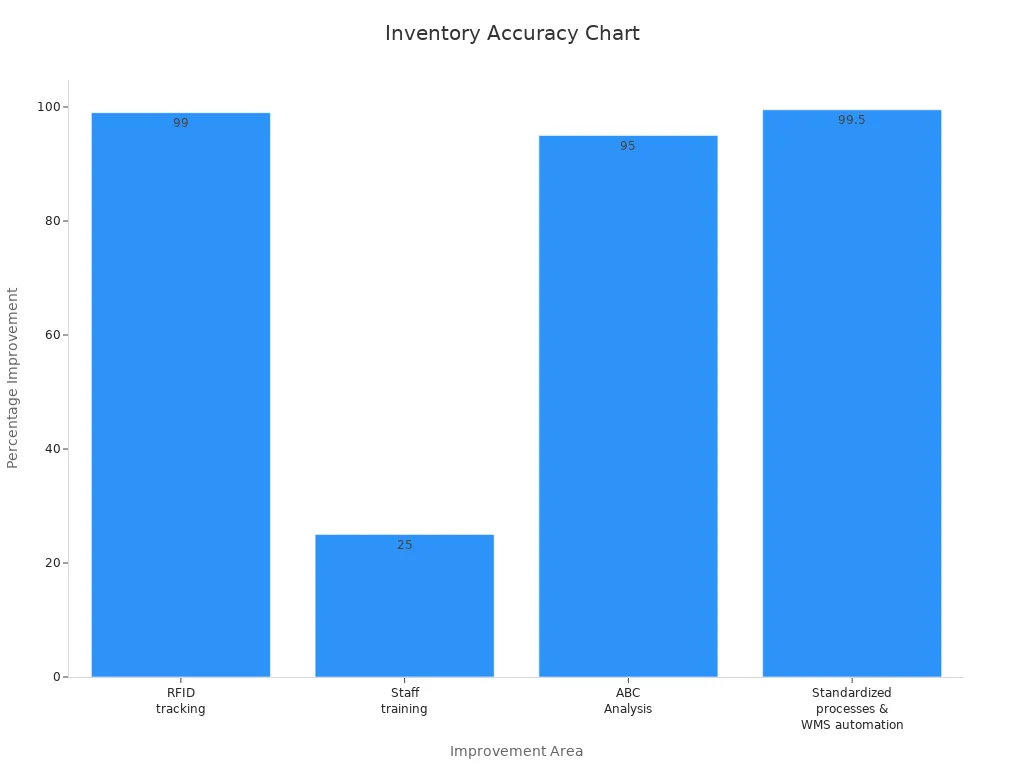
When you use smart inventory control, you keep your shelves stocked with the right products. You also lower your costs and improve customer satisfaction.
Tip: Start by using AI-driven forecasting in JusLink. This helps you set the right inventory levels and avoid costly mistakes.
JUSDA Case Study
Global Expansion Success
You can see how JUSDA helps companies grow worldwide by looking at real examples. Many Chinese manufacturers wanted to expand into new markets. They faced problems like complex supply chains, different customs rules, and slow shipping. JUSDA worked with these companies to solve these challenges.
JUSDA Solutions
To provide you with professional solutions and quotations.
JUSDA built a Supply Chain Management Collaboration Platform. This platform uses AI, cloud computing, and blockchain. You get real-time updates on shipments, customs, and inventory. You can track your products from the factory to the customer. This makes your supply chain more transparent and efficient.
Note: One leading manufacturer used JUSDA’s platform to connect with suppliers in Southeast Asia. They reduced shipping delays by 30% and cut inventory costs by 20%. You can achieve similar results by using digital tools to manage your global supply chain.
Here is a quick look at the benefits:
Challenge | JUSDA Solution | Result |
|---|---|---|
Complex global supply chain | AI-powered platform | Faster, clearer operations |
Customs differences | Real-time tracking | Fewer delays |
High inventory costs | Smart inventory management | Lower costs |
AI-driven Results
You can use JUSDA’s JusLink to unlock the power of AI in your supply chain. JusLink offers tools like AI-driven sales forecasting, smart replenishment, and real-time risk alerts. These features help you make better decisions every day.
For example, JusLink’s AI assistant, JusElsa, answers your questions and helps you track shipments. You get instant updates and can spot problems before they grow. One company used JusLink to predict demand more accurately. They reduced excess stock by 35% and improved delivery times.
AI-driven forecasting: Plan production and avoid shortages.
Smart replenishment: Keep the right amount of stock.
Risk alerts: Respond quickly to disruptions.
When you use JusLink, you build a supply chain that is ready for the future. You gain control, save money, and keep your customers happy.
You can transform supply chains by using technology, diversification, and proactive risk management. Companies like Amazon, Maersk, and Nestlé have shown that AI, blockchain, and IoT make supply chains more resilient and transparent.
Company | Technology Used | Impact on Supply Chain Resilience |
|---|---|---|
Amazon | AI, robotics | Faster order fulfillment, strong inventory management |
Maersk | Blockchain | Better transparency, less paperwork |
Nestlé | IoT sensors | Real-time monitoring, higher product quality |
Take time to review your current processes. Start your journey with solutions like JUSDA’s JusLink. Embrace digital transformation and lead your business into the future.
FAQ
What does it mean to future-proof your supply chain?
You make your supply chain strong against problems. You use technology, smart planning, and good data. This helps you keep products moving, even when things change fast.
How does JusLink help with supply chain visibility?
JusLink gives you real-time updates. You can track shipments, check inventory, and see risks as they happen. This helps you make quick decisions and avoid surprises.
Why is supplier diversification important?
You lower your risk when you use more than one supplier. If one supplier has trouble, you can still get what you need from another. This keeps your business running.
Can AI really improve inventory management?
Yes! AI tools like JusLink predict what you need and when. You avoid running out of stock or having too much. This saves money and keeps customers happy.
How do I start digital transformation in my supply chain?
Begin by checking your current systems.
Connect your main suppliers and warehouses to a digital platform like JusLink.
Train your team to use new tools.
Watch for quick wins and build from there.
See Also
Embracing Technology To Transform Modern Supply Chain Systems
Exploring Supply Chain Trends That Boost Professional Development
How Internet Of Things Is Revolutionizing Supply Chain Management