How to Improve Supply Chain Efficiency from Components to Sales


Supply chain management is very important. It helps create a good supply chain from components to manufacture to consumer, ensuring a smooth transition from parts to finished products and their sale. Companies achieve better results when they focus on being fast and using fewer resources. More money is being invested in smart manufacturing and AI. Having strong workers and collaborating effectively contributes to the success of supply chain management.
Key Takeaways
Make clear goals for supply chain management to help things work better and cost less. Focus on goals like making customers happy and helping the environment.
Use ways like Lean and Six Sigma to make small, helpful changes in supply chain steps. This helps teams get better and work well together.
Watch important numbers like lead time, inventory turnover, and order accuracy to see how things are going and find ways to get better. Checking often can stop problems and help things run smoother.
Supply Chain Management Objectives
Defining Clear Goals
Companies make supply chain plans to set clear goals. These goals help teams know what is important.
When goals are clear, supply chain management is stronger. Teams know what to check and how to get better.
Supply chain management goals often include:
Cost reduction: Companies try to spend less money.
Improved efficiency: Teams work to make things faster and correct.
Increased customer satisfaction: Businesses deliver on time and meet needs.
Enhanced sustainability: Leaders use plans to help the planet and people.
Risk management: Teams find problems early and fix them.
Improved supplier relations: Good partnerships make supply chains stronger.
Clear goals help companies match supply chain plans with business needs. When teams use targets they can measure, they work better and waste less. This way helps supply chains work well and stay strong.
Continuous Improvement
Continuous improvement is an important supply chain plan. Teams use supply chain management to spot problems and make small fixes.
Supply chain plans for continuous improvement include:
Six Sigma
Total Quality Management
Kaizen
Value Stream Mapping
Benchmarking
Supplier Relationship Management
Inventory Management Systems
Root Cause Analysis
Performance Metrics and Key Performance Indicators
Continuous improvement helps teams make supply chains stronger. Small changes help supply chain management be flexible.
Plans like Lean and Kaizen help teams get better step by step. Teams use these plans to work faster and build strength. This way helps companies handle change and keep supply chains working well.
Key Metrics for Efficiency
Supply chain management uses clear metrics to check progress. These metrics help companies find ways to get better. Companies use them to track supply chain optimization and make work easier. Three important metrics are lead time and cycle time, inventory turnover, and order accuracy.
Lead Time and Cycle Time
Lead time shows how long it takes to deliver a product. Cycle time is the time needed to finish one production cycle. Companies that lower lead time get many benefits:
They deliver faster than others, so customers choose them.
They get more customers and make more money.
They change quickly when the market changes.
They make customers happy by delivering on time.
They keep less inventory, so storage costs go down.
They make work easier and spend less money making products.
They can change plans fast when the market shifts.
They have better cash flow and keep improving.
Shorter lead times and cycle times help companies meet demand changes. These metrics also make supply chain management faster and more dependable.
Inventory Turnover
Inventory turnover shows how often a company sells and replaces its inventory each year. High turnover means products sell fast. Low turnover means sales are slow or there is too much inventory. The best supply chains reach good inventory turnover rates:
Most industries want rates between 4 and 10.
eCommerce businesses try for 4-6 each year.
Supermarkets usually have a rate of 14.
Fashion stores often have a lower rate of 3-4.
Better inventory turnover saves money and helps work run smoothly:
Companies save money by moving inventory faster.
Better cash flow helps daily work and growth.
Just-in-time inventory management keeps extra inventory low.
The best inventory turnover rate depends on the industry and business type. Companies use inventory management systems to watch and improve turnover. This helps supply chain optimization and efficiency.
Industry | Average Inventory Turnover Rate |
|---|---|
Supermarkets | 14 |
eCommerce | 4-6 |
Fashion Retail | 3-4 |
Order Accuracy
Order accuracy shows how often companies send the right products to customers. High order accuracy is important for supply chain management and making work better. Industry standards for order accuracy are:
Most supply chains reach 95% to 99.9% accuracy.
The best companies aim for 99.5% to 99.9%.
A 95% accuracy rate is normal.
Better order accuracy makes customers happier and keeps them coming back:
Customers have good experiences and trust the company.
Accurate orders make customers buy again and tell friends.
Mistakes can hurt customer relationships and cause bad reviews.
Higher order accuracy makes work better and helps sales grow.
Companies use inventory management tools and regular checks to keep order accuracy high. Focusing on accuracy helps supply chain efficiency and business growth.
Tip: Checking these metrics often helps companies find problems early and fix them fast. Good supply chain management needs clear goals and strong data.
Inventory Optimization
Demand Forecasting
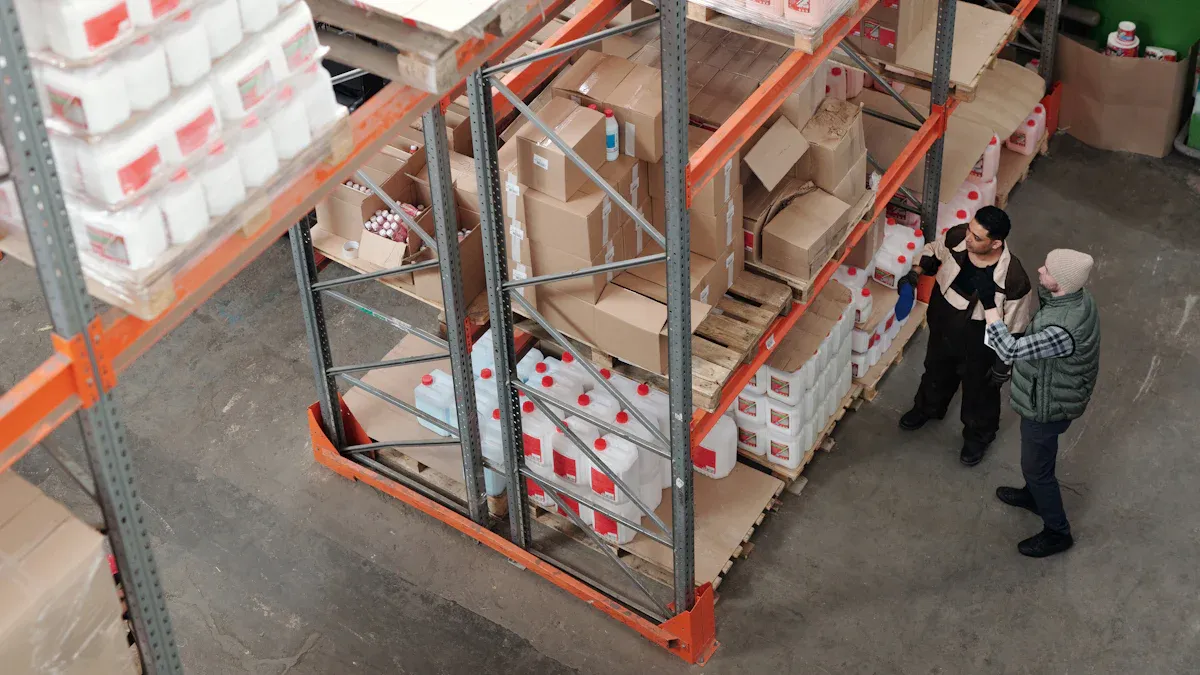
Companies use demand planning to guess what customers want. Good demand planning helps teams avoid running out of products. It also stops them from having too much extra stock. There are two main ways to forecast demand:
Method Type | Description | Best Use Case |
|---|---|---|
Quantitative | Uses math and statistics to study old sales data. | Works best when there is past data and clear patterns. |
Qualitative | Uses expert ideas and opinions instead of numbers. | Good for new markets or new products with no old data. |
Teams pick the best way for their needs. Good demand planning helps companies work better and save time.
Intelligent Inventory Systems
Intelligent inventory systems use technology to help manage inventory. These systems make work easier and help companies do better. They use automatic tools to track products and guess what customers will want. Some important features are:
Changes safety stock levels for important items.
Handles changes in lead time from suppliers.
Contribution to Inventory Management | Description |
|---|---|
Historical Sales Data Analysis | Shows sales patterns in different seasons. |
Real-Time Inventory Monitoring | Watches inventory at all company locations. |
External Factors Consideration | Looks at things like weather, holidays, and trends. |
Dynamic Reorder Thresholds | Changes reorder points when things at work change. |
AI-powered systems use smart tools and outside data, like social media, to help plan demand. These tools help teams avoid running out of products or having too many. Smart systems make inventory optimization easier.
Traceability
Traceability lets companies know where products come from and where they go. Supply chain management uses new technology to track items and make work better. The best tools include:
Technology | Description | Example Application |
|---|---|---|
Blockchain | Makes a record of transactions that everyone can see. | De Beers uses it to track diamonds and make sure they are safe and fair. |
Internet of Things (IoT) | Collects real-time data about products and where they are. | DHL uses sensors to check temperature and humidity for sensitive goods. |
Artificial Intelligence | Helps analyze data and make decisions automatically. | IBM’s Watson looks at data to guess supply chain problems. |
Cloud-Based Solutions | Shares data and helps people work together in real time. | Unilever uses cloud tools to track inventory and shipments worldwide. |
Traceability helps companies find risks and work better. It helps with inventory management and demand planning by giving clear data at every step.
Supplier Collaboration
Working together with suppliers helps companies do better. Teams in supply chain management talk with suppliers to make logistics and distribution smoother. Good teamwork builds trust and makes supply chain optimization simpler.
Long-Term Partnerships
Long-term supplier partnerships help supply chain management and logistics. These relationships help companies get lower prices and bulk discounts, so costs go down. Reliable supplier partnerships lower the chance of problems in distribution. Open teamwork lets teams fix surprises quickly.
Trusted supplier partnerships keep costs steady.
Reliable supplier relationships lower risks in global logistics and distribution.
Open teamwork helps teams fix problems fast.
Teams fix issues faster by working with suppliers during problems.
Companies change plans and find new answers by working with suppliers.
Long-term supplier partnerships save money and make things more reliable.
Working with suppliers makes products and services better. Suppliers learn what companies need, so results improve and teams solve problems together. This teamwork keeps supply chain management strong.
Supplier Performance
Supplier performance changes how well teams work together and how efficient they are. Companies use supply chain management metrics to check supplier quality, delivery, and cost. Teams watch supplier performance to make logistics and distribution better.
Metric | Description |
|---|---|
Quality | Counts mistakes or problems in supplier products. |
Delivery | Checks if deliveries arrive on time in distribution. |
Cost | Looks at supplier prices and how well money is used. |
Risk | Checks for supplier risks in logistics and distribution. |
Innovation | Tracks new ideas or products from suppliers. |
Sustainability | Checks if suppliers care for the planet and people. |
Working with suppliers uses these metrics to build strong partnerships and make supply chain optimization better.
Communication
Clear communication with suppliers helps teams work together in supply chain management. Sharing real-time data helps teams spot risks and fix problems in logistics and distribution. Good communication builds trust and helps everyone know what to expect. Working with suppliers through open communication leads to better supply chain results and higher efficiency.
Teams that share correct information with suppliers can react faster to changes and problems.
Technology in Supply Chain Optimization
Real-Time Data
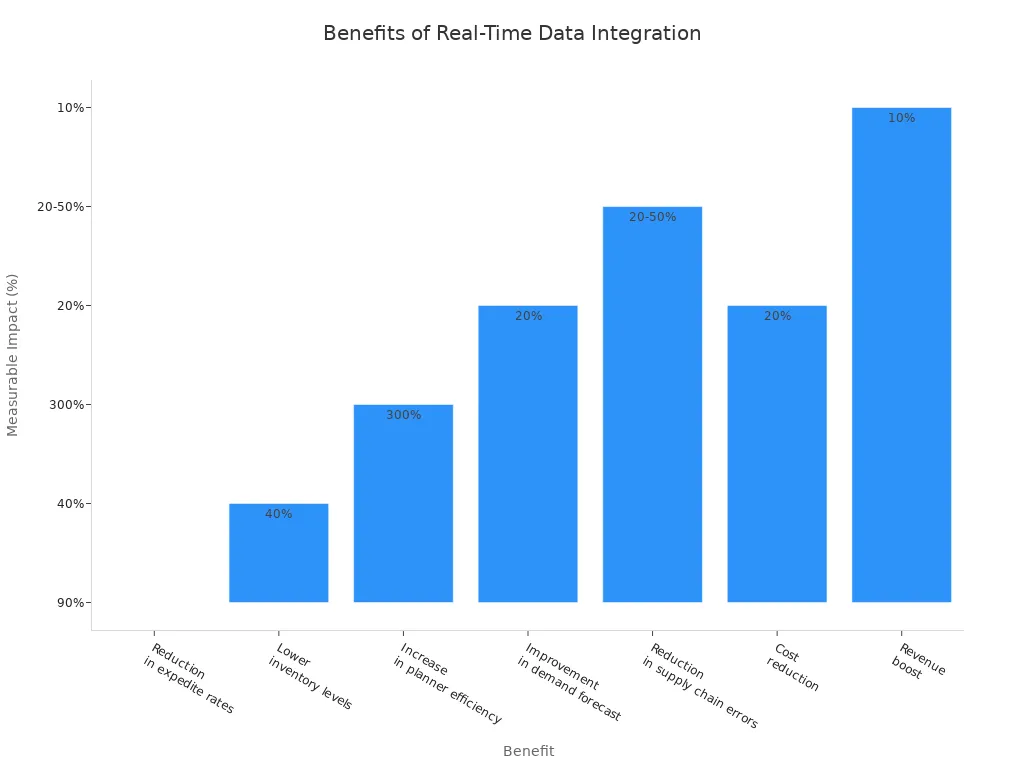
Real-time data helps companies see what is happening now. Teams get updates right away at every step. They can make fast choices and fix problems early. This helps companies spend less money and make fewer mistakes. Real-time data also helps teams work better and faster. The table below shows how real-time data helps supply chain optimization:
Benefit | |
|---|---|
Reduction in expedite rates | Up to 90% |
Lower inventory levels | 40% reduction |
Increase in planner efficiency | Up to 300% improvement |
Improvement in demand forecast accuracy | Up to 20% increase |
Reduction in supply chain errors | 20% to 50% decrease |
Cost reduction | 20% reduction |
Revenue boost | 10% increase |
Automation Tools
Automation tools help companies finish work faster. These tools do jobs that people used to do by hand. Workers can focus on bigger and more important tasks. Automation makes work more accurate and helps stop mistakes. It also saves money and helps teams learn new skills.
Automation tools do jobs for people and help teams work faster.
They make work more correct and stop mistakes.
Workers learn new things and use technology more.
Integrated Platforms
Integrated platforms link all parts of supply chain management. They use technology like AI and machine learning to help with planning and inventory. GAINS Systems and Logility are two popular platforms. These platforms help companies make smart choices and improve how they work.
Platform | Core Solutions | Additional Capabilities |
|---|---|---|
GAINS Systems | Centralized supply chain performance optimization, AI and ML automation for supply chain design, planning, forecasting, inventory replenishment, S&OP | Improved decision-making speed and performance |
Logility | Cloud-based platform for optimized demand, inventory, manufacturing, and supply plans, leveraging generative AI and machine learning | Demand planning, inventory optimization, S&OP, supplier management, network optimization |
Technology makes supply chain management stronger. Companies use these tools to work better, help the planet, and reach new goals for sustainability and esg.
Workforce and Alignment
Skilled Professionals
Companies need skilled professionals to make supply chains better. Workers with strong technical and soft skills help teams fix problems. They also use new technology to improve work. The table below shows the most wanted skills for supply chain optimization in 2024:
Skill Type | Skills |
|---|---|
Technical Skills | AI & ML Proficiency, Data Analytics, Blockchain, IoT & Cloud Computing |
Soft Skills | Strategic Problem-Solving, Collaboration, Risk Management |
Teams with these skills can handle changes in demand. They use digital tools to manage work better. Skilled professionals help companies reach goals and keep things running well.
Team Alignment
Team alignment helps supply chain management work better. When teams share information and work together, they solve problems faster. Companies like Toyota and Siemens use strong teamwork to get good results. Here are some ways alignment helps:
Toyota uses lean principles to make work more efficient.
Siemens uses Digital Twin Technology to talk better and cut delays by 33%.
Walmart has weekly meetings to make demand forecasting 25% better.
Procter & Gamble uses real-time platforms to lower lead times by 15%.
Deloitte says strong communication helps companies react 30% faster to problems.
Aligned teams work together to reach goals and make supply chains better.
Training
Training programs help workers learn new skills and stay interested. A big pharmaceutical company made its supply chain better by teaching teams about data governance and cybersecurity. This digital literacy program helped workers use new systems and keep their management skills. Research shows only 51% of employees feel happy with their daily work. Training helps workers feel more engaged and do better. Companies should:
Check what skills teams need.
Use formal learning, on-the-job training, and micro-learning.
Focus on change management to help workers accept new ways.
Training helps teams work better and meet demand in supply chain management.
From Components to Manufacture to Consumer

End-to-End Visibility
End-to-end visibility lets companies watch every step. Managers see where products are as they move. This helps teams know what is happening in the supply chain. Companies use some best practices to make visibility and efficiency better:
Real-time data with IoT sensors and analytics tools keeps info up to date.
Lean practices help remove waste and make work smoother.
Supplier collaboration means teams share data and plan together.
Customer feedback loops help teams react fast to changes.
Focusing on sustainability helps companies follow rules and meet customer needs.
Seeing all steps helps teams manage risks better. The table below shows how visibility affects risk and cost:
Source | Evidence |
|---|---|
Sensitech | End-to-end supply chain visibility helps teams spot risks early. |
Z2Data | Supply chain visibility is key for stopping risks and staying strong. |
Trackonomy | End-to-end visibility helps companies work smarter and stay strong. |
Trax Technologies | Companies with good supply chain visibility spend 20% less than others. |
Velocity and On-Time Delivery
Speed and on-time delivery are important at every step. Companies use different ways to work faster and meet customer needs:
Companies give delivery windows and share delivery status to help customers.
More supply chain visibility helps teams find problems early.
Teams check safety stock levels to keep enough inventory.
Third-party logistics (3PL) help fill orders quickly and correctly.
Talking clearly about delivery times makes customers happy. Top companies deliver on time 95% of the time or more. Some reach almost 99%. During busy seasons, the best teams still do well. This shows that supply chain optimization and good management matter. Companies that focus on speed and on-time delivery earn trust and meet demand from components to manufacture to consumer.
Companies can make supply chain management better by using some important steps.
Description | |
|---|---|
Build strong relationships with logistics providers | Work with logistics providers to spot delays early and fix problems before they happen. |
Regularly Analyze Data | Watch sales and customer data often to make demand forecasts better. |
Create a Risk Assessment Plan | Find risks in your supply chain and add backup plans to keep things running. |
Invest in Automation Tools | Use software to do simple jobs like tracking inventory and processing orders. |
Prioritize Sustainable Practices | Choose suppliers who care about the environment and check how your work affects nature. |
Establish Regular Communication | Meet with suppliers often to talk about goals and make sure everyone agrees. |
Conduct Regular Audits | Check supply chain steps often to find problems and use Lean ideas to fix them. |
Some common problems in supply chain optimization are:
Not enough resilience or agility
Managing costs
Meeting what customers want
Working well with suppliers
Teams should look at how they manage things now, keep trying to get better, and test one new way to make supply chains work faster and stronger.
FAQ
What is the most important supply chain metric?
Many companies look at lead time. Lead time tells how fast products move. Fast lead times help teams meet what customers want.
How does technology improve supply chain efficiency?
Technology gives teams data right away. Automation tools help workers finish jobs faster. Integrated platforms link different supply chain parts.
Why do companies need skilled supply chain professionals?
Skilled professionals fix problems quickly. They use new technology and help teams work together. Strong workers help companies reach goals faster.
See Also
Enhancing Strategies To Tackle Supply Chain Challenges In Tech
Best Practices For Successful Supply Chain Optimization Techniques
Evaluate Your Supply Chain Efficiency Today And Discover