How logistics companies can implement innovative strategies to cut carbon emissions and build a more sustainable supply chain for the future


You have more pressure to lower carbon emissions in logistics. Global shipping made about 858 million tonnes of CO2 in 2022, with air transport contributing another 739 million tonnes. Most emissions came from container ships and bulk carriers, while moving fossil fuels also caused significant emissions. Now, you must adhere to new rules for reporting emissions as investors and customers increasingly demand better sustainable supply chain management practices. Higher carbon costs are pushing companies to adapt, and changing global markets make this transformation essential. Technology plays a crucial role in providing accurate measurement, and teamwork is vital for achieving a sustainable supply chain.
JUSDA Solutions
To provide you with professional solutions and quotations.
Key Takeaways
Check your carbon emissions to see where you can do better. Use tools to watch emissions in your whole supply chain.
Choose low-emission carriers and green transportation options. This helps lower your carbon footprint and makes your company look better.
Use technology like real-time analytics and AI to plan better routes. This can help use less fuel and cut down on emissions.
Work with partners to share how you are doing with sustainability. Working together can make things run smoother and lower emissions in the supply chain.
Use automated reporting systems to make data collection easier. This keeps your data correct and helps you follow the rules.
Regulatory Drivers In Logistics Carbon Management
Global Emissions Trading Systems
Emissions trading systems are growing in many countries. These systems set a limit on how much carbon companies can release. Companies can buy or sell allowances if they need more or less. This makes companies want to use cleaner vehicles, like electric or hybrid ones. You can also change how you work to use less fuel. This helps lower emissions. Emissions trading creates a market for allowances. This means you can save money by cutting your carbon footprint. If you do not meet your goals, you might pay more for shipping. Using green transportation can help you spend less. Companies that use green vehicles often get a better name. They may also get more customers.
Key Transportation Regulations
You must follow many rules that help cut carbon emissions. These rules are for ships, trucks, trains, and planes. The table below lists some important rules you should know:
Regulation | Description |
|---|---|
Energy Efficiency Existing Ship Index (EEXI) | Checks how energy efficient ships are and sets rules for cutting carbon emissions. |
Carbon Intensity Indicator (CII) | Looks at how much carbon a ship makes and sets targets to lower it. |
IMO 2020 | Makes ships lower sulfur oxide emissions a lot. |
MARPOL Annex VI | Stops ships from polluting the air. |
EU Emission Trading System (EU ETS) | Uses a cap and trade system to lower greenhouse gas emissions. |
EU Monitoring, Reporting, and Verification Regulation (MRV) | Ship owners must check and report greenhouse gas emissions from big ships in EU ports. |
U.S. National Blueprint for Transportation Decarbonization | Plans to stop greenhouse gas emissions from transport by 2050 using different ideas. |
Canada’s emission regulations | Rules to lower emissions from transport, focusing on fuel efficiency and cleaner vehicles. |
China’s National Carbon Market | A trading system that limits emissions and lets companies trade carbon allowances. |
Korea’s carbon market | Uses the Korean Emissions Trading System (K-ETS) and needs allowances for planes and ships in Korea. |
Australian Carbon Unit Scheme | Gives rewards for projects that lower or stop greenhouse gas emissions. |
Impact Of Carbon Pricing
Carbon pricing changes how you make choices in transport. You pay for each ton of carbon you release. This makes you look for ways to cut emissions. You might buy cleaner vehicles or change your routes to use less fuel. Carbon pricing can make things cost more. But it also helps you become more efficient. Supply chain managers try to spend less on emissions. When carbon pricing adds extra costs, your services and products may cost more. You can stay ahead by using smart ways to lower your carbon output.
Measuring Logistics Carbon Footprint
Knowing your logistics carbon footprint is the first step to a greener supply chain. You must find out where emissions come from and how to measure them well. JUSDA ESG gives you tools to track, report, and manage your footprint at every step.
Scope 1, 2, And 3 Emissions
You need to look at three types of emissions for a full picture. Scope 1 means direct emissions from your vehicles and equipment. Scope 2 is about emissions from energy you buy, like electricity for warehouses. Scope 3 is the hardest to track. It includes emissions from suppliers, transport partners, and when people use your products. To measure these, you can:
Add sustainability KPIs to supplier contracts.
Do regular checks on sustainability.
Look at emissions data from suppliers and use good estimates if needed.
JUSDA ESG helps you collect and check this data, so your reports are more trustworthy.
Identifying Carbon Hotspots
You should find the biggest sources of emissions in your supply chain. Transport, getting raw materials, and heavy industries often make the most emissions. For many companies, food, building, and freight supply chains are big causes. If you focus on these hotspots, you can make the biggest difference in your carbon footprint.
Standards For Accurate Measurement
You need to follow global standards to make sure your data is right and trusted. The GLEC Framework is the main standard for measuring emissions in logistics. ISO 14083 gives a common way to measure and report transport emissions. These standards help you compare your footprint with others and follow the rules. JUSDA ESG uses these standards, so you can trust your data and show your progress to customers and regulators.
Tip: Collect data like distance traveled, load weight, and terminal emissions for the best footprint calculations.
With the right tools and standards, you can measure, control, and lower your logistics carbon footprint with confidence.
Data-Driven Strategies For Carbon Emissions Reduction
You can use data to make your logistics cleaner. Smart strategies help you track and lower emissions at every step. Technology lets you see where emissions happen and act fast.
Real-Time Analytics In Logistics
Real-time analytics let you watch emissions as they happen. You get updates from sensors and dashboards right away. This helps you find problems and fix them quickly. AI and machine learning show where emissions are highest. You can use this information to change your work and lower your impact.
JusLink’s AI Solution gives you tools to predict and manage risks. You can guess demand and plan shipments better. This means you use fewer trucks and ships, so emissions go down. AI systems track carbon at every supply chain stage. You get automatic reports and clear records. This makes your data more trustworthy and helps you follow rules.
Tip: Use dashboards to check emissions by region or product. This helps you focus your emission reduction plans.
Route Optimization
Route optimization is a great way to cut carbon. You can use data to find the shortest and fastest routes. This saves time and fuel. Routing software looks at traffic, weather, and load. It helps you avoid delays and wasted trips.
Many companies have seen big results. Some have cut fuel costs and emissions by 20%. When you use real-time data, you drive less and waste less time. This lowers your carbon footprint and saves money.
JUSDA uses IoT and big data for better route planning. You use your fleet better and waste less time. You can plan deliveries to match demand, so trucks are full. This makes your work more efficient and helps you reach your goals.
Route optimization cuts travel and fuel use.
Better fleet use lowers emissions.
Smart routing software looks at traffic and load for good trips.
Low-Emission Carrier Selection
Picking low-emission carriers is a smart choice. You can work with partners who use cleaner vehicles and fuel. This lowers your supply chain’s carbon footprint and meets customer needs.
Many companies now focus on emission reduction in logistics. Firms like Schneider use new technology to keep fuel use low. This helps them reach their goals and stand out.
JUSDA’s IoT and big data help you compare carriers. You can pick the ones with the lowest emissions. This helps your business and the planet.
Low-emission carriers help you cut your carbon footprint.
Green logistics gives you an advantage.
New technology helps with fuel efficiency and emission reduction.
Note: Working with low-emission carriers helps your reputation and meets new rules.
You can use these strategies to make your logistics cleaner and more efficient. Data tools like JusLink’s AI Solution and JUSDA’s IoT give you the insights you need for strong results.
Technology And Automation In Sustainable Supply Chain Management

Technology and automation have changed how you handle logistics. You can use smart tools to watch and improve your supply chain. These new tools help you cut emissions and save money. They also make your business stronger.
Automated Reporting And Tracking
Automated reporting and tracking help you measure your carbon footprint. You do not need to type in data by hand. This means fewer mistakes. You get updates right away and clear records.
Benefit | Description |
|---|---|
Accuracy and consistency | Automated calculations keep data the same and lower mistakes. |
Real-time data and smarter decision making | Real-time data helps you make quick choices to cut emissions. |
Simplified reporting and compliance | Automated systems make reporting easier and help you follow rules. |
Visibility across the supply chain | Automation brings together data from all parts for a full view. |
Scalability and long-term savings | Automated tracking grows with your business and saves money over time. |
JUSDA’s JusLink and ESG platform give you these benefits. You can track emissions from every shipment and warehouse. The system uses IoT sensors to collect data and send it fast. You always know your carbon numbers and can fix problems quickly.
Tip: Automated tracking helps you follow global standards like GLEC and ISO 14083. This makes your reports more trusted by customers and regulators.
Digital Infrastructure Resilience
A strong digital system keeps your logistics working well. You can use AI, IoT, and blockchain to see your supply chain live. These tools help you find risks and fix them early.
Key Points | Description |
|---|---|
Role of AI, IoT, and Blockchain | These tools help you see data and improve supply chain management. |
Automation and Predictive Analysis | Automation and prediction help keep work safe and spot problems. |
Preventive Actions | These steps lower risks from outside problems with checks and planning. |
JUSDA’s JusLink uses these technologies for a clear supply chain view. You can see if a shipment is late or if a warehouse uses too much energy. The system sends alerts so you can act fast. In one story, JUSDA helped a company handle big changes using AI and blockchain. The company saw more clearly and made fewer mistakes. Deliveries got faster.
Note: Digital resilience means your business keeps going, even when there are problems like bad weather or shortages.
Smart Warehousing And Robotics
Smart warehousing and robotics help make logistics greener. Warehouses use lots of energy and cause about 11% of global CO₂ emissions. You can lower these emissions with smart technology.
IoT sensors watch temperature, humidity, and energy use all the time.
AI systems help store and pick items better, saving space and energy.
Robots do simple jobs, which lowers mistakes and speeds up work.
Electric vehicles and machines replace diesel ones, cutting emissions.
JUSDA’s smart warehouses use these tools to work better and lower emissions. JusLink connects all warehouse systems, so you can see inventory and energy use easily. In one case, JUSDA helped a company use smart warehousing. They used AI and IoT to manage inventory and picking. This saved energy and made the supply chain greener.
You can also use solar panels to power your warehouses. Better lights and energy-saving equipment cut emissions more. These steps help you reach your green goals and save money.
Smart warehousing and robotics make your work faster and help you build a greener supply chain.
By using technology and automation, you can lead in sustainable logistics. JUSDA’s JusLink and ESG platform give you tools to measure and improve your supply chain. Real results show these solutions help you cut emissions, save money, and build a strong business for the future.
Alternative Fuels And Modal Shift In Logistics
Biofuels And Electric Vehicles
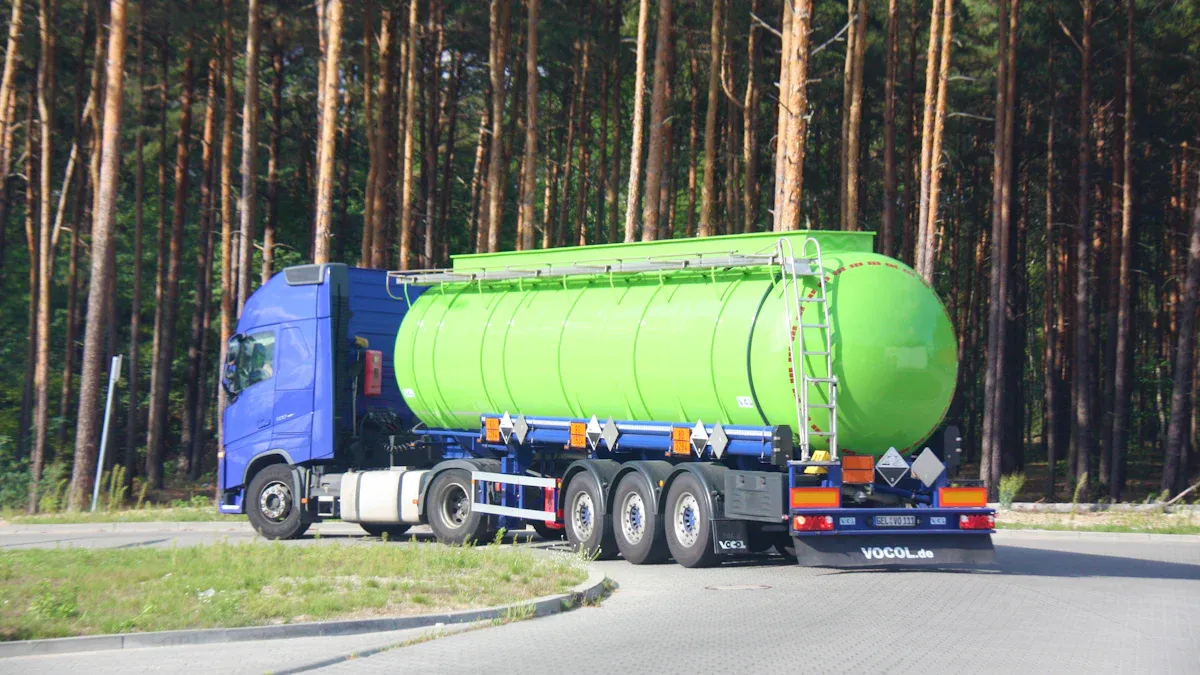
You can cut freight emissions by using cleaner fuels. Many logistics companies now use biofuels and electric vehicles. Biofuels work in most trucks and ships with small changes. They make about half as much carbon as fossil fuels. Electric vehicles do not make tailpipe emissions. They are quieter and help the air get cleaner. But making batteries for electric vehicles still causes some pollution. You can mix biofuels with regular fuel. This means you do not have to change all your trucks at once.
Here is a table that shows how different fuels help lower freight emissions:
Fuel Type | Mode of Transport | Benefits and Emissions Reduction |
|---|---|---|
Biodiesel | Road | Lower carbon emissions compared to traditional diesel. |
Compressed Natural Gas | Road | Burns cleaner, producing fewer pollutants. |
Electric Vehicles | Road | Zero tailpipe emissions, improving as battery technology and infrastructure develop. |
Sustainable Aviation Fuel | Air | Can reduce well-to-wheel emissions by up to 80% compared to conventional jet fuel. |
Liquefied Natural Gas | Ocean | Significantly reduces sulfur oxides, nitrogen oxides, and particulate matter emissions. |
Biofuels | Ocean | Substantial carbon savings, can be used in existing marine engines with minimal modifications. |
Hydrogen | Rail | Produces only water vapor as a byproduct, making it attractive for decarbonizing rail networks. |
Tip: Try small steps first, like using blended fuels or adding a few electric vehicles. You can see results fast and lower freight emissions.
Rail And Intermodal Transport
Rail and intermodal transport are good ways to lower freight emissions. Trains move goods farther using less fuel than trucks. For example, a train can carry cargo almost 300 miles on one gallon of fuel. Railroads move about 40% of U.S. freight but only make 1.9% of transport greenhouse gas emissions. Intermodal transport uses both trains and trucks. This helps save money and cuts pollution. It also helps stop road damage and traffic jams.
Intermodal transport saves money and helps the environment.
Trains use less fuel and make fewer emissions than trucks.
New things like solar-powered coolers make intermodal even greener.
In 2013, U.S. trains could move one ton of freight 470 miles on one gallon of fuel.
“You take so many trucks off the highways when you go intermodal. You talk about sustainability, that’s where you get it.”
Evaluating Emissions Reduction
You need to check if your changes really lower freight emissions. Many companies use special ways to measure progress. These ways help you see if new fuels or transport types work well.
Methodology | Description | Application |
|---|---|---|
Super-SBM Model | Evaluates carbon emissions efficiency using productivity. | Measures efficiency in logistics carbon emissions. |
Malmquist Index | Assesses changes in productivity over time. | Studies static and dynamic efficiency in logistics. |
DEA Models (CCR, BCC) | Analyzes efficiency based on input-output ratios. | Used to compare emissions reduction across regions. |
You can use these tools to track your freight emissions and show your progress. Regular checks help you see what works best and keep making your supply chain better.
Collaboration For Sustainable Supply Chain Management
Working with others is important for a greener supply chain. JUSDA’s platforms help you connect with carriers, suppliers, and customers. Teamwork helps you reach your green goals faster and better.
Partnering With Emission-Reducing Carriers
Picking carriers with cleaner vehicles and fuels lowers your carbon footprint. It also makes your supply chain work better. Many companies want partners who care about the environment. This way brings many good things:
You help the planet by lowering carbon emissions.
You save money and work more efficiently.
You meet what customers and investors want.
You get your suppliers to help with green efforts.
You use low-carbon transport to cut emissions.
JUSDA’s network helps you find these green carriers easily. For example, JUSDA helped an electronics company work with green carriers in Asia and Europe. This made emissions lower and deliveries faster.
Freight Consolidation
Freight consolidation means putting shipments together to fill trucks or containers. This plan uses fewer vehicles on the road. You get these good results:
Fewer trucks means less pollution and less traffic.
You cut greenhouse gases by using trucks better.
You save fuel and spend less money.
You make less noise and need fewer repairs.
JUSDA’s tools help you match shipments going the same way. In one story, JUSDA worked with home appliance brands to combine freight. This cut emissions and made deliveries more reliable.
Shared Sustainability Metrics
You and your partners need to measure progress together. Shared metrics keep everyone on track. Here is how shared sustainability metrics help teamwork:
Aspect | Description |
|---|---|
Alignment on Metrics | You and your partners agree on how to measure sustainability. |
Transparency in Reporting | Both sides track and report emissions in the same way. |
Joint Impact on GHG Emissions | You see the results of your combined efforts to cut emissions. |
Regular reports give you clear information. Being open shows you care about sustainability. Using data helps you choose the best partners. JUSDA’s tools make it easy to share and track these numbers, so your supply chain stays green and strong.
Tracking And Reporting Logistics Carbon Emissions
Technology Standards And Protocols
You need good rules to track carbon emissions in logistics. The GLEC Framework shows you how to measure emissions for all transport types. ISO 14083 helps by giving rules for reporting and calculation. These standards let you compare your results with other companies. They also help you follow global rules. JUSDA ESG uses these standards to keep your data correct and complete. When you use these rules, customers and regulators trust your reports.
Tip: Always add Scope 1, 2, and 3 emissions in your reports. This shows the full effect of your supply chain.
Here are some best ways to track and report:
Best Practice | Description |
|---|---|
Cover your entire business | Track emissions from all your work. |
Address all three emissions scopes | Include Scope 1, 2, and 3 in your reports. |
Aim for absolute reduction | Try to lower emissions, not just balance them. |
Account for uncertainty | Share missing data or how you guessed numbers. |
Follow GHG Protocol principles | Use complete, correct, and clear data in your reports. |
API Integration And Benchmarking
API integration makes carbon reporting faster and easier. You can link your systems to JUSDA ESG for automatic data collection. This means you do not have to enter data by hand. Mistakes go down and you see your emissions right away. API integration helps you follow rules like the GHG Protocol and ISO 14064.
Aspect | Description |
|---|---|
Accurate Data Collection | Automates emissions math and matches rule standards. |
Real-time Tracking | Gives you quick updates on emissions data. |
Streamlined Reporting | Makes it simple to meet world rules. |
Transparency | Lets you check and share emissions data with partners. |
Internal Benchmarking | Helps you see how you do and share results with others. |
You can use benchmarking to compare your emissions with other companies. This helps you set goals and see how you improve. JUSDA ESG’s automatic reporting helps make your supply chain more open and efficient.
Continuous Improvement
You should always try to make your carbon tracking better. Real-time tracking with IoT devices helps you watch shipments and find problems early. AI forecasting lets you plan better and waste less. You can use green technology like electric vehicles and clean energy for your warehouses.
Note: JUSDA ESG gives you tools to keep improving. You get alerts, reports, and tips to help you lower emissions every year.
Try these steps to keep getting better:
Use electric delivery vehicles in cities.
Try drones for last-mile delivery.
Use circular economy ideas to cut waste and emissions.
When you keep improving, your supply chain gets greener and stronger over time.
Building A Resilient Sustainable Supply Chain
Integrating Climate Risk Data
You can make your supply chain stronger with climate risk data. When you watch weather and disasters, you find risks early. Smart tools help you collect data from sensors and reports. This lets you plan for floods, storms, or heat waves. You see weak spots in your supply chain and fix them. JUSDA’s JusLink platform uses AI to send real-time updates. You get alerts if something could hurt your shipments. You can act fast and keep goods moving. Using climate risk data helps you stay green and protect your business.
Tip: Use dashboards to watch climate risks in each region. This helps you stop delays and losses.
Contingency Planning
You need a plan for when things go wrong. Contingency planning means you get ready before problems happen. You list risks like strikes, accidents, or power outages. You make backup routes and find extra suppliers. You train your team to act fast. JUSDA’s supply chain tools help you build these plans. You use digital tools to test your plans and find weak spots. With a strong plan, your supply chain keeps running. You lower big losses and reach your green goals.
List risks for every part of your supply chain.
Make backup plans for moving and storing goods.
Train your team to act fast and stop downtime.
Business Benefits Of Sustainability
You get many good things when you focus on being green and safe. A strong supply chain saves money and keeps customers happy. You build trust with partners and investors. You follow rules and avoid fines. The table below shows the main business benefits:
Benefit | Description |
|---|---|
Risk Mitigation | You find risks early and use smart ways to stay safe. |
Enhanced Agility | You change plans fast to stop delays and losses. |
Improved Customer Satisfaction | You deliver on time and keep products ready, so people complain less. |
Cost Efficiency | You waste less and save money over time. |
Stakeholder Confidence | You show you can handle risks, so people trust you. |
Regulatory Compliance | You meet green rules and avoid getting in trouble. |
You see that stopping risks and waste brings better results. You build a supply chain that lasts. You help the planet and make your business stronger for the future.
You can be a leader in logistics by lowering carbon emissions. Sustainable supply chain management helps your business do better. JUSDA’s tools, like JusLink and ESG, let you check, watch, and make your results better. First, find out how much carbon you make. Then, team up with others and use smart technology.
Start now to make your supply chain greener and stronger for the future.
FAQ
What is the first step to lower supply chain carbon emissions?
First, you need to measure your emissions. Use special tools to track emissions in every part of your supply chain. This helps you see where emissions are the highest. When you have good data, you can set goals. You can also make plans to lower ghg emissions.
How can technology help reduce emissions in logistics?
You can use real-time analytics, IoT sensors, and AI to watch emissions. These tools show you where most emissions happen. Then, you can change routes or pick low-emission carriers. Technology makes it easier to control supply chain emissions. It helps you reach transportation decarbonization goals.
Why is collaboration important for a sustainable supply chain?
You should work with partners who care about emissions. Sharing data and using the same metrics helps everyone lower emissions together. Working as a team leads to better logistics emission solutions. It also builds a strong, sustainable supply chain.
How do you track progress in reducing supply chain carbon emissions?
You can use automated systems to collect emissions data. Regular reports show how you are doing. Benchmarking lets you compare your results with others. This helps you keep making your supply chain better. It helps you reach your sustainable supply chain goals.
What are the business benefits of lowering supply chain emissions?
You save money by using less fuel and energy. Customers trust you more when you care about emissions. You avoid fines by following the rules. Lowering supply chain carbon emissions helps you build a strong and sustainable supply chain for the future.
See Also
Transforming Logistics Through Innovative Supply Chain Solutions
Future Logistics Transformed By Artificial Intelligence Supply Chains
Comprehensive Insights Into Eco-Friendly Supply Chain Transportation
Unlocking Cost Savings: Expert Tips for Supply Chain Success
Discover Five Cutting-Edge Techniques for Supply Chain Optimization