Ten Breakthroughs in Technology-Driven Supply Chain Integration

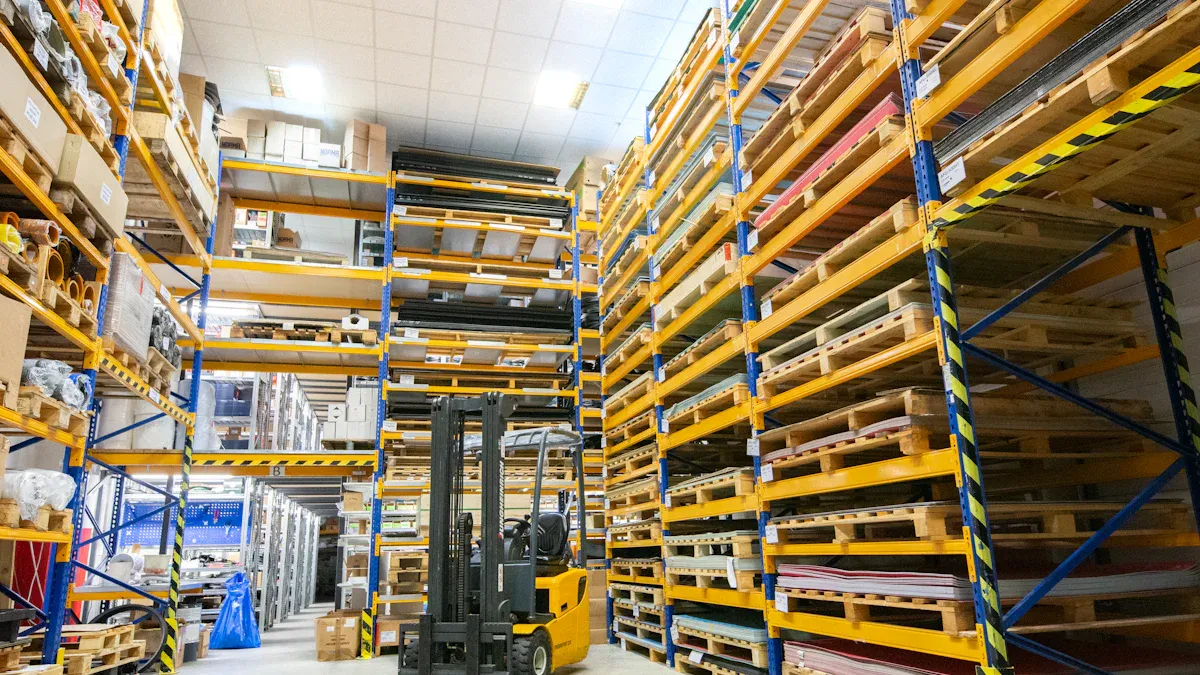
You need to embrace the integration of technology-driven supply chain solutions soon. Many changes in the industry happen quickly. You see AI, blockchain, and advanced robotics as new ideas. These innovations enhance the efficiency of supply chains. You utilize data and digital tools to assist with supply chain digitization. The new technologies and trends transform how logistics and data optimization operate. Look at this table to learn how each technology and innovation affects your work:
Technology | Impact on Supply Chain |
|---|---|
AI | Helps predict demand, make quick choices, and improve accuracy. |
Blockchain | Makes things clearer and easier to track, and lowers fraud and rule-breaking risks. |
Advanced Robotics | Makes work faster and cheaper, and keeps productivity high. |
Internet of Things | Provides real-time data for quick actions and better customer service. |
Sustainability | Encourages eco-friendly actions and links profit with responsibility. |
Supply Chain Visibility | Helps monitor everything from start to finish and manage risks, making the supply chain stronger. |
3D Printing | Allows you to produce items on demand, saving time and money, and increasing flexibility. |
These trends help you work better, stay resilient, protect the environment, and remain competitive. You will find useful tips and real-life examples. Consider which new ideas and data trends align with your supply chain changes.
Key Takeaways
Use technology in supply chains to work better and keep up. New tools like AI and blockchain can change how things are done.
Share data right away and connect online to spot problems fast. This helps you work better with suppliers and partners.
Use automated decision-making to save money and give better service. Automation can help you spend less and manage inventory well.
Use eco-friendly steps in your supply chain. Focus on green logistics and tracking carbon to follow rules and make customers happy.
Use digital twins and data analytics to plan for different situations. This helps you get ready for surprises and make your supply chain better.
AI in Supply Chain Trends
Predictive Analytics
Artificial intelligence is changing supply chain trends very quickly. By 2025, AI in supply chain management will be worth $9.94 billion. The market will grow by 39% every year until 2034. More companies use artificial intelligence and machine learning to guess demand and handle supply chain risk management. These tools help you find patterns in data and make smarter choices.
AI forecasting can lower supply chain mistakes by half. Amazon uses intelligence to check millions of products every day. This helps them put items in the right place and makes forecasts for popular products 20% better. Walmart uses AI to guess what customers will buy. This keeps shelves full and customers happy. These supply chain trends help you react faster to changes.
Here are some real-world examples:
Company | Application | Impact |
|---|---|---|
Amazon | Customer demand forecasting | Keeps stock levels right for over 400 million products with little human help. |
Walmart | Optimized driver routing | Cut 30 million driver miles and saved 94 million pounds of CO2. |
GXO | Automated inventory counting | Checks up to 10,000 pallets each hour for real-time counts. |
JD Logistics | Warehouse space optimization | Suggests the best spot for goods to save space and speed up picking and packing. |
You face problems with predictive analytics, like guessing future demand and handling changes in the economy. Smart algorithms and real-time modeling help you fix these issues. Acting early lets you spot trouble and protect your supply chain risk management.
Automated Decision-Making
Artificial intelligence helps you make decisions automatically in supply chain management. You spend less money, keep less inventory, and give better service. Recent studies show automated decision-making brings clear benefits:
Benefit | Measurement |
|---|---|
Lower cost of goods sold | |
Lower inventory levels | 22% |
Better on-time, in-full (OTIF) service | 5% |
Quicker recovery from disruptions | 60% |
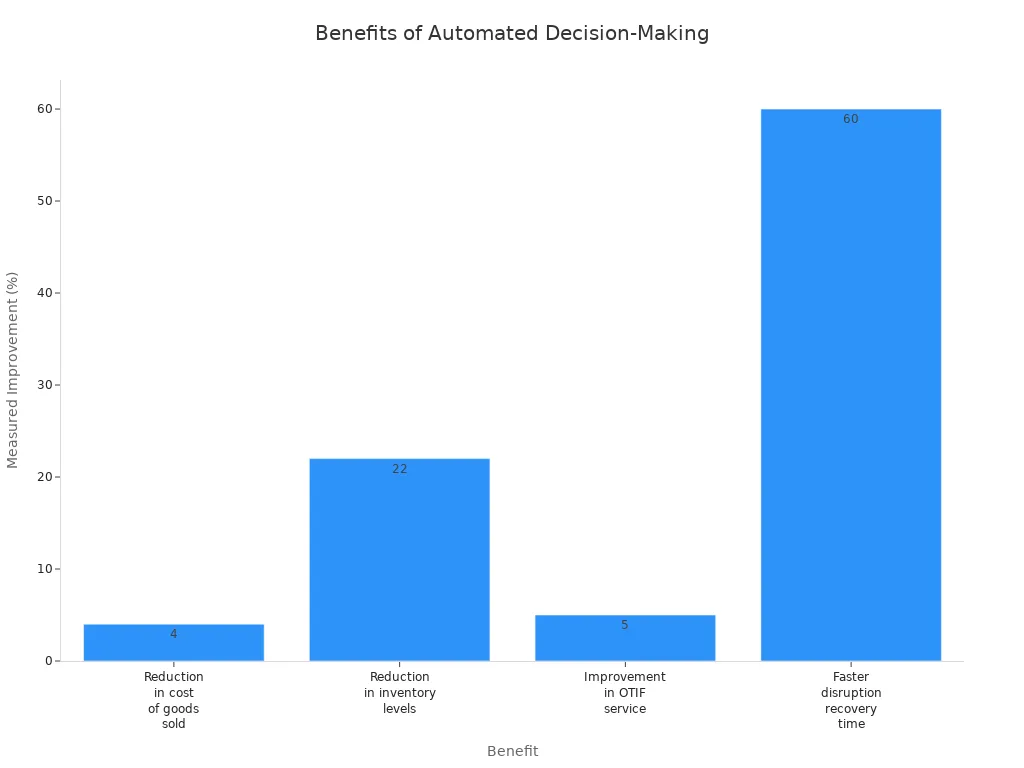
You use automated systems to make fast choices and follow supply chain trends. These new ideas help you bounce back from problems and keep your supply chain strong. You see how artificial intelligence and machine learning make your work more efficient and tough every day.
Integration of Technology-Driven Supply Chain Solution
Digital Connectivity
Digital connectivity is very important in supply chain management. When you use technology-driven solutions, you link all parts of your supply chain. Sharing data in real time helps you find problems early. You can fix issues fast. You work with suppliers and partners using special planning tools. These tools help you plan better and guess demand more accurately.
Sharing data in real time lets you see problems and act fast.
Working together with planning tools makes your work easier.
Better data sharing makes your supply chain stronger and more flexible.
Automation helps stop mistakes and saves money.
Sharing information often helps you talk and agree faster.
Old ways like EDI cost more and are slower. They do not help with real-time work. Digital supply chain networks let you see more and move faster. Almost half of users say they see their supply chain better after using digital tools. Digital changes help you process information quickly and work well with others.
End-to-End Visibility
End-to-end visibility means you can watch every step in your supply chain. You check supply chain steps and look at data for clear answers. Seeing things in real time helps you talk and work with your team and partners. You can react to problems fast and manage inventory better.
To get end-to-end visibility, you do these things:
Watch all supply chain steps to get good data.
Use real-time tools to talk better with others.
Act fast when problems happen in the supply chain.
Manage inventory by guessing needs more exactly.
You use IoT sensors to watch things in real time. Blockchain keeps records safe. AI-powered analytics help you find patterns in your data. Cloud platforms make sharing information easy. Digital twins let you test supply chain ideas and see what happens.
Here are best ways to use integrated platforms:
Best Practice | Description |
|---|---|
Unified Platforms | Put all supply chain jobs in one system to see more and decide better. |
Integrated Data Management | Collect data from inside and outside your company for a full view. |
Advanced Analytics and AI | Use AI to get real-time answers and guess demand. |
Collaboration Tools | Talk easily with teams, suppliers, and customers. |
Automation and Workflow Management | Automate jobs to save time and stop mistakes. |
Cloud-Based Infrastructure | Use cloud computing for flexible and growing technology. |
Supply Chain Risk Management Tools | Watch suppliers and shipments to find risks early. |
Enhanced Agility and Responsiveness | Get real-time data to change quickly when needed. |
Cost Reduction | Make inventory and shipping better to save money. |
Improved Customer Satisfaction | Deliver faster and talk better with customers. |
Tip: Begin with unified platforms and integrated data management. These steps help you build a strong base for your technology-driven supply chain solution.
Blockchain Transformation

Secure Transactions
You want to keep your supply chain safe and honest. Blockchain helps you do this. It creates a record that no one can change. Every time you add new data, blockchain locks it in place. This makes it almost impossible for anyone to cheat or change the information. You and your partners see the same details at the same time. This shared ledger builds trust and helps you spot problems early.
Here is how blockchain improves your supply chain:
Benefit | Description |
|---|---|
Blockchain keeps your records safe from tampering and fraud. | |
Shared Ledger | Everyone in your supply chain sees the same data, which reduces mistakes and builds trust. |
Improved Traceability | You can track products from start to finish, making it easy to check where things come from. |
Fraud Prevention | Blockchain makes it hard for fake goods to enter your supply chain. |
Provenance | You can prove where your products have been at every step. |
You also get better security. Blockchain gives each item a unique digital footprint. This helps you check if a product is real or fake. Only people you trust can see sensitive data. You keep your information safe and private.
Transparency
You need to know what happens at every step in your supply chain. Blockchain for enhanced transparency lets you see all the details. You get a clear view of every transaction and movement. This helps you follow rules and keep your promises to customers.
Enhancement Type | Description |
|---|---|
You get a record of every move and sale that no one can change. | |
Access to Shared Data | Everyone in your supply chain sees the same facts, so you can hold each other accountable. |
Immutability | No one can erase or change the data, so you can trust what you see. |
Verification of Authenticity | You can check if goods are real, which is important for things like medicine or luxury items. |
Compliance with Regulations | You keep good records, so you can show you follow the rules and care for the environment. |
Many companies use blockchain to make their supply chains safer and more open. Here are some real-world examples:
IBM's Food Trust helps Walmart trace fresh food quickly. If there is a problem, you can find the source in seconds.
Carrefour uses blockchain to let shoppers scan a QR code and see where their food comes from.
Provenance tracks seafood to stop illegal fishing and prove the fish is safe.
Tuna companies like Bumble Bee Foods use blockchain to show where each fish was caught.
Tip: Start with one product or supplier. Use blockchain to track its journey. You will see how much easier it is to find and fix problems.
IoT and Asset Management

Real-Time Tracking
You use IoT to make your supply chain faster and more flexible. IoT lets you see every step, from start to finish. You track goods and assets as they move. This helps you talk with suppliers and partners better. You find problems early and change your plans fast. You always know where shipments are. You also know how much inventory you have. Real-time analytics help you spot and fix service problems. You make choices quickly and keep your supply chain strong.
IoT helps you see and track all your assets.
You get real-time updates on inventory and shipments.
Being able to see everything helps you talk and solve problems.
Fast data lets you change plans when demand or markets shift.
IoT data helps you guess risks and avoid them.
You use technology to reorder stock automatically. This stops you from having too much or too little. You react fast to changes and keep your supply chain flexible. It is easier to plan logistics when you know where things are right away.
Inventory Optimization
You use IoT to make inventory and logistics work better. IoT systems do many jobs for you and make your warehouse smarter. You use sensors to watch goods and check storage conditions. This keeps products safe and fresh. You use data to guess what you need and change inventory levels. Optimization means you have just enough stock at the right time.
Here are tips for using IoT in warehouses and logistics:
Start small and test your ideas before going big.
Use strong security and check for risks often.
Check data in real time and use automatic quality checks.
Train workers on how to use new tools.
Set clear goals for your IoT projects.
Check if your current setup is ready for IoT.
Choose use cases that give clear results.
Pick sensors and devices that work well for you.
Connect devices to a platform that uses analytics.
Make sure your system is safe from cyber threats.
Test your ideas in one place before using them everywhere.
Teach workers how to use and understand new data.
Grow your solutions based on what you learn from tests.
Tip: Try a pilot project in one warehouse first. You see what works and then use it in more places for better results.
Robotics and Human-Machine Collaboration
Automation
Automation is changing how supply chains work every day. Robots now help you do jobs faster and safer. Cobots work with you to move things and manage inventory. These machines use smart tools to learn and follow your voice or actions. You can trust cobots to do jobs like picking, packing, and sorting. They use sensors and data to stop mistakes and keep everyone safe.
Here are ways robots help with work and save money:
Robots move things fast, so you spend less time and money.
Automated systems watch inventory and help stop mistakes.
Picking robots make orders right and quick.
Robots check products to keep quality high.
AGVs move goods without people.
Sorting robots put items in order and speed up work.
Cobots work with you and help you do more.
Packing robots finish orders quickly.
Drones check inventory, saving time and making it more accurate.
Tip: Try one automated system in your warehouse first. You will see your work get faster and easier.
Industry 5.0
Industry 5.0 is a new way where people and robots work together. You use technology to team up with robots, not just watch them. Cobots listen to you and learn from what you do. You can talk to robots using your voice or hand signs. You control robots with easy tools, making your job safer and better.
Industry 5.0 helps you fix problems fast. You use robot data to make smart choices. Safety tools like Q-learning help keep you safe at work. You trust robots more when you see how they help your team. Mixing human skills and automation keeps your supply chain strong.
Note: You need to think about safety and trust when you add new tech. Teach your team to work with robots and use data to get better results.
Digital Twins and Data Analytics
Digital twins and data analytics change how you run your supply chain. A digital twin is a virtual copy of your real supply chain. You use it to test ideas before making real changes. This helps you see what might happen. Data analytics turns information into smart choices. You can follow goods, guess problems, and make each step better.
Simulation
Simulation lets you try new plans without any risk. Digital twins help you model your supply chain and see what happens if you switch suppliers or routes. You can find weak spots and fix them before they cause trouble. Data analytics gives you feedback right away, so you always know how things are going.
Here is how digital twins and data analytics help in different areas:
Contribution to Supply Chain Management | |
|---|---|
Inventory Management | You watch stock in real time and waste less. |
Demand Forecasting | You use old and outside data to guess what customers want. |
You spot and fix equipment problems before they stop your work. | |
Network Design | You try new routes or suppliers to see what works best. |
Circular Economy Practices | You get better at recovering and reusing assets. |
Tip: Run a simulation before making big changes. You will find problems early and save money.
Scenario Planning
Scenario planning helps you get ready for surprises. You use digital twins to test "what if" ideas, like sudden demand spikes or late shipments. Data analytics shows you the best way to react. You can plan for broken machines, late suppliers, or even natural disasters.
You model tricky supply chain problems to find good answers.
You guess when machines might break and plan repairs.
You watch stock levels to avoid running out or having too much.
You check how well suppliers do and pick the best ones.
You test how your supply chain handles big changes, like new products or routes.
Data analytics makes your supply chain flexible and strong. You make smarter choices and keep your business running well, even when things change fast.
Cloud Supply Chain Transformation
Cloud supply chain transformation helps you work smarter and faster. You use cloud-based solutions to make your supply chain flexible. You can grow your business without worrying about old systems. Cloud technology lets you change your work quickly when the market shifts. You save money because you do not need expensive hardware. You only pay for the services you use. This change makes your supply chain more efficient and productive.
Centralized Data
You keep all your data in one place with cloud supply chain transformation. Centralized data helps you see everything right away. You make better choices because you have the newest information. You do not waste time looking for files or waiting for updates. Cloud technology helps you work better and change when you need to. You can make your business bigger or smaller without spending a lot.
Benefit | Description |
|---|---|
Improved Performance | You work faster and get better results in supply chain management. |
Higher Flexibility | You change your plans quickly when the market changes. |
Easy Scalability | You grow or shrink your business without spending too much money. |
Increased Productivity | You use your resources better and get more done. |
Tip: Use cloud-based solutions to lower IT support costs and avoid buying new hardware. You can focus on your supply chain transformation instead of fixing computers.
Multi-Enterprise Collaboration
Cloud supply chain transformation helps you work with many partners at once. You share data with suppliers, customers, and other teams. Everyone sees the same information, so you avoid mistakes. You use cloud technology to connect with third-party apps and logistics systems. This makes your supply chain management stronger and more responsive.
Here are guidelines for successful cloud migration and integration:
Make sure you have real-time data visibility across your supply chain.
Move your data to the cloud to improve collaboration with partners.
Use a pay-as-you-go model to save money on capital and maintenance.
Deploy IT resources quickly to reduce lead times and manage inventory better.
Protect your data with strong security measures like encryption and access controls.
Note: Start with one part of your supply chain. Test your cloud transformation before expanding to other areas.
Sustainable Supply Chain Trends
Green Logistics
New rules and customer needs are changing supply chain management. Governments want you to share more about your supply chain. You must show how you use water, energy, and land. You also need to prove you protect people and nature. Customers want to buy products that help the planet. Many people will pay almost 10% more for green products.
Here is a table showing the main pressures you face:
Regulatory Pressure | Description |
|---|---|
Corporate Sustainability Reporting Directive (CSRD) | You must report emissions, water use, and deforestation in your supply chain. Over 50,000 companies must follow these rules. |
Corporate Sustainability Due Diligence Directive (CSDDD) | You must watch for human rights and environmental problems and fix them. |
Consumer Pressure | People want brands to be open and responsible. Many will pay more for products made with care for the planet. |
You can use green logistics to meet these needs. You pick trucks and ships that use less fuel. You plan routes that save energy. You use cross docking to move goods faster and skip extra storage. You work with suppliers who care about the environment. You teach your team to find ways to cut waste and save energy.
Tip: Start by checking your suppliers’ environmental records. Pick partners who share your values.
Carbon Tracking
You need to track carbon in your supply chain. You collect data on energy use, shipping, and making products. You use technology to measure emissions at every step. You set goals to lower your carbon footprint. You use digital twins to test ideas and see how changes affect emissions. You use Lean tools to cut waste and save energy.
Here are some strategies to help you:
Make plans with suppliers to handle problems and keep goods moving.
Use decentralized inventories so you can react quickly to changes.
Use digital twins to test your logistics network and find better ways.
Teach your team to improve operations and focus on sustainability.
Check your suppliers often to make sure they meet your standards.
Combine shipments and pick shorter routes to cut emissions.
You make your supply chain stronger and greener by using these strategies. You help the planet and follow new rules. You also build trust with your customers.
Hyperautomation in Supply Chains
Workflow Orchestration
Hyperautomation helps make supply chains smarter and faster. It uses AI, machine learning, and robotics to connect many tasks. Machines can do boring jobs, so you can focus on bigger choices. Hyperautomation links systems and moves information smoothly. This makes logistics automation work better.
You get many benefits from hyperautomation:
You make hard workflows simple and use tech to study data fast.
You save money by letting machines do jobs instead of people.
You have fewer mistakes because machines follow rules every time.
You get better at logistics automation by using machine learning to look at sales and guess demand.
Start by checking your supply chain management steps. Find places where machines can help. Set clear goals for automation and talk with your partners to agree. Pick the right tech for each job and plan how to add it slowly.
Here are steps to find and use automation:
Look at your supply chain steps now.
Make clear goals for automation.
Talk with partners and share ideas.
Choose which automation projects to do first.
Pick the best tech for each job.
Make a step-by-step plan to add automation.
Make sure your data is right and connected.
Teach your team to use new systems.
Watch results and keep getting better.
Tip: Start with one part of logistics automation, like tracking inventory. You will see results fast and learn how to use more automation in your supply chain.
Speed and Accuracy
You want your supply chain to be fast and correct. Hyperautomation helps you reach these goals. Machines handle data right away, so you spot problems early. You use tech to guess what customers want and avoid running out. You also stop having too much stock. Hyperautomation can lower your costs by up to 30% and make your supply chain stronger.
You use logistics automation to keep shipments on time and orders right. Machine learning tools help you guess demand and plan better. You see fewer mistakes and faster shipping. Your team spends less time on boring work and more time fixing big problems.
Note: Keep checking your data and systems. You will find new ways to get faster and more accurate as tech gets better.
Supplier Collaboration Networks
Digital Platforms
New digital platforms are changing how you work with suppliers. These platforms help you share information quickly. You use technology to connect and track each step. Many companies use AI and blockchain to work better with suppliers. You get updates right away and spot risks early. Digital supply chain twins let you test ideas safely.
Here is a table showing new digital platform advancements:
Advancement Type | Description |
|---|---|
Automates supplier sustainability checks and gives real-time ESG profiles and risk info. | |
Blockchain and AI-driven platform | Makes supply chains clearer and helps pick vendors, keeping data safe and making work better. |
Digital supply chain twin | Builds a model of your supply chain using real-time data for better decisions and visibility. |
Tip: Try a digital supply chain twin to test changes before making them.
Agility
You need to build strong supplier networks to stay flexible. Start by setting clear goals with your suppliers. Make sure everyone knows what you want. Use technology like EDI and fulfillment platforms to manage orders easily. Work together to plan for inventory and demand changes. This helps you react fast when the market changes.
Here are steps to build and grow your network:
Set clear communication. Share goals and make sure everyone understands.
Use technology. Pick digital tools to share info and manage orders.
Work together. Include suppliers in planning and forecasting.
You can also:
Begin with supplier onboarding. Match your goals from the start.
Set up good ways to talk. Regular check-ins help you find problems early.
Focus on working together. Hold planning meetings and share forecasts to handle changes.
Advanced AI and analytics help you work with many suppliers at once. You model your supply chain network and make choices using shared data. This makes your network quick and ready for anything.
You notice technology is changing supply chain management in 2025. These new ideas help you guess what people will buy. You can watch where goods go and make fewer mistakes. You use artificial intelligence, blockchain, and robotics to work faster and safer. Using green methods and new ways to deliver goods makes your supply chain better. If you want to stay ahead, follow this checklist:
Look at data to understand your supply chain.
Draw a map of your supply chain to see everything.
Use digital twins to try out new plans.
Check your spending and get ready for changes.
Keep learning new things and change as supply chain trends grow.
FAQ
What is supply chain integration?
Supply chain integration means you connect all parts of your supply chain. You share data and work together with suppliers, partners, and customers. This helps you make better decisions and improve efficiency.
Tip: Start by linking your systems for real-time updates.
How does AI help in supply chain management?
AI helps you predict demand, automate tasks, and spot problems early. You use AI to analyze data and make smart choices. This saves time and reduces mistakes.
AI tools can improve forecasting.
You get faster responses to changes.
Why should you use blockchain in your supply chain?
Blockchain keeps your records safe and easy to track. You use it to stop fraud and prove where products come from. Everyone sees the same data, so you build trust.
Benefit | What You Get |
|---|---|
Security | Safe records |
Transparency | Clear product paths |
What is a digital twin in supply chain?
A digital twin is a virtual copy of your supply chain. You use it to test ideas and see results before making changes. This helps you find problems and save money.
Note: Try a simulation before changing your real supply chain.
How can you make your supply chain more sustainable?
You choose green logistics, track carbon, and work with eco-friendly suppliers. You use technology to measure and lower your impact on the planet. This helps you meet rules and build trust with customers.
Pick partners who care about the environment.
Use digital tools to track emissions.
See Also
Embracing Transformation: Adapting To Technology In Supply Chains
Unveiling Robotics Innovations: A New Era For Supply Chains
Get Prepared: Discovering New Transport Technologies For Supply Chains
Improving Supply Chains Through Innovative Cloud Technology Solutions
Transforming Logistics: The Effects Of Supply Chain Advancements