Top Trends in Intelligent Logistics for the New Energy Sector in 2025


The energy sector is undergoing a profound transformation, with intelligent logistics playing a critical role in this evolution. By leveraging advanced technologies, companies optimize operations and meet the growing demand for sustainable and efficient supply chains.
Several factors make 2025 a turning point for logistics innovation.
ESG requirements are pressuring businesses to align with sustainability goals.
Automation and digitalization are revolutionizing how products and information are managed.
For instance, Microsoft has already established a decarbonization team within its supply chain, showcasing a trend that will gain further momentum in 2025.
Key Takeaways
Protecting the environment is very important in shipping. Companies use green methods to cut pollution and offer eco-friendly choices.
Smart tools like AI and robots are changing shipping work. These tools make work faster, cheaper, and help with better choices.
Clear supply chains are very important. AI tools give live updates to fix delays and improve work.
Using new energy sources is changing shipping. Electric trucks and clean energy save money and help the planet.
Training workers is very important. Companies need to teach workers new skills for using smart tools in shipping.
Key Drivers of Change in Intelligent Logistics
Sustainability as a core priority
Sustainability has become a cornerstone of intelligent logistics, driven by the urgent need to reduce environmental impact. Companies are adopting green logistics strategies to align with global sustainability goals. For instance, logistics leaders like DHL aim to electrify 60% of their last-mile delivery vehicles by 2030, while Amazon has committed to deploying 100,000 electric delivery vans. These initiatives highlight the industry's shift toward reducing carbon footprints.
The adoption of Sustainable Aviation Fuel (SAF) could save the aviation industry 65 megatonnes of carbon emissions annually by 2050. Additionally, reverse logistics practices, which focus on reusing and recycling materials, can reduce waste by over 30% and cut costs by approximately 15%. Consumers are also playing a pivotal role, with 85% expressing a willingness to pay more for sustainable shipping options. This growing demand underscores the importance of integrating sustainability into intelligent logistics systems.
Evidence Description | Source |
|---|---|
Electrification of last-mile delivery vehicles | C-Suite Strategy |
SAF adoption for aviation | IATA |
Green logistics reducing operational costs by 15-20% | McKinsey |
Reverse logistics reducing waste by 30% | McKinsey |
Transparency and traceability in supply chains
Transparency and traceability are critical for building resilient and efficient supply chains. Advanced technologies like AI-powered control towers provide real-time insights into supply chain performance, enabling companies to monitor delivery delays and supply shortages. Machine learning algorithms enhance demand forecasting accuracy, reaching up to 85%.
Digital Product Passports (DPPs) are becoming essential for compliance with sustainability regulations. These tools also meet consumer demands for greater visibility into product origins and environmental impact. Transparency efforts have measurable outcomes, such as reducing stockouts by 30% and lowering carbon footprints. By leveraging these technologies, intelligent logistics systems can ensure seamless operations and foster trust among stakeholders.
Operational efficiency through digital transformation
Digital transformation is revolutionizing operational efficiency in logistics. Companies are utilizing data analytics, IoT, and AI to optimize processes and improve decision-making. For example, energy efficiency metrics now measure reduced downtime and energy savings, while operational efficiency metrics track shorter processing times and higher automation rates.
Data utilization has become a key driver of success. Advanced analytics improve forecasting accuracy and enhance compliance with sustainability goals. Additionally, employee productivity and satisfaction have increased due to streamlined workflows and digital tools. Intelligent logistics systems are leveraging these advancements to create more agile and cost-effective supply chains.
Metric Type | Description |
|---|---|
Energy efficiency metrics | Optimization of energy and operational processes, including reduced downtime and energy savings. |
Operational efficiency metrics | Reduced processing times and increased automation rates. |
Data utilization | Improved decision-making and forecasting accuracy. |
Sustainability goals | Achievements in reducing energy usage and carbon footprint. |
Global energy transition policies and their impact
Global energy transition policies are reshaping the logistics landscape in the new energy sector. Governments worldwide are implementing regulations to achieve net-zero emissions, which directly impacts supply chain operations. These policies encourage companies to adopt sustainable practices, optimize logistics, and reduce carbon footprints.
One significant outcome of these policies is the push for sustainability. Logistics providers are redesigning supply chains to align with environmental goals. For example, many companies are transitioning to electric vehicles and alternative fuels to minimize emissions. This shift not only supports global climate objectives but also enhances brand reputation among environmentally conscious consumers.
Operational efficiency has also improved due to energy transition policies. Digitization and smart tools are helping companies streamline logistics processes. Advanced technologies like AI and IoT enable better route planning, real-time tracking, and predictive maintenance. These innovations reduce delays and improve resource utilization, making supply chains more agile and cost-effective.
However, these policies also present challenges. The growing demand for low-carbon solutions has increased pressure on logistics providers. Limited assets, complex supply chain networks, and the need for sustainable infrastructure create hurdles that require innovative solutions.
The table below highlights the key impacts of global energy transition policies on supply chain operations:
Impact Area | Description |
|---|---|
Sustainability | Transitioning to net-zero emissions requires logistics to evolve towards greater sustainability. |
Operational Efficiency | Companies are optimizing supply chain design and logistics through digitization and smart tools. |
Cost Reduction | Route optimization and better asset utilization help reduce costs and emissions in logistics. |
Challenges in Logistics | Increased demand, limited assets, complexity, and the need for low-carbon solutions are key issues. |
Energy transition policies are not just regulatory measures; they are catalysts for innovation. By embracing these changes, companies can build resilient, sustainable, and efficient supply chains that meet the demands of a rapidly evolving energy sector.
Top Trends in Intelligent Logistics for 2025

AI and generative AI for logistics optimization
Artificial intelligence (AI) and generative AI are transforming logistics by enabling smarter decision-making and operational efficiency. These technologies analyze vast amounts of data to optimize routes, predict demand, and reduce costs. For example, UPS saves $400 million annually by using AI-driven predictive analytics for route optimization. AI-driven forecasting also reduces errors by up to 50%, leading to cost reductions of 10-15%, according to a McKinsey study.
Generative AI is gaining traction in the energy sector. It is valued at $534 million and is projected to grow to $8.6 billion by 2032. This growth reflects its ability to enhance customer experiences and streamline operations. For instance, 45% of energy suppliers plan to implement generative AI technologies like chatbots in 2024, which could reduce contact center calls by over 60%. AI also analyzes real-time data, such as traffic patterns and fuel costs, to recommend efficient transportation routes. This reduces delivery times and fuel expenses, making supply chains more agile and cost-effective.
The logistics market is expected to grow significantly due to advancements in AI. The AI in logistics market alone is projected to increase from $18.01 billion in 2024 to $26.34 billion in 2025, reflecting a compound annual growth rate (CAGR) of 46.2%. This rapid growth highlights the rising complexity of supply chains and the increasing demand for real-time logistics solutions.
Robotics and automation in energy logistics
Robotics and automation are revolutionizing energy logistics by improving efficiency and accuracy. Automated systems handle repetitive tasks, allowing human workers to focus on more strategic roles. Performance metrics demonstrate the impact of robotics on logistics operations:
Metric | Description |
|---|---|
Shipping Time | Measures the speed of item shipment post-order, indicating efficiency improvements. |
Perfect Order Rate | Percentage of orders shipped without errors, reflecting accuracy in order fulfillment. |
Capacity Utilization | Evaluates the effectiveness of robot usage against its potential, highlighting optimization opportunities. |
Cycles Completed | Counts the number of tasks the robot performs in a time frame, indicating productivity levels. |
Wait Time | Time spent waiting for processes, helping identify bottlenecks in logistics operations. |
These metrics highlight how robotics enhance operational efficiency. For example, robots reduce shipping times and improve order accuracy, leading to higher customer satisfaction. Automation also optimizes capacity utilization, ensuring resources are used effectively. By minimizing wait times and completing more cycles, robots streamline logistics processes and reduce costs.
The logistics market's growth is further validated by the expansion of e-commerce and the adoption of automation. Companies are increasingly relying on robotics to meet the demands of a fast-paced, technology-driven world. This trend underscores the importance of integrating robotics into intelligent logistics systems.
Quantum computing for supply chain modeling
Quantum computing is poised to revolutionize supply chain modeling in energy logistics. This technology addresses complex optimization problems, such as vehicle routing and facility location, which are critical for minimizing costs and improving efficiency. Quantum computing reduces computation time, enabling real-time modeling and optimization. This makes supply chains more resilient to disruptions.
Recent studies highlight the benefits of quantum computing in logistics. It improves demand forecasting by analyzing complex patterns across factors like seasonal trends and economic indicators. This capability enhances inventory and production plans, leading to cost savings and better service levels. Quantum computing also enables advanced simulations of disruption scenarios, improving risk assessments and contingency planning.
The ability to simulate numerous "what-if" scenarios in parallel is another advantage of quantum computing. This allows organizations to model risks in near real-time, providing insights into vulnerabilities and bottlenecks. By leveraging quantum computing, companies can build more resilient and efficient supply chains, ensuring they remain competitive in a rapidly evolving energy sector.
Integration of alternative energy sources in logistics
The integration of alternative energy sources is reshaping logistics in the new energy sector. Companies are increasingly adopting renewable energy solutions to power their operations, reduce costs, and meet sustainability goals. This shift not only aligns with global environmental objectives but also enhances operational efficiency and resilience.
Renewable Energy in Transportation
Logistics providers are transitioning to renewable energy-powered transportation systems. Electric vehicles (EVs) and hydrogen fuel cell trucks are becoming essential components of green logistics. EVs offer a cleaner alternative to traditional diesel-powered vehicles, significantly reducing greenhouse gas emissions. Hydrogen fuel cell technology, on the other hand, provides a viable solution for long-haul transportation, offering extended range and faster refueling times.
For instance, companies deploying EV fleets have reported a 30% reduction in fuel costs and a 20% decrease in maintenance expenses. These savings demonstrate the economic benefits of integrating alternative energy sources into logistics operations. Additionally, renewable energy-powered transportation systems contribute to improved air quality, benefiting communities and ecosystems.
Renewable Energy in Warehousing and Facilities
Warehousing operations are also undergoing a transformation through the adoption of renewable energy. Solar panels, wind turbines, and energy storage systems are being installed in logistics facilities to generate clean energy on-site. These systems reduce reliance on fossil fuels and lower operational costs.
For example, warehouses equipped with solar panels can generate up to 70% of their energy needs, significantly reducing electricity expenses. Energy storage systems further enhance efficiency by storing excess energy for use during peak demand periods. This approach not only minimizes costs but also ensures uninterrupted operations during power outages.
Statistical Insights on Green Logistics
A recent study highlights the success of integrating alternative energy sources in logistics strategies. Researchers used both qualitative and quantitative methods to assess green logistics in energy supply chains. Semi-structured interviews with industry professionals revealed key challenges and strategies, while surveys provided quantitative data on the adoption of green practices. Statistical techniques, such as regression analysis, demonstrated a strong correlation between renewable energy adoption and improved performance metrics. Companies reported significant cost savings and reductions in carbon emissions, underscoring the effectiveness of these strategies.
Challenges and Opportunities
Despite the benefits, integrating alternative energy sources in logistics presents challenges. High initial investment costs and limited infrastructure for renewable energy systems remain significant barriers. However, advancements in technology and supportive government policies are creating opportunities for growth. Incentives such as tax credits and subsidies are encouraging companies to adopt renewable energy solutions.
Tip: Collaboration between logistics providers, energy companies, and policymakers can accelerate the adoption of alternative energy sources. Joint efforts can address infrastructure gaps and promote innovation in green logistics.
The integration of alternative energy sources is no longer optional for logistics providers. It is a strategic imperative that drives sustainability, reduces costs, and enhances operational efficiency. By embracing renewable energy, companies can build resilient supply chains that meet the demands of a rapidly evolving energy sector.
Sustainability and Ethical Practices in Intelligent Logistics
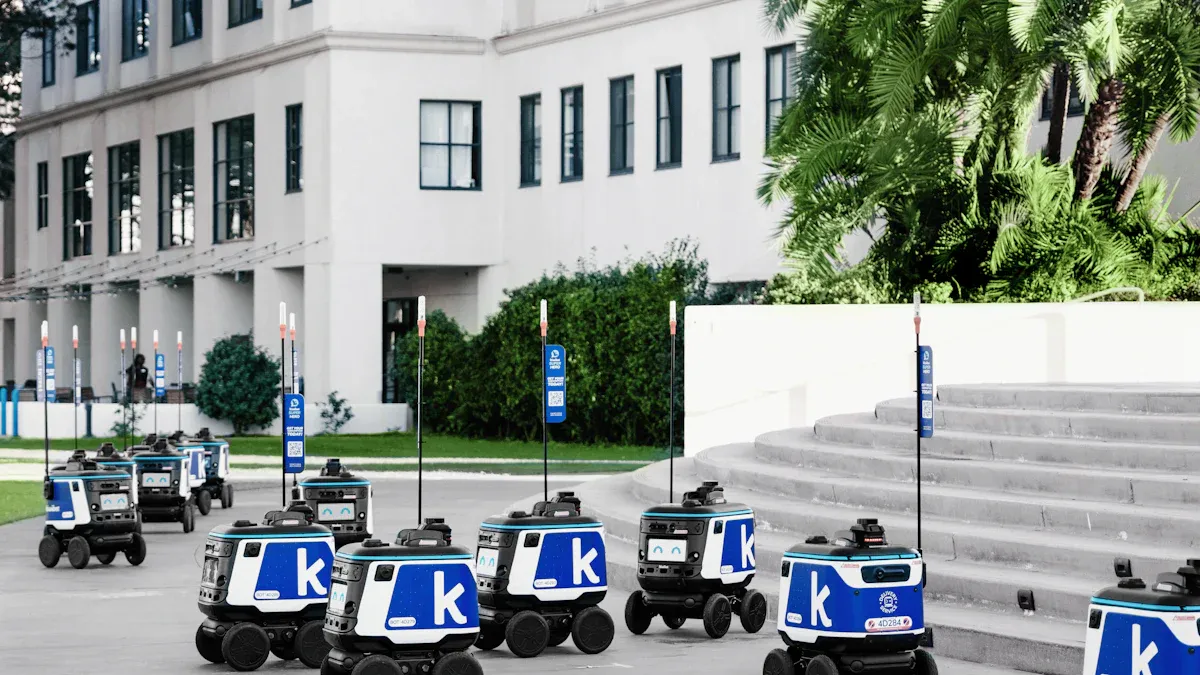
Greener supply chains through intelligent solutions
Greener supply chains are transforming logistics by leveraging intelligent solutions to minimize environmental impact. Advanced technologies enable companies to optimize resource management, reduce waste, and enhance decision-making processes. For example, smart manufacturing technologies adjust production output based on demand, significantly reducing waste. These innovations also help manage environmental impacts across the supply chain, leading to a decreased carbon footprint.
Improvement Type | Description |
|---|---|
Emissions Reduction | Greener supply chains aim to reduce emissions, contributing to lower overall environmental impact. |
Waste Minimization | Intelligent solutions help minimize waste through better resource management and production efficiency. |
Enhanced Decision-Making | Advanced technologies improve decision-making capabilities, leading to more sustainable practices. |
By adopting these practices, companies not only achieve sustainability goals but also improve operational efficiency. Intelligent logistics systems play a pivotal role in creating greener supply chains that align with global environmental objectives.
Data-driven approaches to reducing carbon footprints
Data-driven strategies are essential for reducing carbon footprints in logistics. Companies are increasingly using AI-powered solutions to analyze supply chain data and identify areas for improvement. For instance, one company implemented an AI system that reduced carbon emissions by 10% while saving $5 million annually. This demonstrates the dual benefits of sustainability and cost efficiency.
Tip: Data analytics can uncover hidden inefficiencies in logistics operations, enabling targeted interventions to reduce emissions.
These systems also support real-time monitoring of environmental impacts, ensuring compliance with sustainability standards. By integrating data-driven approaches, businesses can achieve measurable reductions in their carbon footprints while enhancing overall supply chain performance.
Ethical sourcing and labor practices in energy logistics
Ethical sourcing and labor practices are becoming critical components of energy logistics. Companies are responding to regulatory scrutiny and consumer expectations by committing to carbon neutrality and adopting alternative fuels like hydrogen and biofuels. These efforts align with international agreements and reduce greenhouse gas emissions.
Evidence Type | Description |
|---|---|
Carbon Neutrality Goals | Logistics companies are committing to carbon neutrality, aligning with international agreements. |
Electric Vehicles Adoption | Companies are incorporating electric trucks, reducing greenhouse gas emissions in freight transport. |
Alternative Fuels Exploration | Many organizations are exploring hydrogen and biofuels to decrease reliance on fossil fuels. |
Ethical practices also enhance company reputation and customer loyalty. Businesses that prioritize ethical operations avoid human rights violations and improve financial performance. Consumers increasingly prefer products from companies that demonstrate ethical conduct, making it a strategic imperative for logistics providers.
Workforce Transformation in Intelligent Logistics
Reskilling for advanced technologies
The rapid adoption of advanced technologies in logistics demands a workforce equipped with new skills. Companies are investing in reskilling programs to ensure employees can adapt to innovations like AI, robotics, and IoT. Microlearning has emerged as a popular method, improving focus and long-term retention by up to 80%. Gamification of learning further enhances engagement, increasing knowledge retention by 20%.
Metric Type | Impact Description |
|---|---|
Microlearning | Improves focus and supports long-term retention by up to 80%. |
Gamification of Learning | Increases employee engagement by 40% and knowledge retention by 20%. |
Measuring Effectiveness | Companies using data-driven approaches can improve reskilling ROI. |
Success Measurement | Only 33% of companies measure impact on business outcomes; 42% report positive ROI. |
Organizations that measure the effectiveness of reskilling programs report higher returns on investment. These efforts not only enhance employee capabilities but also ensure the seamless integration of advanced technologies into logistics operations.
Addressing the digital skills gap
The logistics industry faces a significant digital skills gap, with many workers unprepared for emerging technologies. For example, only 24% of graduates possess proficiency in AI inventory optimization, leaving a 67% skills gap. Similarly, 71% of workers struggle to utilize IoT data for real-time tracking.
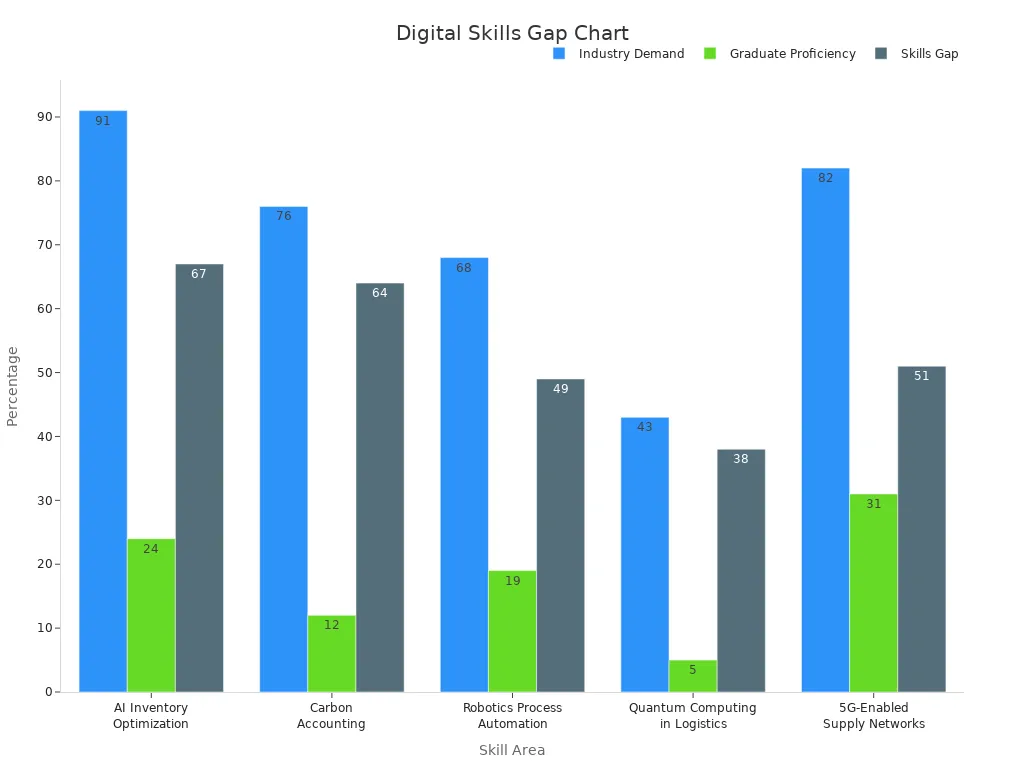
Bridging this gap requires targeted training programs and partnerships with educational institutions. Companies must prioritize upskilling in areas like carbon accounting, robotics process automation, and blockchain-based traceability. Addressing these gaps will ensure the workforce remains competitive in the evolving landscape of intelligent logistics.
Balancing automation with human expertise
Automation is transforming logistics, but human expertise remains essential for decision-making and oversight. Factors like error susceptibility, decision complexity, and regulatory requirements necessitate a balance between machines and humans.
Key considerations for balancing automation and human expertise:
Data availability
Process variability
Error susceptibility
Decision complexity
Speed of decision-making
While automation enhances efficiency, human workers provide critical judgment and adaptability. Companies must focus on integrating automation with human expertise to create resilient and efficient logistics systems.
Real-World Applications and Case Studies
Jusda’s Smart Supply Chain Solutions
Jusda has emerged as a leader in intelligent logistics by offering innovative supply chain solutions tailored to the new energy sector. Its smart supply chain collaboration platforms address common challenges such as scattered resources and inefficiencies. By deploying AI technologies and intelligent equipment, Jusda optimizes production efficiency and reduces operational costs for its clients.
The company’s "short-term pilot–mid-term expansion–long-term optimization" strategy exemplifies its commitment to continuous improvement. This approach includes constructing automated application platforms, implementing lean operational standards, and creating end-to-end management systems. These efforts enhance warehousing and logistics services, ensuring seamless operations for manufacturing clients. Jusda’s focus on proprietary core technologies further strengthens its ability to deliver customized solutions that meet the unique needs of the energy industry.
Digital Transformation with JusLink Technology
JusLink technology represents a significant milestone in Jusda’s digital transformation journey. This platform leverages big data, IoT, and AI to provide end-to-end supply chain visualization. Companies using JusLink benefit from increased efficiency in warehouse operations, faster and more reliable deliveries, and optimized inventory management. These advancements reduce storage costs and minimize product shortages.
Real-time order-tracking capabilities also improve the customer experience by offering greater transparency. For example, clients can monitor shipments in real time, ensuring timely deliveries and fostering trust. JusLink’s ability to integrate advanced technologies into logistics operations highlights its role as a pioneer in digital transformation within the energy sector.
Global Logistics Networks for New Energy Integration
Jusda’s global logistics network plays a crucial role in supporting the integration of new energy solutions. The company conducts energy audits to quantify energy usage and identify areas for improvement. Establishing energy KPIs based on ISO 50006 allows Jusda to target high-energy-consuming processes for efficiency measures.
Energy-saving strategies implemented across the supply chain reduce dependency on fossil fuels and lower greenhouse gas emissions. Upstream supply chain emissions often exceed direct emissions by over ten times, emphasizing the importance of supplier engagement. Jusda’s customized solutions, such as overseas plant construction and relocation services, further enhance its ability to meet the demands of a rapidly evolving energy sector.
By combining advanced technologies with a global logistics network, Jusda empowers new energy enterprises to achieve sustainability goals while optimizing operational efficiency.
The transformative trends in intelligent logistics for 2025 showcase the sector's evolution toward sustainability and efficiency. Innovations like AI, robotics, and renewable energy integration are reshaping supply chains, making them more agile and environmentally responsible. The energy logistics market, valued at USD 230 billion in 2023, is projected to grow to USD 350 billion by 2032, driven by advancements in IoT, blockchain, and AI.
Key factors such as the globalization of energy operations and the expansion of the renewable energy sector highlight the increasing demand for specialized logistics solutions. Intelligent logistics will remain pivotal in addressing these challenges, ensuring a sustainable and efficient future for the energy industry.
Metric | Value |
|---|---|
Current Market Size | USD 230 billion (2023) |
Projected Market Size | USD 350 billion (2032) |
Compound Annual Growth Rate | 4.7% |
The future of energy logistics lies in innovation, sustainability, and adaptability. Companies that embrace these principles will lead the way in transforming global supply chains.
FAQ
What is intelligent logistics, and why is it important for the new energy sector?
Intelligent logistics uses advanced technologies like AI, IoT, and robotics to optimize supply chain operations. It is crucial for the new energy sector because it enhances efficiency, reduces costs, and supports sustainability goals, which are essential for meeting global energy transition demands.
How does AI improve logistics operations?
AI analyzes large datasets to optimize routes, predict demand, and reduce errors. It enables real-time decision-making, which minimizes delays and improves resource utilization. For example, AI-driven route optimization can save companies millions annually by reducing fuel consumption and delivery times.
What role does sustainability play in intelligent logistics?
Sustainability drives the adoption of green logistics practices, such as using electric vehicles and renewable energy. These practices reduce carbon footprints and align with global environmental goals. Companies benefit from cost savings, improved brand reputation, and compliance with ESG standards.
Tip: Implementing sustainable logistics practices can also attract environmentally conscious customers.
Why is workforce transformation necessary in intelligent logistics?
Advanced technologies like robotics and AI require a skilled workforce. Reskilling programs help employees adapt to these innovations, ensuring seamless operations. Companies that invest in workforce transformation improve productivity and remain competitive in the evolving logistics landscape.
How do alternative energy sources impact logistics?
Alternative energy sources, such as solar and hydrogen, power transportation and warehousing operations. They reduce reliance on fossil fuels, lower operational costs, and support sustainability goals. For instance, electric vehicles cut fuel expenses by 30%, making logistics more eco-friendly and cost-effective.
Note: Collaboration with energy providers can accelerate the adoption of renewable energy in logistics.
See Also
Five Key Trends Shaping Future Supply Chain Efficiency
Transforming Logistics: The Role of AI in Supply Chains
Robotics Innovations Driving Sustainability in Supply Chain Management
2024 Updates: Discovering Innovations in Sea Freight Logistics
Get Prepared: Latest Transport Technology Trends for Supply Chains