Intelligent Logistics Innovations Transforming Supply Chains in 2025


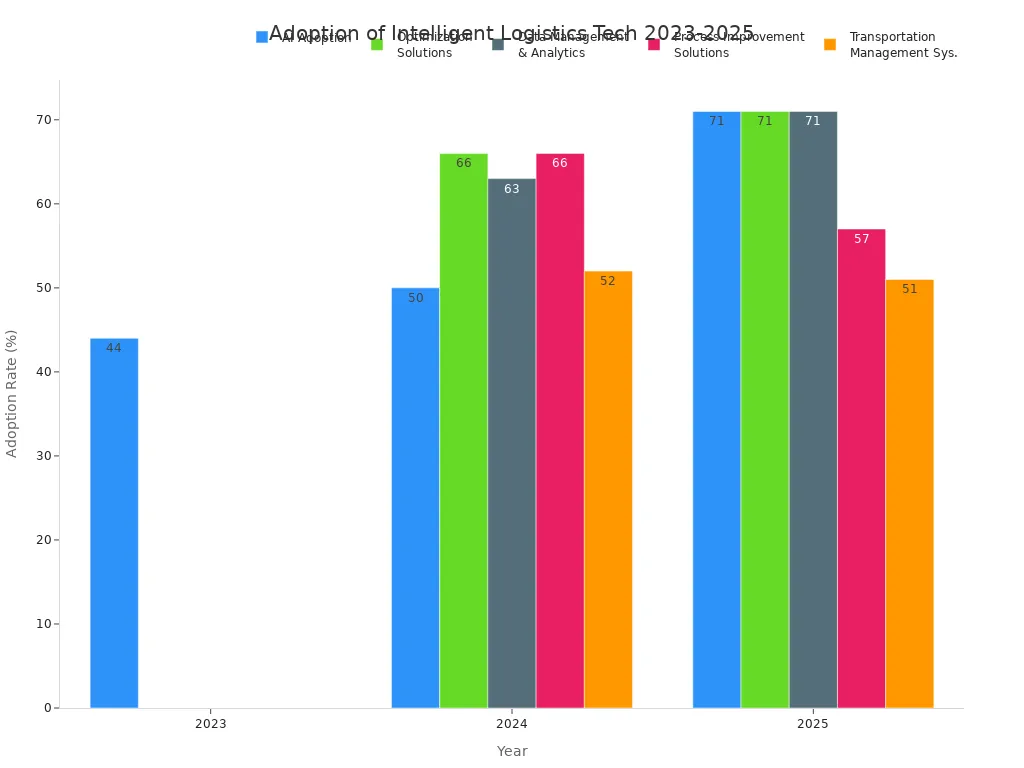
Intelligent logistics is changing supply chains very quickly in 2025. Companies must use new technology to do better at work. More businesses are using artificial intelligence in supply chains. In 2025, 71% of companies will use artificial intelligence. The table below shows how many companies use these technologies:
Metric / Category | 2023 (%) | 2024 (%) | 2025 (%) |
|---|---|---|---|
Adoption of Artificial Intelligence (AI) | 44 | 50 | 71 |
Adoption of Optimization Solutions | N/A | 66 | 71 |
Adoption of Data Management & Analytics | N/A | 63 | 71 |
Logistics automation helps companies compete better. It makes deliveries faster and customers happier.
Key Takeaways
Intelligent logistics uses AI, automation, and IoT. These tools help supply chains move faster. They make supply chains smarter. They also make them more reliable in 2025.
JUSDA’s smart warehouse technology helps workers do more. It lowers costs for companies. It makes tracking things easier and quicker. This gives better control of the supply chain.
Companies should plan how to use technology. They need to build a culture that likes new ideas. They should work with other partners. This helps them stay strong and grow in changing markets.
Intelligent Logistics Trends 2025
Intelligent logistics is changing supply chains everywhere in 2025. Companies use new technology to work faster and more accurately. They also want to see what is happening at every step. JUSDA is a leader with a big network and smart platforms like JusLink. The biggest trends are artificial intelligence, automation, and IoT working together. These trends help companies work better and keep up with market changes.
AI in Supply Chain
Artificial intelligence is changing how companies run supply chains. It helps with predicting what will happen and planning for demand. It also helps manage risks. JusLink uses artificial intelligence to look at data and guess what inventory is needed. This helps companies make decisions faster and with fewer mistakes. Artificial intelligence can find the best routes and schedules. This saves time and money. JusLink uses artificial intelligence and real-time data to show what is happening everywhere in the supply chain. This helps companies fix problems quickly and keep service high. Artificial intelligence also helps manage inventory by changing stock levels when the market changes.
Automation and Robotics
Automation and robotics are important in logistics technology. Companies use robots, AGVs, and conveyor belts to get more done. Automation helps companies make fewer mistakes and spend less on workers. Robotic process automation does boring jobs like typing data and talking to customers. This means fewer mistakes and more time saved. Big companies use artificial intelligence bots to check information and handle inventory. Automation helps all companies deal with not having enough workers and makes supply chains faster. It also saves money and makes things work better for a long time. JusLink uses automation to make warehouses work better and improve supply chain automation.
Robots and AGVs help pick and pack faster.
Artificial intelligence systems guess demand and help store things better.
Predictive maintenance stops breakdowns and keeps things running.
Automation can grow with both big and small companies.
IoT and Real-Time Data
IoT and real-time data are making new trends in logistics technology. Companies use sensors, RFID tags, and IoT robots to watch inventory and shipments. JusLink’s platform shows where things are in real time and helps guess what will be needed. IoT sensors check things like temperature and humidity to keep products safe. When artificial intelligence and IoT work together, they help find the best routes and show everything in the supply chain. Real-time data helps companies stop problems before they get big and react fast to changes. JusLink shows how artificial intelligence and IoT can work together to make warehouse jobs easier and improve logistics technology.
Real-time tracking shows where inventory is in warehouses.
IoT robots help pick, pack, and check stock.
Sensors watch shipments and keep products safe.
Artificial intelligence and IoT together help plan routes and manage supply chains.
In 2025, supply chain trends focus on intelligent logistics, automation, and real-time data. JUSDA leads with smart solutions for global logistics. Companies that use these trends do better and have stronger supply chains.
JUSDA Warehouse Solutions
JUSDA has one of the biggest warehouse networks in the world. Their warehouses cover over 2.5 million square meters. These are in Asia, North America, and Europe. This network helps many industries like electronics, automotive, FMCG, and healthcare. JUSDA’s warehouses use smart logistics technology. This gives clients fast, clear, and flexible solutions everywhere.
Advanced Inventory Management
JUSDA’s inventory system uses new logistics technology to keep stock levels right. It also helps stop mistakes. Automated Guided Vehicles and robots do the same jobs over and over. This makes work faster and saves money on workers. Smart shelves and IoT sensors watch inventory all the time. They send alerts when stock is low. This helps companies not run out or have too much stock.
JUSDA’s predictive analytics help sales go up by almost 3%. They also cut out-of-stock items by half. Clients get 5-10% more profit by planning inventory and demand better.
The table below shows how JUSDA’s warehouse technology helps clients:
Benefit Area | Measurable Impact | Example/Details |
|---|---|---|
Productivity Increase | Robotics handle up to 50% of automotive tasks | |
Labor Cost Reduction | 20-50% reduction | Reduced physical strain improves morale |
Overall Productivity Boost | 10-30% increase | Robotics and automation contribute |
Sales Improvement | Nearly 3% increase through predictive analytics | Forecasting demand reduces stockouts |
Out-of-Stock Reduction | Up to 50% decrease | Better inventory management |
Profit Margin Boost | 5-10% increase | Improved inventory and demand forecasting |
Logistics Cost Reduction | 20% reduction (Sharp client) | JusLink platform integration |
Order Delivery Time | 30% improvement (Sharp client) | Enhanced supply chain coordination |
Equipment Downtime Reduction | Reduced via IoT-enabled maintenance | Real-time monitoring and predictive alerts |
Stock Level Optimization | Improved through IoT and smart shelving | Automatic reorder alerts reduce errors |
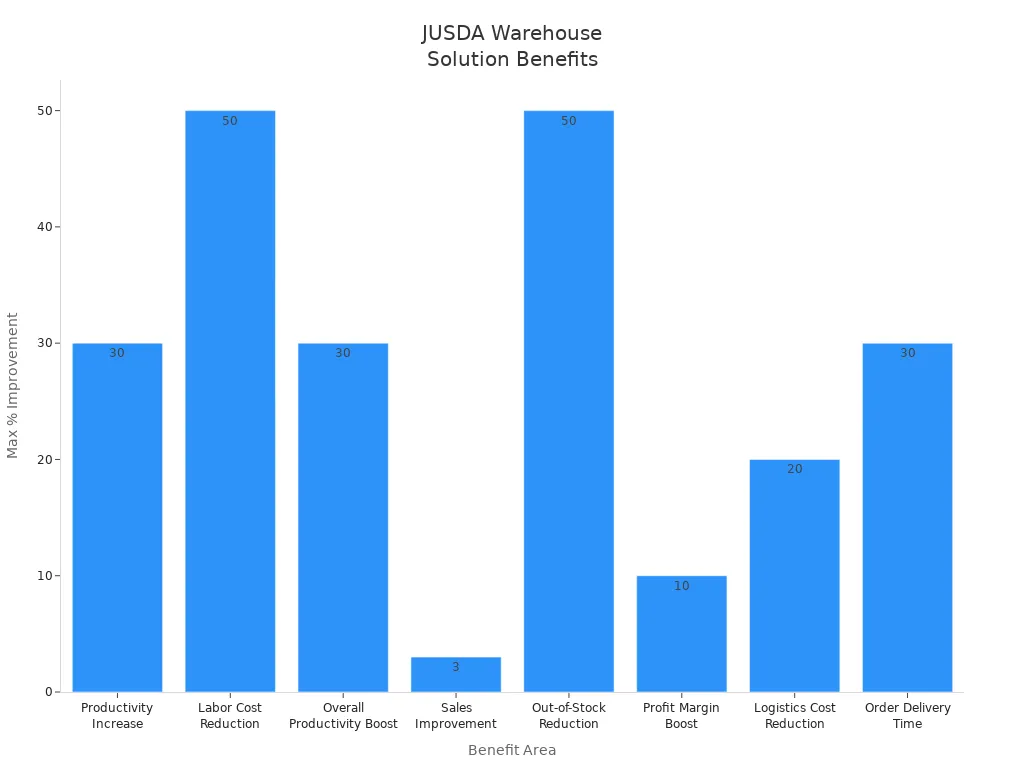
JUSDA’s technology makes warehouses up to 30% more productive. It also cuts labor costs by up to 50%. These changes help companies control their supply chains better.
Real-Time Visibility
JUSDA’s warehouses use smart technology for real-time shipment tracking. IoT devices like sensors and RFID tags watch goods and check things like temperature. Cloud computing stores this data so clients can see it anywhere. Big data analytics and artificial intelligence look at the data. They help guess demand and spot problems early.
Real-time tracking lets companies follow products from start to finish.
Customers get correct ETAs and tracking, which makes them happy.
Blockchain keeps data safe and clear across the network.
5G makes data move fast, so decisions happen quickly.
Real-time platforms help companies spot problems right away and act fast. This lowers risks and costs. Being open also builds trust with shippers, managers, and customers.
JUSDA’s technology gives clients a clear look at their inventory and shipments. This helps avoid delays and keeps customers updated.
Value-Added Services
JUSDA has many value-added services for flexible logistics. These include picking, packing, labeling, kitting, and repacking. JUSDA’s C2M2C model links all parts of the supply chain. It connects raw material suppliers to end users. This helps companies work better and react fast to market changes.
JUSDA works in over 15 countries with local networks for growth.
JusLink Smart Supply Chain Management gives great control and visibility.
JUSDA grows in key places like the US, Mexico, Germany, India, and Vietnam.
Special solutions, like fleet management for FMCG and telematics for automotive, make things work better.
JUSDA’s value-added services and technology help clients grow without losing control. Companies get better efficiency, lower costs, and happier customers.
AI and Digital Supply Chain

JusLink AI Capabilities
JusLink puts artificial intelligence at the heart of supply chain automation. The platform uses ai-driven tools to help companies handle inventory, shipments, and orders. JusLink’s technology gives real-time views of the supply chain. Users talk to JusElsa, a smart helper, for quick answers and to automate jobs. JusLink’s ai helps with material prep, delivery stocking, and logistics management. Companies get better results with automated order checks and data searches. JusLink’s technology lets teams work faster and make smarter choices.
Predictive Analytics
Analytics are important for the future of ai in supply chains. JusLink uses advanced analytics to guess demand and set stock levels. The system looks at sales trends and freight rates. Companies use analytics to plan busy times and stop shortages. JusLink’s predictive analytics help managers know when to reorder products. The platform also uses analytics to guess shipping costs and delivery times. This technology makes supply chain automation better and keeps things running smoothly.
JusLink’s predictive analytics helped a big electronics company cut stockouts by half. The company made more profit and kept customers happy.
Risk Management
Risk management is very important in supply chain operations. JusLink’s technology uses ai to watch risks in real time. The risk control tower warns managers about delays or problems. Analytics track shipments and spot issues early. JusLink’s ai helps companies react fast to changes. The platform helps with rules and keeps data safe. Customer stories show JusLink’s risk management tools help businesses avoid costly mistakes and make supply chains more reliable.
Blockchain and Transparency in Logistics
Blockchain technology is changing how companies handle logistics. It makes safe records for each step in the supply chain. Companies use blockchain to share data safely and build trust with partners.
Secure Data Sharing
Blockchain lets senders and receivers trade directly. This means fewer middlemen are needed. Payments move faster, and costs are lower. Companies keep data safe with blockchain’s secure system. Staff learn about these systems with training and test projects. Technology partners help set up blockchain tools. SEKO Logistics uses blockchain to make supply chains clearer and work better.
Blockchain cuts costs by removing middlemen.
Payments happen fast between groups.
Data stays safe and private.
Training and test projects help staff use blockchain.
Traceability
Blockchain helps companies track products better. They can see where items are at every step. This helps them find problems fast. If a recall happens, managers use blockchain to find the right items and where they are. Blockchain also checks if products are real. This matters for things like medicine and luxury goods. It is easier to show where products come from because blockchain tracks their journey.
Blockchain helps companies stop fake products and show customers where things come from.
Compliance
Blockchain helps companies follow rules by keeping clear records. Every action is saved, so it is easy to check. Auditors look at these records to see if companies meet standards. Blockchain makes it easy to show proof that rules are followed. This builds trust with customers and rule-makers. Logistics companies use blockchain to be open and follow laws.
Sustainability and Green Logistics Trends

Energy-Efficient Transport
Companies want to use less energy when moving goods. They do this to cut pollution and save money. Electric trucks and hybrid vehicles help lower emissions. Some companies use alternative fuels to be greener. Route optimization software helps use less fuel. JUSDA uses green fleets and gives clients eco-friendly choices. These steps help companies follow environmental rules. They also make the company look better to the public. Using less energy saves money over time and makes air cleaner.
Smart Packaging
Smart packaging is important for making logistics greener. Companies pick recyclable materials and lighter designs to make less waste. Some packages have sensors that check temperature and humidity. This keeps sensitive items safe and stops spoilage. JUSDA gives clients packaging that fits products well. This lowers shipping costs and saves space in trucks. Smart packaging helps companies reach green goals. It also lowers their effect on the environment.
ESG Initiatives
ESG initiatives are changing how logistics works. Many companies set goals to cut emissions and make work safer. JUSDA helps clients with clear reports and green solutions. ESG programs support fair labor and good sourcing in logistics. Companies that follow ESG rules earn trust from customers and investors. These programs help companies find new ideas and make supply chains more sustainable.
Overcoming Supply Chain Challenges
Talent and Skills
In 2025, logistics companies do not have enough skilled workers. Many businesses work with more vendors, which makes things harder. To fix this, companies hire new graduates and train their workers. Training helps workers learn new skills and stay longer at their jobs. Companies also work with service providers to get expert help. These steps help teams use new technology like automation and AI. By building talent, logistics companies stay strong and keep up with changes.
Cybersecurity
Cybersecurity is still a big worry in logistics. As companies use more digital tools, new risks appear. AI-based security tools do simple jobs and let experts handle tough problems. Many companies use XDR and SOC to find threats faster. Public and private groups work together to get more help and money for security. Working with security service providers makes defenses stronger without hiring big teams. These plans keep data safe and help logistics run well.
ROI and Implementation
Using new logistics technology needs good planning. Companies must think about costs and what they will gain. Many hire consultants to help with new technology and hard tasks. Automation and AI make work faster, but need training and support. Companies look at how they get supplies to avoid problems in transport. By watching key numbers, companies see if changes are worth it. This helps make sure new ideas bring real value and help companies grow.
Adapting to Supply Chain Trends
Technology Roadmap
Companies need a simple plan to keep up. A technology roadmap helps leaders set goals and check progress. Teams use the roadmap to pick which tools to try first. Most start with real-time tracking and automation. Later, they add analytics and artificial intelligence. The roadmap shows when to upgrade systems and train workers. Leaders look at the plan often to make sure it fits business needs.
Tip: Check the technology roadmap every three months. This helps teams keep up with new trends and not fall behind.
Innovation Culture
A strong innovation culture helps companies handle new problems. Leaders ask teams to share ideas and test new solutions. Employees feel safe to try new ways without worrying about mistakes. Managers reward creative thinking and teamwork. Talking openly helps everyone learn and get better. Companies that care about innovation can react faster to changes.
Share ideas in team meetings.
Celebrate small wins to help confidence grow.
Give training on new tools and ways to work.
Strategic Partnerships
Strategic partnerships help companies grow and stay flexible. Working with technology providers gives access to new tools. Partnerships with universities and research groups bring new ideas. Suppliers and customers can also be partners. These relationships help companies solve problems and find new markets. Strong partnerships make the supply chain stronger.
Partnership Type | Benefit |
|---|---|
Technology Providers | Access to new solutions |
Universities | Research and innovation |
Suppliers/Customers | Better collaboration |

JUSDA Solutions
To provide you with professional solutions and quotations.
Intelligent logistics brings big changes to supply chains in 2025. Companies work faster and make fewer mistakes with advanced solutions like JUSDA. They can also see what is happening at every step. Leaders need to look at their logistics plans and find new technology.
Stay up to date and take action to keep supply chains strong and ready for growth in the future.
See Also
How Artificial Intelligence Is Transforming Future Logistics Systems
Supply Chain Innovations Driving Major Changes In Logistics
Enhancing Supply Chain Efficiency Through Advanced AI Solutions
Top Five Trends Shaping Tomorrow’s Supply Chain Efficiency
Insights Into AI Integration For Next Generation Supply Chains