JUSDA Warehouse Automation Best Practices for Modern Supply Chains

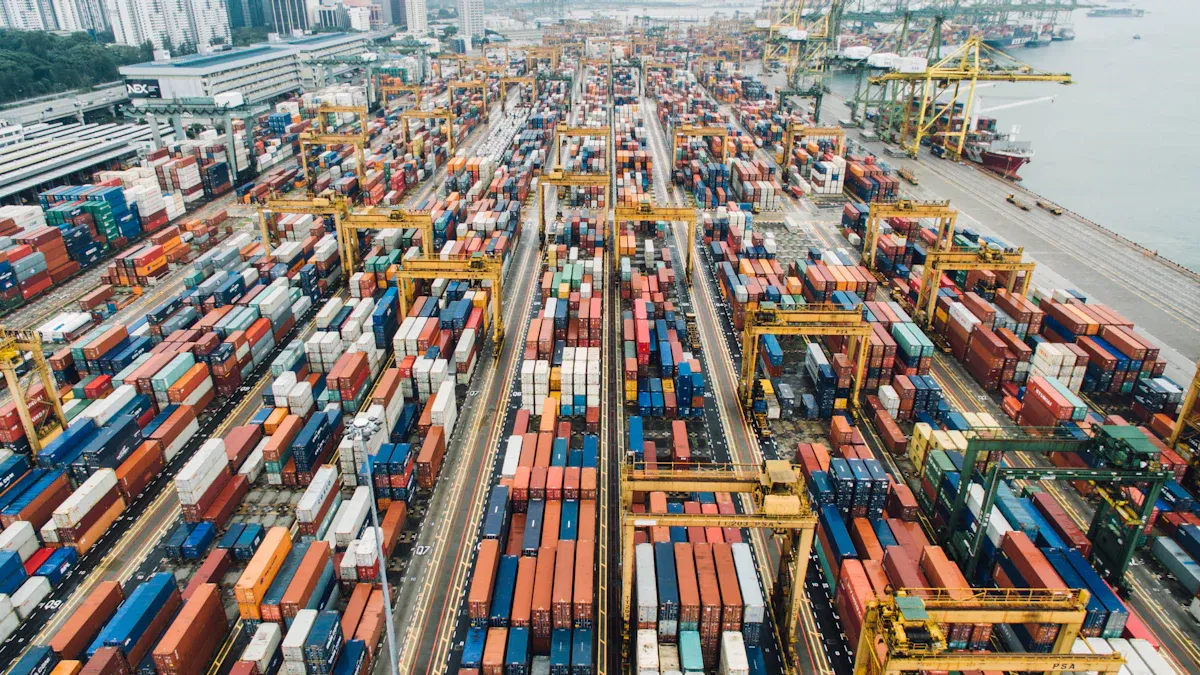
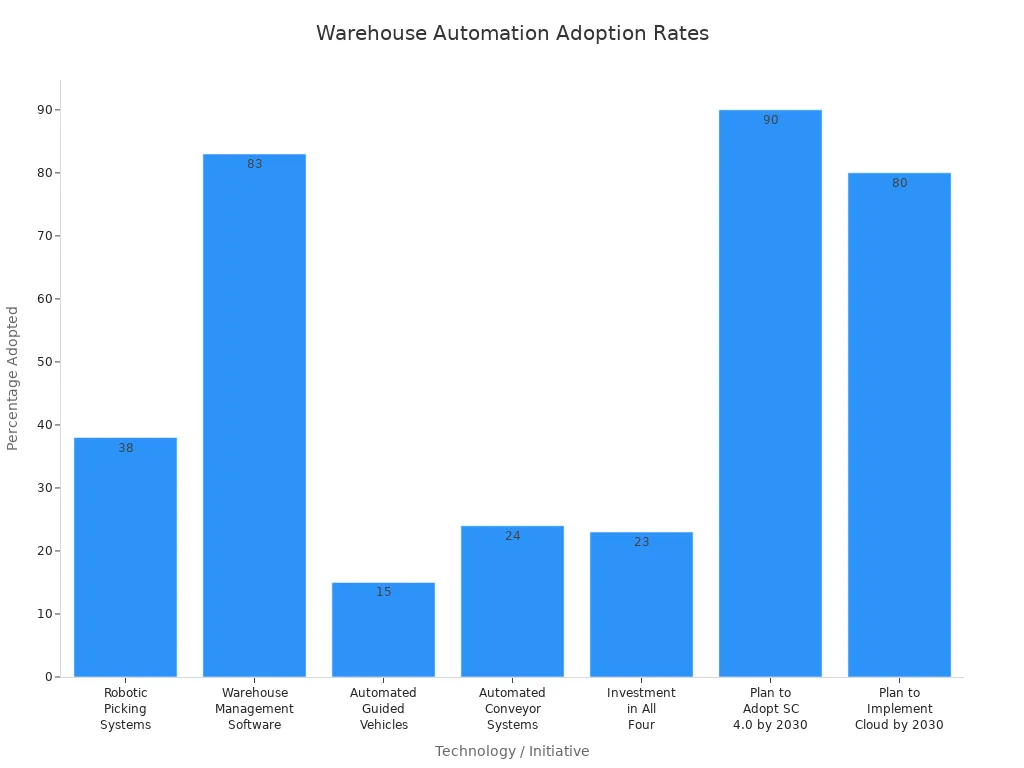
You can see warehouse automation changing supply chains everywhere. Companies buy new systems to make work faster and more accurate. They also want to use less manual labor. The table below shows how many supply chains use different technologies now:
Automation Technology | Percentage Adopted |
|---|---|
Robotic Picking Systems | 38% |
Warehouse Management Software | 83% |
Automated Guided Vehicles (AGVs) | 15% |
Automated Conveyor Systems | 24% |
Investment in All Four Technologies | 23% |
Plan to Adopt Supply Chain 4.0 by 2030 | 90% |
Plan to Implement Cloud Technologies by 2030 | 80% |
JUSDA helps you fix labor shortages. JUSDA also helps you work better by using smart automation ideas.
Key Takeaways
Warehouse automation helps things get done faster. Companies like PUMA made order time go from 8 days to 2 days. This shows that automation can make work much quicker.
Automation makes things more accurate. Systems can keep track of inventory with over 99.9% accuracy. This means there are fewer mistakes and fewer returns.
Look at your processes before you automate. Find slow steps and fix them first. This helps you get the most out of automation.
Pick the best technology for your needs. Think about how it can grow, work with other systems, and if the vendor can help you. This makes sure your automation works as your business gets bigger.
Training is very important. Give your team the skills they need to use new technology. This helps everyone do better in the warehouse.
Warehouse Automation Overview
Definition
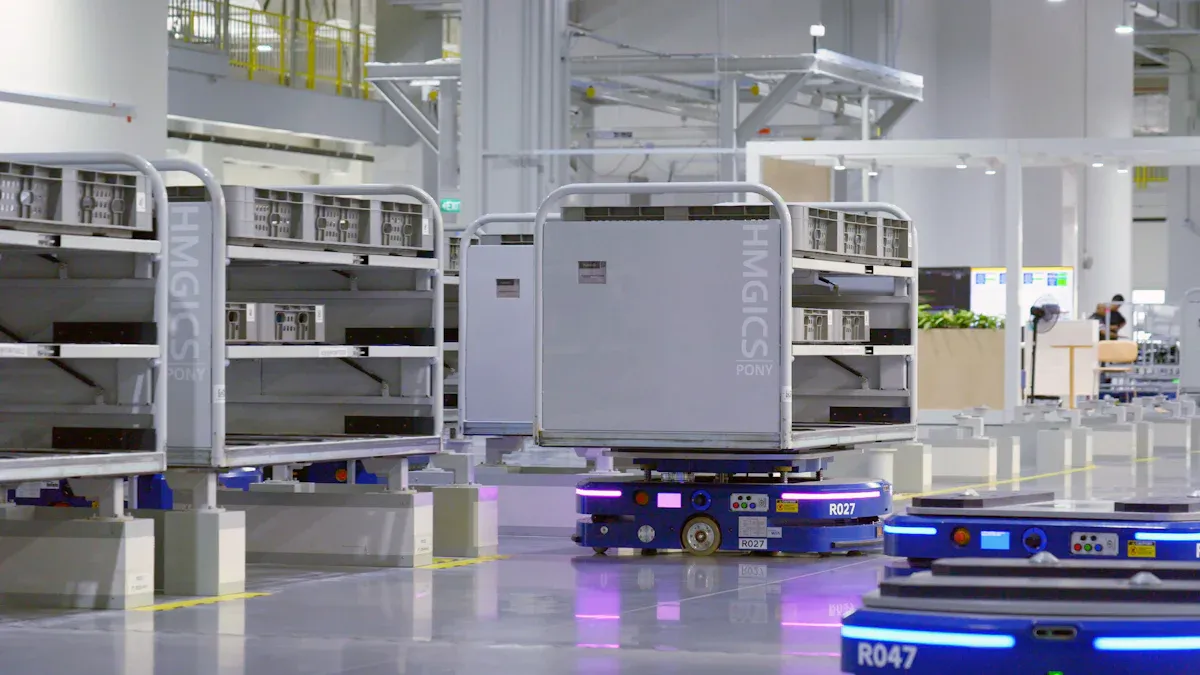
Warehouse automation uses technology to make work easier and faster. Machines and software help with jobs like tracking inventory and picking orders. Controls also help move goods around the warehouse. Top supply chain groups say automation makes every part of the warehouse better. You do not have to use only manual labor. Smart systems can do many tasks for you.
Tip: Automating your warehouse helps you make fewer mistakes. It also saves time on daily work.
Technologies
There are many ways to automate your warehouse. Some common choices are:
Inventory management software
Smart warehouse apps
Mobile robots (AMRs and AGVs)
Pick to light systems
Put to light systems
Voice picking and tasking
Automated sortation systems
RFID technology
Machine vision
Artificial intelligence
Automated palletizing/depalletizing technology
Cobotics
Edge computing
Blockchain technology
Warehouse drones
These tools help you track inventory and fill orders. They also help move products around. RFID technology lets you scan items fast and keep records correct. Mobile robots can move goods without people helping.
Relevance
Warehouse automation is very important now. E-commerce and global shipping are getting bigger. You need to handle more orders and make customers happy. Automation helps you work faster during busy times. It also helps you fill orders better. Today, 54% of companies use some automation in their warehouses. Almost 87% of leaders want to use more automation to meet demand. A study by McKinsey & Company found that 83% of logistics leaders think automation is needed for the future. Using warehouse automation helps you stay ahead and meet customer needs.
Benefits
Efficiency
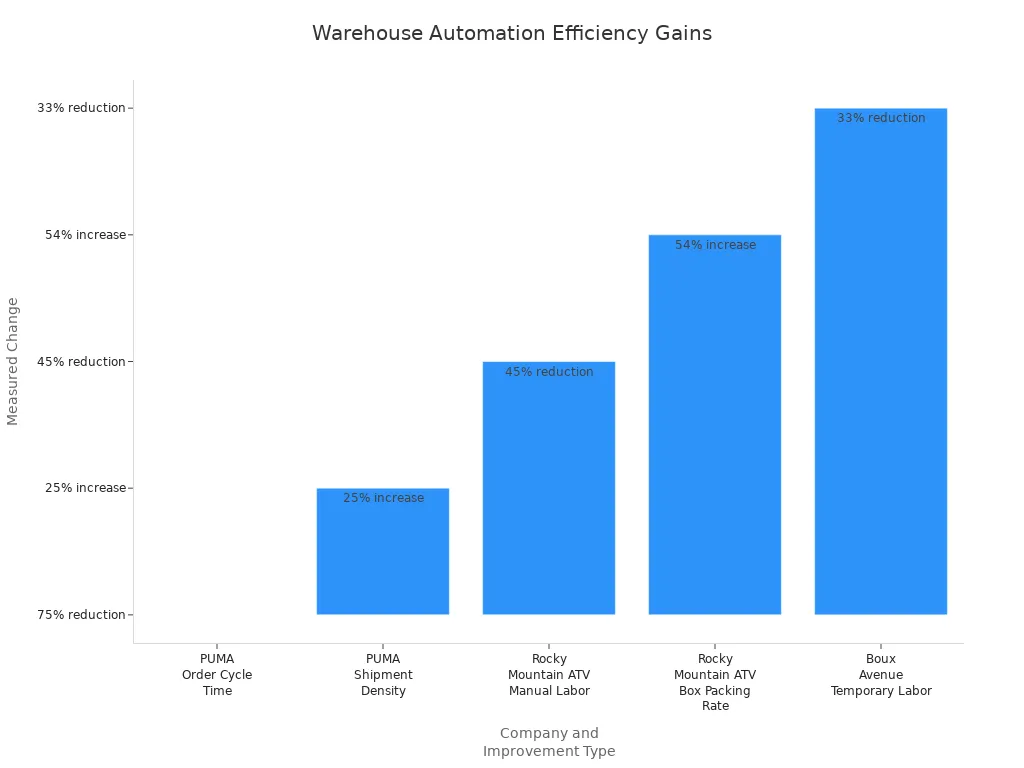
Automation helps your warehouse work faster and smoother. Many companies have seen these changes. For example, PUMA made its order time much shorter. It went from 8 days to only 2 days. Rocky Mountain ATV packed more boxes each hour. They went from 26 to 40 boxes per hour. Boux Avenue could handle more orders after using automation. They processed 50 orders and 250 items every hour. These examples show how automation helps you do more work each day.
Company | Improvement Type | Measurable Change |
|---|---|---|
PUMA | Order Cycle Time | Reduced from 8 days to 2 days |
PUMA | Warehouse Capacity | Increased to 5.5 million units |
Rocky Mountain ATV | Manual Labor | Reduced by 45% |
Rocky Mountain ATV | Box Packing Rate | Increased from 26 to 40 boxes per hour |
Boux Avenue | Temporary Labor | Reduced by 33% |
Boux Avenue | Order Processing Rate | 50 orders and 250 items per hour |
Note: The best warehouses use labor well. They can fill orders in less than a day.
Accuracy
Automated systems make fewer mistakes than people. They use barcode scanning and machine learning to track products. This helps keep inventory up to date all the time. You get fewer wrong shipments and fewer returns. Automated systems check SKUs and amounts with over 99.9% accuracy. Newegg made its order time only 20 minutes with Perfect Pick. Automated storage and retrieval systems make fewer picking mistakes than people. They can cut mistakes by more than 30%.
Automated systems check SKUs and amounts right away.
Robots work with over 99.9% accuracy.
AS/RS solutions can pick with up to 99.9% accuracy.
Labor Solutions
Warehouse automation helps with labor shortages and workforce problems. Many companies use automation to help or replace manual labor. You can move workers to more important jobs. Machines can do the boring and repeated tasks. This keeps your warehouse running when it is hard to find workers. Automation also makes the workplace safer. It takes over dangerous jobs. Your team can learn new skills too.
Companies use automation to help or replace manual labor.
Automation lets you move workers to important jobs.
Sometimes, you do not need people for repeated tasks.
"You can move workers to more important jobs. Sometimes, you do not need people for repeated tasks.
Warehouse Automation Best Practices
Process Assessment
You should start by checking your warehouse process before automating. This helps you see how things work and what needs fixing. Here are the main steps:
Internal Assessment: Watch how your warehouse works each day. Look for slow steps or mistakes.
Data Collection: Collect facts about orders, inventory, and speed. Use this to find problems.
Workflow Analysis: Look at each step in your process. Find what slows your team down.
Document Pain Points: Write down the biggest issues. Count how much time or money you lose.
Prioritize Inefficiencies: List problems from worst to least bad. Work on the biggest ones first.
Identify Potential Wins: Guess how much you can save by fixing each problem. Pick the best ones to fix.
For example, a company had slow order processing and inventory mistakes. After using data analytics, they saw inventory moved slowly. They used barcode scanning to make picking faster and more correct.
JUSDA helps you check your process with smart analytics tools. You get a report that shows where automation helps most.
Technology Selection
Picking the right technology is important for warehouse automation. You should look at a few things to make a good choice. The table below shows what to think about:
Criteria | Description |
|---|---|
SKU/order profile | Check the size and type of products you have. This changes which automation tools you need. |
Scalability and flexibility | Make sure the system can grow and change with your business. |
End-to-end integration | Pick tools that work well with your other systems. |
Reliability and vendor support | Choose vendors who help you and fix things fast. |
Resiliency and redundancy | Find systems that keep working if something breaks. |
Performance monitoring | Use tools that watch how your warehouse works. |
Ergonomics | Pick technology that keeps workers safe and comfortable. |
Tip: JUSDA helps you pick technology that fits your needs. You get advice on which systems work for your products and process.
Integration
You need to connect new automation with your current warehouse software. Good integration makes your warehouse work better. Here are some best practices:
Use the same data types and rules for all systems. This helps them share information.
Match data fields carefully. Make sure information stays right when you move it.
Set up your systems to fit together. Test everything before you start using it.
Research to pick a warehouse management system (WMS) partner with good support.
Get key staff and experts to help. They fix problems fast.
Write down your automation plan. Share it so everyone knows what to do.
After you set up automation, check for problems and fix your plan.
JUSDA gives you help with integration. You get support for setup and training, so your systems work together well.
Staff Training
Training your team is very important for warehouse automation. You need to help workers learn new skills and feel ready for new technology. Here are some good ways to train:
Use hands-on training. Let workers try new systems safely.
Make practice areas where staff can learn without real orders.
Pair new workers with mentors who know the systems.
Start with easy digital tools. Move to harder automation later.
Make simple interfaces. This helps staff learn quickly.
Give practice time before new systems are needed.
Set time for learning new skills. Link training to job growth.
Offer programs to reward learning and give certificates.
Swisslog and JUSDA give custom training programs. Your team learns to fix mistakes and keep systems working well.
Data Optimization
Making your data better helps your warehouse automation work best. You need to track key numbers like order time and inventory accuracy. Here are ways to use data for better results:
Watch key numbers to see how your warehouse does.
Use old sales data to guess demand. Change inventory to avoid running out or having too much.
Find slow spots in your process. Move help to where it is needed.
Learn about your operations. Make smart choices using real data.
Make your supply chain faster and easier.
JUSDA uses smart analytics to help you see trends and improve your warehouse. You get reports that show where you can save time and money.
Scalability
Your warehouse automation should grow with your business. You need to plan for more orders and busy times. Here are ways to keep your automation scalable:
Pick solutions that can grow as your business gets bigger.
Use racks and pick zones you can change fast. You can move these easily.
Add more autonomous mobile robots (AMRs) when you get busier.
Change automation to fit your needs. Do not buy too much at first.
Use data and AI to make things work better as you grow.
Check your current work before picking a scalable solution.
Plan to add new automation in steps.
JUSDA helps you build scalable systems. You get flexible solutions that fit your growth and changing needs.
JUSDA Approach
Custom Solutions
JUSDA gives you a plan that fits your business. They do not use the same plan for everyone. The team learns about your market and what you need. You get flexible help and quick answers at every step. JUSDA covers many supply chain parts, so you fix problems in one place. The JusLink Smart Supply Chain Management Platform uses advanced technology to help you work better. If your business is high-value, JUSDA makes special logistics plans for you. This keeps your customers happy and your business running well.
JUSDA looks at your market and needs before making a plan.
You get flexible help for every part of your supply chain.
JusLink helps you work faster with smart tools.
High-value businesses get special logistics plans.
Note: JUSDA’s way means you always get a plan that fits your goals.
Technology Use
JUSDA uses new technology to help you do well. You get better results with tools like IoT, cloud computing, and big data analytics. These tools help you track inventory right away. You can see what you have and where it is anytime. Cloud computing lets you manage your data from anywhere. Big data analytics helps you find patterns and make smart choices. IoT connects your devices and systems, so you get fast updates and better control.
IoT links your warehouse devices for easy data sharing.
Cloud computing lets you reach your information easily.
Big data analytics shows you trends and helps you plan.
Real-time tracking keeps your inventory clear and correct.
Integration Support
JUSDA helps you connect new systems to your current setup. You get help for every step, from planning to running your warehouse. The JusLink platform gives you full control and lets you see your workflow. You can spot problems early. JUSDA uses RFID and warehouse management systems to keep your data right. The company has over 155 service locations and more than 2.5 million square meters of warehouse space. You can trust JUSDA to handle over 2,000 international routes, so your goods move easily across borders.
Aspect | Description |
|---|---|
Technological Edge | Advanced AI, big data, and IoT work together in your operations. |
Smart Supply Chain Platform | JusLink gives you end-to-end control and better workflow. |
Technologies Used | RFID and WMS improve your data and accuracy. |
Service Locations | Over 155 worldwide. |
Warehousing Space | More than 2.5 million square meters. |
International Routes | Over 2,000 routes connect key markets. |
You get custom services, better inventory tracking, and faster order packing. JUSDA makes warehouse automation easy and helpful for your business.
Challenges
Change Management
When you add automation, things change a lot. Many workers worry about losing their jobs. A study found almost 60% of warehouse workers feel this way. You need to help your team see how automation can make work safer and more fun. There are other problems too, like:
Old and new systems may not work together.
The project might miss some important parts.
Costs can go up more than you planned.
Schedules can get mixed up.
Some staff do not want new technology.
Tip: You can help by sharing clear facts and giving training. Show your team how automation helps everyone.
System Integration
It is hard to connect new automation to old warehouse technology. You may have problems with data formats and API support. Here are some common issues:
Integration Issue | Description |
|---|---|
Compatibility Issues | Old systems may not work with new automation technology. |
Data Format Inconsistencies | New systems use formats like JSON or XML, but old ones use outdated formats. |
API Limitations | Many old systems do not support real-time data exchange. |
Hardware Communication Protocol Mismatches | Older equipment may use protocols that do not match modern technology. |
Middleware Solutions | You may need extra software to connect old and new systems. |
Human Element | Staff need training to adapt to new systems. |
Security Vulnerabilities | Poor integration can create security gaps. |
Setting up new systems can stop your warehouse for a while. You might miss shipments or orders could be late. Bad integration can cause mistakes and slow work. These errors can send wrong shipments and make customers unhappy.
Data Security
Automation can bring new risks to your warehouse data. You need to protect your systems from cyberattacks and accidents. Power or network problems can stop your warehouse. Sabotage and technology breakdowns can also hurt your work. You can keep data safe by:
Using backup systems for important jobs
Setting up more network and power access points
Following strong cybersecurity rules
Note: Check your security often and update your systems to block new threats.
JUSDA Solutions
JUSDA helps you fix these problems with expert support. You get programs that teach your team new skills and help them feel better. JUSDA offers services to connect new automation to old systems. You get help with data security, backup plans, and cybersecurity tools. JUSDA’s flexible solutions help your warehouse grow safely and smoothly. You can trust JUSDA to guide you and keep your supply chain strong.
Implementation Steps

Assessment
You begin by checking how your warehouse works now. Find problems like slow picking or inventory mistakes. Decide where automation can help the most. Here are steps to follow:
Look for issues in your supply chain. Find slow order picking or inventory mistakes.
Plan how robots and software will work with your systems. Set goals you want to reach.
Put in new technology and teach your team. Make sure everyone learns to use the new tools.
Watch your warehouse after you add automation. Ask your team for ideas and check how things go.
Try changes at pilot sites first. If it works well, use automation in more places.
Tip: Get your staff involved early. Training and feedback help everyone get used to new systems.
Design
You need a good plan for your automation to work. Start by making clear goals. Pick what problems you want to fix, like slow picking or high labor costs. Look at your data to see where you lose time or money. Make a plan that fits your needs. Choose equipment and software that match your picking and inventory. Roll out new systems in steps to avoid big problems. Teach your team new workflows and safety rules. Keep checking your system and change things when needed.
Labor and cost matter for your design.
High turnover and training costs mean you need easy systems.
More orders mean you need flexible solutions.
Note: A strong design helps your warehouse automation work well and lets you grow.
Support
You need support to keep your automation working right. Regular maintenance stops problems before they happen. Watch your system’s performance and fix issues fast. Give training so your team learns new skills. Use reports to check order speed and inventory accuracy. JUSDA gives expert help and custom support. You get advice, troubleshooting, and updates for your systems.
Support Service | Benefit |
|---|---|
Maintenance | Stops breakdowns |
Performance Tracking | Makes things work better |
Staff Training | Keeps skills up to date |
Expert Guidance | Fixes problems quickly |
JUSDA’s support helps your warehouse automation stay strong and reliable.
You can make your warehouse better by taking important steps. The table below lists the main actions to follow:
Actionable Step | Description |
|---|---|
Implement Intelligent Workflow Automation | Use AI to give out tasks and fix problems fast. |
Focus on Change Management and Training | Get your team involved early and train them well. |
Prioritize Scalability and Flexibility | Pick cloud systems that are easy to grow and change. |
Establish Robust Security Protocols | Keep your data safe with strong rules and checks. |
If you use these best practices, your work gets more accurate and faster. You also save money for a long time. JUSDA helps you with special solutions and expert advice. You can build a smart supply chain platform and link your business in many places. Contact JUSDA to begin your automation journey.
FAQ
What is the first step to automate my warehouse?
You need to check how your warehouse works first. Watch what happens each day. Write down how fast orders go out and how correct your inventory is. This helps you see what needs fixing most.
How does warehouse automation help with labor shortages?
Automation lets you give workers better jobs. Machines can do the same task over and over. Your warehouse keeps working even if you cannot find enough people.
Can automation improve order accuracy?
Yes! Automated systems use barcode scanning and machine learning. They get things right more than 99.9% of the time. You will have fewer mistakes and fewer returns.
Is warehouse automation scalable for growing businesses?
You can add more robots or software as your business gets bigger. Pick systems that can change as you grow. JUSDA helps you plan for busy times and what you will need later.
How does JUSDA support integration with my current systems?
JUSDA gives you expert help for setup and training. The team connects new automation to your old systems. You get support at every step.

JUSDA Solutions
To provide you with professional solutions and quotations.
See Also
Jusda: Navigating Your Journey Towards Supply Chain Strength
Discover How JUSDA Transforms Sustainable Supply Chain Practices
Enhancing Productivity: JUSDA's Comprehensive Supply Chain Insights
The Reasons JUSDA's Supply Chain Solutions Stand Out
Unlocking Greater Efficiency with JUSDA's Logistics Technology