Key Considerations for Successful Bulk Logistics Operations


You face many challenges when managing Bulk Logistics Operations. Safety risks, environmental issues, and market changes can slow down your progress or raise costs.
Safety concerns include cargo shifting, fire hazards, and structural stress.
Environmental factors require you to manage emissions and prevent spills.
Efficiency depends on balancing supply and demand and handling port congestion.
Challenge Category | Description of Challenge | Impact on Bulk Logistics Operations |
|---|---|---|
Manual workflows and fragmented data reduce transparency. | You may see higher costs and wasted resources. | |
Safety and Environmental Risks | Handling bulk materials demands strict protocols. | Mistakes can cause accidents or disrupt the supply chain. |
You can improve your results by reviewing your current processes and acting on proven strategies.
Key Takeaways
Set clear goals and use accurate volume forecasts to plan your bulk logistics efficiently and reduce costs.
Choose and maintain the right equipment to improve safety, speed, and reliability in handling bulk cargo.
Train your team regularly and follow strict safety rules to prevent accidents and manage risks effectively.
Use technology like AI, real-time tracking, and automation to optimize routes, monitor shipments, and boost efficiency.
Build strong partnerships and communicate openly with all stakeholders to improve coordination and reduce delays.
Planning
Objectives
You set the direction for your bulk logistics operations by defining clear objectives. Leading companies focus on several key goals:
Drive strategic growth and expand into high-potential markets.
Identify and prioritize service regions with strong growth prospects.
Develop geographic expansion plans that align with high-margin sectors.
Target leadership opportunities that match your core strengths.
Analyze customer and market trends to support long-term demand.
You also aim for cost efficiency by leveraging economies of scale. Efficient handling and transportation of large volumes over long distances help you minimize costs per unit. Specialized equipment, such as cranes, conveyor belts, and storage silos, supports these objectives. By connecting resource-rich areas with consumer markets, you enable sustainable business growth and support global trade.
Volume Assessment
Accurate volume assessment ensures you allocate resources effectively. You measure bulk cargo using standard metrics like TEU, cubic meters, or metric tons. Load factors help you gauge how well you use available capacity. To forecast demand, you use time-series models such as Holt-Winters and SARIMA, which capture trends and seasonality. Regression models that include economic indicators and weather data improve your predictions. Advanced AI-driven models now offer even greater accuracy, helping you plan for both short-term and long-term needs.
Modern transportation management systems (TMS) give you real-time data and scenario modeling. These tools let you adapt quickly to changes, optimize truckloads, and improve operational productivity. You can reduce costs and boost customer satisfaction by using these advanced forecasting and planning methods.
Route Optimization
You optimize routes by using advanced technologies like AI and machine learning. These tools analyze variables such as weather, traffic, and fuel prices to generate efficient routes and predict delays. GPS systems designed for freight help you avoid restrictions and improve navigation. Real-time tracking with telematics and sensors allows you to adjust routes on the fly, reducing empty miles and fuel consumption.
Tip: Regular vehicle maintenance and strategic route planning help you avoid breakdowns and minimize costs. By combining technology with smart planning, you improve delivery reliability and keep your bulk logistics operations running smoothly.
Equipment
Selection
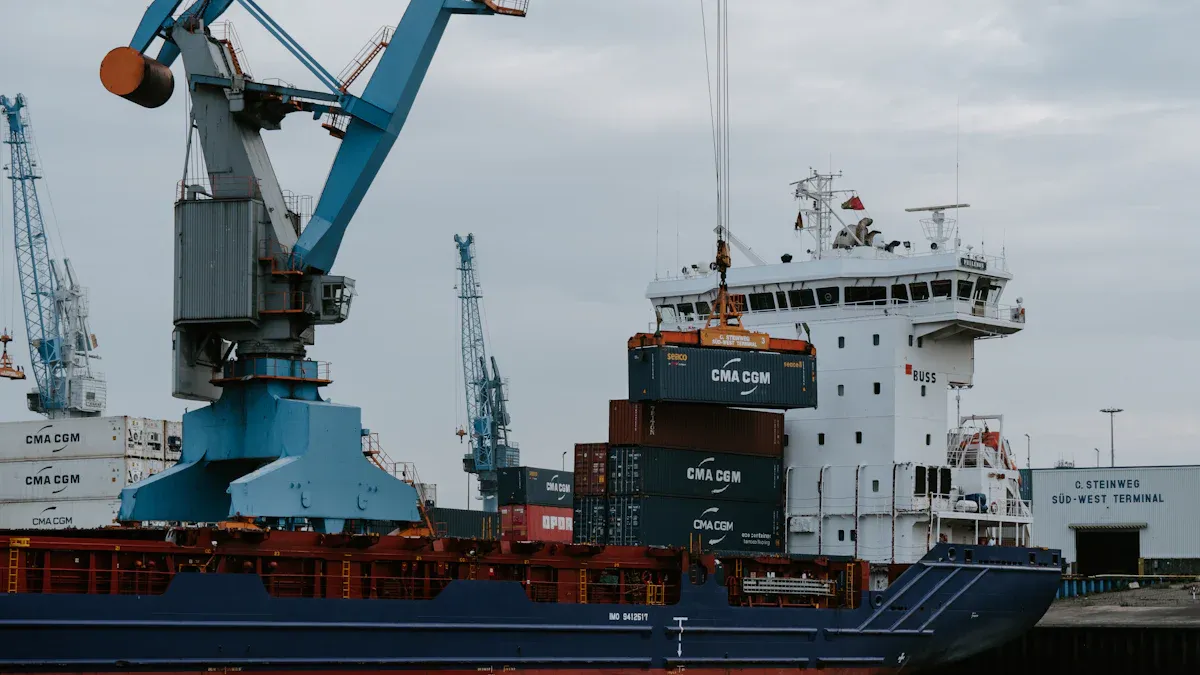
You must choose the right equipment for loading, unloading, and transporting bulk cargo. The right choice improves safety, efficiency, and cost control. You should consider several criteria before making a decision. The table below shows important standards and factors:
Criteria Category | Description |
|---|---|
Cost factors including investment, operational, and maintenance costs | |
Equipment Characteristics | Features and capabilities of the equipment |
Environmental Impact | Effects on environment and compliance with environmental regulations |
Compatibility | How well equipment types work together within the system |
Operational Costs | Expenses related to running the equipment |
Throughput Capacity | Ability to handle required volume efficiently |
Industry Standards & Certifications | Compliance with standards such as ISO 9001, 14001, and 22000 |
You need to verify certifications like ISO 9001 for quality, ISO 14001 for environmental management, and ISO 22000 for food safety. Communicate with providers to confirm operational conditions and special cleaning certificates when needed. You must also match equipment size and type to your throughput requirements to keep investment and storage costs low.
Maintenance
Regular inspections and maintenance prevent delays and damage in bulk logistics operations. You should set a clear maintenance schedule based on how often you use each machine. High-use equipment needs more frequent checks. Use sensors and AI to detect problems early and plan repairs during off-peak hours. Keep detailed logs of inspections and repairs to spot trends and adjust your schedule. Train your staff on basic maintenance tasks and update their skills often. Budget for maintenance every year and review funds each quarter to support ongoing needs.
Tip: Early problem detection and routine care help you avoid costly breakdowns and keep your operations running smoothly.
Specialized Tools
You need specialized tools to handle different types of bulk cargo safely and efficiently. Some essential tools include:
Gantry cranes for lifting large containers and bulk cargo.
Mobile cranes for flexible lifting across different sites.
Dockside cranes for stable loading and unloading at ports.
Level-luffing cranes for precise horizontal movement.
Continuous ship unloaders for rapid unloading of materials like coal and ore.
Forklifts for moving heavy items quickly within warehouses.
Choosing the right tools for each task helps you improve speed, safety, and reliability in your bulk logistics operations.
Safety
Training
You build a strong safety culture by involving everyone, from executives to frontline workers. Continuous training and regular audits help you maintain high safety standards. You empower your team to report unsafe practices openly, which reduces risks and encourages accountability. Digital tools like Gensuite allow you to track certifications and schedule refresher courses efficiently. You can use augmented reality (AR) and virtual reality (VR) simulations to provide hands-on training in a risk-free environment. Active management involvement, such as designating safety leaders and recognizing safe behavior, keeps safety top of mind. You reinforce safety messages through newsletters, videos, and signage. By refreshing training methods and encouraging feedback, you keep safety education effective and engaging.
Tip: Surprise training sessions and recognition programs help prevent complacency and motivate your team to stay alert.
Risk Management
You manage risks by following international regulations, such as IATA for air cargo and road transport safety guidelines. Accurate documentation, including correct shipping names and compliance with codes like IMSBC, ensures you meet legal requirements. You take precautions against hazards like fire, contamination, corrosion, and cargo shift. Safe loading and unloading procedures require proper equipment, protective gear, and monitoring technology. Sometimes, you break bulk shipments into smaller units to reduce risk. Specialized training focused on safety and regulatory compliance improves operational efficiency. You conduct safety audits, job hazard analyses, and near-miss reporting to identify and address risks before accidents occur.
Key Risk Management Strategies:
Follow global safety regulations
Maintain updated documentation
Use protective gear and proper equipment
Conduct regular safety audits
Weight Distribution
Proper weight distribution keeps your bulk cargo transport safe and efficient. You prevent axle overloads and shifting loads, which can cause rollovers and mechanical failures. The VARIANCE Act allows for axle weight variances, recognizing natural cargo shifting and improving payload efficiency. You load heavier items low and centered to lower the center of gravity and reduce rollover risk. Securing cargo properly minimizes shifting and braking issues. Compliance with axle weight limits avoids fines and downtime. Improved weight distribution enables trucks to carry fuller loads, reducing trips and highway congestion. You support timely delivery and reduce infrastructure wear by maintaining balanced loads.
Note: Always secure bulk cargo and check axle weights before transit to ensure safety and compliance.
Cost Efficiency
Budgeting
You control costs in bulk logistics by using smart budgeting methods. Start by analyzing historical data to spot spending patterns and predict future freight costs. Real-time data helps you adjust your budget quickly when market conditions change. Advanced analytics let you forecast seasonal demand and spot supply chain disruptions before they happen. You need to understand market forces like fuel prices, currency changes, and new regulations. Staying informed helps you avoid unexpected expenses.
Tip: Set clear financial goals and track key performance indicators such as transportation cost per unit and inventory carrying cost. This approach helps you measure progress and find areas for improvement.
Here are steps you can follow to build a strong budget:
Review past spending and use it to plan future costs.
Adjust your budget using real-time market data.
Predict demand and disruptions with analytics.
Monitor market trends and regulations.
Align your team and document assumptions for accuracy.
Reducing Waste
You improve cost efficiency by reducing waste in your logistics operations. Over-production, waiting, and unnecessary transportation often lead to higher costs. You can cut waste by adopting lean management techniques and using asset management solutions.
Common sources of waste:
E-waste from old electronics
Hazardous waste such as batteries and chemicals
Paper waste from documentation
Fuel and oil waste from vehicle maintenance
Excess inventory and damaged goods
You can reduce waste by conducting audits, setting goals, and training employees on proper disposal. Recycling programs and reusable packaging lower costs and help the environment. Digitizing paperwork and optimizing fleet maintenance also reduce waste.
Applying lean principles like Just-in-Time production and process simplification helps you cut costs and boost efficiency.
Bulk Discounts
You save money by negotiating bulk discounts with carriers and suppliers. Shipping larger volumes lets you access better freight rates and lower per-unit packaging costs. Consolidating shipments reduces transportation expenses and improves load optimization. You may see savings of 10–15% on transportation costs by forming strategic partnerships and negotiating flexible contracts.
Bulk ordering increases warehousing and inventory costs, but you can offset these with the savings from volume-based pricing. Careful planning and forecasting help you balance upfront investments with long-term benefits. Strong supplier relationships and smart negotiation strategies maximize your cost savings.
Remember, bulk discounts work best when you manage inventory wisely and maintain good communication with your partners.
Communication
Transparency
You need constant and transparent communication to keep bulk logistics operations running smoothly. When you share information openly, you build trust and prevent misunderstandings. You can use several best practices to maintain transparency:
Establish joint planning and forecasting with all partners. This keeps demand and production schedules aligned.
Use integrated technology platforms, such as APIs and ERP systems, for real-time data sharing.
Implement common communication platforms with clear protocols. This standardizes how everyone interacts.
Share all relevant data with suppliers to improve supply chain visibility.
Define contractual KPIs and conduct regular performance reviews to ensure accountability.
Leverage blockchain technology and smart contracts for traceable, transparent records.
Invest in cloud-based ERP systems and unified dashboards to break down data silos.
These steps help you foster trust, improve collaboration, and enable proactive logistics management.
Real-Time Updates
You improve coordination and efficiency by using real-time updates. These updates help you respond quickly to changes and keep everyone informed. The table below shows how real-time updates support different aspects of bulk logistics:
Aspect | Role of Real-Time Updates |
|---|---|
Communication & Coordination | Seamless updates between dispatchers, drivers, and customers allow quick issue resolution. |
Continuous tracking supports efficient dispatch scheduling and reduces shortages. | |
Product Integrity | Real-time verification prevents delivery errors and ensures quality. |
Analytics & Decision Support | Real-time analytics predict delivery times and optimize routes. |
Technology Integration | GPS and IoT devices provide fleet visibility for informed decisions. |
You can also use digital booking slots and synchronized communication to reduce congestion at sites. Automated alerts help you stay compliant with regulations and avoid risks.
Compliance
Documentation
You must prepare accurate documentation to ensure compliance in bulk logistics. Each document serves a specific purpose and helps you meet legal and regulatory requirements. The table below shows key documents and their roles:
Document Name | Purpose/Role in Compliance and Logistics |
|---|---|
Bill of Lading | Legal receipt and shipment terms; proof of shipment; essential for tracking and legal compliance |
Commercial Invoice | Details quantity, description, and cost; vital for customs clearance and inventory tracking |
Packing List | Specifies contents of each package/container; important for customs and inventory |
Air Waybill (AWB) | Receipt and contract for air freight; enables quick delivery, tracking, and air freight regulation compliance |
Certificate of Origin | Declares country of origin; qualifies shipments for trade agreements and customs compliance |
Import License | Government permit for restricted goods; ensures legal import compliance and expedites customs clearance |
Export Declaration | Official export details; meets export regulations and supports customs clearance |
Consular Invoice | Certified commercial invoice by importing country consulate; aids customs clearance and duty calculation |
Dock Receipt | Issued by port authorities; confirms arrival and handling terms; proof of delivery |
Shipper’s Letter of Instruction (SLI) | Provides freight forwarder with shipment instructions; facilitates coordination and cost optimization |
You also need operational instructions, safety data sheets for hazardous materials, and service contracts. These documents help you communicate with carriers and customs officials, reduce misunderstandings, and support safe handling.
Customs Clearance
You face many challenges during customs clearance for bulk cargo. Complex regulations and frequent changes make compliance difficult. Break bulk cargo requires careful planning because labor-intensive loading and unloading increase risks of damage and theft. Specialized equipment adds cost and complexity. Scheduling and vessel availability can cause delays.
Customs clearance often involves:
Navigating complex paperwork and avoiding errors
Staying updated on international trade rules
Using digital documentation and automated systems to speed up processing
Working with expert partners to handle VAT registration and e-commerce compliance
Even small mistakes in product descriptions can lead to delays or penalties. You must pay close attention to every detail to keep shipments moving.
Tip: Consolidate shipments when possible to simplify compliance and reduce delays.
Regulatory Standards
You must follow strict regulatory standards in bulk logistics. In the United States, the Environmental Protection Agency (EPA) sets emission limits for heavy-duty trucks. You need to modernize your fleet with cleaner engines and telematics systems to meet these standards. The Department of Transportation and the Pipeline and Hazardous Materials Safety Administration (PHMSA) provide rules for hazardous materials, including packaging and transport requirements.
Key compliance areas include:
Customs regulations for international shipments
Environmental rules for emissions and waste management
Accurate documentation for traceability and legal compliance
Technology tools like Transportation Management Systems (TMS) and Electronic Data Interchange (EDI) help you automate compliance checks and improve efficiency. You must coordinate with shippers, carriers, customs brokers, and regulatory bodies to avoid fines and protect your reputation.
Warehousing
Storage
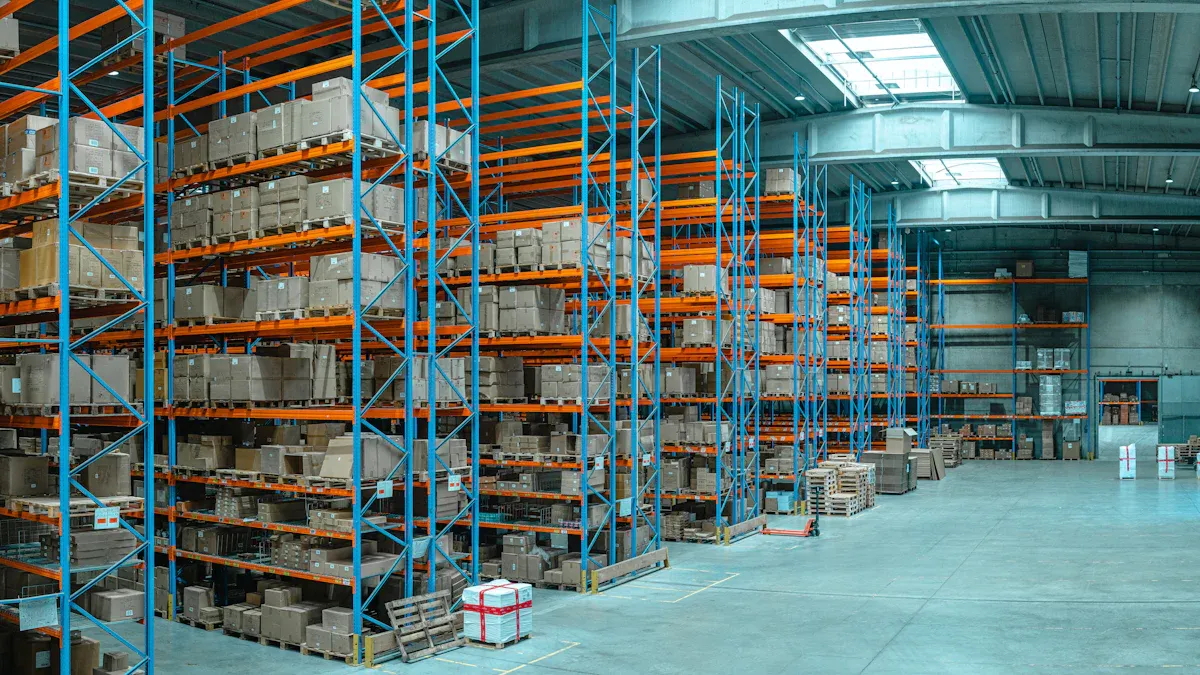
You need strong storage solutions to keep bulk cargo safe and organized. Modern warehouses use different systems to handle heavy loads and maximize space. Here are some of the most efficient options:
Pallet Racking: Store materials on pallets in rows and levels. Choose from selective, drive-in, push-back, or flow racks.
Multi-tier Shelving: Build vertical storage levels for manual picking and better use of height.
Cantilever Shelving: Hold long or bulky items like pipes and timber with open arms for easy access.
Heavy-Duty Shelving: Use reinforced steel shelves for industrial goods.
Modular Shelving: Change layouts quickly to fit new needs.
Mobile Shelving: Move shelves on tracks to save space.
Mezzanine Flooring: Add extra floors or shelving to use warehouse height.
Automated Storage and Retrieval Systems (ASRS): Use robots and lifts to speed up storage and reduce labor.
Vertical Storage Systems: Stack goods with carousels or lift modules for quick retrieval.
Bulk Storage Areas: Place large or heavy items on the floor for easy access.
Security Cages: Lock up high-value items for extra safety.
These systems help you optimize space, improve safety, and keep operations running smoothly.
Inventory
You manage bulk inventory by using smart tools and clear processes. Batch control lets you produce and store goods in manageable amounts, which reduces losses. Real-time tracking with RFID or barcodes helps you monitor stock levels and avoid mistakes. Demand forecasting and reorder points keep your inventory balanced, so you do not run out or overstock. Organize your warehouse to speed up order picking and lower errors. Strong supplier relationships and good logistics coordination ensure you deliver on time. Standard operating procedures for receiving, storing, and shipping keep your handling consistent. Warehouse management systems tie all these steps together for better control.
Tip: Use technology like cloud-based data storage and automation to track inventory and reduce errors.
Efficiency
You measure warehousing efficiency by tracking key metrics. These numbers show how well your warehouse performs and where you can improve. Here is a table with important metrics:
Category | Metrics (Examples) |
|---|---|
Timeliness | On time, in full (OTIF), Dock to Stock, Order processing time |
Completeness | Order fill rate, Perfect order rate |
Process Quality | Inventory accuracy, Shipped order accuracy, Inventory shrinkage rate |
Productivity | Employee turnover rate, Order processing time |
Capacity | Warehouse capacity utilization |
Cost | Warehouse cost as % of sales, Energy usage, Waste emissions |
Track these metrics often. You will spot problems early and keep your bulk logistics operations efficient and reliable.
Carrier Selection
Experience
You need to choose carriers with proven experience in bulk logistics operations. Experienced carriers have strong networks and established systems that help you deliver shipments on time. They use advanced technology like GPS tracking and AI route optimization to reduce delays and damage. When you work with experienced carriers, you gain access to reliable customs compliance and expert advice for international shipping. These carriers handle large shipments efficiently and adapt to sudden changes in demand. You protect your reputation and keep customers satisfied by selecting carriers with a history of safe, on-time deliveries.
Tip: Always check a carrier’s safety records, certifications, and customer testimonials before making your decision.
Capacity
Carrier capacity plays a key role in meeting your logistics demands. You must match your shipment volume and timing with the carrier’s ability to handle goods. Carriers with the right capacity ensure on-time deliveries and reduce the risk of delays. They use clean, well-maintained equipment and provide trained drivers for safe handling. You benefit from flexible delivery options and fewer errors when you choose carriers with scalable capacity. Technology like GPS and route-mapping software helps carriers optimize load space and improve efficiency. By diversifying your carrier network, you avoid bottlenecks and keep your supply chain moving smoothly.
Key capacity factors to consider:
Maximum volume the carrier can handle
Cleanliness and compliance of equipment
Availability of trained staff and safety equipment
Communication and proactive issue reporting
Service Consistency
You rely on service consistency to keep your bulk logistics operations efficient. Carriers must follow strict quality management standards, such as ISO-9001, to ensure reliable service. Regular audits, customer feedback, and performance reviews help carriers maintain high standards. You should monitor inventory accuracy, return processing times, and customer complaints to spot problems early. Effective account management and clear communication support quick problem resolution. When carriers document corrective actions and analyze root causes, they prevent repeat issues and improve service quality.
Note: Consistent service from your carriers builds trust and supports long-term business growth.
Technology
Automation
You can transform your bulk logistics operations by adopting the latest automation technologies. Automated storage and retrieval systems (AS/RS) use robotics and AI to manage inventory with speed and accuracy. Machine learning and predictive analytics help you forecast demand and make smarter decisions. Automated order processing reduces manual entry errors and speeds up your workflow. IoT-enabled tracking solutions, such as GPS and RFID, give you real-time updates on shipments. Cloud-based logistics management platforms let you control all logistics functions from one place, improving visibility and coordination.
Smart sensors monitor cargo conditions and equipment status. You can use these tools to schedule maintenance before problems occur, reducing downtime and keeping your operations running smoothly.
Logistics Software
You boost efficiency in bulk cargo management by using advanced logistics software. Real-time freight rate comparison tools help you find the best shipping options quickly. Container and air shipment tracking improves transparency and lets you monitor every shipment. Ship schedule planners align your cargo with vessel timelines and capacities. Load calculators optimize space in containers and trucks, saving you money. Route planners use traffic and distance data to create the fastest delivery routes. CO₂ calculators estimate your logistics carbon footprint, supporting your sustainability goals.
Feature/Capability | Description | Impact on Bulk Cargo Management |
|---|---|---|
Automation | AI/ML for predictive analytics and real-time updates | Speeds up processes, reduces errors |
Real-time Tracking | Monitors shipments and inventory status | Improves transparency and decision-making |
Route Optimization | Plans delivery routes using traffic data | Cuts fuel use and delivery times |
Data Integration | Connects ERP, e-commerce, and IoT devices | Enhances coordination across supply chain |
Cloud-based Accessibility | SaaS models for flexibility and scalability | Supports growth and remote management |
Data Analytics
You gain a competitive edge by using data analytics in your bulk logistics operations. AI-driven analytics provide predictive insights and operational recommendations. You can spot market changes early and respond quickly. Data analytics help you track key performance indicators, such as delivery times and inventory levels. You use these insights to improve resource use and reduce costs. Advanced analytics also support proactive management, letting you adjust your strategies before problems arise.
Tip: Use analytics dashboards to visualize trends and make faster decisions. This approach helps you stay ahead in a fast-moving logistics environment.
You can achieve success in Bulk Logistics Operations by focusing on planning, safety, equipment, and technology. When you use these strategies together, you improve efficiency and protect your team. Regularly review your logistics practices to find new ways to adapt and grow. Stay proactive and work closely with your partners. Continuous improvement keeps your operations strong and ready for any challenge.
FAQ
What is bulk logistics?
Bulk logistics involves moving large quantities of goods, such as grains, minerals, or liquids. You use specialized equipment and vehicles to handle these materials safely and efficiently.
How do you choose the right carrier for bulk shipments?
You look for carriers with experience, strong safety records, and enough capacity. Check certifications and customer reviews. Reliable carriers help you avoid delays and protect your cargo.
Why is route optimization important in bulk logistics?
Route optimization helps you save time and money. You use technology to find the fastest and safest routes. This reduces fuel costs and improves delivery reliability.
How can you improve safety in bulk logistics operations?
You train your team regularly and use proper equipment. Safety audits and clear procedures help you prevent accidents. You encourage everyone to report hazards and follow safety rules.
See Also
How Robotics In Logistics Boost Warehouse Efficiency Dramatically
Unlocking Supply Chain Savings With Proven Logistics Strategies
Mastering Lean Logistics To Drive Success In High-Tech Manufacturing
Effective Supply Chain Techniques To Ensure Optimization Success
Transforming Logistics Through Cutting-Edge Supply Chain Innovations