Key Performance Indicators (KPIs) for Third-Party Logistics (3PL) Warehouse Management

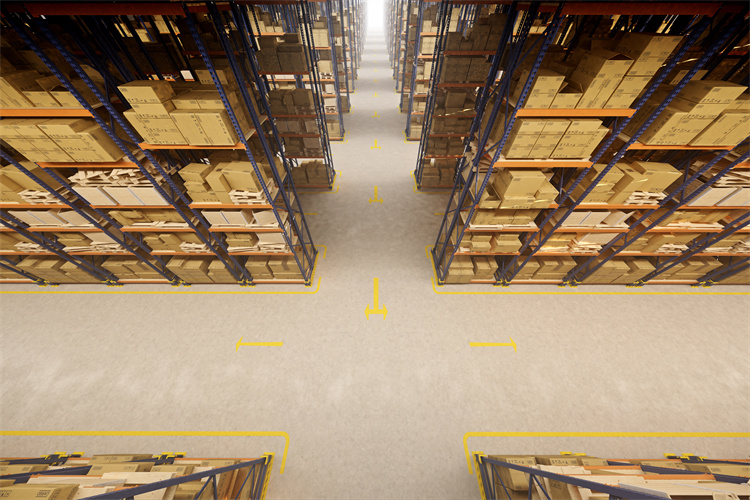
You need to track the right Key Performance Indicators to maximize your warehouse performance. The most commonly used metrics include order accuracy rate, inventory accuracy, on-time shipment, inventory turnover, dock-to-stock time, and cost per unit shipped. Advanced platforms like JusLink and eVMI empower you to monitor these KPIs in real time. With JUSDA’s global expertise and technology, you gain precise control and continual improvement for every aspect of warehouse operations.
Order accuracy rate
Inventory accuracy
Inventory turnover
On-time shipment
Dock-to-stock time
Cost per unit shipped
Key Takeaways
Track essential KPIs like order accuracy and inventory turnover to boost warehouse performance.
Use technology like JusLink and eVMI for real-time monitoring of KPIs, helping you respond quickly to issues.
Regularly review your KPIs to identify trends and areas for improvement, ensuring your warehouse runs smoothly.
Set clear targets for your KPIs to motivate your team and enhance accountability in operations.
Why KPIs Matter
Performance and Accountability
You need clear standards to measure how well your warehouse operates. Key Performance Indicators set these standards and help you track progress. When you monitor KPIs, you see where your team excels and where you need to improve. Regular reviews of these metrics keep everyone focused on meeting expectations. If your warehouse meets or exceeds KPI targets, you know your team is fulfilling commitments. This approach builds trust with clients and strengthens your reputation.
Tip: Use dashboards to visualize KPI results. Quick access to data helps you address issues before they grow.
A systematic approach to measuring and monitoring performance ensures you meet standards and boost efficiency. When you review KPIs often, you catch problems early and solve them quickly. This keeps your operations running smoothly and supports accountability at every level.
Here are some KPIs that drive efficiency, cost control, and service quality for logistics providers:
KPI | Relevance |
|---|---|
On-time Delivery Rate | Crucial for assessing reliability, impacting customer satisfaction and loyalty. |
Freight Cost as Percentage of Sales | Gauges efficiency of transportation spending in relation to revenue generation. |
Carrier Compliance Rate | High compliance indicates reliable carrier performance, essential for smooth operations. |
Average Miles per Gallon (MPG) | Monitors fuel efficiency, reducing transportation costs and environmental impact. |
CO2 Emissions per Ton-Mile | Assesses environmental sustainability, increasingly important for customer decisions. |
Cost per Shipment | Directly affects the bottom line, essential for identifying opportunities to reduce expenses. |
Delivery in Full on Time (DIFOT) Rate | Comprehensive measure of logistics effectiveness, impacting customer satisfaction. |
Damage-Free Delivery Rate | Essential for quality assurance, reducing returns and maintaining customer trust. |
Fleet Utilization Rate | High utilization indicates efficient asset use, contributing to cost savings. |
Order to Delivery Lead Time | Critical for evaluating speed and efficiency, affecting customer satisfaction. |
Effective management of logistics leads to competitive advantages such as reduced operational costs and improved customer loyalty.
KPIs help evaluate performance, identify bottlenecks, and implement improvements in logistics operations.
Continuous Improvement
You want your warehouse to get better every day. KPIs guide you toward smarter decisions and more efficient processes. When you analyze KPI data, you spot trends and find areas that need attention. You can adjust your goals and methods as your business changes. This flexibility keeps your warehouse competitive.
Method | Description |
|---|---|
Align with Objectives | Ensure KPIs match your warehouse goals, like reducing order processing time. |
Data-driven Decisions | Analyze KPI data to find trends and inefficiencies, leading to better choices. |
Flexibility in KPIs | Review and adjust KPIs to fit current needs in a changing industry. |
Embrace a Problem-solving Mindset | Encourage your team to identify issues early and suggest solutions. |
Leverage Technology and Automation | Use analytics and automation to improve operations and reduce errors. |
Foster a Rewarding Environment | Recognize and reward employee contributions to motivate ongoing improvement. |
You can use technology like JusLink and eVMI to track KPIs in real time. These tools help you respond quickly to changes and keep your warehouse running at its best. When you reward your team for meeting goals, you motivate them to keep improving. Continuous improvement becomes part of your daily routine.
Essential Key Performance Indicators
Order Accuracy Rate
Order accuracy rate measures how many orders you pick, pack, and ship without errors. This KPI is vital for customer satisfaction and retention. Industry benchmarks set acceptable performance at 97%, but top-performing warehouses aim for 99.5% or higher. JUSDA’s JusLink and eVMI platforms help you track every order in real time, reducing mistakes and boosting accuracy.
The industry benchmark for order accuracy is around 97%.
Leading 3PLs target 99.5% accuracy for best-in-class service.
JusLink’s real-time tracking and automated replenishment systems ensure you maintain high order accuracy by preventing stockouts and overstocking.
Evidence Description | Impact on Order Accuracy |
|---|---|
Real-time tracking of shipments | Enhances visibility and reduces errors in delivery processes |
Automated replenishment systems | Maintains accurate stock levels |
Continuous data flow for monitoring | Allows quick adjustments to orders and logistics |
Inventory Accuracy
Inventory accuracy shows how well your recorded stock matches the physical count. This KPI affects your ability to fulfill orders and manage costs. The average inventory accuracy rate for leading 3PL providers is 83%, but top performers reach above 98%. JUSDA’s technology improves your inventory accuracy by 20% to 30%, giving you better control and fewer discrepancies.
Most 3PLs report 83% inventory accuracy.
Top performers achieve rates above 98%.
You can use eVMI and JusLink to monitor inventory levels in real time, reducing errors and improving fulfillment rates.
On-Time Shipment Rate
On-time shipment rate tracks the percentage of orders shipped within the promised timeframe. This KPI is crucial for meeting customer expectations. Strategic warehouse locations, proximity to customers, and access to transportation infrastructure all influence this rate. JUSDA’s global network and advanced technology help you optimize routes and process orders quickly.
Strategic warehouse placement improves delivery speed.
Technology like JusLink enables route optimization and efficient inventory management.
Receiving Efficiency
Receiving efficiency measures how quickly you process incoming goods. You calculate it by dividing the total quantity received by the labor hours used. High receiving efficiency means you move products into storage faster, reducing delays and improving overall workflow. JUSDA’s automated systems streamline receiving, so you can handle more goods with less effort.
Tip: Use real-time dashboards to monitor receiving rates and identify bottlenecks.
Order Cycle Time
Order cycle time is the total time from receiving an order to shipping it out. Shorter cycle times lead to faster deliveries and happier customers. If you delay orders in the fulfillment queue, customer satisfaction drops. JUSDA’s technology helps you shorten cycle times by automating order processing and tracking every step.
Customers expect quick deliveries. You can meet these demands by reducing order cycle time and improving your fulfillment process.
Dock-to-Stock Time
Dock-to-stock time measures how long it takes to move goods from the receiving dock to storage. The industry standard for top-performing 3PLs is 8-10 hours. JUSDA’s automated workflows and real-time tracking help you meet or exceed this benchmark, ensuring products are available for picking and shipping without delay.
Aim for dock-to-stock times under 10 hours for best results.
Space Utilization
Space utilization shows how efficiently you use your warehouse’s storage capacity. Leading 3PLs optimize space with push-back racking, vertical lift modules, and mezzanine floors. JUSDA uses layout optimization, directed put-away, and AI-driven WMS solutions to maximize cubic space and minimize wasted areas.
Strategy | Description |
|---|---|
Layout Optimization | Detailed floor plans and defined warehouse sections |
Inventory Management | Geographic cycle counts and product consolidation |
Directed Put-Away | Optimal storage locations and defined zones |
Clean Allocation | Picking from the same location until empty |
Reporting Capabilities | Monitoring space utilization through reports |
Return Rate
Return rate tracks the percentage of orders customers send back. High return rates can signal problems with order accuracy, product quality, or shipping damage. JUSDA’s real-time data systems help you analyze returns, identify root causes, and implement corrective actions quickly.
Note: Monitoring return rates helps you improve processes and reduce future returns.
Labor Productivity
Labor productivity measures how efficiently your team completes warehouse tasks. You can track productivity by analyzing order accuracy, fill rates, and cost per order. JUSDA’s technology identifies bottlenecks, tracks employee performance, and helps you optimize labor allocation.
Identify tasks that take longer than expected.
Track order accuracy and fulfillment rates.
Evaluate employee performance patterns.
Damage Rate
Damage rate shows the percentage of products damaged during handling or storage. The average damage rate in 3PL warehouses is about 2%. You can minimize damage by using the right equipment, improving packing methods, and enhancing visibility of goods. JUSDA’s advanced management systems and protective packaging solutions help you keep damage rates low.
Common causes include improper packing and poor management.
Use protective packaging and real-time tracking to reduce damage.
You can maintain high service quality by monitoring damage rates and implementing best practices.
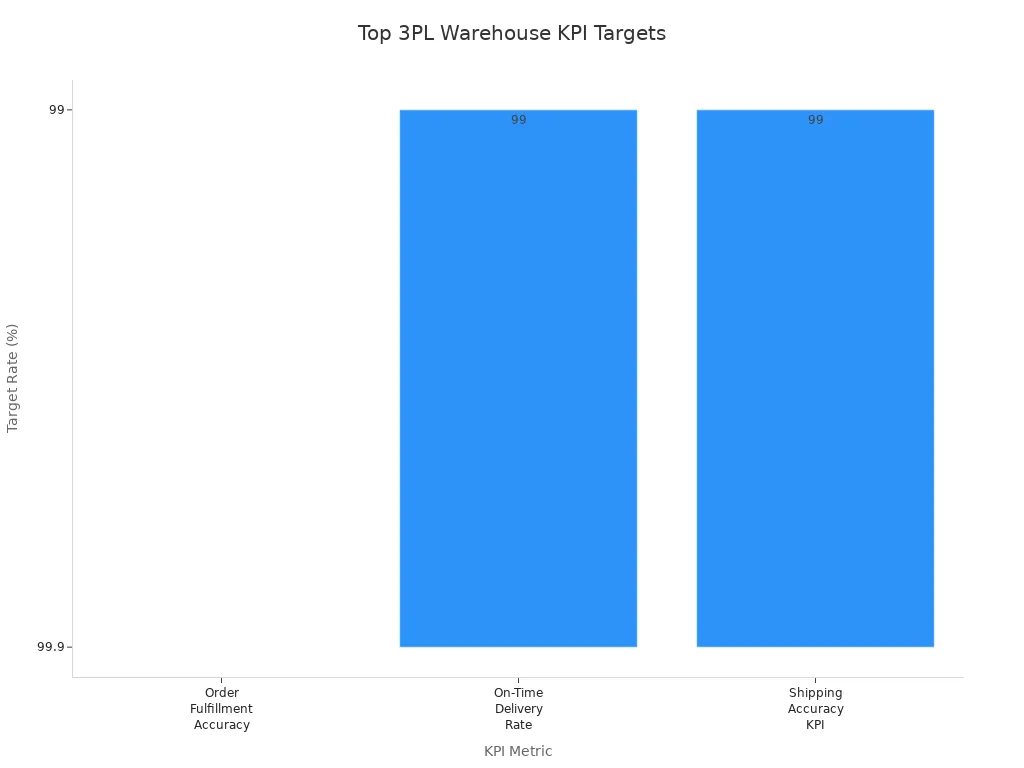
Table: Critical KPIs for 3PL Warehouse Management
KPI Metric | Description | Target Rate |
|---|---|---|
Order Fulfillment Accuracy | Essential for customer satisfaction; targets 99.5% to 99.9% accuracy. | 99.9% |
On-Time Delivery Rate | Measures ability to meet delivery times; crucial for customer expectations. | 95% to 99% |
Shipping Accuracy KPI | Assesses accuracy of shipping orders; aims for 99.9% outbound accuracy. | Above 99% |
Return Processing Time | Measures efficiency of handling returns; impacts customer experience. | N/A |
Cost Per Unit Shipped | Assesses cost efficiency of shipping; aids in resource allocation. | N/A |
Operational Costs | Tracks expenses to identify cost reduction opportunities. | N/A |
Perfect Order Rate | Measures orders delivered correctly and on time; correlates with satisfaction. | N/A |
You can use Key Performance Indicators to measure, monitor, and improve every aspect of your warehouse operations. JUSDA’s real-time data solutions give you the visibility and control you need to achieve global best practices.
Inventory Management at JUSDA Warehouses

Inventory Turnover
You need to monitor inventory turnover to keep your warehouse efficient. Inventory turnover measures how often you sell and replace stock during a set period. High turnover means you move products quickly, which reduces holding costs and keeps your inventory fresh. JUSDA’s real-time tracking systems help you analyze sales patterns and adjust stock levels. You can use automated alerts to prevent overstocking and avoid shortages. When you maintain a healthy turnover rate, you improve cash flow and support customer satisfaction.
Tip: Set monthly targets for turnover. Review your sales data regularly to spot slow-moving items and adjust your purchasing strategy.
Shrinkage Rate
Shrinkage rate shows how much inventory you lose due to theft, damage, or errors. You must keep this rate low to protect your profits and maintain trust with clients. JUSDA’s advanced warehouse management systems track every item from arrival to shipment. You can use regular audits and automated reconciliation to catch discrepancies early.
Here is a comparison of shrinkage rates in the industry:
Category | Shrinkage Rate |
|---|---|
Best-in-class | <0.01% |
Typical allowance | 0.5-1% |
Industry average | 1.4% |
Renegotiation threshold | >2% |
Aim for a shrinkage rate below 0.5%. Use technology to monitor inventory and train your staff to handle goods carefully.

JUSDA Solutions
To provide you with professional solutions and quotations.
Slow-Moving Inventory
Slow-moving inventory ties up valuable space and capital. You need to identify these items and take action to optimize warehouse performance. JUSDA uses slotting optimization to assign the best locations for slow-moving products. You can adopt just-in-time inventory practices to reduce excess stock. Consolidated storage systems, such as mobile shelving, help you save space for low-demand items.
Here are proven strategies to manage slow-moving inventory:
Assign storage locations based on movement rate and demand.
Schedule smaller, frequent deliveries to minimize excess stock.
Use mobile shelving or pallet flow racks for low-cube SKUs.
Note: Review your inventory reports monthly. Move slow-moving items to less accessible areas and prioritize fast-moving products for prime locations.
Cost and Financial KPIs
Cost Per Order
You need to understand the cost per order to manage your warehouse budget. This KPI shows how much you spend to process each order, including picking, packing, storage, and shipping. In most 3PL warehouse operations, the average cost per order ranges from 25% to 35% of the total order value. Fulfillment fees make up a large part of this expense. For e-commerce, you usually pay between $0.20 and $2.00 for pick and pack services per order. Storage, receiving, and shipping fees also add to your total cost. When you track cost per order, you can spot areas where you spend too much and find ways to save money. JUSDA’s advanced systems help you monitor these costs in real time, so you can make quick decisions and keep your operations efficient.
Tip: Review your cost per order every month. Look for trends and adjust your processes to reduce unnecessary expenses.
Storage Cost Ratio
Storage cost ratio measures how much you spend on storing goods compared to your total inventory value. You need to choose the right pricing model for your business. Some warehouses offer on-demand storage, where costs change based on how much inventory you store. Others provide dedicated storage space for a fixed monthly fee. Each model has its own benefits and drawbacks.
Pricing Model | Description | Advantages/Disadvantages |
|---|---|---|
On-Demand 3PL Storage | Costs fluctuate based on inventory stored. | Costs decrease with lower inventory; may charge for underutilized pallets. |
Dedicated 3PL Storage Space | Fixed monthly cost for dedicated space regardless of inventory levels. | Stable costs; can lead to excess capacity during off-peak times. |
You should compare these options and pick the one that fits your business needs. JUSDA’s technology gives you clear reports on storage costs, helping you manage your budget and avoid surprises.
Labor Cost Ratio
Labor cost ratio tells you how much of your total operating cost comes from employee wages and benefits. Warehousing relies heavily on labor, so this KPI is important for controlling expenses. You can track labor cost ratio by dividing your total labor costs by your overall warehouse operating costs. If you see labor costs rising, you may need to review your staffing levels or invest in automation. JUSDA’s warehouse management systems help you analyze labor productivity and allocate resources more effectively.
Note: Use labor cost ratio to guide your hiring and training decisions. Efficient labor management leads to lower costs and better service.
Service Quality and Customer Satisfaction
Customer Complaint Rate
You need to monitor customer complaint rate to understand how well your warehouse meets client expectations. This KPI shows the percentage of orders that result in formal complaints. High complaint rates often point to issues with order accuracy, shipment delays, or product damage. You can use real-time tracking systems like JusLink to identify problems quickly. When you address complaints fast, you build trust and improve your reputation.
You should analyze complaint trends every month. Look for patterns in product types, shipping methods, or specific warehouse locations. If you see a spike in complaints, investigate the root cause and take corrective action. JUSDA’s advanced management platforms help you track complaints and automate follow-ups. You can set alerts for high-risk orders and respond before issues escalate.
Tip: Encourage customers to share feedback after every delivery. Quick responses to complaints show your commitment to service quality.
Customer Satisfaction Score
You measure customer satisfaction score by collecting feedback and ratings from clients. This score reflects how happy customers feel about your service. High scores mean you deliver reliable, accurate, and timely orders. Low scores signal areas for improvement.
You can use several metrics to calculate customer satisfaction in 3PL warehouse management:
Metric | Description |
|---|---|
On-time Delivery | Measures how often orders arrive within the promised time window. |
Order Accuracy | Tracks the precision of order fulfillment. |
Customer Feedback | Collects opinions and ratings from clients. |
Service Level Agreement (SLA) | Compares actual performance to agreed standards. |
Continuous Improvement | Focuses on ongoing enhancements to meet changing customer needs. |
You should review satisfaction scores regularly. Use surveys, direct feedback, and SLA performance reports. JUSDA’s JusLink platform helps you visualize these scores in real time. When you see a drop in satisfaction, act quickly to resolve issues and improve your processes.
Note: High customer satisfaction leads to repeat business and long-term partnerships. Make it a priority in your warehouse operations.
Health, Safety, and Environmental KPIs
Incident Rate
You need to monitor incident rate to keep your warehouse safe and productive. This KPI tracks the number of workplace injuries or accidents over a set period. A lower incident rate means you have a safer environment for your team. Best-in-class 3PL warehouses report an injury incidence score below 2, while the average warehouse sees a score closer to 10. You can reduce incidents by focusing on safety training and clear guidelines.
Training employees to use different forklift types and understand their weight limits.
Maintaining proper aisle width and clearance to prevent collisions.
Enforcing safe speeds throughout the warehouse.
You should also invest in ergonomic workplace design and comprehensive employee training. Strict adherence to warehouse guidelines helps prevent accidents. When you prioritize safety, you protect your staff and avoid costly disruptions.
Safety Measure | Impact on Incident Rate |
|---|---|
Forklift Training | Reduces handling accidents |
Aisle Width Management | Prevents collisions |
Safe Speed Enforcement | Lowers risk of injuries |
Ergonomic Design | Minimizes strain and fatigue |
Employee Training | Builds safety awareness |
Tip: Review incident rates monthly. Address any spikes immediately to maintain a safe working environment.
Compliance Score
You need to track compliance score to ensure your warehouse meets industry standards and client requirements. This KPI measures how well your operations follow safety, environmental, and regulatory guidelines. High compliance scores show you run a responsible and trustworthy warehouse.
Modern technology helps you monitor compliance in real time. Visual Supply Chain platforms measure employee performance and operational efficiency. Periodic queries to management systems provide up-to-date metrics, encouraging healthy competition among your team.
Reliable logistics providers offer transparent, data-driven insights into safety and compliance. You receive regular reports on safety performance, including incident rates and compliance scores. Sharing audit and compliance reports helps you spot risks and address gaps quickly.
Key compliance practices include:
Using real-time tracking to monitor shipments and warehouse activities.
Leveraging data analytics to gain insights into operational efficiency and compliance levels.
Conducting regular audits to identify and resolve issues.
Compliance Practice | Benefit |
|---|---|
Real-time Tracking | Immediate visibility |
Data Analytics | Informed decision-making |
Regular Audits | Proactive risk management |
Transparent Reporting | Builds client trust |
Note: High compliance scores reflect your commitment to safety and continuous improvement. Regular monitoring keeps your warehouse operations on track.
KPIs vs. SLAs
You often hear about KPIs and SLAs in warehouse management. These terms sound similar, but they serve different purposes. KPIs, or Key Performance Indicators, help you measure how well your warehouse performs. SLAs, or Service Level Agreements, set the minimum standards you promise to your clients.
KPIs give you a big-picture view. You track things like order accuracy, inventory turnover, and damage rate. These indicators show your progress over time. SLAs focus on specific targets. You agree to meet certain standards, such as shipping 95% of orders within 24 hours.
Here is a simple table to help you see the difference:
Aspect | KPI (Key Performance Indicator) | SLA (Service Level Agreement) |
|---|---|---|
Definition | Higher-level indicators measuring overall company progress | Contractually agreed-upon targets that must be met |
Measurement | Combines multiple metrics to assess performance | Specific targets for service delivery |
Example | Percentage of items dispatched within 24 hours | Must dispatch at least 95% of items within 24 hours |
Note: KPIs help you improve your operations. SLAs protect your clients by setting clear expectations.
JUSDA uses both KPIs and SLAs to deliver reliable service. You can set ambitious KPIs to drive continuous improvement. You also meet strict SLAs to keep your clients satisfied. JUSDA’s JusLink platform tracks every metric in real time. You see your performance and know when you meet your goals.
You should review your KPIs and SLAs regularly. Align them with your business objectives. When you use JUSDA’s approach, you build trust and achieve success for your clients.
Tracking the right Key Performance Indicators gives you a clear view of your warehouse performance. You can use JUSDA’s advanced technology and global experience to reach operational excellence. Review your current KPI tracking methods and look for ways to improve. Consider JUSDA’s solutions to optimize your warehouse. Keep reviewing your progress and work with your partners for continuous improvement.
FAQ
What is the most important KPI for a 3PL warehouse?
Order accuracy rate stands out as the most critical KPI. You need to ensure every order ships correctly. High accuracy builds trust and keeps your clients satisfied.
How often should you review warehouse KPIs?
You should review KPIs at least once a month. Regular reviews help you spot trends, address issues quickly, and keep your warehouse running smoothly.
Can technology help you improve KPI performance?
Yes. Platforms like JusLink and eVMI give you real-time data. You can track performance, receive alerts, and make fast decisions to improve your KPIs.
How do you choose which KPIs to track?
You should select KPIs that match your business goals. Focus on metrics that impact cost, efficiency, and customer satisfaction. Use a table to compare options:
KPI | Impact Area |
|---|---|
Order Accuracy | Customer Service |
Inventory Turnover | Cost Efficiency |
On-Time Shipment | Delivery Speed |
See Also
Harnessing Robotics in Logistics to Boost Warehouse Efficiency
Unlocking Cost Savings: Expert Tips for Supply Chain Success
Understanding Robotic Automation for Enhanced Warehouse Efficiency
Mastering Lean Logistics for Success in High-Tech Manufacturing