Staying Resilient Against Cyber Attacks in Logistics Operations for cybersecurity threats in logistics increase 35%

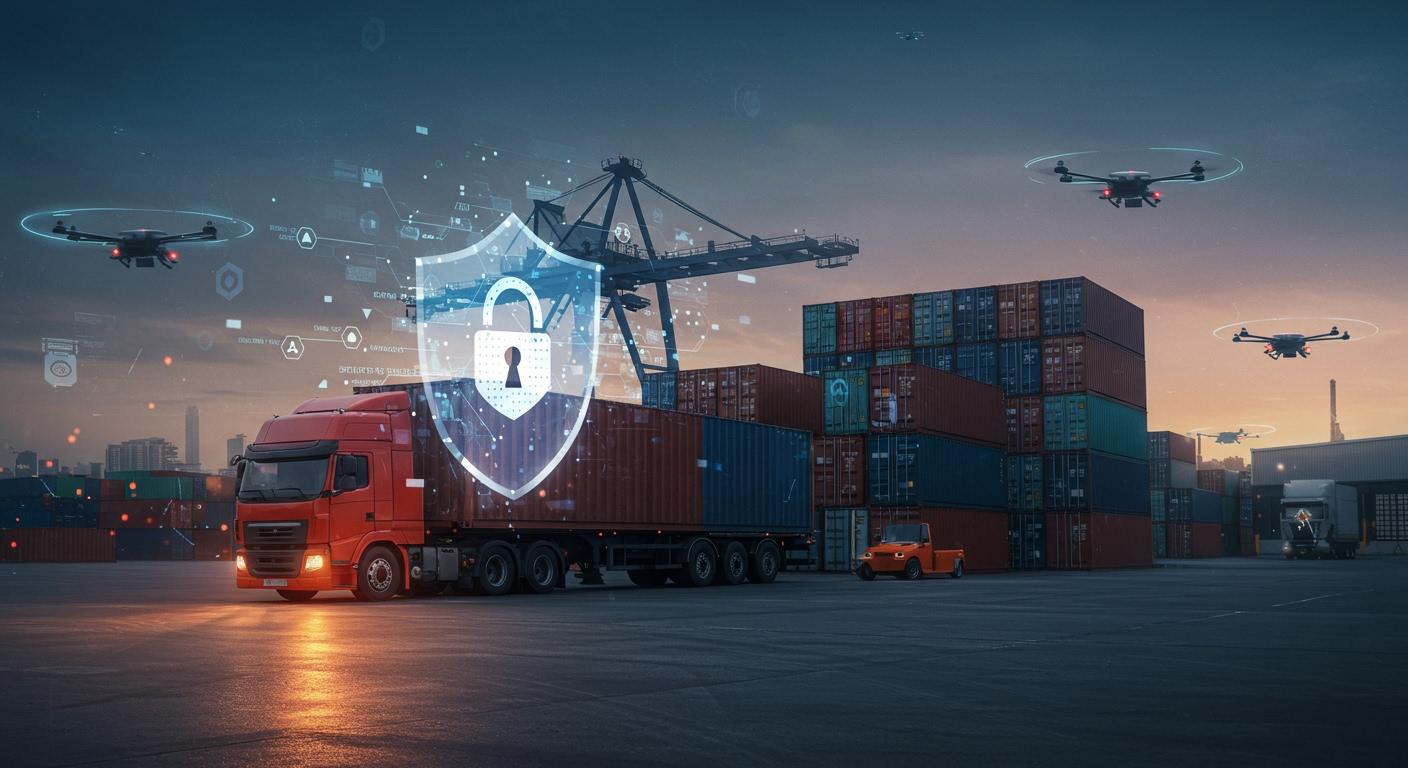
Logistics cybersecurity threats surged by 35% in recent months, as shown in the table below:
Month | Mentions | Change |
|---|---|---|
Jan | 413 | - |
Feb | 411 | -0.5% |
Mar | 559 | +35% |
Major companies like Jaguar Land Rover and Asahi suffered operational shutdowns due to cyberattacks. These incidents highlight the urgent need for logistics companies to strengthen resilience. How can operations stay protected and recover quickly? Digital transformation, advanced technologies, and zero-trust supply chains play a critical role in building robust defenses.
Key Takeaways
Cybersecurity threats in logistics have surged by 35%, highlighting the need for companies to strengthen their defenses.
Ransomware attacks account for 38% of incidents, making it crucial for logistics firms to implement robust data protection strategies.
Regular employee training and clear communication can significantly reduce human error, a leading cause of cybersecurity incidents.
Adopting advanced technologies and incident response plans helps logistics companies quickly recover from cyberattacks.
Continuous monitoring and compliance with cybersecurity regulations are essential for maintaining operational integrity and protecting sensitive data.
Threat Landscape
Recent Trends
The logistics industry faces a rapidly evolving threat landscape. Cybercriminals have shifted their focus toward logistics operations, exploiting vulnerabilities in legacy systems and interconnected networks. Companies in this sector experience frequent attacks that disrupt business and cause financial losses.
The reliance on outdated technology and complex digital networks makes logistics organizations attractive targets for cyber threats. Attackers use advanced techniques, including AI-driven phishing campaigns, to bypass traditional security measures.
Key trends in logistics cybersecurity include:
Ransomware accounts for 38% of attacks targeting logistics companies. Attackers encrypt critical data and demand payment for its release.
Distributed Denial of Service (DDoS) attacks represent 24% of incidents. The transport industry alone faces 21% of all DDoS events, which can halt operations and impact customer service.
Phishing attacks make up 18% of threats. Cybercriminals use deceptive emails and messages to steal credentials and gain unauthorized access.
State-sponsored actors increasingly target logistics networks, using sophisticated methods to surveil supply chains and disrupt aid routes.
These trends highlight the urgent need for robust logistics cybersecurity strategies.
Notable Attacks
Several high-profile cyberattacks have demonstrated the severe impact on logistics operations:
In July 2025, KNP Logistics Group collapsed after a ransomware attack exploited a weak password. The incident led to the loss of 700 jobs and a complete shutdown.
Russian state-sponsored actors targeted logistics companies supporting Ukraine in May 2025. They used spear-phishing and exploited vulnerabilities to monitor aid shipments.
Expeditors International suffered a cyberattack in February 2022, forcing a three-week operational shutdown and resulting in a class action lawsuit from customers.
The NotPetya malware attack caused Maersk to lose $300 million and halted global shipping operations.
Toyota suspended production at all 14 Japanese plants in March 2022 due to a malware attack on a key supplier, disrupting the entire supply chain.
Jaguar Land Rover halted production for weeks in August 2023 after a ransomware attack, affecting thousands of jobs.
These incidents underscore the critical importance of proactive cybersecurity measures in logistics.
Logistics Cybersecurity Threats
Ransomware
Ransomware poses a significant threat to logistics cybersecurity. Attackers use malicious software to encrypt critical data and demand payment for its release. This type of attack can halt operations and disrupt essential services. The Pittsburgh Regional Transit incident in December 2024 illustrates the impact. A ransomware attack delayed bus and rail services for hours, affecting thousands of commuters. The attack disrupted scheduling and ticketing platforms, which led to extended wait times and forced route changes.
Incident | Date | Impact |
|---|---|---|
Pittsburgh Regional Transit (PRT) | December 2024 | A ransomware attack delayed bus and rail services for hours, affecting thousands of commuters. The attack disrupted scheduling and ticketing platforms, leading to extended wait times and forced route alterations. |
Ransomware accounts for 38% of attacks in the transport industry. These incidents can severely disrupt logistics operations and increase contractual risks.
Data Breaches
Data breaches create financial and operational challenges for logistics companies. Attackers gain unauthorized access to sensitive information, which can result in significant losses. The average cost of a data breach in the logistics sector is approximately $4.18 million. Ransomware incidents in maritime logistics have increased by 467% year-on-year, showing a growing financial threat. A single day of disruption can lead to major revenue loss and complicate visibility restoration.
The average cost of a data breach in logistics is $4.18 million.
Ransomware incidents in maritime logistics have increased by 467% year-on-year.
One day of operational disruption can cause significant revenue loss and complicate visibility restoration.
Ransomware is the leading threat in transport, accounting for 38% of attacks.
DDoS attacks (24%) and phishing (18%) also threaten operational stability.
Disruptions can stall logistics and increase contractual exposure.
Supply Chain Attacks
Supply chain attacks target digital and physical vulnerabilities in logistics networks. Attackers may exploit third-party suppliers or critical infrastructure. These attacks can disrupt operations across multiple sectors. The Salesforce data breach affected transportation companies such as Stellantis, Qantas, and Air France-KLM, putting over 3.5 million companies at risk. A ransomware attack on European airports targeted a software company that provided automated check-in systems, causing operational delays. The Jaguar Land Rover cyber attack halted production and led to financial losses, exposing weaknesses in the automotive supply chain.
Supply chain attacks compromise logistics cybersecurity by exploiting weak links. These breaches highlight the need for stronger security measures in supply chain management.
Vulnerabilities in Logistics
Legacy Systems
Legacy systems present significant risks for logistics operations. Outdated technology often lacks modern safeguards, making these systems vulnerable to breaches. Many logistics companies struggle with data security risks because legacy platforms complicate the transition to digital operations. Compatibility issues arise when older systems cannot handle new data formats or real-time requirements. Manual data handling in legacy ERP and CRM tools increases the chance of human error. Maintenance costs remain high, and repairs are difficult, creating a financial burden. Regular software updates are essential for security, but legacy systems rarely support these updates, increasing exposure to cyber attacks.
Vulnerability Type | Description |
|---|---|
Security risks | Outdated systems are more vulnerable to breaches due to the lack of modern safeguards. |
Data Security Risks | Legacy systems complicate the shift to digital operations, increasing the risk of data breaches. |
Legacy System Compatibility Issues | Older systems complicate digital transitions, leading to data format conflicts and real-time issues. |
Operational inefficiencies | Manual data handling in legacy ERP and CRM tools increases the risk of human error. |
Maintenance costs | Legacy systems are expensive to maintain and difficult to repair, posing a financial burden. |
Cyber attack vulnerability | Regular software updates are essential; legacy systems are unable to support these updates, increasing risk. |
Human Error
Human error remains a leading cause of logistics cybersecurity incidents. Employees face high workloads and stress, which can lead to mistakes in judgment and execution. Insufficient training leaves staff vulnerable to cyber threats. Poor communication within teams increases the likelihood of errors. Complex processes may result in skipped steps, further contributing to mistakes.
High workloads and stress can lead to errors in judgment and execution.
Insufficient training increases vulnerability to cyber threats.
Poor communication exacerbates the likelihood of mistakes.
Complex processes may result in skipped steps, contributing to errors.
Tip: Regular training and clear communication protocols help reduce human error in logistics operations.
Complex Supply Chains
Complex supply chains introduce unique challenges for cybersecurity risk management. Companies often struggle with limited visibility, making it difficult to monitor suppliers and ensure compliance with security standards. Third-party software and open-source code can introduce vulnerabilities. Dependence on a few critical providers creates systemic risks that may affect multiple organizations. Geopolitical influences also impact vendor choices and strategies, increasing cyber risks.
Challenge Type | Description |
|---|---|
Limited Visibility | Difficulty in monitoring and managing the security of suppliers and their compliance with standards. |
Software Vulnerabilities | Introduction of vulnerabilities through third-party software and open-source code. |
Dependence on Critical Providers | Reliance on a few key suppliers creates systemic risks that can affect multiple organizations. |
Geopolitical Influences | Cyber risks are affected by international tensions, impacting vendor choices and strategies. |
Logistics cybersecurity requires ongoing attention to these vulnerabilities. Companies must address legacy system risks, minimize human error, and manage complex supply chain challenges to build resilient operations.
Protection Strategies
Logistics companies face increasing cyber risks. They must adopt layered protection strategies to defend operations and maintain resilience. Advanced technologies, incident response planning, employee training, and supplier security form the foundation of effective logistics cybersecurity.
Advanced Technologies
Modern logistics operations rely on digital platforms and interconnected networks. Companies use advanced technologies to strengthen defenses and reduce vulnerabilities. JUSDA’s JusLink platform provides AI-driven risk management, real-time monitoring, and automated application management. JusLink’s Control Tower Intelligent Risk Management system monitors supply chain risks and issues timely warnings. JUSDA’s warehouse solutions use advanced inventory management systems like JusLink and eVMI to ensure transparency and control.
Key protection strategies include:
Strategy | Description |
|---|---|
Network segmentation | Divides networks into smaller parts, isolating suspicious behavior and improving security. |
Endpoint anti-malware software | Protects digital endpoints from malware that can damage systems or steal data. |
Routine patching and software updates | Fixes vulnerabilities that hackers often exploit. |
Backup data | Maintains access to critical data, mitigating ransomware impacts. |
Cybersecurity training | Prepares employees to recognize phishing attempts and other threats. |
Companies must balance the cost of advanced cybersecurity solutions with operational needs. Small and medium-sized enterprises often face budget limitations, which can hinder investment in the latest security technologies. JusLink’s scalable SaaS architecture allows businesses to customize features and optimize costs.
Incident Response
A robust incident response plan helps logistics companies contain and recover from cyberattacks. JUSDA’s JusLink platform supports real-time monitoring and rapid response to anomalies. Companies should establish clear communication channels and assign specific roles within the incident response team. They must deploy security monitoring tools and conduct regular threat hunting.
Best practices for incident response include:
Establish clear and secure communication channels for timely information flow.
Use understandable language and visual aids in response plans.
Implement robust detection and analysis capabilities.
Define clear roles and responsibilities for team members.
Practice incident response through regular simulations.
Ensure rapid containment and eradication of threats.
Establish comprehensive recovery procedures with robust backup processes.
Conduct thorough post-incident analysis to improve future responses.
Manage third-party risks with protocols for incidents involving external vendors.
Companies measure the effectiveness of incident response using metrics such as Mean Time to Detect (MTTD) and Mean Time to Respond (MTTR). Lower values indicate quicker identification and response, minimizing breach impacts.
Employee Training
Employees play a critical role in logistics cybersecurity. Training transforms staff from the weakest link into the strongest line of defense. JUSDA emphasizes regular training to enhance employees’ ability to identify and respond to risks such as phishing and social engineering. Training fosters a culture of vigilance and accountability, making employees active participants in cybersecurity.
Training increases awareness and encourages proactive measures like regular software updates and strong password practices.
Security awareness programs reduce vulnerabilities and increase resilience.
Monitoring incidents experienced by employees highlights areas needing targeted training.
Tip: Ongoing training and clear communication protocols help employees stay alert and reduce errors.
Supplier Security
Supply chains depend on third-party suppliers. Companies must ensure that suppliers follow strict security standards. JUSDA’s JusLink platform enables real-time collaboration and information sharing, supporting supplier risk management. Organizations should use frameworks such as ISO 27001 for information security management. Supplier agreements must address security requirements for system and data access, data handling procedures, and include information security clauses.
Conduct risk assessments to identify vulnerabilities in third-party relationships.
Verify compliance before engaging suppliers.
Monitor supplier service delivery and compliance with security requirements.
Pay special attention to technology suppliers and ICT supply chain security.
Continuous monitoring and regular oversight help maintain supplier security and reduce risks across the logistics network.
Note: Companies should conduct regular risk assessments and monitor supplier compliance to maintain a secure supply chain.
JUSDA Solutions
JusLink Platform
JUSDA stands as a global leader in supply chain management. The company focuses on innovation and efficiency. JusLink, JUSDA’s intelligent supply chain platform, uses AI-driven risk management to protect logistics operations. The platform provides real-time monitoring and automated application management. JusLink’s Control Tower Intelligent Risk Management system integrates external data sources. This system monitors supply chain risks and issues timely warnings. JusLink supports global manufacturing material assurance and finished goods delivery management. The platform uses deep learning algorithms for sales forecasting and intelligent replenishment. JusLink’s microservices architecture allows users to customize features for specific business scenarios.
JusLink’s AI Intelligent Agents help users track shipments, assess risks, and handle exceptions. The platform leverages DeepSeek’s large language model to enhance natural language processing and user interaction.
Feature | Benefit |
|---|---|
AI-driven forecasting | Accurate demand prediction |
Real-time monitoring | Immediate risk alerts |
Automated management | Efficient cargo transport |
Customizable architecture | Flexible business solutions |
Warehouse Security
JUSDA provides secure and transparent inventory management through advanced warehouse solutions. The company operates warehouses across China, Hong Kong, Taiwan, Japan, Vietnam, India, the United States, and Mexico. JUSDA Vietnam offers general, bonded, and distribution center storage. The company uses management systems like JusLink and eVMI for real-time inventory tracking. These systems ensure transparency and control for clients. JUSDA’s warehouses include clean room facilities that meet strict environmental health and safety standards. Value-added services include picking, packing, labeling, kitting, and repacking.
Real-time data sharing supports strategic collaboration between suppliers and buyers.
Advanced technology and dedicated staff ensure high efficiency and accuracy.
Customer Success
JUSDA’s solutions deliver real-world impact for global manufacturers. The company developed a Supply Chain Management Collaboration Platform using AI technology. This platform enhances end-to-end lifecycle management and real-time transparency. Leading manufacturers adopted the platform to optimize global processes and reduce costs. JUSDA integrated ERP, TMS, and WMS systems through open data interfaces and a unified big data platform. The platform’s flagship product, JusElsa, uses large language models for customer interactions. JUSDA’s platform helped manufacturers achieve efficient and low-cost global expansion.
JUSDA’s commitment to innovation and efficiency positions the company as a trusted partner for resilient logistics operations.
Compliance and Best Practices
Regulatory Standards
Logistics companies must comply with strict cybersecurity regulations to protect sensitive data and maintain operational integrity. Several key standards govern cybersecurity in the logistics industry:
CIRCIA requires logistics organizations to report cyber incidents that affect their operations or involve data breaches. Covered entities in critical sectors must disclose significant cyber events.
NIST publishes guidelines that help companies strengthen cybersecurity controls across their networks.
PCI DSS ensures secure handling of payment card data, reducing the risk of financial fraud.
HIPAA sets requirements for healthcare logistics providers to safeguard patient information.
These standards help logistics companies build a strong foundation for cybersecurity. Adhering to regulatory requirements reduces risk and demonstrates a commitment to protecting customer and partner data.
Tip: Regular audits and compliance checks help organizations stay aligned with evolving regulations and industry best practices.
Continuous Improvement
Continuous improvement in cybersecurity keeps logistics operations resilient against emerging threats. Companies adopt a Zero-Trust Security model, verifying every interaction to minimize unauthorized access. Integrating AI and machine learning into cybersecurity strategies enables proactive threat detection and mitigation.
Logistics organizations enhance their security posture by following these best practices:
Use threat intelligence platforms to monitor vulnerabilities and stay informed about new risks.
Develop and test incident response plans to ensure readiness during cyberattacks.
Maintain regulatory compliance with standards such as FMCSA, GDPR, and ISO 27001.
Conduct ongoing employee training to improve awareness and response capabilities.
Evaluate third-party vendors rigorously to reduce supply chain vulnerabilities.
Integrate continuous improvement methodologies to promote ongoing enhancements in cybersecurity measures.
Incident | Lesson Learned |
|---|---|
Estes Express Lines | Proactive response measures improve preparedness. |
Forward Air | Strong incident response plans and system updates are essential. |
Continuous improvement ensures logistics companies can adapt to new threats and maintain robust defenses. Regular reviews and updates to cybersecurity practices support long-term resilience.
Logistics cybersecurity demands urgent attention as threats continue to rise. Companies must adopt proactive, layered strategies and leverage digital solutions like JusLink to strengthen resilience. Key actions include:
Conduct regular security audits.
Implement robust access controls.
Secure communication networks.
Keep software updated.
Train employees on cybersecurity best practices.
Develop an incident response plan.
Backup data regularly.
Organizations should build security into their operations, monitor threats continuously, and invest in education. Now is the time to assess and upgrade cybersecurity posture for lasting protection.
FAQ
What advanced technologies does JUSDA use to protect logistics operations?
JUSDA uses the JusLink platform, which integrates AI-driven risk management, real-time monitoring, and automated application management. The Control Tower Intelligent Risk Management system provides timely warnings and supports global supply chain visibility.
How does JusLink help companies manage supply chain risks?
JusLink offers real-time risk monitoring and early warnings through its Control Tower. The platform uses deep learning algorithms for sales forecasting and intelligent replenishment, helping companies respond quickly to disruptions and maintain supply chain stability.
What warehouse security features does JUSDA provide?
JUSDA operates warehouses with advanced inventory management systems like JusLink and eVMI. These systems enable real-time inventory tracking, transparency, and control. Clean room facilities meet strict environmental health and safety standards.
How does JUSDA support supplier security in logistics?
JUSDA’s JusLink platform enables real-time collaboration and information sharing with suppliers. Organizations can use frameworks such as ISO 27001 to manage supplier risk and ensure compliance with information security requirements.
What industries benefit from JUSDA’s supply chain solutions?
JUSDA serves electronic manufacturing, 3C home appliances, FMCG, automotive, new energy, medical health, heavy equipment, and bulk materials. The company tailors supply chain management solutions to meet the unique needs of each industry.
See Also
Top Five Strategies to Achieve Cybersecurity in Supply Chains
The Importance of Security in Logistics and Supply Chains
Understanding Current Trends in Logistics Risk Management
Protecting Your Supply Chain from Potential Risk Factors
Transforming Future Logistics Through Artificial Intelligence in Supply Chains