Navigating Global Supply Chain Shifts: Mexico’s Nearshoring Edge and the Rise of Friendshoring in Building Resilient Logistics Networks

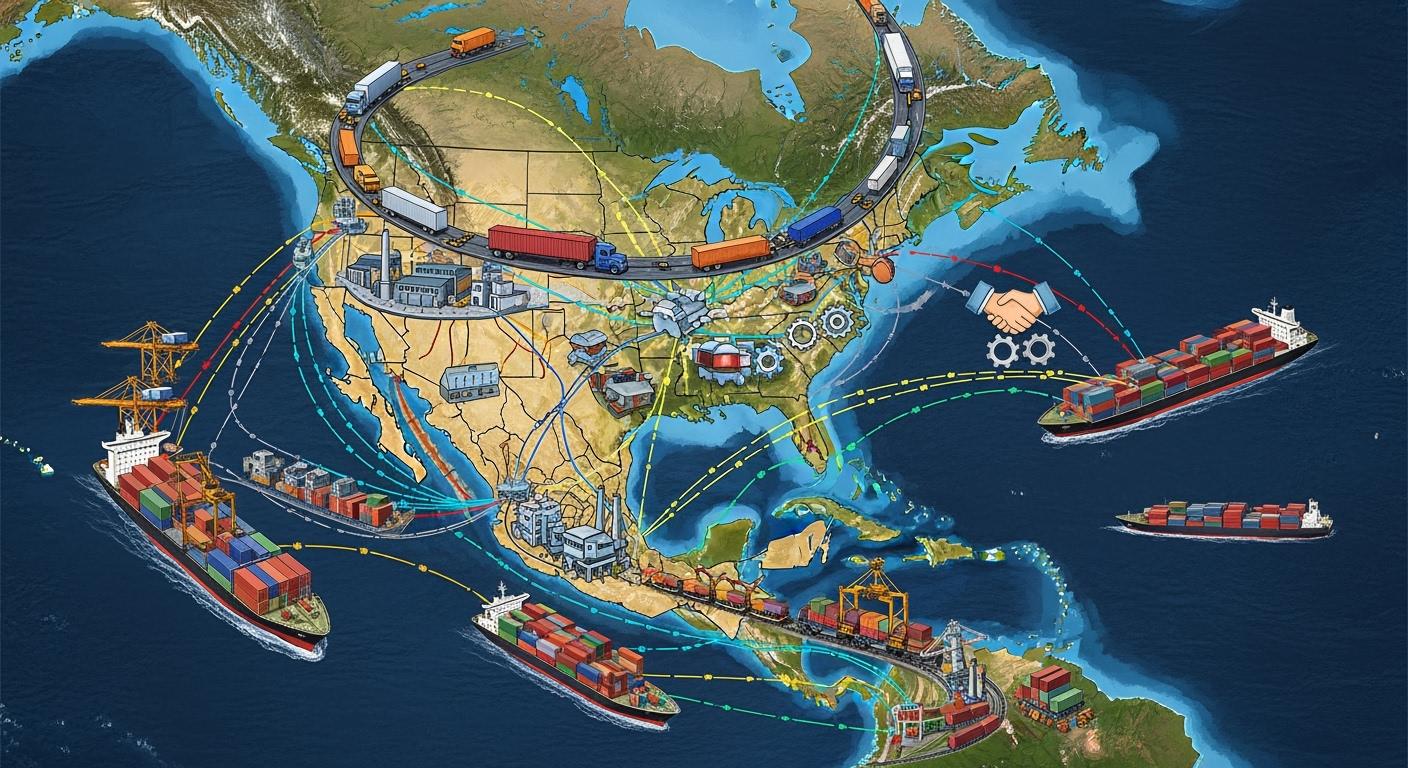
Mexico’s nearshoring and friendshoring strategies drive stronger logistics networks by leveraging geographic advantages and trade agreements. Many global executives now prioritize geopolitically aligned supply chains.
Mexico’s access to over 50 countries enhances its position.
Adoption rates for nearshoring and friendshoring each exceed 42%.
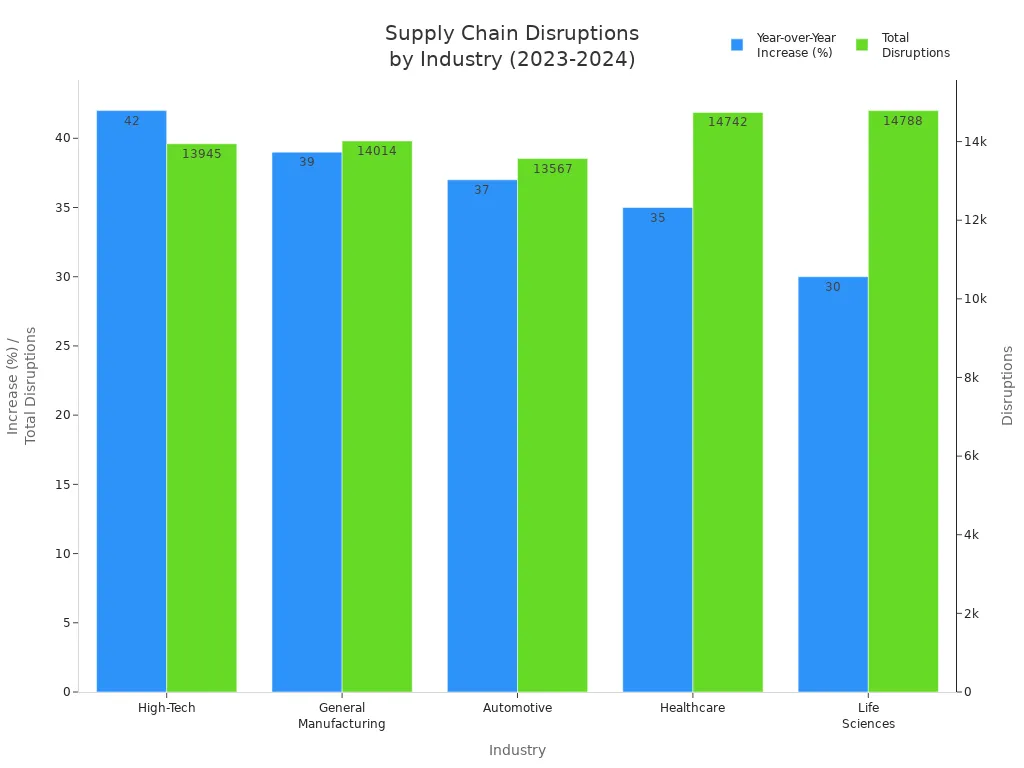
Recent disruptions highlight the need for rapid adaptation. JUSDA’s expertise and AI-driven solutions help organizations achieve supply chain resilience. Decision-makers can secure operational stability by embracing nearshoring initiatives and advanced digital tools.
Key Takeaways
Mexico's geographic location and trade agreements, like USMCA, enhance supply chain efficiency and reduce costs.
Nearshoring allows companies to respond quickly to market changes, improving delivery times and reducing geopolitical risks.
JUSDA's advanced logistics solutions, including real-time tracking and warehouse management, support effective nearshoring operations.
Adopting technology and AI in logistics networks boosts visibility, collaboration, and risk management for businesses.
Investing in workforce development and local partnerships strengthens supply chain resilience and adaptability.
Mexico’s Nearshoring Advantage

Proximity and Trade Agreements
Mexico’s geographic location gives it a strategic edge for near-shoring. The country shares a long border with the United States, which allows companies to optimize transit times and reduce shipping costs. The United States-Mexico-Canada Agreement (USMCA) eliminates nearly all trade tariffs among the three countries. This agreement creates a more efficient trade environment and supports near-shoring by promoting fair labor practices and environmental standards. Free zones along Mexico’s borders offer reduced VAT and income tax rates, making near-shoring more cost-effective for businesses. These factors encourage companies to move production closer to North America, strengthening supply chains and improving market responsiveness.
Transit time optimization reduces shipping from 30-45 days via ocean transport from Asia to just 3-5 days by truck from Mexico.
Near-shoring enables rapid replenishment and just-in-time inventory strategies.
Geographic proximity facilitates faster shipping and lower transportation costs.
Lower labor and operational expenses contribute to a more cost-effective supply chain.
Seamless cross-border trade ensures timely deliveries and reduces disruptions.
JUSDA’s Warehouse Solutions in Mexico
JUSDA supports near-shoring operations with specialized warehouse solutions. The company operates facilities in El Paso and Juarez, which serve as key distribution centers across Mexico. JUSDA’s services include cross-border logistics, customs clearance, real-time tracking, and warehouse management. These solutions help businesses manage inventory efficiently and maintain supply chain visibility.
Service Type | Description |
|---|---|
Cross-Border Logistics | JUSDA provides seamless, secure, and efficient solutions for cross-border logistics needs. |
Customs Clearance | End-to-end service includes customs clearance and compliance management. |
Real-Time Tracking | Offers real-time tracking to ensure shipments move with speed and reliability. |
Warehouse Management | Utilizes facilities in El Paso and Juarez to facilitate distribution across Mexico. |
Impact on Supply Chain Resiliency
Near-shoring to Mexico improves supply chain resiliency for many organizations. Companies can implement risk mitigation strategies and reduce reliance on distant regions. Proactive customs management and optimal crossing points help anticipate delays. Geographic proximity to the market reduces transportation times and costs. Competitive labor costs in Mexico enhance overall supply chain efficiency. Strong trade agreements facilitate smoother cross-border operations. Near-shoring delivers shorter lead times, lower logistics costs, greater supply chain visibility, and better cultural alignment. These advantages position Mexico as a preferred destination for near-shoring initiatives.
Defining Nearshoring and Friendshoring
Nearshoring vs. Friendshoring Explained
Nearshoring and friendshoring have become essential strategies in modern logistics. Both approaches help companies build more resilient supply chains, but they differ in focus and execution. The logistics industry defines these terms as follows:
Term | Definition |
|---|---|
Shifting supply chain or production to a nearby country to reduce shipping time and costs. | |
Friendshoring | Outsourcing to countries that are geopolitical allies, emphasizing political stability and mutual trust. |
Nearshoring involves working with suppliers in neighboring countries. This proximity allows for flexibility and quick responses to market changes. Friendshoring, on the other hand, focuses on building partnerships with trusted allies. Companies select partner countries based on political alignment and shared values, which helps reduce risks from global tensions.
Aspect | Nearshoring | Friendshoring |
|---|---|---|
Partner Country Selection | Focuses on nearby countries for efficiency (e.g., Mexico for the U.S.) | Relocates to allied or politically friendly countries to reduce risks |
Risk Mitigation | Vulnerable to political/economic instability in nearshore regions | Aims to enhance economic security by choosing stable, friendly nations |
Strategic Benefits for Logistics Networks
Both nearshoring and friendshoring offer clear advantages over traditional offshoring. Companies gain faster delivery times, lower transportation costs, and improved collaboration with suppliers. The following table summarizes these strategic benefits:
Benefit | Description |
|---|---|
Reduced Geopolitical Risks | Ensures continuity even during global tensions by relocating to trusted countries. |
Improved Economic Collaboration | Aligns trade policies for smoother operations and better partnerships. |
Faster Delivery Times | Shortened supply chains provide quicker access to products for consumers. |
Reduced Transportation Costs | Geographic proximity lowers shipping and storage expenses. |
Enhanced Collaboration | Closer geographical proximity fosters better communication with suppliers. |
Companies also use friendshoring to diversify supply sources and avoid single points of failure. By relocating production to stable nations, they reduce exposure to trade wars and sanctions. Many organizations now adopt public-private collaboration and multilateral coordination to further strengthen their logistics networks. This flexible and inclusive approach helps companies adapt quickly to changing global conditions.
Building Logistics Networks with Nearshoring and Friendshoring
JUSDA’s Role in Network Optimization
JUSDA plays a central role in optimizing networks for companies adopting near-shoring and friendshoring strategies. The company leverages its extensive global footprint, including service points in North America, Asia, and Europe, to create seamless connections between suppliers, manufacturers, and distributors. JUSDA’s warehouse solutions in Mexico, such as facilities in Juarez and Guadalajara, support efficient inventory management and rapid distribution. These locations enable businesses to respond quickly to market changes and maintain high service levels.
JUSDASR enhances cross-border operations for e-commerce merchants and manufacturers. Its strategic warehouse locations in the United States, close to major ports and airports, allow for quick distribution and cost savings. JUSDASR supports dropshipping and specialized storage for high-power energy products, ensuring compliance and timely delivery. JUSDA in North America focuses on expanding logistics services along the US-Mexico border and the US East Coast. The company provides risk management for hazardous materials and streamlines booking and quoting processes for partners.
JUSDA’s customer stories highlight how the company elevates manufacturers to global prominence. For example, JUSDA’s Supply Chain Management Collaboration Platform uses AI and blockchain to improve transparency and efficiency. Manufacturers benefit from standardized operations, reduced manual handling, and real-time visibility across the supply chain. These solutions help companies optimize their near-shoring networks and achieve cost-effective global expansion.
Key performance indicators measure the success of logistics networks built on near-shoring and friendshoring. The following table summarizes important metrics:
KPI | Description |
|---|---|
Stock Holding | Monitoring inventory levels to balance fulfillment and avoid excess stock. |
Fill Rate | Measures the percentage of customer demand fulfilled from available inventory. |
Replenishment Cycle | Time needed to restock inventory, impacting lead times and demand planning. |
Supplier Performance | Evaluates reliability of suppliers to prevent stock-outs and delays in fulfillment. |
These metrics help companies track progress and identify areas for improvement in their logistics networks.
Technology and AI for Real-Time Collaboration
Technology and artificial intelligence drive real-time collaboration in near-shoring and friendshoring logistics networks. JUSDA’s JusLink intelligent supply chain platform integrates IoT, cloud computing, and big data to facilitate information sharing and collaboration. JusLink’s AI solution offers supply chain trend analysis, freight rate prediction, sales demand forecasting, and replenishment strategies. The platform includes a risk control tower for real-time monitoring and an intelligent supply chain assistant, JusElsa, powered by advanced natural language processing.
Companies use supplier discovery platforms and B2B marketplaces to find local suppliers, which enhances collaboration. AI matchmaking recommends suppliers based on quality and cost, improving integration and communication. Supply chain analytics tools model sourcing scenarios and support decision-making. Blockchain technology ensures transparency, which is crucial for compliance and marketing. Automation in warehouses and last-mile delivery solutions streamlines goods movement and increases operational efficiency. Cloud collaboration tools enable real-time sharing of production plans and inventory data among local firms, fostering a synchronized value chain.
JUSDA’s customer stories demonstrate practical applications of these technologies. For instance, the Supply Chain Management Collaboration Platform enables end-to-end lifecycle management and real-time transparency. Manufacturers use AI-driven demand forecasting and delivery schedule coordination to optimize production and inventory. The integration of ERP, TMS, and WMS systems through open data interfaces supports dynamic inventory management and efficient cross-border operations.
Tip: Companies that adopt advanced technology and AI solutions can achieve greater supply chain visibility, faster response times, and improved risk management. These capabilities are essential for building resilient logistics networks through near-shoring and friendshoring.
JUSDA’s commitment to innovation and efficiency positions it as a key partner for businesses seeking to strengthen their logistics networks. The company’s global network, product offerings, and technology solutions enable organizations to build agile, resilient supply chains that can withstand disruptions and adapt to changing market conditions.
Near-Shoring Initiatives for Supply Chain Resiliency
Risk Mitigation and Agility
Near-shoring has become a mainstream solution for companies seeking to strengthen supply chain resiliency. Over 42% of multinational companies now implement near-shoring or regionalization strategies, a significant rise from 27% in 2022. These near-shoring initiatives help organizations respond quickly to global disruptions and maintain stable supply chain operations.
Companies that adopt near-shoring benefit from improved agility and risk mitigation. They can move products faster and meet customer expectations for speed. Today, 86% of consumers describe "fast" shipping as within two days. In addition, 80% of consumers expect retailers to offer same-day delivery, while 30% expect free same-day delivery. Near-shoring enables businesses to meet these demands by reducing transit times and increasing supply chain resiliency.
Key advantages of near-shoring for supply chain resiliency include:
Faster response to market changes
Reduced exposure to geopolitical risks
Improved ability to manage inventory and demand fluctuations
Enhanced visibility across supply chain operations
These benefits allow companies to maintain high service levels and adapt to changing conditions.
Case Studies: Automotive and Electronics
The automotive and electronics sectors provide clear examples of how near-shoring supports supply chain resiliency. The following table highlights the impact of near-shoring in these industries:
Sector | Impact of Nearshoring |
|---|---|
Automotive | The transition to electric vehicles requires new supply chains for batteries and semiconductors. Suppliers adapt to component obsolescence and cost increases. |
Aerospace | Companies consider near-shoring to Mexico to reduce dependence on Asian suppliers as costs rise due to supply chain disruptions. |
Near-shoring allows automotive companies to build new supply chains that support electric vehicle production. Suppliers can adjust quickly to changes in technology and costs. In aerospace, near-shoring to Mexico helps companies avoid disruptions and maintain supply chain resiliency. These examples show how near-shoring initiatives improve supply chain operations and support long-term stability.
Overcoming Challenges in Nearshoring and Friendshoring
Talent, Financing, and Local Supply Chains
Companies face several obstacles when implementing nearshoring and friendshoring strategies. Workforce shortages present a major challenge in talent acquisition. Many organizations require specialized skills in the manufacturing sector. The demand for skilled labor continues to rise as industries expand operations in new regions. Local supply chains often experience instability due to geopolitical conflicts. These disruptions can affect the flow of goods and materials, making it difficult to maintain resilience.
Workforce shortages impact talent acquisition.
Specialized skills are needed in manufacturing.
Geopolitical conflicts disrupt local supply chains.
Financing also plays a critical role in building strong supply chains. Businesses must secure funding to invest in infrastructure and technology. Reliable logistics solutions help companies overcome disruptions and maintain flexibility. Organizations that invest in local partnerships and training programs can address talent gaps and improve supply chain resilience.
Note: Companies that prioritize workforce development and local supplier relationships strengthen their ability to respond to disruptions and build long-term resilience.
JUSDA’s Approach to Regulatory Compliance
JUSDA implements several strategies to ensure regulatory compliance in nearshoring and friendshoring operations. The company collaborates with local legal experts to navigate complex regulatory landscapes. JUSDA stays informed about changes in local laws and regulations. Partnerships with local firms provide valuable insights into the legal environment.
Stay updated on local laws and regulations.
Form partnerships with local firms.
JUSDA adheres to Mexico customs rules and VAT certification. The company ensures labor compliance to maintain ethical operations. Support for compliance with USMCA and IMMEX secures export eligibility. Compliance and transparency remain essential for building trust in cross-border trade. Reliable operations depend on adherence to local regulations and ethical standards.
Compliance Strategy | Description |
|---|---|
Customs and VAT | Follows Mexico customs rules and VAT certification |
Labor Compliance | Maintains ethical standards in workforce management |
USMCA and IMMEX | Supports export eligibility through regulatory adherence |
JUSDA’s logistics solutions provide companies with the tools to manage regulatory requirements efficiently. These solutions help organizations maintain resilience and flexibility in the face of disruptions.
Future Outlook: Mexico Business Summit 2025 and Beyond
Preparing for USMCA Review
The Mexico Business Summit 2025 stands as a pivotal event for companies involved in nearshoring and friendshoring. Industry leaders, government officials, and experts will share exclusive insights on evolving supply chain strategies. Participants will gain a deeper understanding of key trends, risks, and opportunities shaping Mexico’s role in global logistics. The summit will address topics such as supply chain innovations, workforce development, and sustainability strategies that enhance competitive advantage.
Companies preparing for the upcoming USMCA review must adopt proactive strategies. The following table outlines recommended actions:
Recommendation | Description |
|---|---|
Evaluate supply chain resilience | Assess supply chains to ensure they withstand disruptions and regulatory changes. |
Understand regulatory landscapes | Develop familiarity with the regulatory environment for compliance and strategic planning. |
Enhance local supply chains | Strengthen local supply chains to improve efficiency and reduce dependency on distant suppliers. |
Focused public policies remain essential for integrating local value chains in Mexico. Without these policies, Mexico risks losing its competitive edge in nearshoring. Companies should maintain meticulous records on suppliers and conduct internal compliance audits to prepare for increased oversight.
Sustainability and Workforce Development
Sustainability and workforce development have become central themes in supply chain strategies for nearshoring and friendshoring. The Mexico Business Summit 2025 will highlight the latest trends in these areas. Companies now prioritize shorter transportation distances to reduce carbon emissions. Efficient material management helps curb waste, and stricter labor and environmental standards drive compliance.
Key Trend | Description |
|---|---|
Shorter transportation distances reduce carbon emissions, and efficient material management curbs waste. Companies face stricter labor and environmental standards. | |
Human Capital Development | Advanced skills training is essential for sophisticated technologies, with a focus on engineering, IT, and advanced manufacturing. English proficiency aids remote management. |
Advanced skills training supports the adoption of new technologies in logistics and manufacturing. Companies invest in engineering, IT, and advanced manufacturing to meet industry demands. English proficiency helps teams manage remote operations and collaborate across borders.
The logistics sector in Mexico continues to grow. Nearly 50% of U.S. businesses plan to increase nearshoring volumes by 2025. Demand for inspections and audits in Latin America has risen by 15% year-over-year in Q1 2025. Ongoing trade tensions contribute to a shift in supply chains, which is expected to further enhance trade activity in the region.
Companies attending the Mexico Business Summit 2025 will gain actionable insights to refine their supply chain strategies and prepare for future challenges.
Organizations strengthen logistics networks by prioritizing visibility, regionalization, and second sources for critical components. They achieve enhanced resilience through cross-functional collaboration and scenario planning. JUSDA’s supply chain management solutions deliver reduced geopolitical risks, greater flexibility, and improved supplier network management. Companies move production closer to key consumer markets, minimizing vulnerabilities and supply chain implications. Attending the Mexico Business Summit 2025 allows leaders to explore key near-shoring trends and trusted trade relations. Decision-makers should build adaptive, digitally enabled logistics networks to address supply chain vulnerabilities and disruptions and maximize impact.

JUSDA Solutions
To provide you with professional solutions and quotations.
FAQ
What is the difference between nearshoring and friendshoring?
Nearshoring moves production or supply chains to nearby countries for efficiency. Friendshoring relocates operations to allied nations for stability. Companies use nearshoring and friendshoring to build resilient logistics networks and improve supply security.
How does JUSDA support nearshoring and friendshoring strategies?
JUSDA provides warehouse solutions, cross-border logistics, and AI-driven platforms. These services optimize nearshoring and friendshoring operations, enhance supply security, and help companies manage inventory, compliance, and real-time collaboration.
Why do companies choose nearshoring and friendshoring for supply chain resiliency?
Companies select nearshoring and friendshoring to reduce transportation costs, improve delivery speed, and minimize geopolitical risks. These strategies strengthen supply security and allow organizations to adapt quickly to disruptions.
What industries benefit most from nearshoring and friendshoring?
Industries such as electronics, automotive, FMCG, and medical health gain advantages from nearshoring and friendshoring. These sectors require efficient logistics, supply security, and rapid response to market changes.
How does technology enhance nearshoring and friendshoring logistics networks?
AI, IoT, and cloud computing drive real-time collaboration in nearshoring and friendshoring. JUSDA’s JusLink platform enables supply chain trend analysis, risk monitoring, and seamless integration, supporting supply security and operational efficiency.
See Also
Overcoming Global Supply Chain Growth Challenges Effectively
Transforming Supply Chain Management Through Cloud Technologies
The Future of Logistics: AI's Role in Supply Chains
Innovative Supply Chain Solutions Transforming Modern Logistics
Embracing Technology: Adapting to Evolving Supply Chain Needs