What Differentiates Logistics from Supply Chain Management

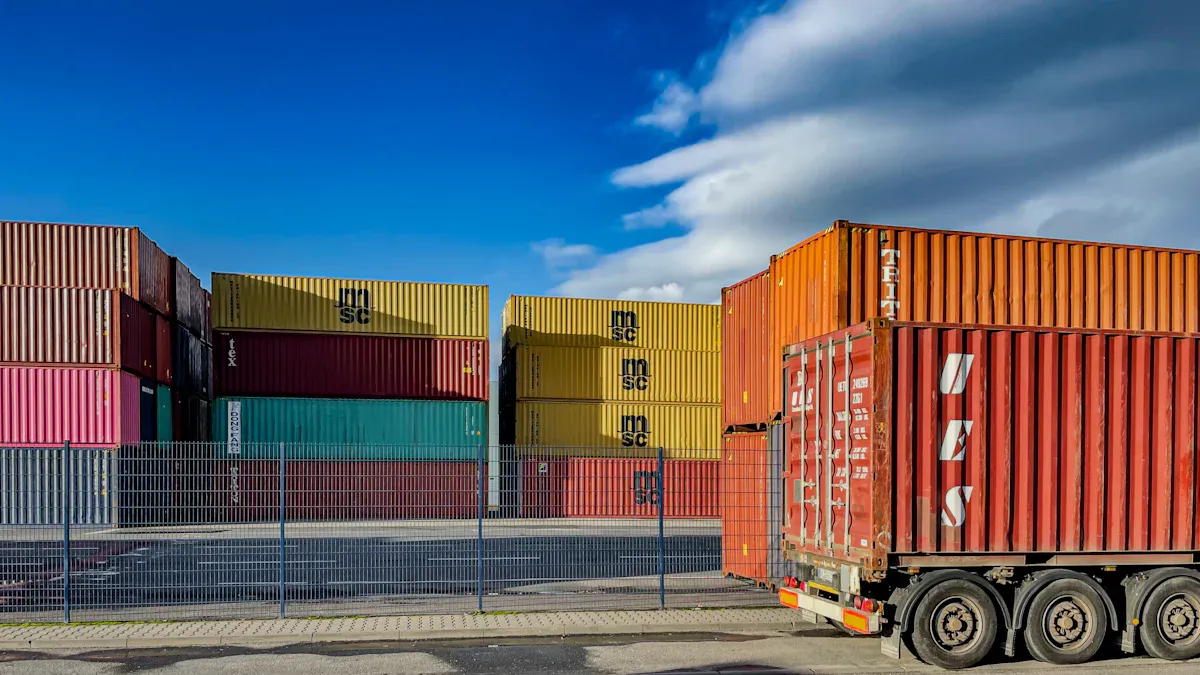
Logistics and supply chain management may seem similar, but they serve distinct functions. Logistics focuses on the movement and storage of goods, while logistics supply chain management oversees the entire process from sourcing materials to final delivery. For example:
Logistic models can predict supply and demand gaps, helping to conserve resources.
Selecting optimal routes reduces costs and enhances efficiency.
Implementing AI accelerates digital transformations within logistics operations.
Understanding the differences between logistics and supply chain management is essential for improving operations and making informed decisions.
Key Takeaways
Logistics is about moving and storing goods. Supply chain management handles everything from getting materials to delivering products.
Knowing how logistics and supply chain management differ helps businesses work better and make smarter choices.
Tools like JUSDA’s JusLink help track shipments live and work together, improving supply chain management.
Defining Logistics and Supply Chain Management
What is Logistics in the Context of the Supply Chain?
Logistics means managing how goods move and are stored. It ensures items travel smoothly, like raw materials going to factories or products reaching buyers. The goal is to make transport and storage cheaper and faster.
For instance, the global logistics market was worth $8.96 trillion in 2023. By 2028, it may grow to $15.79 trillion, with a yearly growth rate of 6.3%. This shows how logistics is becoming more important as online shopping grows and customer needs increase.
Main tasks in logistics include:
Transportation: Picking the best routes and vehicles for quick delivery.
Warehousing: Keeping goods safe and ready until needed.
Inventory Management: Tracking stock to avoid running out or having too much.
Logistics also creates many jobs. In the UK, about 1.25 million people work in this field, and this number is expected to grow.
What is Supply Chain Management and Its Strategic Role?
Supply chain management looks at the big picture. It handles everything from getting raw materials to delivering finished goods. It involves planning and teamwork across areas like buying, making, and logistics.
The Council of Supply Chain Management Professionals says supply chain management includes sourcing, buying, making, and logistics. It also focuses on working with partners to balance supply and demand.
Source | Definition |
|---|---|
Council of Supply Chain Management Professionals | Supply chain management includes planning and managing sourcing, buying, making, and logistics. It involves working with partners to balance supply and demand across companies. |
Association for Operations Management (APICS) | A system for managing the flow of materials, services, and information—from suppliers to factories, warehouses, and customers. It connects suppliers, manufacturing, and distribution. |
Seminal Article | Supply chain management is about coordinating business tasks to improve long-term success. It involves working within a company and with others in the supply chain. |
Today, supply chain management helps businesses stay flexible and quick. Good data helps companies adjust to changes, save resources, and cut costs. This flexibility helps meet customer needs and stay competitive.
How Logistics and Supply Chain Management Interconnect
Logistics is a key part of supply chain management. Logistics handles moving and storing goods, while supply chain management connects this with buying and making. Together, they help products reach customers quickly and affordably.
Studies show sharing real-time data between logistics and supply chain teams is important. It improves customer happiness and helps businesses adjust to changes. For example, linking logistics with supply chain plans makes operations smoother and faster.
Technology makes this connection even stronger. Tools like JUSDA's JusLink allow teams to share data instantly. This helps companies see what’s happening, improve processes, and handle problems better.
Key Differences Between Logistics and Supply Chain Management

Scope and Focus: Logistics vs. Supply Chain Management
Logistics and supply chain management differ in what they handle. Logistics focuses on moving, storing, and delivering goods. It makes sure products get to the right place quickly. Supply chain management looks at the bigger picture. It includes finding materials, making products, and getting them to customers. This connects suppliers, factories, and buyers.
The Council of Supply Chain Management Professionals (CSCMP) explains supply chain management as planning and managing sourcing, production, and logistics. It works with suppliers, partners, and service providers. This shows its wider role compared to logistics, which handles specific tasks.
Key Aspect | Logistics KPIs | Supply Chain Auditing |
|---|---|---|
Scope | Focus on specific logistics operations | Encompasses the entire supply chain |
Purpose | Measure performance | Evaluate compliance and risks |
Methodology | Quantitative metrics | Mix of qualitative and quantitative |
Frequency | Monitored continuously | Conducted periodically |
Stakeholders Involved | Internal teams | External auditors or third-party evaluators |
For example, a Canadian sneaker company uses supply chain management to get materials from around the world. Logistics ensures the sneakers are packed and sent to stores. This shows logistics handles smaller tasks, while supply chain management oversees everything.
Strategic vs. Tactical: Understanding Their Roles
Logistics and supply chain management also have different roles. Logistics focuses on daily tasks. It includes picking routes, managing warehouses, and tracking stock. These jobs keep goods moving smoothly.
Supply chain management is about long-term planning. It aims to save money and improve processes. For example, supply chain managers study market trends to plan production. This helps businesses stay competitive and adjust to changes.
Studies show this difference clearly. Supply chain management needs a deeper understanding of strategies. This improves how the whole supply chain works. Logistics, however, focuses on short-term goals and daily tasks.
Aspect | Supply Chain Management | Logistics |
|---|---|---|
Scope | Involves sourcing, production, and distribution processes | Focuses on the delivery and storage of goods |
Example | Managing supplier relationships and inventory planning | Coordinating freight and managing warehousing |
Key Activities | Planning for long-term improvements | Executing daily operations |
Examples of Logistics and Supply Chain Management in Action
Real-life examples help explain the difference between logistics and supply chain management. During the pandemic, UPS changed its logistics to handle more online orders. It improved delivery routes and managed warehouses better. This shows logistics focuses on daily efficiency.
Supply chain management, however, involves bigger strategies. For example, Sharp, an electronics company, worked with JUSDA to improve its supply chain. Using JUSDA's platform, Sharp cut logistics costs by 20% and sped up order processing. This shows how supply chain management focuses on long-term success.
Source | Description |
|---|---|
Logistics Brief | A collection of industry-leading thought leadership and case studies in logistics and supply chain management. |
ADEXIN | Highlights UPS's strategic adaptation during the pandemic, showcasing real-world logistics management examples. |
DHL | Provides case studies on technology solutions from a leading logistics provider. |
These examples show how logistics and supply chain management work together. Logistics handles daily tasks, while supply chain management focuses on improving the big picture.
The Role of JUSDA in Logistics and Supply Chain Management
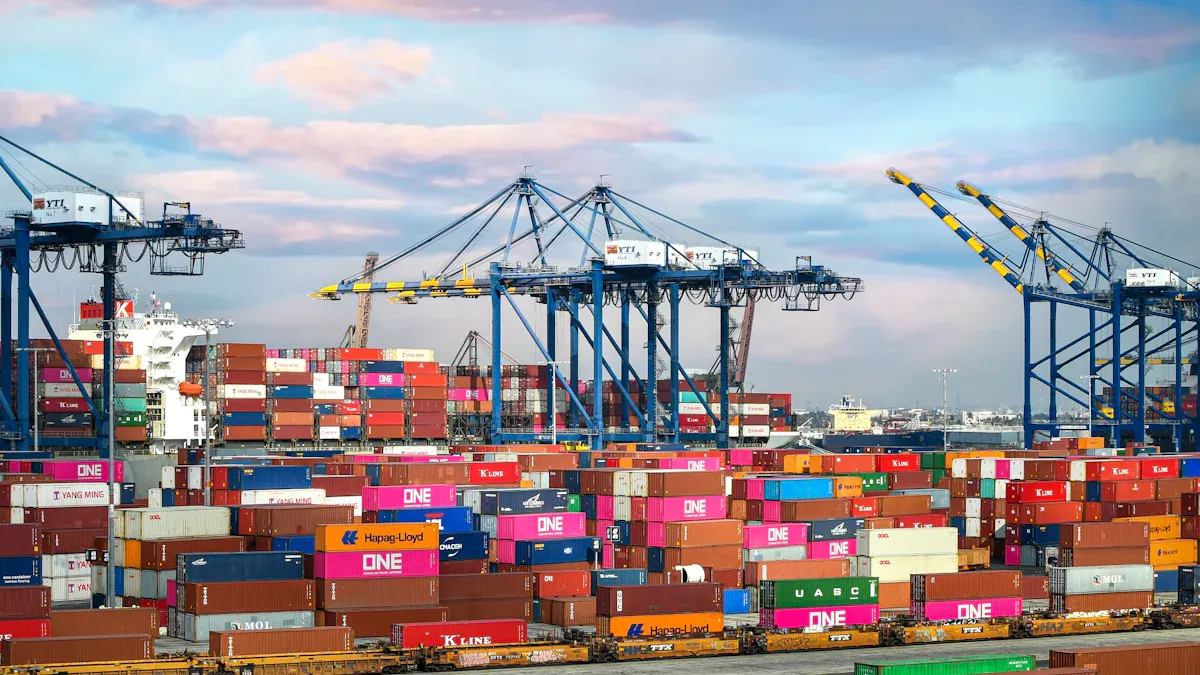
JUSDA's Smart Supply Chain Solutions
JUSDA is a top name in supply chain innovation. Its platform uses AI and cloud tools to improve buying, shipping, storage, and customs processes. This makes work easier and saves money.
JUSDA has earned global praise for its work. For four years straight, it was honored at the China International Import Expo (CIIE) for its supply chain solutions. Its focus on new technology makes it a reliable choice for businesses wanting better results.
Evidence Type | Description |
|---|---|
Recognition | JUSDA was honored for its logistics and supply chain solutions at the CIIE for four years in a row. |
Technological Innovation | JUSDA uses AI and cloud tools to improve buying, shipping, storage, and customs processes. |
How JUSDA's Warehousing Services Improve Logistics
JUSDA’s storage services help make logistics better. It uses smart tools like AI to predict demand and fix problems early. These tools help plan routes and cut costs.
Cloud tools give instant updates, helping you adjust quickly. Big data shows how suppliers are doing and helps manage stock better. JUSDA also cares about the planet by using green warehouses and electric trucks to lower pollution.
JUSDA uses AI to improve supply chain systems.
Offers solutions that connect parts to final buyers (C2M2C).
Using JUSDA's JusLink for Better Supply Chains
JUSDA’s JusLink platform changes how supply chains are managed. Its digital tools make operations smooth and efficient. Real-time tracking lets you see and control every step.
Automation in storage reduces mistakes and boosts work speed. JusLink helps you watch supply chain activities closely, avoiding problems and making smarter choices. This tool helps businesses stay ahead in tough markets.
Feature | Benefit |
|---|---|
Make supply chain operations smooth and efficient | |
Real-time tracking and analytics | Give clear views and control over processes |
Automation in warehousing | Cuts mistakes and improves productivity |
Why Understanding These Differences Matters
Implications for Businesses and Operational Efficiency
Knowing the difference between logistics and supply chain management helps businesses. Logistics ensures goods move smoothly, while supply chain management connects all steps. Together, they make operations run better and more efficiently.
Good logistics keeps costs low and ensures quality deliveries.
Smart supply chain plans save money and keep customers happy.
Fast logistics improve delivery times, building customer trust.
Seeing logistics as part of the supply chain opens new ideas. This big-picture view helps businesses work better and make smarter choices. Companies using this approach often perform better and stay ahead of competitors.
Career Opportunities in Supply Chain Management
Jobs in supply chain management are growing fast and offer stability. There are about two open jobs for every worker in this field. This shows how important logistics roles are across industries.
The Bureau of Labor Statistics says jobs for logisticians will grow 28% from 2021 to 2031. This is much faster than most other jobs. Workers in this field also feel secure, with less than 1% reporting layoffs. Careers in logistics are available in areas like manufacturing and retail.
The global supply chain industry is expected to grow by 11.1% each year until 2030. This steady growth makes supply chain management a great career choice for the future.
Practical Tips for Applying This Knowledge in Real-World Scenarios
You can use what you know about logistics and supply chains to improve your business. Start by checking your logistics processes. Find ways to make transportation cheaper and storage more efficient. Use tools to track inventory and predict what customers need.
For supply chain management, build strong relationships with suppliers and partners. Sharing live data can help everyone work together better. Platforms like JUSDA’s JusLink can track activities and prevent problems.
By mixing logistics improvements with smart supply chain planning, you can boost your business. These actions save money, keep customers happy, and build loyalty over time.

JUSDA Solutions
To provide you with professional solutions and quotations.
Logistics and supply chain management help businesses run better. Knowing how they differ lets you make smarter choices. This can also lead to great job opportunities. Tools like JUSDA’s JusLink and storage services show how companies can succeed in today’s world.
See Also
The Importance of Logistics Security in Supply Chain Operations
Transforming Logistics Through Innovative Supply Chain Solutions
The Significance of Supply Chains in Global Trade Dynamics
Mastering Lean Logistics for Success in High-Tech Manufacturing
How Cloud Solutions Are Transforming Supply Chain Management