Machine Learning Drives Data-Driven, Multi-Objective Optimization for Smarter Logistics Networks in 2025

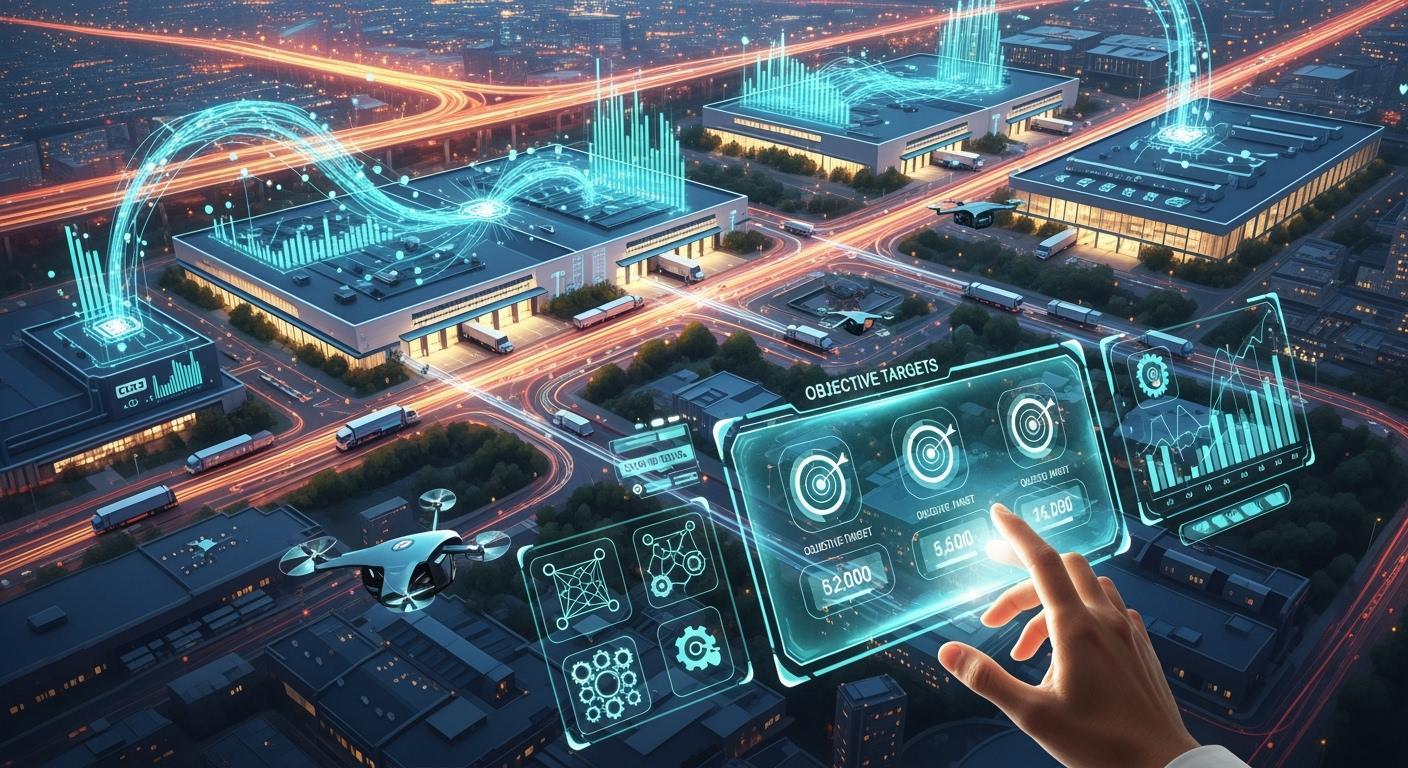
Machine learning now stands at the forefront of logistics innovation in 2025. Companies worldwide recognize its potential to drive smarter, data-driven decision-making and optimize multiple objectives across complex supply chains. JUSDA leads this transformation by integrating advanced AI solutions through its JusLink platform, delivering intelligent forecasting, risk management, and real-time collaboration. Recent statistics reveal the growing influence of AI: As more organizations adopt these technologies, logistics networks see measurable improvements such as reduced fuel consumption, increased vehicle utilization, and more accurate deliveries. JUSDA’s commitment to innovation sets a new standard for efficiency and resilience in global supply chains.
Key Takeaways
Machine learning enhances logistics by optimizing efficiency and accuracy through data-driven strategies.
JUSDA's JusLink platform empowers businesses with AI tools for better forecasting, risk management, and real-time collaboration.
Multi-objective optimization allows logistics companies to balance cost, speed, and service quality effectively.
AI-driven solutions can significantly reduce supply chain errors and improve decision-making efficiency.
Adopting advanced analytics and AI technologies prepares logistics professionals for future challenges and opportunities.
Machine Learning in Logistics

Data-Driven Optimization
Machine learning has become a cornerstone in modern logistics operations. Companies now rely on data-driven optimization to enhance efficiency and accuracy across the supply chain. By analyzing vast amounts of information, machine learning models can identify patterns and predict future needs. Logistics providers use these insights to streamline processes and reduce costs.
Key applications include:
Demand forecasting, which analyzes historical data and market trends to predict inventory needs.
Warehouse automation, improving inventory management and product picking.
Predictive maintenance, anticipating vehicle failures based on usage patterns and sensor data.
Route optimization, adapting delivery routes in real time according to traffic and weather.
Personalized customer experience, tailoring logistics solutions to individual preferences.
These data-driven strategies deliver measurable results. For example:
Amazon’s advanced algorithms have led to faster delivery times and reduced transportation costs.
Walmart’s use of real-time sales data has helped manage stock levels and cut excess inventory by 20%.
Nike has reduced inventory holding costs by 20% through AI-driven demand forecasting.
Logistics companies gather data from a variety of sources to fuel these optimizations:
Past deliveries |
Company records |
Public information |
Carrier statistics |
Historic weather patterns |
Seasonal demand |
JUSDA demonstrates a strong commitment to innovation by integrating these data-driven approaches into its JusLink platform. JusLink’s AI-driven tools empower businesses to make informed decisions and respond quickly to market changes.
Multi-Objective Strategies
Modern logistics networks must balance multiple objectives, such as cost, speed, and service quality. Machine learning enables companies to address these conflicting goals through multi-objective optimization. Unlike traditional methods that focus on a single target, multi-objective strategies consider several factors at once.
The following table highlights the differences between multi-objective and single-objective optimization:
Aspect | Multi-Objective Optimization | Single-Objective Optimization |
|---|---|---|
Objective Handling | Addresses multiple conflicting objectives simultaneously | Focuses on a single objective |
Performance Metrics | Balances time efficiency, cost control, and service quality | Optimizes one metric at the expense of others |
Solution Type | Yields a set of Pareto-optimal solutions | Provides a single optimal solution |
Adaptability | Incorporates adaptive weighting mechanisms | Lacks flexibility in trade-offs |
Coverage of Objective Space | Shows improved coverage and diversity of solutions | Limited to a narrow solution space |
Balancing these objectives can be complex. Companies need robust optimization methods and must integrate factors such as cost, quality, and sustainability. JUSDA’s JusLink platform addresses these challenges by leveraging advanced AI algorithms, ensuring that logistics networks remain agile and competitive.
JUSDA’s JusLink AI Solutions
AI Forecasting and Replenishment
JusLink delivers advanced AI-driven forecasting and replenishment capabilities for supply chain management. The platform uses deep learning algorithms to analyze historical sales data, market trends, and seasonal fluctuations. JusLink identifies patterns in demand data, allowing businesses to adjust inventory levels with precision. Experts recognize that AI models consistently outperform traditional forecasting methods, leading to improved accuracy in logistics operations. JusLink’s AI-enhanced forecasting reduces supply chain errors by 30 to 50%. Companies benefit from more accurate demand forecasts, which minimize overstocking and stockouts.
AI models provide demand forecasts that are more accurate than those generated by traditional methods.
AI-enhanced forecasting can reduce errors in supply chain networks by 30 to 50%.
JusLink’s replenishment strategies automatically generate suggestions based on demand forecasts and inventory levels. The system triggers real-time replenishment processes, optimizing turnover rates and ensuring steady product supply. Businesses gain the ability to respond quickly to market changes, maintaining high service levels and reducing operational risks.
Real-Time Risk Management
JusLink’s Control Tower Intelligent Risk Management system integrates external data to monitor supply chain risks in real time. The platform uses scenario modeling and stress testing to help businesses manage and minimize risks. Generative AI simulates thousands of supply chain scenarios using real-time data, allowing companies to visualize risks and test response strategies. JusLink tracks supplier performance and identifies warning signs before they become issues. AI enables dynamic risk management by continuously updating risk scores based on new data, ensuring shipments stay on schedule.
AI tools like JusLink help businesses manage and minimize risks through scenario modeling and stress testing.
Generative AI can simulate thousands of supply chain scenarios using real-time data, allowing businesses to visualize risks and test response strategies.
An electronics manufacturer reduced component shortages by 37% and improved decision-making efficiency by 50% through AI-driven measures.
AI-driven measures led to a 37% reduction in component shortages through automated supplier diversification.
Inventory optimization resulted in an 18% decrease in holding costs while maintaining a 98% service level.
Resilience measures for shipping routes shortened delivery times by 22% during port congestion.
Overall, these strategies reduced supply disruption losses by 35%, from $23 million to $15 million annually.
Decision-making efficiency improved by 50%, halving crisis response times.
Businesses gain a better understanding of potential risks, leading to more resilient supply chains and fewer surprises. JusLink’s real-time risk management capabilities empower organizations to maintain stability and continuity in their logistics networks.
Intelligent Assistants
JusLink features AI intelligent agents across six key domains, supporting production, delivery, logistics management, order inquiry, data query, and risk management. These assistants use natural language processing (NLP) powered by DeepSeek to facilitate seamless human-computer interaction. JusElsa, JusLink’s proprietary AI assistant, leverages DeepSeek’s deep reasoning and NLP capabilities to provide users with smarter, faster, and more human-like interactions.
Evidence Description | Key Insights |
|---|---|
AI's role in supply chain management | Transforms supply chains from reactive to proactive, optimizing sourcing strategies and enhancing operational efficiency. |
NLP's contribution | Facilitates the extraction of insights from unstructured data, improving decision-making processes. |
AI enables organizations to process large data volumes, identify patterns, and make quick, accurate decisions. NLP allows for the interpretation of human language, aiding in the analysis of supplier communications and customer feedback. JusLink’s integration of DeepSeek and NLP transforms supply chain management, making operations more efficient and responsive.
JUSDA’s customer stories illustrate the real-world impact of JusLink’s intelligent assistants. For example, Chinese manufacturers expanded globally with support from JusLink’s AI-powered platform. The system improved end-to-end lifecycle management, enhanced transparency, and reduced manual handling. Companies achieved cost-effective global expansion, standardized operations, and optimized processes through AI-driven solutions.
JusLink’s intelligent assistants empower logistics professionals to navigate complex supply chains with confidence, ensuring efficiency and resilience in a rapidly changing market.
Dynamic Scheduling with HDRL Framework
Hierarchical Reinforcement Learning
The Hierarchical Deep Reinforcement Learning (HDRL) Framework introduces a new standard for dynamic logistics scheduling. This framework uses a two-level policy structure. The high-level policy focuses on strategic planning, while the low-level policy manages tactical actions. By breaking down complex scheduling into smaller subgoals, the HDRL Framework increases learning efficiency and adaptability. This approach allows logistics systems to respond quickly to disruptions, such as traffic congestion or sudden changes in demand.
The following table outlines the core components of the HDRL Framework:
Component | Description |
|---|---|
Hierarchical Deep RL Architecture | Utilizes a two-level policy decomposition where a high-level policy makes strategic decisions and a low-level policy executes tactical actions. |
Multi-Objective Reward / Pareto-Optimal Mechanism | Designs a vectorized reward system that captures multiple objectives like time efficiency and cost control, adapting dynamically to system conditions. |
Algorithm & Training Techniques | Implements Hierarchical Proximal Policy Optimization and various training methods to enhance learning efficiency in simulated logistics environments. |
Hierarchical reinforcement learning decomposes complex logistics problems into manageable sub-tasks. This structure enables both strategic planning and tactical execution within a unified system. As a result, logistics networks become more adaptive and resilient compared to traditional scheduling methods.
Pareto-Optimal Outcomes
The HDRL Framework excels at balancing multiple objectives in logistics, such as cost, speed, and service quality. It uses a Pareto-optimal reward mechanism, which ensures that improvements in one area do not come at the expense of another. In practice, this means logistics managers can achieve the best possible trade-offs between competing goals.
The table below explains how the framework manages these trade-offs:
Concept | Description |
|---|---|
Multi-objective optimization | Considers several conflicting objectives rather than a single best solution. |
Pareto front | Represents the set of non-dominated solutions, illustrating trade-offs between different objectives. |
Pareto-optimal solution | A solution where no objective can be improved without negatively impacting at least one other. |
Trade-offs | Enhancements in one objective often require compromises in another, necessitating careful decision-making. |
By applying this multi-objective optimization, the HDRL Framework delivers measurable improvements. Companies have reported an 18.4% increase in service quality, a 15.2% reduction in order fulfillment time, and a 7.8% decrease in operational costs. These results highlight the value of integrating machine learning into logistics scheduling for smarter, more efficient networks.
Outcomes and Future Trends
Efficiency and Resilience
Logistics networks that adopt advanced AI and machine learning solutions see measurable improvements in both efficiency and resilience. Companies like JUSDA leverage these technologies to optimize routes, manage risks, and streamline operations. The following table highlights key performance metrics observed in logistics networks using AI-driven platforms:
Metric | Improvement Percentage |
|---|---|
Fuel Consumption Reduction | Up to 15% |
Delivery Speed Improvement | Up to 40% |
On-Time Deliveries Increase | 15% |
Overall Transportation Cost Reduction | Up to 20% |
AI systems dynamically adjust routes and schedules in real time. They uncover hidden patterns in logistics data and provide actionable recommendations for decision-makers. These platforms also strengthen supply chain resilience by enabling proactive management of disruptions. As a result, businesses experience fewer delays, lower costs, and improved service quality.
Evolving Logistics Networks
The logistics industry continues to evolve as AI and machine learning technologies advance. Market forecasts show rapid growth in AI adoption across logistics, with the AI in logistics market projected to reach $549 billion and a growth rate of 46.7% from 2024 to 2033. Generative AI and computer vision also see significant expansion, supporting smarter and more automated operations.
Aspect | Current Value | Projected Growth Rate | Future Value |
|---|---|---|---|
AI in Logistics Market | N/A | 46.7% (2024-2033) | $549 billion |
Generative AI Market | $44 billion | 47.5% (through 2030) | N/A |
Computer Vision Market | $17.7 billion | 19.6% (through 2026) | N/A |
Key trends shaping the future of logistics include:
Advanced analytics for deeper insights
Automation in warehouse operations
Integration of IoT for real-time tracking
Experts predict that machine learning will further enhance logistics networks by improving data management, route optimization, demand forecasting, predictive maintenance, and real-time tracking. AI-driven operations can reduce inventory by up to 30%, logistics costs by 20%, and procurement spend by 15%. The future of logistics will rely on real-time data inputs, enabling dynamic decision-making and more accurate delivery predictions.
Machine learning continues to reshape logistics networks, driving efficiency and resilience for industry leaders like JUSDA and its JusLink platform. Companies report measurable gains such as reduced downtime, higher on-time delivery rates, and improved sustainability scoring.
Measurable Benefit | Description |
|---|---|
Downtime Reduction | Minimizes operational delays |
On-time Delivery Rates | Ensures reliable and timely shipments |
Fuel Savings | Optimizes routes for lower fuel consumption |
Logistics professionals can prepare for 2025 by adopting new technologies, integrating advanced analytics, and upskilling employees to work with AI-driven tools.

JUSDA Solutions
To provide you with professional solutions and quotations.
FAQ
What industries does JUSDA serve?
JUSDA supports industries such as electronic manufacturing, 3C home appliances, FMCG, automotive, new energy, medical health, heavy equipment, and bulk materials. The company tailors supply chain solutions to meet the unique needs of each sector.
How does JusLink improve supply chain efficiency?
JusLink uses AI-driven forecasting, smart replenishment, and real-time risk management. These features help businesses optimize inventory, reduce costs, and respond quickly to market changes.
What is the role of AI intelligent assistants in JusLink?
AI intelligent assistants in JusLink support production planning, delivery, logistics management, order tracking, data queries, and risk management. They use natural language processing for efficient, human-like interactions.
How does the HDRL Framework benefit logistics scheduling?
The HDRL Framework applies hierarchical reinforcement learning and multi-objective optimization. It improves service quality, reduces order fulfillment time, and lowers operational costs by balancing competing logistics goals.
What measurable results have JUSDA’s solutions delivered?
JUSDA’s solutions have increased service quality by 18.4%, reduced order fulfillment time by 15.2%, and decreased operational costs by 7.8%. These improvements help businesses achieve greater efficiency and resilience.
See Also
Transforming Supply Chains Through Big Data And AI
Innovative Logistics Solutions Powered By Artificial Intelligence
Enhancing Automotive Demand Forecasting Through Data Analysis
Boosting Warehouse Efficiency With Advanced Robotics Technology