Mexico's role as a nearshoring hub for EV manufacturing investments which attracts US$2.2 Billion in Automotive Investment in 2Q25

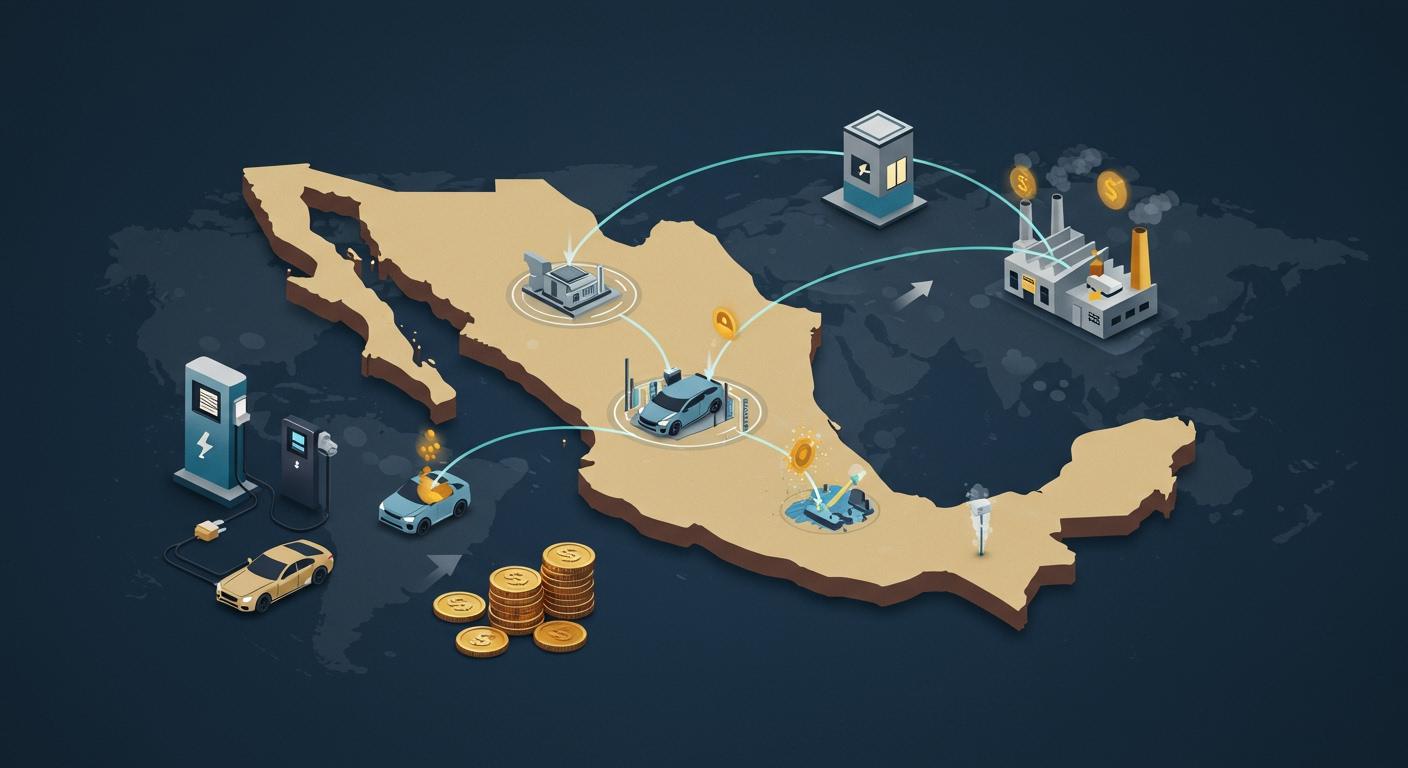
Mexico attracted US$2.2 billion in automotive investment for EV manufacturing in 2Q25 due to a dramatic 179% rise in electric and hybrid vehicle production, reaching 57,601 units in early 2025. The country’s proximity to the U.S. market, favorable trade agreements, and skilled workforce create a competitive environment.
Key Takeaways
Mexico attracted US$2.2 billion in EV manufacturing investments in 2Q25, showcasing its growing importance in the automotive sector.
The country's strategic location near the U.S. market and skilled workforce enhance its competitiveness for electric vehicle production.
Government incentives, such as tax breaks and reduced tolls, make Mexico an attractive destination for automotive companies.
The rise in electric vehicle production in Mexico supports job creation and positions the country as a leader in the global EV market.
Investment Trends

Surge in EV Manufacturing
Mexico secured US$2.2 billion in automotive investment during the second quarter of 2025. Cluster Industrial B2B data shows this investment occurred despite a 30% decline in the sector year-over-year. The country continues to attract global attention for its focus on high-tech and electric vehicle manufacturing.
In 2024, major companies in Mexico produced over 200,000 electric vehicles.
At least 68 investments in the electromobility sector were announced that year.
Localized EV production drove sector growth of 29.7% up to August 2025.
Sales of electrified vehicles increased by 41.1% year-over-year in 2024, reaching 12,147 units.
Hybrid, plug-in hybrid, and fully electric vehicle sales totaled approximately 200,000 units in 2024, a 70.2% increase from the previous year.
Fully electric vehicle registrations reached around 15,000 in 2024, marking an 80% increase.
Mexico’s automotive sector benefits from tariff-free access to markets under the USMCA. Original equipment manufacturers (OEMs) continue to establish manufacturing operations in the country. Mexico is projected to be the third-largest contributor to global light vehicle capacity growth between 2015 and 2025. An estimated 2 million units of manufacturing capacity will be added, representing a 31.2% share of total global capacity growth.
Key Projects and Investors
Several regions in Mexico have emerged as leaders in EV manufacturing investment. The following table highlights key areas and notable projects:
Region | Investment Amount | Notable Projects |
|---|---|---|
Hidalgo | $473.8 million | Giant Motors/JAC |
Nuevo León | $473.8 million | Seojin Mobility |
San Luis Potosi | $737.3 million | Volex |
Coahuila | $737.3 million | Flex-N-Gate |
Guanajuato | N/A | N/A |
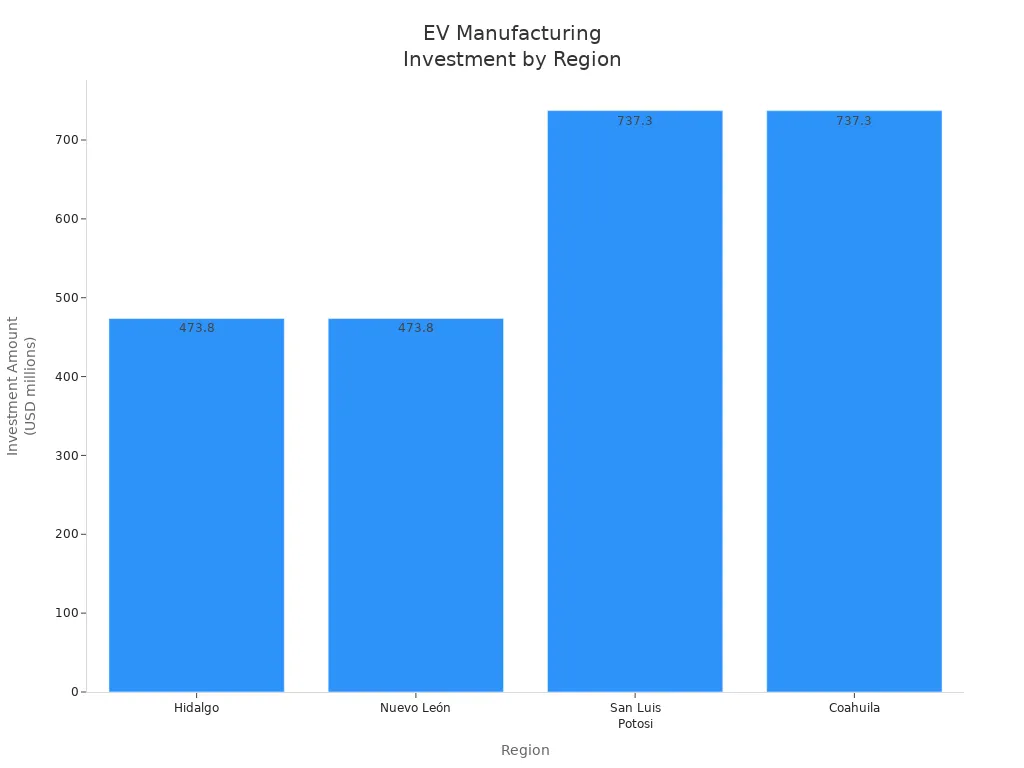
Mexico attracted investment from 18 countries, including China, the United States, South Korea, Japan, Germany, and the United Kingdom. Key projects include Giant Motors/JAC in Hidalgo and Seojin Mobility in Nuevo León. Volex and Flex-N-Gate led investments in San Luis Potosi and Coahuila, focusing on auto parts and electromobility.
Mexico’s Advantages
Location and Workforce
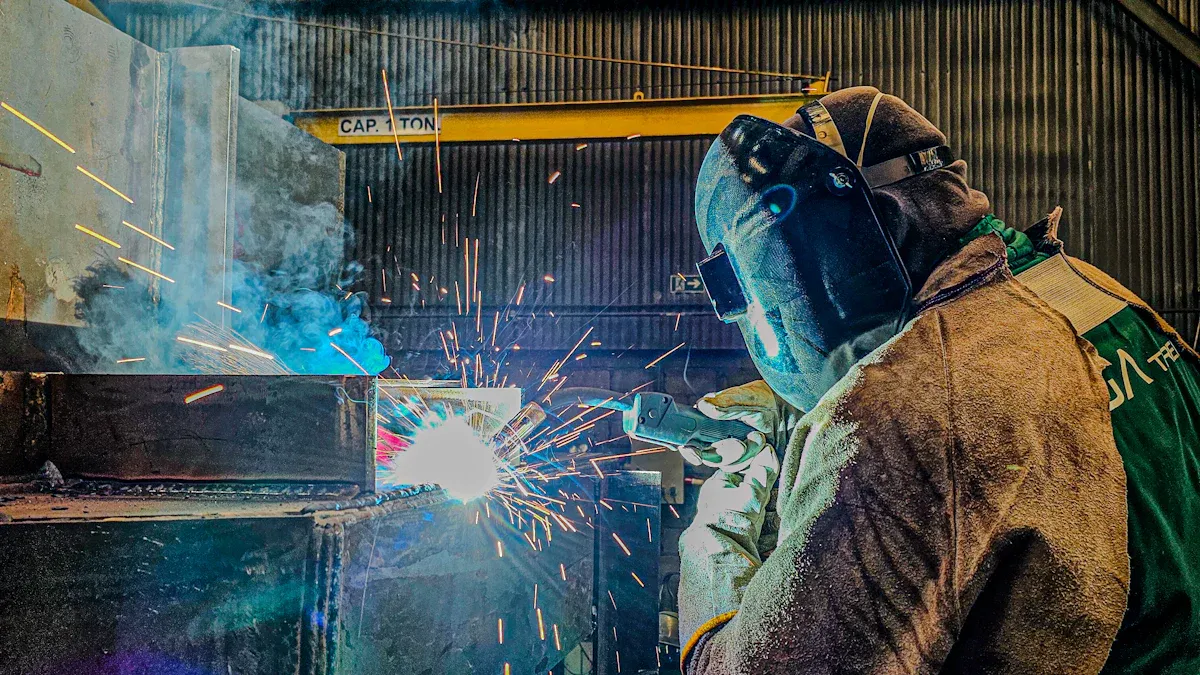
Mexico’s geographic position gives manufacturers a strategic edge. The country shares a long border with the United States, which enables rapid cross-border transport and short lead times for automotive exports. The established manufacturing base, built over decades of integration under NAFTA and USMCA, supports seamless collaboration between Mexican and U.S. companies.
Evidence | Description |
|---|---|
Established Manufacturing Base | Mexico has a mature manufacturing ecosystem due to decades of integration with the U.S. under NAFTA/USMCA. |
Surge in Exports | Since the USMCA came into effect, Mexico’s exports to the US have surged by 30%, reaching US$434bn in 2023. |
Increase in FDI | U.S. foreign direct investment in Mexico rose from US$9.8bn in 2020 to US$13.8bn in 2023. |
Mexico’s workforce stands out for its technical expertise. Investment in advanced education and vocational training produces thousands of skilled graduates each year. Many workers receive training in lean manufacturing, Six Sigma, and ISO-certified processes. This results in high production quality and low defect rates, which attracts global manufacturers seeking reliable EV manufacturing partners.
Mexico’s skilled labor pool supports precision manufacturing.
Technicians and engineers specialize in automotive and electronics sectors.
The workforce adapts quickly to new technologies and production methods.
Supply Chain Strengths
Mexico’s automotive supplier network demonstrates maturity and resilience. The country’s production volume and export levels remain near record highs, which signals a robust supply chain for EV manufacturing. Collaboration between Chinese technology firms and Mexican manufacturers enhances capabilities in high-value modules, such as battery systems.
Evidence Type | Description |
|---|---|
Collaboration | Highlights the synergy between Chinese technology and Mexico's manufacturing capabilities. |
Production Volume | Mexico's vehicle production and export volumes are near record highs, indicating a robust supply chain. |
Market Dynamics | The shift from bulk replenishment to agile inventory models shows adaptability in the supply chain. |
Structural Complementarity | The increasing share of China in high-value modules like battery systems indicates a growing partnership. |
Regional clusters form the backbone of Mexico’s competitiveness in the automotive sector. Each cluster contributes unique capabilities for both conventional and future vehicle platforms. Tier 1 suppliers provide complex components, Tier 2 firms manufacture key parts and sub-assemblies, and Tier 3 companies supply raw materials.
Tier Level | Description |
|---|---|
Tier 1 | Direct providers of complex vehicle components (engines, transmissions, electronics) |
Tier 2 | Key parts and sub-assembly manufacturers |
Tier 3 | Raw materials and basic components |
Regional clusters enhance global competitiveness and support efficient EV manufacturing supply chains.
JUSDA in North America
JUSDA in North America delivers comprehensive logistics solutions tailored for the automotive industry. The company’s carrier network supports cross-border transport between Mexico and the United States, which is vital for EV manufacturing operations. JUSDA emphasizes risk management, especially for hazardous materials such as lithium batteries, ensuring compliance with safety regulations.
JUSDA expands logistics services along the US East Coast and strengthens ties with the US-Mexico border region.
The company provides a quote management system for transparency and compliance.
Specialized handling of automotive components and batteries supports efficient EV manufacturing supply chains.
JUSDA’s focus on market expansion and service innovation gives manufacturers a strategic advantage. The company adapts to nearshoring trends and evolving market demands, helping clients optimize their supply chain operations for EV manufacturing. JUSDA’s investment in customer relationship building and data-driven market analysis further enhances its value proposition in North America.
Infrastructure and Policy
Government Incentives
Mexico’s government has introduced several incentives to attract investment in EV manufacturing. These measures help companies reduce costs and improve profitability.
Discounts on highway tolls in Mexico City and the State of Mexico encourage logistics efficiency.
Exemption from the federal new car tax lowers the financial burden for manufacturers.
Income tax deductions for the depreciation of electric vehicles support long-term investment planning.
These incentives have influenced recent investment decisions by making Mexico a more attractive destination for automotive companies. Investors see clear benefits in establishing EV manufacturing operations in regions with supportive policies.
Logistics and Warehousing
JUSDA’s advanced management systems enable real-time inventory tracking and control. Manufacturers benefit from efficient storage, picking, packing, and distribution services. The warehouse network supports the automotive sector by ensuring timely delivery and optimized logistics for EV manufacturing projects.
Warehouse Location | Area (sq. meters) | Services Provided |
|---|---|---|
Juarez | 36,000 | Finished goods, VMI, distribution |
Guadalajara | 36,000 | Finished goods, VMI, distribution |
JUSDA’s warehousing solutions help companies manage inventory and streamline supply chains. The company’s expertise in logistics planning supports the growth of Mexico’s automotive industry.
JusTrade Customs Solutions
JusTrade offers specialized customs clearance services for automotive and EV supply chains. The company’s SAAS platform integrates AI algorithms and big data analysis to simplify customs processes. JusTrade connects procurement, logistics, warehousing, and finance departments for efficient data flow. Clients benefit from real-time tracking and management of customs operations. JusTrade’s services cover bonded processing trade, cross-border logistics, and supply chain management. The platform ensures compliance with customs regulations and reduces operational costs for manufacturers.
JusTrade’s digital customs solutions enable seamless import and export operations, supporting uninterrupted production for automotive companies in Mexico.
Digital Supply Chain
JusLink AI Solution
Digital transformation has become essential in automotive logistics, especially for EV manufacturing in Mexico. Companies now rely on advanced digital platforms to manage complex supply chains and meet sustainability goals. The integration of digital technology, sustainability, and supply chain transparency drives success in the electric vehicle sector. Leading battery manufacturers like CATL demonstrate that intelligence and digital innovation are critical for market growth. Without these advancements, companies would struggle to penetrate the EV market.
JUSDA’s JusLink AI Solution delivers a powerful approach to supply chain management. The platform uses artificial intelligence to optimize logistics, automate processes, and enhance supplier collaboration. JusLink creates a synchronized network that supports the fast-paced demands of EV manufacturing. The following table highlights key strategies and their impact:
Strategy | Description |
|---|---|
Improved Supplier Collaboration | Enhances communication and coordination with suppliers, leading to better resource management. |
Transportation Visibility | Provides real-time tracking of shipments, reducing delays and improving delivery times. |
Automation | Streamlines processes, reducing manual errors and increasing overall operational efficiency. |
Supply Chain Visibility
Supply chain visibility plays a vital role in the automotive industry. JusLink’s AI-driven platform provides real-time monitoring of shipments and inventory. This capability allows manufacturers to track every stage of production and delivery. Companies like Volkswagen Mexico have improved speed to market and reduced vehicle damage rates to just 0.025%. Enhanced logistics capabilities also increase customer satisfaction and support business growth.
Real-time tracking reduces delays.
Visibility lowers damage rates.
Improved logistics boost customer satisfaction.
Risk Management
Risk management remains a top priority for EV manufacturers. JUSDA’s global digital platform offers advanced tools for monitoring and mitigating risks throughout the supply chain. JusLink’s AI-driven risk control tower provides early warnings and real-time updates, helping companies respond quickly to disruptions. This proactive approach ensures stable operations and protects investments in Mexico’s automotive sector.
JusLink empowers manufacturers to maintain supply chain resilience and adapt to changing market conditions.
Impact and Outlook
Job Creation
Mexico’s automotive sector continues to drive significant job creation. The industry supports over one million direct jobs, accounting for 22% of the nation’s total employment.
More than 102,000 positions exist within Original Equipment Manufacturer (OEM) plants.
The production of trailers and auto parts adds approximately 900,000 jobs.
Precision manufacturing and technology-driven projects contribute to a robust labor market.
These employment figures highlight the sector’s role in supporting families and communities across the country. As EV manufacturing expands, new opportunities emerge for technicians, engineers, and logistics professionals.
Future of EV Manufacturing
Mexico stands at a pivotal point in the global automotive industry. The country adapts to shifting dynamics among dominant automakers and a growing focus on electric vehicles. Supply chain integration efforts have strengthened Mexico’s position, attracting investments from innovative companies. The USMCA agreement promotes local manufacturing, increases regional content requirements, and encourages funding for advanced EV technologies.
Description | |
|---|---|
Local Manufacturing | Promotes local production of EV components. |
Regional Content Requirements | Increases the need for locally sourced materials. |
Investment in EV Technology | Encourages funding for advanced EV technologies. |
Strengthened Supply Chains | Reduces reliance on overseas imports, enhancing stability. |
Higher Labor Standards | Supports better wages and job security, fostering innovation. |
Mexico’s supply chain now features greater stability and resilience. Companies reorganize supply chains to respond to geopolitical factors and market demands.
Mexico’s Global Role
Mexico’s EV manufacturing sector offers multiple opportunities for growth and innovation.
Opportunity | Description |
|---|---|
Battery Production | Mexico's lithium deposits attract investments in battery manufacturing plants. |
Charging Infrastructure | Local companies increase production of EV chargers and components. |
Component Manufacturing | Factories produce high-tech parts for electric vehicles, including motors and lightweight materials. |
Government Support | Tax breaks, grants, and incentives attract EV manufacturers. |
Renewable Energy Alignment | Investments in renewable energy projects align with global sustainability goals. |
JUSDA continues to support the automotive sector with advanced supply chain solutions. The company’s logistics expertise and digital platforms help manufacturers optimize operations and maintain competitiveness. Mexico’s commitment to innovation and sustainability positions the country as a leading global hub for EV manufacturing.
Mexico attracts EV manufacturing investment due to its strategic location, skilled workforce, and supportive policies.
The country debates bills to promote electromobility and invests in energy storage systems for stable charging.
Chinese automakers expand operations, and local suppliers increase rapidly.
The ‘Made in Mexico’ label gains prominence in North America.
Industry stakeholders see opportunities in advanced technology, resilient supply chains, and collaboration for future innovation.
Aspect | Details |
|---|---|
Experienced workforce transitions to EV production with new training. | |
Strategic Positioning | Mexico’s location and trade agreements boost global competitiveness. |
FAQ
What logistics solutions does JUSDA offer for automotive companies in Mexico?
JUSDA provides comprehensive logistics services, including cross-border transport, risk management for hazardous materials, and a carrier network supporting the US-Mexico region. The company also offers a quote management system for transparency and compliance.
What customs clearance services does JusTrade provide for automotive supply chains?
JusTrade delivers intelligent customs clearance through a proprietary SAAS platform. The platform integrates AI algorithms and big data analysis, ensuring efficient, compliant, and real-time customs operations for automotive and EV supply chains.
How does JusLink’s AI Solution enhance supply chain management for EV manufacturing?
JusLink’s AI Solution optimizes supply chain management by providing supply chain trend analysis, freight rate prediction, sales demand forecasting, replenishment strategies, and real-time risk monitoring. The platform improves decision-making and operational efficiency.
See Also
Maximizing Efficiency in Your Automotive Supply Chain
Transforming Data Into Insights for Automotive Demand Planning
Exploring JUSDA's Innovative Logistics Solutions for Manufacturing
Collaborating for Success: Strengthening Supplier Ties in Manufacturing
Mastering Lean Logistics for Success in High-Tech Manufacturing