Data-Driven Multimodal Transport Optimization Becomes Essential as Technology Redefines Global Freight Routes in 2025

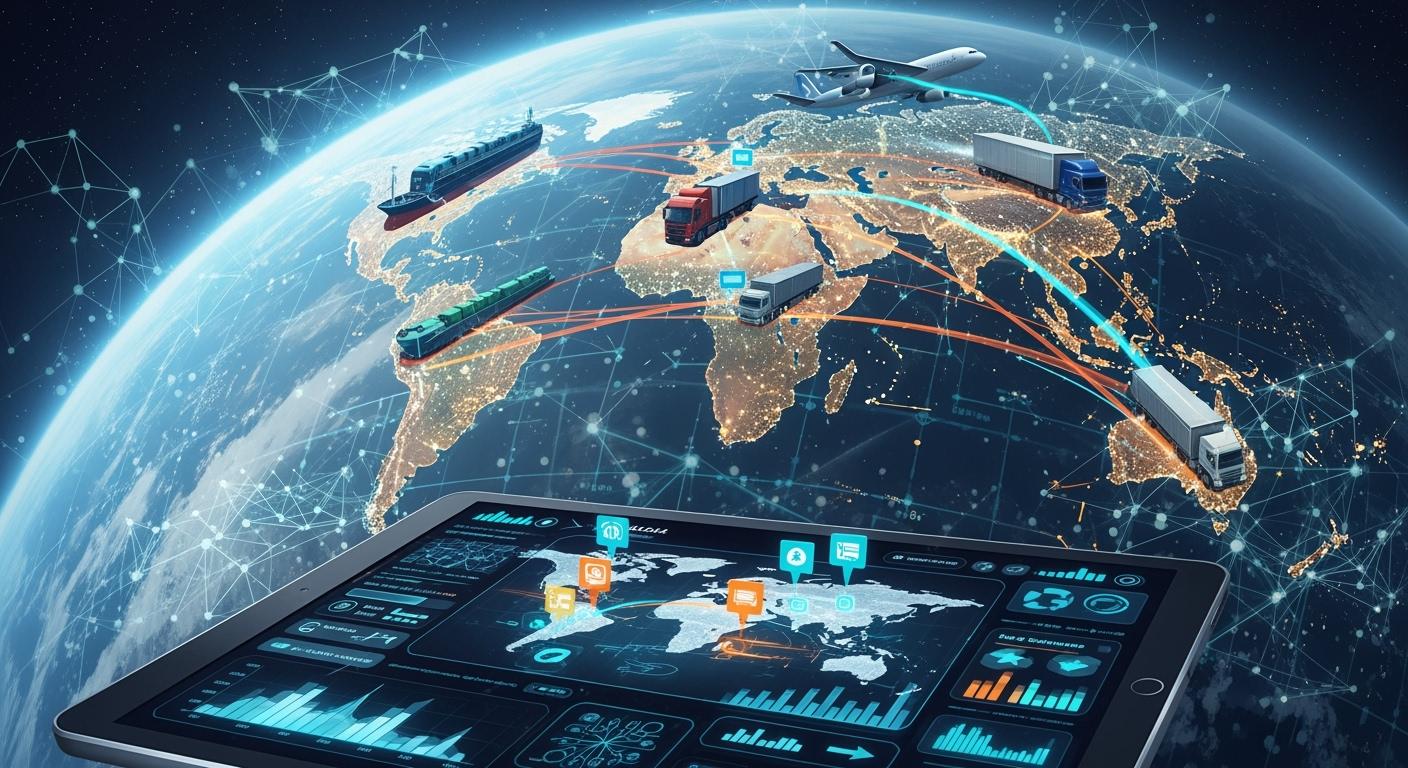
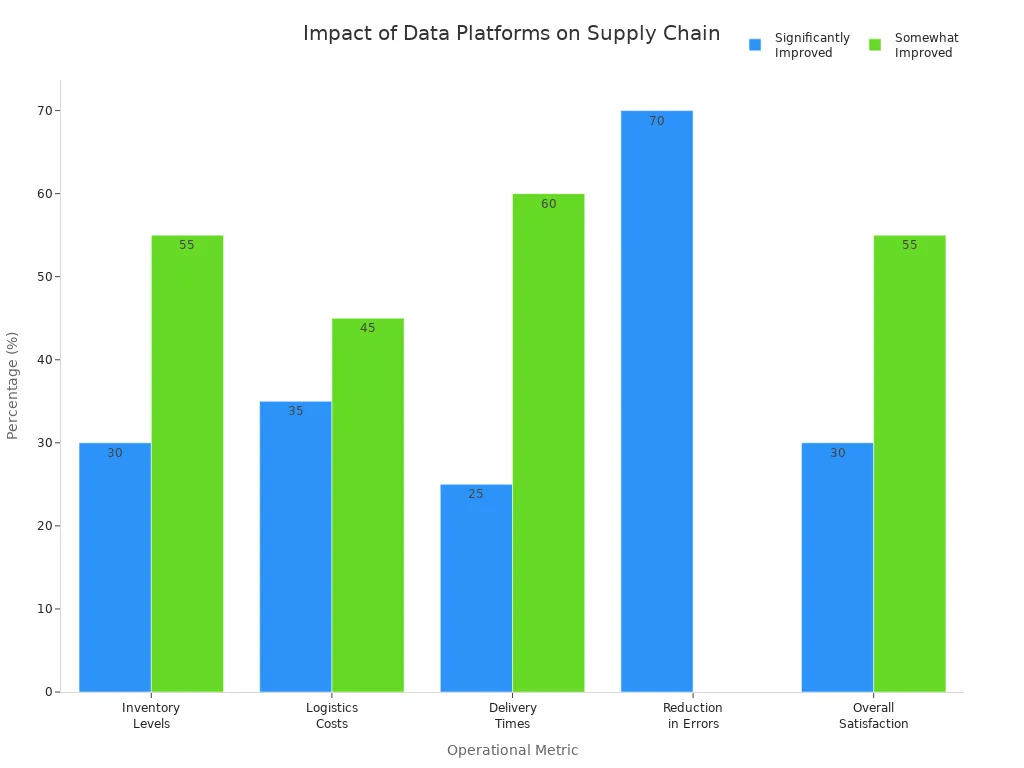
Smart multimodal transport optimization has become essential for global logistics leaders in 2025. Technology and integrated data platforms now drive dramatic improvements in supply chain efficiency. Companies see measurable gains in operational metrics:
Impact | |
|---|---|
Reduction in Inventory Levels | 30% significantly reduced, 55% somewhat reduced |
Logistics Costs | 35% significantly reduced, 45% somewhat reduced |
Delivery Times | 25% significantly faster, 60% somewhat faster |
Reduction in Errors | 70% reported a reduction |
Overall Satisfaction | 30% very satisfied, 55% somewhat satisfied |
JUSDA leverages these advancements to deliver higher reliability and speed for global freight movement.
Key Takeaways
Embrace technology for logistics. Companies using digital platforms see significant improvements in efficiency and cost reduction.
Optimize transport routes with AI. AI solutions help businesses adjust routes in real-time, reducing delivery times and costs.
Utilize multimodal transport. Combining different transport methods under one contract streamlines operations and enhances flexibility.
Focus on sustainability. Shifting from road to rail and sea transport reduces carbon emissions and improves brand image.
Enhance customer experience. Real-time tracking and proactive communication build trust and satisfaction with clients.
Why Optimization Is Essential
Technology’s Impact on Freight Routes
Technology continues to reshape global freight routes. Companies now rely on digital platforms to streamline shipping services and improve customer experience. Real-time visibility reduces errors and enhances operational control. Artificial intelligence develops optimal delivery routes, lowering costs and boosting efficiency, especially in last-mile logistics. IoT tracking provides real-time updates for sensitive cargo, improving management and security. Blockchain integration secures data and simplifies customs documentation, increasing transparency in transactions. Autonomous vessels promise lower labor costs and faster turnaround times, with pilot programs underway in several regions.
Technology | Impact on Freight Routes |
|---|---|
Digital Freight Forwarding | Streamlines shipping services, enhances customer experience with real-time visibility, and reduces errors. |
AI Optimization | Develops optimal delivery routes, reduces costs, and enhances efficiency, especially in last-mile logistics. |
IoT Tracking | Provides real-time tracking of sensitive cargo, improving management and security. |
Blockchain Integration | Secures data, streamlines customs documentation, and enhances transparency in transactions. |
Autonomous Vessels | Promises lower labor costs and faster turnaround times, currently being tested in various locations. |
JUSDA leverages these technologies to optimize multimodal transport, ensuring reliable and efficient freight movement across continents.
Rising Complexity in Logistics
Global supply chains face increasing complexity. Geopolitical tensions and economic instability disrupt operations, causing higher costs and delays. Labor shortages create backlogs and slow the flow of goods. Public health events, such as the COVID-19 pandemic, expose supply chain vulnerabilities, resulting in widespread delays and shortages.
Geopolitical tensions and economic instability disrupt global supply chains, leading to increased costs and delays.
Labor shortages cause significant delays and backlogs in logistics, impacting the flow of goods.
Public health disruptions, such as the COVID-19 pandemic, expose the fragility of supply chains, resulting in widespread delays and shortages.
The US-China trade war led to companies diversifying their supply chains, creating new complexities.
The war in Ukraine has disrupted global flows of essential commodities, causing shortages and price increases.
Labor shortages in logistics and manufacturing have forced companies to scale back production or reroute shipments.
Optimization remains essential for businesses to navigate these challenges. JUSDA’s expertise in multimodal transport helps companies maintain accountability, meet deadlines, and access remote areas. Seamless communication across carriers ensures efficient transitions and reliable delivery.
Reason | Explanation |
|---|---|
Communication | Ensures seamless communication across different services and carriers, leading to efficient transitions. |
Deadlines | Synchronization of various modes helps in meeting deadlines, even when delays occur. |
Accessibility | Allows transportation to remote areas by combining different transport modes. |
Accountability | A single contract with a multimodal operator enhances accountability for the entire journey. |
Note: Optimization in logistics is not just a trend. It is a necessity for companies aiming to thrive in a rapidly changing global market.
Multimodal Transport: Definition and Challenges
What Is Multimodal Transport
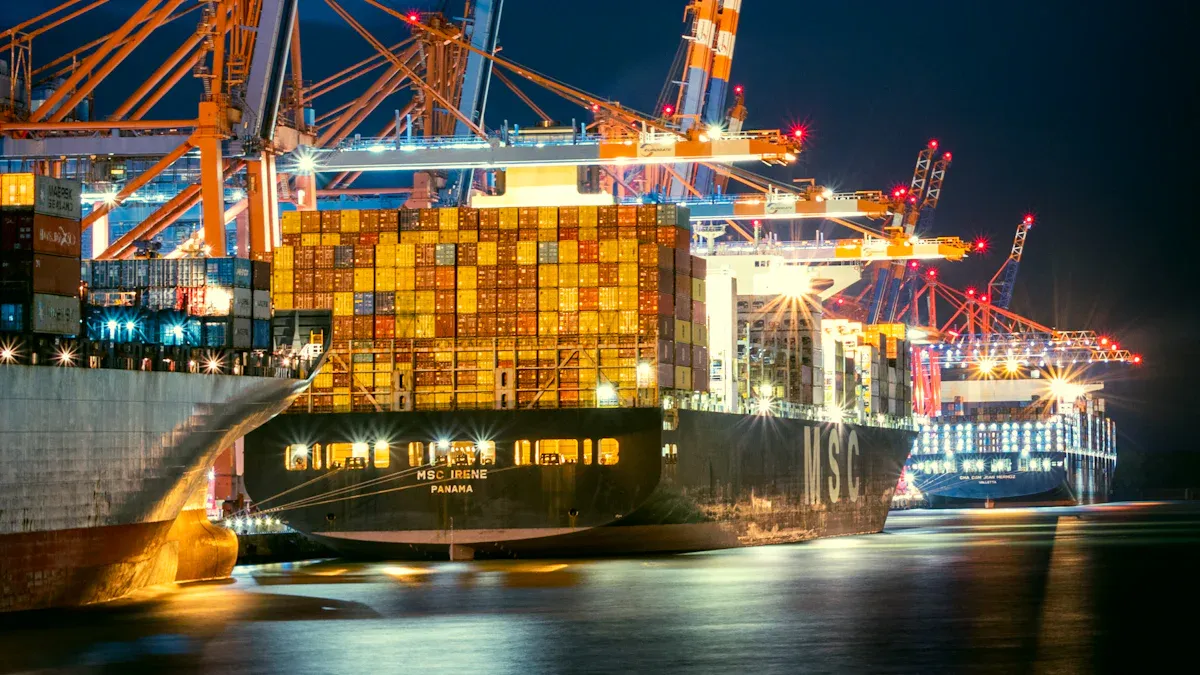
Multimodal transport plays a vital role in modern logistics. It involves moving goods using two or more types of transportation—such as rail, road, sea, or air—under a single contract. This approach streamlines coordination and improves efficiency across the supply chain. Companies can select the best transport method for each segment of a journey, optimizing both cost and speed. The table below highlights the main features of multimodal transport:
Feature | Description |
|---|---|
Integrated Transport | Uses multiple transport modes under one contract for better coordination. |
Enables businesses to choose the most economical method for each trip segment. | |
Speed Optimization | Combines transport modes to avoid delays and improve delivery times. |
Adaptability | Offers flexibility to handle disruptions in the supply chain. |
Environmental Benefits | Reduces emissions by favoring rail or sea over road transport. |
Security Features | Provides real-time tracking and advanced security for safer shipments. |
Multimodal transport supports supply chain resilience and sustainability. It allows businesses to adapt quickly to changing conditions and meet customer demands efficiently.
Key Challenges and Pain Points
Despite its advantages, multimodal transport presents several challenges. Companies often face fragmented data, route inefficiencies, and a lack of real-time visibility. The following table outlines common pain points:
Challenge Type | Description |
|---|---|
Unaligned rail gauges, port capacities, and customs systems cause delays during cargo transfers. | |
Lack of Standardization | Non-digitized documentation leads to inconsistent cargo visibility, especially in developing regions. |
Cost Escalation due to Energy Pricing | Rising fuel prices and unstable maritime conditions increase logistics costs. |
Global Shipping Disruptions | Geopolitical issues force reroutes and delays, impacting delivery timelines and handling costs. |
Managing these challenges requires advanced solutions. Many industry leaders now use digital platforms and real-time data exchange to improve collaboration. JUSDA stands out in this area by leveraging its expertise in complex multimodal networks. The company integrates IoT, cloud computing, and big data to deliver seamless coordination and visibility across all transport modes. This approach helps clients overcome operational barriers and achieve reliable, efficient logistics.
Technology-Driven Route Alternatives

AI and Predictive Analytics
JUSDA’s JusLink AI Solution transforms routing decisions in multimodal transport. The platform uses advanced AI to analyze live data streams from GPS systems, IoT sensors, and transportation management platforms. Logistics managers receive real-time insights that allow them to adjust routes quickly when disruptions occur. JusLink AI predicts transit times, identifies congestion hotspots, and recalculates routes automatically in response to accidents or equipment failures. The system optimizes load and capacity, improving resource scheduling and delivery efficiency. Companies using JusLink AI report reduced delivery times and lower fuel costs. AI-driven control towers coordinate handoffs between transport modes and track container-level status, streamlining customs clearance and enhancing supply chain resilience.
JusLink AI Solution provides supply chain trend analysis and freight rate prediction.
The platform enables sales demand forecasting and replenishment strategies.
Real-time risk monitoring and early warnings support proactive management.
IoT and Real-Time Tracking
JUSDA integrates IoT and real-time tracking across its logistics network. Edge sensors and telematics devices deliver live updates on shipment location, temperature, and condition. GPS-enabled smart sensors provide accurate location data, reducing delays and improving customer satisfaction. Temperature sensors monitor perishable goods, while shock and vibration monitors detect potential damage. Humidity and air quality sensors protect sensitive shipments. These technologies enhance supply chain visibility and operational efficiency.
Benefit | Description |
|---|---|
Enhanced Supply Chain Visibility | Real-time tracking optimizes logistics by providing accurate location updates. |
Operational Cost Reductions | GPS tracking and IoT integration minimize fuel consumption and optimize driver assignments. |
Improved Customer Satisfaction | Customers receive precise ETA updates, reducing uncertainty. |
Digital Platforms and Data Integration
JUSDA’s intelligent supply chain platforms integrate data from diverse sources, including sensors, GPS, and weather forecasts. The JusLink platform simulates traffic scenarios and optimizes vehicle routes and schedules. Real-time monitoring of operations and performance enables rapid decision-making. Automation of paperwork reduces manual tasks, speeding up processes and improving efficiency. Integration with existing systems enhances workflow and data flow, supporting comprehensive analysis and forecasting. These digital platforms improve operational efficiency and enable better planning during demand spikes.
Note: JUSDA’s technology-driven solutions empower businesses to optimize multimodal transport, reduce costs, and deliver reliable service.
Business Impacts of Multimodal Transport Optimization
Cost Reduction and Efficiency
Businesses that adopt multimodal transport optimization experience significant cost savings and improved operational efficiency. JUSDA’s China-Europe Express Rail and its suite of eight core products deliver measurable results for clients across industries. Companies report lower shipping costs, reduced carbon emissions, and streamlined logistics processes.
Business Type | Cost Savings | Additional Benefits |
|---|---|---|
Automotive Supplier | 30% reduction in carbon emissions | |
Furniture Retailers | 20% annual savings in logistics costs | N/A |
Beverage Manufacturer | $2 million annual savings in logistics costs | N/A |
ABC Electronics | 22% reduction in transport costs | 30% less carbon footprint |
General (Rail and Truck) | Up to 30% savings on logistics costs | N/A |
JUSDA’s China-Europe Express Rail offers a balanced solution between speed and cost, with transit times of 15-20 days and costs significantly lower than air freight. The company’s integrated approach to road, ocean, air, and rail transport enables clients to optimize resources, match specialized vehicles, and consolidate shipments. These strategies help businesses lower expenses and improve loading rates.
Key performance indicators used to measure the impact include:
KPI | Description |
|---|---|
Measures delivery performance from the customer's perspective, indicating synchronization in logistics operations. | |
Freight Cost per Shipment | Indicates the average cost incurred to ship a single order, essential for assessing cost efficiency. |
Transportation Capacity Utilization | Evaluates how effectively the capacity of transport vehicles is utilized, indicating operational efficiency. |
Delivery Reliability and Risk Management
Multimodal transport optimization enhances delivery reliability and strengthens risk management. JUSDA’s intelligent supply chain platforms use AI and real-time data to monitor shipments, predict disruptions, and adjust routes. The China-Europe Express Rail minimizes delays by streamlining customs operations and aligning resources across borders.
Recent studies highlight several methods that improve reliability and manage risks:
Mixed-integer fuzzy mathematical models address customer demand uncertainties in routing.
Robust hub station siting under demand uncertainty ensures stable operations.
Stochastic formulations design green intermodal transport services with uncertain times.
Hybrid intelligent algorithms optimize hub-and-spoke networks under cost and time uncertainty.
Robust optimization models address total cost and terminal capacity uncertainties.
Probabilistically robust models tackle uncertainty in multi-period intermodal freight networks.
Researchers have also developed integrated models for post-disaster recovery, enhancing resilience through optimal resource allocation. Two-stage stochastic optimization models improve sustainability and resilience against disruptions. Pre-disruption strategies in rail-truck networks significantly enhance reliability.
JUSDA’s solutions provide real-time risk monitoring and early warnings, allowing businesses to respond quickly to unexpected events. The company’s expertise in handling complex multimodal networks ensures that shipments arrive on time and disruptions are minimized.
Enhanced Customer Experience
Optimized multimodal transport leads to a better customer experience. JUSDA’s technology-driven platforms offer enhanced visibility in tracking deliveries, allowing customers to monitor shipments in real time. Personalized communication keeps clients informed about their orders and expected arrival times.
Efficient routing minimizes delays, ensuring that goods reach their destination as scheduled. Customers benefit from accurate ETA updates and proactive notifications about any changes. These improvements build trust and satisfaction, helping businesses maintain strong relationships with their clients.
Note: JUSDA’s commitment to innovation and efficiency positions the company as a leader in delivering cost-effective, reliable, and customer-focused logistics solutions.
JUSDA Case Studies and Solutions
China-Europe Express Rail Success
JUSDA’s China-Europe Express Rail service demonstrates how companies can achieve cost-effective and reliable logistics. Rail transport offers a dependable solution for businesses that need stable pricing and timely deliveries. The service provides a faster alternative to sea freight and a more economical option than air freight. Companies benefit from smooth customs operations and resource alignment across borders.
The following table shows the growth and impact of the China-Europe Express Rail:
Year | Cargo Trains | TEUs Transported | Increase from 2019 |
|---|---|---|---|
2020 | 12,400 | 1 million | 50% |
Rail transport costs only one-third of air freight.
Rail transport delivers goods faster than sea freight.
Businesses rely on rail for stable pricing and timely deliveries.
JUSDA’s expertise in managing complex logistics networks ensures that shipments arrive on schedule. The company’s integrated approach supports a wide range of industries, including electronics, medical supplies, and automotive parts.
JusLink AI in Action
JUSDA’s JusLink AI Solution transforms logistics operations through advanced technology. The platform integrates live data from GPS, IoT sensors, and transportation management systems. Logistics managers use real-time insights to adjust routes and respond to disruptions. JusLink AI recalculates routes automatically, ensuring timely deliveries even in complex scenarios.
AI enables dynamic routing by processing live data from multiple sources.
The system recalculates routes when disruptions occur, maintaining delivery schedules.
Companies report an 18.7% reduction in logistics costs compared to traditional methods.
Service levels improve by 12.4%.
Performance stability reaches 83% in complex disruption scenarios.
Businesses using AI solutions see up to 15% reduction in logistics costs and a 35% improvement in inventory levels.
JUSDA’s AI-driven platform supports supply chain trend analysis, freight rate prediction, and real-time risk monitoring. The solution helps companies optimize resource allocation and improve operational efficiency.
Customer Story: Smart Logistics Transformation
JUSDA’s Supply Chain Management Collaboration Platform elevates Chinese manufacturers to global prominence. The company faced challenges such as complex overseas supply chains and regional customs differences. JUSDA responded by developing a platform that uses AI, cloud computing, and blockchain technology.
Manufacturers benefit from end-to-end lifecycle management and real-time transparency. The platform integrates systems like ERP, TMS, and WMS, enabling seamless coordination. JusElsa, the intelligent supply chain assistant, uses large language models to enhance customer interactions and decision-making.
The platform streamlines global procurement and transportation.
Real-time tracking and automated processes reduce manual handling.
Smart warehousing and K2L process automation improve efficiency.
Leading manufacturers adopt the platform for cost-effective global expansion.
JUSDA’s commitment to innovation and efficiency drives successful logistics transformation. The company’s solutions optimize multimodal transport, helping clients achieve reliable deliveries and improved customer satisfaction.
Future Trends in Multimodal Transport
Ongoing Tech Evolution
Continuous innovation drives the future of multimodal transport. Companies invest in digital tools such as AI and IoT to modernize logistics operations. The integration of AI, IoT, and digital platforms enhances efficiency, flexibility, and sustainability. In 2024, nearly half of multimodal freight volumes were managed by integrated logistics platforms, which utilized digital tracking and automated documentation. GPS fleet monitoring and IoT sensors reduced delivery inconsistencies by over 21%. Route optimization algorithms coordinated container movements across transport modes for more reliable service.
Emerging technology trends include:
Mobility-as-a-Service (MaaS) platforms that integrate various transportation modes, focusing on customer destinations.
Real-time data access that improves user convenience and reduces congestion.
Autonomous vehicles designed to minimize human error and enhance safety. These vehicles are expected to decrease traffic accidents and expand market opportunities.
Predictive analytics that optimize routes, reduce travel times, and lower fuel consumption.
JUSDA’s vision centers on leveraging these technologies to lead global supply chain transformation. The company’s JusLink intelligent supply chain platform integrates IoT, cloud computing, and big data, providing real-time collaboration and visibility across all logistics operations.
Strategic Adaptation for Businesses
Businesses adapt to future trends by focusing on technological integration, sustainability, and flexibility. Automation of processes and advanced management systems support efficient logistics. Companies implement sustainable practices, including the use of renewable energies and eco-friendly transport modes.
Recent developments in multimodal transport logistics are driven by technology and sustainability mandates. Innovations in digital platforms enhance connectivity and visibility, resulting in more integrated supply chains. The sector moves toward greater technological integration and a sustainable approach, with process automation shaping future operations.
JUSDA remains committed to continuous innovation. The company’s strategy emphasizes collaboration, efficiency, and the adoption of intelligent solutions. By integrating advanced technologies and expanding its global network, JUSDA positions itself as a leader in supply chain transformation. Businesses partnering with JUSDA gain access to comprehensive, data-driven logistics solutions that support resilience and competitiveness in a rapidly evolving market.
Note: The future of multimodal transport depends on ongoing innovation and strategic adaptation. JUSDA’s commitment to technology and efficiency ensures clients are prepared for the challenges and opportunities ahead.
Data-driven multimodal transport optimization reshapes global freight routes, driving efficiency and sustainability. Companies shift from roadways to railways and waterways, reducing carbon emissions and strengthening network resilience. JUSDA’s integrated solutions empower businesses to streamline operations, adapt to market changes, and enhance transparency.
Benefit Description | Impact on Business |
|---|---|
Streamlined operations and cost savings | |
Improved supply chain resilience | Quick adaptation to disruptions |
Sustainability through optimized routes | Reduced emissions and positive brand image |
Industry leaders focus on technology integration, infrastructure investment, and sustainability. AI, automation, and blockchain will continue to advance supply chain management, ensuring future competitiveness.

JUSDA Solutions
To provide you with professional solutions and quotations.
FAQ
What is multimodal transport and how does JUSDA support it?
JUSDA uses multimodal transport to move goods by rail, road, sea, or air under one contract. The company integrates IoT, cloud computing, and big data to streamline coordination and improve efficiency across all transport modes.
How does JUSDA’s China-Europe Express Rail benefit businesses?
China-Europe Express Rail offers faster delivery than sea freight and lower costs than air freight. JUSDA ensures smooth customs operations and reliable resource alignment, supporting industries like electronics, medical supplies, and automotive parts.
What technologies power JUSDA’s JusLink AI Solution?
JusLink AI Solution uses advanced AI, real-time data from GPS, IoT sensors, and transportation management systems. The platform provides supply chain trend analysis, freight rate prediction, and real-time risk monitoring for smarter logistics decisions.
Which industries does JUSDA serve with its logistics solutions?
JUSDA supports electronic manufacturing, 3C home appliances, FMCG, automotive, new energy, medical health, heavy equipment, and bulk materials. The company tailors supply chain solutions to meet each industry’s unique requirements.
How does JUSDA improve customer experience in logistics?
JUSDA’s platforms offer real-time tracking, personalized communication, and accurate ETA updates. Customers monitor shipments easily and receive proactive notifications, which builds trust and satisfaction.
See Also
Get Prepared: Discovering New Transport Tech for Supply Chains
Artificial Intelligence in Supply Chains: Transforming Future Logistics
Analyzing the Future Landscape of LTL Freight Services
Paving the Way: Digital Innovations in Future Logistics
Transforming Supply Chain Management Through Big Data and AI