Ocean Rates Hit Lowest Levels since Late 2023

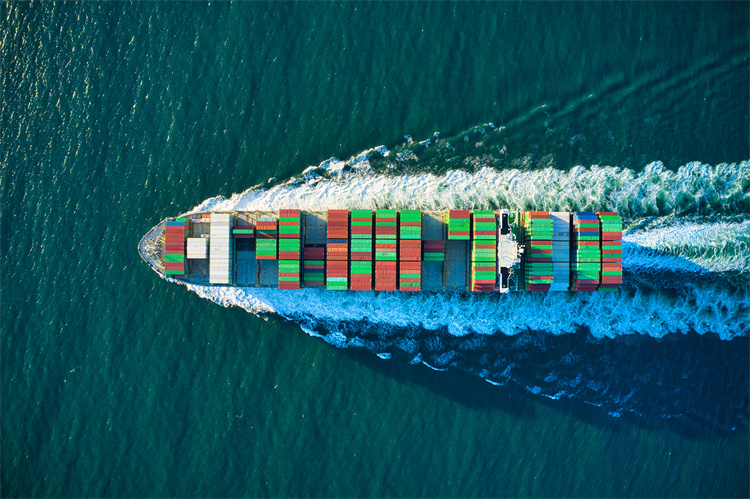
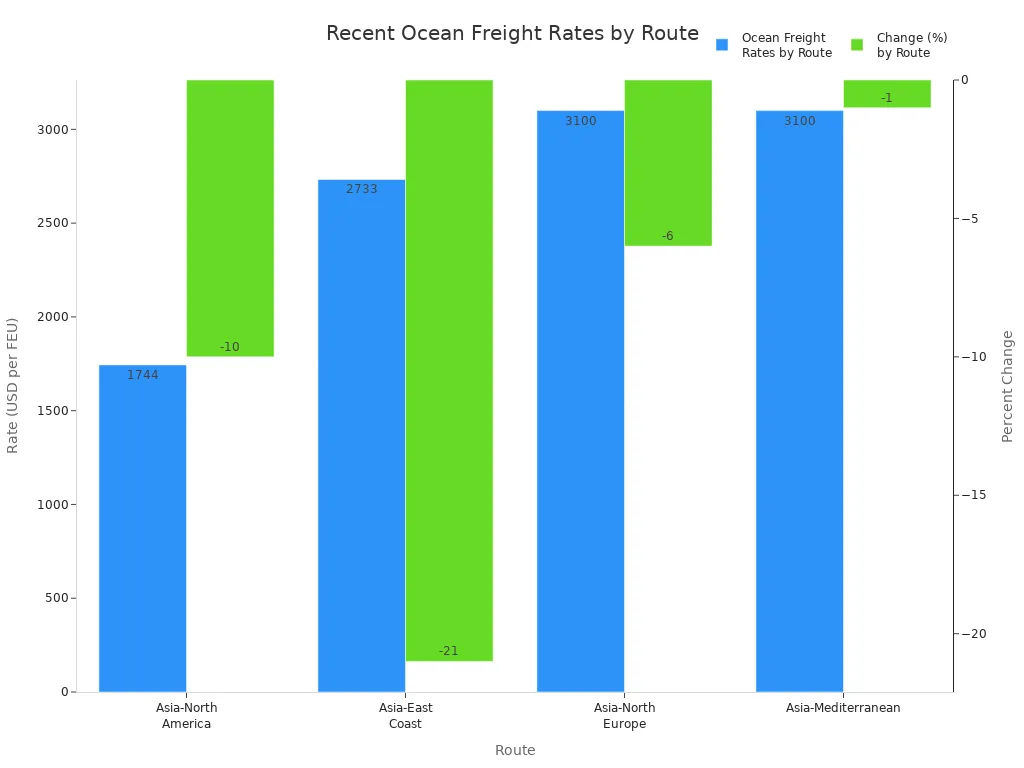
Ocean rates have dropped to their lowest levels since late 2023, with spot prices on key routes like Asia-North America and Asia-North Europe seeing double-digit declines.
Route | Rate (FEU) | Change (%) | Lowest Level Since |
|---|---|---|---|
Asia-North America | $1,744 | -10% | December 2023 |
Asia-East Coast | $2,733 | -21% | N/A |
Asia-North Europe | $3,100 | -6% | Late June |
Asia-Mediterranean | $3,100 | -1% | Late May |
You face these low rates because of weak U.S. import demand, new tariffs, and ongoing port congestion. Many shipping lines have deployed larger vessels, which adds to overcapacity and puts more pressure on prices. These changes affect your business decisions every day. JUSDA helps you navigate these shifts by optimizing logistics and providing reliable, cost-effective solutions.
Key Takeaways
Ocean freight rates have dropped significantly, with some routes seeing declines of up to 58%. This trend is driven by weak demand and overcapacity in the shipping market.
Monitoring spot rates weekly can help you identify trends and better plan your logistics budget. Staying informed allows for smarter shipping decisions.
Working with a logistics partner like JUSDA can stabilize your shipping costs. JUSDA offers consolidated cargo volumes and advanced technology to manage fluctuations in ocean rates.
The current market presents opportunities for securing better shipping deals. Lower rates and excess capacity allow for favorable negotiations with carriers.
Understanding the factors affecting ocean rates, such as tariffs and port congestion, is crucial. This knowledge helps you navigate challenges and protect your bottom line.
Ocean Rates Data
Key Routes
You need to track the latest spot rates on the world’s busiest ocean trade lanes. These numbers help you understand the current market and make better shipping decisions. Here is a snapshot of the most recent spot rates for a forty-foot equivalent unit (FEU):
Trade Lane | Spot Rate (USD per FEU) |
|---|---|
Far East to US East Coast | 7,000 |
Asia to US West Coast | 1,431 |
Far East to North Europe | 6,357 |
You see that the Asia to US West Coast route now sits at $1,431 per FEU. This rate is among the lowest since late 2023. The Far East to North Europe and US East Coast routes remain higher, but they also show signs of decline.
Tip: Monitoring these rates weekly helps you spot trends and plan your logistics budget more accurately.
Rate Trends
You have witnessed a sharp drop in ocean rates compared to late 2023. For example, in late 2023, the spot rate from China to the US West Coast was about $1,500 per FEU. Contract rates averaged $2,800. Today, spot rates have dipped below those levels on some routes. The Drewry World Container Index now stands at $1,669 per 40-foot container, marking a 20-month low. Shanghai–Los Angeles rates have dropped by 58% year-over-year to $2,196, and Shanghai–New York rates have fallen by 46% to $3,200. These numbers are now below the $2,200 break-even point for major carriers like Maersk and Hapag-Lloyd.
Several factors drive these changes:
U.S. tariffs and new port fees have caused volatility. Retailers rushed to stockpile goods ahead of tariffs, which led to a surge in exports and then a sharp decline. By September 2025, U.S.-bound trade lanes saw significant drops as tariffs took full effect. Transpacific rates fell to $1,554 per FEU, a 16% decrease, while East Coast rates dropped to $3,260 per FEU, an 18% decline.
The Red Sea crisis forced ships to reroute around Africa, increasing travel distances by about 9%. This change raised fuel costs and insurance premiums, which pushed up rates temporarily. However, as congestion eased and demand weakened, ocean rates fell again.
The current environment puts pressure on carriers. Many now operate below their break-even points, which challenges profitability and service stability.
You can manage these risks by working with a partner like JUSDA. JUSDA’s ocean freight solutions offer consolidated cargo volumes and stable pricing. You benefit from collective procurement, which helps keep your shipping costs predictable even when the market is volatile. JUSDA also improves cargo consolidation and standard operating procedures, so you get efficient service and fewer delays.
Note: Choosing a logistics provider with strong resource integration and cost management can help you navigate unpredictable ocean rates and protect your bottom line.
Drivers
Demand
You see demand as a key driver in the recent drop in ocean rates. U.S. import volumes have shifted in 2024. Imports rose by $253.3 billion, a 6.6% increase from 2023. The goods and services deficit grew by $133.5 billion, or 17.0%. Exports increased by $119.8 billion, or 3.9%. Even with these gains, cargo demand growth only reached 3%, while vessel capacity grew by 8%. This imbalance puts downward pressure on rates.
Indicator | Statistic | Effect on Rates |
|---|---|---|
Vessel Capacity Growth | Downward pressure on rates | |
Cargo Demand Growth | 3% increase | Rate decline as supply exceeds demand |
Blank Sailings | 25%+ canceled loops | Carrier effort to stabilize rates |
Carriers responded by canceling over 25% of scheduled sailings. You notice these blank sailings as an attempt to stabilize rates, but the oversupply continues to weigh on the market.
Capacity
You face a global container shipping market with rapid supply expansion. The container order book surged, with 27% of installed capacity represented by around 750 vessels. By early 2025, a record level of 8.3 million TEU is expected. In 2024, TEU capacity will increase by 10%, with another 6% growth in 2025. Over 2 million TEU capacity is currently blocked at ports due to congestion, which is close to pandemic levels and represents over 7% of the total fleet capacity.
The global container order book is at a record high.
TEU capacity is expanding faster than demand.
Port congestion blocks significant capacity, slowing the flow of goods.
You see these trends create overcapacity, which pushes ocean rates lower and challenges carriers to maintain profitability.
Policy
You must navigate new tariffs and shifting trade policies. In 2024, the U.S. extended a 30% tariff on imports from China, providing short-term stability for importers. Reciprocal tariffs now affect trade with partners like the EU and Japan, adding complexity to shipping costs. The introduction of a 25% tariff on Indian exports led to a decline in export orders, directly impacting shipping demand.
New tariffs caused a surge in ocean shipping demand as importers rushed to stock up before tariffs took effect.
Despite the demand spike, rates did not rise dramatically due to high rate levels and market overcapacity.
Strikes and seasonal fluctuations add uncertainty to the market.
You also see ongoing congestion at major ports, especially in Asia and the Mediterranean. Geopolitical tensions and demand surges drive this congestion, leading to longer waiting times and higher shipping rates. The Red Sea crisis had a major impact. Container vessel traffic through the Suez Canal dropped by about 75% in 2024 compared to 2023. Transit times for shipments from Southeast Asia to the U.S. East Coast increased by 47%. Shipments from Southeast Asia to Europe took 33% longer, and transit times from China to Europe rose by 25%. Median shipping times on key lanes now approach two months.
JUSDA helps you manage these challenges. You benefit from JUSDA’s resource optimization and cost control strategies. JUSDA leverages its supplier network and advanced logistics technology to keep your supply chain efficient, even when market conditions shift. You gain access to consolidated cargo volumes, stable pricing, and improved service levels, so you can adapt quickly to changes in ocean rates and global trade policies.
Impacts
Shippers
You face a challenging environment as ocean rates reach new lows. Increased competition among freight forwarders means you must focus on efficiency and customer service to stay profitable. The pressure on rates makes it harder to maintain margins. Overcapacity in the market and stagnant demand add to the strain. Mistrust between shippers and carriers can lead to higher costs and less efficient operations.
Impact on Shippers | Description |
|---|---|
Increased Competition | You see more freight forwarders competing for limited cargo. |
Pressure on Rates | Lower rates make it difficult to achieve profitability. |
Mistrust and Volatility | Uncertainty in the market increases your operational risks. |
Overcapacity | Too many vessels chasing too little cargo drives rates even lower. |
Stagnant Demand | Slow growth in global trade limits your opportunities for expansion. |
JUSDA helps you overcome these challenges by offering tailored logistics solutions. For industries like electronics, automotive, and FMCG, JUSDA uses its global network and local expertise to design efficient, industry-specific strategies.
Carriers
You see carriers making significant adjustments to cope with declining rates. Many carriers suspend services or implement blank sailings to control capacity. For example, in October, carriers canceled 67 sailings from China to the U.S. and 71 on the westbound trade. These actions help stabilize rates but can disrupt your shipping schedules.
Carriers suspend services to reduce available capacity.
Blank sailings become more common as carriers try to balance supply and demand.
You benefit when your logistics partner, like JUSDA, can adapt quickly to these changes and secure reliable space for your shipments.
Supply Chain
Low ocean rates affect the entire supply chain. You may experience higher operational and inventory costs due to unreliable shipping schedules. Disruptions can lead to lost sales, missed deadlines, and increased working capital needs. The complexity of managing contingencies rises, and your reputation may suffer if you cannot deliver on time.
Impact Type | Description |
|---|---|
Financial Impacts | Higher costs from delays, lost sales, and extra inventory. |
Operational Impacts | Production disruptions and increased complexity in logistics planning. |
Reputational Impacts | Customer satisfaction and loyalty decline if deliveries are unreliable. |
JUSDA supports your supply chain by leveraging advanced technology and a robust network. You gain access to real-time tracking, efficient consolidation, and flexible solutions that keep your operations running smoothly, even when ocean rates fluctuate.
JUSDA Solutions
8 Core Products
You need logistics solutions that adapt to changing ocean rates and global supply chain disruptions. JUSDA’s 8 Core Products give you a comprehensive toolkit to manage every aspect of your logistics. These products include air, land, ocean, and rail transport, cloud warehousing, consolidation and distribution, foreign trade services, and the JusLink intelligent supply chain platform. Each product targets specific industry needs, from electronics to automotive and FMCG. You benefit from a robust supplier network, strategic partnerships, and a global infrastructure that supports both domestic and international shipments.
Air Transport: Fast, reliable air freight for urgent shipments.
Land Transport: Extensive road network with specialized vehicles.
Ocean Shipping: Consolidated cargo volumes and stable pricing.
Rail Transport: Efficient cross-border rail solutions.
Cloud Warehousing: Real-time inventory management.
Consolidation & Distribution: Streamlined for e-commerce and retail.
Foreign Trade Services: End-to-end compliance and customs support.
JusLink Platform: IoT, cloud, and big data for supply chain visibility.
Innovation
You face a rapidly evolving logistics landscape. JUSDA leads with innovation, using advanced technology to help you stay ahead. The JusLink platform integrates IoT, cloud computing, and big data, giving you real-time visibility and predictive insights. This technology helps you anticipate demand, optimize routes, and manage risks before they impact your business.
Our team is committed to analyzing these changes to ensure we bring the best opportunities to our customers. As the industry evolves, so do we—ready to propose solutions that capitalize on these shifts and deliver value through the most advantageous deals.
You gain from predictive analytics, AI, and machine learning, which automate tasks and improve decision-making. These tools help you reduce costs and improve service reliability.
Efficiency
You want to optimize resources and control costs, especially when ocean rates fluctuate. JUSDA’s solutions deliver measurable results:
Nibco reduced inventory levels by 40% and cut total system costs by 12% with a new inventory strategy.
Intel’s make-to-order approach lowered supply chain costs by over $4 per unit for its Atom chip.
Predictive analytics improved inventory accuracy by up to 25%, reducing overstock and understock.
Logistic regression models boosted on-time delivery by 10-20%.
IoT technology monitors goods in real time, optimizes routes, and streamlines warehouse operations.
You can trust JUSDA to deliver efficiency, cost savings, and reliable performance, no matter how the market changes.
JUSDA Solutions
To provide you with professional solutions and quotations.
Outlook
Forecast
You can expect continued volatility in ocean freight rates over the next several months. Industry analysts project maritime trade growth will slow to just 0.5% by 2025. Fluctuating container rates and unpredictable carrier schedules will likely remain common. Geopolitical tensions and shifting tariffs may cause sharp swings in demand and pricing. You will need to monitor these trends closely to make informed shipping decisions.
Risks
You face several risks in the current ocean freight market. These risks can disrupt your operations and impact your bottom line.
Risk Category | Specific Risks |
|---|---|
Port congestion, labor actions, equipment shortages, service disruptions, weather events, geopolitical events | |
Regulatory and Compliance Risks | Tariff changes, trade sanctions, regulatory requirements, documentation errors, partner government agency issues |
Financial Risks | Currency fluctuations, rate volatility, credit risk, cost inflation |
You must stay alert to these risks and prepare your supply chain for sudden changes.
Opportunities
You also have new opportunities as ocean rates remain low. The current market allows you to secure better deals and optimize your logistics strategy.
Opportunity Description | Details |
|---|---|
You can secure favorable rates for your shipments. | |
Favorable environment for larger volume commitments | You can leverage the buyer’s market if you provide volume certainty. |
Spot market bookings for non-urgent cargo | You can capture competitive pricing for flexible shipments. |
Contracted rates for guaranteed space and schedules | You can lock in reliability before the market stabilizes. |
Excess capacity contributing to favorable pricing | You can negotiate better deals with carriers. |
You can adapt to these changes by using JUSDA’s solutions. JUSDA helps you streamline your operations and manage costs with advanced digital tools. You gain real-time tracking, AI-powered insights, and risk mitigation strategies. The JusLink Smart Supply Chain Management Platform gives you better control and coordination. With JUSDA, you can turn market challenges into opportunities and keep your supply chain resilient.
You have seen ocean rates fall sharply, with spot rates dropping 58% on the Asia to US West Coast and 46% on the Asia to US East Coast. This decline comes from weakened demand, overcapacity, and new port fees. These changes challenge your supply chain and profitability. JUSDA supports you with innovative technology, localized strategies, and proactive risk management. You can rely on JUSDA’s expertise to adapt quickly and keep your logistics efficient as the market evolves.
FAQ
What causes ocean freight rates to drop?
You see rates drop when shipping demand falls or vessel supply rises. Overcapacity, weak import demand, and new tariffs all push rates lower. Port congestion and global events can also affect prices.
How can you manage shipping costs during rate volatility?
You can manage costs by working with a logistics partner like JUSDA. JUSDA offers consolidated cargo, stable pricing, and advanced technology to help you control expenses and improve efficiency.
What industries benefit most from JUSDA’s solutions?
You benefit if you work in electronics, automotive, FMCG, new energy, or medical health. JUSDA tailors logistics strategies for each industry, using its global network and technology.
How does JUSDA help you handle supply chain disruptions?
JUSDA uses real-time tracking, predictive analytics, and a strong supplier network. You get fast responses to disruptions, flexible shipping options, and reliable delivery even when the market changes.
See Also
Exploring Innovations in Sea Freight Logistics for 2024
Understanding Current Trends in Logistics Risk Management
An In-Depth Look at Jusda Supply Chains and Consumer Needs