Port Strikes Expose Global Supply Chain Fragility and Trigger Wide-Ranging Logistics Disruptions

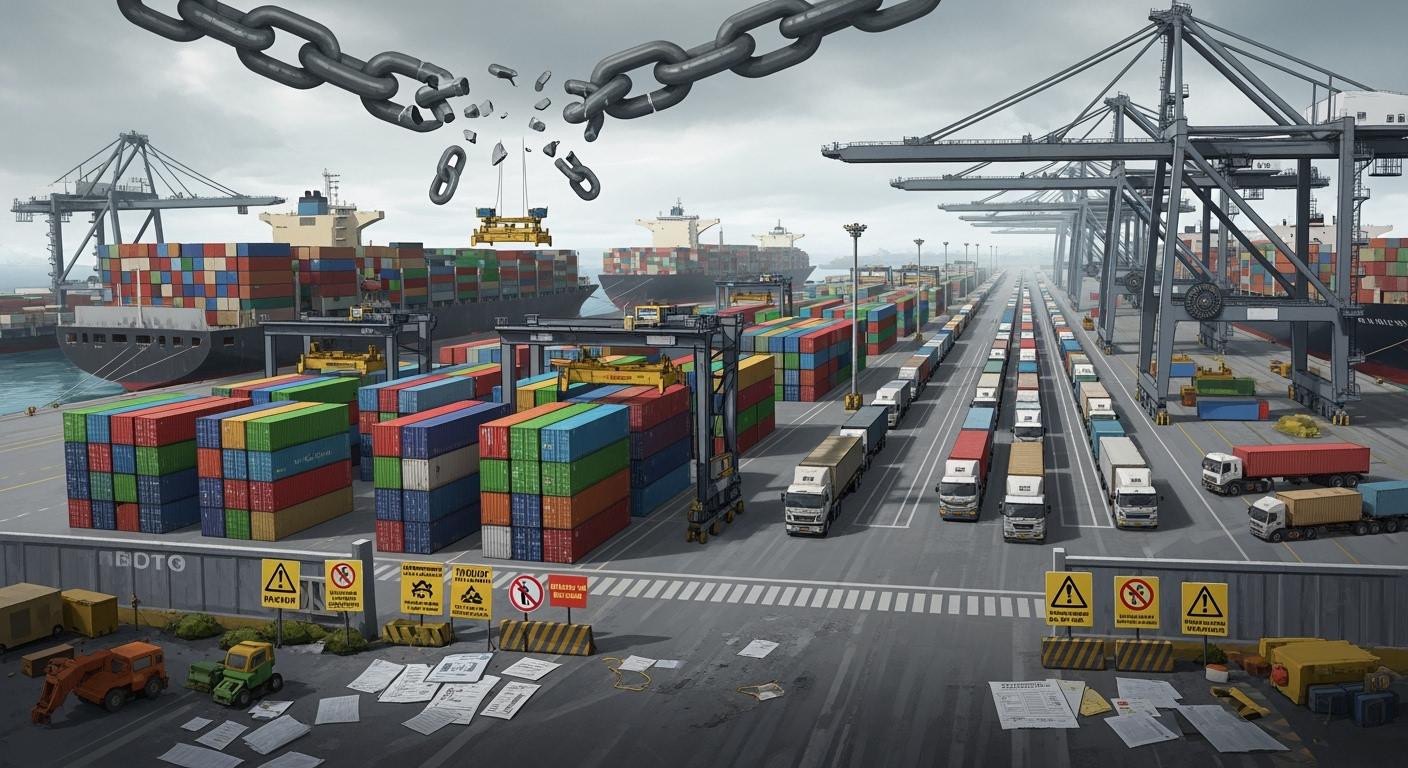
Recent port strikes in the US and Europe have exposed significant vulnerabilities in global supply chains. These disruptions ripple across logistics networks, causing delays and congestion that often take days to clear.
The International Longshoremen’s Association strike led to daily losses of up to $4.5 billion and forced supply chain recovery to extend for weeks.
AI-powered solutions like JusLink analyze data, predict disruptions, and optimize operations, helping companies maintain continuity.
Real-time visibility and just-in-case inventory strategies allow businesses to respond quickly and build trust with stakeholders.
Proactive risk management and advanced supply chain solutions now play a crucial role in minimizing the effects of a port strike.
Key Takeaways
Port strikes can cause significant delays and congestion, leading to increased logistics costs and disrupted supply chains.
Companies should adopt advanced inventory management strategies to prevent stockouts and maintain operational stability during disruptions.
Diversifying ports and transport modes helps businesses avoid severe delays and maintain the flow of goods during port strikes.
Investing in AI-driven solutions like JusLink can enhance supply chain resilience by providing real-time data and predictive analytics.
Proactive risk management and strategic planning are essential for companies to navigate the challenges posed by port strikes.
Port Strike Impacts on Global Logistics
Supply Chain Delays and Congestion
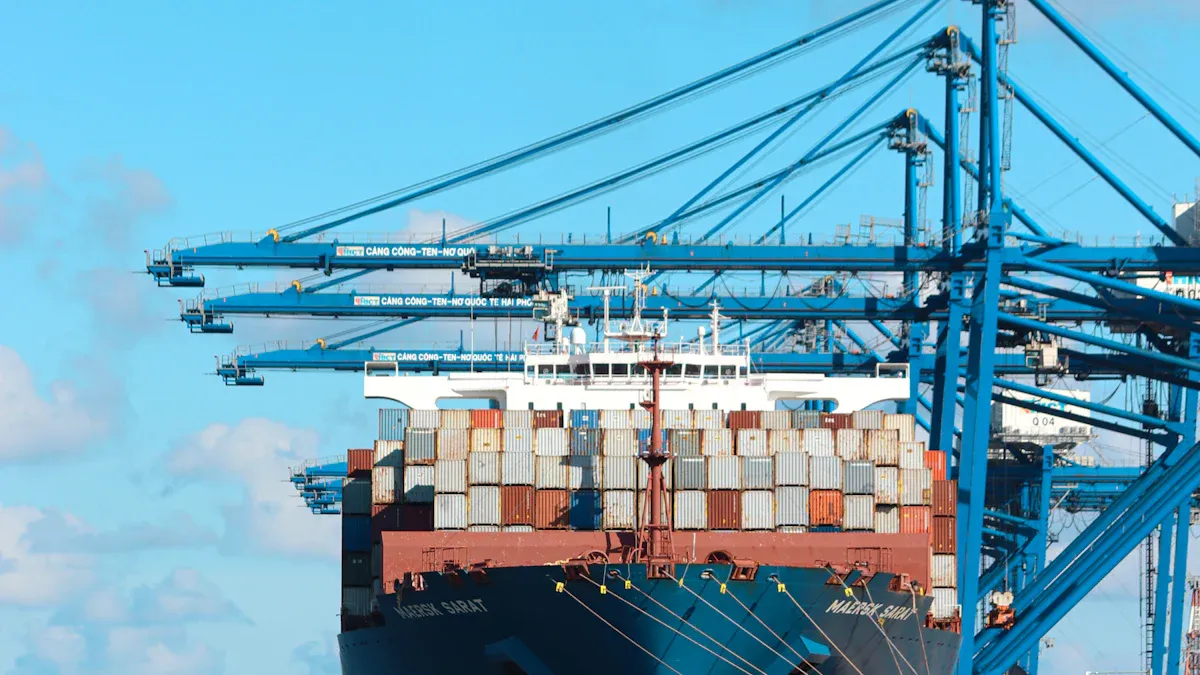
Port strikes have created significant challenges for global logistics networks. In October 2024, a strike involving 45,000 dockworkers at U.S. East and Gulf Coast ports led to the shutdown of 36 ports. This event caused widespread delays and forced companies to reroute vessels to Canadian and Mexican ports. The ripple effects extended into late 2024 and early 2025, straining shipping schedules and increasing logistics costs.
European ports faced similar disruptions. Rotterdam experienced a 48-hour strike by container lashing workers, which doubled the queue of vessels waiting to enter the port. Antwerp saw limited pilotage services due to pension reform disputes, resulting in vessel delays at both Antwerp and Zeebrugge. Storm Amy further exacerbated backlogs, making normal operations unlikely to resume until the end of the month.
Note: The interconnectedness of global supply chains means that even short-term port strikes can lead to reduced product availability, especially for imported goods such as fruits and vegetables during winter months in the U.S.
The following table highlights the scale of disruptions at major European ports:
Port | Disruption Details | Impact on Logistics |
|---|---|---|
Rotterdam | 48-hour strike by container lashing workers over pay and conditions | Significant slowdowns in vessel handling and inland transport |
Antwerp | Limited pilotage services due to a pension reform dispute | Vessel delays in Antwerp and Zeebrugge |
General | Strikes and congestion add to existing operational challenges on Asia–Europe corridor | Reliability remains near record lows across major carrier alliances |
Businesses have responded by holding higher inventory levels to prevent stockouts. Longer anchor times and slower transit rates have become common at major ports. Congested terminals drive up shipping costs and disrupt inventory turnover rates. Companies face rising demand and bottlenecks, which force them to adjust their logistics strategies.
JUSDA’s extensive warehouse network and advanced management systems, such as eVMI and Juslink, help mitigate these delays. With over 2.5 million square meters of warehousing space worldwide, JUSDA provides real-time inventory tracking and control. This capability allows businesses to respond quickly to disruptions and maintain supply chain continuity. JUSDASR’s cross-border logistics services further support companies by enabling efficient rerouting and timely delivery, even during periods of congestion.
Cost Increases and Industry Disruption
Port strikes have led to substantial cost increases for shippers and carriers. When container ships cannot unload, massive backlogs develop at ports. Trucking companies experience delays, and drivers often wait without loads, reducing their income. The rush to move delayed goods increases wages and spot rates, while rising fuel and maintenance costs squeeze profit margins.
The following table summarizes the impact of delays and congestion on shipping times and inventory turnover rates:
Impact | Description |
|---|---|
Longer Anchor Times | Major ports are experiencing increased anchor times due to congestion. |
Slower Transit Times | The delays lead to slower overall shipping times for goods. |
Higher freight rates and congestion fees are being imposed on businesses. | |
Higher Inventory Levels | Businesses are compelled to hold more inventory to prevent stockouts. |
Industries such as retail, automotive, and agriculture have experienced the greatest disruption. Retailers face significant delays in shipments and increased logistics costs, which can lead to shortages of consumer goods. Automobile manufacturers encounter delays in the arrival of major components, affecting production schedules. Agricultural exporters struggle with delays in shipping products like coffee, bananas, and cocoa.
JUSDA’s global warehouse network and JUSDASR’s cross-border logistics solutions provide critical support during these disruptions. By offering strategic warehouse locations and real-time inventory management, JUSDA enables companies to optimize their supply chains and reduce costs. The integration of JusLink’s AI-driven analytics helps businesses forecast demand, manage inventory, and monitor risks, ensuring resilience against future port strike events.
Tip: Companies that leverage advanced supply chain solutions and diversify their logistics strategies can better withstand the impact of port strikes and maintain operational stability.
Causes and Vulnerabilities Exposed by Port Strikes
Labor Negotiations and Contract Disputes
Labor negotiations and contract disputes often trigger port strike events, revealing the fragility of global supply chains. The International Longshoremen’s Association (ILA) strike from October 1 to October 3, 2024, shut down 36 U.S. ports and caused daily losses estimated at $5 billion. This disruption highlighted the seriousness of unresolved labor disputes and their ability to escalate quickly. The ILA’s negotiations focus on wages and working conditions, which remain common causes of port strikes. When these negotiations stall, the consequences ripple across the East and Gulf coasts, impacting businesses and consumers alike.
The ILA strike became a major news topic, emphasizing the risks associated with labor negotiations.
Unresolved disputes can lead to significant economic impacts, including supply chain disruptions and financial losses.
Atlantic Coast ports accounted for nearly 30% of U.S.-international trade value in 2022, showing the critical role these ports play in the economy.
Weaknesses in Supply Chain Networks
Port strikes expose several weaknesses in supply chain networks. Just-in-time inventory models, designed for efficiency, become highly vulnerable during disruptions. Companies must reroute shipments, which increases operational costs and creates financial strain. Small and medium-sized businesses face heightened risks, with some at risk of bankruptcy due to stranded inventory. These events force organizations to reevaluate logistics strategies and adopt more resilient approaches.
Port strikes reveal the fragility of just-in-time inventory systems.
Companies experience increased costs and must reroute shipments.
Small businesses are especially vulnerable, risking bankruptcy when inventory is stranded.
Organizations must reconsider logistics strategies to build resilience.
JUSDA’s digital solutions, including JusLink AI and JusElsa, provide real-time risk monitoring and predictive analytics. These AI tools analyze historical data and external signals to predict future supply chain bottlenecks. Real-time insights improve decision-making and help maintain supply chain resilience. JusLink AI monitors thousands of risk signals, offering early warnings and enabling proactive interventions. Dynamic inventory optimization adapts to demand and supply changes, preventing stockouts and excess inventory. Companies using these solutions can respond quickly to disruptions and maintain operational stability.
Proactive risk management with AI-driven tools like JusLink AI and JusElsa strengthens supply chain networks and reduces vulnerability during a port strike.
Economic and Consumer Effects

Product Shortages and Price Volatility
Port strikes disrupt supply chains and create immediate shortages in consumer markets. Retailers struggle to restock shelves when shipments stall at major ports. Automotive, pharmaceutical, and retail industries experience delays that ripple through national and global markets. The 2024 port strike caused billions of dollars in daily trade disruptions, affecting importers such as Walmart and Home Depot.
Shipping delays lead to inventory shortages for retailers.
Increased logistics costs during disruptions often result in higher prices for consumers.
The cascading effects of port strikes can change consumer behavior, causing panic buying and reduced brand loyalty.
Consumers react quickly to news of supply chain disruptions. Panic buying becomes common when rumors of shortages spread. Fear of scarcity prompts unnecessary stockpiling, especially for essential goods like toilet paper and cleaning supplies. Delays in transportation and shortages of raw materials make it difficult for retailers to replenish inventory, fueling a cycle of anxiety and hoarding.
Note: Supply chain disruptions can trigger price volatility, forcing businesses to adjust pricing strategies and pass costs to consumers.
Workforce Reductions and Market Uncertainty
Port strikes influence workforce dynamics and market stability. Labor unions negotiate terms during transitions to automation, and breakdowns in social dialogue can lead to disruptive strikes. These events create uncertainty for workers and employers. However, research from the University of California shows that automation at San Pedro Bay ports increased union workforce growth by 3 percent compared to other ports. Paid hours at automated terminals also rose significantly.
Historically, dock employment increased with the introduction of container ships. Recent studies indicate that ports adopting autonomous technologies maintain or expand job levels. Market uncertainty often arises from labor resistance rather than actual job losses. Strikes can disrupt operations and create anxiety about future employment, but automation and technology may support workforce expansion.
Factor | Impact on Workforce and Market |
|---|---|
Labor Negotiations | Can trigger strikes and instability |
Automation Adoption | May increase workforce and paid hours |
Market Uncertainty | Often linked to labor resistance |
Tip: Companies that invest in digital supply chain solutions, such as JUSDA’s JusLink AI, gain better visibility and risk management, helping them navigate market uncertainty and workforce changes.
Mitigation Strategies for Port Strike Disruptions
Diversifying Ports and Transport Modes
Shippers and businesses can reduce risk by diversifying their port choices and transport modes. When a port strike occurs, companies that rely on a single gateway face severe delays. By using alternative ports and multiple transport options, organizations maintain the flow of goods and avoid bottlenecks. JUSDA’s global network supports this strategy with warehouses and logistics hubs across China, the United States, Europe, and Southeast Asia. Companies can reroute shipments through West Coast ports or inland distribution centers, ensuring continuity even when East Coast ports experience scrutiny.
Port Type | Advantages |
|---|---|
West Coast Ports | |
Proximity to Key Markets | Direct access to inland distribution networks |
JUSDASR’s cross-border logistics services enable flexible routing and quick adaptation to changing port schedules. The service provides direct express lines, first-mile logistics, and overseas warehousing, allowing businesses to shift shipments efficiently. By leveraging JUSDA’s carrier network and strategic warehouse locations, companies respond faster to disruptions and maintain reliable delivery schedules.
Tip: Diversifying transport modes, such as combining ocean, air, rail, and road, helps companies avoid over-reliance on any single route and minimizes the impact of port strikes.
Inventory Management with JUSDA Warehousing
Effective inventory management is essential during port strike disruptions. JUSDA’s warehousing solutions offer real-time inventory tracking and control through advanced systems like eVMI and Juslink. Businesses can monitor stock levels, adjust replenishment strategies, and prevent shortages. JUSDA’s warehouses span over 2.5 million square meters globally, providing general storage, bonded facilities, and distribution centers.
Companies benefit from enhanced flexibility for variable demand by adopting a Cost Per Unit (CPU) model. This approach allows organizations to adjust staffing levels based on real-time demand, which is crucial during unpredictable delays. The CPU model also helps maintain budget control, improves workforce motivation, and reduces reliance on temporary labor. Businesses respond quickly to supply chain changes and maximize productivity.
JUSDA’s VMI services enable strategic collaboration between suppliers and buyers.
Real-time data sharing supports dynamic inventory optimization.
Value-added services, such as picking, packing, and labeling, streamline warehouse operations.
Note: Advanced inventory management with JUSDA’s warehousing solutions reduces the risk of stockouts and excess inventory during port strike events.
Technology Adoption: JusLink AI and JUSDASR
Technology plays a vital role in enhancing supply chain resilience. JusLink AI provides real-time data analytics, monitoring shipment statuses and predicting delays. Companies use predictive modeling to reroute shipments and adjust inventory levels in response to disruptions. JusLink’s risk control tower offers early warnings and actionable intelligence, enabling proactive interventions.
JUSDASR supports cross-border logistics with strategic warehouse locations near major ports and airports. The service integrates with major carriers, such as FedEx and UPS, ensuring efficient last-mile delivery. Businesses diversify shipping routes and maintain open communication with logistics partners, which is essential during a port strike.
JusLink AI delivers supply chain trend analysis and freight rate prediction.
Sales demand forecasting and replenishment strategies optimize procurement.
JusElsa, the intelligent supply chain assistant, enhances decision-making and risk management.
JUSDA’s digital solutions empower companies to streamline operations, reduce costs, and improve customer satisfaction. By adopting advanced technology, organizations gain full visibility into their supply chains and respond quickly to disruptions.
Tip: Investing in AI-driven supply chain solutions, such as JusLink AI and JUSDASR, strengthens resilience and ensures continuity during port strike disruptions.
Businesses face urgent challenges as each port strike reveals vulnerabilities in global supply chains. JUSDA’s advanced logistics solutions and global network help companies reduce risk and recover faster. Organizations that adopt proactive planning and digital tools experience measurable benefits:
Reduced costs
Increased agility
Improved supplier relationships
Enhanced customer satisfaction
Industry experts recommend integrating resilience, investing in visibility, and conducting scenario planning. Companies that leverage technology and strategic partnerships maintain continuity and protect customer relationships during disruptions.

JUSDA Solutions
To provide you with professional solutions and quotations.
FAQ
What industries benefit most from JUSDA’s supply chain solutions?
JUSDA serves electronics, automotive, FMCG, medical health, heavy equipment, and bulk materials industries. Each sector receives tailored logistics and supply chain management services that improve efficiency and reliability.
How does JusLink AI help companies during port strikes?
JusLink AI provides real-time risk monitoring, predictive analytics, and supply chain trend analysis. These features allow companies to anticipate disruptions, optimize inventory, and maintain operational stability during port strikes.
What advantages do JUSDA’s warehousing services offer?
JUSDA’s warehousing network provides real-time inventory tracking, flexible storage options, and value-added services like picking, packing, and labeling. These capabilities help businesses respond quickly to supply chain disruptions.
How does JUSDASR support cross-border logistics?
JUSDASR offers direct express lines, first-mile logistics, and overseas warehousing. Strategic warehouse locations near major ports and airports enable efficient rerouting and timely delivery during disruptions.
Can JUSDA’s solutions improve supply chain visibility?
JUSDA’s JusLink intelligent supply chain platform integrates IoT, cloud computing, and big data. This integration provides full visibility, real-time monitoring, and dynamic management across global supply chain networks.
See Also
Address Supply Chain Risks To Safeguard Your Business Now
Understanding Inflation: Managing Disruptions In Supply Chains
Analyzing Trends: The Risks In Logistics Management
Mitigating Risks: Essential Strategies For Supply Chain Protection