Smart solutions for supply chain continuity during port strikes


Businesses maintain continuity during port strikes major terminals Q4 supply chain by embracing proactive planning and technology-driven solutions. Recent trends show that shippers frontload inventory to reduce risk. For example, projections indicate a drop in U.S. port import volumes this quarter:
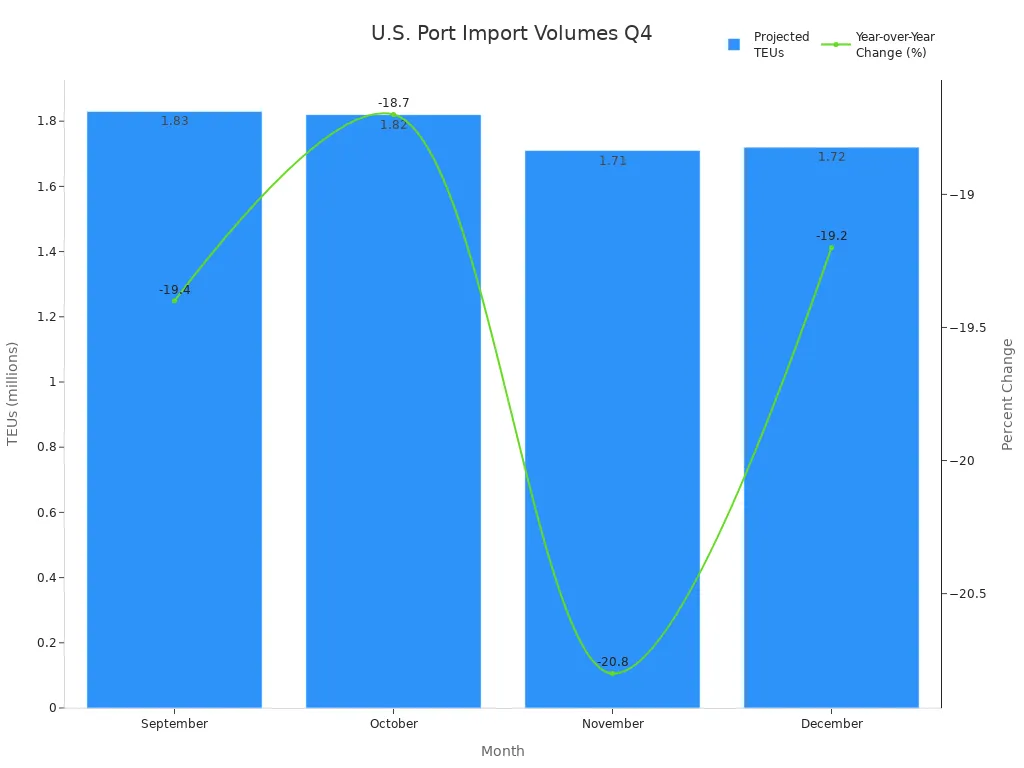
JUSDA supports diverse industries with advanced warehousing, digital platforms, and regional logistics strategies. These tools help companies minimize disruptions and respond quickly to changing conditions.
Key Takeaways
Proactive planning and technology are essential for maintaining supply chain continuity during port strikes.
Diversifying suppliers and entry points reduces risks and enhances resilience against disruptions.
Real-time data and strong logistics coordination help companies respond quickly to changing conditions.
Investing in advanced inventory management systems allows businesses to monitor stock levels and avoid shortages.
Scenario planning prepares companies for potential disruptions, ensuring they can act swiftly when challenges arise.
Port strikes major terminals Q4 supply chain

Risks and disruptions
Port strikes major terminals Q4 supply chain create a complex web of risks that can halt the movement of goods and disrupt business operations. The following table outlines the most common risks and disruptions that companies face during these events:
Risk/Disruption | Description |
|---|---|
Port Congestion | Breaks the flow of goods, causing delays in reaching customers. |
Container Imbalances | Results in shipping delays that ripple through supply networks, disrupting production. |
Labor Strikes | Add further delays at ports and warehouses, exacerbating existing issues. |
Road Closures/Driver Shortages | Slow down inland transport, complicating logistics. |
Rigid Routes and Limited Carriers | Increase the problem of delays and inefficiencies in the supply chain. |
Need for Real-Time Data | Critical for tracking slowdowns and planning detours to mitigate disruptions. |
Importance of Logistics Coordination | Reduces lead times and helps avoid costly downtime caused by chokepoints. |
During Q4, these risks intensify. Persistent softness in manufacturing leads to a decline in factory output, which impacts truck freight volumes. The growth of private fleets reduces reliance on for-hire fleets, making supply chain dynamics more complicated. Regional variations also appear, with the Southeast experiencing the largest declines due to hurricanes and slowdowns in the automotive industry.
Tip: Real-time data and strong logistics coordination help companies respond quickly to these disruptions.
Industry impacts
Port strikes major terminals Q4 supply chain affect industries in different ways. Dockworkers' strikes often cause significant shipment delays, creating bottlenecks throughout the supply chain. The 2022 strikes at U.S. ports led to inventory shortages, especially for retail and automotive sectors that depend on just-in-time deliveries. In 2023, a 13-day work stoppage at the Port of Vancouver halted an estimated $10 billion in trade, impacting Canadian industries and global trade routes.
Manufacturing sectors rely on timely imports of essential components. Delays can lead to production stoppages and potential layoffs.
Retailers face higher costs and limited product availability, especially during peak seasons. Many turn to expensive alternatives like air freight, which can increase prices for consumers.
Local economies near ports often suffer from reduced employment and economic downturns when port activity decreases.
Port strikes major terminals Q4 supply chain present unique challenges for every link in the supply chain, making proactive planning and technology adoption essential for resilience.
Diversifying entry points
Alternative ports
When port strikes major terminals Q4 supply chain, companies often look for alternative entry points to keep goods moving. Several U.S. ports have a proven track record of handling increased cargo volumes during major disruptions. These ports help businesses avoid bottlenecks and maintain delivery schedules.
West Coast ports often absorb extra shipments when other terminals face strikes.
The Port of Houston plays a key role, especially during disruptions at East and Gulf Coast ports.
Other regional ports step up to manage overflow, providing flexibility for shippers.
By leveraging these alternative ports, businesses can reduce the risk of delays and keep their supply chains resilient during peak seasons.
Regional networks
Regional logistics networks offer another layer of protection against congestion at major terminals. These networks use inland ports and intermodal centers to move goods efficiently across the country.
Inland ports are intermodal logistics centers located away from traditional seaports, designed to connect the interior of the country to global trade routes via rail and highway infrastructure. These facilities allow goods arriving at major seaports to be offloaded, transferred and distributed with a high level of efficiency, while also reducing congestion at coastal gateways and trimming costly last-mile delivery timelines.
Companies that use regional networks can bypass crowded gateways and deliver products faster. This approach supports a more agile response to disruptions and helps maintain steady inventory levels.
JUSDA warehouse solutions
Inventory management
JUSDA operates a global warehouse network that supports supply chain resilience during disruptions. The company manages facilities in strategic locations, including Vietnam, China, the United States, Mexico, and other regions. In Vietnam, JUSDA provides over 130,000 square meters of storage capacity across multiple sites. These warehouses offer general storage, bonded services, distribution centers, and finished goods storage.
JUSDA’s advanced inventory management systems, such as eVMI and Juslink, enable businesses to maintain transparency and control over their stock. These platforms allow clients to monitor inventory levels in real time, reducing the risk of shortages or overstocking during periods of uncertainty. The systems support automated replenishment and demand forecasting, which helps companies respond quickly to market changes.
The value-added services provided by JUSDA warehouses enhance operational efficiency, especially during Q4 surges. The following table highlights key offerings:
Service/Feature | Description |
|---|---|
Bonded Warehouse Services | Secure storage for goods awaiting export or re-export, ensuring compliance with customs laws. |
Extensive Warehouse Network | Strategically located warehouses across Northern Vietnam with a total capacity of 130,000 m². |
Key Advantages | Dual-layer security, multilingual team, and strict management processes for faster operations. |
JUSDA’s inventory management solutions help businesses maintain steady supply levels and adapt to the challenges posed by port strikes major terminals Q4 supply chain.
Real-time tracking
JUSDA’s real-time tracking technology delivers comprehensive supply chain visibility. The company integrates multi-modal tracking across ocean, rail, trucking, and air cargo, allowing clients to follow shipments at every stage. This visibility proves essential during disruptions, as it enables businesses to make informed decisions and reroute goods when necessary.
JUSDA’s tracking systems provide several benefits:
Port congestion monitoring delivers real-time updates on port operations and vessel queuing.
Container tracking offers visibility of shipment status and location throughout the supply chain.
Alternative routing capacity monitors service levels at alternative ports to facilitate rerouting during disruptions.
Exception management systems automate alerts for potential disruptions and provide alternative routing recommendations.
Disruption impact simulation models the effects of port strikes on supply chain operations.
Alternative scenario testing evaluates different strategies for managing disruptions effectively.
These features allow companies to respond quickly to changing conditions and minimize the impact of delays. JUSDA’s technology supports proactive risk management, helping businesses maintain continuity even during peak seasons and unexpected events.
Note: JUSDA’s combination of advanced inventory management and real-time tracking ensures that businesses can navigate supply chain challenges with confidence.
Alternative transport modes
Rail and trucking
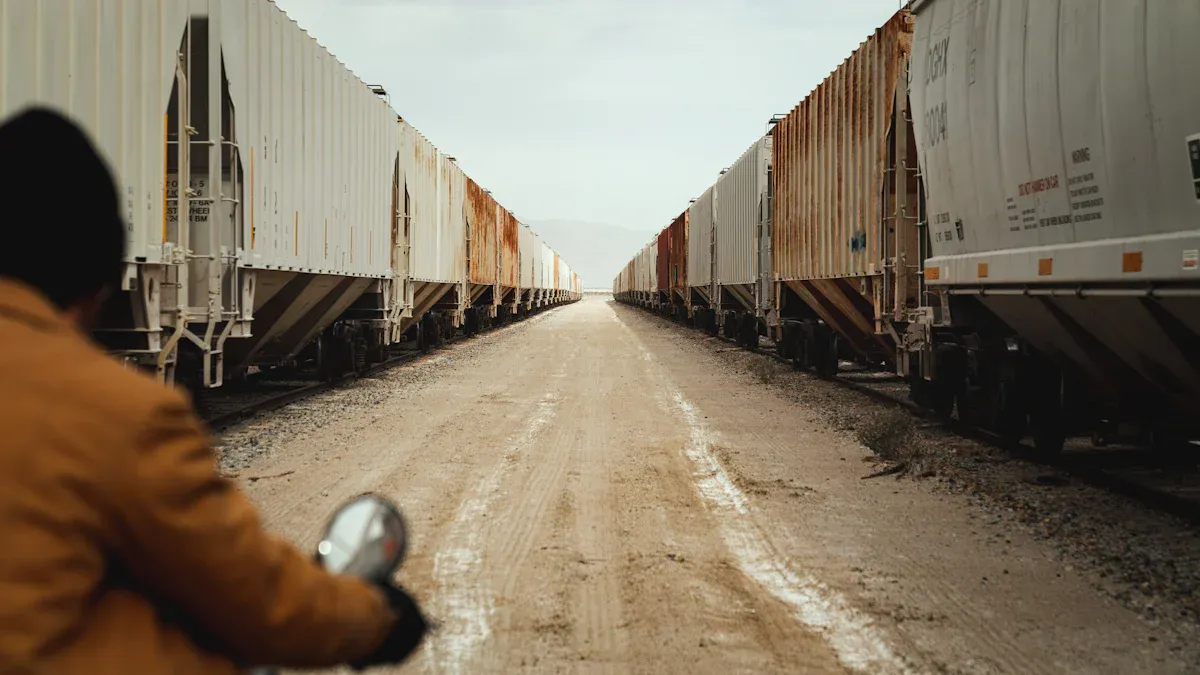
Rail and trucking provide essential alternatives when port strikes disrupt ocean shipping. Many companies rely on these modes to move goods efficiently across regions. Rail transport offers a cost-effective solution for long-distance shipments. It supports large volumes and helps bypass congested ports. Trucking delivers flexibility for last-mile delivery and regional distribution. Companies can reroute shipments to inland rail terminals or regional warehouses, reducing delays.
JUSDA leverages a robust network of rail and trucking partners. This network covers major trade corridors in North America, Asia, and Europe. JUSDA’s logistics experts coordinate cross-border trucking between the United States and Mexico, supporting industries such as electronics, automotive, and medical devices. The company’s advanced tracking systems provide real-time updates on shipment status, helping businesses make quick decisions during disruptions.
Tip: Combining rail and trucking allows companies to adapt quickly to changing conditions and maintain steady inventory flow.
Air freight options
Air freight becomes a critical option during severe supply chain disruptions. Companies choose air transport for urgent shipments that cannot wait for delayed ocean routes. Air freight offers unmatched speed, making it ideal for high-value or time-sensitive goods. However, it comes at a higher cost compared to other modes.
Air freight delivers goods much faster than ocean shipping, but at a premium price.
Ocean freight remains more cost-effective for large shipments, though it is slower.
Recent disruptions, such as the Red Sea crisis, have increased both ocean and air freight rates. Many shippers now shift to air for urgent deliveries, driving up demand and costs.
Sea-air shipping combines both modes, offering a balance between cost and speed. This method reduces transit times compared to ocean freight alone and is more economical than full air freight.
JUSDA’s global logistics platform supports multi-modal solutions, including air, rail, and trucking. The company helps clients select the best transport mode based on urgency, cost, and supply chain needs. This flexibility ensures that businesses can keep goods moving, even when traditional routes face disruption.
JUSDA in North America
Cross-border logistics
JUSDA delivers robust cross-border logistics solutions for businesses operating in North America. The company supports industries such as electronics, automotive, medical devices, and oil and gas. JUSDA’s network covers major trade corridors between the United States and Mexico. Nearshoring trends have increased demand for reliable logistics partners. JUSDA responds by offering seamless transport across borders, strict compliance with trade regulations, and specialized handling for hazardous materials.
The company’s logistics platform simplifies booking and quoting for less-than-container load (LCL) shipments. JUSDA expands its carrier network to ensure efficient movement of goods. The team manages customs clearance and documentation, reducing delays at border crossings. Businesses benefit from transparent pricing and standardized operations.
Description | |
|---|---|
Technology Integration | Utilizes AI-driven tools for demand forecasting, predictive maintenance, and route optimization. |
Cloud Computing Integration | Migrated operations to cloud-based platforms for real-time data access and operational flexibility. |
Big Data Analytics | Leverages big data for insights into supplier performance, inventory management, and risk mitigation. |
Sustainability Initiatives | Implements eco-friendly strategies like carbon-neutral warehousing and electric vehicle fleets. |
Global Trade Compliance | Streamlines cross-border logistics operations while ensuring compliance with international trade regulations. |
JUSDA’s cross-border logistics solutions help companies adapt quickly to changing market conditions and maintain supply chain continuity during port strikes.
Risk management
JUSDA places risk management at the core of its North American logistics strategy. The company uses advanced technology to monitor shipments and identify potential disruptions. AI-driven systems forecast demand and optimize routes, helping businesses avoid delays caused by port strikes or shifting trade policies.
JUSDA’s risk control tower provides real-time alerts for shipment exceptions. The team ensures strict compliance with safety regulations, especially when handling hazardous materials like lithium batteries. Data analytics support proactive decision-making, allowing companies to reroute shipments and adjust inventory levels as needed.
Note: JUSDA’s commitment to compliance and operational transparency gives businesses confidence during uncertain times.
JUSDA’s expertise in North American logistics enables clients to navigate complex regulatory environments and respond effectively to supply chain challenges. The company’s integrated approach supports resilience and growth for diverse industries.
Technology and visibility
JusLink AI platform
JUSDA’s JusLink AI platform transforms supply chain management with advanced visibility and predictive analytics. The platform uses AI to provide a real-time overview of risks across the entire supply chain. This approach helps companies address challenges such as supplier instability and geopolitical conflicts. JusLink’s risk control tower monitors every node, giving managers the information they need to act quickly.
AI-driven tools in JusLink analyze large amounts of data, including trends and forecasts. These tools predict disruptions before they occur. For example, JusLink can alert teams to compliance risks by continuously monitoring regulatory requirements and supplier behavior. Companies using AI-driven visibility solutions have seen recovery times after disruptions cut in half.
JUSDA’s customer stories highlight the impact of JusLink’s technology. Leading manufacturers use the platform to standardize operations, reduce manual handling, and improve decision-making. The AI-powered ETA forecasting feature enables proactive risk mitigation. Teams receive early warnings about potential delays, allowing them to adjust schedules and reroute shipments as needed.
Real-time monitoring
Real-time monitoring stands at the core of JUSDA’s disruption management strategy. JusLink’s AI platform delivers continuous updates on shipment status, port congestion, and route changes. This level of visibility allows companies to identify risks days or even weeks in advance.
The measurable benefits of real-time monitoring include:
Benefit | Measurable Impact |
|---|---|
Faster Response Times | |
Proactive Risk Identification | Identify disruptions days/weeks in advance |
Improved Customer Service | Higher customer satisfaction and retention |
Cost Reduction | 10-15% reduction in total logistics costs |
JUSDA’s AI-powered monitoring tools help businesses maintain high service levels, even during port strikes or unexpected events. The combination of predictive analytics and real-time alerts ensures that supply chains remain agile and resilient throughout the year.
Collaboration and planning
Supplier partnerships
Supplier partnerships play a vital role in maintaining supply chain continuity during major port disruptions. Companies that diversify their supplier base reduce the risk of unexpected delays. Relying on a single supplier or region increases vulnerability. By building relationships with suppliers in different locations, businesses create a more resilient network.
Strong supplier partnerships allow companies to engage in joint planning for disruption preparedness. They work together to adapt sourcing strategies and logistics when conditions change. This collaboration helps businesses respond quickly to port strikes or other disruptions. Effective communication and coordination with suppliers ensure that alternative routes or sourcing options can be implemented without delay. These partnerships support steady inventory flow and minimize the impact of disruptions.
Tip: Companies should regularly review supplier relationships and expand their network to include partners in multiple regions. This approach strengthens the supply chain and prepares businesses for unexpected events.
Scenario planning
Scenario planning helps companies prepare for port strikes and other supply chain disruptions. Businesses use several techniques to anticipate and manage risks. The following table outlines effective scenario planning methods:
Technique | Description |
|---|---|
Simulations | Suppliers uncover specific route guidance and prepare for immediate impacts after a port strike. |
Contingency Planning | Establishes a Plan B to mitigate disruptions and allows businesses to be resilient to changing conditions. |
Scenario Planning | Develops financial models to understand the impact of various disruption scenarios on profitability and liquidity. |
Companies also use these strategies to strengthen their supply chains:
Diversification strategies prevent over-reliance on a single source.
Financial management helps anticipate future events and maintain stability.
Partnership and collaboration leverage collective resources for faster recovery.
Scenario planning enables businesses to act quickly when disruptions occur. By preparing for different outcomes, companies protect their operations and maintain supply chain continuity. JUSDA supports clients with advanced planning tools and collaborative solutions, helping them stay agile in a changing environment.
Companies can maintain supply chain continuity during Q4 port strikes by adopting key strategies:
Strategy | Description |
|---|---|
Reduces reliance on a single supplier or region, enhancing resilience against localized disruptions. | |
Maintaining Safety Stock | Creates a cushion against supply interruptions, helping to absorb short-term shocks like port delays. |
Investing in Supply Chain Tech | Utilizes AI and machine learning to analyze data and respond quickly to potential disruptions. |
Preparing Contingency Plans | Develops alternative shipping options to meet fulfillment needs during unforeseen events. |
Diversifying Sourcing & Fulfillment | Reduces risks associated with geopolitical tensions and trade policy shifts by broadening the supplier network. |
JUSDA’s advanced warehousing, technology, and North American logistics expertise deliver smarter solutions for diverse industries. Businesses should assess risk management practices, strengthen supplier relationships, and implement real-time visibility tools to enhance resilience. Taking these steps ensures agility and continuity in a dynamic market.
FAQ
How does JUSDA’s warehouse network enhance supply chain resilience?
JUSDA operates warehouses in China, Vietnam, the United States, Mexico, and other regions. Advanced inventory systems like eVMI and JusLink provide real-time tracking, automated replenishment, and transparency for clients.
What technology does JUSDA use for supply chain visibility?
JUSDA uses the JusLink AI platform. This system offers real-time monitoring, predictive analytics, and a risk control tower. Clients receive early warnings and actionable insights to manage disruptions.
How does JUSDA manage cross-border logistics in North America?
JUSDA streamlines cross-border logistics between the United States and Mexico. The company ensures compliance with trade regulations, manages customs clearance, and provides transparent pricing for industries such as electronics and automotive.
What value-added services do JUSDA warehouses offer?
Service | Description |
|---|---|
Picking | Selects items for shipment |
Packing | Prepares goods for delivery |
Labeling | Applies identification labels |
Kitting | Assembles product kits |
Repacking | Adjusts packaging as needed |
JUSDA’s value-added services optimize warehouse operations and support supply chain efficiency.

JUSDA Solutions
To provide you with professional solutions and quotations.
See Also
Navigating Supply Chain Challenges: An In-Depth Resource
Proactive Strategies: JUSDA's Approach to Supply Chain Resilience
Addressing Supply Chain Risks: Safeguard Your Business Now
Understanding Risks: Protecting Your Supply Chain Effectively
Innovative Cloud Solutions: Transforming Supply Chain Operations