Securing Semiconductor Supply: How Buffer Strategies Help Automotive Leaders Navigate Air Capacity Constraints


Automotive leaders face urgent challenges in securing semiconductor supply as air freight constraints disrupt global logistics. Recent events have led to production shutdowns at U.S. auto plants, with critical chips halting assembly lines and manufacturers like Ford and General Motors taking action to prevent further disruption.
The supply chain remains fragile due to limited chip deliveries and geopolitical tensions.
Buffer strategies offer a practical guide to buffer strategy for navigating these risks, supported by technology-driven partners like JUSDA.
Trend | Impact on Buffer Strategies |
|---|---|
Regulatory Compliance | Reliability and performance require buffer strategies to meet standards. |
Technological Innovations | Advanced buffer technologies improve performance and reduce interference. |
Global Semiconductor Shortages | Component availability issues drive adoption of buffer strategies. |
JUSDA supports industry professionals with actionable solutions and real-world expertise.
Key Takeaways
Buffer strategies are essential for automotive leaders to maintain a steady supply of semiconductors amid disruptions.
Diversifying suppliers and sourcing from multiple regions reduces dependency and mitigates risks in the supply chain.
Implementing inventory buffers can lead to significant reductions in lead time variability, enhancing production stability.
Utilizing advanced technologies like AI for demand forecasting helps optimize inventory management and respond to market changes.
Collaborating with suppliers and leveraging platforms like JusLink strengthens supply chain resilience and improves visibility.
Understanding Buffer Strategies
Buffer Strategies in Semiconductor Supply
Automotive manufacturers rely on buffer strategies to maintain a steady flow of semiconductor components. These strategies help companies address unpredictable supply chain disruptions and ensure production continuity. Buffer strategies form the foundation of a practical guide to buffer strategy, especially when air freight capacity becomes limited.
Key components of buffer strategies in semiconductor supply chains include:
Inventory buffering: Companies maintain a buffer stock of critical semiconductor chips to reduce the impact of short-term disruptions.
Diversification: Manufacturers source components from multiple suppliers, lowering dependency on any single vendor.
Proactive risk management: Teams establish contingency plans and alternative logistics routes to prepare for unexpected events.
By integrating inventory buffers, manufacturers can achieve up to a 20% reduction in lead time variability. For example, a multinational electronics company used buffer stock to overcome global semiconductor shortages, keeping operations stable and avoiding delays. Holding a calculated buffer of essential chips allows automotive leaders to sustain production during supplier delays.
Types of Buffer Approaches
A practical guide to buffer strategy highlights several common buffer approaches used in semiconductor supply chains. Each approach offers unique benefits and challenges:
Buffer Strategy | Description | Pros and Cons |
|---|---|---|
Safety Stock | Minimum inventory level to protect against demand variability. | Good: Shields against delays and price spikes. Bad: May become excessive. |
Reorder Point | Triggers new orders when inventory reaches a set level. | Good: Simple for steady demand. Bad: Less effective with volatile demand. |
Demand Forecasting | Adjusts buffers using predicted sales and historical data. | Good: Leaner buffers, less waste. Bad: Needs constant updates. |
Just-in-Case (JIC) | Extra inventory as insurance against uncertainties. | Good: Adapts to risk. Bad: Ties up cash. |
Just-in-Time (JIT) | Minimizes buffers, relies on timely supply chain delivery. | Good: Saves money and space. Bad: Vulnerable to disruptions. |
Automotive leaders embrace the changing reality of supply chain challenges. They prepare with strong, diverse supply chain partners and relationships. Implementing inventory buffers for frequently short parts remains essential. A practical guide to buffer strategy enables companies to select the right approach for their needs and maintain resilience in semiconductor supply.
Air Capacity Constraints and Supply Chain Risks

Impact of Limited Air Freight
Automotive supply chains depend on reliable air freight to move semiconductor components quickly across global markets. Recent trends show that air freight from Taiwan now requires booking lead times of two to three weeks, compared to the usual five to seven days. Increased competition for cargo space, driven by demand for AI hardware and semiconductor equipment, has made it harder for automotive manufacturers to secure timely shipments. Shippers must reserve space allocations three to four weeks in advance to avoid delays. This change leads to higher costs, especially when expedited shipping becomes necessary.
Note: Longer lead times and increased costs force automotive leaders to rethink logistics planning and inventory management. Companies must adapt by using a practical guide to buffer strategy, which helps them anticipate delays and maintain production schedules.
Vulnerabilities in Automotive Semiconductor Supply
The automotive semiconductor supply chain faces several vulnerabilities that air freight limitations have exposed. The COVID-19 pandemic revealed weaknesses, causing factory shutdowns and labor shortages. Transport disturbances resulted in long delivery delays and insufficient supply availability. Geopolitical tensions continue to complicate import and export operations, creating unpredictability in product shipments.
The semiconductor supply chain remains complex and concentrated in specific regions, making it susceptible to disruptions.
Geopolitical tensions, such as those in the Taiwan Strait, can lead to global supply uncertainties, especially for advanced semiconductor manufacturing.
The automotive industry relies on just-in-time production methods, which heighten susceptibility to supply chain disruptions.
Automotive leaders must address these vulnerabilities by strengthening supplier relationships and diversifying logistics strategies. A practical guide to buffer strategy provides actionable steps for building resilience, ensuring that production continues even when air capacity constraints threaten supply continuity.
Practical Guide to Buffer Strategy for Automotive Supply Chains
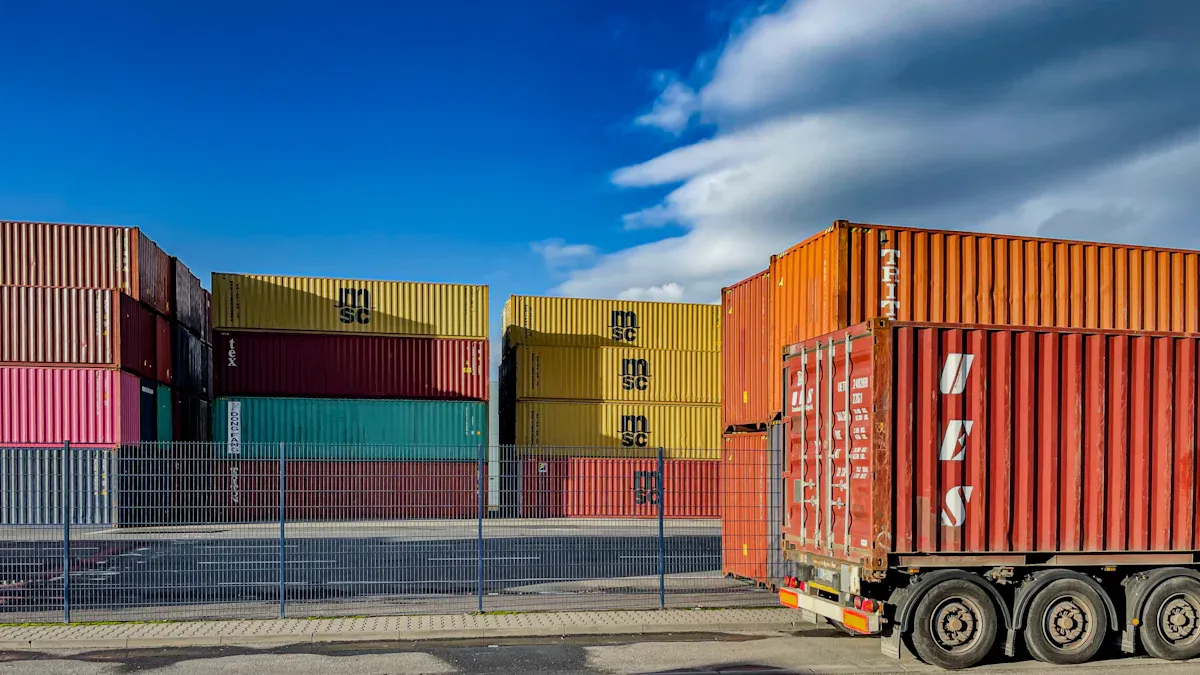
Inventory Buffering with JUSDA Warehousing
Automotive manufacturers face persistent risks in semiconductor supply chains. JUSDA's warehousing solutions provide a foundation for inventory buffering, enabling companies to maintain critical stock levels and reduce the impact of disruptions. JUSDA operates over 2.5 million square meters of warehouse space globally, including specialized facilities in China, Vietnam, and the United States. These warehouses use advanced management systems like eVMI and JusLink for real-time inventory tracking and control.
Ford's semiconductor crisis highlighted the dangers of relying solely on just-in-time inventory systems. The absence of buffer inventory led to operational and financial losses.
Toyota's approach, which included stockpiling chips and maintaining close supplier relationships, helped mitigate risks and sustain production during shortages.
JUSDA's warehousing services offer value-added options such as picking, packing, labeling, and kitting. These capabilities support a practical guide to buffer strategy by ensuring that automotive leaders can respond quickly to supply chain interruptions. Maintaining buffer stock in JUSDA's secure facilities allows manufacturers to avoid costly shutdowns and keep assembly lines moving.
Multi-Modal Transport Solutions by JUSDA
Air capacity constraints demand flexible logistics planning. JUSDA's multi-modal transport solutions combine air, land, sea, and rail services to optimize delivery schedules and reduce risk. The company leverages strategic partnerships and a robust global network to provide tailored transport options for automotive clients.
Multi-modal transport strategies can reduce transit delays by 20-30%.
These approaches can generate cost savings of up to 15%.
Leading companies, such as Apple, use a mix of air and sea freight to adapt to disruptions.
JUSDA's expertise in route planning and resource allocation ensures that shipments reach their destinations on time, even when air freight is limited. The practical guide to buffer strategy recommends integrating multi-modal transport to maintain semiconductor supply continuity. JUSDA's solutions help automotive manufacturers navigate unpredictable logistics environments and minimize the impact of air capacity shortages.
Supplier Collaboration and Forecasting with JusLink
Collaboration among manufacturers and suppliers strengthens supply chain resilience. JusLink, JUSDA's intelligent supply chain platform, enables real-time information sharing, joint problem-solving, and advanced forecasting. Automotive leaders use JusLink to diversify supply sources, build strategic reserves, and strengthen relationships with key suppliers.
Diversifying sourcing options reduces reliance on single suppliers and mitigates risks.
Building strategic reserves of critical materials buffers against disruptions.
Strong supplier relationships foster stability and innovation.
Investing in advanced technologies enhances visibility and logistics efficiency.
JusLink supports open communication and joint innovation. Manufacturers share forecasts and plans, improving coordination and visibility across the supply chain. The platform's AI-driven tools facilitate collaborative R&D, driving competitiveness in the automotive sector. A practical guide to buffer strategy emphasizes the importance of supplier collaboration and forecasting for long-term supply chain stability.
Dynamic Replenishment Using AI Tools
JUSDA leverages AI-driven forecasting and replenishment strategies to optimize inventory management. JusLink's AI solution provides sales demand forecasting, replenishment suggestions, and real-time risk monitoring. The platform's intelligent agents analyze historical data and market trends, enabling dynamic inventory adjustments.
Manufacturers benefit from automated replenishment processes that trigger real-time inventory updates. JusLink's AI capabilities include supply chain trend analysis, freight rate prediction, and risk control towers. These features support a practical guide to buffer strategy by allowing automotive leaders to respond rapidly to changing market conditions and supply chain disruptions.
Tip: Dynamic replenishment using AI tools helps manufacturers maintain optimal buffer levels, reduce excess inventory, and ensure steady product supply.
JUSDA's integration of digital tools and global logistics expertise empowers automotive companies to build resilient semiconductor supply chains. By adopting a practical guide to buffer strategy, industry professionals can enhance inventory management, transport planning, and risk mitigation.
Implementing Buffer Strategies: Step-by-Step
Assessing Supply Chain Gaps
Automotive leaders begin by evaluating their supply chain for vulnerabilities in semiconductor sourcing. They establish a unified information architecture, which centralizes documentation and automates data capture. This approach enhances visibility across systems. Companies integrate their supply chain networks, creating digital ecosystems for real-time sharing of compliance documentation and standardized information exchange. Advanced analytics and intelligence tools support proactive decision-making and compliance monitoring.
Assess current information flows and identify critical gaps.
Connect key suppliers through standardized digital interfaces.
Deploy predictive analytics and automate compliance reporting.
These steps help manufacturers pinpoint weaknesses and prepare for disruptions.
Setting Buffer Levels and KPIs with JusLink
JusLink enables automotive companies to set optimal buffer levels and key performance indicators (KPIs). Strategic inventory buffers help manage supply chain disruptions. Customized buffer solutions use demand forecasting models, allowing dynamic adjustments based on historical data and real-time analytics. Predictive buffer strategies maintain production schedules, even when raw material availability fluctuates.
Utilize strategic inventory buffers for critical components.
Apply demand forecasting models for dynamic buffer adjustments.
Monitor KPIs to ensure buffer strategies align with production goals.
JusLink’s digital platform supports a practical guide to buffer strategy by providing tools for continuous improvement.
Leveraging JUSDA’s Global Network
JUSDA’s global network offers extensive warehousing and multi-modal transport solutions. Automotive manufacturers access over 2.5 million square meters of warehouse space and a robust logistics infrastructure. This network supports scalable capacity and integration capabilities, enabling seamless collaboration and data sharing with partners.
Feature | Description |
|---|---|
Instant visibility into operations and performance metrics | |
Mobile access | Field operations access data on-the-go |
Scalable capacity | Adapts to increased data volumes |
Integration | Connects with partner systems for enhanced collaboration |
JUSDA’s infrastructure ensures manufacturers can respond quickly to supply chain changes.
Continuous Improvement and Monitoring
Continuous improvement relies on real-time visibility and performance tracking. IoT sensors provide 24/7 data collection, while immediate alert systems notify stakeholders of any conditions outside acceptable parameters. Rich historical data allows for trend analysis and process optimization. Companies use demand forecasting, risk assessment, and anomaly detection to refine buffer strategies and maintain resilience.
Automotive leaders monitor KPIs and adjust buffer levels as market conditions evolve. The shift from just-in-time inventory management to maintaining safety stock levels may increase procurement costs and strain working capital. However, these investments strengthen supply chain stability and support long-term growth.
Case Example: JUSDA in Action
Automotive Client Challenge
A leading automotive manufacturer faced severe disruptions in semiconductor supply. Air freight constraints delayed critical chip shipments, threatening production schedules and customer commitments. The company relied on just-in-time inventory, which left little room for error. When air capacity tightened, assembly lines risked shutdowns. The manufacturer needed a solution that could restore stability and improve supply chain resilience.
Buffer Strategy Implementation
JUSDA responded with an integrated buffer strategy. The team deployed global warehousing to hold essential semiconductor stock at strategic locations. Advanced management systems, including eVMI and JusLink, enabled real-time inventory tracking and control. JusLink’s AI-driven tools supported demand forecasting and dynamic replenishment, allowing the manufacturer to adjust buffer levels quickly.
JusLink’s intelligent platform facilitated collaboration between suppliers and the manufacturer. Real-time data sharing improved visibility and enabled joint planning. AI-powered analytics anticipated exceptions and prevented disruptions before they reached production.
Key integration benefits included:
Improved workforce utilization through labor and fulfillment planning.
Optimization of goods movement via flow management.
Anticipation and prevention of exceptions using predictive analytics.
Faster and more accurate operational decision-making supported by prescriptive insights.
Results and Insights
The manufacturer saw immediate improvements in supply chain performance. Order cycle time and total processing time dropped. Fulfillment speed increased while service levels remained high. Real-time exception forecasting minimized disruptions, keeping production on track.
Reduction in order cycle time and total processing time.
Improvement in fulfillment speed while maintaining high service levels.
Real-time exception forecasting to minimize disruptions.
Strengthening of overall supply chain performance.
AI enhanced every aspect of the supply chain, from procurement and sourcing to logistics and warehousing. The manufacturer optimized costs, minimized downtime, and improved reliability. Automated processes led to significant operational efficiencies. JUSDA’s integrated approach helped the automotive client secure semiconductor supply and maintain a competitive edge.
Buffer strategies play a vital role in securing semiconductor supply for automotive leaders. JUSDA’s warehousing, JusLink, and digital solutions offer a practical, technology-driven approach to managing inventory and logistics. Key takeaways include:
Diversifying supplier networks across regions
Investing in localized manufacturing and foundries
Leveraging advanced forecasting and inventory management tools
Automotive companies should evaluate their supply chain resilience by:
Building global sourcing partnerships
Investing in engineering flexibility
Using data and market intelligence for proactive decisions
JUSDA provides resources and expertise for those seeking advanced buffer strategies. Companies can explore JUSDA’s solutions to strengthen supply chain stability and support future growth.

JUSDA Solutions
To provide you with professional solutions and quotations.
FAQ
What types of warehousing services does JUSDA offer?
JUSDA provides general storage, bonded warehouses, distribution centers, and finished goods storage. Facilities include clean rooms that meet strict environmental standards. Advanced systems like eVMI and JusLink support real-time inventory tracking.
How does JusLink improve supply chain visibility?
JusLink uses IoT, cloud computing, and big data to enable real-time monitoring. The platform offers dashboards, automated reporting, and AI-driven forecasting. Users gain instant access to shipment status and inventory levels.
Can JUSDA help manage air freight constraints?
JUSDA combines air, land, sea, and rail transport to optimize delivery schedules. Strategic route planning and resource allocation help automotive leaders navigate air capacity shortages and maintain semiconductor supply continuity.
What value-added services are available in JUSDA warehouses?
JUSDA offers picking, packing, labeling, kitting, switch doc, and repacking. Software upgrades and rework services further enhance warehouse operations. These services support efficient inventory management and logistics planning.
How does JusLink’s AI solution support buffer strategies?
JusLink’s AI solution provides sales demand forecasting, replenishment suggestions, and risk monitoring. Intelligent agents analyze historical data and market trends, enabling dynamic inventory adjustments and proactive supply chain management.
See Also
Expert Strategies for Overcoming Automotive Supply Chain Obstacles
Enhancing Supply Chain Efficiency in High-Tech Manufacturing
Maximizing Efficiency in Your Automotive Supply Chain
Proven Techniques for Successful Supply Chain Optimization
Addressing Global Supply Chain Growth Challenges Effectively