Supply Chain AI Adoption Accelerates: How to Build an AI-Powered Supply Chain Visibility Platform

Modern businesses face growing complexity in their supply chains. Real-time visibility and agility have become essential. According to PwC’s 2025 Digital Trends in Operations Survey:
57% of companies have integrated AI partially or fully into their operations.
JUSDA and its JusLink platform empower organizations to transform global supply chains. Predictive analytics enables leaders to anticipate changes, reduce risk, and respond faster. Every supply chain professional should consider if their current systems deliver the speed and insight required in today’s market.
Key Takeaways
AI enhances supply chain visibility and efficiency by automating tasks and improving demand forecasting. Companies can achieve up to 98% accuracy in data extraction and reduce logistics costs by 15%.
Start AI adoption with a clear understanding of business goals. Identify specific challenges and set measurable outcomes to ensure technology investments align with organizational needs.
High-quality data is crucial for effective AI implementation. Regularly assess data quality to support predictive analytics and ensure compliance with cybersecurity best practices.
Workforce enablement is key to successful AI integration. Invest in training programs to build digital skills and foster a culture of collaboration between employees and AI systems.
Measure success with relevant KPIs like order accuracy and delivery times. Regularly track these metrics to evaluate progress and refine strategies for continuous improvement.
AI in Supply Chain

Visibility and Efficiency
Supply chain leaders recognize the importance of real-time visibility and operational efficiency. Artificial intelligence (AI) transforms supply chain management by enabling accurate inventory tracking and timely information flow. Companies use AI to automate repetitive tasks, allowing employees to focus on strategic decisions. AI-driven predictive analytics help businesses forecast demand, optimize inventory, and improve agility. Integration with ERP and TMS systems enhances data analysis and decision-making, resulting in better inventory management and logistics operations.
Companies utilizing AI-powered visibility solutions report significant gains. Forecasting accuracy improves, with some models reaching up to 98% accuracy in data extraction. Pattern detection capabilities reduce exception handling time by 70%. Logistics costs decrease by 15%, inventory levels improve by 35%, and service levels rise by up to 65%.
Method | Description |
|---|---|
Automation | AI automates routine tasks, freeing human workers for strategic roles. |
Predictive Analytics | AI forecasts demand and optimizes inventory, increasing supply chain agility. |
Integration with ERP | AI enhances ERP systems for real-time analysis and better inventory management. |
Integration with TMS | AI analyzes logistics data for improved route planning and delivery. |
AI Chatbots | Virtual assistants handle routine inquiries, improving customer service efficiency. |
AI addresses key challenges in supply chain visibility. It breaks down data silos through API-based integration and data normalization. IoT-enabled tracking and automated milestone updates provide real-time insights. Machine learning supports predictive ETA, anomaly detection, and automated decision support.
JUSDA’s Approach
JUSDA integrates AI-driven tools to elevate supply chain performance. The company leverages digital transformation, big data, and cloud-based solutions to optimize logistics. JusLink, JUSDA’s intelligent supply chain platform, uses AI for enhanced demand forecasting, predictive maintenance, and route optimization. Data-driven insights support supplier performance evaluation, inventory management, and risk mitigation.
Strategy | Description |
|---|---|
AI-driven tools | JusLink enhances demand forecasting, predictive maintenance, and route optimization. |
Digital Transformation | JUSDA implements AI, big data, and cloud solutions for logistics optimization. |
Data-driven insights | JusLink provides actionable intelligence for supplier management and risk mitigation. |
JUSDA’s approach ensures seamless integration of AI across supply chain operations. The company’s commitment to innovation and efficiency positions it as a leader in global supply chain management.
Building the Platform
Identifying Needs
Successful AI-powered supply chain visibility platforms begin with a clear understanding of business objectives. Companies must identify the specific challenges they want to address, such as improving demand forecasting, reducing logistics costs, or enhancing real-time tracking. Setting clear goals ensures that technology investments align with measurable outcomes.
Organizations often follow a structured approach to define their needs:
Set clear goals for supply chain improvement, focusing on areas like demand forecasting or logistics optimization.
Ensure data readiness by cleaning, standardizing, and consolidating information from all relevant systems.
Start with a pilot project in a high-impact, low-risk area to test the effectiveness of AI solutions.
A cross-functional steering committee, including representatives from procurement, logistics, IT, and finance, helps align priorities across the enterprise. This committee articulates the business problems that AI will solve, avoiding a technology-first mindset. Companies also assess their technical infrastructure to ensure compatibility with AI requirements.
Tip: Begin with a thorough data assessment to evaluate the quality, accessibility, and completeness of supply chain data. This step lays the foundation for effective predictive analytics and future platform scalability.
Step | Description |
|---|---|
Data Assessment | Evaluate quality, accessibility, and completeness of data across supply chain systems. |
Problem Statement Development | Articulate specific business challenges AI will address. |
Cross-Functional Alignment | Establish a steering committee for enterprise-wide support. |
Technical Infrastructure | Assess existing systems for AI compatibility and integration. |
Talent Development | Build internal data science capabilities and analytical literacy. |
Governance Framework | Define ethical considerations and decision rights. |
Implementation Roadmap | Prioritize use cases and start with pilot projects. |
Integrating JusLink
Integrating JusLink into existing supply chain systems requires careful planning and collaboration. Many organizations encounter challenges such as fragmented data systems, lack of real-time tracking, and insufficient collaboration among stakeholders. Resistance to adopting new technologies and concerns about job disruption can also slow progress.
JusLink addresses these challenges by providing a flexible, microservices-based architecture. This design allows companies to customize features for specific business scenarios. JusLink supports seamless integration with ERP, TMS, and WMS platforms, enabling real-time data sharing and process automation.
Common challenges during integration include:
Fragmented data systems
Lack of real-time tracking
Insufficient collaboration among stakeholders
Resistance to adopting new technologies
High initial costs and complexity of integration
Job disruption concerns
Data quality issues
Cybersecurity risks and compliance with evolving regulations
Despite these hurdles, companies that successfully integrate JusLink realize significant benefits. Predictive analytics capabilities within JusLink enable accurate demand forecasting, intelligent replenishment, and proactive risk management. These features help organizations optimize inventory, reduce costs, and improve service levels.
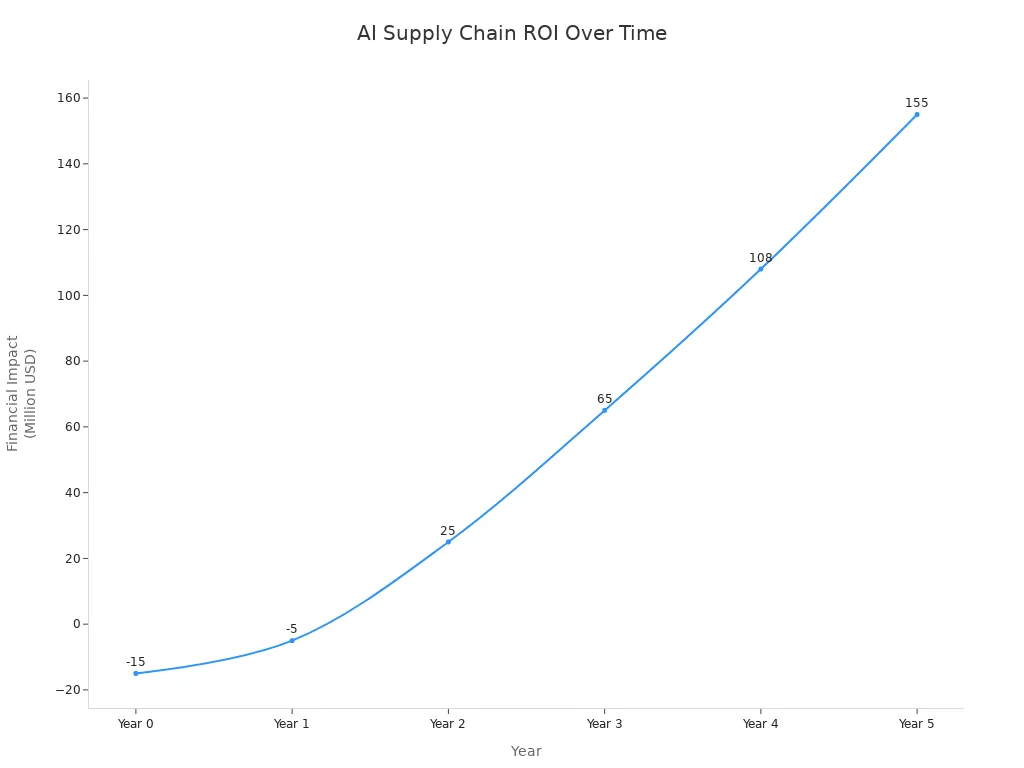
Inventory carrying cost reduction: 20-30%
Transportation cost optimization: 15-25%
Procurement cost reduction: 12-18%
JusLink’s integration empowers companies to move from fragmented operations to a unified, intelligent supply chain ecosystem.
Data Quality
High-quality data forms the backbone of any AI-powered supply chain platform. Organizations must map data components to cybersecurity best practices, identifying and addressing gaps that could introduce AI-specific risks. Knowing the origin of each data source, and vetting suppliers, helps mitigate potential vulnerabilities.
Companies should also widen their lens on AI data, assessing the diversity of use cases and ensuring adequate protection measures. JusLink supports these best practices by enabling real-time data monitoring, anomaly detection, and automated reporting. These features ensure that predictive analytics models receive accurate, timely, and secure data.
Note: Consistent data quality management not only improves the performance of predictive analytics but also strengthens compliance and risk management across the supply chain.
By prioritizing data quality, organizations unlock the full value of AI-driven supply chain visibility and position themselves for long-term success.
Predictive Analytics in JusLink
Demand Forecasting
JusLink uses advanced predictive analytics to transform demand forecasting for global supply chains. The platform leverages AI and machine learning to analyze large volumes of historical sales data, market signals, and real-time trends. These technologies identify patterns that traditional forecasting methods often miss. JusLink adapts to new trends and disruptions by learning from incoming data, which allows companies to respond quickly to market changes.
AI-driven forecasting in JusLink provides faster and more accurate predictions than manual or legacy systems.
The platform uses both real-time and historical data to generate actionable insights for procurement and production planning.
Companies using JusLink have reported up to a 30% improvement in forecast accuracy and a 25% reduction in excess inventory within just 90 days of implementation.
JusLink’s demand forecasting helps organizations minimize excess inventory, reduce storage costs, and align stock levels with actual customer needs.
Aspect | Description |
|---|---|
Demand Forecasting | Advanced models anticipate demand by SKU, region, and customer segment. |
Data Utilization | Analysis of seasonality, historical trends, and market behavior aligns inventory with real demand. |
Outcome | Minimizes both understocking and costly overages. |
Predictive analytics in JusLink enables businesses to make informed decisions, optimize inventory, and improve supply chain agility. This approach supports proactive responses to market dynamics, making supply chains more resilient and efficient.
Risk Management
JusLink’s predictive analytics platform strengthens risk management across the supply chain. The system continuously monitors risk indicators, supplier performance, and external factors such as traffic, weather, and carrier data. By analyzing risk-triggering patterns, JusLink provides early warning alerts and enables proactive decision-making.
The risk control tower in JusLink evaluates supplier efficiency and predicts potential disruptions before they escalate.
Unified data allows for accurate "what-if" simulations, helping teams prepare contingency plans.
Companies using JusLink’s AI-driven risk management tools have improved resilience by identifying and mitigating risks early.
The platform empowers organizations to adjust sourcing strategies and reroute shipments before delays impact operations.
Note: Predictive analytics in JusLink facilitates proactive, data-driven decisions that help manage risks and maintain supply chain stability.
JusLink’s risk management capabilities support continuous improvement and ensure that businesses can respond quickly to unexpected events.
Inventory Optimization
Inventory optimization is a core benefit of JusLink’s predictive analytics capabilities. The platform enables accurate demand forecasting, which determines optimal stock quantities and safety stock levels. JusLink supports continuous inventory monitoring and dynamic adjustment of reorder points based on predictive insights.
Predictive analytics transforms large datasets into actionable recommendations for inventory management.
JusLink helps organizations reduce stockouts and excess inventory by aligning stock levels with real demand.
The system improves supplier relationships by assessing reliability and optimizing reorder points.
Companies have observed significant reductions in stockouts and enhanced operational efficiency after adopting JusLink.
Tip: Real-time data integration in JusLink ensures that inventory levels remain optimized, supporting efficient production and delivery.
JusLink’s inventory optimization strategies help businesses lower holding costs, minimize shortages, and improve overall supply chain performance.
How Predictive Analytics Transforms Supply Chain Agility and Decision-Making
Predictive analytics in JusLink delivers measurable improvements in supply chain agility and decision-making:
Enhances demand planning by providing accurate forecasts based on historical and market data.
Optimizes inventory levels, reducing holding costs and minimizing risks of overstocking or shortages.
Integrates external data to highlight risks and enable proactive rerouting before disruptions occur.
Empowers teams to make faster, data-driven decisions that support business goals.
Companies with high adoption of AI-driven predictive analytics in their supply chains have reported an average of 12% year-over-year earnings growth since 2020. JusLink’s comprehensive approach positions organizations to thrive in a rapidly changing global market.
Change Management
Workforce Enablement
Organizations that adopt AI-powered supply chain platforms like JusLink must focus on workforce enablement to ensure successful transformation. Change often brings resistance, especially when employees face new technologies. Leaders can overcome this by building a culture that values learning and collaboration. They start by assessing workforce readiness to identify skill gaps. Training programs tailored to specific roles help employees gain digital and analytical skills needed for AI adoption.
A people-first approach encourages hands-on experimentation with AI tools in low-risk environments. Staff engagement channels, such as workshops and feedback sessions, support continuous learning. Clear playbooks and defined metrics guide employees through the adoption process. Companies also redefine roles to complement AI capabilities, allowing staff to focus on tasks that require human judgment.
Strategy | Description |
|---|---|
Invest in digital and analytical skills for supply chain professionals. | |
Redefining Roles | Adjust roles to enhance collaboration between humans and AI systems. |
Workplace Culture | Foster a culture that supports human-AI teamwork and innovation. |
85% of business leaders recognize the need for digital fluency at all levels to stay competitive in an AI-driven landscape.
Measuring Success
Measuring the success of AI adoption in supply chain visibility platforms requires clear and relevant key performance indicators (KPIs). Organizations track these metrics to evaluate progress and identify areas for improvement. Common KPIs include order accuracy, delivery times, inventory turnover, and carrying cost of inventory.
KPI | Description |
|---|---|
Order Accuracy | Tracks how accurately orders are fulfilled and delivered without errors. |
Delivery Times | Measures the timeliness of product deliveries, impacting customer satisfaction. |
Inventory Turnover | Indicates how often inventory is sold and replenished, reflecting efficient management. |
Carrying Cost of Inventory | Represents the costs of holding inventory, which decrease with better supply chain visibility. |
Leaders also monitor employee engagement and adoption rates. They use feedback loops to refine training and support programs. By aligning KPIs with business goals, companies ensure that AI-powered platforms like JusLink deliver measurable value and drive continuous improvement.
JUSDA and JusLink guide organizations through each step of AI adoption, from data assessment to workforce enablement. Predictive analytics and digital transformation drive supply chain competitiveness. Industry analysts predict several future trends:
Machine learning will improve inventory forecasting accuracy.
Advanced neural networks will enhance anomaly detection and risk assessment.
Natural Language Processing will streamline team communication.
IoT devices will enable real-time monitoring and optimize delivery routes.
Companies that embrace these innovations position themselves for continuous improvement and long-term success.

JUSDA Solutions
To provide you with professional solutions and quotations.
FAQ
What industries benefit most from JUSDA’s JusLink platform?
JUSDA’s JusLink platform serves electronic manufacturing, 3C home appliances, FMCG, automotive, new energy, medical health, heavy equipment, and bulk materials. Each industry receives tailored supply chain solutions for improved efficiency and visibility.
How does JusLink improve supply chain visibility?
JusLink integrates IoT, cloud computing, and big data. The platform enables real-time tracking, automated reporting, and predictive analytics. Companies gain end-to-end visibility across procurement, logistics, and inventory management.
What are JusLink’s core AI capabilities?
JusLink offers supply chain trend analysis, freight rate prediction, sales demand forecasting, replenishment strategies, risk control tower, and an intelligent supply chain assistant. These features optimize operations and support data-driven decision-making.
Can JusLink integrate with existing ERP and TMS systems?
JusLink uses a microservices architecture. The platform supports seamless integration with ERP, TMS, and WMS systems. This enables real-time data sharing and process automation for unified supply chain management.
How does JusLink support risk management?
JusLink’s risk control tower monitors supply chain risks in real time. The system provides early warnings and actionable insights. Companies can respond quickly to disruptions and maintain supply chain stability.
See Also
Exploring AI's Role in Shaping Future Supply Chains
Boosting Supply Chain Performance Through AI Innovations
Transforming Logistics for Tomorrow with AI Supply Chains
Revealing Big Data's Transformative Effects on Supply Chains