Real Answers for Automation at the Loading Dock

You want real answers about automating your loading dock. Automation brings more than just fancy equipment. You see fewer injuries because machines handle the risky tasks. Your team gets more done since automated systems keep moving, even when people take breaks. Mistakes drop, so you get better inventory and order accuracy. Real Answers for automation mean safer, faster, and more precise loading docks. Trust experts to help you find the right fit for your operation.
Key Takeaways
Automation at the loading dock enhances safety by reducing heavy lifting and minimizing human error.
Extendable conveyors and automated systems speed up loading and unloading, allowing for more efficient operations.
Dock management software provides real-time tracking and alerts, helping to optimize resource allocation and reduce delays.
Investing in automated guided vehicles (AGVs) can lower labor costs and improve accuracy in moving goods.
Regularly assess and measure your automation efforts to ensure continuous improvement and better performance.
Real Answers for Loading Dock Automation
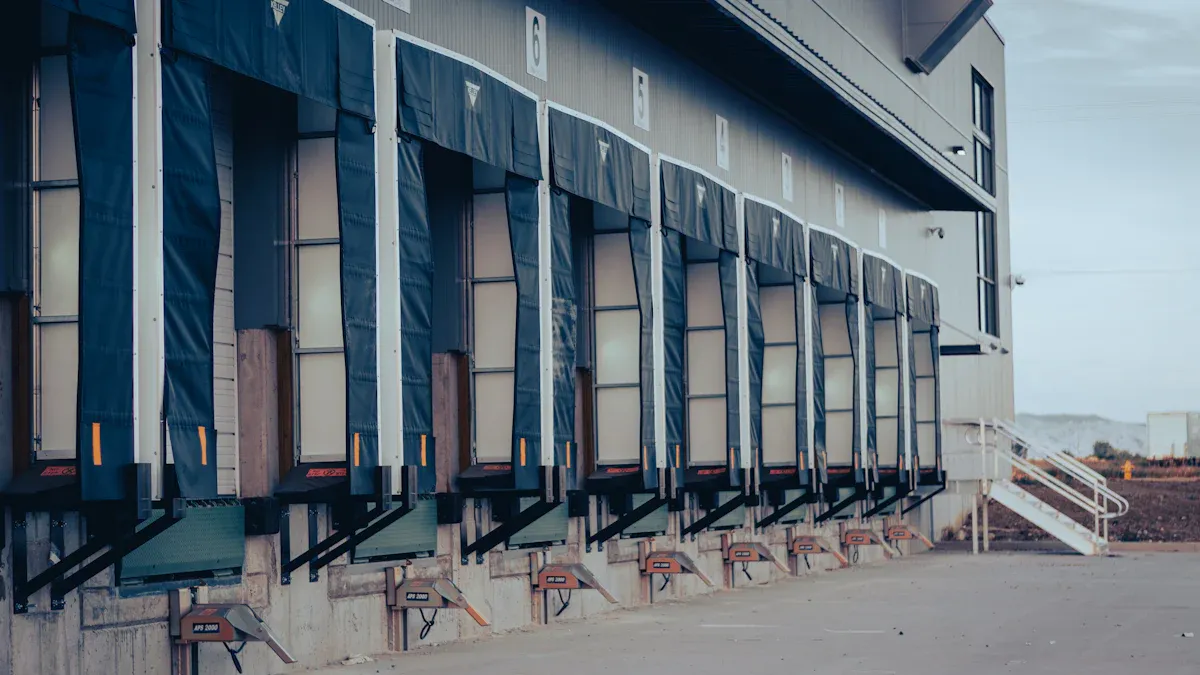
You want to know what really works at the loading dock. Let’s break down the top automation solutions that are making a difference right now. These tools help you move goods faster, keep your team safe, and cut down on mistakes. Here are the Real Answers you need to solve common loading dock headaches.
Extendable Conveyors
Extendable conveyors change the way you load and unload trucks. You can move the conveyor right into the trailer, so your team does not have to carry boxes as far. This means less heavy lifting and fewer injuries. You also speed up the process because the conveyor keeps moving items without stopping. Many warehouses use these conveyors to handle more packages in less time. You see fewer bottlenecks and your team stays safer.
Tip: If you want to handle more volume during peak times, extendable conveyors give you the flexibility to adjust quickly.
Automated Trailer Loading Systems
Automated trailer loading systems take the guesswork out of loading. These machines can fill a trailer with pallets or boxes in a set pattern. You get more space in each truck and reduce the risk of items shifting during transport. Your team spends less time inside the trailer, which lowers the chance of accidents. Companies that use these systems report faster loading times and better use of truck space. You also see fewer damaged goods because the system loads everything evenly.
Automated Guided Vehicles (AGVs)
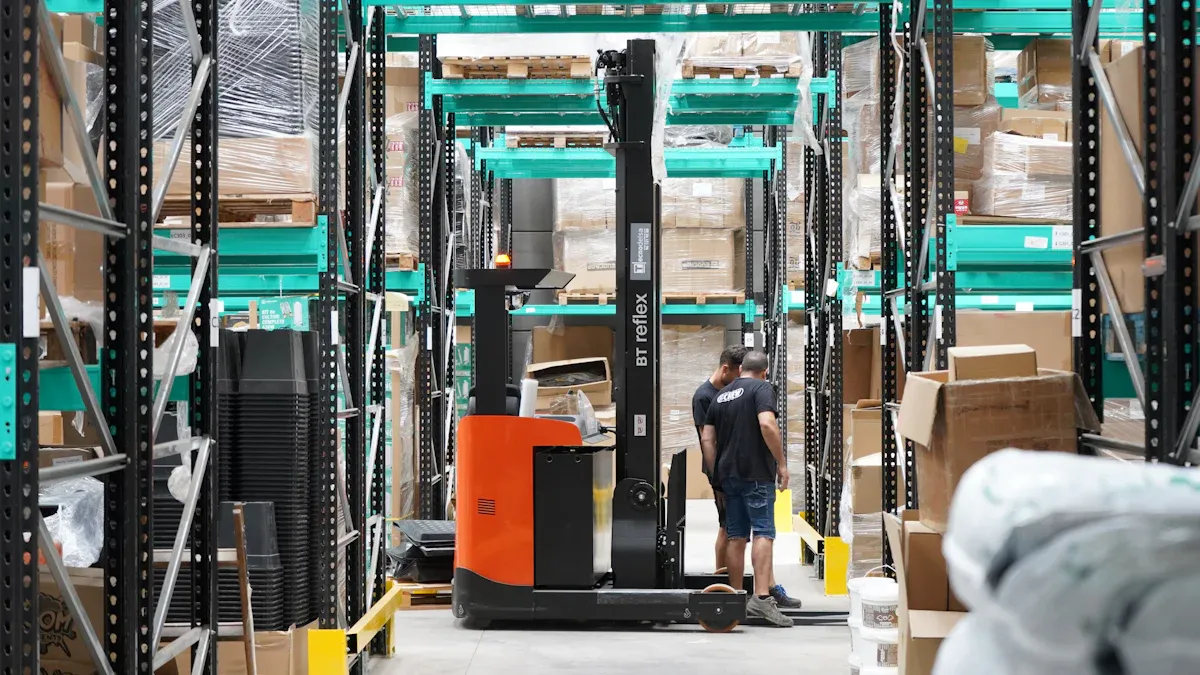
Automated Guided Vehicles, or AGVs, are like robots that move goods around your dock. You can use them to carry pallets from the dock to storage or from storage to the dock. AGVs work in many places, such as airports, seaports, and big warehouses. They help you cut labor costs and reduce mistakes. For example:
At airports and seaports, AGVs move baggage and cargo, making the process faster and safer.
In warehouses, AGVs handle inventory and order picking, so you do not need as many people for these tasks.
On assembly lines, AGVs bring parts right where they are needed, keeping production moving.
You get more done with fewer people, and your team can focus on other important jobs.
Dock Management Software
Dock management software gives you control over everything happening at your loading dock. You can track trucks as they arrive and leave, so you always know what is going on. The software calculates how long each truck spends at the dock, helping you spot delays and fix them fast. You can also use real-time asset tracking with RFID or GPS to see where your trucks and containers are at any moment.
Real-time dock in and dock out tracking helps you assign docks to trucks at the right time.
Automated turn-around time calculation lets you find and fix slowdowns before they become big problems.
Slot-based dock assignment means trucks do not wait around, so you avoid traffic jams at your dock.
In busy places like automotive hubs, even a small delay can stop the whole line. Dock management software keeps everything moving smoothly. Cement plants and other industries use this software to speed up dispatch and reduce bottlenecks caused by manual scheduling.
Note: The demand for advanced dock solutions keeps growing. The global market for dock levelers is expected to reach $2.33 billion by 2034. Companies see real value in these tools because they boost efficiency and safety.
When you use these Real Answers for automation, you solve real problems at your loading dock. You get safer operations, faster loading and unloading, and better use of your resources.
Safety Improvements with Automation
Automated Dock Levelers and Restraints
You want your team to stay safe at the loading dock. Automated dock levelers and restraints help you do that. These systems create a smooth path between the dock and the truck. Workers move goods without tripping or falling. Restraints lock trailers in place, so trucks do not roll away while people load or unload. You also meet safety rules because these tools follow international standards.
Evidence Type | Description |
|---|---|
Dock Levelers | Ensure smooth transitions between the loading dock and vehicles, reducing accident risks during loading/unloading. |
Vehicle Restraints | Secure trucks and trailers to the dock, preventing unintended movement, which is essential for worker safety. |
Compliance | Designed to meet international safety standards, contributing to regulatory compliance. |
Tip: Automated restraints and levelers help you avoid costly accidents and keep your operation running.
Real-Time Monitoring and Alerts
You want to catch problems before they happen. Real-time monitoring and alert systems give you that power. Sensors track loads, crane movements, and operator actions. If something goes wrong, alarms warn you right away. You can see where every truck and cargo is at any moment. IoT sensors check for hazards like high temperatures or strong vibrations. The system sends alerts if a truck enters the wrong area or if a crane gets overloaded.
Feature | Description |
|---|---|
Load Monitoring and Alerts | IoT ensures cranes operate within safe capacity limits by monitoring load weight. Alerts prevent damage and accidents. |
Real-Time Location Tracking | GPS tracking improves safety by ensuring cranes operate in designated areas, preventing unauthorized movements. |
Remote Safety Monitoring | IoT sensors detect hazards like excessive vibrations or temperature changes, triggering safety protocols for immediate action. |
Operator Performance | IoT tracks operator actions, allowing targeted training for safer and more efficient crane operation. |
Real-time monitoring systems show you live data about crane stability.
Displays warn you about load capacity, so you avoid overloading.
Sensors measure boom length and keep cranes safe.
Alarms alert you when something is not right, so you can fix it fast.
Note: Real Answers for automation include smart monitoring tools that help you prevent accidents and keep your dock secure.
Reducing Human Error
You want fewer mistakes at your loading dock. Automation helps you reach that goal. Robots and sensors take over risky jobs. Machines load and unload faster and more accurately than people. You get fewer damaged goods and faster order fulfillment. Automation also keeps workers safe by controlling heavy equipment.
Robots replace manual tasks, making your operation more efficient.
Sensors and lasers increase accuracy and reduce collisions.
Automated systems ensure quick loading and unloading.
You see fewer errors and safer working conditions.
Callout: When you use automation, you lower the risk of human error and create a safer workplace for everyone.
Boosting Efficiency and Eliminating Bottlenecks
Streamlined Loading and Unloading
You want your loading dock to run fast and smooth. Automation makes that possible. When you use automated systems, you move goods quicker and with fewer mistakes. You see the difference right away. Here’s how automation helps you boost throughput:
ASRS can cut your operational costs by up to 30% while moving more products through your dock.
Goods-to-person models can increase your pick rates by up to 300%. That means you fill orders faster.
Automated Truck Loading Systems can load 600 bags in just 20–30 minutes. You save time on every shipment.
IoT integration and scanning systems in these solutions make each step faster and more accurate.
AGVs take over the heavy lifting, so your team can focus on other tasks.
Automated systems let you handle more shipments in less time.
Tip: When you streamline your loading and unloading, you keep your dock moving and avoid long lines of waiting trucks.
Optimized Vehicle and Resource Allocation
You want every truck and worker to be in the right place at the right time. Automation helps you plan and assign resources better. Take a look at some best practices:
Best Practice | Description |
|---|---|
Analyze warehouse processes | Study your workflow and start with a pilot program to test new automation solutions. |
Automate packaging | Use systems that pick the best box size and inserts for each product. This saves space and cuts waste. |
Streamline outbound processing | Use automated weighing, rating, and printing to load trucks efficiently and keep deliveries on track. |
When you follow these steps, you use your trucks and people more wisely. You avoid wasted trips and empty runs.
Minimizing Downtime
Downtime slows everything down. Automation helps you keep things moving. Machines do not need breaks or shift changes. They work around the clock. If a problem pops up, real-time alerts let you fix it fast. You spend less time waiting and more time shipping. With Real Answers for automation, you keep your dock running at top speed.
Note: The right automation tools help you spot problems early and keep your operation on schedule.
Technologies Behind Loading Dock Automation
Sensors and IoT Integration
You see sensors and IoT devices everywhere on modern loading docks. These smart tools track everything in real time. They watch your equipment, monitor temperatures, and even check if a truck is in the right spot. IoT sensors help you spot problems before they slow you down. You get alerts if something goes wrong, so you can fix it fast. Digital twin technology lets you create a virtual copy of your dock. You can test changes and see results before making them in real life. Many companies in e-commerce, logistics, and manufacturing use these tools to boost safety and efficiency. Real-time tracking and AI-powered Warehouse Management Systems (WMS) give you more control and visibility over your operations.
Tip: With IoT and sensors, you always know what’s happening at your dock. You make smarter decisions and keep things running smoothly.
Robotics and Material Handling
Robots now handle many tough jobs at the loading dock. You find Autonomous Mobile Robots (AMRs) and Automated Guided Vehicles (AGVs) moving goods quickly and safely. These machines help you cut errors and save money. They also make inventory management easier by updating data in real time and sending alerts when you need to restock. Here’s a quick look at some common equipment and their benefits:
Type of Equipment | Proven Benefits |
|---|---|
Autonomous Mobile Robots (AMRs) | Boost efficiency, reduce mistakes, improve inventory, save costs |
Automated Guided Vehicles (AGVs) | Offer flexible operations and real-time decision making |
Advanced Material Handling (MHE) | Enable predictive maintenance, cut downtime, support sustainability |
You might also use special robots like Trakr 2.0 for material handling or HOCA for fast order picking. Brisk helps your team pick items faster with an easy-to-use interface. When you connect these robots to your WMS, you get even more value. AI and machine learning let your system assign tasks, plan picking routes, and predict busy times. This makes your dock run smoother and faster.
Data Analytics for Maintenance
You want your equipment to last longer and avoid surprise breakdowns. Data analytics helps you do that. Predictive maintenance uses real-time data to spot issues before they become big problems. Your system watches machines 24/7 and tells you when something needs attention. This way, you fix things before they break. AI looks at past data to predict when equipment might fail. You get alerts and can plan repairs, so you avoid costly downtime. Maintenance teams see the full picture and never miss a warning sign.
Predictive maintenance keeps your dock running.
Real-time monitoring catches problems early.
AI helps you plan repairs and avoid surprises.
Note: With smart data analytics, you keep your loading dock safe, efficient, and always ready for the next shipment.
Steps to Implement Automation
Assess Current Operations
Start by looking at your loading dock as it is today. Walk through each step and ask yourself what slows things down. Watch for bottlenecks, safety risks, and places where mistakes happen. Write down how long each task takes. Notice which equipment gets used most and which sits idle. This honest review helps you see where automation can make the biggest impact.
Choose the Right Solutions
Pick automation tools that fit your needs. Focus on safety first. Overhead doors, dock levelers, and seals help prevent accidents. Fixed dock levelers give lift truck drivers safer access. If you need something special, look for customizable dock equipment. Think about how each solution will work with your team and your space.
Efficiency boosters such as fixed dock levelers
Customizable equipment for unique requirements
Plan and Budget
Make a clear plan before you buy anything. Set goals for what you want to improve. List the equipment and software you need. Figure out the costs for buying, installing, and maintaining each item. Create a budget that covers training and support. Ask experts for advice so you don’t miss hidden costs.
Tip: Planning with experts helps you avoid surprises and keeps your project on track.
Staff Training and Change Management
Get your team ready for new technology. Invite employees to join the process so they feel involved. Offer training that covers digital skills, technical know-how, and teamwork. Set up mentorship programs and support systems. Celebrate wins to keep morale high. Encourage people to work with machines, not against them. Keep improving your training as you go.
Provide training in digital and technical skills
Foster collaboration between people and machines
Recognize achievements to boost engagement
Measure and Improve
Track your progress with clear numbers. Use key performance indicators (KPIs) to see what’s working. Check on-time delivery, volume of shipments, and picking accuracy. Watch for customer complaints and lost sales. Measure how well you use labor and equipment. Review these numbers often and make changes to keep improving.
KPI Name | Description |
|---|---|
Ratio of deliveries made on time | |
Volume of Deliveries | Number of shipments handled |
Picking Accuracy | Correct items picked for orders |
Utilization of Labor | Productivity of workers and machines |
Dock to Stock Cycle Time | Time from receiving to stocking shipments |
Note: Measuring results helps you spot problems early and make smart changes for better performance.
You now see how automation can make your loading dock safer, faster, and more accurate. When you work with experts and choose solutions that fit your needs, you boost safety, save money, and meet important rules. Every warehouse is different. Take a close look at your own operation. Ready to get started? Reach out to automation experts for advice that matches your goals.
FAQ
What is the first step to automate my loading dock?
Start by looking at your current process. Watch for slow spots and safety risks. Write down what you see. This helps you pick the right automation tools for your needs.
Will automation replace my team?
No, automation helps your team. Machines handle heavy or risky jobs. Your team can focus on safer and more important tasks. You get better results together.
How much does loading dock automation cost?
Costs depend on what you need. Simple tools cost less. Full systems cost more. You can start small and add more later. Ask an expert for a quote that fits your budget.
How do I know if automation is working?
Track your results!
Check numbers like on-time deliveries, fewer mistakes, and faster loading times. Use software to see real progress. If things improve, your automation works.
See Also
Maximizing Efficiency Through Robotic Automation in Warehousing
Embracing Automation: Advantages of High-Tech Manufacturing Warehouses
Logistics Robotics: A Game Changer for Warehouse Efficiency
The Importance of Warehouse Automation for Business Success
Exploring AI's Untapped Potential in Logistics and Supply Chain