Saudi Arabia’s Logistics and Warehousing Accelerate Under Vision 2030 and E-commerce Growth

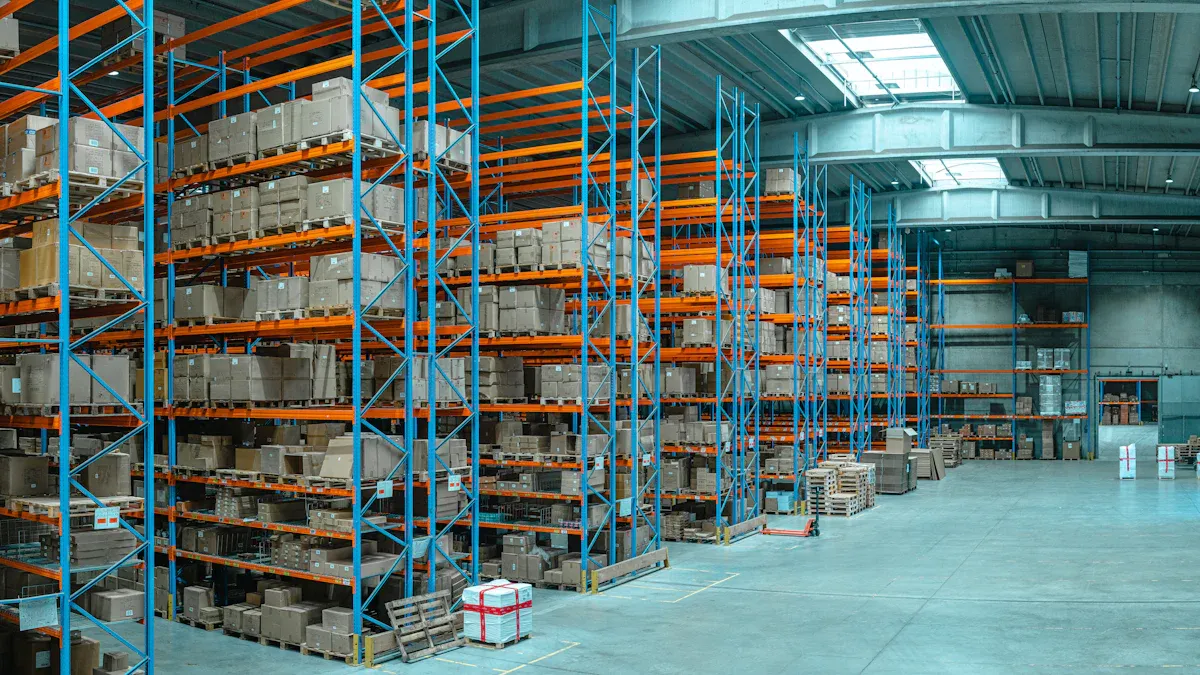
Saudi Arabia’s logistics and warehousing sectors are experiencing rapid acceleration, fueled by Vision 2030 and the expansion of e-commerce. The nation targets USD 450 billion in domestic capital investment by 2030 and records annual FDI exceeding USD 103 billion. Recent achievements include handling 4 million TEUs since March 2022 and developing over 2 million square meters of logistics zones. Massive infrastructure investments and smart operations are transforming the Kingdom into a global logistics hub, making it essential for business professionals, investors, and industry leaders to understand these dynamic changes.
Key Takeaways
Saudi Arabia's logistics sector is rapidly growing due to Vision 2030, which invests over $100 billion in infrastructure improvements.
E-commerce is a major driver of logistics demand, with the market projected to exceed $20 billion by 2025, requiring advanced warehousing solutions.
Sustainability is a key focus, with the goal of net-zero carbon emissions by 2060, promoting eco-friendly logistics practices.
Investors should explore opportunities in smart storage solutions and cold chain logistics to meet the rising demand for efficient supply chains.
Companies must embrace digital transformation and technology integration to enhance operational efficiency and stay competitive.
Vision 2030 and E-commerce: Driving Logistics Growth
Vision 2030’s Impact on Logistics
Vision 2030 has transformed Saudi Arabia’s logistics sector through targeted policy reforms and strategic investments. The government has allocated over $100 billion to expand ports, airports, railways, and highways. These infrastructure upgrades support the seamless movement of goods across the country. The adoption of digital solutions, including blockchain, IoT, and AI, has enhanced logistics operations and improved supply chain visibility.
Saudi Arabia’s commitment to sustainability under Vision 2030 drives the logistics industry toward eco-friendly practices. The nation aims for net-zero carbon emissions by 2060, encouraging the use of electric vehicles and energy-efficient warehousing. The Saudi Logistics Hub seeks to attract $10 billion in foreign investment by 2030, positioning the country as a global logistics center.
Note: Vision 2030 emphasizes technology integration and sustainability, setting new standards for logistics efficiency and environmental responsibility.
The following table summarizes the key areas influenced by Vision 2030:
Key Area | Impact |
|---|---|
Infrastructure Development | Over $100 billion invested in expanding ports, airports, railways, and highways |
Technology Integration | Adoption of digital solutions like blockchain, IoT, and AI for enhanced logistics |
E-commerce Growth | E-commerce market grew by 32% annually from 2019 to 2023, increasing logistics demand |
Foreign Investment | Saudi Logistics Hub aims to attract $10 billion in foreign investment by 2030 |
Sustainability Goals | Vision 2030 targets net-zero carbon emissions by 2060, promoting eco-friendly logistics |
Government initiatives under Vision 2030 have directly impacted logistics infrastructure and efficiency:
Transportation developments and world-class infrastructure support the movement of goods.
Digitally-driven logistics industry leverages AI and IoT for operational efficiency.
Sustainable logistics practices reduce carbon emissions through electric vehicles and energy-efficient warehouses.
E-commerce Expansion and Market Demand
E-commerce has emerged as a powerful driver of logistics growth in Saudi Arabia. The market is projected to exceed $20 billion by 2025, with an annual growth rate of over 15%. By 2033, the sector could reach a valuation of $708.7 billion, nearly tripling its current size. E-commerce now contributes over 6% of national retail activity, highlighting its significant role in the economy.
Consumer trends shape logistics requirements in several ways. Rapid growth in online shopping necessitates improvements in logistics infrastructure. The rise of mobile commerce requires mobile-friendly logistics solutions. Increasing use of digital payments enhances the need for secure and efficient payment logistics. Demand for faster delivery drives the need for next-day or same-day delivery capabilities.
The table below outlines major consumer trends and their implications for logistics:
Trend | Implication on Logistics Requirements |
|---|---|
Rapid growth of online shopping | Necessitates improvements in logistics infrastructure |
Rise of mobile commerce | Requires mobile-friendly logistics solutions |
Increasing use of digital payments | Enhances the need for secure and efficient payment logistics |
Demand for faster delivery | Drives the need for next-day or same-day delivery capabilities |
E-commerce sales in Saudi Arabia are projected to exceed $13 billion by 2025.
Over 70% of e-commerce transactions occur via mobile phones.
Consumers increasingly expect next-day or same-day delivery.
The expansion of e-commerce has led to increased demand for warehousing and storage solutions, especially in urban areas. Temperature-controlled facilities are also in higher demand due to the import of perishable goods and pharmaceuticals. These trends reinforce the need for advanced logistics networks and innovative supply chain management.
Warehousing Sector: Trends and Achievements
Market Growth and Key Data
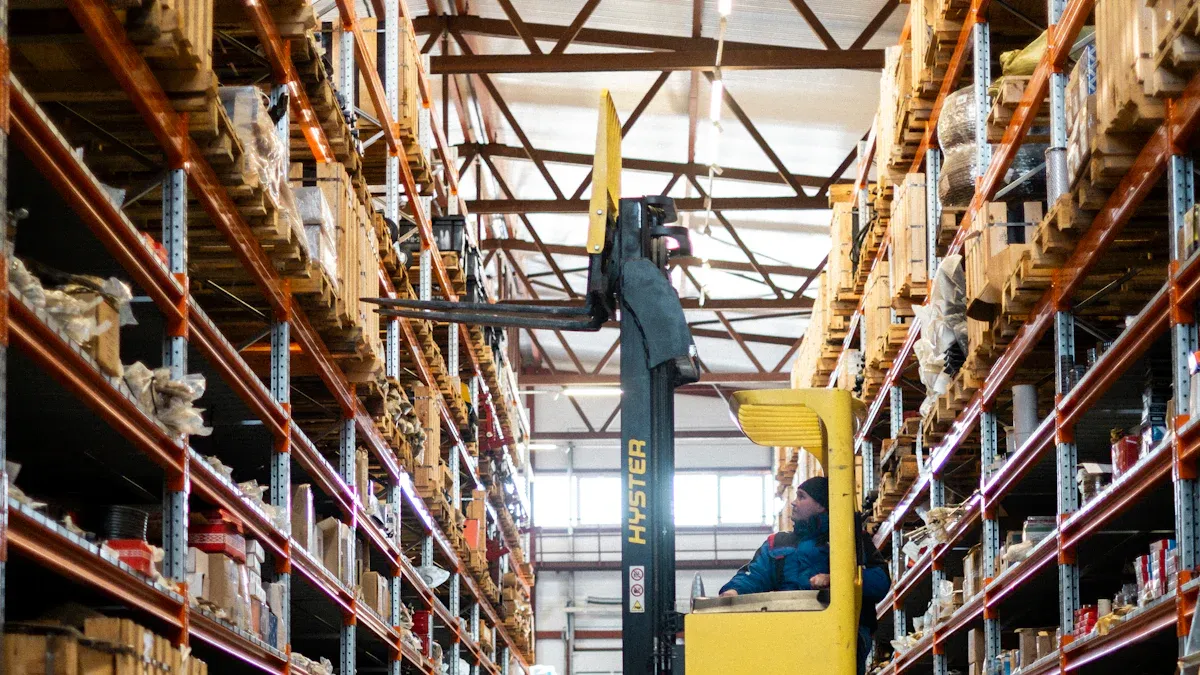
Saudi Arabia’s warehousing sector has experienced remarkable growth in recent years. The market reached a value of approximately USD 9.3 billion in 2022. Projections indicate an increase to around USD 13.2 billion by 2030. This upward trend reflects the country’s commitment to becoming a global logistics hub.
Several key figures highlight the sector’s rapid expansion:
The number of logistics facilities has grown by 267% since 2021.
Over 12,450 warehouses now operate across the Kingdom.
The government has launched 22 logistics hubs, covering a total area of 34 million square meters.
The Saudi Arabia Freight and Logistics Industry Outlook Report 2025-2034 notes that this surge in warehousing demand aligns with the nation’s industrialization and the booming e-commerce sector. The need for advanced storage solutions continues to rise, especially in urban centers where retail and online sales are strongest.
The following table summarizes the recent growth in the warehousing sector:
Indicator | 2022 Value / Status | 2030 Projection / Current Status |
|---|---|---|
Market Value | USD 9.3 billion | USD 13.2 billion |
Number of Warehouses | 12,450+ | Continuing to increase |
Logistics Facilities Growth | +267% since 2021 | Sustained high demand |
Logistics Hubs | 22 launched (34 million m²) | Expansion to 59 by 2030 planned |
Infrastructure Milestones and Facility Expansion
Saudi Arabia has made significant investments in warehousing infrastructure. The Al Khomrah Logistics Zone in Jeddah stands as the largest logistics zone in the country, demonstrating the scale of recent expansion. The government plans to increase the number of logistics zones from 22 to 59 by 2030, with investments exceeding SAR 10 billion (USD 2.66 billion).
Key milestones and expansion highlights include:
The demand for warehouses has surged by 267% since 2021, driven by e-commerce and retail growth.
Over 1.3 million square meters of new warehouse space were added in the first half of 2025.
Riyadh’s warehouse stock increased by 3.5%, reaching 28.9 million square meters.
Jeddah’s total warehouse supply rose by 1.4%, totaling 20.1 million square meters.
Dammam Metropolitan Area’s warehouse stock grew by 0.7%, now at 8 million square meters.
The number of e-export logistics centers expanded from 2 in 2019 to 23 by 2025, supporting intercity trade and positioning Saudi Arabia as a key re-export platform.
These infrastructure achievements reflect a strategic approach to facility expansion. The government’s focus on developing logistics zones and modern warehousing solutions supports the Kingdom’s vision of becoming a regional and global trade leader.
Saudi Arabia’s warehousing sector continues to evolve, meeting the needs of a rapidly growing economy and a dynamic e-commerce landscape. The ongoing expansion of logistics hubs and warehouse facilities ensures that the country remains competitive in the global supply chain arena.
Strategic Initiatives and Investments
Infrastructure Upgrades and Modernization
Saudi Arabia continues to invest heavily in logistics and warehousing infrastructure. Both government and private sector players have launched major projects to support the country’s transformation into a global logistics hub. The National Industrial Development and Logistics Program (NIDLP) leads efforts to diversify the economy through logistics and infrastructure investments. Over the past decade, investments have exceeded $100 billion, improving ports, airports, railways, and highways. The logistics sector contributed about 6% to the national GDP in 2022, with a target of 10% by 2030.
Key investments include:
Location | Company | Investment (SAR) | Project Description |
|---|---|---|---|
Dammam | Sultan Logistics | 200M | Logistics park at King Abdulaziz Port, including warehousing and re-export services. |
Jeddah | DP World | 900M | New logistics park at Jeddah Islamic Port, integrating warehousing and container storage. |
The Saudi Ports Authority is also developing integrated logistics areas with a total investment of 2 billion SAR. Plans for economic cities and special economic zones aim to attract 12.8 million SAR in investments.
Public-private partnerships play a vital role in modernization. Projects such as the Riyadh Metro and Bus System and Jeddah’s Waterfront Development involve collaboration with international firms and private investors. The privatization of airports and seaports attracts foreign investment, driving innovation and efficiency.
Regulatory Reforms and Sustainability
Saudi Arabia has introduced regulatory reforms to promote sustainability and efficiency in logistics. The government established the National Center for Environmental Compliance (NCEC) in 2020 to enforce environmental laws and monitor compliance in logistics projects. Logistics projects must now obtain environmental permits and follow strict standards for emissions and waste management.
Regulatory Reform | Description |
|---|---|
National Center for Environmental Compliance | Enforces environmental laws and monitors compliance in logistics projects. |
Environmental Permits | Required for logistics projects, with strict standards for emissions. |
Environmental Impact Assessments (EIAs) | Needed for high-risk developments to assess environmental impact. |
General Environmental Regulations | Promotes balanced environmental activities and resource conservation. |
Executive Regulations for Environmental Inspections | Details inspection protocols and penalties for violations. |
Executive Regulations for Environmental Permits | Governs the permitting process for new operations. |
The shift toward energy-efficient models and alternative fuels is clear. Warehousing facilities now focus on reducing energy use and emissions. The implementation of the Public-Private Partnership Law and updated regulations creates a more business-friendly environment, encouraging further investment and sustainable growth.
Technology and Digital Transformation in Logistics
JUSDA’s JusLink AI Solution
JUSDA stands as a global leader in supply chain management, driving digital transformation in logistics through advanced technology. JusLink, JUSDA’s intelligent supply chain platform, integrates AI, IoT, and big data to deliver real-time collaboration and information sharing. JusLink’s AI Solution to analyze supply chain trends, predict freight rates, and forecast sales demand. JusLink’s risk control tower monitors disruptions and provides early warnings, while the intelligent assistant, JusElsa, streamlines operations with natural language processing.
JusLink’s AI Solution enhances efficiency and risk management across logistics operations. The platform enables predictive analytics, improves inventory management, and supports agile decision-making. Businesses benefit from accurate demand forecasts, reduced inventory costs, and optimized procurement strategies. JusLink’s real-time visibility empowers stakeholders to respond quickly to market changes and minimize supply chain errors.
JusLink’s AI-driven approach transforms traditional logistics into a smart, connected ecosystem, setting new standards for operational excellence.
Improvement Area | Description |
|---|---|
Blockchain enhances data accuracy in complex logistics processes, building trust among stakeholders. | |
Operational Efficiency | Integration of AI and IoT leads to predictive analytics and real-time decisions, resulting in cost reductions. |
Inventory Management | Advanced systems ensure optimal stock levels with minimal waste and improved order accuracy. |
Fulfillment and Last-Mile Innovations
Saudi Arabia’s logistics sector embraces cutting-edge fulfillment and last-mile delivery solutions. Companies deploy AI-powered route optimization to reduce fuel consumption and accelerate deliveries. Autonomous delivery vehicles, including driverless vans and drones, operate in urban areas, lowering labor costs and boosting efficiency. Smart warehousing and micro-fulfillment centers enable same-day delivery, meeting rising consumer expectations.
AI-powered customer experience tools provide predictive delivery windows and real-time tracking, enhancing satisfaction.
Green logistics initiatives introduce electric fleets and eco-friendly practices, supporting sustainability goals.
Advanced warehouse management solutions improve supply chain visibility and minimize errors.
Digital transformation in logistics empowers businesses to deliver faster, more reliable services. Technology adoption drives operational agility, reduces costs, and strengthens risk management, positioning Saudi Arabia as a leader in modern logistics.
Cross-Border Logistics and JUSDASR

JUSDASR’s Role in E-commerce Supply Chains
JUSDASR provides specialized cross-border logistics solutions that empower e-commerce merchants and manufacturers. The service supports global supply chains by offering direct express lines, first-mile logistics, and overseas warehousing and distribution. Strategic investments at King Abdulaziz Port, such as the SAR 1 billion logistics park, enhance cold storage capacity and meet the demands of global e-commerce. JUSDASR’s network includes warehouses located near major ports and airports in the United States, which enables quick distribution and cost savings for businesses.
JUSDASR integrates advanced technologies to optimize operations. The platform features real-time inventory visibility, remote operational access, scalable computing power, and seamless collaboration across supply chains. These capabilities allow merchants to manage inventory efficiently and respond quickly to market changes. Dropshipping services help businesses maintain flexible inventory levels and adapt to consumer demand.
JUSDASR’s logistics solutions combine professional express lines, specialized support for high-power energy storage products, and direct accounts with major carriers for reliable last-mile delivery.
Feature | Description |
|---|---|
WMS and IoT integration | Enhances operational efficiency and tracking. |
Automation in material handling | Reduces labor costs and increases speed. |
AI-driven predictive maintenance | Minimizes downtime through proactive measures. |
Data analytics for optimized space use | Maximizes storage efficiency and reduces waste. |
Strategic Warehousing for Global Reach
Strategic warehouse locations play a vital role in expanding global reach for e-commerce companies. JUSDASR positions its warehouses close to major ports and airports, which improves connectivity with international markets. This approach reduces transit times and lowers transportation costs, boosting trade efficiency. As e-commerce grows, the need for fulfillment space increases. Warehouses help manage inventory and ensure timely order delivery.
Government initiatives, such as the Global Supply Chain Resilience Initiative, drive industrial output and require robust logistics infrastructure. Key projects at major ports enhance cargo handling and facilitate smoother import and export processes. JUSDASR’s warehousing solutions support businesses in scaling their operations and meeting global demand.
Real-time inventory visibility
Remote operational access
Scalable computing power
Seamless collaboration across supply chains
JUSDASR’s strategic approach to warehousing and logistics positions e-commerce companies for success in global markets.
Challenges and Opportunities
Operational and Regulatory Barriers
Saudi Arabia’s logistics and warehousing sector faces several operational and regulatory challenges. Companies must navigate high initial capital investment to build modern, automated facilities. Many businesses struggle to find skilled labor with expertise in advanced warehouse technologies. Regulatory hurdles and bureaucratic processes often delay project implementation. The sector relies on fluctuating oil prices, which can impact government spending and long-term planning. Geopolitical tensions sometimes affect investor confidence and market stability. Environmental concerns require companies to adapt their operations and invest in sustainable practices. Logistical inefficiencies limit the effective use of warehouse facilities, reducing overall productivity.
Additional barriers include customs clearance times that average seven days, which is longer than the three-day benchmark in leading logistics markets. Administrative bottlenecks create further delays, making it difficult for companies to meet tight delivery schedules. Evolving regulations add complexity to operational efficiency, requiring businesses to stay updated and compliant.
Companies must address these barriers to unlock the full potential of Saudi Arabia’s logistics and warehousing sector.
High initial capital investment for automation
Limited skilled labor for advanced technologies
Regulatory hurdles and bureaucratic delays
Fluctuating oil prices impacting spending
Geopolitical tensions affecting confidence
Environmental adaptation requirements
Logistical inefficiencies in warehouse use
Lengthy customs clearance and administrative delays
Evolving regulations complicating operations
Investment and Partnership Potential
Despite these challenges, Saudi Arabia offers significant opportunities for investors, technology providers, and logistics partners. The sector’s rapid growth and government support create a favorable environment for innovation and expansion. The following table highlights key areas for investment and partnership:
Area of Investment | Description |
|---|---|
Multimodal Logistics Parks | Development of integrated transport hubs for efficient cargo movement |
Smart Storage Solutions | Implementation of AI-driven inventory management in warehouses |
Cold Chain Logistics | Establishment of temperature-controlled supply chains for perishables |
Digital Trade Facilitation | Systems to streamline cross-border trade processes |
E-commerce Fulfillment Centers | Centers in major cities to support online retail operations |
Robotic Warehouses | Automation of storage and retrieval processes using robotics |
Temperature-Controlled Storage | Facilities for sensitive goods like food and pharmaceuticals |
Public-Private Partnerships | Collaborations to develop bonded zones and logistics infrastructure |
Smart City Logistics | Integration of logistics solutions in urban development projects like NEOM |
ESG-Compliant Logistics Funds | Investment vehicles focused on sustainable logistics practices |
Saudi Arabia’s logistics sector presents a dynamic landscape for growth. Investors and partners who embrace technology and sustainability can help shape the future of logistics and warehousing in the Kingdom.
Real-World Impact: Sharp and JUSDA Collaboration
Supply Chain Optimization Results
Sharp, a global leader in household appliances, faced complex supply chain challenges after its acquisition by Foxconn. The company struggled with slow order processing, inefficient inventory management, and high logistics costs. Sharp formed SHARP JUSDA LOGISTICS (SJL) in partnership with JUSDA to address these issues. SJL implemented a comprehensive supply chain optimization strategy using a combination of software, hardware, and tailored solutions.
The results of this collaboration demonstrate significant improvements:
Key Outcome | Result Achieved |
|---|---|
Logistics Cost Reduction | 20% decrease |
Labor Cost Savings | 70% reduction |
Order Delivery Time | 30% faster |
Operational Efficiency | 50% increase |
Communication Accuracy | Near-perfect |
SJL introduced vendor-managed inventory (VMI) and just-in-time (JIT) strategies. These approaches optimized resource allocation and improved real-time inventory management. The JusLink technology platform integrated Warehouse Management System (WMS) and Transportation Management System (TMS), providing real-time visibility and automated freight calculation. SJL also expanded external warehousing services and secured competitive transportation pricing.
The partnership between Sharp and JUSDA showcases how digital solutions and strategic logistics management can transform supply chain performance.
Lessons for Industry Stakeholders
Industry stakeholders can learn valuable lessons from the Sharp and JUSDA collaboration. Companies that embrace digital transformation and intelligent supply chain solutions achieve measurable gains in efficiency and cost savings. The integration of advanced technologies, such as AI-driven platforms and automated systems, enables real-time decision-making and risk management.
Key takeaways include:
Invest in technology platforms for supply chain visibility.
Adopt VMI and JIT strategies to optimize inventory and resource allocation.
Streamline logistics flows to reduce unnecessary inventory and improve delivery speed.
Collaborate with experienced supply chain partners to leverage global expertise.
Sharp’s experience with JUSDA highlights the importance of innovation, efficiency, and collaboration in modern logistics. Stakeholders who prioritize these principles position their organizations for long-term success in a competitive market.
Future Outlook for Saudi Logistics and Warehousing
Implications for Stakeholders
Saudi Arabia’s logistics and warehousing sectors present a promising future for stakeholders. Companies, investors, and technology providers will find expanding opportunities as the market grows. The logistics market is projected to reach USD 81.2 billion by 2033, with a compound annual growth rate of 4.9%. Vision 2030’s infrastructure investments, totaling USD 133.3 billion, continue to enhance capacity and service quality. E-commerce and cold-chain investments drive demand for advanced logistics solutions.
Stakeholders should consider several key implications:
Businesses must adapt to rapid digital transformation and invest in smart warehousing technologies.
Investors will benefit from the sector’s robust expansion and government support for innovation.
Technology providers can introduce AI-driven platforms and automation to improve operational efficiency.
Logistics partners should focus on sustainability and energy-efficient models to align with national goals.
Companies that embrace innovation and collaboration will gain a competitive edge in Saudi Arabia’s evolving logistics landscape.
Stakeholder Type | Opportunity Area | Strategic Focus |
|---|---|---|
Businesses | Digital transformation | Smart warehousing, automation |
Investors | Market expansion | Infrastructure, cold chain |
Technology Firms | AI and IoT integration | Predictive analytics |
Logistics Partners | Sustainability | Energy-efficient operations |
Saudi Arabia’s Global Positioning
Saudi Arabia continues to strengthen its position as a global logistics and warehousing hub. The Kingdom’s location connects the Red Sea and Gulf shipping lanes, handling 13% of global trade traffic. Ongoing infrastructure enhancements, including a 4.5 billion SAR investment in port modernization, have increased cargo handling capacity. The number of commercial registrations in logistics rose by 49%, reaching 22,290 by Q3 2025.
Saudi Arabia climbed 17 places in the World Bank’s Logistics Performance Index, now ranking 38th globally. The country leverages its geographic advantage to facilitate transit flows between Asia, Europe, and Africa. Vision 2030’s strategic initiatives and investments solidify Saudi Arabia’s role as a regional and international logistics leader.
The Kingdom’s logistics sector benefits from its central location and modern infrastructure.
Enhanced connectivity supports global supply chains and e-commerce growth.
Saudi Arabia’s commitment to innovation and sustainability attracts international partners.
Saudi Arabia stands poised to become a top-tier global logistics and warehousing hub, offering unmatched opportunities for growth and collaboration.
Saudi Arabia’s logistics and warehousing sectors accelerate due to Vision 2030 and e-commerce growth. The market benefits from government initiatives, technology adoption, and strong investment focus. Companies use AI, IoT, and cloud platforms to improve efficiency. Predictive analytics support better decision-making. Stakeholders should pursue strategic investments and partnerships to shape the future. Saudi Arabia stands ready to become a global logistics hub.
Key Growth Drivers | Description |
|---|---|
Government Initiatives | Strong push for smart cities and digital transformation |
Technology Adoption | Increasing use of AI, IoT, and cloud platforms |
Demand for Analytics | Rising need for predictive analytics |
Investment Focus | Significant investments in data infrastructure |

JUSDA Solutions
To provide you with professional solutions and quotations.
FAQ
How does JusLink’s AI Solution improve supply chain operations?
JusLink’s AI Solution uses advanced analytics and real-time monitoring. It predicts demand, optimizes inventory, and manages risks. Companies gain better visibility and make faster, data-driven decisions.
What advantages does JUSDASR bring to cross-border e-commerce?
JUSDASR offers strategic warehouse locations near major U.S. ports and airports. The service supports dropshipping, specialized storage, and reliable last-mile delivery through partnerships with FedEx and UPS.
Which industries benefit from JUSDA’s logistics solutions?
JUSDA serves electronic manufacturing, home appliances, FMCG, automotive, new energy, medical health, heavy equipment, and bulk materials. Each industry receives tailored supply chain management solutions.
How did JUSDA help Sharp optimize its supply chain?
JUSDA partnered with Sharp to form SHARP JUSDA LOGISTICS. The collaboration reduced logistics costs by 20%, labor costs by 70%, and improved order delivery times by 30% through digital solutions and process optimization.
See Also
Transforming Logistics: The Future of AI in Supply Chains
Achieving Success: Importance of Supply Chain Transparency in E-commerce
Paving the Way: Digital Innovations Shaping Future Logistics
Enhancing Productivity: JUSDA Unveils Advanced Warehousing Solutions
Sustainable Growth: JUSDA's Innovations in Efficient Logistics