Supplier Diversification and AI Integration Drive Modern Supply Chains in global trade networks

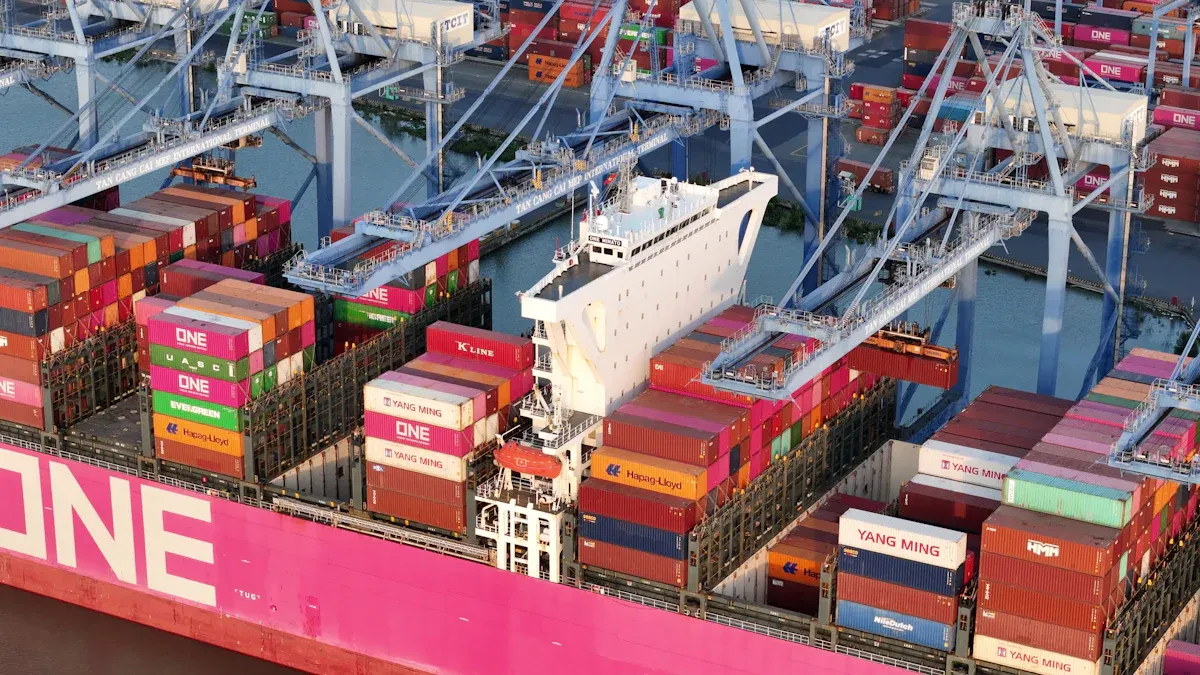
Global trade networks are rapidly transforming as supply chain diversification and AI integration become standard practice. Recent data shows nearly 10% of organizations use multi-agent systems, while 27% have dedicated AI teams. JUSDA drives innovation by operating in the U.S. and Mexico, supporting high-tech and automotive sectors with advanced digital platforms like JusLink.
Ongoing instability, including geopolitical tensions and raw material shortages, increases the urgency for businesses to adopt intelligent automation and data-driven strategies.
Evidence | Description |
|---|---|
Ongoing global instability | Modern supply chains face constant pressure from geopolitical tensions, raw material shortages, and transport bottlenecks. |
Critical need for intelligent automation | Industries like automotive manufacturing require timing and precision, emphasizing the urgency for automation. |
Key Takeaways
Diversifying suppliers reduces risks from disruptions. Companies should source from multiple regions to protect against natural disasters and political changes.
AI integration enhances supply chain efficiency. Businesses can use AI for better forecasting, risk control, and automation, leading to lower costs and faster deliveries.
Implementing AI requires a structured approach. Companies should assess their current supply chain, identify pain points, and start with pilot projects to measure success.
Continuous improvement is key for resilience. Regularly review supply chain strategies and adapt to market changes to maintain efficiency and stability.
Leveraging technology and diversification together strengthens supply chains. Combining AI insights with diverse sourcing strategies leads to better decision-making and operational success.
Supply Chain Diversification
Risk Management
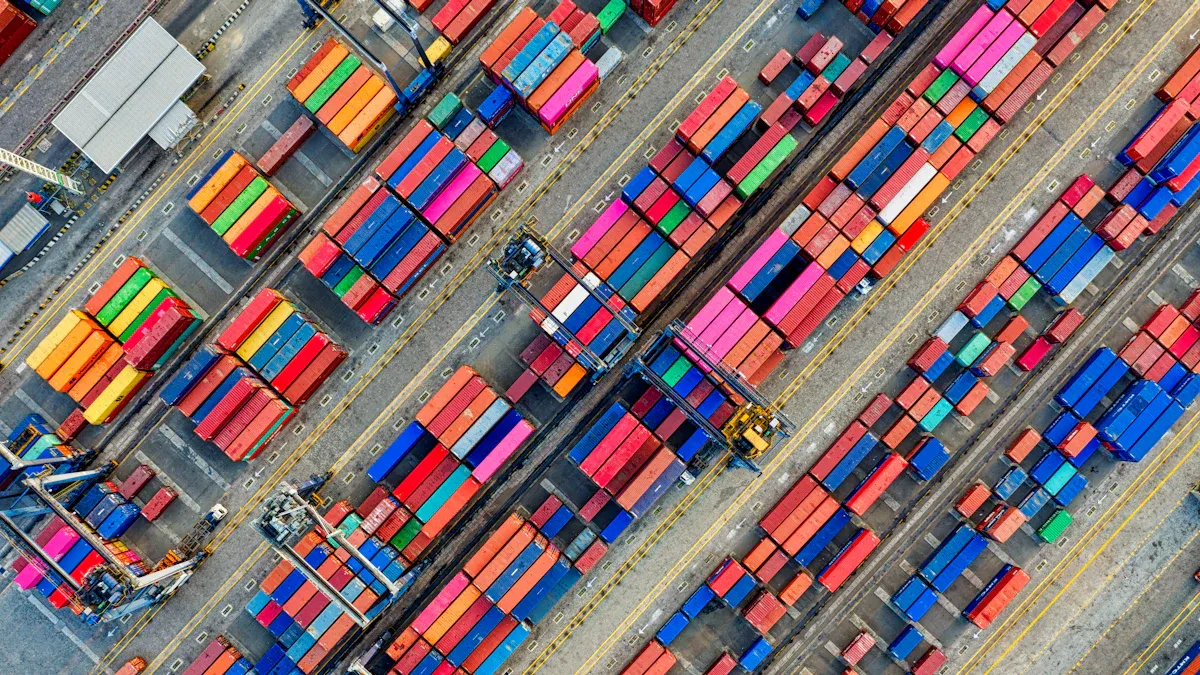
Supply chain diversification helps companies manage risks in global trade. When firms rely on a single supplier or region, they face greater vulnerability to disruptions. Natural disasters, political changes, or sudden policy shifts can halt operations. Companies that diversify suppliers domestically and internationally reduce the risk of supply chain breakdowns. By sourcing from multiple locations, businesses protect themselves from regional disasters and unexpected events.
Evidence Description | Impact on Risk Mitigation |
|---|---|
Diversifying suppliers reduces vulnerability to disruptions from natural disasters and political changes. | Firms can maintain operational continuity despite external shocks. |
Increased costs from tariffs and trade friction may lead firms to build redundancies in their supply chains. | This can enhance resilience against supply chain breakdowns. |
Diversification lowers sensitivity to trade tensions and policy uncertainty. | Firms can better manage costs associated with import/export restrictions. |
Sourcing from multiple suppliers in different regions mitigates risks from natural disasters. | Reduces the likelihood of total supply chain disruption. |
JUSDA supports risk management by offering a global network of warehouses and logistics services. With service points in China, Vietnam, India, the United States, and other regions, JUSDA enables companies to build flexible and redundant supply chains. Advanced inventory management systems like JusLink and eVMI provide real-time tracking and control, helping firms respond quickly to disruptions.
Resilience in Global Trade
Resilience means the ability to recover from setbacks and continue operations. Supply chain diversification increases resilience for multinational companies. Apparel and textile firms now source materials from different regions to avoid relying on a single country. Fashion retailers shift sourcing from Bangladesh to Turkey and Eastern Europe to reduce risks from geopolitical changes and natural disasters.
Companies in the apparel and textile industry diversify supply chains to reduce reliance on specific regions.
Fashion retailers shift sourcing from traditional hubs to new regions to mitigate risks.
JUSDA’s expertise in supply chain management helps businesses adapt to changing global conditions. The company’s extensive warehouse network and digital platforms allow clients to adjust sourcing strategies and maintain steady product flow. JUSDA’s solutions, such as cloud warehousing and consolidation, support resilience by enabling quick responses to market changes.
Geopolitical and Economic Factors
Geopolitical and economic factors strongly influence supply chain diversification strategies. Trade wars, tariffs, and political instability can disrupt supply chains and increase costs. Regulatory shifts, climate policies, and natural disasters also affect logistics planning. Technological warfare and cybersecurity threats now target digital supply chains, risking data and delivery continuity.
Trade wars and tariffs force companies to reroute supply chains or re-shore operations.
Political instability can lead to sudden operational halts.
Regulatory changes introduce compliance risks.
Climate-linked disruptions and policy responses reshape logistics strategies.
Cyberattacks threaten digital supply chains.
Russia-Ukraine conflict changes trade routes and energy prices, prompting supplier diversification.
Anti-globalization movements influence nations to rethink cross-border supply.
Increased digitalization makes supply chains vulnerable to cyber threats.
JUSDA’s global footprint and advanced technology help companies navigate these challenges. The company operates warehouses in key regions, including China, Vietnam, the United States, and Mexico. JusLink’s AI-driven platform provides real-time monitoring and risk alerts, supporting decision-making during geopolitical and economic shifts.
Company | Strategy Description | Financial Impact |
|---|---|---|
Deere & Company | Redesigned supply chain network | |
5% annual transportation savings | ||
Starbucks | Restructured supply chain into three operational groups | $500 million savings between 2009-2010 |
Intel | Nearshoring investments in Costa Rica and Vietnam | Reduced geopolitical risks |
JUSDA’s commitment to innovation and efficiency positions it as a leader in supporting supply chain diversification. The company’s solutions help clients achieve operational continuity, resilience, and cost savings in a complex global environment.
Diversification Strategies
Multi-Country Sourcing
Companies use multi-country sourcing to build strong and flexible supply chains. They select suppliers from different regions to reduce risks and improve access to materials. Leading businesses such as Vestas and IBM operate sourcing networks across continents. Apple Inc. sources components from China, South Korea, Taiwan, and the United States. Nike and Adidas work with factories in many countries, including Vietnam and Indonesia. These approaches help companies respond quickly to changes in demand and supply.
Demand-driven sourcing matches purchases with real-time customer needs.
Consignment sourcing allows payment for inventory only when used.
Sustainable sourcing focuses on fair labor and environmental impact.
Just-in-time sourcing reduces inventory costs.
Low-cost country sourcing improves profit margins.
JUSDA supports multi-country sourcing with a global network of warehouses and logistics centers. The company’s presence in China, Vietnam, the United States, and Mexico enables clients to diversify suppliers and manage complex supply chains.
Strategic Inventory
Strategic inventory management helps companies stay resilient during disruptions. Businesses maintain safety stock and use just-in-time methods to adapt quickly. These practices build flexibility and reduce risks. JUSDA’s advanced warehouse solutions, such as eVMI and JusLink, provide real-time inventory tracking and control. Clients can monitor stock levels and respond to changes in demand.
Onshoring and Nearshoring
Onshoring and nearshoring bring production closer to customers. These strategies offer faster delivery, lower shipping costs, and easier communication. Companies gain more control and stronger quality oversight. The table below shows the benefits and drawbacks:
Strategy | Benefits | Drawbacks |
|---|---|---|
Onshoring | Maximum control | Higher cost |
Stronger quality | Limited workforce/capacity | |
Nearshoring | Faster delivery | Sometimes more expensive |
Lower shipping costs | Fewer supplier options | |
Easier communication | N/A |
JUSDA’s diversified sourcing and AI-powered planning help clients choose the best location for production and distribution. The company uses predictive analytics, IoT, and AI to improve operational agility and sustainability.
AI Integration

Artificial intelligence is transforming supply chain management. Companies now use AI to improve forecasting, risk control, and automation. JUSDA leads this change with advanced solutions like JusLink and JusElsa. These tools help businesses make better decisions, reduce costs, and respond quickly to changes in global trade.
Forecasting and Planning
AI-driven forecasting tools help companies predict demand and plan inventory more accurately. By 2030, experts predict that 70% of large organizations will use AI-based supply chain forecasting. This shift marks a move away from traditional planning methods. AI analyzes large amounts of data, including sales trends and market signals, to create precise forecasts.
JUSDA’s JusLink platform uses AI to provide smart forecasting and replenishment. For example, a global industrial company improved its supply chain performance with JusLink, achieving a 78% increase in forecast accuracy and better inventory turnover. JusLink acts as a control tower, collecting real-time data and supporting decisions across the entire supply chain.
Tip: Companies can follow these steps to implement AI-based forecasting:
Define a vision for touchless forecasting.
Set clear business change goals.
Develop a data strategy.
Build a technology roadmap.
Plan the adoption journey.
With AI, businesses can match inventory to real demand, reduce waste, and avoid stockouts. This leads to faster delivery times and higher customer satisfaction.
Risk Control
AI enhances risk control by providing real-time visibility and early warnings. Traditional risk management often reacts to problems after they occur. AI-driven systems, like those in JusLink, monitor supplier networks and spot risks before they disrupt operations. Companies using AI for risk control report a 30% reduction in revenue losses from supply disruptions and a 50-70% decrease in the time needed to assess impacts.
Benefit Description | AI-Driven Risk Control | Traditional Risk Management |
|---|---|---|
Revenue Loss Reduction | 30% reduction | N/A |
Time Efficiency | 50-70% faster | N/A |
AI also helps companies choose reliable suppliers and optimize costs by reducing excess inventory. JusElsa, JUSDA’s intelligent assistant, uses natural language processing to answer questions, track shipments, and alert users to potential risks. This proactive approach keeps supply chains stable and resilient.
Enhanced visibility into supplier networks
Proactive risk mitigation with early warning systems
Improved supplier selection using risk profiles
Cost optimization through lower inventory carrying costs
Automation
Automation powered by AI streamlines supply chain operations. AI-driven inventory management reduces costs and improves accuracy. It forecasts demand and adjusts inventory levels dynamically. In warehouses, AI optimizes layout and labor, making operations more efficient.
JUSDA’s solutions use AI to automate routine tasks and support real-time decision-making. JusLink analyzes historical and real-time data to find inefficiencies. It optimizes transportation routes, selects strategic warehouse locations, and minimizes costs. These improvements lead to faster deliveries, fewer errors, and better turnover.
AI-driven inventory management cuts costs and boosts accuracy.
AI streamlines warehouse operations and labor performance.
Real-time analytics support quick decisions and better collaboration.
Recent industry data shows the impact of AI integration:
Metric | Quantifiable Improvement |
|---|---|
Reduction in Inventory | |
Cost Reduction | 35% significantly reduced |
Faster Delivery Times | 25% significantly faster |
Reduction in Errors | 70% reported a reduction |
Improvement in Turnover | Average 15% increase |
Satisfaction Level | 30% very satisfied |
JUSDA’s AI-powered platforms help clients achieve these results. Companies experience lower costs, faster deliveries, and higher satisfaction. AI integration is now essential for building efficient, resilient, and future-ready supply chains.
Synergy: Diversification & AI
Optimizing Supplier Networks
AI tools like JusLink help companies optimize supplier networks by mapping the entire supply chain. JusLink creates a detailed map that shows where suppliers are located and highlights possible threats in those areas. The platform discovers sub-tier suppliers, revealing hidden risks that may not be obvious at first glance. JusLink evaluates each supplier using risk scores and tracks data from many sources. This ongoing monitoring helps companies make better decisions and choose reliable partners. JusLink also uses predictive alerting, which analyzes past data to forecast future risks. These features support supply chain diversification and make supplier networks stronger.
Trend | Description |
|---|---|
Enhanced Supplier Relationship Management | AI uses data analytics to evaluate supplier performance and improve collaboration. |
Supplier Risk Management | AI-driven tools monitor supplier performance for better selection and engagement. |
Complex Optimization | AI systems handle many variables, optimizing manufacturing supply chains. |
Real-Time Monitoring
JUSDA’s AI solutions gather real-time data from IoT sensors and enterprise systems. JusLink continuously analyzes this data, identifying patterns and predicting disruptions before they happen. The system can detect changes in demand or equipment breakdowns, alerting stakeholders quickly. High-performing supply chains using AI see fewer disruptions and less overstock. Automation helps decision-makers assess supplier reliability and engage with partners more effectively. JusLink’s real-time insights allow companies to respond faster and avoid outdated reports.
AI tracks supplier performance and reliability.
Continuous data processing enables near real-time pattern identification.
Proactive alerts minimize disruptions and financial losses.
Adaptive Response
JUSDA’s customer stories show how AI and supply chain diversification work together. In high-tech and manufacturing sectors, AI reduces coordination costs and improves transparency. JusLink integrates data from different sources, revealing subtle correlations that help companies adapt quickly. Continuous monitoring supports faster response times across operations. Companies using JUSDA’s platform experience improved efficiency and stability. The synergy between AI and supply chain diversification helps businesses stay resilient in changing markets.
AI enhances supply chain diversification by lowering coordination costs.
Improved information transparency supports adaptive decision-making.
Faster response times lead to better operational outcomes.
Implementation Steps
Assessment
Businesses begin by evaluating their current supply chain structure and readiness for AI integration. Experts recommend a structured audit to identify areas that need improvement. This process focuses on risk management, operational efficiency, and resource capacity. Companies should look for hidden weaknesses in supplier relationships and processes. Many organizations now use AI-powered decision intelligence systems to make informed choices and adapt to disruptions. This shift supports the move toward localized supplier networks and greater resilience.
92% of executives believe AI-driven insights help predict and prevent disruptions. 87% expect positive returns from AI and machine learning investments within a few years.
Key steps for assessment include:
Assess the health of the supply chain for resilience.
Identify hidden weaknesses in supplier relationships.
Implement strategies for resilience, such as supplier diversification and process automation.
Ensure continuous adaptability to evolving threats and customer needs.
Integration
JUSDA recommends a clear approach for integrating AI into supply chain operations. Companies should first identify pain points, such as demand planning or route optimization. Starting with a focused pilot project helps track key metrics like forecast accuracy and cost savings. Investing in strong data infrastructure ensures access to clean and organized data. Centralized storage and good governance practices support this effort. After the pilot, businesses can scale and iterate, using insights to improve AI algorithms and establish continuous learning.
Tip: Focus on high-impact areas and measure results with clear benchmarks.
Continuous Improvement
Sustaining supply chain diversification and AI integration requires ongoing improvement. JUSDA’s best practices highlight the importance of combining human expertise with advanced technology. Companies benefit from deep AI integration, using machine learning for optimization and predictive capabilities. Cyber-physical systems, which blend physical processes with computing, enable real-time monitoring and support sustainability.
Aspect | Description |
|---|---|
Enhances human abilities through AI and collaborative robots | |
Advanced AI Integration | Uses machine learning for optimization and prediction |
Cyber-Physical Systems | Combines physical and digital processes for real-time improvement |
Regular reviews and updates help businesses stay ahead of market changes and maintain a resilient, efficient supply chain.
Supply chain diversification and AI integration help companies build resilient and efficient global operations. JUSDA leads this transformation by providing advanced digital platforms and a robust global network.
Businesses can future-proof their supply chains by following these steps:
Diversify sourcing strategies.
Act quickly with AI-powered insights.
Long-term Benefits | Description |
|---|---|
Stable production plans and less fluctuation in inventory levels | |
Enhanced Demand Forecasting | Better planning and scheduling |
Improved Supplier Relationships | Strong partnerships and shared innovation |
Operational Efficiency | Greater efficiency for manufacturers and suppliers |
Companies that adopt these strategies experience lasting improvements in efficiency, flexibility, and customer satisfaction. The long-term value compounds, strengthening supply chains for years to come.
FAQ
What industries does JUSDA serve?
JUSDA supports industries such as electronics manufacturing, automotive, FMCG, new energy, medical health, heavy equipment, and bulk materials. The company provides tailored supply chain solutions for each sector.
How does JusLink improve supply chain management?
JusLink uses AI to forecast demand, manage inventory, and monitor risks in real time. The platform helps companies make better decisions and respond quickly to changes in the supply chain.
What are the benefits of JUSDA’s warehousing solutions?
JUSDA’s warehousing offers real-time inventory tracking, advanced management systems, and value-added services like packing and labeling. These features help companies reduce costs and improve efficiency.
How does JUSDA help manage supply chain risks?
JUSDA provides a global network, AI-driven risk monitoring, and real-time alerts. These tools help companies identify disruptions early and maintain stable operations.
See Also
Exploring AI Integration For The Next Supply Chain
Enhancing Supply Chain Efficiency Through AI Innovations
Transforming Logistics With AI In The Supply Chain