Supply Chain Resilience Challenges Amidst Intertwined Multiple Risks


You face a fragile global supply chain, where risks connect and can quickly cause problems. In 2024, disruptions have surged:
Year | Type of Disruption | Percentage Increase |
|---|---|---|
2024 | Extreme Weather | 119% |
2024 | Flood Alerts | 214% |
2024 | Major Hurricanes | 101% |
2024 | Overall Disruptions | 38% |
A single issue can trigger a chain reaction, affecting many parts of your operations. Many companies now work to balance Supply Chain Resilience with cost and efficiency. When you use real-time data and focus on talent, you get better demand planning, stronger relationships, and smarter risk management.
Key Takeaways
Understand interconnected risks in your supply chain. Recognizing how risks relate helps you build stronger resilience.
Invest in technology for better visibility. Use real-time data and analytics to spot risks early and respond quickly.
Diversify your suppliers across regions. This strategy reduces risk and keeps your supply chain flexible and strong.
Create a risk-aware culture in your organization. Encourage open communication about risks to improve response times and decision-making.
Balance efficiency with resilience. Focus on both cost-effectiveness and the ability to withstand disruptions to protect your operations.
Interconnected Risk Landscape
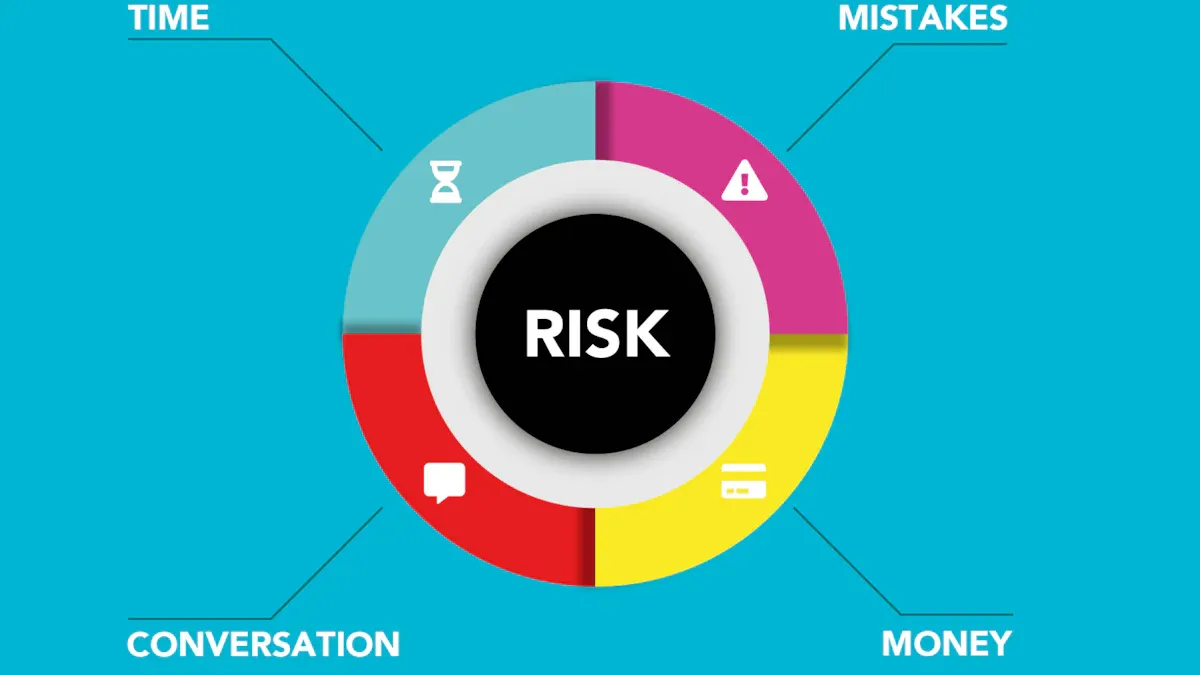
You face many risks in your supply chain. These risks connect and can cause bigger problems when they happen together. If you understand how these risks work, you can build stronger Supply Chain Resilience.
Geopolitical Risks
Global risks come from political changes or instability in countries where your supply chain operates. Even stable countries can feel the effects of regional problems. These issues can lead to supply chain disruptions or higher costs because of tariffs or trade barriers.
Geopolitical turmoil often disrupts supply chains. In late 2023, military conflicts and extreme weather made global commerce harder. Attacks on shipping routes and limits in key canals forced companies to find new routes, which increased costs and delays.
Trade wars and tariffs between countries like the U.S. and China raise costs and disrupt supply chain routes.
Political instability can stop production and distribution suddenly.
Regulatory changes in government policies affect supply chain operations.
Military conflict in the Middle East affected shipping through the Red Sea and Suez Canal.
Drought limited water supply to the Panama Canal, causing shipping delays.
These disruptions increased costs and delayed production.
Economic Shifts
Evidence | Description |
|---|---|
Economic Shifts | Economic changes spread shocks through supply chains, affecting firms and the economy. |
COVID-19 Impact | The pandemic exposed weaknesses in global supply chains, causing big disruptions. |
Supply Chain Pressure Index | This index measures disruptions like shipping delays and inventory problems. |
GDP Decline Analysis | 30% of the U.S. GDP drop during the early pandemic came from foreign lockdowns. |
Inflation Sources | International factors added about 2 percentage points to U.S. inflation in 2021-2022. |
Regulatory Changes
Regulation | Change |
|---|---|
CSDDD | Deadline extended by one year. |
CSRD | Deadline extended by two years. |
Reporting Requirements | Simplified for smaller companies. |
Regulatory Change | Description |
|---|---|
New Tariffs | New fees for vessels at U.S. ports. |
Compliance Requirements | Companies must know suppliers and audit them. |
Sustainability Standards | Reporting rules are easier for small firms. |
A 90-day pause on tariffs for most countries, with a 10% rate.
Tariffs on goods from China raised to 145%.
These changes aim to reshape trade and protect jobs.
Operational Threats
Operational Threats | Description |
|---|---|
Extreme Weather Events | Wildfires, hurricanes, and floods stopped operations and delayed shipments. |
Labor Disputes | Dockworker tensions slowed major ports, affecting logistics. |
Port Congestion | Crowded ports like Singapore and Mediterranean hubs disrupted global goods flow. |
Geopolitical Conflicts | The Red Sea Crisis blocked shipping, causing delays and higher costs. |
Reputational and Environmental Risks
Investors now look at how well you manage climate risks. Big asset managers like BlackRock use climate resilience to guide investments.
Being open about climate risk in your supply chain gives you an advantage.
Most negative impacts on reputation and financial performance come from your suppliers. You must manage ESG risks to keep your supply chain strong.
Financial Risks
Geopolitical factors can lead to financial risks, such as higher costs from tariffs and currency changes.
You may face direct costs and trouble accessing capital.
Compliance risks change quickly, so you must adapt to avoid penalties.
Logistics Risks
Operational risks include logistical issues from tariffs, which affect delivery schedules and inventory.
Port congestion and shipping delays can slow down your supply chain.
Recent disasters show how one event can trigger many problems. For example:
The 2011 Japan Earthquake and Tsunami caused a 74% production drop for Toyota and an 81% drop for Honda, leading to a global loss of 3.6 million car units.
Hurricane Harvey in 2017 shut down over 15% of U.S. refinery capacity, disrupting $600 billion in economic activity.
The COVID-19 pandemic led to a 67% increase in supply chain disruptions, with 57% of companies facing serious challenges.
You must understand how these risks connect. If you do, you can prepare for cascading disruptions and protect your Supply Chain Resilience.
Supply Chain Resilience Challenges
Visibility Gaps
You need clear visibility across your supply chain to spot risks early. Many companies struggle to see beyond their direct suppliers. When you miss information about fourth or fifth parties, you face hidden threats. For example, a breach at Ahold Delhaize happened because a third-party vendor had weak controls. This shows how gaps in visibility can expose you to cyber risks and supply disruptions.
Incident | Key Findings |
|---|---|
General Pattern | Organizations suffer breaches due to uneven controls across their supplier ecosystem and lack of visibility into fourth and fifth parties. |
Ahold Delhaize | Breach occurred via a third-party vendor, highlighting the risk of relying on interconnected vendors. |
You must improve transparency to strengthen Supply Chain Resilience. When you track your suppliers and their partners, you reduce the chance of surprise disruptions.
Talent Shortages
You need skilled workers to manage your supply chain. Many companies face talent shortages, which make it hard to respond to problems quickly. When you lack experts in logistics, risk management, or technology, you struggle to keep operations running smoothly. This shortage slows down your ability to adapt and recover from disruptions.
Tip: Invest in training programs and attract new talent to build a stronger supply chain team.
Overlapping Risks
You face many risks at the same time. These risks can come from inside your company or from outside events. Operational risks, like production delays, mix with financial risks, such as currency changes. Natural disasters and global pandemics add more pressure. When these risks overlap, they create a feedback loop that makes disruptions worse.
Geopolitical instability, environmental challenges, and economic changes combine to form a ‘polycrisis’.
These overlapping risks affect transport reliability, shipping capacity, and demand for freight services.
The feedback loop amplifies disruptions across global supply chains.
You must understand how these risks connect. When you do, you can build better Supply Chain Resilience and prepare for complex challenges.
Cost of Resilience
Building Supply Chain Resilience costs money. You need to invest in risk assessments, new technology, and backup plans. Manufacturers now focus on near-term risk mitigation to keep costs low while improving resilience. Supply chain finance helps by improving liquidity and efficiency. Companies in competitive markets benefit more from these financial tools.
Customizing financial methods helps address differences between industries.
You must balance spending on resilience with your budget limits.
When you plan carefully, you can strengthen your supply chain without overspending.
Balancing Efficiency and Resilience
You want your supply chain to run smoothly and cost-effectively. At the same time, you need it to withstand disruptions. This creates a challenge. If you focus only on efficiency, you may ignore risks. If you focus only on resilience, you may increase costs.
Recent global events show the need to balance efficiency and resilience.
Disruptive technologies can help improve both areas.
Companies must address trade-offs to stay strong during turbulent times.
You must find the right balance. When you do, you protect your business and keep operations running, even when problems arise.
Challenge | Description |
|---|---|
Supply chains are susceptible to disruptions from geopolitical tensions, IT outages, and conflicts. | |
Economic volatility | Fluctuations in the economy can significantly impact supply chain operations. |
Regulatory complexities | Navigating various regulations adds layers of difficulty to maintaining resilience. |
Need for effective risk management | Organizations must develop strategies to mitigate risks both in the short and long term. |
Note: Problems of transparency, coordination issues, and surge response all make balancing efficiency and resilience harder. You must work with your team and partners to overcome these challenges.
Building Supply Chain Resilience
Scenario Planning
You can prepare for disruptions by using scenario planning. This means you think ahead and create backup plans for different problems. You should use several strategies to make your supply chain stronger:
Develop logistics contingency plans and diversify your suppliers.
Follow the PPRR Model: Prevention, Preparedness, Response, and Recovery.
Increase transparency so everyone knows what is happening.
Choose suppliers close to your main operations to lower risks and costs.
Work with trusted carriers and check freight metrics often.
Use predictive analytics to simulate risk scenarios.
Monitor supplier performance in real time to spot problems early.
These steps help you respond quickly when something goes wrong.
Technology and Digital Tools
You can use technology to improve your supply chain. Digital tools help you see risks and act fast. The table below shows how different tools help you build Supply Chain Resilience:
Technology/Tool | Contribution to Resilience |
|---|---|
Real-Time Risk Dashboards | Track global events and their effects on vendors. |
Performance Analytics | Measure delivery accuracy and quality issues. |
ESG Scoring Systems | Check if suppliers follow ethical sourcing rules. |
Cloud-Based Platforms | Keep all data in one place for easy access. |
Digital Twins | Test plans and forecast disruptions. |
AI Applications | Predict and reduce risks in your supply chain. |
Demand Forecasting | See demand changes using machine learning. |
Predictive Maintenance | Find machine problems before they stop production. |
Risk Scoring for Vendors | Rate suppliers based on reliability. |
Smart Routing | Change shipment routes quickly during disruptions. |
Risk Monitoring
You need to watch for risks all the time. Good risk monitoring helps you act before problems get worse. Here are some best practices:
Keep learning through training and workshops.
Use supply chain software for real-time data and predictions.
Involve all stakeholders and communicate often.
Track key performance indicators to get early warnings.
These actions help you stay ahead of threats.
Diversification
You can lower risk by spreading your suppliers across different regions. Diversification keeps your supply chain flexible and strong. The table below explains why this works:
Evidence | Description |
|---|---|
Supplier diversification reduces risk | You avoid big problems from political or trade issues. |
Proactive strategy | You stay agile and respond to challenges faster. |
Flaw in sole sourcing | Relying on one supplier can stop your operations. |
Resilience and cost efficiency | Diversification makes your supply chain more efficient and resilient. |
Compliance and Governance
You must follow rules and set up strong governance. These frameworks help you see and control risks. When you use technology and focus on data integrity, you can spot problems before they grow. Regular audits and close work with suppliers build ethical and structured supply chains. This approach makes your supply chain more resilient against disruptions.
Collaboration and Transparency
Working with partners and sharing information helps everyone. You get better forecasts and deliver products on time. You also improve efficiency and manage risks together. Here are some benefits:
Increase customer satisfaction with timely deliveries.
Optimize processes and reduce lead times.
Identify and solve risks as a team.
When you build trust and communicate openly, you strengthen your Supply Chain Resilience.
Integrated Risk Management
Risk-Aware Culture
You build a strong supply chain when you create a risk-aware culture. This means everyone in your company understands risks and talks about them openly. Companies with this culture respond faster to disruptions and know how to set priorities. You see better results when you measure and manage risks before they become problems. Good communication, both inside your company and with suppliers, keeps relationships strong and helps you solve issues quickly.
Companies with a risk-aware culture respond quickly to disruptions.
Open communication about risks keeps your supply chain strong.
Proactive risk management leads to better resilience.
Cross-Functional Teams
You need teams from different departments to work together. Cross-functional teams help you spot risks early and act fast. When you bring together people from procurement, manufacturing, and logistics, you can find new suppliers or change production plans quickly. During the pandemic, many companies struggled because they did not have teams ready to handle sudden problems. Ford used cross-functional teams to align its supply chain with new goals. Procter & Gamble increased production by 45% in a few weeks by coordinating across departments. Amazon grew its grocery sales by 40% in 2020 using these teams.
Cross-functional teams help you adjust to disruptions.
Collaboration between departments keeps your supply chain moving.
You become more agile and ready for change.
Continuous Improvement
You make your supply chain stronger when you focus on continuous improvement. This means you always look for ways to get better and fix problems. The PDCA Cycle (Plan-Do-Check-Act) gives you a clear way to solve issues and stay flexible. A culture of accountability helps you address problems right away. Continuous learning lets you adapt to new challenges.
Evidence Point | Description |
|---|---|
PDCA Cycle | Gives you a structured way to solve problems and stay agile. |
Culture of Accountability | Helps you fix issues quickly and take responsibility. |
Continuous Learning | Keeps your team ready for changes and new risks. |
You reduce costs, improve quality, and respond faster to market changes when you make improvement a habit.
You face urgent challenges in your supply chain. Recent events show how quickly risks can spread and disrupt operations.
Event | Impact |
|---|---|
Supply shocks and higher prices | |
Increased costs for medical supplies | |
Export Restrictions | Blocked essential goods |
You need proactive risk management. Use AI-driven analytics and supplier scoring to uncover problems early. Build safeguards and track performance in real time.
A global manufacturer can spot supplier distress with predictive analytics and switch suppliers before a crisis hits.
Start by mapping your supply chain and identifying critical vulnerabilities. Take action now to strengthen your resilience.
FAQ
What does supply chain resilience mean?
Supply chain resilience means your supply chain can handle disruptions and recover quickly. You prepare for risks, respond fast, and keep your business running. You build strength by planning, using technology, and working with partners.
How can you spot risks early in your supply chain?
You use real-time dashboards and analytics to track suppliers and shipments. You monitor key performance indicators. You talk with your team and partners often. Early warnings help you act before problems grow.
Why is supplier diversification important?
Supplier diversification lowers your risk. You avoid big problems if one supplier fails. You choose suppliers from different regions. You keep your supply chain flexible and strong.
Tip: Review your supplier list every year. Add new partners to reduce risk.
What role does technology play in supply chain resilience?
Technology helps you see risks and act fast. You use AI, cloud platforms, and digital twins. These tools give you better forecasts and help you plan for disruptions.
Technology | Benefit |
|---|---|
AI | Predicts risks |
Cloud | Shares data fast |
Digital Twin | Tests scenarios |
How do you balance efficiency with resilience?
You set clear goals for cost and risk. You use automation to speed up tasks. You invest in backup plans. You review your processes often. You find the right mix for your business needs.
See Also
Don't Overlook Supply Chain Threats: Safeguard Your Company Now
A Green Strategy for Addressing Supply Chain Challenges
Stay Ready: JUSDA's Strategies for Strong Supply Chains
Understanding Risks: Protecting Your Supply Chain Effectively