Unlocking Supply Chain Visibility with Predictive AI Solutions: How it Drives Supply Chains From Reactive to Predictive

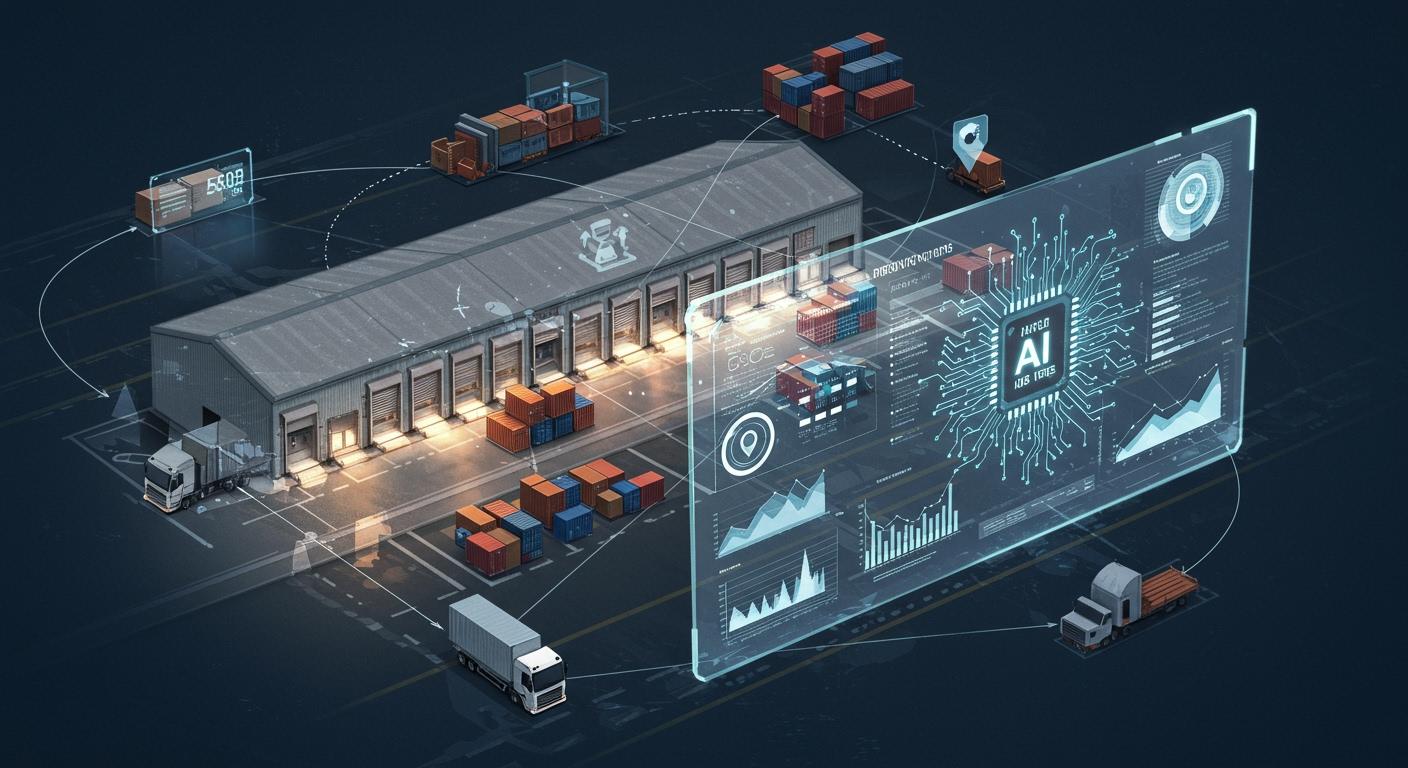
Reactive supply chains often struggle with disruptions, as 79% of companies lack complete visibility into their operations. Predictive AI transforms this landscape by enabling real-time data analysis and dynamic inventory adjustments, improving forecasting accuracy and reducing errors by up to 50 percent. JUSDA, a global leader in intelligent supply chain solutions, leverages JusLink and advanced warehouse services to deliver superior supply chain visibility and empower businesses to act proactively.
Key Takeaways
Predictive AI transforms supply chains from reactive to proactive, enabling businesses to anticipate issues before they arise.
Real-time data analysis improves demand forecasting, reducing errors and optimizing inventory management.
Enhanced supply chain visibility leads to significant cost savings and stronger supplier relationships.
Implementing predictive AI requires a structured approach, focusing on data quality and cross-functional collaboration.
Continuous learning and adaptation are essential for successful AI integration in supply chain operations.
From Reactive to Predictive
The Role of Predictive AI
Supply chains have shifted from reactive to predictive management through the adoption of advanced technologies. Traditional reactive supply chains respond to risks only after disruptions occur. They often lack real-time visibility and do not have contingency plans in place. Predictive supply chains, on the other hand, anticipate potential issues and use predictive analytics to implement preemptive strategies.
Reactive Supply Chain Management: Responds to risks after they occur, lacking real-time visibility and contingency planning.
Proactive Supply Chain Management: Anticipates potential issues, employs predictive analytics, and implements preemptive strategies to mitigate risks.
PREDICTIVE AI enables this transformation by providing several core functions:
Demand Forecasting: PREDICTIVE AI analyzes historical and real-time data to generate precise demand forecasts, reducing overstock and stockouts.
Inventory Management: It dynamically adjusts inventory levels based on demand patterns and supply fluctuations, improving availability and reducing waste.
Logistics Optimization: PREDICTIVE AI identifies the most efficient carrier in real time by factoring in various logistical elements.
Supplier Relationship Management: It enhances sourcing by evaluating suppliers based on pricing, lead times, and risk factors.
"AI has shifted the paradigm from reactive to proactive supply chain management. By predicting demand, identifying risks and optimizing every step of the process, logistics companies can exceed customer expectations while driving profitability." — Patrick Van Hull, Industry Principal at Interos
Impact on Decision-Making
PREDICTIVE AI has a direct impact on the speed and accuracy of supply chain decisions. Companies using PREDICTIVE AI benefit from smarter demand forecasting, predictive maintenance, and proactive issue resolution. These capabilities help businesses prevent problems before they arise and improve service reliability.
Evidence Type | Description |
|---|---|
AI-powered predictive models significantly improve demand forecasting accuracy by analyzing large datasets and identifying patterns that traditional methods miss. | |
Decision-Making Efficiency | AI enhances decision-making efficiency by enabling real-time data processing and adaptive forecasting models that respond to market changes. |
Inventory Management | AI-driven forecasts help reduce overstocking and stockouts, leading to better inventory management and cost savings. |
PREDICTIVE AI tools automate inventory tracking and optimize logistics by analyzing data to determine the most efficient routes for shipments. This approach reduces costs and delivery times. Companies that adopt PREDICTIVE AI gain a competitive edge by making faster, more informed decisions and maintaining optimal stock levels.
Supply Chain Visibility Explained

What Is Supply Chain Visibility?
Supply chain visibility refers to the ability to track and monitor the movement of parts, components, raw materials, and finished products from the manufacturer to the end user. This capability gives businesses real-time insights into their operations. With digital transformation, companies can improve production, distribution, and delivery processes. Enhanced data exchange and real-time visibility support better decision-making across the supply chain.
Industry leaders outline several key components of supply chain visibility:
Multi-modal transportation visibility across all carriers
Real-time location tracking with dynamic ETA calculations
Exception management with automated alerts
Advanced analytics with customizable dashboards
Mobile accessibility for on-the-go decision-making
To achieve effective supply chain visibility, companies focus on:
Data standardization for consistent formats
Process integration to map complete supply chain activities
Technology enablement through connected visibility tools
Performance metrics to track progress
Collaboration protocols for sharing information with partners
Why It Matters for Modern Businesses
Modern businesses operate in complex, global environments. Supply chain visibility helps them respond quickly to changes and disruptions. Organizations that implement comprehensive visibility programs see measurable improvements in financial performance, risk management, and operational excellence. Enhanced transparency leads to cost reductions and stronger supplier relationships.
Coca-Cola’s use of real-time yard tracking provides end-to-end traceability, resulting in lower transportation costs, more efficient movement of freight, and faster dispute resolution.
Companies using AI-driven supply chain visibility solutions have reduced out-of-stock scenarios by 25%. They have also streamlined warehouse operations and achieved a 20% reduction in lead times. Improved visibility leads to significant cost savings by optimizing inventory management and reducing carrying costs.
However, businesses face several challenges in achieving full visibility:
Challenge | Description |
|---|---|
Data Fragmentation and Integration | Difficulty in integrating fragmented data across various systems, hindering a clear view of the supply chain. |
Inadequate Technology | Outdated or incompatible technology limits real-time tracking, affecting product quality and efficiency. |
Collaboration with Suppliers | Lack of cooperation from suppliers can lead to delays and affect overall business performance. |
Data Accuracy and Quality | Poor-quality data results in tracking errors and undermines decision-making effectiveness. |
Supply chain visibility remains a critical factor for companies seeking to stay competitive and resilient in today’s fast-changing markets.
Challenges in Traditional Supply Chains
Visibility Gaps and Risks
Traditional supply chains often struggle to provide complete supply chain visibility. Many organizations monitor only a small portion of their extended supply chain for cyber threats. Less than half track even 50% of their network, leaving significant gaps. Companies tend to focus on immediate suppliers, but they overlook deeper levels such as raw material sourcing and sub-tier suppliers. This lack of insight increases risk exposure and complicates compliance efforts.
Managers frequently rely on delayed or outdated information. This practice hinders decision-making and reduces organizational resilience. In complex environments, firms encounter many market actors and dispersed information sources. Effective information acquisition becomes crucial for maintaining control.
Note: Limited visibility can expose companies to cybersecurity threats and slow response times during disruptions.
Risk Type | Description |
|---|---|
Data Fragmentation | Companies often use single-purpose tools, leading to siloed data and hampering decision-making. |
Poor Data Quality | Inaccurate or outdated data can lead to faulty conclusions and poor risk management. |
Outdated Information | Real-time visibility is essential; outdated data limits competitiveness and responsiveness. |
Organizations face additional risks:
Cybersecurity threats arise when vulnerabilities go unmonitored.
Limited real-time visibility prevents quick action during disruptions.
Legacy System Limitations
Legacy systems present major obstacles to supply chain visibility and responsiveness. Many businesses use custom-built architectures that do not integrate easily with new tools. This situation leads to workflow inconsistencies and increased IT overhead.
Factor | Description |
|---|---|
Integration complexities | Legacy systems often involve custom-built architectures that do not easily integrate with new tools, leading to workflow inconsistencies and increased IT overhead. |
Data silos | Separate tools and inconsistent datasets across departments create fragmented visibility, making it challenging to synchronize planning and respond to disruptions in real time. |
Many companies struggle to connect modern tracking systems with legacy ERP platforms. This challenge creates data silos and operational inefficiencies. Valuable real-time insights often remain underutilized due to lack of seamless connectivity.
Industry analysts report several common limitations:
Lack of agility: Legacy systems cannot adapt quickly to market changes or e-commerce growth.
Siloed operations: Disparate systems fragment data and limit visibility, making collaboration difficult.
High maintenance costs: Older systems require expensive upkeep and rely on outdated technology.
Competitive pressure: Companies risk falling behind competitors who embrace digital transformation.
Legacy systems restrict supply chain visibility and slow organizational response to market demands.
JUSDA’s Predictive AI Integration
Real-Time Data and Automation
JUSDA sets the standard for real-time data integration and automation in global supply chains. The company’s proprietary JusLink platform delivers end-to-end visibility and AI-driven control. JusLink connects with ERP and SAP systems, synchronizing logistics and production schedules for immediate updates. This integration allows businesses to respond quickly to changes in demand or disruptions.
JUSDA’s approach to automation focuses on eliminating redundancies and optimizing inventory. The company achieves zero-redundancy inventory management through its C2M2C (Component to Manufacturer to Consumer) model. This model ensures that inventory moves efficiently from suppliers to end customers. JUSDA’s Sky Network acts as a digital backbone, providing comprehensive visibility across the entire supply chain. The Vertical Network leverages over 20 years of expertise in Vendor Managed Inventory (VMI) and cross-border logistics. The Ground Network supports rapid response with localized hubs in key manufacturing regions.
The following table summarizes JUSDA’s real-time data and automation features:
Feature | Description |
|---|---|
JusLink Platform | Proprietary platform enabling end-to-end supply chain visibility and AI-driven control. |
Real-time Logistics Synchronization | Seamless integration of ERP/SAP systems with production schedules for immediate updates. |
Zero-redundancy Inventory | Achieves efficient inventory management from Component to Manufacturer to Consumer (C2M2C). |
Sky Network | Digital backbone providing comprehensive visibility across the supply chain. |
Vertical Network | Expertise in Vendor Managed Inventory (VMI) and cross-border logistics honed over 20 years. |
Ground Network | Localized hubs in emerging manufacturing regions for rapid response. |
JusLink and JUSDA’s warehouse solutions work together to provide real-time tracking, transparency, and automation at every stage of the supply chain.
Predictive Analytics in Action
JUSDA uses advanced technologies to power predictive analytics in supply chain operations. The company relies on AI for predictive analytics in demand, inventory, and risk management. JusLink serves as an intelligent control tower, integrating data and algorithmic models for comprehensive management.
JUSDA’s predictive analytics capabilities allow businesses to anticipate changes and act before disruptions occur. The system analyzes historical and real-time data to forecast demand, optimize inventory, and monitor risks. This proactive approach helps companies maintain stability and efficiency in their operations.
The table below highlights the technologies JUSDA uses for predictive analytics:
Technology | Description |
|---|---|
AI | Utilized for predictive analytics in demand, inventory, and risk management. |
JusLink | An AI-based intelligent supply chain control tower that integrates data and algorithmic models for comprehensive supply chain management. |
JUSDA’s integration of AI, IoT, and cloud computing ensures that companies gain full supply chain visibility. This visibility enables rapid decision-making, risk mitigation, and continuous improvement across global operations.
Key Features of JusLink for Supply Chain Visibility
AI Forecasting and Replenishment
JusLink uses AI forecasting to transform inventory and replenishment processes. The platform analyzes extensive datasets, including historical sales and market trends, through machine learning. This approach enables more accurate predictions of future product demand. JusLink maintains optimal stock levels, which helps reduce waste and avoid stockouts.
AI forecasting minimizes excess inventory and lowers storage costs.
The system optimizes procurement schedules by predicting demand with precision.
Predictive analytics enhance logistics by identifying efficient delivery routes.
JusLink reduces unnecessary stock accumulation, improving cash flow management.
The platform plays a significant role in transportation and logistics optimization.
JusLink helps adjust shipping schedules and minimizes delays.
JusLink’s intelligent agents support production material preparation and finished product delivery. These agents generate scientific stocking plans and optimize procurement strategies. The platform’s AI-driven replenishment suggestions ensure steady product supply and timely delivery.
Risk Monitoring and Alerts
JusLink functions as an AI-based intelligent supply chain control tower. The platform facilitates real-time monitoring and proactive decision-making. JusLink integrates data and algorithmic models across the entire supply chain, from suppliers to customers. This integration enables comprehensive management through real-time data collection and analysis. Supply chain managers receive timely alerts about potential risks, allowing them to respond quickly and maintain operational stability.
JusLink’s risk control tower provides early warnings for disruptions and transport risks. Intelligent algorithms strengthen signal detection and support emergency response. The platform’s AI agents identify risks that may affect transportation delivery and offer solutions to reduce risks.
Integration with Warehouse Management for End-to-End Visibility
JusLink integrates seamlessly with warehouse management systems to provide end-to-end supply chain visibility. The following table highlights the key components of this integration:
Key Component | Description |
|---|---|
Seamless Integration | Integrates ERP/SAP systems with production schedules for enhanced coordination. |
Real-time Logistics Synchronization | Provides up-to-date logistics information, improving responsiveness and efficiency in the supply chain. |
Zero-redundancy Inventory | Achieves streamlined inventory management from components to consumers, reducing waste and costs. |
Digital Backbone | JusLink serves as the digital backbone for end-to-end visibility and AI-driven control. |
Expertise | Leverages over 20 years of experience in VMI, cross-border logistics, and global supply chains. |
Localized Hubs | Establishes localized hubs in emerging manufacturing regions to enhance operational efficiency. |
JusLink’s integration with advanced warehouse management systems ensures transparency and control at every stage. The platform supports real-time inventory tracking and strategic collaboration between suppliers and buyers. JusLink’s digital backbone enables businesses to achieve supply chain visibility, optimize inventory, and respond rapidly to market changes.
Benefits for Global Operations
Enhanced Agility and Resilience
Global supply chains face constant challenges. Organizations must adapt quickly to disruptions and changing market conditions. JUSDA’s predictive AI solutions help companies anticipate risks and optimize operations. AI acts as a strategic imperative, allowing businesses to navigate complex supply chain challenges with greater agility.
Predictive AI identifies risks such as supplier delays and extreme weather before they impact operations.
Early warning capabilities enable companies to mitigate threats by sourcing alternatives and adjusting inventory.
Scenario modeling with AI helps organizations test disruption scenarios and build contingency plans.
JUSDA’s approach improves production and personnel management. Decision-making becomes more efficient. Companies respond to risks effectively and maintain flexibility in dynamic environments. These capabilities strengthen resilience and ensure continuity in global operations.
Benefit | Description |
|---|---|
Risk Identification | AI detects threats early for proactive response. |
Scenario Modeling | AI enables planning for multiple disruptions. |
Organizational Flexibility | AI supports quick adaptation to change. |
Tip: Enhanced agility and resilience allow organizations to maintain service levels and customer satisfaction, even during unexpected events.
Proactive Inventory Management
Proactive inventory management is essential for multinational supply chains. JUSDA’s predictive AI solutions align inventory levels with real-time demand. Companies like JD.com use AI for demand forecasting and inventory management, achieving a 92% increase in net income. Unilever leverages AI for targeted promotions and vending machine operations, resulting in a 15–35% sales increase for retail partners. Walmart employs AI to optimize inventory, reducing forecasting errors by up to 50%. This approach improves product availability and customer satisfaction.
AI-driven forecasting aligns inventory with demand, reducing excess stock.
Automated replenishment ensures timely product delivery.
Real-time monitoring supports supply chain visibility and transparency.
JUSDA’s JusLink platform integrates these capabilities, enabling businesses to manage inventory proactively. Companies minimize waste, optimize cash flow, and maintain steady product supply across global markets.
Real-World Success with JUSDA
Customer Story Highlights
JUSDA has helped many companies achieve global supply chain excellence. One notable example involves Chinese manufacturers expanding into international markets. These manufacturers faced complex overseas supply chains, global procurement challenges, and regional customs differences. JUSDA responded by developing a Supply Chain Management Collaboration Platform powered by AI technology. This platform improved end-to-end lifecycle management, real-time transparency, and operational efficiency.
JUSDA’s platform integrated advanced technologies such as AI and blockchain. Leading manufacturers adopted this solution to standardize operations and reduce manual handling. The platform enabled real-time demand forecasting, delivery schedule coordination, and customs tracking. As a result, companies optimized global processes and reduced costs.
In the automotive sector, JUSDA partnered with Foton Blue Ocean to enhance supply chain management. The collaboration extended JUSDA’s lean supply chain approach from electronics to automotive manufacturing. This partnership supported Chinese automotive companies as they expanded into Southeast Asia and other global markets.
JUSDA’s digital platform provided full visibility, real-time monitoring, and risk prevention for global supply chains.
Lessons Learned
JUSDA’s customer stories reveal several key lessons for businesses seeking supply chain transformation:
Efficiency Gains: Companies achieved higher efficiency by integrating AI-driven platforms. Manual processes decreased, and data accuracy improved.
Cost Reduction: Standardized operations and real-time data sharing led to lower logistics and inventory costs.
Global Expansion: JUSDA’s solutions enabled seamless cross-border management, supporting international growth.
Benefit | Impact |
|---|---|
Efficiency | Faster processes and improved accuracy |
Cost Reduction | Lower logistics and inventory expenses |
Global Expansion | Easier entry into new international markets |
JUSDA’s experience shows that digital transformation with AI and advanced analytics delivers measurable results. Companies gain control, visibility, and resilience in their global supply chains.
Implementing Predictive AI Solutions
Steps for Integration
Organizations planning to implement predictive AI in their supply chains should follow a structured approach. Each step builds a strong foundation for successful adoption and long-term value. The following table outlines the recommended steps for integrating predictive AI into existing supply chain systems:
Step | Description |
|---|---|
1 | Conduct a comprehensive data assessment to evaluate quality, accessibility, and completeness across supply chain systems. |
2 | Develop a clear problem statement that articulates specific business challenges AI will address. |
3 | Establish cross-functional alignment by creating a steering committee with representation from key departments. |
4 | Prepare technical infrastructure by evaluating existing systems against AI requirements. |
5 | Focus on talent development to enhance internal data science capabilities and analytical literacy. |
6 | Establish a governance framework addressing ethical considerations and decision rights. |
7 | Develop an implementation roadmap prioritizing use cases based on value potential and complexity. |
Tip: A clear roadmap and strong cross-functional alignment help organizations avoid common pitfalls during AI integration.
Best Practices
Industry experts recommend several best practices for successful predictive AI adoption in supply chains. These practices help organizations maximize value and minimize risk:
Treat AI as an evolving capability that requires continuous improvements.
Start AI initiatives by addressing real pain points within the organization.
Encourage experimentation and adaptation of AI tools in daily operations.
Establish a clear strategic vision for AI adoption to align initiatives with business objectives.
Start with smaller projects and scale up gradually to manage risk and learn from implementations.
Invest in workforce development by upskilling employees to effectively operate AI systems.
Collaborate with external partners, including AI technology providers, to navigate implementation complexities.
Implement a robust data governance framework to ensure data quality, integrity, and security.
Invest in AI literacy programs for better engagement and long-term results.
Prioritize internal knowledge-sharing and regular training sessions to keep teams updated.
Focus on practical, role-specific training to ensure employees can integrate AI into daily operations.
Note: Continuous learning and collaboration drive successful AI adoption and help organizations stay ahead in a rapidly changing supply chain landscape.
JUSDA’s predictive AI solutions empower organizations to achieve supply chain visibility and proactive management. JusLink integrates ERP/SAP systems with production schedules, enabling real-time logistics synchronization and zero-redundancy inventory. Companies benefit from improved demand forecasting, cost savings, and enhanced decision-making.
Key Takeaways | Description |
|---|---|
Demand Forecasting | AI improves accuracy for better inventory management. |
Cost Savings | Reduces delivery times and logistics costs. |
Strategic Roadmap | Requires high-quality data and skilled personnel. |
Start small with standardized reporting before scaling.
Leverage AI for predictive analytics and inventory management.
Focus on localized services to support global expansion.

JUSDA Solutions
To provide you with professional solutions and quotations.
FAQ
What makes JUSDA’s JusLink platform unique for supply chain visibility?
JusLink integrates real-time data, predictive analytics, and AI-driven control. The platform connects with ERP and SAP systems, providing end-to-end visibility and proactive risk management across global supply chains.
How does JUSDA’s predictive AI improve inventory management?
JUSDA’s predictive AI analyzes historical and real-time data. The system forecasts demand, optimizes stock levels, and automates replenishment. Companies reduce waste, avoid stockouts, and maintain steady product supply.
Can JusLink help manage supply chain risks in real time?
Yes. JusLink’s risk control tower monitors disruptions and transport risks. The platform uses intelligent algorithms and AI agents to provide early warnings and actionable solutions for risk mitigation.
What industries benefit most from JUSDA’s solutions?
JUSDA serves electronic manufacturing, automotive, FMCG, new energy, medical health, heavy equipment, and bulk materials. The company tailors supply chain solutions to meet the unique needs of each industry.
See Also
Exploring AI's Role in Shaping Future Supply Chains
Transforming Supply Chain Management Through Big Data Analytics
The Future of Logistics: AI's Transformative Supply Chain Role