Port Strikes and Rail Delays Are Changing Supply Chain Strategies in North American supply chains

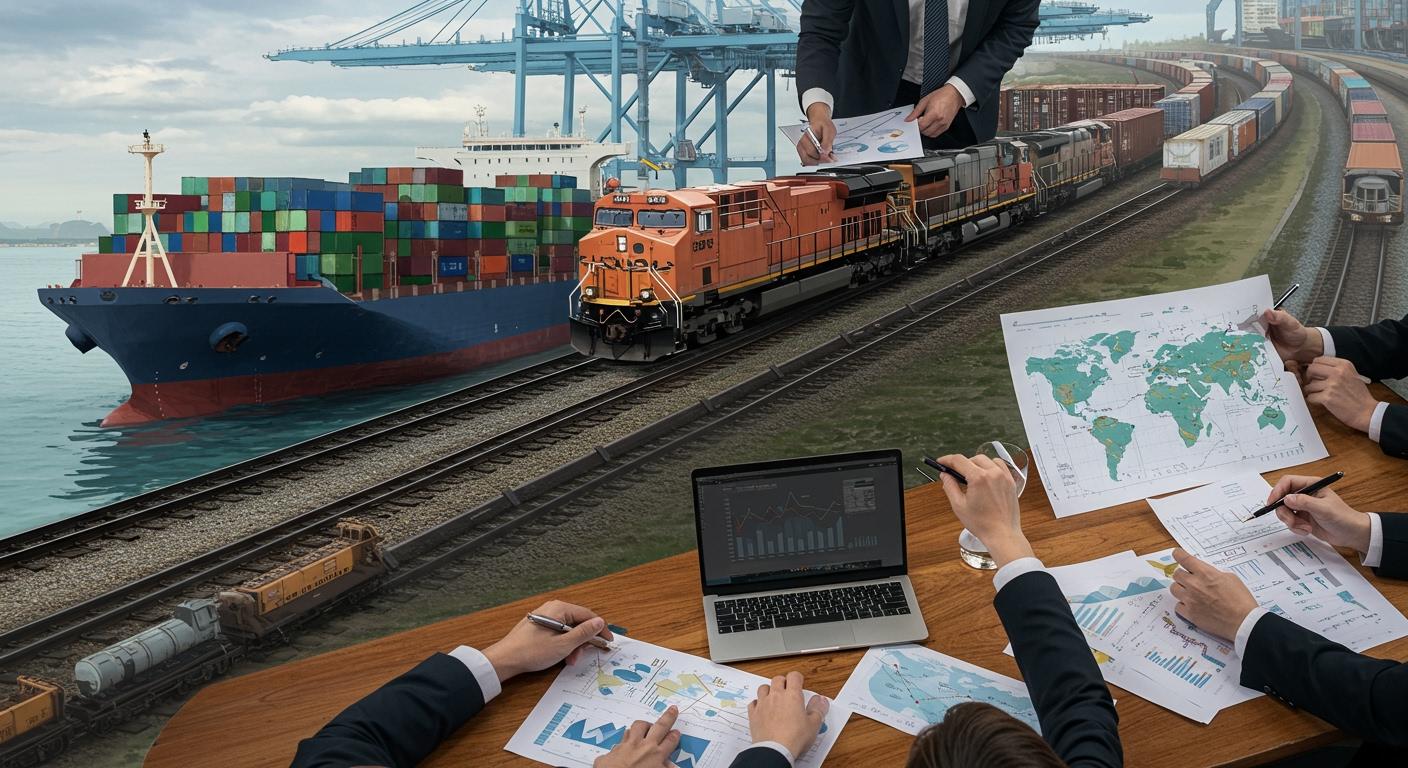
Port strikes and rail delays now reveal critical supply chain vulnerability across North America. Recent labor actions have forced companies to book shipments up to four weeks in advance, while vessel congestion at major ports like Antwerp and Rotterdam slows turnarounds. A three-day work stoppage triggered weeks of port congestion and equipment shortages, with thousands of containers held in transit and agricultural exports facing costly delays. JUSDA responds with innovative solutions, helping businesses adapt to these urgent challenges.
Key Takeaways
Port strikes and rail delays expose vulnerabilities in North American supply chains, leading to longer shipment times and increased costs.
Companies should diversify their supplier base and adopt hybrid inventory strategies to balance cost control with adequate stock levels.
Investing in technology, like AI and real-time tracking, enhances supply chain visibility and helps businesses respond quickly to disruptions.
Effective risk management and route diversification are essential for maintaining operational stability during supply chain challenges.
Collaboration with suppliers improves forecasting and contingency planning, enabling quicker responses to potential disruptions.
Disruptions in Ports and Rail
Port Strikes Impact
Port strikes have created significant challenges for North American supply chains. Labor actions at major ports have led to widespread congestion, vessel queuing, and equipment shortages. Many companies now face delays in both imports and exports, with some shipments held for weeks. The effects reach across industries, including automotive manufacturing, retail, agriculture, and energy. Financial and operational costs have surged, with businesses paying higher demurrage, detention, and expedited transportation fees. Inventory costs have also increased as goods sit idle.
Over 50% of container volume moves through affected ports, leaving limited alternative capacity for rerouting. Infrastructure constraints and dependencies on established logistics networks make it difficult for companies to shift cargo quickly.
The table below summarizes the immediate effects of recent port strikes:
Impact Category | Details |
|---|---|
Container Volume Disruption | Import delays, export bottlenecks, vessel queuing, container equipment shortage |
Industry-Specific Impacts | Automotive manufacturing, retail operations, agricultural exports, chemical and energy |
Financial and Operational Costs | Increased demurrage and detention, expedited transportation costs, higher inventory costs |
Market Share Concentration | Over 50% of container volume through affected ports, limited alternative capacity |
Infrastructure Constraints | Limited ability to shift cargo routing, dependencies on established logistics networks |
JUSDA’s expertise in managing multi-modal disruptions helps businesses navigate these challenges. The company leverages its global network and advanced technology to provide real-time visibility and flexible routing options.
Rail Delays Overview
Rail delays have compounded supply chain disruptions. Network congestion often causes one stopped train to delay many others. Crew timeouts, due to federal regulations, require replacement workers and slow operations. Shipping contracts may include penalties for late deliveries, increasing costs for shippers. Some companies shift to trucking alternatives, but this can lead to higher expenses and further congestion.
Network congestion
Crew timeouts
Customer penalties
Modal shift risk
Storage and demurrage
Safety issues
Extreme heat has caused an average of 50 derailments each year in the United States, accounting for about 30% of late arrivals and resulting in roughly 1,200 hours of lost time.
"Delay cascades in the model were primarily caused by sharing rolling stock (locomotives and wagons), indicating that materials like rolling stock and personnel play a significant role in spreading delays through the rail network."
JUSDA’s multi-modal capabilities and risk management solutions support clients in adapting to these rail challenges, ensuring shipments move efficiently even during disruptions.
Supply Chain Vulnerability Exposed
Shipment Delays
Port strikes and rail delays have exposed significant supply chain vulnerability in North America. Companies now face longer shipment times and unpredictable delivery schedules. The average anchor time at North American ports has increased to 0.6 days, or 14 hours, causing delays across multiple industries. Nine out of eleven major ports reported higher anchor times in 2024, with Charleston, Vancouver, and Norfolk experiencing delays of up to 0.7 days. The U.S. West Coast continues to recover from a backlog, with congestion rising by 20-30% in Q1 2025 compared to the previous year.
Retailers and manufacturers struggle to maintain production schedules as raw materials and finished goods arrive late. Trucking and rail disruptions further compound these delays, resulting in empty shelves and lost sales.
Impact Type | Description |
|---|---|
Manufacturing Slowdowns | Production delays due to factories waiting on raw materials, leading to backorders and shortages. |
Higher Shipping Costs | Increased costs for logistics due to extended shipping times and rerouting. |
Empty Shelves & Lost Sales | Retailers face stock issues, particularly those relying on just-in-time inventory. |
Trucking & Rail Disruptions | Congestion disrupts schedules for trucks and trains, causing delays in cargo movement inland. |
JUSDA addresses supply chain vulnerability by providing real-time visibility and flexible routing options. Their multi-modal expertise helps clients adapt quickly to changing conditions, minimizing the impact of shipment delays.
Rising Costs
Supply chain vulnerability also manifests in rising transportation and logistics costs. Transpacific container rates have increased by $400-$500 per FEU on both coasts, reflecting the financial strain of ongoing disruptions. Year-on-year comparisons show rates remain lower than previous peaks, but companies still face pressure from fluctuating costs. Asia-Europe trade lanes have seen rates drop by 60% compared to last year, highlighting the broader impact of market conditions.
Recent disruptions have forced North American companies to rethink their cost structures. Tariff changes, port congestion, and global routing issues have led to longer lead times and variable carrier performance. Businesses now prioritize flexibility and strategic warehousing to manage these challenges. Collaboration with suppliers and the use of Group Purchasing Organizations (GPOs) have become essential strategies for navigating supply chain vulnerability.
JUSDA’s approach to risk management and regulatory compliance supports clients in controlling costs. Their solutions include strict adherence to safety regulations for hazardous materials and efficient cross-border logistics, ensuring reliable and cost-effective operations.
Inventory Challenges
Inventory management faces new risks as supply chain vulnerability increases. Companies must balance the need for cost control with the necessity of maintaining adequate stock levels. Many organizations have shifted from just-in-time (JIT) inventory models to hybrid strategies that combine JIT with just-in-case (JIC) approaches. This change provides a buffer against disruptions but can increase holding costs.
Diversify the supplier base to reduce dependency on any single region.
Modify inventory planning by adopting a hybrid JIT/JIC strategy.
Develop robust contingency plans to address potential disruptions.
Seek insurance and financial safeguards to protect against unavoidable risks.
JUSDA helps clients manage inventory challenges by offering cloud warehousing and real-time inventory management solutions. Their expertise in regulatory compliance, especially for hazardous materials and cross-border shipments, reduces supply chain vulnerability and supports business continuity.
Companies that invest in advanced risk management and inventory optimization can better withstand future disruptions. JUSDA’s integrated solutions empower businesses to build resilience and maintain operational stability.
Strategic Responses
North American supply chains now require robust, multi-layered strategies to address ongoing disruptions. Companies across industries have adopted new approaches to risk management, route diversification, inventory optimization, and technology integration. JUSDA in North America leads this transformation by delivering advanced solutions tailored to the unique needs of sectors such as electronics, automotive, FMCG, and medical devices.
Risk Management
Effective risk management forms the foundation of resilient supply chains. Companies now use a combination of frameworks to mitigate disruptions:
Building redundancies into logistics networks
Leveraging data and analytics for early warning
Implementing cybersecurity measures
Establishing contingency plans
Ensuring compliance with industry standards
The COVID-19 pandemic exposed the dangers of relying on single suppliers or regions. Organizations with contingency plans and diversified networks sustained operations more effectively. Today, risk management also addresses geopolitical uncertainty, cybersecurity, regulatory compliance, and climate-related disruptions.
JUSDA in North America supports clients with comprehensive risk management, especially for hazardous materials and cross-border logistics. JusLink’s AI-powered risk control tower provides real-time monitoring and early warnings, helping businesses respond quickly to emerging threats. For example, automotive manufacturers use JUSDA’s compliance expertise to navigate complex regulations and maintain uninterrupted production.
Route Diversification
Route diversification has become a critical strategy for minimizing the impact of port strikes and rail delays. Companies evaluate and implement alternative shipping routes when primary lanes face disruption. They combine ocean, air, and rail options to maintain flexibility and consider rail freight across Central Asia as a backup when sea lanes are delayed.
Reduced risk: Diversified routes allow quick pivots during disruptions.
Greater flexibility: Businesses adjust lead times and delivery methods based on real-time conditions.
Cost optimization: Multiple vendors and routes help avoid high costs during emergencies.
During the Suez Canal blockage, companies with diversified logistics routes experienced less disruption. Research shows that organizations with resilient supply chains recover up to 40% faster from major events. JUSDA’s extensive carrier network and multi-modal capabilities enable clients to shift shipments seamlessly, ensuring continuity for sectors like electronics and FMCG.
Inventory Optimization
Inventory optimization strategies have evolved in response to supply chain vulnerability. Companies now balance just-in-time and just-in-case models, using advanced analytics and real-time data to improve forecasting and inventory planning.
Strategy | Description |
|---|---|
Demand Forecasting with Advanced Analytics | Use AI-driven analytics and historical data for accurate forecasting. |
Adopting a Multi-Sourcing Strategy | Diversify suppliers to reduce vulnerability to disruptions. |
Enhancing Supply Chain Visibility | Implement real-time tracking and IoT-enabled sensors. |
Strengthening Safety Stock and Buffer | Maintain safety stock to cushion against shocks. |
Leveraging JIT and JIC Models | Balance holding costs with extra stock during disruptions. |
Implementing Inventory Segmentation | Prioritize critical products during disruptions. |
Building Resilient Warehousing Strategies | Establish multiple distribution centers. |
Enhancing Supplier Collaboration | Improve planning through close collaboration. |
Utilizing Blockchain | Enhance traceability and security. |
Scenario Planning and Risk Mitigation | Prepare for disruption scenarios with stress tests and contingency plans. |
JUSDA’s cloud warehousing and real-time inventory management solutions help clients optimize stock levels and reduce carrying costs. For example, medical device manufacturers use JUSDA’s visibility tools to ensure critical products remain available, even during transportation delays.
Technology Integration
Technology integration now drives supply chain resilience. AI-powered solutions provide early warnings for risks such as supplier delays and extreme weather. These tools enable proactive threat mitigation, scenario modeling, and rapid response to disruptions.
JusLink’s AI Solution delivers real-time visibility, trend analysis, and risk control for North American supply chains. The platform’s intelligent assistant, JusElsa, supports decision-making and streamlines operations. Companies using JusLink report measurable benefits:
Benefit | Measurable Impact |
|---|---|
Stockout Reduction | |
Emergency Shipping Cost Elimination | 30%+ reduction in emergency shipping costs |
Service Level Excellence | On-time delivery rates of 98% or higher |
Inventory Optimization | 15-25% decrease in carrying costs |
Market Responsiveness | Enhanced ability to adjust strategies in real time |
Customer Experience Enhancement | Proactive communication with customers |
Supplier Relationship Optimization | Improved collaboration with suppliers |
Risk Management and Resilience | Faster response to disruptions |
Electronics and automotive companies leverage JusLink’s predictive analytics to optimize procurement and production schedules. FMCG and medical device firms use real-time tracking to maintain service levels and customer satisfaction. JUSDA’s technology-driven approach empowers businesses to adapt quickly, reducing the impact of supply chain vulnerability and building long-term resilience.
Industry Examples
Electronics & Automotive
Electronics and automotive companies have responded to port and rail disruptions by adopting flexible supply chain strategies. They now switch transport modes quickly, improve logistics efficiency, and manage smaller loads to reduce costs. These changes increase responsiveness to market shifts. JUSDA supports these industries with tailored solutions, including multi-modal transport and real-time visibility. The JusLink AI Solution helps manufacturers optimize procurement and production schedules, ensuring uninterrupted operations even during delays.
Benefit | Description |
|---|---|
Flexibility | Allows companies to switch transport modes easily |
Efficiency | Improves the overall logistics process |
Cost Reduction | Helps in managing smaller loads, reducing costs |
Enhanced Responsiveness | Increases ability to respond to market changes |
JUSDA’s customer stories highlight how leading manufacturers use AI-driven platforms to standardize operations and reduce manual handling, enabling cost-effective global expansion.
FMCG & Medical Devices
FMCG companies face rising eCommerce demands and fierce competition. They modernize logistics by extending warehouse capabilities and investing in technology to streamline goods movement and storage. Automated solutions enhance warehouse efficiency and help companies adapt to changing consumer needs. JUSDA’s cloud warehousing and real-time inventory management support these efforts, providing visibility and control over stock levels.
Medical device manufacturers encounter higher costs due to tariffs on Chinese imports. Essential components now cost more, leading to price increases for high-tech products and delays in delivering critical equipment. JUSDA’s expertise in regulatory compliance and cross-border logistics helps these companies manage risks and maintain supply continuity.
JUSDA’s tailored solutions enable FMCG and medical device firms to overcome logistics complexities, optimize inventory, and deliver products reliably.
Oil & Gas Logistics
Oil and gas logistics face unique challenges during port strikes and rail delays. The Canadian National and Canadian Pacific Kansas City rail strikes caused a 44% increase in origin rail yard dwell times. Destination yard dwell times dropped by 80%, showing reduced shipment volumes. Industries dependent on rail, such as crude oil, experienced higher transportation costs and significant delays.
The 2024 US Port Strike shut down 36 ports from Maine to Texas.
Congested docks and delayed global schedules disrupted supply chains.
Concerns about shortages and inflation increased, especially for import-reliant industries.
JUSDA’s comprehensive carrier network and risk management solutions help oil and gas companies navigate these disruptions. Their focus on regulatory compliance and flexible routing ensures reliable delivery, even during major supply chain breakdowns.
Building Resilience
Flexible Networks
Supply chain leaders invest in flexible logistics networks to strengthen resilience against future disruptions. They reconsider traditional supply chain models and build elasticity into project plans. Research shows that companies with operational flexibility achieve better inventory growth and maintain efficiency during major disruptions. These organizations optimize their networks and infrastructure, embrace automation, and diversify suppliers. JUSDA’s JusLink AI Solution supports flexible routing and multi-modal transport, allowing clients to pivot quickly when demand shifts or disruptions occur.
Firms that prioritize flexibility can act quickly, stock up to lock in prices, and take control of procurement. This approach helps them manage unpredictable demand and maintain continuity in logistics operations.
Predictive Analytics
Predictive analytics play a vital role in risk monitoring and decision-making. Advanced models continuously track thousands of risk indicators and provide early warning alerts. Experts highlight that predictive analytics uncover risk-triggering patterns, compare supplier performance, and analyze external factors. Businesses use these insights to select reliable suppliers and create contingency plans before issues escalate. JusLink’s AI Solution delivers real-time risk monitoring and trend analysis, empowering teams to adjust strategies proactively.
Predictive analytics optimize inventory management and forecast demand.
Intelligent order management systems drive action and improve supplier performance.
Proactive adjustments prevent disruptions from impacting supply chain performance.
Collaboration
Supplier collaboration enhances supply chain resilience. Companies share real-time data, improve forecasting, and jointly plan for contingencies. Collaboration across supplier tiers addresses risks early, such as material shortages or shipment delays. Strong supplier relationships enable quicker responses to disruptions and ensure continuity of supply. JUSDA’s JusLink platform facilitates seamless information sharing and supports collaborative planning.
Benefit | Description |
|---|---|
Enhanced Visibility | Sharing real-time data improves forecasting and inventory management. |
Risk Mitigation | Joint contingency planning allows for quicker responses to disruptions. |
Innovation | Collaborative efforts can lead to product improvements and process innovations. |
Sustainability | Aligning on environmental and social goals promotes sustainable practices. |
JUSDA’s commitment to innovation and collaboration positions clients to build resilient supply chains that withstand future challenges.
Supply chain leaders now embrace resilience and proactive planning to address disruptions. JUSDA’s innovative solutions support these efforts. Companies adopt strategies such as:
Investing in AI and IoT for real-time monitoring
Building strong supplier relationships
Maintaining safety stock for critical components
Developing contingency plans for alternative routes
They regularly assess risks and activate crisis management teams. Evaluating supply chain vulnerability and leveraging technology help future-proof operations.

JUSDA Solutions
To provide you with professional solutions and quotations.
FAQ
What industries does JUSDA serve in North America?
JUSDA supports electronics, automotive, medical devices, oil and gas, FMCG, and heavy equipment sectors.
The company tailors logistics solutions to meet the unique needs of each industry.
How does JUSDA manage hazardous materials in logistics?
JUSDA emphasizes risk management and strict compliance with safety regulations for hazardous materials, including lithium batteries.
Adheres to CFR, IMDG, and IATA standards
Provides employee training
What technology does JUSDA use for supply chain visibility?
JUSDA leverages JusLink’s AI Solution, which integrates IoT, cloud computing, and big data.
Feature | Benefit |
|---|---|
Real-time data | Enhanced visibility |
Predictive AI | Early risk detection |
How does JUSDA help optimize inventory management?
JUSDA offers cloud warehousing and real-time inventory management.
Clients use advanced analytics for demand forecasting, replenishment strategies, and inventory segmentation.
What regions does JUSDA focus on for market expansion?
JUSDA expands logistics services on the US East Coast and strengthens ties with the US-Mexico border region.
Supports cross-border transport
Enhances carrier network for regional growth
See Also
Understanding Inflation: Managing Supply Chain Challenges Effectively
Transforming Industries Through Innovative Cloud Supply Chain Solutions
Addressing Global Supply Chain Growth Challenges Successfully
Analyzing Trends: The Risks Associated With Logistics Operations
Embracing Change: Adapting Supply Chains to Technology Innovations