Technology sector supply chains under export restrictions and domestic production mandates

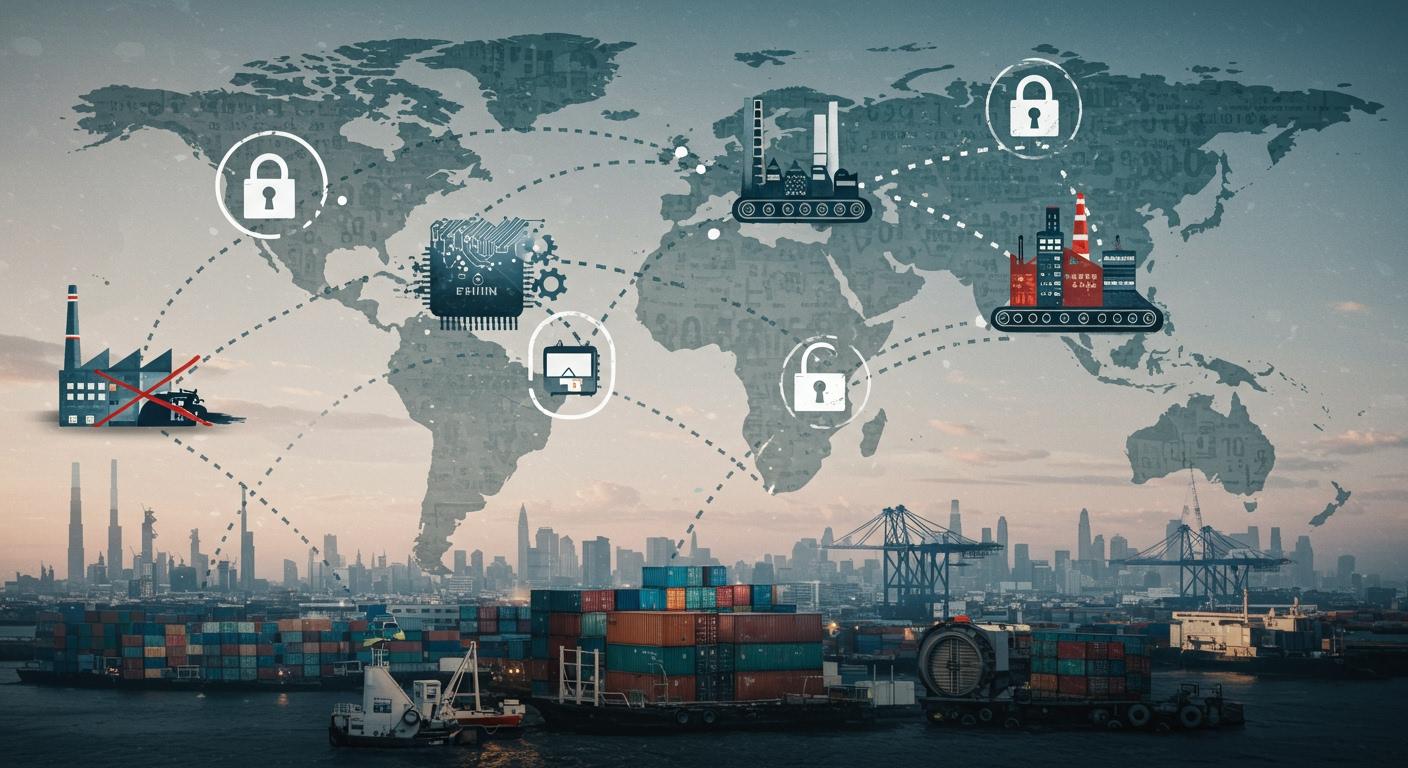
Export restrictions and domestic production mandates are changing how companies manage supply chains in the technology sector. Recent trends show China’s rise as a global automotive manufacturer disrupts traditional patterns. Regions like Europe and the US now use domestic mandates to protect jobs and industries. Digital and AI-driven solutions from JUSDA help businesses adjust quickly and keep operations efficient.
Key Takeaways
Export restrictions and domestic mandates are reshaping technology supply chains. Companies must adapt their sourcing and manufacturing strategies to comply with new regulations.
Investing in domestic capabilities is crucial. Companies should build local production facilities to reduce reliance on foreign suppliers and enhance supply chain resilience.
Digital solutions like JUSDA's JusTrade and JusLink can streamline customs processes and improve supply chain management. These tools help companies maintain compliance and optimize operations.
Diversification is key to managing supply chain risks. Companies should explore multi-country sourcing and strategic inventory management to mitigate disruptions.
Collaboration with suppliers and industry groups enhances compliance and operational efficiency. Building strong partnerships can help companies navigate regulatory changes effectively.
Export Restrictions & Mandates
Export Controls Explained
Export controls are government rules that limit the sale or transfer of certain products, technology, or information to other countries. These controls often target sensitive items, such as advanced semiconductors or artificial intelligence (AI) tools. In recent years, the United States has increased export controls on technology sent to China. These actions aim to protect national security and maintain a competitive edge in the technology sector.
The table below shows some recent examples of export controls:
Date | Action Description | Impact on Technology Sector |
|---|---|---|
August 2023 | Ban on US investment in Chinese AI and quantum technology with military applications | Restricts US firms from engaging in high-tech sectors in China, limiting China's access to advanced technologies. |
October 2023 | Expansion of semiconductor export controls | Adjusts performance thresholds for advanced chips, imposes licensing on 43 countries to prevent circumvention. |
December 2024 | New controls on high-bandwidth memory (HBM) | Aims to cripple China's AI sector by limiting access to critical memory technologies essential for AI systems. |
Domestic Mandates Overview
Domestic production mandates require companies to make certain products within their own country. Governments use these mandates to protect local jobs and industries. For example, the United States passed the CHIPS Act to encourage domestic semiconductor manufacturing. Taiwan and South Korea received waivers to continue some production in China, but they still face long-term challenges because they rely on US technology.
Country | Export Control Legislation | Impact on Global Supply Chains |
|---|---|---|
United States | ECRA, CHIPS Act | Restricts exports to China, affecting semiconductor supply chains and encouraging domestic production. |
Taiwan/South Korea | Waivers granted | Allowed to continue production in China, but long-term challenges remain due to reliance on US technology. |
China | N/A | Faces restrictions on advanced technology imports, impacting its technological development. |
Direct Effects on Supply Chains
Export restrictions and domestic mandates change how companies build and manage their supply chains. These policies create new challenges for the technology sector:
Legislation imposes strict restrictions on foreign influence in the AI supply chain.
Companies must follow broad rules that target prohibited foreign entities.
Enhanced domestic sourcing mandates increase operational challenges.
Companies face significant compliance and operational hurdles due to new requirements.
The broad definition of prohibited foreign entities complicates sourcing and licensing.
Firms must navigate rigorous supply chain integrity requirements.
New export controls aim to secure the advanced AI development ecosystem.
Companies must provide extensive information to retain export privileges.
Compliance burdens have increased for firms in the advanced computing supply chain.
These changes force companies to rethink sourcing, manufacturing, and compliance strategies to stay competitive and meet legal requirements.
Technology Sector Supply Chain Impacts
Sourcing & Supplier Disruption
Export restrictions have caused major changes in global sourcing for the technology sector. Companies in the semiconductor and electronics industries now face new challenges. U.S. export controls have led Chinese firms to reduce their reliance on U.S. technologies. Many Chinese companies view U.S. suppliers as less reliable, which encourages them to design out American components. This shift opens opportunities for non-U.S. companies to fill gaps in the global semiconductor market.
Supply chains depend on critical raw materials. When countries restrict exports of these materials, disruptions occur. For example, China’s restrictions on gallium and germanium in 2024 affected the supply of essential components for electronics. These constraints can cause production delays and increase costs.
The semiconductor supply chain is highly interconnected. U.S. companies rely on Chinese firms for key inputs and services. If U.S. supply chains move away from China too quickly, shortages in electronics may result. Companies must manage these risks to maintain supply chain continuity.
JUSDA has demonstrated expertise in managing complex supply chains. The company invests in technology and builds diversified networks. JUSDA adapts to digital transformation trends, using advanced logistics technologies, automation, and data analytics. Their commitment to compliance and sustainability helps them navigate evolving regulations.
Supply chain continuity faces risks from geopolitical instability, cybersecurity threats, and challenges in sourcing rare metals. Export restrictions and tariffs from major countries add to these vulnerabilities. Controls on key technologies can halt production in dependent countries, disrupting global trade.
Cost & Lead Time Changes
Export controls and domestic mandates have changed cost structures and lead times in the technology sector. Defense contractors report higher costs and longer delivery times. Lead times for crucial components have expanded from weeks to months. Programs that used just-in-time supply models now face significant challenges. The cost of raw materials has surged, which impacts production timelines.
Governments promote strategies to reduce reliance on foreign suppliers. This leads to increased domestic production initiatives. The focus on building secure electronics ecosystems affects costs and lead times for technology companies.
JUSDA’s digital solutions help companies manage these changes. The company uses automation and data analytics to optimize logistics and reduce delays. JUSDA’s commitment to compliance and sustainability influences operational costs and investment strategies.
Manufacturing Shifts
Manufacturing locations for technology products have shifted in response to export restrictions and domestic mandates. Companies replace foreign technology in government offices with domestic alternatives. This increases domestic production and reduces reliance on foreign technology in critical sectors like government and banking.
Evidence Description | Impact on Manufacturing Locations |
|---|---|
Replacement of foreign technology in government offices with domestic alternatives since 2019 | Increased domestic production and reduced reliance on foreign technology in critical sectors like government and banking. |
Initiatives like 'Made in China 2025' focusing on self-sufficiency in technology | Encouragement of local manufacturing capabilities in key industries such as semiconductors and AI. |
Legal frameworks like the Anti-Foreign Sanctions Law (AFSL) | Strengthening of domestic firms against foreign restrictions, promoting local production. |
Concerns over U.S. export controls leading to technology disruptions | Urgency for Chinese firms to develop independent manufacturing solutions to mitigate risks. |
JUSDA supports these manufacturing shifts by providing advanced supply chain management solutions. The company’s investments in technology and diversified networks help clients adapt to new production requirements. JUSDA’s digital transformation efforts, including automation and data analytics, enable efficient manufacturing and logistics operations.
Companies in the technology sector must respond quickly to regulatory changes. JUSDA’s expertise in compliance and sustainability helps clients manage risks and maintain supply chain stability.
Challenges for Technology Companies
Compliance Risks
Technology companies face a complex landscape of compliance risks. Regulations change quickly, and companies must keep up to avoid penalties or disruptions. The following table outlines the most significant compliance risks:
Compliance Risk | Description |
|---|---|
Businesses must adapt to rapidly changing sanctions and export controls to mitigate compliance risks effectively. | |
Complex Trade Agreements and Tariffs | Shifting tariffs and changing trade agreements require careful navigation to minimize costs and mitigate risks. |
Forced Labor Compliance | Companies need to focus on origin compliance, supply chain transparency, and sustainability to avoid penalties. |
Supply Chain Robustness | Building a robust and flexible supply chain is essential due to increasing geopolitical conflicts and stricter regulations. |
Multinational technology companies also manage responsible AI governance, online safety, child protection laws, antitrust risks, operational resiliency, and third- and fourth-party risk management. JusTrade, JUSDA’s customs clearance platform, helps companies handle these challenges. Its intelligent SAAS platform streamlines customs processes, ensures compliance with changing regulations, and reduces manual errors. Companies use JusTrade to maintain supply chain transparency and meet global trade requirements.
Innovation Constraints
Export controls can influence innovation and research activities. Some experts argue that restrictions on semiconductors and advanced technology may slow progress. However, recent data shows a more complex picture:
U.S. export controls on semiconductors have sparked debate about their impact on innovation.
Critics argue that these controls may stifle technological progress.
Analysis of R&D spending and patent filings from leading semiconductor companies shows no substantial evidence that these controls hinder innovative capabilities.
Companies affected by the October 2022 controls increased R&D spending and patent filings, suggesting that innovation continued despite restrictions.
JusLink, JUSDA’s AI-driven supply chain platform, supports companies as they adapt to these constraints. JusLink uses AI to forecast demand, manage risks, and optimize inventory. This helps technology companies stay agile and continue investing in research and development.
Market Access Issues
Export restrictions and domestic mandates shape the competitive landscape in the technology sector. The Biden administration’s semiconductor export control rules restrict certain chips and manufacturing equipment. These rules protect national security but can limit market access for U.S. firms like NVIDIA and AMD. Companies must invest more in R&D to stay competitive. Overly strict controls may threaten the industry’s global leadership. The CHIPS Act encourages domestic production, but companies still need to balance compliance with the need to access international markets.
JUSDA’s digital solutions, including JusTrade and JusLink, help companies navigate these market access challenges. They provide real-time insights, streamline customs clearance, and support compliance, allowing companies to compete globally.
Strategies & Solutions
Diversification Approaches
Technology companies face ongoing risks from export restrictions and changing regulations. Diversification helps reduce these risks and keeps supply chains stable. Companies use several approaches to strengthen their supply chains:
Multi-country sourcing allows companies to avoid relying on a single region. They select suppliers from different countries to spread risk.
Split shipments help minimize delays. Companies ship products in smaller loads across various routes.
Strategic inventory management protects against supply disruptions. Firms maintain safety stock levels to ensure production continues.
Onshoring and nearshoring move production closer to home or to stable countries. This reduces exposure to political risks.
Strengthening supplier relationships builds trust and transparency. Companies work closely with suppliers to improve reliability.
JUSDA supports these strategies by building diversified supply chain networks. The company uses advanced logistics and digital platforms to help clients manage sourcing and inventory. JusLink’s AI-driven tools provide real-time insights into supplier performance and inventory levels. This enables companies to respond quickly to disruptions and maintain continuity.
Domestic Capability Investment
Many companies invest in domestic capabilities to meet production mandates and reduce reliance on foreign suppliers. They build new factories, upgrade existing facilities, and train workers. These investments help companies comply with local regulations and improve supply chain resilience.
JUSDA assists clients with domestic capability investment. The company offers cloud warehousing, consolidation, and distribution services. JusTrade’s customs clearance platform streamlines import and export processes, making it easier for companies to move goods within their own country. JusLink’s intelligent supply chain management supports material preparation and delivery stocking, helping companies optimize production schedules and inventory.
Companies measure the effectiveness of their adaptation strategies using several dimensions:
Dimension | Description |
|---|---|
Backup resources ensure continuity in supply chain operations. | |
Financial Strength | Strong finances help companies withstand disruptions and invest in new strategies. |
Collaborative Relationships | Partnerships and networks enhance flexibility and responsiveness. |
Operational Capability | Efficient management and adaptation keep operations running smoothly. |
Human Capital | Skilled workers contribute to effective supply chain management. |
JUSDA’s platforms help companies track these dimensions and improve their supply chain performance.
Collaboration & Advocacy
Collaboration and advocacy play a key role in navigating export restrictions and domestic mandates. Companies form partnerships with suppliers, logistics providers, and industry groups. These relationships help companies share information, respond to regulatory changes, and advocate for favorable policies.
JUSDA encourages collaboration through its global network of service points and digital platforms. The company connects clients with reliable partners and provides real-time data sharing. JusLink’s Control Tower Intelligent Risk Management system monitors risks and alerts companies to potential disruptions. JusTrade’s customs experts work with clients to ensure compliance and smooth cross-border operations.
Best practices for maintaining compliance and operational efficiency include:
Best Practice | Description |
|---|---|
Leverage technology | Use advanced tools to meet compliance requirements. |
Invest in automation | Implement automated systems with real-time analytics. |
Use AI tools | Monitor regulatory changes and identify issues quickly. |
Comprehensive screening | Screen for sanctioned entities and ensure transparency. |
Employee training | Train staff to understand export control regulations. |
Access controls | Restrict access to sensitive technologies. |
Update policies | Revise internal policies to reflect new restrictions. |
Proactive assessment | Assess product uses to mitigate risks. |
Legal collaboration | Work with legal experts to stay informed. |
Internal reviews | Review processes and gather end-use statements. |
Training program assessment | Evaluate and improve training programs. |
Mandatory training | Require relevant training for all personnel. |
External partnerships | Collaborate with compliance experts for updated materials. |
Companies also evaluate current compliance processes, diversify supply chains, and prepare for regional variations in regulations. JUSDA’s platforms support these best practices by providing automated compliance systems and AI-driven monitoring.
JUSDA’s Digital Solutions
JUSDA offers digital solutions that help technology sector companies overcome supply chain challenges. JusTrade provides intelligent customs clearance services. The platform uses AI algorithms and big data analysis to streamline customs processes and ensure compliance. Clients benefit from reduced manual errors and faster clearance times.
JusLink delivers a comprehensive digital supply chain management solution. The platform uses AI-driven sales forecasting, smart replenishment, and risk management tools. JusLink’s Control Tower monitors supply chain risks in real time and provides early warnings. The platform’s AI intelligent agents assist with material preparation, delivery stocking, logistics management, and risk assessment.
JUSDA’s customer stories show how companies adapt to global supply chain challenges. For example, Chinese manufacturers faced complex overseas supply chains and regional customs differences. JUSDA developed a Supply Chain Management Collaboration Platform using AI technology. The platform improved lifecycle management, transparency, and efficiency. Companies optimized global processes, reduced manual handling, and expanded internationally at lower costs.
JUSDA’s solutions help clients maintain compliance, manage risks, and optimize supply chain operations. The company’s commitment to innovation and efficiency positions it as a leader in global supply chain management.
Export restrictions and domestic mandates reshape the technology sector supply chains. Companies now rely on digital transformation for resilience. The table below highlights how digital tools support supply chain strength:
Aspect | Description |
|---|---|
Enables flexible and responsive supply ecosystems to uncertainties. | |
Real-time Visibility | Essential for navigating complex regulatory environments and ensuring compliance. |
Diversified Supply Chains | Helps mitigate risks associated with geopolitical shifts and regulatory changes. |
Strategic partnerships and compliance remain vital. As policies shift, companies must innovate and adapt to maintain global competitiveness.
FAQ
What is JusTrade and how does it help technology companies?
JusTrade is JUSDA’s customs clearance platform. It uses AI and big data to simplify import and export processes. Technology companies rely on JusTrade for fast, accurate, and compliant customs operations.
How does JusLink support supply chain management?
JusLink provides AI-driven tools for sales forecasting, replenishment, and risk management. Companies use JusLink to improve supply chain visibility, optimize inventory, and respond quickly to disruptions.
What industries benefit from JUSDA’s solutions?
JUSDA serves electronics manufacturing, 3C home appliances, automotive, FMCG, new energy, medical health, heavy equipment, and bulk materials. Each industry receives tailored supply chain management and logistics solutions.
How does JUSDA help companies manage compliance risks?
JUSDA’s platforms automate compliance checks and streamline customs processes. JusTrade reduces manual errors and ensures companies meet global trade regulations. JusLink monitors regulatory changes and provides real-time risk alerts.
Can JUSDA’s solutions help with global expansion?
JUSDA’s digital platforms support international logistics, customs clearance, and supply chain collaboration. Companies use JUSDA’s technology to expand globally, optimize processes, and reduce costs.
See Also
Enhancing Strategies to Address Supply Chain Challenges in Tech
Investigating Robotics Innovations: Transforming Supply Chain Dynamics
Addressing Global Supply Chain Growth Obstacles Effectively
Identifying Risks: Protecting Your Supply Chain Effectively
Always Acknowledge Supply Chain Risks: Secure Your Business Now